


Building Blocks
This section contains fundamental products for the synthesis of organic and biological compounds. Building blocks are the essential starting materials used to construct complex molecules through various chemical reactions. They play a critical role in drug discovery, material science, and chemical research. At CymitQuimica, we offer a diverse range of high-quality building blocks to support your innovative research and industrial projects, ensuring you have the essential components for successful synthesis.
Subcategories of "Building Blocks"
- Boronic Acids & Boronic Acid Derivatives(5,756 products)
- Chiral Building Blocks(1,242 products)
- Hydrocarbon Building Blocks(6,095 products)
- Organic Building Blocks(61,037 products)
Found 196139 products of "Building Blocks"
Sort by
Purity (%)
0
100
|
0
|
50
|
90
|
95
|
100
8-Bromo-3-methylimidazo[1,2-a]pyridine
CAS:<p>Versatile small molecule scaffold</p>Formula:C8H7BrN2Purity:Min. 95%Molecular weight:211.06 g/mol5-Bromo-3-methylimidazo[2,1-b][1,3]thiazole
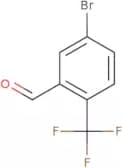
CAS:<p>Versatile small molecule scaffold</p>Formula:C6H5BrN2SPurity:Min. 95%Molecular weight:217.09 g/mol5-Bromo-2-(trifluoromethyl)benzaldehyde
CAS:<p>Versatile small molecule scaffold</p>Formula:C9H5F5OPurity:Min. 95%Molecular weight:224.13 g/mol6-Chloro-7-fluoroquinoxaline
CAS:<p>6-Chloro-7-fluoroquinoxaline is a quinoxaline that has been shown to have antiviral properties, inhibiting the activity of integrase enzymes in human cells. 6-Chloro-7-fluoroquinoxaline is structurally similar to other quinoxalines, with a hydrophobic region and a quinone acceptor. The pharmacophore of this drug is believed to be the same as that of other quinoxalines, which means it binds to the enzyme's active site by inserting into its hydrophobic pocket. 6-Chloro-7-fluoroquinoxaline has been shown to inhibit HIV and other viruses as well as SARS coronavirus (SARS CoV).</p>Formula:C8H4ClFN2Purity:Min. 95%Molecular weight:182.58 g/mol(6-(2-[2-(2-Methoxyethoxy)ethoxy]ethoxy)pyridazin-3-yl)methanol
CAS:<p>Versatile small molecule scaffold</p>Formula:C12H20N2O5Purity:Min. 95%Molecular weight:272.3 g/mol5-[(3,4-Dimethoxyphenyl)methyl]pyrrolidin-2-one
CAS:<p>Versatile small molecule scaffold</p>Formula:C13H17NO3Purity:Min. 95%Molecular weight:235.28 g/mol5-Bromo-2-methylbenzo[b]thiophene-1,1-dioxide
CAS:<p>Versatile small molecule scaffold</p>Formula:C9H7BrO2SPurity:Min. 95%Molecular weight:259.12 g/mol[2-(Phenylsulfanyl)phenyl]methanamine
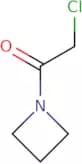
CAS:<p>Versatile small molecule scaffold</p>Formula:C13H13NSPurity:Min. 95%Molecular weight:215.32 g/mol1-Azetidin-1-yl-2-chloro-ethanone
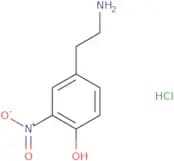
CAS:<p>Versatile small molecule scaffold</p>Formula:C5H8ClNOPurity:Min. 95%Molecular weight:133.58 g/mol4-(2-Aminoethyl)-2-nitrophenol hydrochloride
CAS:<p>Versatile small molecule scaffold</p>Formula:C8H11ClN2O3Purity:Min. 95%Molecular weight:218.6 g/molethyl 1-aminocyclohexane-1-carboxylate hydrochloride
CAS:<p>Versatile small molecule scaffold</p>Formula:C9H18ClNO2Purity:Min. 95%Molecular weight:207.7 g/mol1-Ethyl-3,5-dimethyl-1H-pyrazol-4-ylamine
CAS:<p>Versatile small molecule scaffold</p>Formula:C7H13N3Purity:Min. 95%Molecular weight:139.2 g/mol1-Cyclohexyl-3,5-dimethyl-1H-pyrazol-4-amine
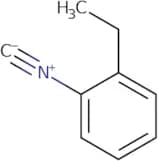
CAS:<p>Versatile small molecule scaffold</p>Formula:C11H19N3Purity:Min. 95%Molecular weight:193.29 g/mol1-Ethyl-2-isocyano-benzene
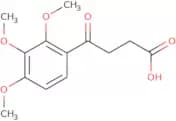
CAS:<p>Versatile small molecule scaffold</p>Formula:C9H9NPurity:Min. 95%Molecular weight:131.17 g/mol4-(2,3,4-Trimethoxyphenyl)-4-oxobutyric acid
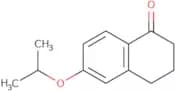
CAS:<p>Versatile small molecule scaffold</p>Formula:C13H16O6Purity:Min. 95%Molecular weight:268.26 g/mol6-iso-Propoxy-3,4-dihydro-2H-naphthalen-1-one
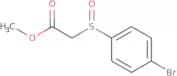
CAS:<p>Versatile small molecule scaffold</p>Formula:C13H16O2Purity:Min. 95%Molecular weight:204.27 g/molMethyl 2-(4-bromobenzenesulfinyl)acetate
CAS:<p>Versatile small molecule scaffold</p>Formula:C9H9BrO3SPurity:Min. 95%Molecular weight:277.14 g/mol2-Chloro-6-(pyridin-4-yl)pyridine-3-carbonitrile
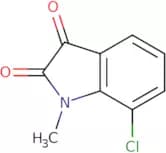
CAS:<p>Versatile small molecule scaffold</p>Formula:C11H6ClN3Purity:Min. 95%Molecular weight:215.64 g/mol7-Chloro-1-methyl-1H-indole-2,3-dione
CAS:<p>Versatile small molecule scaffold</p>Formula:C9H6ClNO2Purity:Min. 95%Molecular weight:195.6 g/molN-[2-(Dimethylamino)ethyl]-2-methylpropanamide
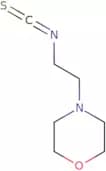
CAS:<p>Versatile small molecule scaffold</p>Formula:C8H18N2OPurity:Min. 95%Molecular weight:158.24 g/mol2-Morpholinoethyl isothiocyanate
CAS:<p>2-Morpholinoethyl isothiocyanate is a synthetic chemopreventive agent that has been shown to be an antioxidant and to induce apoptosis of cancer cells in vitro. It inhibits the growth of liver cancer cells by inhibiting the transcription of oncogenes, such as c-myc and c-jun, and also by inhibiting the activity of other enzymes, such as glutathione S-transferase. 2-Morpholinoethyl isothiocyanate also induces apoptosis in fibroblasts by activating transcription factors, such as NF-κB, which regulate the expression of proapoptotic genes.</p>Formula:C7H12N2OSPurity:Min. 95%Molecular weight:172.25 g/molPyrazolo[1,5-a]pyridine-3-carboxylic acid methyl ester
CAS:<p>Versatile small molecule scaffold</p>Formula:C9H8N2O2Purity:Min. 95%Molecular weight:176.17 g/mol9-Oxo-bicyclo[3.3.1]nonane-3-carboxylic acid
CAS:<p>Versatile small molecule scaffold</p>Formula:C10H14O3Purity:Min. 95%Molecular weight:182.22 g/molethyl 2-amino-5-bromobenzoate
CAS:<p>Versatile small molecule scaffold</p>Formula:C9H10BrNO2Purity:Min. 95%Molecular weight:244.1 g/mol2-{[(Benzyloxy)carbonyl]amino}benzoic acid
CAS:<p>Versatile small molecule scaffold</p>Formula:C15H13NO4Purity:Min. 95%Color and Shape:PowderMolecular weight:271.27 g/molMethyl 2-amino-5-methyl-1,3-thiazole-4-carboxylate
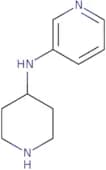
CAS:<p>Versatile small molecule scaffold</p>Formula:C6H8N2O2SPurity:Min. 95%Molecular weight:172.2 g/molN-(Piperidin-4-yl)pyridin-3-amine
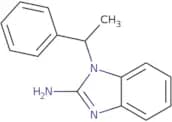
CAS:Controlled Product<p>Versatile small molecule scaffold</p>Formula:C10H15N3Purity:Min. 95%Molecular weight:177.25 g/mol1-(1-Phenylethyl)-1H-1,3-benzodiazol-2-amine
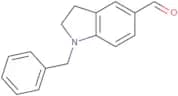
CAS:<p>Versatile small molecule scaffold</p>Formula:C15H15N3Purity:Min. 95%Molecular weight:237.3 g/mol1-Benzyl-2,3-dihydro-1H-indole-5-carbaldehyde
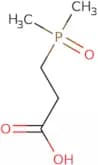
CAS:<p>Versatile small molecule scaffold</p>Formula:C16H15NOPurity:Min. 95%Molecular weight:237.3 g/mol3-(Dimethylphosphoryl)propanoic acid
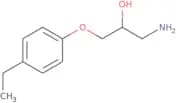
CAS:<p>Versatile small molecule scaffold</p>Formula:C5H11O3PPurity:Min. 95%Molecular weight:150.1 g/mol1-Amino-3-(4-ethyl-phenoxy)-propan-2-ol
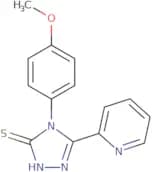
CAS:<p>Versatile small molecule scaffold</p>Formula:C11H17NO2Purity:Min. 95%Molecular weight:195.26 g/mol4-(4-Methoxyphenyl)-5-(pyridin-2-yl)-4H-1,2,4-triazole-3-thiol
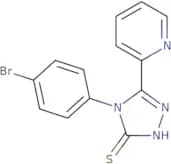
CAS:<p>Versatile small molecule scaffold</p>Formula:C14H12N4OSPurity:Min. 95%Molecular weight:284.34 g/mol4-(4-Bromophenyl)-5-(pyridin-2-yl)-4H-1,2,4-triazole-3-thiol
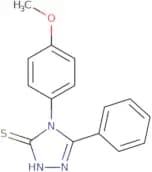
CAS:<p>Versatile small molecule scaffold</p>Formula:C13H9BrN4SPurity:Min. 95%Molecular weight:333.21 g/mol4-(4-Methoxyphenyl)-5-phenyl-4H-1,2,4-triazole-3-thiol
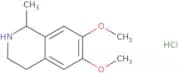
CAS:<p>Versatile small molecule scaffold</p>Formula:C15H13N3OSPurity:Min. 95%Molecular weight:283.4 g/mol6,7-Dimethoxy-1-methyl-1,2,3,4-tetrahydroisoquinoline hydrochloride
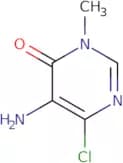
CAS:<p>Puerarin is a natural compound that is found in the roots of the plant Pueraria lobata. It has been shown to inhibit the binding of dopamine receptor agonists to their receptors, which may be due to its structural similarity to dopamine. Puerarin also inhibits the activity of an enzyme called tyrosine hydroxylase, which converts tyrosine into l-dopa and is a key enzyme in the synthesis of neurotransmitters such as dopamine and norepinephrine. Puerarin has been shown to have anti-inflammatory effects in tissue culture experiments, and it may possess potential for treating autoimmune diseases due to its ability to inhibit inflammatory responses.</p>Formula:C12H17NO2·HClPurity:Min. 95%Molecular weight:243.73 g/mol5-Amino-6-chloro-3-methyl-3,4-dihydropyrimidin-4-one
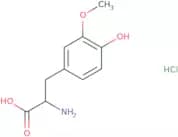
CAS:<p>Versatile small molecule scaffold</p>Formula:C5H6ClN3OPurity:Min. 95%Molecular weight:159.57 g/mol(2S)-2-Amino-3-(4-hydroxy-3-methoxyphenyl)propanoic acid hydrochloride
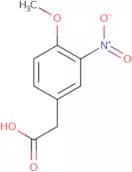
CAS:Controlled Product<p>Versatile small molecule scaffold</p>Formula:C10H14ClNO4Purity:Min. 95%Molecular weight:247.67 g/mol2-(4-methoxy-3-nitrophenyl)acetic acid
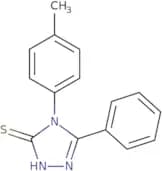
CAS:<p>2-(4-Methoxy-3-nitrophenyl)acetic acid is a linker used in peptide synthesis. It reacts with benzylic alcohols to form stable, cleavable linkages. 2-(4-Methoxy-3-nitrophenyl)acetic acid preferentially reacts with phenylacetic acid and deprotects the benzyl group from a peptide. This product is stable at room temperature and can be used in solid phase chemistry, such as peptide synthesis.</p>Formula:C9H9NO5Purity:Min. 95%Molecular weight:211.2 g/mol4-(4-Methylphenyl)-5-phenyl-4H-1,2,4-triazole-3-thiol
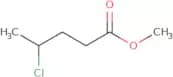
CAS:<p>Versatile small molecule scaffold</p>Formula:C15H13N3SPurity:Min. 95%Molecular weight:267.4 g/molMethyl 4-chloropentanoate
CAS:<p>Methyl 4-chloropentanoate is a piperidine derivative and an intermediate in the reductive amination of ketones. It is used as a reagent for the synthesis of pyridine derivatives, carbamates, and other functionalized compounds. Methyl 4-chloropentanoate can be prepared by hydrogenation of methyl 4-chlorobutyrate or by electrochemical oxidation of methyl 4-aminobenzoate. This compound has been used in organic process research and electrochemical preparations.</p>Formula:C6H11ClO2Purity:Min. 95%Molecular weight:150.6 g/mol{2-[(Dimethylamino)methyl]phenyl}methanol
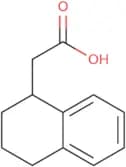
CAS:<p>Versatile small molecule scaffold</p>Formula:C10H15NOPurity:Min. 95%Molecular weight:165.23 g/mol2-(1,2,3,4-Tetrahydronaphthalen-1-yl)acetic acid
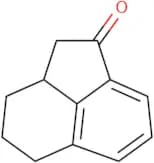
CAS:<p>Versatile small molecule scaffold</p>Formula:C12H14O2Purity:Min. 95%Molecular weight:190.24 g/mol1,2,2a,3,4,5-Hexahydroacenaphthylen-1-one
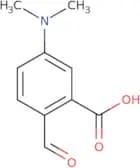
CAS:<p>Versatile small molecule scaffold</p>Formula:C12H12OPurity:Min. 95%Molecular weight:172.22 g/mol5-(Dimethylamino)-2-formylbenzoic acid
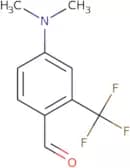
CAS:<p>Versatile small molecule scaffold</p>Formula:C10H11NO3Purity:Min. 95%Molecular weight:193.2 g/mol4-(Dimethylamino)-2-(trifluoromethyl)benzaldehyde
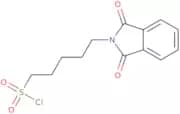
CAS:<p>Versatile small molecule scaffold</p>Formula:C10H10F3NOPurity:Min. 95%Molecular weight:217.19 g/mol5-(1,3-Dioxo-2,3-dihydro-1H-isoindol-2-yl)pentane-1-sulfonyl chloride
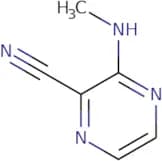
CAS:<p>Versatile small molecule scaffold</p>Formula:C13H14ClNO4SPurity:Min. 95%Molecular weight:315.77 g/mol3-(Methylamino)pyrazine-2-carbonitrile
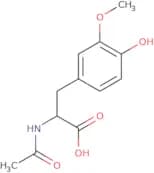
CAS:<p>3-(Methylamino)pyrazine-2-carbonitrile (3MAPCN) is a synthetic chemical that has been optimized for use as a cyanide antidote. It has been shown to be effective against cyanide poisoning in rats and is currently undergoing clinical trials. 3MAPCN binds to the iron atom of cytochrome c oxidase in the mitochondrial electron transport chain, thereby inhibiting the enzyme's ability to produce ATP. This prevents cell death by depriving the cell of energy.</p>Formula:C6H6N4Purity:Min. 95%Molecular weight:134.14 g/mol2-Acetamido-3-(4-hydroxy-3-methoxyphenyl)propanoic acid
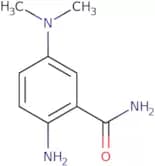
CAS:<p>2-Acetamido-3-(4-hydroxy-3-methoxyphenyl)propanoic acid is an organic acid that is used as a diagnostic agent for dopamine. It has been shown to be effective in the diagnosis of pediatric cases of DOPA responsive dystonia and DOPA responsive choreoathetosis. This compound may be used to diagnose Parkinson's disease, although it is not yet approved for this use. 2-Acetamido-3-(4-hydroxy-3-methoxyphenyl)propanoic acid is also used as a biochemical marker in the retrospective diagnosis of monoamine oxidase inhibitor therapy and in the clinical development of drugs with monoamine oxidase inhibiting activity.</p>Formula:C12H15NO5Purity:Min. 95%Molecular weight:253.25 g/mol2-Amino-5-(dimethylamino)benzamide
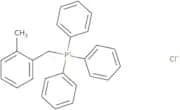
CAS:<p>Versatile small molecule scaffold</p>Formula:C9H13N3OPurity:Min. 95%Molecular weight:179.22 g/mol(2-Methylbenzyl)triphenylphosphonium chloride
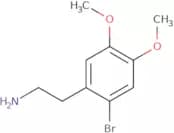
CAS:<p>Versatile small molecule scaffold</p>Formula:C26H24ClPPurity:Min. 95%Molecular weight:402.9 g/mol2-(2-Bromo-4,5-dimethoxyphenyl)ethan-1-amine
CAS:Controlled Product<p>Versatile small molecule scaffold</p>Formula:C10H14BrNO2Purity:Min. 95%Molecular weight:260.13 g/mol1-(2,6-Dichlorophenyl)piperazine
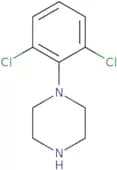
CAS:Controlled Product<p>Versatile small molecule scaffold</p>Formula:C10H12Cl2N2Purity:Min. 95%Molecular weight:231.12 g/mol2-(4-Bromophenoxy)-3-methylbutanoic acid
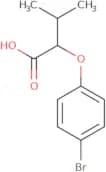
CAS:<p>Versatile small molecule scaffold</p>Formula:C11H13BrO3Purity:Min. 95%Molecular weight:273.12 g/mol4-(2-Fluorophenyl)butan-2-one
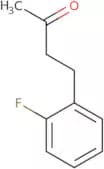
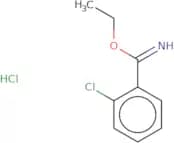
CAS:<p>Versatile small molecule scaffold</p>Formula:C10H11FOPurity:Min. 95%Molecular weight:166.19 g/molEthyl 2-chlorobenzene-1-carboximidate hydrochloride
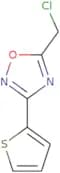
CAS:<p>Versatile small molecule scaffold</p>Formula:C9H11Cl2NOPurity:Min. 95%Molecular weight:220.1 g/mol5-(Chloromethyl)-3-thien-2-yl-1,2,4-oxadiazole
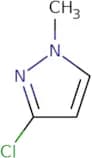
CAS:<p>Versatile small molecule scaffold</p>Formula:C7H5ClN2OSPurity:Min. 95%Molecular weight:200.65 g/mol3-Chloro-1-methyl-1H-pyrazole
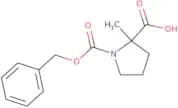
CAS:<p>3-Chloro-1-methyl-1H-pyrazole is a regioselective, heterocyclic compound. It is a halovinyl derivative of pyrazole and is used in the synthesis of other heterocycles. 3-Chloro-1-methyl-1H-pyrazole has been found to be an efficient synthetic intermediate for both ketones and pyrazoles. The reaction mechanism for this compound involves an initial alkylation followed by a substitution reaction with the nucleophilic hydroxyl group. The final product is formed via a heterocyclization step involving fragmentation and halogenation.</p>Formula:C4H5ClN2Purity:Min. 95%Molecular weight:116.55 g/mol1-Cbz-2-methylpyrrolidine-2-carboxylic acid
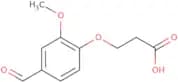
CAS:<p>1-Cbz-2-methylpyrrolidine-2-carboxylic acid is an orally active PARP inhibitor that has been shown to inhibit tumor growth in clinical trials. It is a carboxamide derivative with a cyclic structure. 1-Cbz-2-methylpyrrolidine-2-carboxylic acid blocks cellular proliferation and induces apoptosis by inhibiting DNA synthesis and protein expression. This agent also inhibits the growth of murine melanoma cells in vitro, as well as xenografts in vivo. In addition, 1-Cbz-2-methylpyrrolidine-2-carboxylic acid has been shown to be more potent against cancer cells than other PARP inhibitors, such as abt 888.</p>Formula:C14H17NO4Purity:Min. 95%Molecular weight:263.29 g/mol3-(4-Formyl-2-methoxyphenoxy)propanoic acid
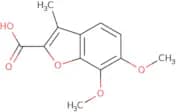
CAS:<p>Versatile small molecule scaffold</p>Formula:C11H12O5Purity:Min. 95%Molecular weight:224.21 g/mol6,7-Dimethoxy-3-methyl-1-benzofuran-2-carboxylic acid
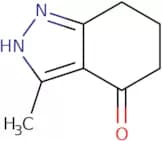
CAS:<p>Versatile small molecule scaffold</p>Formula:C12H12O5Purity:Min. 95%Molecular weight:236.22 g/mol3-Methyl-1,5,6,7-tetrahydroindazol-4-one
CAS:<p>Versatile small molecule scaffold</p>Formula:C8H10N2OPurity:Min. 95%Molecular weight:150.18 g/molMethyl 4-aminobenzoate hydrochloride
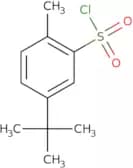
CAS:<p>Methyl 4-aminobenzoate hydrochloride is a compound that is soluble in water and has a molecular weight of 155.14 g/mol. The compound has an acidic nature, with the pKa being 2.5, which makes it a proton donor and an acid catalyst. It can be used to synthesize retinoic acid, which is used to treat acne, by reacting with glycinamide ribonucleotide. Methyl 4-aminobenzoate hydrochloride can also be used for sample pretreatment before analysis by gas chromatography (GC), liquid chromatography (LC) or mass spectrometry (MS). This compound is not highly polar and can therefore be dissolved in non-polar solvents such as hexane or dichloromethane. Methyl 4-aminobenzoate hydrochloride reacts with anthracene and amines to form methyl derivatives.</p>Formula:C8H9NO2·HClPurity:Min. 95%Molecular weight:187.63 g/mol5-tert-Butyl-2-methyl-benzenesulfonyl chloride
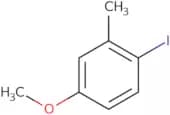
CAS:<p>Versatile small molecule scaffold</p>Formula:C11H15ClO2SPurity:Min. 95%Molecular weight:246.75 g/mol1-Iodo-4-methoxy-2-methylbenzene
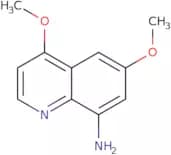
CAS:<p>1-Iodo-4-methoxy-2-methylbenzene (1IMMB) is an iodide which has been used as a precursor in the synthesis of carbonyl groups. This compound has also been shown to have high yields and mechanistic. The carbonyl group is located at the 1,3 positions and the methoxy group is located at the 2 position. This compound reacts with acetonitrile to form a naphthalene derivative. 1IMMB also reacts with an alcohol to form a cyclic ether with regiospecificity. It can also be used as a catalyst in the synthesis of unsymmetrical compounds that contain both carbonyl groups and alcohols.</p>Formula:C8H9IOPurity:Min. 95%Molecular weight:248.06 g/mol4,6-Dimethoxyquinolin-8-amine
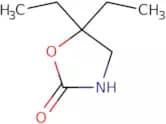
CAS:<p>Versatile small molecule scaffold</p>Formula:C11H12N2O2Purity:Min. 95%Molecular weight:204.22 g/mol5,5-Diethyl-1,3-oxazolidin-2-one
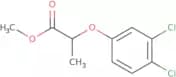
CAS:<p>Versatile small molecule scaffold</p>Formula:C7H13NO2Purity:Min. 95%Molecular weight:143.18 g/molMethyl 2-(3,4-dichlorophenoxy)propanoate
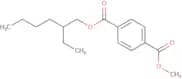
CAS:<p>Versatile small molecule scaffold</p>Formula:C10H10Cl2O3Purity:Min. 95%Molecular weight:249.09 g/mol1-(2-Ethylhexyl) 4-methyl benzene-1,4-dicarboxylate
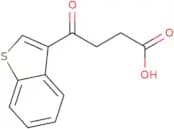
CAS:<p>1-(2-Ethylhexyl) 4-methyl benzene-1,4-dicarboxylate is a silylated, polysulphide sealant with good adhesion to many plastics and metals. It is also used as a plasticizer for acrylates and a sealant for polyurethanes. This product has been shown to be an effective sealant for terephthalate and polyethers. The molecule contains two ester groups that react with the hydroxyl groups on the surface of the substrate to form the crosslinked network.</p>Formula:C17H24O4Purity:Min. 95%Molecular weight:292.4 g/mol4-(1-Benzothiophen-3-yl)-4-oxobutanoic acid
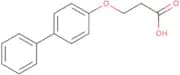
CAS:<p>Versatile small molecule scaffold</p>Formula:C12H10O3SPurity:Min. 95%Molecular weight:234.27 g/mol3-(4-Phenylphenoxy)propanoic acid
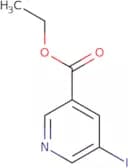
CAS:<p>Versatile small molecule scaffold</p>Formula:C15H14O3Purity:Min. 95%Molecular weight:242.27 g/molEthyl 5-iodonicotinate
CAS:<p>Versatile small molecule scaffold</p>Formula:C8H8INO2Purity:Min. 95%Molecular weight:277.06 g/molChroman-6-yl-acetic acid
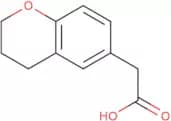
CAS:<p>Versatile small molecule scaffold</p>Formula:C11H12O3Purity:Min. 95%Molecular weight:192.22 g/mol7-Methyl-1H-benzo[d][1,3]oxazine-2,4-dione
CAS:<p>Versatile small molecule scaffold</p>Formula:C9H7NO3Purity:Min. 95%Molecular weight:177.16 g/molMethyl cis-3-hydroxycyclobutanecarboxylate
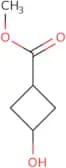
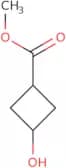
CAS:<p>Versatile small molecule scaffold</p>Formula:C6H10O3Purity:Min. 95%Molecular weight:130.14 g/molTrans-methyl 3-hydroxycyclobutanecarboxylate
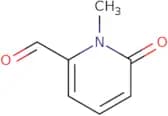
CAS:<p>Versatile small molecule scaffold</p>Formula:C6H10O3Purity:Min. 95%Molecular weight:130.1 g/mol1-Methyl-6-oxo-1,6-dihydropyridine-2-carbaldehyde
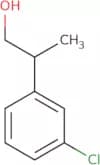
CAS:<p>Versatile small molecule scaffold</p>Formula:C7H7NO2Purity:Min. 95%Molecular weight:137.14 g/mol2-(3-Chlorophenyl)propan-1-ol
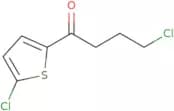
CAS:<p>Versatile small molecule scaffold</p>Formula:C9H11ClOPurity:Min. 95%Molecular weight:170.63 g/mol4-Chloro-1-(5-chlorothiophen-2-yl)butan-1-one
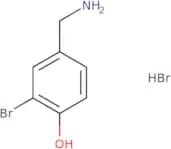
CAS:<p>Versatile small molecule scaffold</p>Formula:C8H8Cl2OSPurity:Min. 95%Molecular weight:223.12 g/mol4-(Aminomethyl)-2-bromophenol hydrobromide
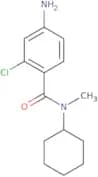
CAS:<p>Versatile small molecule scaffold</p>Formula:C7H9Br2NOPurity:Min. 95%Molecular weight:282.96 g/mol4-Amino-2-chloro-N-cyclohexyl-N-methylbenzamide
CAS:<p>Versatile small molecule scaffold</p>Formula:C14H19ClN2OPurity:Min. 95%Molecular weight:266.76 g/mol8-Chloro-1H-benzo[D][1,3]oxazine-2,4-dione
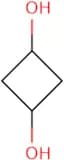
CAS:<p>8-Chloro-1H-benzo[D][1,3]oxazine-2,4-dione is an organic chemical used as a precursor to pharmaceuticals. It is produced by the esterification of an acid chloride with a carboxylic acid. This chemical can be converted into other products through hydrogenation or hydrochlorination. 8-Chloro-1H-benzo[D][1,3]oxazine-2,4-dione is also used in the production of xylene and dichlorobenzene. This compound has two isomers that differ in their reactivity due to steric hindrance. The less reactive isomer has been shown to have antiinflammatory effects in mice.</p>Formula:C8H4ClNO3Purity:Min. 95%Molecular weight:197.58 g/molCyclobutane-1,3-diol
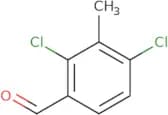
CAS:<p>Cyclobutane-1,3-diol is an organic compound that is a viscous liquid at room temperature. It is used in the production of polyesters and coatings. Cyclobutane-1,3-diol has been shown to be a good ligation partner with ethylene glycol in the liquid phase. It also has been used as an impurity scavenger and as a skeleton for other compounds. Cyclobutane-1,3-diol can be purified by distillation or crystallization, but it may contain fluorine or alkali metal residues that are difficult to remove. There are two stereoisomers of cyclobutane-1,3-diol: D-(+)-cyclobutane-1,3-diol and L-(+)-cyclobutane-1,3-diol.</p>Formula:C4H8O2Purity:Min. 95%Molecular weight:88.11 g/mol2,4-Dichloro-3-methylbenzaldehyde
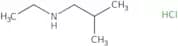
CAS:<p>Versatile small molecule scaffold</p>Formula:C8H6Cl2OPurity:Min. 95%Molecular weight:189.04 g/molEthyl(2-methylpropyl)amine hydrochloride
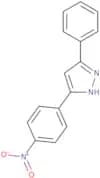
CAS:<p>Versatile small molecule scaffold</p>Formula:C6H16ClNPurity:Min. 95%Molecular weight:137.65 g/mol3-(4-Nitrophenyl)-5-phenyl-1H-pyrazole
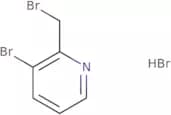
CAS:<p>3-(4-Nitrophenyl)-5-phenyl-1H-pyrazole is a dipole tautomeric proton tautomer with a fluorescence photophysical. It has a molecular orbital that is acidic. 3-(4-Nitrophenyl)-5-phenyl-1H-pyrazole has the following transfer functional groups: nitro, fluorescence, and photophysical. 3-(4-Nitrophenyl)-5-phenyl-1H-pyrazole is an experimentally determined molecule with a molecular orbitals of acidic. It has two tautomers, which are the dipole and tautomers. The dipole tautomeric proton tautomer is the more stable form of 3-(4-Nitrophenyl)-5-phenyl-1H-pyrazole in solution.</p>Formula:C15H11N3O2Purity:Min. 95%Molecular weight:265.27 g/mol3-Bromo-2-(bromomethyl)pyridine hydrobromide
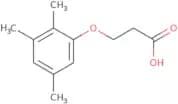
CAS:<p>Versatile small molecule scaffold</p>Formula:C6H6Br3NPurity:Min. 95%Molecular weight:331.83 g/molBiphenyl-4-yl-hydrazine hydrochloride
CAS:<p>Versatile small molecule scaffold</p>Formula:C12H13ClN2Purity:Min. 95%Molecular weight:220.7 g/mol3-(2,3,5-Trimethylphenoxy)propanoic acid
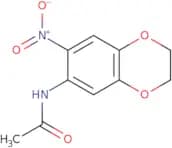
CAS:<p>Versatile small molecule scaffold</p>Formula:C12H16O3Purity:Min. 95%Molecular weight:208.25 g/molN-(7-Nitro-2,3-dihydro-1,4-benzodioxin-6-yl)acetamide
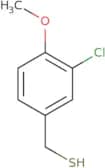
CAS:<p>Versatile small molecule scaffold</p>Formula:C10H10N2O5Purity:Min. 95%Molecular weight:238.2 g/mol(3-Chloro-4-methoxyphenyl)methanethiol
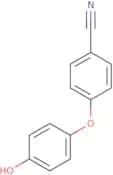
CAS:<p>Versatile small molecule scaffold</p>Formula:C8H9ClOSPurity:Min. 95%Molecular weight:188.67 g/mol4-(4-Hydroxyphenoxy)benzonitrile
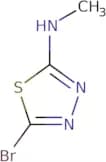
CAS:<p>Versatile small molecule scaffold</p>Formula:C13H9NO2Purity:Min. 95%Molecular weight:211.22 g/mol5-Bromo-N-methyl-1,3,4-thiadiazol-2-amine
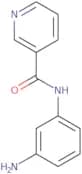
CAS:<p>Versatile small molecule scaffold</p>Formula:C3H4BrN3SPurity:Min. 95%Molecular weight:194.06 g/molN-(3-Aminophenyl)nicotinamide
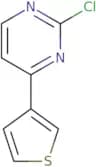
CAS:<p>Versatile small molecule scaffold</p>Formula:C12H11N3OPurity:Min. 95%Molecular weight:213.23 g/mol2-Chloro-4-(thiophen-3-yl)pyrimidine
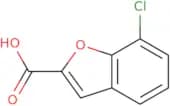
CAS:<p>Versatile small molecule scaffold</p>Formula:C8H5ClN2SPurity:Min. 95%Molecular weight:196.66 g/mol7-Chlorobenzofuran-2-carboxylic acid
CAS:<p>Versatile small molecule scaffold</p>Formula:C9H5O3ClPurity:Min. 95%Molecular weight:196.58 g/mol[1,2,4]Triazolo[1,5-a]pyrazin-2-amine
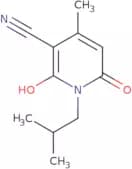
CAS:<p>Versatile small molecule scaffold</p>Formula:C5H5N5Purity:Min. 95%Molecular weight:135.13 g/mol6-Hydroxy-4-methyl-1-(2-methylpropyl)-2-oxo-1,2-dihydropyridine-3-carbonitrile
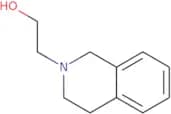
CAS:<p>Versatile small molecule scaffold</p>Formula:C11H14N2O2Purity:Min. 95%Molecular weight:206.24 g/mol2-(3,4-Dihydroisoquinolin-2(1H)-yl)ethanol
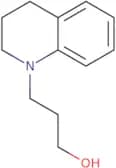
CAS:<p>2-(3,4-Dihydroisoquinolin-2(1H)-yl)ethanol is a quinoline derivative that has been shown to inhibit the growth of tumour cells. It has been shown to induce cell death in hepatoma cell lines and inhibit the proliferation of human tumour cells. This compound binds to choline receptors on the surface of cancer cells, inhibiting the release of neurotransmitter acetylcholine which is involved in many cellular processes including muscle contraction and nerve conduction. 2-(3,4-Dihydroisoquinolin-2(1H)-yl)ethanol also inhibits lipid peroxidation and induces apoptosis by binding to iron in mitochondria.</p>Formula:C11H15NOPurity:Min. 95%Molecular weight:177.24 g/mol3-(1,2,3,4-Tetrahydroquinolin-1-yl)propan-1-ol
CAS:<p>Versatile small molecule scaffold</p>Formula:C12H17NOPurity:Min. 95%Molecular weight:191.27 g/molN-(2-Aminoethyl)morpholine-4-carboxamide hydrochloride
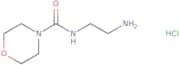
CAS:<p>Versatile small molecule scaffold</p>Formula:C7H16ClN3O2Purity:Min. 95%Molecular weight:209.67 g/mol2-Amino-1-(2,5-dichlorothiophen-3-yl)ethan-1-one hydrochloride
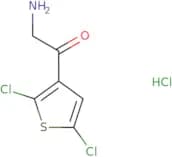
CAS:<p>Versatile small molecule scaffold</p>Formula:C6H6Cl3NOSPurity:Min. 95%Molecular weight:246.5 g/mol5-tert-Butyl-2-methoxy-benzenesulfonyl chloride
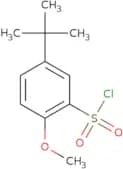
CAS:<p>Versatile small molecule scaffold</p>Formula:C11H15ClO3SPurity:Min. 95%Molecular weight:262.76 g/molMethyl imidazo[1,2-a]pyridine-5-carboxylate
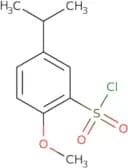
CAS:<p>Methyl imidazo[1,2-a]pyridine-5-carboxylate is a fluorescent compound that can be used as a reagent to measure the activity of esterases. It has been shown to bind to 4-methylumbelliferone and react with it in a process that is catalyzed by esterases. 4-Methylumbelliferone is a fluorescent compound that can be used as a substrate for estersase activity.</p>Formula:C9H8N2O2Purity:Min. 95%Molecular weight:176.17 g/mol5-Isopropyl-2-methoxybenzene-1-sulfonyl chloride
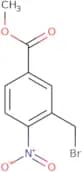
CAS:<p>Versatile small molecule scaffold</p>Formula:C10H13ClO3SPurity:Min. 95%Molecular weight:248.73 g/molMethyl 3-(bromomethyl)-4-nitrobenzoate
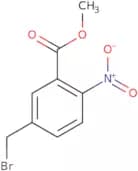
CAS:<p>Methyl 3-(bromomethyl)-4-nitrobenzoate is a chemical compound that belongs to the group of medicinal compounds. It has been shown to be nontoxic in mice, and stimulates the production of nitric oxide in macrophages by activating toll-like receptor-4. Methyl 3-(bromomethyl)-4-nitrobenzoate is also catalytic for the synthesis of palladium complexes with a variety of ligands, including acetates, carbonates, and chlorides. This chemical has been used as a probe for identifying proteins involved in cell signaling pathways and as a screening tool for the identification of new therapeutic targets.</p>Formula:C9H8BrNO4Purity:Min. 95%Molecular weight:274.07 g/molMethyl 5-(bromomethyl)-2-nitrobenzoate
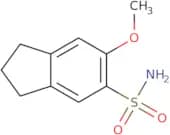
CAS:<p>Versatile small molecule scaffold</p>Formula:C9H8BrNO4Purity:Min. 95%Molecular weight:274.07 g/mol6-Methoxy-2,3-dihydro-1H-indene-5-sulfonamide
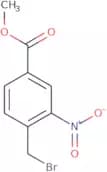
CAS:<p>Versatile small molecule scaffold</p>Formula:C10H13NO3SPurity:Min. 95%Molecular weight:227.3 g/molMethyl 4-(bromomethyl)-3-nitrobenzoate
CAS:<p>Methyl 4-(bromomethyl)-3-nitrobenzoate is a nitro compound that has been found to have anti-leishmanial activity. It inhibits the growth of Leishmania spp. and reverses the resistance to estradiol in Leishmania donovani, leading to a decrease in parasite load and an increase in survival time. Methyl 4-(bromomethyl)-3-nitrobenzoate is synthesized by coupling activated methyl 3-nitrobenzoate with bromoacetic acid. The nitro group can be photolabile and easily cleaved by ultraviolet light, which makes this drug suitable for use as a photosensitizer for photodynamic therapy (PDT). This drug has been shown to be effective against human cells in vitro, but not against mouse or rat cells.</p>Formula:C9H8BrNO4Purity:Min. 95%Molecular weight:274.07 g/molButyl(3-chloropropyl)amine hydrochloride
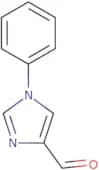
CAS:<p>Versatile small molecule scaffold</p>Formula:C7H17Cl2NPurity:Min. 95%Molecular weight:186.12 g/mol1-Phenyl-1H-imidazole-4-carbaldehyde
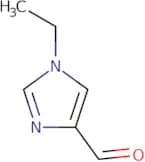
CAS:<p>Versatile small molecule scaffold</p>Formula:C10H8N2OPurity:Min. 95%Molecular weight:172.18 g/mol1-Ethyl-1H-imidazole-4-carbaldehyde
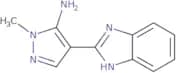
CAS:<p>Versatile small molecule scaffold</p>Formula:C6H8N2OPurity:Min. 95%Molecular weight:124.14 g/mol4-(1H-1,3-Benzodiazol-2-yl)-1-methyl-1H-pyrazol-5-amine
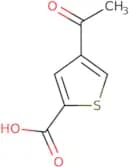
CAS:<p>Versatile small molecule scaffold</p>Formula:C11H11N5Purity:Min. 95%Molecular weight:213.24 g/mol4-Acetylthiophene-2-carboxylic acid
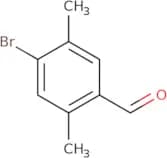
CAS:<p>Versatile small molecule scaffold</p>Formula:C7H6O3SPurity:Min. 95%Molecular weight:170.19 g/mol4-Bromo-2,5-dimethylbenzaldehyde
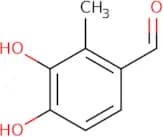
CAS:<p>4-Bromo-2,5-dimethylbenzaldehyde is a chiral compound with photoelectrochemical properties. It has been shown to be an efficient sensitizer for introducing fluorophores into organic materials, such as polymers and plastics. 4-Bromo-2,5-dimethylbenzaldehyde is also a fluorescent compound that can be used in affinity tests. It has been used in optical voltammetry to study the oxidation of organic compounds. The photovoltaic effect of this compound has been studied using cyclic voltammetry and ultrafast spectroscopy. 4-Bromo-2,5-dimethylbenzaldehyde has been applied in transfer and transport experiments on ruthenium surfaces. This enantiomer is also used as a catalyst for the synthesis of other compounds.</p>Formula:C9H9BrOPurity:Min. 95%Molecular weight:213.07 g/mol3,4-Dihydroxy-2-methylbenzaldehyde
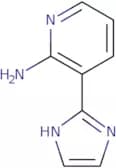
CAS:<p>Versatile small molecule scaffold</p>Formula:C8H8O3Purity:Min. 95%Molecular weight:152.15 g/mol3-(1H-Imidazol-2-yl)pyridin-2-amine
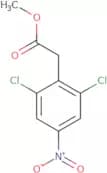
CAS:<p>Versatile small molecule scaffold</p>Formula:C8H8N4Purity:Min. 95%Molecular weight:160.18 g/molMethyl 2-(2,6-dichloro-4-nitrophenyl)acetate
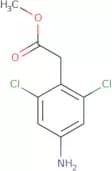
CAS:<p>Versatile small molecule scaffold</p>Formula:C9H7Cl2NO4Purity:Min. 95%Molecular weight:264.06 g/molMethyl 2-(4-amino-2,6-dichlorophenyl)acetate
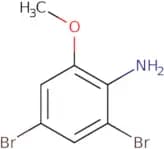
CAS:<p>Versatile small molecule scaffold</p>Formula:C9H9Cl2NO2Purity:Min. 95%Molecular weight:234.08 g/mol2,4-Dibromo-6-methoxyaniline
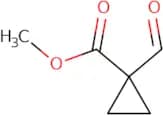
CAS:<p>Versatile small molecule scaffold</p>Formula:C7H7Br2NOPurity:Min. 95%Molecular weight:280.95 g/molmethyl 1-formylcyclopropane-1-carboxylate
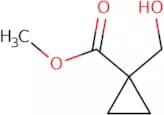
CAS:<p>Versatile small molecule scaffold</p>Formula:C6H8O3Purity:Min. 95%Molecular weight:128.1 g/molMethyl 1-(hydroxymethyl)cyclopropanecarboxylate
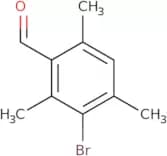
CAS:<p>Versatile small molecule scaffold</p>Formula:C6H10O3Purity:Min. 95%Molecular weight:130.14 g/mol3-Bromo-2,4,6-trimethylbenzaldehyde
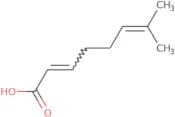
CAS:<p>Versatile small molecule scaffold</p>Formula:C10H11BrOPurity:Min. 95%Molecular weight:227.1 g/mol(2E)-7-Methylocta-2,6-dienoic acid
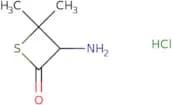
CAS:<p>Versatile small molecule scaffold</p>Formula:C9H14O2Purity:Min. 95%Molecular weight:154.21 g/mol(3R)-3-Amino-4,4-dimethylthietan-2-one hydrochloride
CAS:<p>Versatile small molecule scaffold</p>Formula:C5H10ClNOSPurity:Min. 95%Molecular weight:167.66 g/mol3-Chloro-5-(chloromethyl)-8-thia-4,6-diazatricyclo[7.4.0.0,2,7]trideca-1(9),2,4,6-tetraene
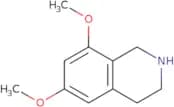
CAS:<p>Versatile small molecule scaffold</p>Formula:C11H10Cl2N2SPurity:Min. 95%Molecular weight:273.2 g/mol6,8-Dimethoxy-1,2,3,4-tetrahydroisoquinoline
CAS:<p>Versatile small molecule scaffold</p>Formula:C11H15NO2Purity:Min. 95%Molecular weight:193.24 g/mol4-(Furan-2-yl)pyrrolidin-2-one
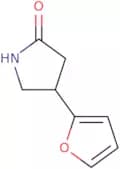
CAS:<p>Versatile small molecule scaffold</p>Formula:C8H9NO2Purity:Min. 95%Molecular weight:151.16 g/mol(3S)-3-{[(tert-Butoxy)carbonyl]amino}-4-oxo-4-(prop-2-en-1-yloxy)butanoic acid
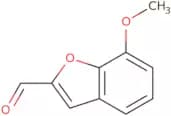
CAS:<p>Versatile small molecule scaffold</p>Formula:C12H19NO6Purity:Min. 95%Molecular weight:273.28 g/mol7-Methoxy-1-benzofuran-2-carbaldehyde
CAS:<p>Versatile small molecule scaffold</p>Formula:C10H8O3Purity:Min. 95%Molecular weight:176.17 g/mol1-Chloro-1,1-difluoropropan-2-one
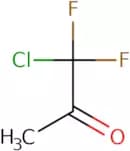
CAS:<p>Versatile small molecule scaffold</p>Formula:C3H3ClF2OPurity:Min. 95%Molecular weight:128.5 g/molMethyl 2-azabicyclo[2.2.1]heptane-3-carboxylate hydrochloride
CAS:<p>Versatile small molecule scaffold</p>Formula:C8H14ClNO2Purity:Min. 95%Molecular weight:191.65 g/mol2-Azabicyclo[2.2.1]heptane-3-carboxylic acid
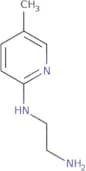
CAS:<p>2-Azabicyclo[2.2.1]heptane-3-carboxylic acid (AAV) is an antiviral agent that inhibits the replication of a number of viruses, including HIV and hepatitis C virus. It has been shown to be effective in treating patients with cirrhosis and multigram hepatitis B or C. 2-Azabicyclo[2.2.1]heptane-3-carboxylic acid is structurally similar to other antiviral agents, such as serine protease inhibitors, which are used to treat chronic hepatitis B and C virus infections. This drug has been shown to inhibit the NS3 protease enzyme that is essential for viral replication in vitro and in vivo. 2-Azabicyclo[2.2.1]heptane-3-carboxylic acid also has structural similarity to ester hydrochloride drugs, which are used for the treatment of em</p>Formula:C7H11NO2Purity:Min. 95%Molecular weight:141.17 g/molN-(2-Aminoethyl)-5-methylpyridin-2-amine
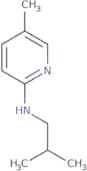
CAS:<p>Versatile small molecule scaffold</p>Formula:C8H13N3Purity:Min. 95%Molecular weight:151.21 g/mol5-Methyl-N-(2-methylpropyl)pyridin-2-amine
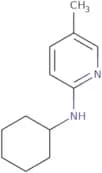
CAS:<p>Versatile small molecule scaffold</p>Formula:C10H16N2Purity:Min. 95%Molecular weight:164.25 g/molN-Cyclohexyl-5-methylpyridin-2-amine
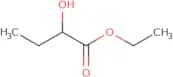
CAS:<p>Versatile small molecule scaffold</p>Formula:C12H18N2Purity:Min. 95%Molecular weight:190.28 g/mol(S)-Ethyl 2-hydroxybutanoate
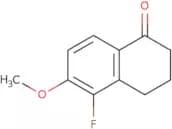
CAS:<p>Versatile small molecule scaffold</p>Formula:C6H12O3Purity:Min. 95%Molecular weight:132.16 g/mol5-Fluoro-6-methoxy-1,2,3,4-tetrahydronaphthalen-1-one
CAS:<p>Versatile small molecule scaffold</p>Formula:C11H11FO2Purity:Min. 95%Molecular weight:194.2 g/mol5-Amino-4-(propan-2-yl)-4H-1,2,4-triazole-3-thiol
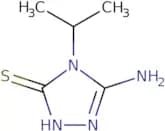
CAS:<p>Versatile small molecule scaffold</p>Formula:C5H10N4SPurity:Min. 95%Molecular weight:158.23 g/mol6-Amino-1-(phenylsulfanyl)hexan-1-one hydrochloride
CAS:<p>Versatile small molecule scaffold</p>Formula:C12H18ClNOSPurity:Min. 95%Molecular weight:259.8 g/mol1-[4-Methyl-2-(propylamino)-1,3-thiazol-5-yl]ethan-1-one hydrochloride
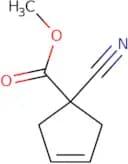
CAS:<p>Versatile small molecule scaffold</p>Formula:C9H15ClN2OSPurity:Min. 95%Molecular weight:234.75 g/mol3-Cyclopentene-1-carboxylic acid,1-cyano-,methyl ester
CAS:<p>Versatile small molecule scaffold</p>Formula:C8H9NO2Purity:Min. 95%Molecular weight:151.16 g/mol2-Chloro-1-isocyanato-3-(trifluoromethyl)benzene
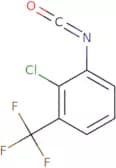
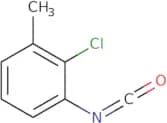
CAS:<p>Versatile small molecule scaffold</p>Formula:C8H3ClF3NOPurity:Min. 95%Molecular weight:221.56 g/mol2-Chloro-1-isocyanato-3-methylbenzene
CAS:<p>Versatile small molecule scaffold</p>Formula:C8H6ClNOPurity:Min. 95%Molecular weight:167.59 g/mol(1S,2R)-2-(Methoxycarbonyl)cyclopropane-1-carboxylic acid ee
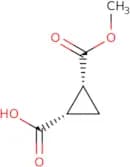
CAS:<p>Versatile small molecule scaffold</p>Formula:C6H8O4Purity:Min. 95%Molecular weight:144.13 g/mol2-Chloroethyl methanesulfonylmethanesulfonate
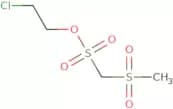
CAS:<p>2-Chloroethyl methanesulfonylmethanesulfonate (2CEMS) is a potent and selective inhibitor of the enzyme methyltransferase. This drug has been shown to be effective against leukemic mice, as well as against carcinoma cell lines in vitro. 2CEMS is also active in vivo, inhibiting the growth of bladder tumours in rats. The mechanism of action is not fully understood but may involve carbamoylation, which inhibits the production of fatty acids and nucleic acids. 2-Chloroethyl methanesulfonylmethanesulfonate has been shown to enhance antitumour activity when used in combination with specific antibodies.</p>Formula:C4H9ClO5S2Purity:Min. 95%Molecular weight:236.7 g/mol2-Amino-1-(furan-2-yl)ethan-1-one hydrochloride
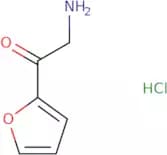
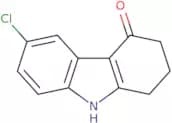
CAS:<p>Versatile small molecule scaffold</p>Formula:C6H8ClNO2Purity:Min. 95%Molecular weight:161.58 g/mol6-Chloro-2,3,4,9-tetrahydro-1H-carbazol-4-one
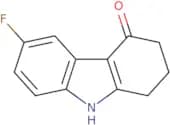
CAS:<p>Versatile small molecule scaffold</p>Formula:C12H10ClNOPurity:Min. 95%Molecular weight:219.66 g/mol6-Fluoro-2,3,4,9-tetrahydro-1H-carbazol-4-one
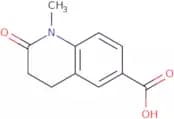
CAS:<p>Versatile small molecule scaffold</p>Formula:C12H10FNOPurity:Min. 95%Molecular weight:203.21 g/mol1-Methyl-2-oxo-1,2,3,4-tetrahydroquinoline-6-carboxylic acid
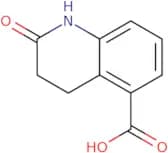
CAS:<p>Versatile small molecule scaffold</p>Formula:C11H11NO3Purity:Min. 95%Molecular weight:205.21 g/mol2-oxo-1,2,3,4-tetrahydroquinoline-5-carboxylic acid
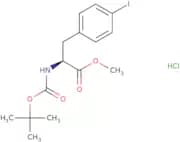
CAS:<p>Versatile small molecule scaffold</p>Formula:C10H9NO3Purity:Min. 95%Molecular weight:191.18 g/molN-Boc-4-iodo-L-phenylalanine methyl ester ee
CAS:<p>Versatile small molecule scaffold</p>Formula:C15H20INO4Purity:Min. 95%Molecular weight:405.23 g/mol7-Bromochromone-2-carboxylic acid
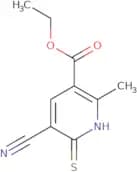
CAS:<p>Versatile small molecule scaffold</p>Formula:C10H5BrO4Purity:Min. 95%Color and Shape:PowderMolecular weight:269.05 g/molEthyl 5-cyano-2-methyl-6-sulfanylpyridine-3-carboxylate
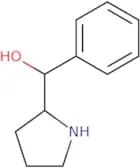
CAS:<p>Ethyl 5-cyano-2-methyl-6-sulfanylpyridine-3-carboxylate is a carboxylic acid that belongs to the group of carboxylic acids. It has a molecular weight of 182.25 and a chemical formula of C8H7NOSO2. This compound is an ethyl ester of 5-cyano-2-methylpyridine 3,5 dicarboxylic acid, which is found in plants. The compound exhibits antibacterial activity against Streptococcus mutans, while it does not exhibit any activity against Escherichia coli or Pseudomonas aeruginosa. Ethyl 5-cyano-2-methylpyridine 3,5 dicarboxylate also exhibits antiviral properties by inhibiting the synthesis of rRNA and protein synthesis in polio virus infected cells.</p>Formula:C10H10N2O2SPurity:Min. 95%Molecular weight:222.27 g/molPhenyl(pyrrolidin-2-yl)methanol
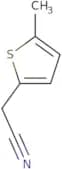
CAS:<p>Phenyl(pyrrolidin-2-yl)methanol is a hypotensive drug that belongs to the group of medicines. It can be used as a radical scavenger and it is also an antihypertensive drug. Phenyl(pyrrolidin-2-yl)methanol has been found to decrease blood pressure in animals and humans. This drug has also been shown to reduce the risk of developing atherosclerosis, which may be due to its ability to scavenge free radicals and prevent the oxidation of low density lipoprotein cholesterol.</p>Formula:C11H15NOPurity:Min. 95%Molecular weight:177.24 g/mol2-(5-Methylthiophen-2-yl)acetonitrile
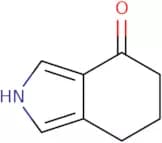
CAS:<p>Versatile small molecule scaffold</p>Formula:C7H7NSPurity:Min. 95%Molecular weight:137.2 g/mol6,7-Dihydro-2H-isoindol-4(5H)-one
CAS:<p>Versatile small molecule scaffold</p>Formula:C8H9NOPurity:Min. 95%Molecular weight:135.16 g/mol2H,4H,5H,6H,7H,8H-Cyclohepta[C]pyrrol-4-one
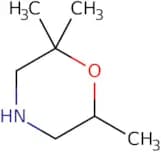
CAS:<p>Versatile small molecule scaffold</p>Formula:C9H11NOPurity:Min. 95%Molecular weight:149.19 g/mol2,2,6-Trimethylmorpholine
CAS:<p>Versatile small molecule scaffold</p>Formula:C7H15NOPurity:Min. 95%Molecular weight:129.2 g/molMethyl 3-amino-5-nitrothiophene-2-carboxylate
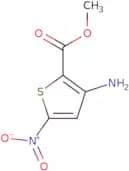
CAS:<p>Versatile small molecule scaffold</p>Formula:C6H6N2O4SPurity:Min. 95%Molecular weight:202.19 g/mol2,2-Dimethyl-3-(2-methyl-propenyl)-cyclopropanecarboxylic acid hydrazide
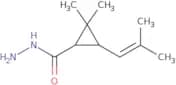
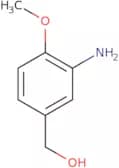
CAS:<p>Versatile small molecule scaffold</p>Formula:C10H18N2OPurity:Min. 95%Molecular weight:182.27 g/mol(3-Amino-4-methoxyphenyl)methanol
CAS:<p>Versatile small molecule scaffold</p>Formula:C8H11NO2Purity:Min. 95%Molecular weight:153.18 g/mol5-(Chloromethyl)-N-phenyl-1,3,4-thiadiazole-2-carboxamide
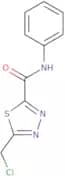
CAS:<p>Versatile small molecule scaffold</p>Formula:C10H8ClN3OSPurity:Min. 95%Molecular weight:253.71 g/mol2-(2-bromophenyl)-2-methylpropanoic acid
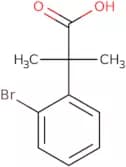
CAS:<p>Versatile small molecule scaffold</p>Formula:C10H11BrO2Purity:Min. 95%Molecular weight:243.1 g/molN-Ethyl-4-iodobenzamide
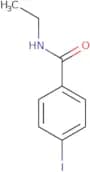
CAS:<p>Versatile small molecule scaffold</p>Formula:C9H10INOPurity:Min. 95%Molecular weight:275.09 g/molrac-2-[(1R,2R)-2-Methyl-3-oxocyclopentyl]acetic acid
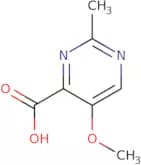
CAS:<p>Versatile small molecule scaffold</p>Formula:C8H12O3Purity:Min. 95%Molecular weight:156.2 g/mol5-methoxy-2-methylpyrimidine-4-carboxylic acid
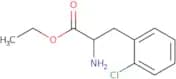
CAS:<p>Versatile small molecule scaffold</p>Formula:C7H8N2O3Purity:Min. 95%Molecular weight:168.15 g/molEthyl 2-amino-3-(2-chlorophenyl)propanoate
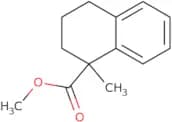
CAS:<p>Versatile small molecule scaffold</p>Formula:C11H14ClNO2Purity:Min. 95%Molecular weight:227.69 g/molMethyl 1-methyl-1,2,3,4-tetrahydronaphthalene-1-carboxylate
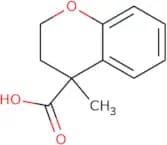
CAS:<p>Versatile small molecule scaffold</p>Formula:C13H16O2Purity:Min. 95%Molecular weight:204.26 g/mol4-Methyl-3,4-dihydro-2H-1-benzopyran-4-carboxylic acid
CAS:<p>Versatile small molecule scaffold</p>Formula:C11H12O3Purity:Min. 95%Molecular weight:192.21 g/mol(2E)-3-[2-(Benzyloxy)phenyl]prop-2-enoic acid
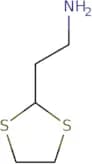
CAS:<p>Versatile small molecule scaffold</p>Formula:C16H14O3Purity:Min. 95%Molecular weight:254.28 g/mol2-(1,3-Dithiolan-2-yl)ethan-1-amine
CAS:<p>Versatile small molecule scaffold</p>Formula:C5H11NS2Purity:Min. 95%Molecular weight:149.3 g/mol7-Amino-2-methylquinolin-8-ol
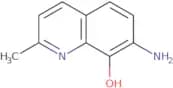
CAS:<p>Versatile small molecule scaffold</p>Formula:C10H10N2OPurity:Min. 95%Molecular weight:174.2 g/mol2-Ethyl-4,6-dimethylpyrimidine-5-carboxylic acid
CAS:<p>Versatile small molecule scaffold</p>Formula:C9H12N2O2Purity:Min. 95%Molecular weight:180.2 g/molN-(4-Aminophenyl)-3-(piperidin-1-yl)propanamide
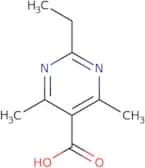
CAS:<p>Versatile small molecule scaffold</p>Formula:C14H21N3OPurity:Min. 95%Molecular weight:247.34 g/mol2-azabicyclo[2.2.2]octan-6-ol
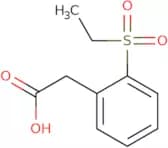
CAS:<p>Versatile small molecule scaffold</p>Formula:C7H13NOPurity:Min. 95%Molecular weight:127.2 g/mol2-(2-(Ethylsulfonyl)phenyl)acetic acid
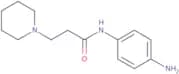
CAS:<p>Versatile small molecule scaffold</p>Formula:C10H12O4SPurity:Min. 95%Molecular weight:228.27 g/mol2-[3-(Ethanesulfonyl)phenyl]acetic acid
CAS:<p>Versatile small molecule scaffold</p>Formula:C10H12O4SPurity:Min. 95%Molecular weight:228.27 g/mol3-(Chloromethyl)-1h,4h,5h,6h-cyclopenta[c]pyrazole hydrochloride
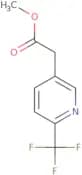
CAS:<p>Versatile small molecule scaffold</p>Formula:C7H9N2Cl·HClPurity:Min. 95%Molecular weight:193.07 g/molMethyl 2-(6-trifluoromethyl-pyridin-3-yl)acetate
CAS:<p>Versatile small molecule scaffold</p>Formula:C9H8F3NO2Purity:Min. 95%Molecular weight:219.16 g/mol2-(tert-Butoxycarbonyl)-2-azabicyclo[2.2.1]heptane-5-carboxylic acid
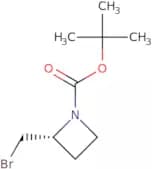
CAS:<p>Versatile small molecule scaffold</p>Formula:C12H19NO4Purity:Min. 95%Molecular weight:241.29 g/moltert-Butyl (2R)-2-(bromomethyl)azetidine-1-carboxylate
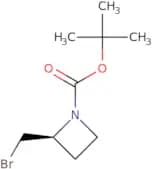
CAS:<p>Versatile small molecule scaffold</p>Formula:C9H16BrNO2Purity:Min. 95%Molecular weight:250.13 g/moltert-Butyl (2S)-2-(bromomethyl)azetidine-1-carboxylate
CAS:<p>Versatile small molecule scaffold</p>Formula:C9H16BrNO2Purity:Min. 95%Molecular weight:250.14 g/mol2-amino-5-boc-5-aza-spiro[3.4]octane
CAS:<p>Versatile small molecule scaffold</p>Formula:C12H22N2O2Purity:Min. 95%Molecular weight:226.32 g/moltert-butyl N-{[(1r,3r)-3-aminocyclobutyl]methyl}carbamate, trans
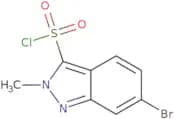
CAS:<p>Versatile small molecule scaffold</p>Formula:C10H20N2O2Purity:Min. 95%Molecular weight:200.3 g/mol6-Bromo-2-methyl-2H-indazole-3-sulfonyl chloride
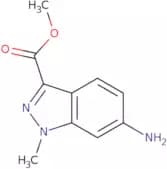
CAS:<p>Versatile small molecule scaffold</p>Formula:C8H6BrClN2O2SPurity:Min. 95%Molecular weight:309.57 g/molMethyl 6-amino-1-methyl-1H-indazole-3-carboxylate
CAS:Controlled Product<p>Versatile small molecule scaffold</p>Formula:C10H11N3O2Purity:Min. 95%Molecular weight:205.21 g/mol4-Bromopyrazolo[1,5-a]pyridine-2-carboxylic acid
CAS:<p>Versatile small molecule scaffold</p>Formula:C8H5BrN2O2Purity:Min. 95%Molecular weight:241.04 g/molMethyl 7H-pyrrolo[2,3-d]pyrimidine-2-carboxylate
CAS:<p>Versatile small molecule scaffold</p>Formula:C8H7N3O2Purity:Min. 95%Molecular weight:177.16 g/mol2-Boc-6-aminomethyl-2-azaspiro[3.3]heptane
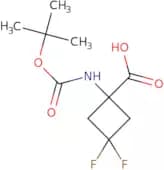
CAS:<p>Versatile small molecule scaffold</p>Formula:C12H22N2O2Purity:Min. 95%Molecular weight:226.32 g/mol1-(Boc-amino)-3,3-difluorocyclobutanecarboxylic acid
CAS:<p>Versatile small molecule scaffold</p>Formula:C10H15F2NO4Purity:Min. 95%Molecular weight:251.2 g/mol2-[(tert-butoxy)carbonyl]-1H,2H,3H,4H-pyrrolo[1,2-a]pyrazine-6-carboxylic acid
CAS:<p>Versatile small molecule scaffold</p>Formula:C13H18N2O4Purity:Min. 95%Molecular weight:266.3 g/mol1-Boc-6-oxo-1-azaspiro[3.3]heptane
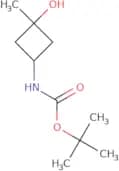
CAS:<p>Versatile small molecule scaffold</p>Formula:C11H17NO3Purity:Min. 95%Molecular weight:211.26 g/molcis-tert-butyl 3-hydroxy-3-methylcyclobutylcarbamate
CAS:<p>Versatile small molecule scaffold</p>Formula:C10H19NO3Purity:Min. 95%Molecular weight:201.27 g/mol2-(tert-Butoxycarbonyl)-2-azaspiro[3.5]nonane-7-carboxylic Acid
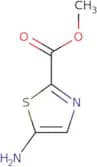
CAS:<p>Versatile small molecule scaffold</p>Formula:C14H23NO4Purity:Min. 95%Molecular weight:269.34 g/molMethyl 5-aminothiazole-2-carboxylate
CAS:<p>Versatile small molecule scaffold</p>Formula:C5H6N2O2SPurity:Min. 95%Molecular weight:158.18 g/molTert-butyl 7-oxo-2-azaspiro[3.5]nonane-2-carboxylate
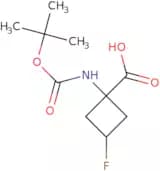
CAS:<p>Versatile small molecule scaffold</p>Formula:C13H21NO3Purity:Min. 95%Molecular weight:239.31 g/mol1-(boc-amino)-3-fluorocyclobutanecarboxylic acid
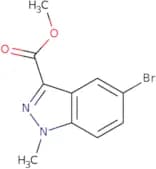
CAS:<p>Versatile small molecule scaffold</p>Formula:C10H16FNO4Purity:Min. 95%Molecular weight:233.24 g/molmethyl 5-bromo-1-methyl-1H-indazole-3-carboxylate
CAS:Controlled Product<p>Versatile small molecule scaffold</p>Formula:C10H9BrN2O2Purity:Min. 95%Molecular weight:269.1 g/mol1-Boc-6-hydroxy-1-azaspiro[3.3]heptane
CAS:<p>Versatile small molecule scaffold</p>Formula:C11H19NO3Purity:Min. 95%Molecular weight:213.28 g/moltert-butyl 8-amino-2-azaspiro[4.5]decane-2-carboxylate
CAS:<p>Versatile small molecule scaffold</p>Formula:C14H26N2O2Purity:Min. 95%Molecular weight:254.4 g/mol
![8-Bromo-3-methylimidazo[1,2-a]pyridine](/_next/image/?url=https%3A%2Fstatic.cymitquimica.com%2Fproducts%2F3D%2Fthumb-webp%2FNBC99082.webp&w=3840&q=75)

![5-Bromo-3-methylimidazo[2,1-b][1,3]thiazole](/_next/image/?url=https%3A%2Fstatic.cymitquimica.com%2Fproducts%2F3D%2Fthumb-webp%2FNBC99253.webp&w=3840&q=75)

![(6-(2-[2-(2-Methoxyethoxy)ethoxy]ethoxy)pyridazin-3-yl)methanol](/_next/image/?url=https%3A%2Fstatic.cymitquimica.com%2Fproducts%2F3D%2Fthumb-webp%2FNBD51970.webp&w=3840&q=75)
![5-[(3,4-Dimethoxyphenyl)methyl]pyrrolidin-2-one](/_next/image/?url=https%3A%2Fstatic.cymitquimica.com%2Fproducts%2F3D%2Fthumb-webp%2FNBD88932.webp&w=3840&q=75)
![5-Bromo-2-methylbenzo[b]thiophene-1,1-dioxide](/_next/image/?url=https%3A%2Fstatic.cymitquimica.com%2Fproducts%2F3D%2Fthumb-webp%2FNCA16690.webp&w=3840&q=75)
![[2-(Phenylsulfanyl)phenyl]methanamine](/_next/image/?url=https%3A%2Fstatic.cymitquimica.com%2Fproducts%2F3D%2Fthumb-webp%2FNCA16704.webp&w=3840&q=75)



![N-[2-(Dimethylamino)ethyl]-2-methylpropanamide](/_next/image/?url=https%3A%2Fstatic.cymitquimica.com%2Fproducts%2F3D%2Fthumb-webp%2FNCA22417.webp&w=3840&q=75)
![Pyrazolo[1,5-a]pyridine-3-carboxylic acid methyl ester](/_next/image/?url=https%3A%2Fstatic.cymitquimica.com%2Fproducts%2F3D%2Fthumb-webp%2FNCA23784.webp&w=3840&q=75)
![9-Oxo-bicyclo[3.3.1]nonane-3-carboxylic acid](/_next/image/?url=https%3A%2Fstatic.cymitquimica.com%2Fproducts%2F3D%2Fthumb-webp%2FNCA24200.webp&w=3840&q=75)

![2-{[(Benzyloxy)carbonyl]amino}benzoic acid](/_next/image/?url=https%3A%2Fstatic.cymitquimica.com%2Fproducts%2F3D%2Fthumb-webp%2FNCA25488.webp&w=3840&q=75)

![{2-[(Dimethylamino)methyl]phenyl}methanol](/_next/image/?url=https%3A%2Fstatic.cymitquimica.com%2Fproducts%2F3D%2Fthumb-webp%2FNCA32179.webp&w=3840&q=75)
![7-Methyl-1H-benzo[d][1,3]oxazine-2,4-dione](/_next/image/?url=https%3A%2Fstatic.cymitquimica.com%2Fproducts%2F3D%2Fthumb-webp%2FNCA48011.webp&w=3840&q=75)
![8-Chloro-1H-benzo[D][1,3]oxazine-2,4-dione](/_next/image/?url=https%3A%2Fstatic.cymitquimica.com%2Fproducts%2F3D%2Fthumb-webp%2FNCA49760.webp&w=3840&q=75)

![[1,2,4]Triazolo[1,5-a]pyrazin-2-amine](/_next/image/?url=https%3A%2Fstatic.cymitquimica.com%2Fproducts%2F3D%2Fthumb-webp%2FNDA00233.webp&w=3840&q=75)
![Methyl imidazo[1,2-a]pyridine-5-carboxylate](/_next/image/?url=https%3A%2Fstatic.cymitquimica.com%2Fproducts%2F3D%2Fthumb-webp%2FNDA04755.webp&w=3840&q=75)

![3-Chloro-5-(chloromethyl)-8-thia-4,6-diazatricyclo[7.4.0.0,2,7]trideca-1(9),2,4,6-tetraene](/_next/image/?url=https%3A%2Fstatic.cymitquimica.com%2Fproducts%2F3D%2Fthumb-webp%2FNDA20317.webp&w=3840&q=75)
![(3S)-3-{[(tert-Butoxy)carbonyl]amino}-4-oxo-4-(prop-2-en-1-yloxy)butanoic acid](/_next/image/?url=https%3A%2Fstatic.cymitquimica.com%2Fproducts%2F3D%2Fthumb-webp%2FNDA22427.webp&w=3840&q=75)
![Methyl 2-azabicyclo[2.2.1]heptane-3-carboxylate hydrochloride](/_next/image/?url=https%3A%2Fstatic.cymitquimica.com%2Fproducts%2F3D%2Fthumb-webp%2FNDA25998.webp&w=3840&q=75)
![2-Azabicyclo[2.2.1]heptane-3-carboxylic acid](/_next/image/?url=https%3A%2Fstatic.cymitquimica.com%2Fproducts%2F3D%2Fthumb-webp%2FNDA26006.webp&w=3840&q=75)

![1-[4-Methyl-2-(propylamino)-1,3-thiazol-5-yl]ethan-1-one hydrochloride](/_next/image/?url=https%3A%2Fstatic.cymitquimica.com%2Fproducts%2F3D%2Fthumb-webp%2FNDA32389.webp&w=3840&q=75)

![2H,4H,5H,6H,7H,8H-Cyclohepta[C]pyrrol-4-one](/_next/image/?url=https%3A%2Fstatic.cymitquimica.com%2Fproducts%2F3D%2Fthumb-webp%2FNEA88081.webp&w=3840&q=75)
![rac-2-[(1R,2R)-2-Methyl-3-oxocyclopentyl]acetic acid](/_next/image/?url=https%3A%2Fstatic.cymitquimica.com%2Fproducts%2F3D%2Fthumb-webp%2FNEA94900.webp&w=3840&q=75)
![(2E)-3-[2-(Benzyloxy)phenyl]prop-2-enoic acid](/_next/image/?url=https%3A%2Fstatic.cymitquimica.com%2Fproducts%2F3D%2Fthumb-webp%2FNEA98223.webp&w=3840&q=75)
![2-azabicyclo[2.2.2]octan-6-ol](/_next/image/?url=https%3A%2Fstatic.cymitquimica.com%2Fproducts%2F3D%2Fthumb-webp%2FNEB55149.webp&w=3840&q=75)
![2-[3-(Ethanesulfonyl)phenyl]acetic acid](/_next/image/?url=https%3A%2Fstatic.cymitquimica.com%2Fproducts%2F3D%2Fthumb-webp%2FNEC17955.webp&w=3840&q=75)
![3-(Chloromethyl)-1h,4h,5h,6h-cyclopenta[c]pyrazole hydrochloride](/_next/image/?url=https%3A%2Fstatic.cymitquimica.com%2Fproducts%2F3D%2Fthumb-webp%2FNEC21033.webp&w=3840&q=75)
![2-(tert-Butoxycarbonyl)-2-azabicyclo[2.2.1]heptane-5-carboxylic acid](/_next/image/?url=https%3A%2Fstatic.cymitquimica.com%2Fproducts%2F3D%2Fthumb-webp%2FNEC21041.webp&w=3840&q=75)
![2-amino-5-boc-5-aza-spiro[3.4]octane](/_next/image/?url=https%3A%2Fstatic.cymitquimica.com%2Fproducts%2F3D%2Fthumb-webp%2FNEC38049.webp&w=3840&q=75)
![tert-butyl N-{[(1r,3r)-3-aminocyclobutyl]methyl}carbamate, trans](/_next/image/?url=https%3A%2Fstatic.cymitquimica.com%2Fproducts%2F3D%2Fthumb-webp%2FNEC38057.webp&w=3840&q=75)
![4-Bromopyrazolo[1,5-a]pyridine-2-carboxylic acid](/_next/image/?url=https%3A%2Fstatic.cymitquimica.com%2Fproducts%2F3D%2Fthumb-webp%2FNEC38072.webp&w=3840&q=75)
![Methyl 7H-pyrrolo[2,3-d]pyrimidine-2-carboxylate](/_next/image/?url=https%3A%2Fstatic.cymitquimica.com%2Fproducts%2F3D%2Fthumb-webp%2FNEC38073.webp&w=3840&q=75)
![2-Boc-6-aminomethyl-2-azaspiro[3.3]heptane](/_next/image/?url=https%3A%2Fstatic.cymitquimica.com%2Fproducts%2F3D%2Fthumb-webp%2FNEC38079.webp&w=3840&q=75)
![2-[(tert-butoxy)carbonyl]-1H,2H,3H,4H-pyrrolo[1,2-a]pyrazine-6-carboxylic acid](/_next/image/?url=https%3A%2Fstatic.cymitquimica.com%2Fproducts%2F3D%2Fthumb-webp%2FNEC38086.webp&w=3840&q=75)
![1-Boc-6-oxo-1-azaspiro[3.3]heptane](/_next/image/?url=https%3A%2Fstatic.cymitquimica.com%2Fproducts%2F3D%2Fthumb-webp%2FNEC38093.webp&w=3840&q=75)
![2-(tert-Butoxycarbonyl)-2-azaspiro[3.5]nonane-7-carboxylic Acid](/_next/image/?url=https%3A%2Fstatic.cymitquimica.com%2Fproducts%2F3D%2Fthumb-webp%2FNEC38118.webp&w=3840&q=75)
![Tert-butyl 7-oxo-2-azaspiro[3.5]nonane-2-carboxylate](/_next/image/?url=https%3A%2Fstatic.cymitquimica.com%2Fproducts%2F3D%2Fthumb-webp%2FNEC38122.webp&w=3840&q=75)
![1-Boc-6-hydroxy-1-azaspiro[3.3]heptane](/_next/image/?url=https%3A%2Fstatic.cymitquimica.com%2Fproducts%2F3D%2Fthumb-webp%2FNEC38156.webp&w=3840&q=75)
![tert-butyl 8-amino-2-azaspiro[4.5]decane-2-carboxylate](/_next/image/?url=https%3A%2Fstatic.cymitquimica.com%2Fproducts%2F3D%2Fthumb-webp%2FNEC38161.webp&w=3840&q=75)