Building Blocks
This section contains fundamental products for the synthesis of organic and biological compounds. Building blocks are the essential starting materials used to construct complex molecules through various chemical reactions. They play a critical role in drug discovery, material science, and chemical research. At CymitQuimica, we offer a diverse range of high-quality building blocks to support your innovative research and industrial projects, ensuring you have the essential components for successful synthesis.
Subcategories of "Building Blocks"
- Boronic Acids & Boronic Acid Derivatives(5,756 products)
- Chiral Building Blocks(1,242 products)
- Hydrocarbon Building Blocks(6,095 products)
- Organic Building Blocks(61,051 products)
Found 199813 products of "Building Blocks"
Sort by
Purity (%)
0
100
|
0
|
50
|
90
|
95
|
100
N-[2-(1-Benzyl-1H-indol-3-yl)ethyl]acetamide
CAS:Controlled Product<p>Versatile small molecule scaffold</p>Formula:C19H20N2OPurity:Min. 95%Molecular weight:292.4 g/mol4-{[(Diaminomethylidene)amino]methyl}benzoic acid
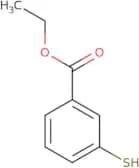
CAS:<p>4-(Diaminomethylidene)amino-N-methylbenzoic acid (DABA) is a potent histone deacetylase inhibitor that has been shown to inhibit the growth of cancer cells in vitro. DABA binds to the hydrophobic pocket of the acetyltransferase domain of the HDAC enzyme and prevents its interaction with the substrate lysine, inhibiting histone acetylation. In addition, DABA also inhibits platelet aggregation by reducing ATP production in platelets, which may be due to its ability to inhibit protein kinase A activity. The molecular modeling study demonstrated that DABA fits well into the hydrophobic pocket of HDAC2, with potential for binding to other HDACs.</p>Formula:C9H11N3O2Purity:Min. 95%Molecular weight:193.2 g/molEthyl 3-sulfanylbenzoate
CAS:<p>Ethyl 3-sulfanylbenzoate is a potent inhibitor of cytosolic phospholipase A2 (cPLA2). This enzyme is involved in the production of arachidonic acid, which is a precursor for prostaglandins and leukotrienes. Inhibition of cPLA2 prevents the release of arachidonic acid, reducing the production of inflammatory molecules. Ethyl 3-sulfanylbenzoate has been shown to inhibit platelet aggregation and reduce thrombus formation in vitro. The activity of this drug can be attributed to its substitution with electron-donating groups at the ortho position on the phenyl ring.</p>Formula:C9H10O2SPurity:Min. 95%Molecular weight:182.24 g/molMethyl 2-hydroxy-3-methylpentanoate
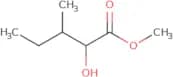
CAS:<p>Methyl 2-hydroxy-3-methylpentanoate is a volatile chemical compound that is found in the essential oil of guajava fruit. It is an ester of a hydroxycarboxylic acid and an alcohol. This chemical has been identified by magnetic resonance spectroscopy and was found to be present in the headspace of guava fruit. Methyl 2-hydroxy-3-methylpentanoate interacts with the hydroxyl group of benzoic acid to form methyl benzoate, which is used as a food preservative. This compound can also be found in other plants such as psidium guajava, which is native to South America and has been used for centuries as a natural remedy for various ailments.</p>Formula:C7H14O3Purity:Min. 95%Molecular weight:146.18 g/molethyl 3-bromoprop-2-ynoate
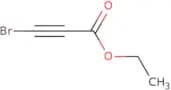
CAS:<p>Ethyl 3-bromoprop-2-ynoate is a synthetic chemical that can be used as an ethynylation reagent in cross-coupling reactions. This compound has been shown to efficiently catalyze both Pd(0)- and Cu(I)-catalyzed cross-couples with good yields of the desired products. The stereochemistry of this reaction is not affected by the nature of the substrate, and it does not require any protecting groups. Ethyl 3-bromoprop-2-ynoate is useful for the synthesis of natural products such as amino acids, amides, and carbohydrates.</p>Formula:C5H5BrO2Purity:Min. 95%Molecular weight:177 g/mol1-(2-Furylmethyl)-4-piperidinone
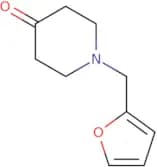
CAS:<p>Versatile small molecule scaffold</p>Formula:C10H13NO2Purity:Min. 95%Molecular weight:179.22 g/mol1-((Pyridin-2-yl)methyl)piperidin-4-one
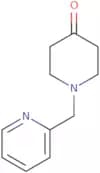
CAS:<p>1-((Pyridin-2-yl)methyl)piperidin-4-one is an organic compound that can be synthesized from piperidine and malonic acid. It is an antipsychotic agent that binds to the dopamine D4 receptor, which may be responsible for its antiangiogenic properties. 1-(Pyridin-2-yl)methyl)piperidin-4-one has been shown to inhibit the growth of human umbilical vein endothelial cells in culture and to block the formation of new blood vessels, as well as to reduce the volume of existing blood vessels. This drug also has a high yield in crystallization and is easy to synthesize from commercially available starting materials.</p>Formula:C11H14N2OPurity:Min. 95%Molecular weight:190.24 g/mol1-(Pyridin-3-ylmethyl)piperidin-4-one
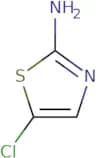
CAS:<p>Versatile small molecule scaffold</p>Formula:C11H14N2OPurity:Min. 95%Molecular weight:190.24 g/mol5-Chloro-1,3-thiazol-2(3H)-imine
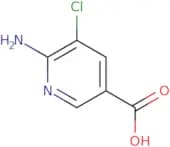
CAS:<p>5-Chloro-1,3-thiazol-2(3H)-imine (CTA) is a mutagen with the ability to induce point mutations in DNA. It binds to sulfur, which can be found in proteins and nucleotides. CTA has been shown to cause substitutions in Salmonella typhimurium TA100 and E. coli strains TA98 and TA1535. This compound has also been shown to have mutagenic activity against the organisms Escherichia coli and Pneumoniae, although it is not active against Ta10 or Ta1537.</p>Formula:C3H3ClN2SPurity:Min. 95%Molecular weight:134.59 g/mol6-Amino-5-chloronicotinic acid
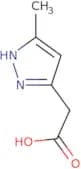
CAS:<p>Versatile small molecule scaffold</p>Formula:C6H5ClN2O2Purity:Min. 95%Molecular weight:172.57 g/mol2-(5-Methyl-1H-pyrazol-3-yl)acetic acid
CAS:<p>Versatile small molecule scaffold</p>Formula:C6H8N2O2Purity:Min. 95%Molecular weight:140.14 g/molEthyl 2-{[(oxolan-2-yl)methyl]amino}acetate
CAS:Versatile small molecule scaffoldFormula:C9H17NO3Purity:Min. 95%Molecular weight:187.24 g/mol[1-(4-Methoxy-phenyl)-ethyl]-methyl-amine hydrochloride
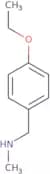
CAS:<p>Versatile small molecule scaffold</p>Formula:C10H15NOPurity:Min. 95%Molecular weight:165.23 g/molN-(4-Ethoxybenzyl)-n-methylamine
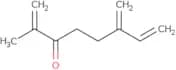
CAS:<p>The chemical structure of N-(4-ethoxybenzyl)-n-methylamine is C(O)NHCH3. It is a colorless liquid with a boiling point of 176°C and a melting point of -5°C. N-(4-ethoxybenzyl)-n-methylamine is soluble in water, ethanol, ether, acetone and benzene. The molecule contains carboxylic acid groups that can interact with nonpolar environments. Hydrogen bonds are also possible between the molecule and water molecules. This product has been used experimentally as a screening tool for interactions with other molecules. The chemical formula of this product is C8H14N2O2 and it has an empirical formula weight of 174.22 g/mol.</p>Formula:C10H15NOPurity:Min. 95%Molecular weight:165.23 g/mol2-Methyl-6-methylideneocta-1,7-dien-3-one
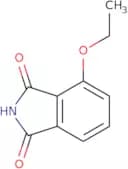
CAS:<p>2-Methyl-6-methylideneocta-1,7-dien-3-one is a chemical substance that has been found to act as an attractant for insects. In assays, it was found to have significant chemotactic activity and also to be able to damage the wings of flies in both damaged and undamaged states. It has been shown that 2-methyl-6-methylideneocta-1,7-dien-3-one interacts with solid phase microextraction (SPME) fibers, which can be used for extracting the compound from samples. The chemical has been found to be active against Diptera and Lepidoptera species. 2MEMO can be used in treatments for controlling insects in agriculture or industry by attracting them and damaging their wings or preventing them from flying.</p>Formula:C10H14OPurity:Min. 95%Molecular weight:150.22 g/mol4-Ethoxy-2,3-dihydro-1H-isoindole-1,3-dione
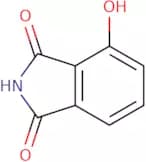
CAS:<p>Versatile small molecule scaffold</p>Formula:C10H9NO3Purity:Min. 95%Molecular weight:191.18 g/mol4-Hydroxy-2,3-dihydro-1H-isoindole-1,3-dione
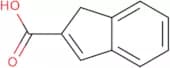
CAS:<p>4-Hydroxy-2,3-dihydro-1H-isoindole-1,3-dione is a nonpolymeric compound that has been shown to be an inhibitor of tumor growth. It inhibits the proliferation of tumor cells by binding to the hydroxyl group on the cell surface and inducing apoptosis. 4-Hydroxy-2,3-dihydro-1H-isoindole-1,3-dione also prevents the formation of inflammatory bowel disease in mice. This drug also absorbs infrared light and can be used as an absorber for infrared radiation.</p>Formula:C8H5NO3Purity:Min. 95%Molecular weight:163.13 g/mol1H-Indene-2-carboxylic acid
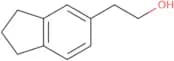
CAS:<p>1H-Indene-2-carboxylic acid is a 6-carboxylic acid that has been found to inhibit the growth of cancer cells in vitro. It has been shown to competitively inhibit the activation of peroxisome proliferator-activated receptor gamma (PPARγ), which is involved in controlling cell growth and differentiation. 1H-Indene-2-carboxylic acid also inhibits the activity of cytochrome P450 and induces apoptotic cell death, which may be due to its ability to activate caspase 3. This drug was also shown to increase levels of growth factors by upregulating expression of insulin like growth factor II (IGFII).</p>Formula:C10H8O2Purity:Min. 95%Molecular weight:160.17 g/mol2-(2,3-Dihydro-1H-inden-5-yl)ethan-1-ol
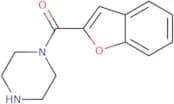
CAS:<p>Versatile small molecule scaffold</p>Formula:C11H14OPurity:Min. 95%Molecular weight:162.23 g/mol1-(1-Benzofuran-2-carbonyl)piperazine
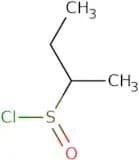
CAS:<p>Versatile small molecule scaffold</p>Formula:C13H14N2O2Purity:Min. 95%Molecular weight:230.26 g/molButane-2-sulfinic chloride
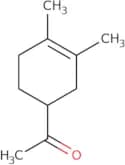
CAS:<p>Versatile small molecule scaffold</p>Formula:C4H9ClOSPurity:Min. 95%Molecular weight:140.63 g/mol1-(3,4-Dimethylcyclohex-3-en-1-yl)ethan-1-one
CAS:Versatile small molecule scaffoldFormula:C10H16OPurity:Min. 95%Molecular weight:152.23 g/molMethyl 4-amino-3,5-dichlorobenzoate
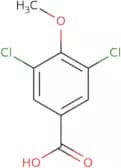
CAS:<p>Methyl 4-amino-3,5-dichlorobenzoate is a reactive intermediate that is obtained by chlorination of 4-hydroxybenzoic acid. It is used in the synthesis of various esters and salts, such as 4-amino-3,5-dichlorobenzoic acid and methyl 3,5-dichlorobenzoyl chloride. This compound can be synthesized by saponifying the ester with stannous chloride or by hydrolyzing the ester with hydrochloric acid. The spectra of Methyl 4-amino-3,5-dichlorobenzoate are consistent with those reported for other compounds of this type. The chlorine atoms in Methyl 4-amino-3,5-dichlorobenzoate have a Cl to C ratio of 1:1.</p>Formula:C8H7Cl2NO2Purity:Min. 95%Molecular weight:220.05 g/mol3,5-Dichloro-4-methoxybenzaldehyde
CAS:<p>3,5-Dichloro-4-methoxybenzaldehyde is a white crystalline solid that is soluble in water. It has been shown to inhibit the activity of oxidase enzymes, which are involved in the degradation of chlorinated hydrocarbons and other toxic substances. The compound also exhibits potent cytotoxicity against various cancer cells, including melanoma cells. 3,5-Dichloro-4-methoxybenzaldehyde is used as an intermediate for the production of vanillyl alcohol (VAN) and 4-methoxybenzaldehyde (MMB). It reacts with chlorine to produce chlorohydroxyl compounds that are used as pesticides or disinfectants. 3,5-Dichloro-4-methoxybenzaldehyde has been shown to be effective against plant diseases such as powdery mildew and black spot on roses. The compound is also used in the production of methyl cinnamate (MC) by reaction</p>Formula:C8H6Cl2O2Purity:Min. 95%Molecular weight:205.04 g/mol1-Chloro-2-(2-ethoxyethoxy)ethane
CAS:<p>Versatile small molecule scaffold</p>Formula:C6H13ClO2Purity:Min. 95%Molecular weight:152.62 g/mol5-(Dimethylamino)pyridazin-3(2H)-one hydrochloride
CAS:<p>Versatile small molecule scaffold</p>Formula:C6H10ClN3OPurity:Min. 95%Molecular weight:175.62 g/mol4-[(Carbamoylimino)amino]benzoic acid
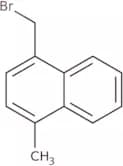
CAS:<p>Versatile small molecule scaffold</p>Formula:C8H7N3O3Purity:Min. 95%Molecular weight:193.16 g/mol1-(bromomethyl)-4-methylnaphthalene
CAS:<p>Versatile small molecule scaffold</p>Formula:C12H11BrPurity:Min. 95%Molecular weight:235.12 g/mol2-[(1-Bromo-2-naphthyl)oxy]acetic acid
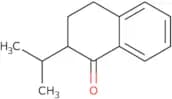
CAS:<p>2-[(1-Bromo-2-naphthyl)oxy]acetic acid is a fluorescent probe that is used in fluorescence data assays. It has a low molecular weight of 216.3 and fluoresces when excited with UV light. 2-[(1-Bromo-2-naphthyl)oxy]acetic acid has been shown to inhibit the production of oxidase enzymes in vitro, which are found in many bacteria and fungi. 2-[(1-Bromo-2-naphthyl)oxy]acetic acid is also a substrate for the enzyme assembly, which catalyzes the formation of peptide bonds between amino acids. The probe can be used as a marker for protein synthesis and has been shown to have anti-diabetic effects in vivo.</p>Formula:C12H9BrO3Purity:Min. 95%Molecular weight:281.11 g/mol2-(Propan-2-yl)-1,2,3,4-tetrahydronaphthalen-1-one
CAS:<p>Versatile small molecule scaffold</p>Formula:C13H16OPurity:Min. 95%Molecular weight:188.26 g/molN-(Piperidin-4-yl)cyclohexanecarboxamide hydrochloride
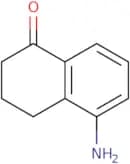
CAS:<p>Versatile small molecule scaffold</p>Formula:C12H23ClN2OPurity:Min. 95%Molecular weight:246.78 g/mol5-Amino-1,2,3,4-tetrahydronaphthalen-1-one
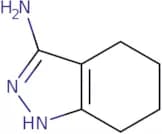
CAS:<p>5-Amino-1,2,3,4-tetrahydronaphthalen-1-one is an organic compound that belongs to the class of heterocyclic compounds. It has been shown to act as a superacid and has been used in the synthesis of multidrug resistant cancer cells. 5-Amino-1,2,3,4-tetrahydronaphthalen-1-one also binds to topoisomerase II and III and inhibits DNA replication. The drug can also inhibit the function of p-glycoprotein and other multidrug resistant transporters at the cellular level.</p>Formula:C10H11NOPurity:Min. 95%Molecular weight:161.2 g/mol4,5,6,7-Tetrahydro-2H-indazol-3-amine
CAS:<p>Versatile small molecule scaffold</p>Formula:C7H11N3Purity:Min. 95%Molecular weight:137.19 g/mol3-{[2-(Morpholin-4-yl)ethyl]amino}propanenitrile
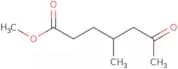
CAS:3-{[2-(Morpholin-4-yl)ethyl]amino}propanenitrile is a prodrug that is metabolized to the active drug, 2-morpholinoethanol. It is used for the treatment of breast cancer and mastitis (inflammation of the breast). 3-{[2-(Morpholin-4-yl)ethyl]amino}propanenitrile has a high water solubility and high stability, which makes it an ideal candidate for injection as a sustained release drug. This drug can be injected into solid tumors that are difficult to treat with other drugs and may also be used in conjunction with chemotherapy. 3-{[2-(Morpholin-4-yl)ethyl]amino}propanenitrile inhibits the production of estrogen, which plays a role in the growth of some types of breast cancer cells.Formula:C9H17N3OPurity:Min. 95%Molecular weight:183.25 g/molMethyl 4-methyl-6-oxoheptanoate
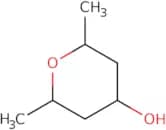
CAS:<p>Versatile small molecule scaffold</p>Formula:C9H16O3Purity:Min. 95%Molecular weight:172.22 g/mol2,6-Dimethyltetrahydro-2H-pyran-4-ol
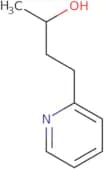
CAS:Versatile small molecule scaffoldFormula:C7H14O2Purity:Min. 95%Molecular weight:130.18 g/mol4-(Pyridin-2-yl)butan-2-ol
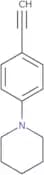
CAS:<p>Versatile small molecule scaffold</p>Formula:C9H13NOPurity:Min. 95%Molecular weight:151.21 g/mol4'-N-Piperidinophenyl acetylene
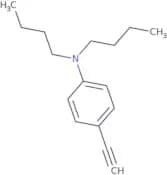
CAS:<p>Versatile small molecule scaffold</p>Formula:C13H15NPurity:Min. 95%Molecular weight:185.27 g/molN,N-Dibutyl-4-ethynylaniline
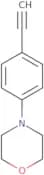
CAS:<p>Versatile small molecule scaffold</p>Formula:C16H23NPurity:Min. 95%Molecular weight:229.36 g/mol4-(4-Ethynylphenyl)morpholine
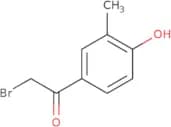
CAS:<p>Versatile small molecule scaffold</p>Formula:C12H13NOPurity:Min. 95%Molecular weight:187.24 g/mol2-Bromo-1-(4-hydroxy-3-methylphenyl)ethan-1-one
CAS:<p>Versatile small molecule scaffold</p>Formula:C9H9BrO2Purity:Min. 95%Molecular weight:229.07 g/mol6-Hydroxy-2-methylnicotinonitrile
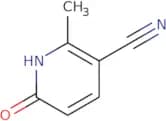
CAS:<p>6-Hydroxy-2-methylnicotinonitrile is a reagent that is used for the condensation of aldehydes and amines. It can also be used to form enamines from primary amines with carbonyl compounds. Dimethyl acetal, dimethyl, methyl methacrylate, cyclized, methacrylate, acetal are some of the products that are made using 6-Hydroxy-2-methylnicotinonitrile.</p>Formula:C7H6N2OPurity:Min. 95%Molecular weight:134.14 g/mol1-(4-Methylphenyl)-1,4-diazepane
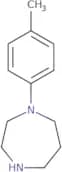
CAS:<p>Versatile small molecule scaffold</p>Formula:C12H18N2Purity:Min. 95%Molecular weight:190.28 g/mol2-(4-Chlorophenyl)-2H-1,2,3-triazole-4-carbaldehyde
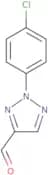
CAS:<p>Versatile small molecule scaffold</p>Formula:C9H6ClN3OPurity:Min. 95%Molecular weight:207.61 g/mol2-(3-Chlorophenyl)-2H-1,2,3-triazole-4-carbaldehyde
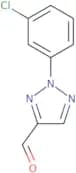
CAS:<p>Versatile small molecule scaffold</p>Formula:C9H6ClN3OPurity:Min. 95%Molecular weight:207.61 g/mol6-Methyl-2-oxopiperidine-3-carboxylic acids
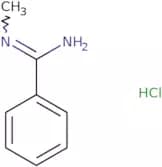
CAS:<p>Versatile small molecule scaffold</p>Formula:C7H11NO3Purity:Min. 95%Molecular weight:157.2 g/molN-Methylbenzenecarboximidamide hydrochloride
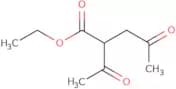
CAS:<p>N-Methylbenzenecarboximidamide hydrochloride is a chemical substance that belongs to the class of benzamidine. It is used as an intermediate in the synthesis of other chemicals and drugs, such as 3-methylcholanthrene, which is used for the treatment of cancer. N-Methylbenzenecarboximidamide hydrochloride is synthesized by solid-phase synthesis on a silica gel support using benzamidine as a starting material. The final product can be purified by chromatography with a solvent system consisting of hexane and ethyl acetate. This reaction mechanism involves oxidation of the methyl group to form an epoxide, followed by nucleophilic attack by water on the epoxide to form an enol. The enol undergoes reductive elimination to produce the desired product. The optimal reaction conditions are achieved at 60 degrees Celsius and a pH between 5 and 7.</p>Formula:C8H11ClN2Purity:Min. 95%Molecular weight:170.64 g/molEthyl 2-acetyl-4-oxopentanoate
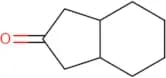
CAS:<p>Ethyl 2-acetyl-4-oxopentanoate is a modification of the molecule pentanoic acid. It is a functional molecule that can be modified by substitutions and modifications. The pharmacokinetic properties of this compound have been studied in rats, which showed that it has a high absorption rate when administered orally. Pharmacokinetic studies also revealed that ethyl 2-acetyl-4-oxopentanoate is metabolized to carboxyethyl 2-acetyl-4-oxopentanoate and pyridazine ethyl 2-acetyl-4-oxopentanoate, which are both neuropathic pain drugs with similar pharmacodynamics. This drug has shown promise as a lead compound for the treatment of neuropathic pain due to its α2δ subunit binding activity.</p>Formula:C9H14O4Purity:Min. 95%Molecular weight:186.21 g/molOctahydro-1H-inden-2-one
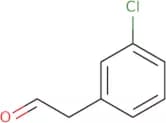
CAS:<p>Versatile small molecule scaffold</p>Formula:C9H14OPurity:Min. 95%Molecular weight:138.21 g/mol(3-Chlorophenyl)acetaldehyde
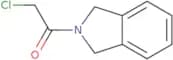
CAS:<p>3-Chlorophenylacetaldehyde is a chemical compound with the molecular formula CHClO. It is a colorless solid that crystallizes in the form of its dimers, (3-chlorophenyl)acetaldehyde and (3-chloro-2-phenylethynyl) acetaldehyde. It is an intermediate in the synthesis of other compounds, such as phenylethenes and annulated polycyclic aromatic hydrocarbons. 3-Chlorophenylacetaldehyde can be synthesized by transforming naphthalene or phenylethenes with heat or light. In addition, it can be synthesized from photodimerization of 2-(3-chlorophenyl)ethanol and phenylethanone. The transformation of 3-chlorophenylacetaldehyde to 3-(2-phenylethynyl) acetaldehyde can take place through a series of reactions including alkene formation, dimerization, carbon atom rearrangement and annulation</p>Formula:C8H7ClOPurity:Min. 95%Molecular weight:154.59 g/mol2-Chloro-1-(2,3-dihydro-1H-isoindol-2-yl)ethan-1-one
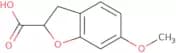
CAS:<p>Versatile small molecule scaffold</p>Formula:C10H10ClNOPurity:Min. 95%Molecular weight:195.64 g/mol6-Methoxy-2,3-dihydro-1-benzofuran-2-carboxylic acid
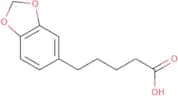
CAS:<p>Versatile small molecule scaffold</p>Formula:C10H10O4Purity:Min. 95%Molecular weight:194.18 g/mol5-(1,3-Dioxaindan-5-yl)pentanoic acid
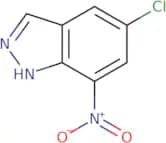
CAS:<p>5-(1,3-Dioxaindan-5-yl)pentanoic acid is a natural product that was isolated from the leaves of peperomia. It has been shown to have antimicrobial effects against various bacteria and fungi, including methicillin-resistant Staphylococcus aureus (MRSA). This compound binds to bacterial DNA at the gyrase site, inhibiting transcription and replication. 5-(1,3-Dioxaindan-5-yl)pentanoic acid also inhibits protein synthesis by binding to the bacterial ribosomes.</p>Formula:C12H14O4Purity:Min. 95%Molecular weight:222.24 g/mol5-Chloro-7-nitro-1H-indazole
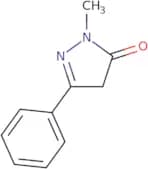
CAS:<p>Versatile small molecule scaffold</p>Formula:C7H4ClN3O2Purity:Min. 95%Molecular weight:197.58 g/mol2-methyl-5-phenyl-2,4-dihydro-3H-pyrazol-3-one
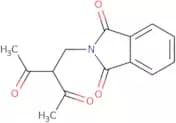
CAS:<p>2-methyl-5-phenyl-2,4-dihydro-3H-pyrazol-3-one is a synthesized compound that has been studied by coupling with diamines and pyrazolones. The compound is also structurally related to arylamines.</p>Formula:C10H10N2OPurity:Min. 95%Molecular weight:174.2 g/mol2-(2-Acetyl-3-oxobutyl)-2,3-dihydro-1H-isoindole-1,3-dione
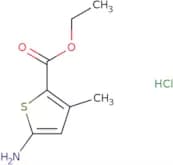
CAS:<p>Versatile small molecule scaffold</p>Formula:C14H13NO4Purity:Min. 95%Molecular weight:259.26 g/molEthyl 5-amino-3-methylthiophene-2-carboxylate hydrochloride
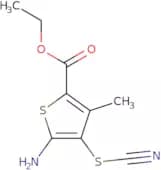
CAS:<p>Versatile small molecule scaffold</p>Formula:C8H12ClNO2SPurity:Min. 95%Molecular weight:221.71 g/molEthyl 5-amino-4-(cyanosulfanyl)-3-methylthiophene-2-carboxylate
CAS:<p>Versatile small molecule scaffold</p>Formula:C9H10N2O2S2Purity:Min. 95%Molecular weight:242.3 g/molEthyl 2-amino-6-methylthieno[2,3-d][1,3]thiazole-5-carboxylate
CAS:<p>Versatile small molecule scaffold</p>Formula:C9H10N2O2S2Purity:Min. 95%Molecular weight:242.3 g/mol5-Methylthieno[2,3-d][1,3]thiazol-2-amine
CAS:<p>Versatile small molecule scaffold</p>Formula:C6H6N2S2Purity:Min. 95%Molecular weight:170.3 g/mol3-Bromo-5,7-dimethylpyrazolo[1,5-a]pyrimidine
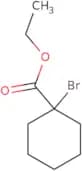
CAS:<p>Versatile small molecule scaffold</p>Formula:C8H8BrN3Purity:Min. 95%Molecular weight:226.07 g/molEthyl 1-bromocyclohexane-1-carboxylate
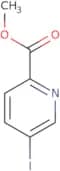
CAS:<p>Versatile small molecule scaffold</p>Formula:C9H15BrO2Purity:Min. 95%Molecular weight:235.12 g/molMethyl 5-iodopyridine-2-carboxylate
CAS:<p>Methyl 5-iodopyridine-2-carboxylate is an amino acid analog that specifically binds to lysine residues. This compound inhibits the incorporation of lysine into proteins, which may be important for the study of protein synthesis. Methyl 5-iodopyridine-2-carboxylate has been shown to react with aromatic amino acids and form amidines that are stable in aqueous solution. It can also react with tryptic peptides to yield model compounds.</p>Formula:C7H6INO2Purity:Min. 95%Molecular weight:263.03 g/mol4-Bromo-3-methylbenzene-1-carbothioamide
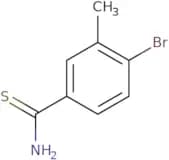
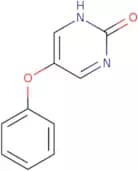
CAS:<p>Versatile small molecule scaffold</p>Formula:C8H8BrNSPurity:Min. 95%Molecular weight:230.13 g/mol5-Phenoxypyrimidin-2-ol
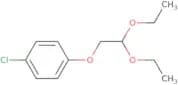
CAS:<p>Versatile small molecule scaffold</p>Formula:C10H8N2O2Purity:Min. 95%Molecular weight:188.18 g/mol1-Chloro-4-(2,2-diethoxyethoxy)benzene
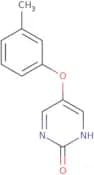
CAS:<p>1-Chloro-4-(2,2-diethoxyethoxy)benzene (1C4DEB) is a human chorionic gonadotropin (hCG) functional theory and polychlorinated biphenyls (PCBs) organocatalytic inhibitor. 1C4DEB binds to the active site of hCG and prevents the binding of follitropin, an allosteric modulator, to this site. This results in a decrease in the maximal response of hCG to follitropin. 1C4DEB has been shown to be an experimental model for pesticides that are known as dihedral bond cleavage agents.</p>Formula:C12H17ClO3Purity:Min. 95%Molecular weight:244.71 g/molTolimidone
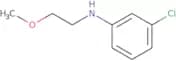
CAS:<p>Tolimidone is an enzyme inhibitor that binds to the active site of the enzyme HMG-CoA reductase. It inhibits the synthesis of cholesterol, leading to reduced levels of LDL and VLDL cholesterol. Tolimidone has also been shown to reduce plasma glucose and pro-inflammatory cytokines. This drug is currently being investigated as a potential treatment for high cholesterol and diabetes. The effective dose of tolimidone is not yet known, but it has been shown in vivo that it can lower cholesterol levels by up to 60%.</p>Formula:C11H10N2O2Purity:Min. 95%Molecular weight:202.21 g/mol3-Chloro-N-(2-methoxyethyl)aniline
CAS:Versatile small molecule scaffoldFormula:C9H12ClNOPurity:Min. 95%Molecular weight:185.65 g/molDiethyl 3,4-pyrroledicarboxylate
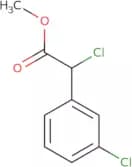
CAS:<p>The synthesis of diethyl 3,4-pyrroledicarboxylate was achieved by copolymerizing the monomers 1,2-diethoxyethane and 2,5-dimethoxytetrahydrofuran. This compound can be synthesized in a stereoselective way and is a stereospecific intramolecular hydrogen donor. The compound has been shown to inhibit the growth of leukemia cells and other cancer cells in vitro. It also induces cell death in HL-60 cells by producing reactive oxygen species (ROS). This compound has also been shown to have antitumor activity against L1210 cells and is an inhibitor of DNA synthesis.</p>Formula:C10H13NO4Purity:Min. 95%Color and Shape:PowderMolecular weight:211.22 g/molMethyl 2-chloro-2-(3-chlorophenyl)acetate
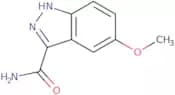
CAS:<p>Versatile small molecule scaffold</p>Formula:C9H8Cl2O2Purity:Min. 95%Molecular weight:219.06 g/mol5-Methoxy-1H-indazole-3-carboxylic acid amide
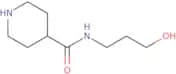
CAS:Controlled Product<p>5-Methoxy-1H-indazole-3-carboxylic acid amide is a glycogen synthase kinase 3 (GSK3) inhibitor. GSK3 is a serine/threonine protein kinase that regulates glycogen synthase and phosphorylates tau proteins. 5-Methoxy-1H-indazole-3-carboxylic acid amide has been used in the treatment of type 2 diabetes mellitus, Alzheimer's disease and other neurological disorders. The cocrystal structure of 5-methoxy indazole carboxamide with glycogen synthase was determined at 1.2 Å resolution.</p>Formula:C9H9N3O2Purity:Min. 95%Molecular weight:191.19 g/molN-(3-Hydroxypropyl)piperidine-4-carboxamide
CAS:<p>Versatile small molecule scaffold</p>Formula:C9H18N2O2Purity:Min. 95%Molecular weight:186.25 g/molN-[8-(Propan-2-yl)-8-azabicyclo[3.2.1]octan-3-ylidene]hydroxylamine
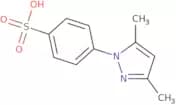
CAS:<p>Versatile small molecule scaffold</p>Formula:C10H18N2OPurity:Min. 95%Molecular weight:182.3 g/mol4-(3,5-Dimethyl-1H-pyrazol-1-yl)benzene-1-sulfonic acid
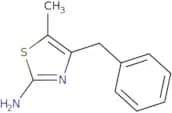
CAS:<p>Versatile small molecule scaffold</p>Formula:C11H12N2O3SPurity:Min. 95%Molecular weight:252.29 g/mol4-Benzyl-5-methyl-1,3-thiazol-2-amine
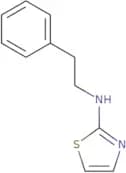
CAS:<p>Versatile small molecule scaffold</p>Formula:C11H12N2SPurity:Min. 95%Molecular weight:204.29 g/molN-(2-Phenylethyl)-1,3-thiazol-2-amine
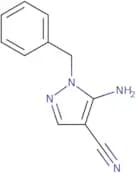
CAS:<p>Versatile small molecule scaffold</p>Formula:C11H12N2SPurity:Min. 95%Molecular weight:204.29 g/mol5-Amino-1-benzyl-1H-pyrazole-4-carbonitrile
CAS:<p>5-Amino-1-benzyl-1H-pyrazole-4-carbonitrile is a receptor antagonist that belongs to the group of diazonium salts. It has been shown to bind selectively to high levels of purine receptors in the heart, lungs, and kidneys. This drug has also been shown to be an effective inhibitor of smooth muscle cell proliferation, which can reduce the risk of pulmonary hypertension. 5-Amino-1-benzyl-1H-pyrazole-4-carbonitrile has been synthesized and tested for clinical studies. The compound has shown potency against diazotization reactions with biological activity.</p>Formula:C11H10N4Purity:Min. 95%Molecular weight:198.22 g/mol1-(4-Amino-2-methylphenyl)pyrrolidine-2,5-dione
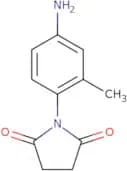
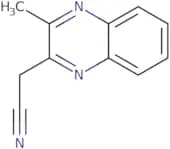
CAS:<p>Versatile small molecule scaffold</p>Formula:C11H12N2O2Purity:Min. 95%Molecular weight:204.22 g/mol2-(3-Methylquinoxalin-2-yl)acetonitrile
CAS:<p>Versatile small molecule scaffold</p>Formula:C11H9N3Purity:Min. 95%Molecular weight:183.21 g/mol3-Methyl-5-(phenylamino)-1,2-thiazole-4-carbonitrile
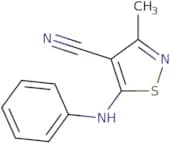
CAS:<p>Versatile small molecule scaffold</p>Formula:C11H9N3SPurity:Min. 95%Molecular weight:215.28 g/mol5-Dimethylsulfamoyl-2-fluoro-benzoic acid
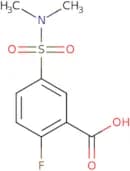
CAS:<p>Versatile small molecule scaffold</p>Formula:C9H10FNO4SPurity:Min. 95%Molecular weight:247.25 g/mol3-Methyl-2-(3-methylbutanamido)butanoic acid
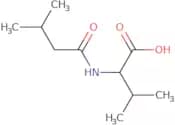
CAS:<p>Versatile small molecule scaffold</p>Formula:C10H19NO3Purity:Min. 95%Molecular weight:201.26 g/mol2-[(2-Methoxy-2-oxoethyl)sulfanyl]acetic acid
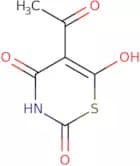
CAS:<p>Versatile small molecule scaffold</p>Formula:C5H8O4SPurity:Min. 95%Molecular weight:164.18 g/mol5-Acetyl-4-hydroxy-3,6-dihydro-2H-1,3-thiazine-2,6-dione
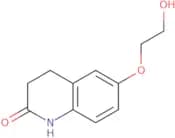
CAS:<p>5-Acetyl-4-hydroxy-3,6-dihydro-2H-1,3-thiazine-2,6-dione is a phenolate which has been shown to have antibacterial activity. It binds to the thiol group of the enzyme hepg2 and inhibits its activity. This leads to a decrease in cell growth and eventually cell death. 5-Acetyl-4-hydroxy-3,6-dihydro-2H-1,3-thiazine - 2,6 - dione has been found to be effective against strains of Staphylococcus and other bacteria that are resistant to penicillin. 5ADHTD has also been shown to have kinetic and thermodynamic properties that make it a good candidate for use as an antibiotic.</p>Formula:C6H5NO4SPurity:Min. 95%Molecular weight:187.18 g/mol6-(2-Hydroxyethoxy)-1,2,3,4-tetrahydroquinolin-2-one
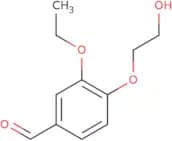
CAS:<p>Versatile small molecule scaffold</p>Formula:C11H13NO3Purity:Min. 95%Molecular weight:207.23 g/mol3-Ethoxy-4-(2-hydroxy-ethoxy)-benzaldehyde
CAS:<p>Versatile small molecule scaffold</p>Formula:C11H14O4Purity:Min. 95%Molecular weight:210.23 g/mol2-{8-Methyl-8-azabicyclo[3.2.1]octan-3-yl}acetic acid hydrochloride
CAS:<p>Versatile small molecule scaffold</p>Formula:C10H18ClNO2Purity:Min. 95%Molecular weight:219.71 g/mol5-[(2-Phenylethyl)amino]-1,3,4-thiadiazole-2-thiol
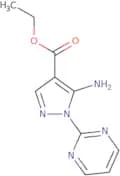
CAS:<p>Versatile small molecule scaffold</p>Formula:C10H11N3S2Purity:Min. 95%Molecular weight:237.3 g/molethyl 5-amino-1-(pyrimidin-2-yl)-1H-pyrazole-4-carboxylate
CAS:<p>Versatile small molecule scaffold</p>Formula:C10H11N5O2Purity:Min. 95%Molecular weight:233.2 g/mol2-Chloro-N-[(4-methylphenyl)methyl]propanamide
CAS:<p>Versatile small molecule scaffold</p>Formula:C11H14ClNOPurity:Min. 95%Molecular weight:211.69 g/mol2-Chloro-N-[1-(4-methoxyphenyl)ethyl]acetamide
CAS:<p>Versatile small molecule scaffold</p>Formula:C11H14ClNO2Purity:Min. 95%Molecular weight:227.69 g/mol2-Hydroxy-2-[4-(propan-2-yl)phenyl]acetonitrile
CAS:<p>2-Hydroxy-2-[4-(propan-2-yl)phenyl]acetonitrile, or bornyl acetate, is a volatile chemical compound. It is a colorless liquid with a strong odor that is sometimes described as fruity and citrusy. The smell of this chemical is often compared to the scent of oranges or apricots. Bornyl acetate has been found in Hymenoptera (bees and wasps), mandelonitrile, and borneol. This chemical also has a slight acidic taste to it.</p>Formula:C11H13NOPurity:Min. 95%Molecular weight:175.23 g/mol1-Amino-3-phenylcyclobutane-1-carboxylic acid hydrochloride
CAS:<p>Versatile small molecule scaffold</p>Formula:C11H14ClNO2Purity:Min. 95%Molecular weight:227.69 g/mol2-(4-Formyl-2-methoxyphenoxy)-N-methylacetamide
CAS:<p>Versatile small molecule scaffold</p>Formula:C11H13NO4Purity:Min. 95%Molecular weight:223.22 g/mol2-Hydroxy-5-(morpholin-4-ylsulfonyl)benzoic acid
CAS:<p>Versatile small molecule scaffold</p>Formula:C11H13NO6SPurity:Min. 95%Molecular weight:287.29 g/mol2-(1,3-Dioxo-2,3-dihydro-1H-isoindol-2-yl)propanenitrile
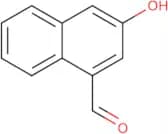
CAS:<p>2,2-Dihydrobenzofuran-1,3-dione is a heterocyclic compound that contains nitrogen atoms and unsaturated bonds. The reaction of the aniline with the acid chloride in the presence of hydrochloric acid leads to the formation of benzofuran-2,3-dione. This compound can be converted to 2-(1,3-dioxo-2,3-dihydro-1H-isoindol-2-yl)propanenitrile by reacting it with triazole in an organic solvent such as ethanol or methanol.</p>Formula:C11H8N2O2Purity:Min. 95%Molecular weight:200.19 g/mol3-Hydroxy-1-naphthaldehyde
CAS:<p>3-Hydroxy-1-naphthaldehyde is a potential drug target that is involved in the functional theory of hydrogen bonding. It is an acidic molecule that has been shown to be able to enhance proton transfer, which leads to increased plasma glucose levels. 3-Hydroxy-1-naphthaldehyde has been shown to have low energy and a dipole, which makes it an ideal fluorophore for use in ultrafast measurements. The molecule has also been found to be a drug target due to its ability to bind with other molecules through hydrogen bonds.</p>Formula:C11H8O2Purity:Min. 95%Molecular weight:172.18 g/mol3-[4-(Trifluoromethyl)phenyl]but-2-enoic acid
CAS:<p>Versatile small molecule scaffold</p>Formula:C11H9F3O2Purity:Min. 95%Molecular weight:230.18 g/mol2-Methyl-5-phenyl-1,3-oxazole-4-carboxylic acid
CAS:<p>Versatile small molecule scaffold</p>Formula:C11H9NO3Purity:Min. 95%Molecular weight:203.19 g/mol1-(1-Phenyl-1H-pyrazol-3-yl)ethan-1-one
CAS:<p>Versatile small molecule scaffold</p>Formula:C11H10N2OPurity:Min. 95%Molecular weight:186.21 g/mol5-[(Diethylamino)methyl]furan-2-carbohydrazide
CAS:Versatile small molecule scaffoldFormula:C10H17N3O2Purity:Min. 95%Molecular weight:211.26 g/mol1-[(3,5-Dimethyl-1H-pyrazol-4-yl)sulfonyl]piperidine
CAS:<p>Versatile small molecule scaffold</p>Formula:C10H17N3O2SPurity:Min. 95%Molecular weight:243.33 g/mol2-Phenylcyclobutane-1-carboxylic acid
CAS:<p>Versatile small molecule scaffold</p>Formula:C11H12O2Purity:Min. 95%Molecular weight:176.21 g/mol2-Methyl-indan-2-carboxylic acid
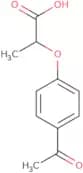
CAS:<p>Versatile small molecule scaffold</p>Formula:C11H12O2Purity:Min. 95%Molecular weight:176.21 g/mol2-(4-Acetylphenoxy)propanoic acid
CAS:<p>Versatile small molecule scaffold</p>Formula:C11H12O4Purity:Min. 95%Molecular weight:208.21 g/mol3-(4-Acetylphenoxy)propanoic acid
CAS:<p>Versatile small molecule scaffold</p>Formula:C11H12O4Purity:Min. 95%Molecular weight:208.21 g/mol4-Methoxy-4-oxo-2-phenylbutanoic acid
CAS:<p>Versatile small molecule scaffold</p>Formula:C11H12O4Purity:Min. 95%Molecular weight:208.21 g/mol1-(3-Chloropropyl)pyrrolidin-2-one
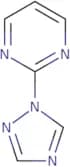
CAS:<p>Versatile small molecule scaffold</p>Formula:C7H12ClNOPurity:Min. 95%Molecular weight:161.63 g/mol2-(1H-1,2,4-Triazol-1-yl)pyrimidine
CAS:<p>Versatile small molecule scaffold</p>Formula:C6H5N5Purity:Min. 95%Molecular weight:147.14 g/mol2,3,5,6-Tetrafluoro-4-methylbenzaldehyde
CAS:<p>Versatile small molecule scaffold</p>Formula:C8H4F4OPurity:Min. 95%Molecular weight:192.11 g/mol4-(1H-Imidazol-1-yl)thiophene-2-carbaldehyde
CAS:<p>Versatile small molecule scaffold</p>Formula:C8H6N2OSPurity:Min. 95%Molecular weight:178.21 g/mol4-Chloro-2-fluoro-5-methoxyaniline
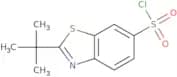
CAS:<p>Versatile small molecule scaffold</p>Formula:C7H7ClFNOPurity:Min. 95%Molecular weight:175.59 g/mol2-tert-Butyl-1,3-benzothiazole-6-sulfonyl chloride
CAS:<p>Versatile small molecule scaffold</p>Formula:C11H12ClNO2S2Purity:Min. 95%Molecular weight:289.8 g/mol4-Methoxy-2,5-dimethyl-benzenesulfonyl chloride
CAS:<p>Versatile small molecule scaffold</p>Formula:C9H11ClO3SPurity:Min. 95%Molecular weight:234.7 g/mol1,3,3-Trimethyl-1,2,3,4-tetrahydroquinoxalin-2-one
CAS:<p>Versatile small molecule scaffold</p>Formula:C11H14N2OPurity:Min. 95%Molecular weight:190.24 g/mol3-[(3,4-Dimethoxyphenyl)amino]propanenitrile
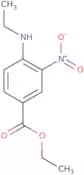
CAS:<p>Versatile small molecule scaffold</p>Formula:C11H14N2O2Purity:Min. 95%Molecular weight:206.24 g/mol4-Ethylamino-3-nitro-benzoic acid ethyl ester
CAS:<p>4-Ethylamino-3-nitro-benzoic acid ethyl ester is a crystalline solid that belongs to the class of organic compounds known as benzamides. It has a molecular formula of C 7 H 6 N 2 O 3 and a molecular weight of 166.14 g/mol. 4-Ethylamino-3-nitro-benzoic acid ethyl ester has an intramolecular conformation, which means that the structure is stable when it is not interacting with other molecules. The molecule consists of six carbon atoms and six hydrogen atoms in a chain and a six-membered ring containing two nitrogens, one oxygen, and four carbons. The molecule also contains an amino group (-NH2) attached to the second carbon atom in the chain and an ethyl group (-CH2CH3) attached to the third carbon atom in the chain. This compound interacts with hydrogen bonds to form weak bonds between molecules, which stabil</p>Formula:C11H14N2O4Purity:Min. 95%Molecular weight:238.24 g/mol1-(2,6-Difluoro-3-nitrophenyl)ethan-1-one
CAS:<p>Versatile small molecule scaffold</p>Formula:C8H5F2NO3Purity:Min. 95%Molecular weight:201.13 g/mol[(1-benzylpyrrolidin-3-yl)methyl](methyl)amine
CAS:<p>Versatile small molecule scaffold</p>Formula:C13H20N2Purity:Min. 95%Molecular weight:204.3 g/mol[(1-Benzylpyrrolidin-3-yl)methyl](ethyl)amine
CAS:<p>Versatile small molecule scaffold</p>Formula:C14H22N2Purity:Min. 95%Molecular weight:218.34 g/mol[(1-Benzylpyrrolidin-3-yl)methyl](2,2,2-trifluoroethyl)amine
CAS:<p>Versatile small molecule scaffold</p>Formula:C14H19F3N2Purity:Min. 95%Molecular weight:272.31 g/molEthyl 3-(2-ethoxy-2-oxoethyl)-5-oxopyrrolidine-3-carboxylate
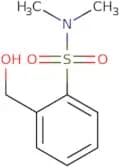
CAS:<p>Versatile small molecule scaffold</p>Formula:C11H17NO5Purity:Min. 95%Molecular weight:243.26 g/mol2-(Hydroxymethyl)-N,N-dimethylbenzene-1-sulfonamide
CAS:<p>Versatile small molecule scaffold</p>Formula:C9H13NO3SPurity:Min. 95%Molecular weight:215.27 g/mol2-[(3-Cyanophenyl)amino]acetic acid
CAS:<p>Versatile small molecule scaffold</p>Formula:C9H8N2O2Purity:Min. 95%Molecular weight:176.17 g/mol2-[(1,3-Benzothiazol-2-yl)amino]acetic acid
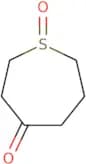
CAS:<p>Versatile small molecule scaffold</p>Formula:C9H8N2O2SPurity:Min. 95%Molecular weight:208.24 g/mol4-Thiepanone 1-oxide
CAS:<p>Versatile small molecule scaffold</p>Formula:C6H10O2SPurity:Min. 95%Molecular weight:146.21 g/mol2-[(2-Phenylethyl)amino]acetic acid hydrochloride
CAS:<p>Versatile small molecule scaffold</p>Formula:C10H14ClNO2Purity:Min. 95%Molecular weight:215.67 g/mol3-[Cyclohexyl(ethyl)amino]propanenitrile
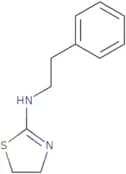
CAS:<p>Versatile small molecule scaffold</p>Formula:C11H20N2Purity:Min. 95%Molecular weight:180.29 g/molN-(2-Phenylethyl)-4,5-dihydro-1,3-thiazol-2-amine
CAS:<p>Versatile small molecule scaffold</p>Formula:C11H14N2SPurity:Min. 95%Molecular weight:206.31 g/mol2-[2-(Dimethylamino)ethoxy]benzylamine
CAS:Controlled Product<p>Versatile small molecule scaffold</p>Formula:C11H18N2OPurity:Min. 95%Molecular weight:194.28 g/mol7,7,9-Trimethyl-1,3-diazaspiro[4.5]decane-2,4-dione
CAS:<p>Versatile small molecule scaffold</p>Formula:C11H18N2O2Purity:Min. 95%Molecular weight:210.27 g/molo-[8-(Aminooxy)octyl]hydroxylamine
CAS:Versatile small molecule scaffoldFormula:C8H20N2O2Purity:Min. 95%Molecular weight:176.26 g/mol4-Ethoxynaphthalene-1-sulfonyl chloride
CAS:<p>Versatile small molecule scaffold</p>Formula:C12H11ClO3SPurity:Min. 95%Molecular weight:270.73 g/mol5-Bromo-1H-imidazo[4,5-b]pyrazine
CAS:<p>Versatile small molecule scaffold</p>Formula:C5H3BrN4Purity:Min. 95%Molecular weight:199.01 g/mol2-Chloromethyl-6-ethyl-3H-thieno[2,3-d]pyrimidin-4-one
CAS:<p>Versatile small molecule scaffold</p>Formula:C9H9ClN2OSPurity:Min. 95%Molecular weight:228.7 g/mol2-(Chloromethyl)-5-(4-chlorophenyl)-3H,4H-thieno[2,3-d]pyrimidin-4-one
CAS:<p>Versatile small molecule scaffold</p>Formula:C13H8Cl2N2OSPurity:Min. 95%Molecular weight:311.2 g/mol2-Chloromethyl-3,5,6,7-tetrahydro-cyclopenta[4,5]thieno[2,3-d]pyrimidin-4-one
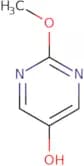
CAS:<p>Versatile small molecule scaffold</p>Formula:C10H9N2OSClPurity:Min. 95%Molecular weight:240.7 g/mol2-Methoxypyrimidin-5-ol
CAS:<p>Versatile small molecule scaffold</p>Formula:C5H6N2O2Purity:Min. 95%Molecular weight:126.11 g/mol3-Ethyl-3-phenylazetidine hydrochloride
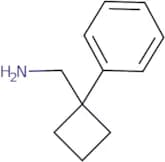
CAS:<p>Versatile small molecule scaffold</p>Formula:C11H16ClNPurity:Min. 95%Molecular weight:197.7 g/molC-(1-Phenyl-cyclobutyl)-methylamine
CAS:<p>Versatile small molecule scaffold</p>Formula:C11H15NPurity:Min. 95%Molecular weight:161.25 g/mol(1-Benzylcyclopropyl)methanamine
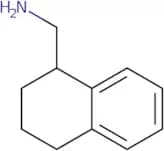
CAS:<p>Versatile small molecule scaffold</p>Formula:C11H15NPurity:Min. 95%Molecular weight:161.24 g/mol1,2,3,4-Tetrahydronaphthalen-1-ylmethylamine
CAS:<p>Versatile small molecule scaffold</p>Formula:C11H15NPurity:Min. 95%Molecular weight:161.25 g/mol1-{4-[(Dimethylamino)methyl]phenyl}ethan-1-one
CAS:<p>Versatile small molecule scaffold</p>Formula:C11H15NOPurity:Min. 95%Molecular weight:177.24 g/molMethyl({[4-(prop-2-en-1-yloxy)phenyl]methyl})amine
CAS:<p>Versatile small molecule scaffold</p>Formula:C11H15NOPurity:Min. 95%Molecular weight:177.24 g/mol2-Phenoxycyclopentan-1-amine hydrochloride
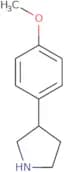
CAS:<p>Versatile small molecule scaffold</p>Formula:C11H16ClNOPurity:Min. 95%Molecular weight:213.7 g/mol3-(4-Methoxyphenyl)pyrrolidine
CAS:<p>Versatile small molecule scaffold</p>Formula:C11H15NOPurity:Min. 95%Molecular weight:177.24 g/molN-(1-Hydroxy-1-phenylpropan-2-yl)-N-methylformamide
CAS:<p>Versatile small molecule scaffold</p>Formula:C11H15NO2Purity:Min. 95%Molecular weight:193.24 g/mol1-Cyclohexyl-3-methyl-2,5-dihydro-1H-pyrrole-2,5-dione
CAS:<p>Versatile small molecule scaffold</p>Formula:C11H15NO2Purity:Min. 95%Molecular weight:193.24 g/mol1-(Aminomethyl)-4-tert-butylcyclohexan-1-ol hydrochloride
CAS:<p>Versatile small molecule scaffold</p>Formula:C11H24ClNOPurity:Min. 95%Molecular weight:221.77 g/mol1-(2,2-Diethoxyethyl)piperidin-4-ol
CAS:<p>Versatile small molecule scaffold</p>Formula:C11H23NO3Purity:Min. 95%Molecular weight:217.31 g/molN-[3-(Dimethylamino)propyl]piperidine-4-carboxamide
CAS:<p>Versatile small molecule scaffold</p>Formula:C11H23N3OPurity:Min. 95%Molecular weight:213.32 g/mol{2-[(5-Bromopyridin-2-yl)amino]ethyl}diethylamine
CAS:<p>Versatile small molecule scaffold</p>Formula:C11H18BrN3Purity:Min. 95%Molecular weight:272.18 g/mol1-(3,5-Dimethylphenyl)ethan-1-amine
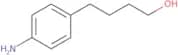
CAS:<p>Versatile small molecule scaffold</p>Formula:C10H15NPurity:Min. 95%Molecular weight:149.23 g/mol4-(4-Aminophenyl)butan-1-ol
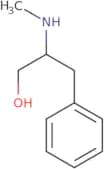
CAS:<p>Versatile small molecule scaffold</p>Formula:C10H15NOPurity:Min. 95%Molecular weight:165.23 g/mol2-(Methylamino)-3-phenylpropan-1-ol
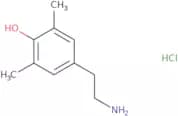
CAS:<p>Versatile small molecule scaffold</p>Formula:C10H15NOPurity:Min. 95%Molecular weight:165.23 g/mol4-(2-Aminoethyl)-2,6-dimethylphenol hydrochloride
CAS:Controlled Product<p>Versatile small molecule scaffold</p>Formula:C10H16ClNOPurity:Min. 95%Molecular weight:201.69 g/mol1-(3,4-Dimethoxyphenyl)ethan-1-amine hydrochloride
CAS:<p>Versatile small molecule scaffold</p>Formula:C10H16ClNO2Purity:Min. 95%Molecular weight:217.69 g/mol1-Cyclohexyl-3-hydroxypyrrolidine-2,5-dione
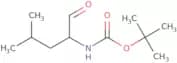
CAS:<p>Versatile small molecule scaffold</p>Formula:C10H15NO3Purity:Min. 95%Molecular weight:197.23 g/moltert-Butyl N-(4-methyl-1-oxopentan-2-yl)carbamate
CAS:<p>Tert-butyl N-(4-methyl-1-oxopentan-2-yl)carbamate (TBOC) is a reagent that is used in the synthesis of a variety of organic compounds. TBOC is an amide and an aldehyde with a carbon chain length of 6. This compound can be synthesized from methyl formate and diisobutylaluminum hydride, which are reacted together to produce lithium aluminum hydride. The process produces high yields of TBOC, which can be used for the synthesis of various products.</p>Formula:C11H21NO3Purity:Min. 95%Molecular weight:215.29 g/mol3-[(Ethylsulfanyl)methyl]aniline
CAS:<p>Versatile small molecule scaffold</p>Formula:C9H13NSPurity:Min. 95%Molecular weight:167.27 g/mol[4-(Morpholinomethyl)phenyl]methanol
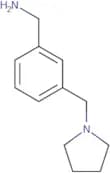
CAS:<p>Versatile small molecule scaffold</p>Formula:C12H17NO2Purity:Min. 95%Molecular weight:207.27 g/mol3-Pyrrolidin-1-ylmethyl-benzylamine
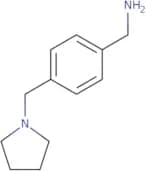
CAS:<p>Versatile small molecule scaffold</p>Formula:C12H18N2Purity:Min. 95%Molecular weight:190.28 g/mol4-Pyrrolidin-1-ylmethyl-benzylamine
CAS:<p>Versatile small molecule scaffold</p>Formula:C12H18N2Purity:Min. 95%Molecular weight:190.28 g/mol4-Piperidin-1-ylmethyl-benzylamine
CAS:<p>Versatile small molecule scaffold</p>Formula:C13H20N2Purity:Min. 95%Molecular weight:204.32 g/mol((3-Bromo-2-methylpropoxy)methyl)benzene
CAS:<p>Versatile small molecule scaffold</p>Formula:C11H15BrOPurity:Min. 95%Molecular weight:243.14 g/mol1H-Pyrazolo[1,5-a]imidazole-7-carbonitrile
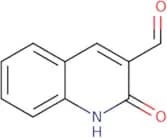
CAS:<p>Versatile small molecule scaffold</p>Formula:C6H4N4Purity:Min. 95%Molecular weight:132.12 g/mol2-Hydroxyquinoline-3-carbaldehyde
CAS:<p>2-Hydroxyquinoline-3-carbaldehyde is an apical, synchronous fluorescence compound that has antioxidative properties. It has been shown to have a protective effect against cervical cancer and skin cancer in animal studies. 2-Hydroxyquinoline-3-carbaldehyde also inhibits the growth of human liver cells and induces apoptosis in hepatocellular carcinoma cells (HepG2). It binds to albumin and chloride ions, which may account for its antitumor activity. Structural analysis has revealed that 2-hydroxyquinoline-3-carbaldehyde is structurally similar to 2-amino-5 -iodobenzoic acid, a molecule known to inhibit tumor growth. Binding experiments reveal that 2HCQC binds to cancer cells through electrostatic interactions with the cell membrane.</p>Formula:C10H7NO2Purity:Min. 95%Molecular weight:173.17 g/molBenzene, 2-(bromomethyl)-1-fluoro-4-methoxy-
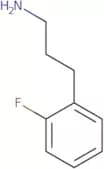
CAS:<p>Benzene, 2-(bromomethyl)-1-fluoro-4-methoxy-, is a positron emitter that can be used as a radiopharmaceutical in positron emission tomography. It has been shown to be an inhibitor of the enzyme tyrosine phosphatase and may have therapeutic potential for the treatment of cancer. This compound was synthesized by reacting benzene with bromoiodomethane in the presence of potassium carbonate and triflic acid. The reaction yields enolate ions that are alkylated by bromide ions, leading to the formation of a 1-fluoro-4-methoxybenzene.</p>Formula:C8H8BrFOPurity:Min. 95%Molecular weight:219.05 g/mol2-Fluoro-benzenepropanamine
CAS:<p>Versatile small molecule scaffold</p>Formula:C9H12FNPurity:Min. 95%Molecular weight:153.2 g/mol1-(1-Methylpiperidin-3-yl)ethan-1-one
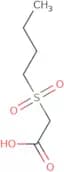
CAS:<p>Versatile small molecule scaffold</p>Formula:C8H15NOPurity:Min. 95%Molecular weight:141.21 g/mol2-(Butane-1-sulfonyl)acetic acid
CAS:<p>Versatile small molecule scaffold</p>Formula:C6H12O4SPurity:Min. 95%Molecular weight:180.22 g/molN-(3-Aminopropyl)-N-ethylcyclohexanamine
CAS:<p>Versatile small molecule scaffold</p>Formula:C11H24N2Purity:Min. 95%Molecular weight:184.32 g/molN,N-Diethyl-1H-1,3-benzodiazol-2-amine
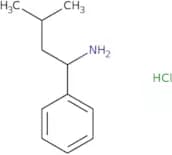
CAS:<p>Versatile small molecule scaffold</p>Formula:C11H15N3Purity:Min. 95%Molecular weight:189.26 g/mol3-Methyl-1-phenylbutan-1-amine hydrochloride
CAS:<p>Versatile small molecule scaffold</p>Formula:C11H18ClNPurity:Min. 95%Molecular weight:199.72 g/mol1-[4-(Propan-2-yl)phenyl]ethan-1-amine hydrochloride
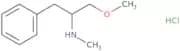
CAS:<p>Versatile small molecule scaffold</p>Formula:C11H18ClNPurity:Min. 95%Molecular weight:199.72 g/mol(1-Methoxy-3-phenylpropan-2-yl)(methyl)amine hydrochloride
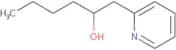
CAS:<p>Versatile small molecule scaffold</p>Formula:C11H18ClNOPurity:Min. 95%Molecular weight:215.72 g/mol1-(Pyridin-2-yl)hexan-2-ol
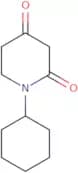
CAS:<p>Versatile small molecule scaffold</p>Formula:C11H17NOPurity:Min. 95%Molecular weight:179.26 g/mol1-Cyclohexylpiperidine-2,4-dione
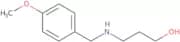
CAS:<p>Versatile small molecule scaffold</p>Formula:C11H17NO2Purity:Min. 95%Molecular weight:195.26 g/mol3-((4-Methoxybenzyl)amino)propan-1-ol
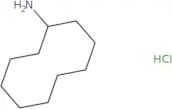
CAS:<p>Versatile small molecule scaffold</p>Formula:C11H17NO2Purity:Min. 95%Molecular weight:195.26 g/molCyclodecanamine hydrochloride
CAS:<p>Cyclodecanamine hydrochloride is an anti-diabetic drug that is used to treat type 2 diabetes. It has been shown to be effective in humans and animals with induced diabetes. Cyclodecanamine hydrochloride's mechanism of action is not fully understood, but it may cause increased insulin secretion by the pancreas or decreased glucose production by the liver. Cyclodecanamine hydrochloride also inhibits chloride channels in pancreatic beta cells, which leads to increased insulin secretion.</p>Formula:C10H22ClNPurity:Min. 95%Molecular weight:191.74 g/mol4-(Dipropylamino)butanoic acid hydrochloride
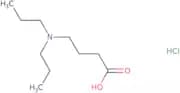
CAS:<p>Versatile small molecule scaffold</p>Formula:C10H22ClNO2Purity:Min. 95%Molecular weight:223.74 g/mol4-Methoxynaphthalene-1-thiol
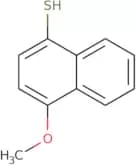
CAS:<p>Versatile small molecule scaffold</p>Formula:C11H10OSPurity:Min. 95%Molecular weight:190.26 g/molMethyl 4-oxochroman-8-carboxylate
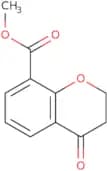
CAS:<p>Versatile small molecule scaffold</p>Formula:C11H10O4Purity:Min. 95%Molecular weight:206.19 g/mol1-(4-Bromophenyl)-5-oxopyrrolidine-3-carboxylic acid
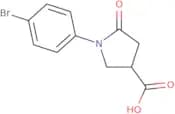
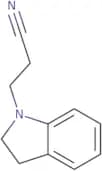
CAS:<p>Versatile small molecule scaffold</p>Formula:C11H10BrNO3Purity:Min. 95%Molecular weight:284.11 g/mol3-(2,3-Dihydro-1H-indol-1-yl)propanenitrile
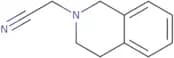
CAS:<p>Versatile small molecule scaffold</p>Formula:C11H12N2Purity:Min. 95%Molecular weight:172.23 g/mol2-(1,2,3,4-Tetrahydroisoquinolin-2-yl)acetonitrile
CAS:<p>Versatile small molecule scaffold</p>Formula:C11H12N2Purity:Min. 95%Molecular weight:172.23 g/mol4-{[(Propan-2-yl)amino]methyl}benzonitrile
CAS:<p>Versatile small molecule scaffold</p>Formula:C11H14N2Purity:Min. 95%Molecular weight:174.24 g/mol4-[(4-Methoxyphenyl)methyl]-1,3-thiazol-2-amine
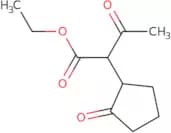
CAS:<p>Versatile small molecule scaffold</p>Formula:C11H12N2OSPurity:Min. 95%Molecular weight:220.29 g/molEthyl 3-oxo-2-(2-oxocyclopentyl)butanoate
CAS:Versatile small molecule scaffoldFormula:C11H16O4Purity:Min. 95%Molecular weight:212.24 g/mol2-Chloro-N-[3-(cyclohexyloxy)propyl]acetamide
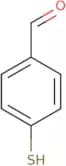
CAS:<p>Versatile small molecule scaffold</p>Formula:C11H20ClNO2Purity:Min. 95%Molecular weight:233.73 g/mol4-Sulfanylbenzaldehyde
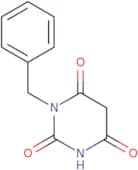
CAS:<p>4-Sulfanylbenzaldehyde is a chemical compound with the molecular formula CH3SO2CH=CH2. It is an aromatic organic sulfonic acid derivative. 4-Sulfanylbenzaldehyde has been shown to bind to the insulin-like growth factor receptor and has been used in the development of monoclonal antibodies for use in cancer treatment. The binding of 4-sulfanylbenzaldehyde to these receptors, which are found on the surface of cells, can cause cell proliferation and inhibit apoptosis by inhibiting the release of cytochrome c from mitochondria. This chemical is also used as a reagent for analytical methods such as SERS and ECL spectroscopy.</p>Formula:C7H6OSPurity:Min. 95%Molecular weight:138.19 g/mol1-Benzylpyrimidine-2,4,6(1H,3H,5H)-trione
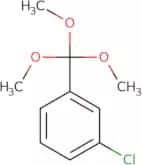
CAS:<p>Versatile small molecule scaffold</p>Formula:C11H10N2O3Purity:Min. 95%Molecular weight:218.21 g/mol1-Chloro-3-(trimethoxymethyl)benzene
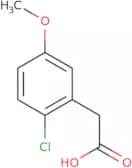
CAS:<p>Versatile small molecule scaffold</p>Formula:C10H13ClO3Purity:Min. 95%Molecular weight:216.66 g/mol2-(2-Chloro-5-methoxyphenyl)acetic acid
CAS:<p>Versatile small molecule scaffold</p>Formula:C9H9ClO3Purity:Min. 95%Molecular weight:200.62 g/mol(2-[(3-Chlorophenyl)amino]ethyl)(methyl)amine
CAS:<p>Versatile small molecule scaffold</p>Formula:C9H13ClN2Purity:Min. 95%Molecular weight:184.66 g/mol3-Methyldodecan-1-ol
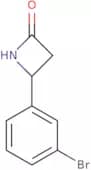
CAS:<p>3-Methyldodecan-1-ol is a natural chemical that is found in Australian eucalyptus oil. It is used as an intermediate in the synthesis of other chemicals and as a solvent. 3-Methyldodecan-1-ol has been shown to have various activities, such as anti-inflammatory and analgesic effects, which are due to its ability to inhibit prostaglandin synthesis.</p>Formula:C13H28OPurity:Min. 95%Molecular weight:200.36 g/mol4-(3-Bromophenyl)azetidin-2-one
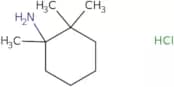
CAS:Versatile small molecule scaffoldFormula:C9H8BrNOPurity:Min. 95%Molecular weight:226.07 g/mol1,2,2-Trimethylcyclohexan-1-amine hydrochloride
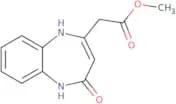
CAS:<p>Versatile small molecule scaffold</p>Formula:C9H20ClNPurity:Min. 95%Molecular weight:177.71 g/molMethyl 2-(4-oxo-4,5-dihydro-1H-1,5-benzodiazepin-2-yl)acetate
CAS:<p>Versatile small molecule scaffold</p>Formula:C12H12N2O3Purity:Min. 95%Molecular weight:232.23 g/molEthyl 2-(N-hydroxyimino)-2-(1H-indol-3-yl)acetate
CAS:<p>Versatile small molecule scaffold</p>Formula:C12H12N2O3Purity:Min. 95%Molecular weight:232.23 g/mol
![N-[2-(1-Benzyl-1H-indol-3-yl)ethyl]acetamide](/_next/image/?url=https%3A%2Fstatic.cymitquimica.com%2Fproducts%2F3D%2Fthumb-webp%2FRBA64507.webp&w=3840&q=75)

![4-{[(Diaminomethylidene)amino]methyl}benzoic acid](/_next/image/?url=https%3A%2Fstatic.cymitquimica.com%2Fproducts%2F3D%2Fthumb-webp%2FRBA65187.webp&w=3840&q=75)

![Ethyl 2-{[(oxolan-2-yl)methyl]amino}acetate](/_next/image/?url=https%3A%2Fstatic.cymitquimica.com%2Fproducts%2F3D%2Fthumb-webp%2FRBA68192.webp&w=3840&q=75)
![[1-(4-Methoxy-phenyl)-ethyl]-methyl-amine hydrochloride](/_next/image/?url=https%3A%2Fstatic.cymitquimica.com%2Fproducts%2F3D%2Fthumb-webp%2FRBA68413.webp&w=3840&q=75)



![4-[(Carbamoylimino)amino]benzoic acid](/_next/image/?url=https%3A%2Fstatic.cymitquimica.com%2Fproducts%2F3D%2Fthumb-webp%2FRBA77998.webp&w=3840&q=75)
![2-[(1-Bromo-2-naphthyl)oxy]acetic acid](/_next/image/?url=https%3A%2Fstatic.cymitquimica.com%2Fproducts%2F3D%2Fthumb-webp%2FRBA79159.webp&w=3840&q=75)

![3-{[2-(Morpholin-4-yl)ethyl]amino}propanenitrile](/_next/image/?url=https%3A%2Fstatic.cymitquimica.com%2Fproducts%2F3D%2Fthumb-webp%2FRBA83284.webp&w=3840&q=75)
![Ethyl 2-amino-6-methylthieno[2,3-d][1,3]thiazole-5-carboxylate](/_next/image/?url=https%3A%2Fstatic.cymitquimica.com%2Fproducts%2F3D%2Fthumb-webp%2FRBA94053.webp&w=3840&q=75)
![5-Methylthieno[2,3-d][1,3]thiazol-2-amine](/_next/image/?url=https%3A%2Fstatic.cymitquimica.com%2Fproducts%2F3D%2Fthumb-webp%2FRBA94059.webp&w=3840&q=75)
![3-Bromo-5,7-dimethylpyrazolo[1,5-a]pyrimidine](/_next/image/?url=https%3A%2Fstatic.cymitquimica.com%2Fproducts%2F3D%2Fthumb-webp%2FRBA94537.webp&w=3840&q=75)

![N-[8-(Propan-2-yl)-8-azabicyclo[3.2.1]octan-3-ylidene]hydroxylamine](/_next/image/?url=https%3A%2Fstatic.cymitquimica.com%2Fproducts%2F3D%2Fthumb-webp%2FRDA08725.webp&w=3840&q=75)
![2-[(2-Methoxy-2-oxoethyl)sulfanyl]acetic acid](/_next/image/?url=https%3A%2Fstatic.cymitquimica.com%2Fproducts%2F3D%2Fthumb-webp%2FRDA11448.webp&w=3840&q=75)
![2-{8-Methyl-8-azabicyclo[3.2.1]octan-3-yl}acetic acid hydrochloride](/_next/image/?url=https%3A%2Fstatic.cymitquimica.com%2Fproducts%2F3D%2Fthumb-webp%2FRDA12978.webp&w=3840&q=75)
![5-[(2-Phenylethyl)amino]-1,3,4-thiadiazole-2-thiol](/_next/image/?url=https%3A%2Fstatic.cymitquimica.com%2Fproducts%2F3D%2Fthumb-webp%2FRDA12985.webp&w=3840&q=75)
![2-Chloro-N-[(4-methylphenyl)methyl]propanamide](/_next/image/?url=https%3A%2Fstatic.cymitquimica.com%2Fproducts%2F3D%2Fthumb-webp%2FRDA13115.webp&w=3840&q=75)
![2-Chloro-N-[1-(4-methoxyphenyl)ethyl]acetamide](/_next/image/?url=https%3A%2Fstatic.cymitquimica.com%2Fproducts%2F3D%2Fthumb-webp%2FRDA13130.webp&w=3840&q=75)
![2-Hydroxy-2-[4-(propan-2-yl)phenyl]acetonitrile](/_next/image/?url=https%3A%2Fstatic.cymitquimica.com%2Fproducts%2F3D%2Fthumb-webp%2FRDA13218.webp&w=3840&q=75)


![3-[4-(Trifluoromethyl)phenyl]but-2-enoic acid](/_next/image/?url=https%3A%2Fstatic.cymitquimica.com%2Fproducts%2F3D%2Fthumb-webp%2FRDA13684.webp&w=3840&q=75)


![5-[(Diethylamino)methyl]furan-2-carbohydrazide](/_next/image/?url=https%3A%2Fstatic.cymitquimica.com%2Fproducts%2F3D%2Fthumb-webp%2FRDA14117.webp&w=3840&q=75)
![1-[(3,5-Dimethyl-1H-pyrazol-4-yl)sulfonyl]piperidine](/_next/image/?url=https%3A%2Fstatic.cymitquimica.com%2Fproducts%2F3D%2Fthumb-webp%2FRDA14146.webp&w=3840&q=75)








![3-[(3,4-Dimethoxyphenyl)amino]propanenitrile](/_next/image/?url=https%3A%2Fstatic.cymitquimica.com%2Fproducts%2F3D%2Fthumb-webp%2FRDA18115.webp&w=3840&q=75)

amine](/_next/image/?url=https%3A%2Fstatic.cymitquimica.com%2Fproducts%2F3D%2Fthumb-webp%2FRDA18905.webp&w=3840&q=75)
amine](/_next/image/?url=https%3A%2Fstatic.cymitquimica.com%2Fproducts%2F3D%2Fthumb-webp%2FRDA18907.webp&w=3840&q=75)
amine](/_next/image/?url=https%3A%2Fstatic.cymitquimica.com%2Fproducts%2F3D%2Fthumb-webp%2FRDA18909.webp&w=3840&q=75)

![2-[(3-Cyanophenyl)amino]acetic acid](/_next/image/?url=https%3A%2Fstatic.cymitquimica.com%2Fproducts%2F3D%2Fthumb-webp%2FRDA19227.webp&w=3840&q=75)
![2-[(1,3-Benzothiazol-2-yl)amino]acetic acid](/_next/image/?url=https%3A%2Fstatic.cymitquimica.com%2Fproducts%2F3D%2Fthumb-webp%2FRDA19236.webp&w=3840&q=75)
![2-[(2-Phenylethyl)amino]acetic acid hydrochloride](/_next/image/?url=https%3A%2Fstatic.cymitquimica.com%2Fproducts%2F3D%2Fthumb-webp%2FRDA19775.webp&w=3840&q=75)
![3-[Cyclohexyl(ethyl)amino]propanenitrile](/_next/image/?url=https%3A%2Fstatic.cymitquimica.com%2Fproducts%2F3D%2Fthumb-webp%2FRDA21141.webp&w=3840&q=75)
![2-[2-(Dimethylamino)ethoxy]benzylamine](/_next/image/?url=https%3A%2Fstatic.cymitquimica.com%2Fproducts%2F3D%2Fthumb-webp%2FRDA21597.webp&w=3840&q=75)
![7,7,9-Trimethyl-1,3-diazaspiro[4.5]decane-2,4-dione](/_next/image/?url=https%3A%2Fstatic.cymitquimica.com%2Fproducts%2F3D%2Fthumb-webp%2FRDA21638.webp&w=3840&q=75)
![o-[8-(Aminooxy)octyl]hydroxylamine](/_next/image/?url=https%3A%2Fstatic.cymitquimica.com%2Fproducts%2F3D%2Fthumb-webp%2FRDA21969.webp&w=3840&q=75)
![5-Bromo-1H-imidazo[4,5-b]pyrazine](/_next/image/?url=https%3A%2Fstatic.cymitquimica.com%2Fproducts%2F3D%2Fthumb-webp%2FRDA22541.webp&w=3840&q=75)
![2-Chloromethyl-6-ethyl-3H-thieno[2,3-d]pyrimidin-4-one](/_next/image/?url=https%3A%2Fstatic.cymitquimica.com%2Fproducts%2F3D%2Fthumb-webp%2FRDA22568.webp&w=3840&q=75)
![2-(Chloromethyl)-5-(4-chlorophenyl)-3H,4H-thieno[2,3-d]pyrimidin-4-one](/_next/image/?url=https%3A%2Fstatic.cymitquimica.com%2Fproducts%2F3D%2Fthumb-webp%2FRDA22569.webp&w=3840&q=75)
![2-Chloromethyl-3,5,6,7-tetrahydro-cyclopenta[4,5]thieno[2,3-d]pyrimidin-4-one](/_next/image/?url=https%3A%2Fstatic.cymitquimica.com%2Fproducts%2F3D%2Fthumb-webp%2FRDA22570.webp&w=3840&q=75)


![1-{4-[(Dimethylamino)methyl]phenyl}ethan-1-one](/_next/image/?url=https%3A%2Fstatic.cymitquimica.com%2Fproducts%2F3D%2Fthumb-webp%2FRDA24582.webp&w=3840&q=75)
![Methyl({[4-(prop-2-en-1-yloxy)phenyl]methyl})amine](/_next/image/?url=https%3A%2Fstatic.cymitquimica.com%2Fproducts%2F3D%2Fthumb-webp%2FRDA24589.webp&w=3840&q=75)



![N-[3-(Dimethylamino)propyl]piperidine-4-carboxamide](/_next/image/?url=https%3A%2Fstatic.cymitquimica.com%2Fproducts%2F3D%2Fthumb-webp%2FRDA25016.webp&w=3840&q=75)
![{2-[(5-Bromopyridin-2-yl)amino]ethyl}diethylamine](/_next/image/?url=https%3A%2Fstatic.cymitquimica.com%2Fproducts%2F3D%2Fthumb-webp%2FRDA25098.webp&w=3840&q=75)



![3-[(Ethylsulfanyl)methyl]aniline](/_next/image/?url=https%3A%2Fstatic.cymitquimica.com%2Fproducts%2F3D%2Fthumb-webp%2FRDA26726.webp&w=3840&q=75)
![[4-(Morpholinomethyl)phenyl]methanol](/_next/image/?url=https%3A%2Fstatic.cymitquimica.com%2Fproducts%2F3D%2Fthumb-webp%2FRDA27165.webp&w=3840&q=75)


![1H-Pyrazolo[1,5-a]imidazole-7-carbonitrile](/_next/image/?url=https%3A%2Fstatic.cymitquimica.com%2Fproducts%2F3D%2Fthumb-webp%2FRDA29619.webp&w=3840&q=75)




![1-[4-(Propan-2-yl)phenyl]ethan-1-amine hydrochloride](/_next/image/?url=https%3A%2Fstatic.cymitquimica.com%2Fproducts%2F3D%2Fthumb-webp%2FRDA33899.webp&w=3840&q=75)
![4-{[(Propan-2-yl)amino]methyl}benzonitrile](/_next/image/?url=https%3A%2Fstatic.cymitquimica.com%2Fproducts%2F3D%2Fthumb-webp%2FRDA35001.webp&w=3840&q=75)
![4-[(4-Methoxyphenyl)methyl]-1,3-thiazol-2-amine](/_next/image/?url=https%3A%2Fstatic.cymitquimica.com%2Fproducts%2F3D%2Fthumb-webp%2FRDA35053.webp&w=3840&q=75)
![2-Chloro-N-[3-(cyclohexyloxy)propyl]acetamide](/_next/image/?url=https%3A%2Fstatic.cymitquimica.com%2Fproducts%2F3D%2Fthumb-webp%2FRDA35473.webp&w=3840&q=75)
![(2-[(3-Chlorophenyl)amino]ethyl)(methyl)amine](/_next/image/?url=https%3A%2Fstatic.cymitquimica.com%2Fproducts%2F3D%2Fthumb-webp%2FRDA36725.webp&w=3840&q=75)