


Building Blocks
This section contains fundamental products for the synthesis of organic and biological compounds. Building blocks are the essential starting materials used to construct complex molecules through various chemical reactions. They play a critical role in drug discovery, material science, and chemical research. At CymitQuimica, we offer a diverse range of high-quality building blocks to support your innovative research and industrial projects, ensuring you have the essential components for successful synthesis.
Subcategories of "Building Blocks"
- Boronic Acids & Boronic Acid Derivatives(5,756 products)
- Chiral Building Blocks(1,242 products)
- Hydrocarbon Building Blocks(6,095 products)
- Organic Building Blocks(61,055 products)
Found 199650 products of "Building Blocks"
Sort by
Purity (%)
0
100
|
0
|
50
|
90
|
95
|
100
1-[4-(Methylsulfanyl)phenyl]ethan-1-amine hydrochloride
CAS:<p>Versatile small molecule scaffold</p>Formula:C9H14ClNSPurity:Min. 95%Molecular weight:203.73 g/molRef: 3D-FIA93777
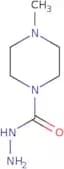
Discontinued product4-Methylpiperazine-1-carbohydrazide
CAS:<p>Versatile small molecule scaffold</p>Formula:C6H14N4OPurity:Min. 95%Molecular weight:158.2 g/molRef: 3D-NDA70165
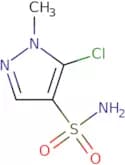
Discontinued product5-Chloro-1-methyl-1H-pyrazole-4-sulfonamide
CAS:<p>Versatile small molecule scaffold</p>Formula:C4H6ClN3O2SPurity:Min. 95%Molecular weight:195.63 g/molRef: 3D-NDA39850
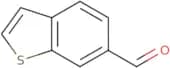
Discontinued product1-Benzothiophene-6-carboxaldehyde
CAS:<p>1-Benzothiophene-6-carboxaldehyde (BTA) is a heterocyclic compound that contains sulfur. It is a colorless liquid with a sweet odor. BTA is used in the manufacture of pesticides, pharmaceuticals, and other organic chemicals. It is also used as a building block in the synthesis of other compounds and has been shown to have anti-inflammatory properties.</p>Formula:C9H6OSPurity:Min. 95%Molecular weight:162.21 g/molRef: 3D-GAA38680
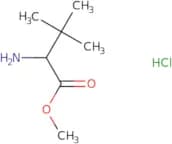
Discontinued productMethyl 2-amino-3,3-dimethylbutanoate hydrochloride
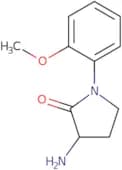
CAS:<p>Versatile small molecule scaffold</p>Formula:C7H16ClNO2Purity:Min. 95%Molecular weight:181.66 g/mol3-Amino-1-(2-methoxyphenyl)pyrrolidin-2-one
CAS:<p>Versatile small molecule scaffold</p>Formula:C11H14N2O2Purity:Min. 95%Molecular weight:206.24 g/molRef: 3D-XZB85912
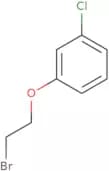
Discontinued product1-(2-Bromoethoxy)-3-chlorobenzene
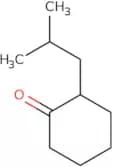
CAS:<p>Versatile small molecule scaffold</p>Formula:C8H8BrClOPurity:Min. 95%Molecular weight:235.51 g/mol2-(2-Methylpropyl)cyclohexan-1-one
CAS:<p>2-(2-Methylpropyl)cyclohexan-1-one is a heterobicyclic compound with a hydroxyl group and two cyclohexane rings. It has a nitrogen atom with three substituents, one of which is a trifluoromethyl group. This molecule is used as a polymerization initiator for polyester and polycarbonate production. It also can be used in the production of liquid crystal compositions, aliphatic hydrocarbons, and organic solvents. 2-(2-Methylpropyl)cyclohexan-1-one is an organic solvent that can be used in the preparation of monomers such as carbonyl groups or cyanates.</p>Formula:C10H18OPurity:Min. 95%Molecular weight:154.25 g/molRef: 3D-EAA66864
Discontinued productOctahydro-pyrazino[2,1-c][1,4]thiazine 2,2-dioxide hydrochloride
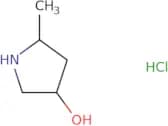
CAS:<p>Versatile small molecule scaffold</p>Formula:C7H16Cl2N2O2SPurity:Min. 95%Molecular weight:263.18 g/mol5-Methylpyrrolidin-3-ol hydrochloride
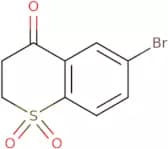
CAS:<p>Versatile small molecule scaffold</p>Formula:C5H12ClNOPurity:Min. 95%Molecular weight:137.61 g/mol6-Bromo-2,3-dihydrothiochromen-1,1-dioxide-4-one
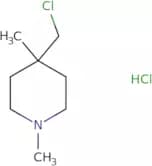
CAS:<p>Versatile small molecule scaffold</p>Formula:C9H7BrO3SPurity:Min. 95%Molecular weight:275.12 g/mol4-(Chloromethyl)-1,4-dimethylpiperidine hydrochloride
CAS:<p>Versatile small molecule scaffold</p>Formula:C8H17Cl2NPurity:Min. 95%Molecular weight:198.13 g/molRef: 3D-DXC58362
Discontinued product2-Amino-4H,5H-naphtho[2,1-b]thiophene-1-carbonitrile
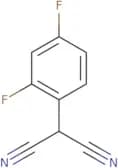
CAS:<p>2-Amino-4H,5H-naphtho[2,1-b]thiophene-1-carbonitrile is a dihydronaphthalene compound that has been shown to be active against influenza viruses. It inhibits the virus by binding to the pyrimidine ring of the virus's RNA polymerase. This inhibits viral replication and reduces plaque formation. 2-Amino-4H,5H-naphtho[2,1-b]thiophene-1-carbonitrile has antiviral activity against influenza A and is effective in inhibiting h5n1 virus replication.</p>Formula:C13H10N2SPurity:Min. 95%Molecular weight:226.3 g/mol2-(2,4-Difluorophenyl)propanedinitrile
CAS:<p>Versatile small molecule scaffold</p>Formula:C9H4F2N2Purity:Min. 95%Molecular weight:178.14 g/molRef: 3D-DXC58290
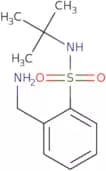
Discontinued product2-(Aminomethyl)-N-tert-butylbenzene-1-sulfonamide
CAS:<p>Versatile small molecule scaffold</p>Formula:C11H18N2O2SPurity:Min. 95%Molecular weight:242.34 g/mol4-[2-(Trifluoromethyl)phenoxy]aniline
CAS:<p>Versatile small molecule scaffold</p>Formula:C13H10F3NOPurity:Min. 95%Molecular weight:253.22 g/mol3-[(2-Methyl-2-propen-1-yl)thio]-5H-1,2,4-triazino[5,6-b]indole
CAS:<p>3-[(2-Methyl-2-propen-1-yl)thio]-5H-1,2,4-triazino[5,6-b]indole is a recombinant protein that binds to the ribosomal protein L11. It has been shown to inhibit the biosynthesis of the bacterial cell wall and therefore inhibit replication of the bacterial genome. 3-[(2-Methyl-2-propen-1-yl)thio]-5H-1,2,4-triazino[5,6-b]indole also inhibits the synthesis of proteins essential for cell division. This compound has been shown to bind to ribosomes in both prokaryotic and eukaryotic cells. It may have potential as an inhibitor of cancerous cells because it inhibits protein synthesis in mammalian cells.</p>Formula:C13H12N4SPurity:Min. 95%Molecular weight:256.33 g/molRef: 3D-DNA02311
Discontinued productrac-(1R,5S,6R)-3-Benzyl-3-azabicyclo[3.1.0]hexan-6-amine dihydrochloride
CAS:<p>Versatile small molecule scaffold</p>Formula:C12H18Cl2N2Purity:Min. 95%Molecular weight:261.19 g/molRef: 3D-DJD39547
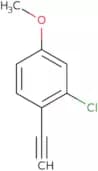
Discontinued product2-Chloro-1-ethynyl-4-methoxybenzene
CAS:<p>Versatile small molecule scaffold</p>Formula:C9H7ClOPurity:Min. 95%Molecular weight:166.6 g/molRef: 3D-DGA44068
Discontinued product4,5-Dihydroxy-2,3-dihydro-1H-isoindole-1,3-dione
CAS:4,5-Dihydroxy-2,3-dihydro-1H-isoindole-1,3-dione is a molybdenum compound with a hydroxyl group. It has been shown to inhibit the growth of bacteria that are resistant to penicillin by binding to the penicillin-binding proteins in their cell wall. 4,5-Dihydroxy-2,3-dihydro-1H-isoindole-1,3-dione has been found to be an effective inhibitor of polymer film formation when used in conjunction with 3 chloroperoxybenzoic acid. This compound also has been shown to have anti bacterial properties against Escherichia coli and Pseudomonas aeruginosa. 4,5-Dihydroxy -2,3 -dihydro -1H -isoindole -1,3 -dione may also have environmental applications due itsFormula:C8H5NO4Purity:Min. 95%Molecular weight:179.13 g/molRef: 3D-DGA35672
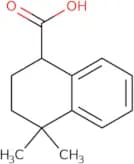
Discontinued product4,4-Dimethyl-1,2,3,4-tetrahydronaphthalene-1-carboxylic acid
CAS:<p>Versatile small molecule scaffold</p>Formula:C13H16O2Purity:Min. 95%Molecular weight:204.26 g/molRef: 3D-DDA10380
Discontinued product2-[3-(Difluoromethoxy)-4-methoxyphenyl]ethan-1-amine
CAS:Controlled Product<p>Versatile small molecule scaffold</p>Formula:C10H13F2NO2Purity:Min. 95%Molecular weight:217.21 g/molRef: 3D-YHB23469
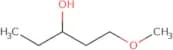
Discontinued product1-Methoxypentan-3-ol
CAS:<p>Versatile small molecule scaffold</p>Formula:C6H14O2Purity:Min. 95%Molecular weight:118.17 g/molRef: 3D-CBA99999
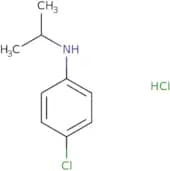
Discontinued product4-Chloro-N-(propan-2-yl)aniline hydrochloride
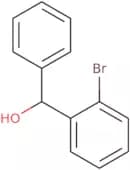
CAS:<p>Versatile small molecule scaffold</p>Formula:C9H13Cl2NPurity:Min. 95%Molecular weight:206.11 g/mol(2-Bromophenyl)(phenyl)methanol
CAS:<p>The synthesis of (2-bromophenyl)(phenyl)methanol is accomplished by the reaction of an aldehyde with bromine followed by an alkylation with magnesium. The product is obtained as a racemic mixture of enantiomers with a chiral center, which can be resolved by fractional crystallization or other separation methods. This method has been shown to be efficient for the synthesis of alcohols and carbinols, and stereogenic reactions.</p>Formula:C13H11OBrPurity:Min. 95%Molecular weight:263.12 g/molRef: 3D-JCA14247
Discontinued producttert-Butyl 6,6-dioxo-6λ6-thia-2,7-diazaspiro[3.4]octane-2-carboxylate
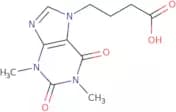
CAS:<p>Versatile small molecule scaffold</p>Formula:C10H18N2O4SPurity:Min. 95%Molecular weight:262.3 g/mol4-(1,3-Dimethyl-2,6-dioxo-2,3,6,7-tetrahydro-1H-purin-7-yl)butanoic acid
CAS:Controlled Product<p>Versatile small molecule scaffold</p>Formula:C11H14N4O4Purity:Min. 95%Molecular weight:266.25 g/molRef: 3D-CCA08348
Discontinued product2-{[3-(Dimethylamino)propyl]sulfanyl}aniline
CAS:<p>Versatile small molecule scaffold</p>Formula:C11H18N2SPurity:Min. 95%Molecular weight:210.34 g/molRef: 3D-BAA13477
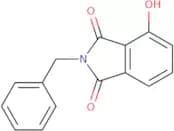
Discontinued product2-Benzyl-4-hydroxy-2,3-dihydro-1H-isoindole-1,3-dione
CAS:<p>Versatile small molecule scaffold</p>Formula:C15H11NO3Purity:Min. 95%Molecular weight:253.25 g/molRef: 3D-CSB68816
Discontinued productN-[1-(Furan-2-yl)ethyl]pyridin-2-amine
CAS:<p>Versatile small molecule scaffold</p>Formula:C11H12N2OPurity:Min. 95%Molecular weight:188.23 g/molRef: 3D-FPA83374
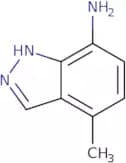
Discontinued product4-Methyl-1H-indazol-7-amine
CAS:<p>Versatile small molecule scaffold</p>Formula:C8H9N3Purity:Min. 95%Molecular weight:147.18 g/mol3-Methyl-2-[3-(trifluoromethyl)phenyl]butanoic acid
CAS:<p>Versatile small molecule scaffold</p>Formula:C12H13F3O2Purity:Min. 95%Molecular weight:246.22 g/molRef: 3D-BCA63232
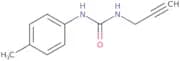
Discontinued product1-(4-Methylphenyl)-3-(prop-2-yn-1-yl)urea
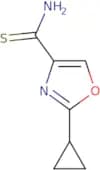
CAS:<p>1-(4-Methylphenyl)-3-(prop-2-yn-1-yl)urea is a fluorescent derivative that can be detected with certain techniques. It has been used to detect phosphatases in cervical cancer cells and tumor cells. This compound is a ligand for the surface antigen of placental alkaline phosphatase (PLAP). It can also bind to other organic ligands, such as recombinant human erythropoietin (EPO), which may be useful for redirecting the action of this protein. 1-(4-Methylphenyl)-3-(prop-2-yn-1-yl)urea is an organic bispecific molecule that binds to two receptors, one on tumor cells and one on normal cells. This binding leads to cell death by apoptosis through the release of cytochrome c from mitochondria.</p>Formula:C11H12N2OPurity:Min. 95%Molecular weight:188.23 g/mol2-Cyclopropyl-1,3-oxazole-4-carbothioamide
CAS:<p>Versatile small molecule scaffold</p>Formula:C7H8N2OSPurity:Min. 95%Molecular weight:168.22 g/molRef: 3D-BKD17844
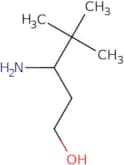
Discontinued product3-Amino-4,4-dimethylpentan-1-ol
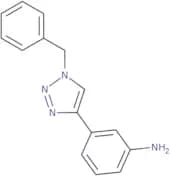
CAS:<p>Versatile small molecule scaffold</p>Formula:C7H17NOPurity:Min. 95%Molecular weight:131.22 g/mol3-(1-Benzyl-1H-1,2,3-triazol-4-yl)aniline
CAS:<p>Versatile small molecule scaffold</p>Formula:C15H14N4Purity:Min. 95%Molecular weight:250.3 g/molRef: 3D-BWB92000
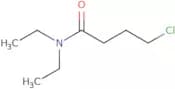
Discontinued product4-Chloro-N,N-diethyl-butyramide
CAS:<p>Versatile small molecule scaffold</p>Formula:C8H16ClNOPurity:Min. 95%Molecular weight:177.67 g/molRef: 3D-GCA79428
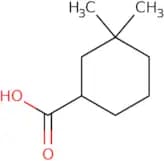
Discontinued product3,3-Dimethylcyclohexane-1-carboxylic acid
CAS:<p>Versatile small molecule scaffold</p>Formula:C9H16O2Purity:Min. 95%Molecular weight:156.22 g/molRef: 3D-CCA20977
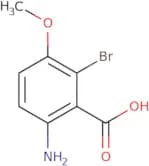
Discontinued product6-Amino-2-bromo-3-methoxybenzoic acid
CAS:<p>Versatile small molecule scaffold</p>Formula:C8H8BrNO3Purity:Min. 95%Molecular weight:246.06 g/molRef: 3D-CGA94638
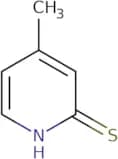
Discontinued product4-Methylpyridine-2-thiol
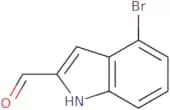
CAS:<p>4-Methylpyridine-2-thiol is a ligand that binds to metal ions. It has been shown to be an effective photoelectron scavenger for mercury and lead, as well as a wide variety of other metals. 4-Methylpyridine-2-thiol is also an important monomer in the preparation of polymers and resins. This ligand has been used in the synthesis of compounds with cyclic structures and hydrochloric acid, as well as being crystallized with x-ray crystallography. The properties of this ligand have been studied by voltammetry, spectroscopies, and crystallography. 4-Methylpyridine-2-thiol interacts with chloride ions in acetonitrile to form a salt called methylpyridinium chloride.</p>Formula:C6H7NSPurity:Min. 95%Molecular weight:125.19 g/mol4-bromo-1H-indole-2-carbaldehyde
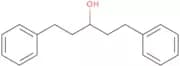
CAS:<p>Versatile small molecule scaffold</p>Formula:C9H6BrNOPurity:Min. 95%Molecular weight:224.1 g/mol1,5-Diphenylpentan-3-ol
CAS:<p>Flindersia laevicarpa is a small tree native to Australia. The leaves of the tree are used for medicinal purposes and contain 1,5-diphenylpentan-3-ol. Flindersia laevicarpa has been shown to have anti-inflammatory and antioxidant properties, as well as an ability to inhibit platelet aggregation.</p>Formula:C17H20OPurity:Min. 95%Molecular weight:240.34 g/molRef: 3D-SAA48686
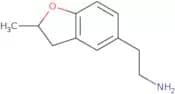
Discontinued product2-(2-Methyl-2,3-dihydro-1-benzofuran-5-yl)ethan-1-amine
CAS:Controlled Product<p>Versatile small molecule scaffold</p>Formula:C11H15NOPurity:Min. 95%Molecular weight:177.24 g/molrac-(1R,4R)-4-{[(2-Fluorophenyl)methyl]amino}cyclohexan-1-ol hydrochloride
CAS:<p>Versatile small molecule scaffold</p>Formula:C13H19ClFNOPurity:Min. 95%Molecular weight:259.7 g/molRef: 3D-TMD05176
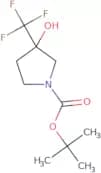
Discontinued producttert-Butyl 3-hydroxy-3-(trifluoromethyl)pyrrolidine-1-carboxylate
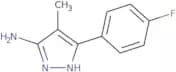
CAS:<p>Versatile small molecule scaffold</p>Formula:C10H16F3NO3Purity:Min. 95%Molecular weight:255.23 g/mol5-(4-Fluoro-phenyl)-4-methyl-2H-pyrazol-3-ylamine
CAS:<p>Versatile small molecule scaffold</p>Formula:C10H10FN3Purity:Min. 95%Molecular weight:191.2 g/molRef: 3D-TTB06047
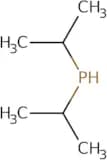
Discontinued productDiisopropylphosphine, 10wt.% in hexane
CAS:<p>Please enquire for more information about Diisopropylphosphine, 10wt.% in hexane including the price, delivery time and more detailed product information at the technical inquiry form on this page</p>Formula:C6H15PPurity:Min. 95%Molecular weight:118.16 g/molRef: 3D-VAA49153
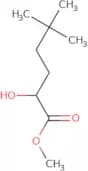
Discontinued productMethyl 2-hydroxy-5,5-dimethylhexanoate
CAS:<p>Versatile small molecule scaffold</p>Formula:C9H18O3Purity:Min. 95%Molecular weight:174.24 g/molRef: 3D-NJC68939
Discontinued product2-Bromo-3,3,3-trifluoro-1-propene
CAS:Controlled Product<p>2-Bromo-3,3,3-trifluoro-1-propene is a chemical compound that has been synthesized in an asymmetric reaction. The reactant is bromopropane and the product is 2,2,2-trifluoropropene. The methylene group on the propene molecule is activated by the nucleophilic attack of a fluoride ion from hydrogen fluoride to form a cavity with a highly strained bond. The kinetic study of this reaction revealed that the activation energy for the reaction is 42 kJ/mol. Palladium-catalyzed coupling reactions are catalyzed by palladium and require nonpolar solvents such as toluene or dichloromethane. This type of reaction has been shown to be exothermic with an isolated yield of 1%.</p>Formula:C3H2BrF3Purity:Min. 95%Color and Shape:Colorless PowderMolecular weight:174.95 g/mol3-Boc-3-azabicyclo[3.2.1]octan-8-amine
CAS:<p>Versatile small molecule scaffold</p>Formula:C12H22N2O2Purity:Min. 95%Molecular weight:226.32 g/mol
![1-[4-(Methylsulfanyl)phenyl]ethan-1-amine hydrochloride](/_next/image/?url=https%3A%2Fstatic.cymitquimica.com%2Fproducts%2F3D%2Fthumb-webp%2FFIA93777.webp&w=3840&q=75)

![Octahydro-pyrazino[2,1-c][1,4]thiazine 2,2-dioxide hydrochloride](/_next/image/?url=https%3A%2Fstatic.cymitquimica.com%2Fproducts%2F3D%2Fthumb-webp%2FDXC60335.webp&w=3840&q=75)
![2-Amino-4H,5H-naphtho[2,1-b]thiophene-1-carbonitrile](/_next/image/?url=https%3A%2Fstatic.cymitquimica.com%2Fproducts%2F3D%2Fthumb-webp%2FMBA07120.webp&w=3840&q=75)
![4-[2-(Trifluoromethyl)phenoxy]aniline](/_next/image/?url=https%3A%2Fstatic.cymitquimica.com%2Fproducts%2F3D%2Fthumb-webp%2FLCA94684.webp&w=3840&q=75)
![3-[(2-Methyl-2-propen-1-yl)thio]-5H-1,2,4-triazino[5,6-b]indole](/_next/image/?url=https%3A%2Fstatic.cymitquimica.com%2Fproducts%2F3D%2Fthumb-webp%2FDNA02311.webp&w=3840&q=75)
![rac-(1R,5S,6R)-3-Benzyl-3-azabicyclo[3.1.0]hexan-6-amine dihydrochloride](/_next/image/?url=https%3A%2Fstatic.cymitquimica.com%2Fproducts%2F3D%2Fthumb-webp%2FDJD39547.webp&w=3840&q=75)
![2-[3-(Difluoromethoxy)-4-methoxyphenyl]ethan-1-amine](/_next/image/?url=https%3A%2Fstatic.cymitquimica.com%2Fproducts%2F3D%2Fthumb-webp%2FYHB23469.webp&w=3840&q=75)
![tert-Butyl 6,6-dioxo-6λ6-thia-2,7-diazaspiro[3.4]octane-2-carboxylate](/_next/image/?url=https%3A%2Fstatic.cymitquimica.com%2Fproducts%2F3D%2Fthumb-webp%2FAVD27336.webp&w=3840&q=75)
![2-{[3-(Dimethylamino)propyl]sulfanyl}aniline](/_next/image/?url=https%3A%2Fstatic.cymitquimica.com%2Fproducts%2F3D%2Fthumb-webp%2FBAA13477.webp&w=3840&q=75)
![N-[1-(Furan-2-yl)ethyl]pyridin-2-amine](/_next/image/?url=https%3A%2Fstatic.cymitquimica.com%2Fproducts%2F3D%2Fthumb-webp%2FFPA83374.webp&w=3840&q=75)
![3-Methyl-2-[3-(trifluoromethyl)phenyl]butanoic acid](/_next/image/?url=https%3A%2Fstatic.cymitquimica.com%2Fproducts%2F3D%2Fthumb-webp%2FBCA63232.webp&w=3840&q=75)
![rac-(1R,4R)-4-{[(2-Fluorophenyl)methyl]amino}cyclohexan-1-ol hydrochloride](/_next/image/?url=https%3A%2Fstatic.cymitquimica.com%2Fproducts%2F3D%2Fthumb-webp%2FTMD05176.webp&w=3840&q=75)

![3-Boc-3-azabicyclo[3.2.1]octan-8-amine](/_next/image/?url=https%3A%2Fstatic.cymitquimica.com%2Fproducts%2F3D%2Fthumb-webp%2FFDC76351.webp&w=3840&q=75)