Building Blocks
This section contains fundamental products for the synthesis of organic and biological compounds. Building blocks are the essential starting materials used to construct complex molecules through various chemical reactions. They play a critical role in drug discovery, material science, and chemical research. At CymitQuimica, we offer a diverse range of high-quality building blocks to support your innovative research and industrial projects, ensuring you have the essential components for successful synthesis.
Subcategories of "Building Blocks"
- Boronic Acids & Boronic Acid Derivatives(5,756 products)
- Chiral Building Blocks(1,242 products)
- Hydrocarbon Building Blocks(6,095 products)
- Organic Building Blocks(61,038 products)
Found 196817 products of "Building Blocks"
Sort by
Purity (%)
0
100
|
0
|
50
|
90
|
95
|
100
Bicyclo[4.1.0]heptane-1-carbaldehyde
CAS:<p>Versatile small molecule scaffold</p>Formula:C8H12OPurity:Min. 95%Molecular weight:124.18 g/mol{Bicyclo[4.1.0]heptan-1-yl}methanol
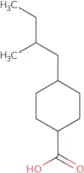
CAS:<p>Versatile small molecule scaffold</p>Formula:C8H14OPurity:Min. 95%Molecular weight:126.2 g/mol4-(2-Methylbutyl)cyclohexane-1-carboxylic acid
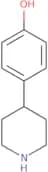
CAS:<p>Versatile small molecule scaffold</p>Formula:C12H22O2Purity:Min. 95%Molecular weight:198.3 g/mol4-(Piperidin-4-yl)phenol
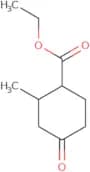
CAS:<p>4-(Piperidin-4-yl)phenol is a potent antipsychotic drug that belongs to the group of piperidines. It has been shown to be active in animal models and as an antipsychotic agent in humans. 4-(Piperidin-4-yl)phenol binds to alpha and beta adrenergic receptors, serotonin receptors, dopamine receptors, and histamine H1 receptors. It has been shown to have high potency and affinity for these receptors. This drug is also cloned from human brain tissue and has acted as a subtype-selective antagonist at cloned human alpha 1A-adrenergic receptor.</p>Formula:C11H15NOPurity:Min. 95%Molecular weight:177.25 g/molEthyl 2-methyl-4-oxocyclohexane-1-carboxylate
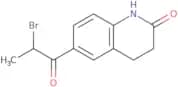
CAS:<p>Versatile small molecule scaffold</p>Formula:C10H16O3Purity:Min. 95%Molecular weight:184.23 g/mol6-(2-Bromopropanoyl)-1,2,3,4-tetrahydroquinolin-2-one
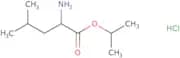
CAS:<p>Versatile small molecule scaffold</p>Formula:C12H12BrNO2Purity:Min. 95%Molecular weight:282.13 g/molPropan-2-yl (2S)-2-amino-4-methylpentanoate hydrochloride
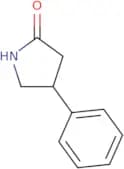
CAS:<p>Versatile small molecule scaffold</p>Formula:C9H20ClNO2Purity:Min. 95%Molecular weight:209.71 g/mol(4S)-4-Phenylpyrrolidin-2-one
CAS:<p>Versatile small molecule scaffold</p>Formula:C10H11NOPurity:Min. 95%Molecular weight:161.2 g/mol(2S)-2-{[(tert-Butoxy)carbonyl]amino}-3-(3,4-dihydroxyphenyl)-2-methylpropanoic acid
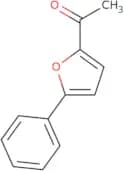
CAS:<p>Versatile small molecule scaffold</p>Formula:C15H21NO6Purity:Min. 95%Molecular weight:311.3 g/mol1-(5-Phenylfuran-2-yl)ethan-1-one
CAS:<p>1-(5-Phenylfuran-2-yl)ethan-1-one is a chemical compound that has been shown to be an effective method for synthesizing indole derivatives from 5-phenyl furan-2-carboxylic acid. The indole ring of the 1-(5-Phenylfuran-2-yl)ethan-1-one is derived from the furan ring, which is formed by a rearrangement of the carboxylic acid. This transformation can also be accomplished with other electrophilic reactants, such as thionyl chloride or phosphorus pentachloride. The synthesis of 1-(5-Phenylfuran-2-yl)ethan-1 can be achieved by the rearrangement of 2,3,4,5 tetrahydrofuran.<br>Synlett 2004, 1670</p>Formula:C12H10O2Purity:Min. 95%Molecular weight:186.21 g/mol3-Chloromethyl-4-methyl-furazan
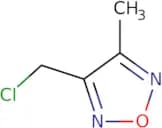
CAS:<p>3-Chloromethyl-4-methyl-furazan is a colorless liquid that is soluble in alcohol, ether and benzene. It has a boiling point of 104°C and an average molecular weight of 183.3. 3-Chloromethyl-4-methyl-furazan reacts with strong bases to form sulfuryl chloride, which is used as a precursor to other compounds. It can also be used for the chlorination of organic compounds or the manufacture of various sulfonyl chlorides.</p>Formula:C4H5ClN2OPurity:Min. 95%Molecular weight:132.55 g/mol7-Aminoheptanoic Acid Hydrochloride
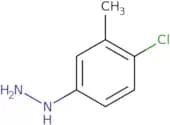
CAS:<p>7-Aminoheptanoic Acid Hydrochloride is a product that is obtained from the reaction of diethyl malonate with hydroxylamine. It is a nucleophilic compound that can react with various electrophiles, such as phthalimide. This product has high yields and can be used in organic synthesis to make other compounds. The crystallization of 7-Aminoheptanoic Acid Hydrochloride can be done by refluxing in hydrochloric acid and then decompressing the solution. The crystallizing agent used for this process can be either an organic solvent or water. This product can also be produced on a large scale using the malonate method.</p>Formula:C7H16ClNO2Purity:Min. 95%Molecular weight:181.66 g/mol(4-Chloro-3-methyl-phenyl)-hydrazine
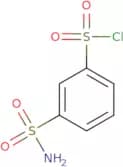
CAS:<p>Versatile small molecule scaffold</p>Formula:C7H9ClN2Purity:Min. 95%Molecular weight:156.62 g/mol3-(Aminosulfonyl)benzenesulfonyl chloride
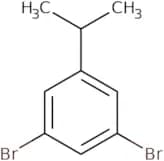
CAS:<p>Versatile small molecule scaffold</p>Formula:C6H6ClNO4S2Purity:Min. 95%Molecular weight:255.7 g/mol1,3-Dibromo-5-isopropylbenzene
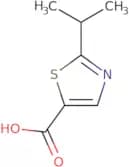
CAS:<p>Versatile small molecule scaffold</p>Formula:C9H10Br2Purity:Min. 95%Molecular weight:277.99 g/mol2-isopropylthiazole-5-carboxylic acid
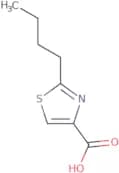
CAS:<p>Versatile small molecule scaffold</p>Formula:C7H9NO2SPurity:Min. 95%Molecular weight:171.21 g/mol2-Butyl-1,3-thiazole-4-carboxylic acid
CAS:<p>Versatile small molecule scaffold</p>Formula:C8H11NO2SPurity:Min. 95%Molecular weight:185.25 g/mol[2-(Methylsulfanyl)pyridin-3-yl]methanol
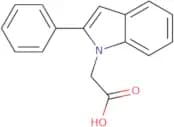
CAS:<p>Versatile small molecule scaffold</p>Formula:C7H9NOSPurity:Min. 95%Molecular weight:155.22 g/mol2-(2-Phenyl-1H-indol-1-yl)acetic acid
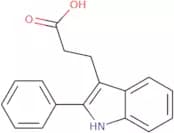
CAS:<p>Versatile small molecule scaffold</p>Formula:C16H13NO2Purity:Min. 95%Molecular weight:251.28 g/mol3-(2-Phenyl-1H-indol-3-yl)propanoic acid
CAS:<p>Versatile small molecule scaffold</p>Formula:C17H15NO2Purity:Min. 95%Molecular weight:265.31 g/mol4-[(Trifluoromethyl)sulfanyl]-1H-pyrrole-2-carboxylic acid
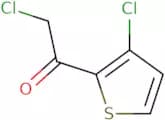
CAS:<p>Versatile small molecule scaffold</p>Formula:C6H4F3NO2SPurity:Min. 95%Molecular weight:211.16 g/mol2-Chloro-1-(3-chlorothiophen-2-yl)ethanone
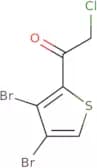
CAS:<p>Versatile small molecule scaffold</p>Formula:C6H4Cl2OSPurity:Min. 95%Molecular weight:195.07 g/mol2-Chloro-1-(3,4-dibromo-2-thienyl)-1-ethanone
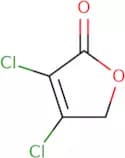
CAS:<p>Versatile small molecule scaffold</p>Formula:C6H3Br2ClOSPurity:Min. 95%Molecular weight:318.41 g/mol3,4-Dichloro-2(5H)-furanone
CAS:<p>3,4-Dichloro-2(5H)-furanone is a biologically active compound that has been shown to inhibit the growth of Listeria monocytogenes and typhimurium. It is a furanone analog with a chlorine substituent on the 2 position. The chemical structure of 3,4-Dichloro-2(5H)-furanone includes an oxygenated hydroxyl group at the 4 position, which is important for its bacteriostatic effects. The compound has been shown to be effective against multidrug resistant strains of bacteria such as methicillin resistant Staphylococcus aureus (MRSA). 3,4-Dichloro-2(5H)-furanone also has biological properties that are similar to those of other furanones found in nature. This molecule exhibits spectrometric properties typical of many furanones and can be easily reduced by sodium borohyd</p>Formula:C4H2Cl2O2Purity:Min. 95%Molecular weight:152.96 g/mol2-(Phenylsulfanyl)butanoic acid
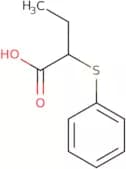
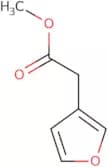
CAS:<p>Versatile small molecule scaffold</p>Formula:C10H12O2SPurity:Min. 95%Molecular weight:196.27 g/molMethyl 2-(furan-3-yl)acetate
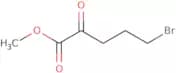
CAS:<p>Versatile small molecule scaffold</p>Formula:C7H8O3Purity:Min. 95%Molecular weight:140.14 g/molMethyl 5-bromo-2-oxopentanoate
CAS:<p>Methyl 5-bromo-2-oxopentanoate is a carbonyl compound that is used as an intermediate in organic synthesis. It can be used to make oxime, adduct, and attack compounds. Methyl 5-bromo-2-oxopentanoate reacts with hydroxylamine in the presence of acid to produce the corresponding oxime. In the presence of base, it reacts with proline to form an intramolecular acetylenedicarboxylate. This reaction takes place through a reductive elimination mechanism where hydrogenolysis is catalyzed by zinc metal or zinc chloride.</p>Formula:C6H9BrO3Purity:Min. 95%Molecular weight:209.04 g/mol2-(Prop-2-en-1-yl)benzaldehyde
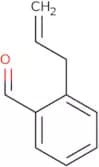
CAS:<p>2-(Prop-2-en-1-yl)benzaldehyde is a synthetic, aldehydes, aromatic hydrocarbons and olefinic. It is an efficient method for the synthesis of the skeleton of alkene and anthracene. This compound can be used as a mediator in the reaction system, which has a high yield in reactions. It reacts with oxygenated ligands to form new molecules.<br>2-(Prop-2-en-1-yl)benzaldehyde is also a ligand that binds to receptor ligands such as riboflavin and pyridoxal phosphate.</p>Formula:C10H10OPurity:Min. 95%Molecular weight:146.19 g/mol1-(3-Bromothiophen-2-yl)-2-chloroethan-1-one
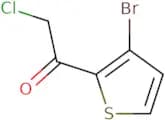
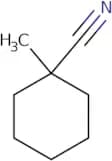
CAS:<p>Versatile small molecule scaffold</p>Formula:C6H4BrClOSPurity:Min. 95%Molecular weight:239.52 g/mol1-Methylcyclohexane-1-carbonitrile
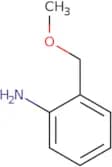
CAS:<p>Versatile small molecule scaffold</p>Formula:C8H13NPurity:Min. 95%Molecular weight:123.2 g/mol2-(Methoxymethyl)aniline
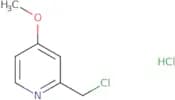
CAS:<p>2-(Methoxymethyl)aniline is a chlorobenzene derivative with a methide group. It is prepared by the reaction of formamidines, xylene, and organometallics in high yields. The 2-methoxymethyl group is readily cleaved to form an amine, which can be used for the synthesis of other compounds. The bond cleavage occurs through deprotonation or proton abstraction to yield the desired product. This method provides a cheaper alternative to other methods that require expensive reagents like boron trifluoride etherate.</p>Formula:C8H11NOPurity:Min. 95%Molecular weight:137.18 g/mol2-(Chloromethyl)-4-methoxypyridine hydrochloride
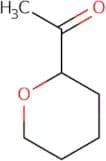
CAS:<p>2-(Chloromethyl)-4-methoxypyridine hydrochloride (2-CMP) is a sulfide that can be used as a catalyst in organic chemistry. 2-CMP is efficient for the conversion of alkenes to alkanes and has been shown to be selective for the formation of linear alkanes. The substituent effects on catalytic activity are sensitive to electronic effects, which may be due to the different electron densities of the sulfur atom. This compound has been shown to have high catalytic efficiency in converting hydrocarbons and can also be used as a catalyst in other reactions such as reductive amination, oxidation, and nitration.</p>Formula:C6H9Cl2N3Purity:Min. 95%Molecular weight:194.06 g/mol1-(Oxan-2-yl)ethan-1-one
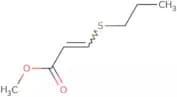
CAS:<p>Versatile small molecule scaffold</p>Formula:C7H12O2Purity:Min. 95%Molecular weight:128.17 g/molMethyl 3-(propylsulfanyl)prop-2-enoate
CAS:<p>Versatile small molecule scaffold</p>Formula:C7H12O2SPurity:Min. 95%Molecular weight:160.24 g/molEthyl 2-(1,2,3,4-tetrahydronaphthalen-1-yl)acetate
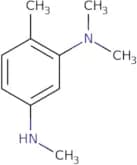
CAS:<p>Versatile small molecule scaffold</p>Formula:C14H18O2Purity:Min. 95%Molecular weight:218.29 g/mol1-N,1-N,3-N,6-Tetramethylbenzene-1,3-diamine
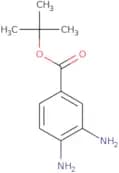
CAS:<p>Versatile small molecule scaffold</p>Formula:C10H16N2Purity:Min. 95%Molecular weight:164.25 g/moltert-Butyl 3,4-diaminobenzoate
CAS:<p>Versatile small molecule scaffold</p>Formula:C11H16N2O2Purity:Min. 95%Molecular weight:208.26 g/mol3,4-Dihydrospiro[1-benzopyran-2,1'-cyclopentane]-4-one
CAS:<p>Versatile small molecule scaffold</p>Formula:C13H14O2Purity:Min. 95%Molecular weight:202.25 g/mol3,4-Dihydrospiro[1-benzopyran-2,1'-cyclohexane]-4-one
CAS:<p>Versatile small molecule scaffold</p>Formula:C14H16O2Purity:Min. 95%Molecular weight:216.27 g/mol1'-Methyl-3,4-dihydrospiro[1-benzopyran-2,4'-piperidine]-4-one
CAS:<p>Versatile small molecule scaffold</p>Formula:C14H17NO2Purity:Min. 95%Molecular weight:231.29 g/mol7H-Pyrimido[4,5-b][1,4]thiazin-6-amine
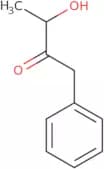
CAS:<p>Versatile small molecule scaffold</p>Formula:C6H6N4SPurity:Min. 95%Molecular weight:166.2 g/mol3-Hydroxy-1-phenylbutan-2-one
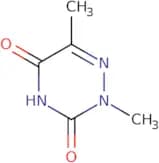
CAS:<p>3-Hydroxy-1-phenylbutan-2-one is a precursor to the synthetic chemical phenylacetonitrile, which is used in the production of polymers, pharmaceuticals, and fragrances. 3-Hydroxy-1-phenylbutan-2-one can be decarboxylated by heating it with a strong base to form an aldehyde. The enzyme extracts from pollinating insects have been shown to have high efficiency for this reaction. 3-Hydroxyphenylacetonitrile has been synthesized using Grignard reagent in an asymmetric synthesis reaction. The process for converting this compound into phenylacetonitrile involves oxidation of the alcohol groups using oxidizing agents such as nitric acid or hydrogen peroxide. This reaction also produces volatile compounds such as acetaldehyde and acetic acid that are responsible for the characteristic odor of many fruits and flowers.</p>Formula:C10H12O2Purity:Min. 95%Molecular weight:164.2 g/mol2,6-Dimethyl-2,3,4,5-tetrahydro-1,2,4-triazine-3,5-dione
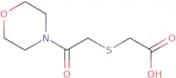
CAS:<p>Versatile small molecule scaffold</p>Formula:C5H7N3O2Purity:Min. 95%Molecular weight:141.13 g/mol(2-Morpholin-4-yl-2-oxo-ethylsulfanyl)-acetic acid
CAS:<p>Versatile small molecule scaffold</p>Formula:C8H13NO4SPurity:Min. 95%Molecular weight:219.26 g/molMethyl 2-[(5-sulfanyl-1,3,4-thiadiazol-2-yl)sulfanyl]acetate
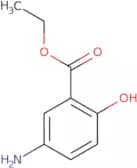
CAS:<p>Versatile small molecule scaffold</p>Formula:C5H6N2O2S3Purity:Min. 95%Molecular weight:222.3 g/molEthyl 5-amino-2-hydroxybenzoate
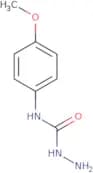
CAS:<p>Ethyl 5-amino-2-hydroxybenzoate is a nitro compound that is catalyzed by acid methyl ester to form an ethyl ester. The reaction proceeds in an aerated solution, which increases the efficiency of the reaction. This process can be conducted in a photocatalytic system, which increases the selectivity of the reaction. Ethyl 5-amino-2-hydroxybenzoate can also be transformed into 5-nitrosalicylic acid by catalyzing with acid ethyl ester, and then into 5-aminosalicylic acid with hydrogen peroxide. Factors that affect this reaction include pH, temperature, concentration of reactants, and presence of light.</p>Formula:C9H11NO3Purity:Min. 95%Molecular weight:181.19 g/mol3-Amino-1-(4-methoxyphenyl)urea
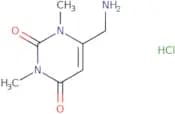
CAS:<p>Versatile small molecule scaffold</p>Formula:C8H11N3O2Purity:Min. 95%Molecular weight:181.19 g/mol6-(Aminomethyl)-1,3-dimethyl-1,2,3,4-tetrahydropyrimidine-2,4-dione hydrochloride
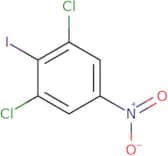
CAS:<p>Versatile small molecule scaffold</p>Formula:C7H12ClN3O2Purity:Min. 95%Molecular weight:205.64 g/mol1,3-Dichloro-2-iodo-5-nitrobenzene
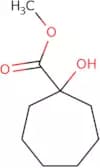
CAS:<p>1,3-Dichloro-2-iodo-5-nitrobenzene is a nucleophilic reagent that can react with a variety of functional groups. It reacts with carbanionic compounds, such as sulphoxides, to form the corresponding chloroformates. This compound is used in the synthesis of organic compounds. 1,3-Dichloro-2-iodo-5-nitrobenzene has been used in the kinetic study of reactions between hydrazine and ammonia or methylamine, and it efficiently reacts with methanol to form methyl nitrosourea. 1,3-Dichloro-2-iodo-5-nitrobenzene is also a useful nucleophile for the synthesis of anionically stabilized carbonyl compounds from aromatic systems. This reagent reacts with electron rich aromatic systems to form electrophilic aromatic substituents that are less susceptible to nucleophilic attack</p>Formula:C6H2Cl2INO2Purity:Min. 95%Molecular weight:317.89 g/molMethyl 1-hydroxycycloheptane-1-carboxylate
CAS:<p>Versatile small molecule scaffold</p>Formula:C9H16O3Purity:Min. 95%Molecular weight:172.22 g/mol
![Bicyclo[4.1.0]heptane-1-carbaldehyde](/_next/image/?url=https%3A%2Fstatic.cymitquimica.com%2Fproducts%2F3D%2Fthumb-webp%2FMCA60934.webp&w=3840&q=75)

![{Bicyclo[4.1.0]heptan-1-yl}methanol](/_next/image/?url=https%3A%2Fstatic.cymitquimica.com%2Fproducts%2F3D%2Fthumb-webp%2FMCA60935.webp&w=3840&q=75)
![(2S)-2-{[(tert-Butoxy)carbonyl]amino}-3-(3,4-dihydroxyphenyl)-2-methylpropanoic acid](/_next/image/?url=https%3A%2Fstatic.cymitquimica.com%2Fproducts%2F3D%2Fthumb-webp%2FMCA63137.webp&w=3840&q=75)

![[2-(Methylsulfanyl)pyridin-3-yl]methanol](/_next/image/?url=https%3A%2Fstatic.cymitquimica.com%2Fproducts%2F3D%2Fthumb-webp%2FMCA65890.webp&w=3840&q=75)
![4-[(Trifluoromethyl)sulfanyl]-1H-pyrrole-2-carboxylic acid](/_next/image/?url=https%3A%2Fstatic.cymitquimica.com%2Fproducts%2F3D%2Fthumb-webp%2FMCA66540.webp&w=3840&q=75)

![3,4-Dihydrospiro[1-benzopyran-2,1'-cyclopentane]-4-one](/_next/image/?url=https%3A%2Fstatic.cymitquimica.com%2Fproducts%2F3D%2Fthumb-webp%2FMCA75619.webp&w=3840&q=75)
![3,4-Dihydrospiro[1-benzopyran-2,1'-cyclohexane]-4-one](/_next/image/?url=https%3A%2Fstatic.cymitquimica.com%2Fproducts%2F3D%2Fthumb-webp%2FMCA75620.webp&w=3840&q=75)
![1'-Methyl-3,4-dihydrospiro[1-benzopyran-2,4'-piperidine]-4-one](/_next/image/?url=https%3A%2Fstatic.cymitquimica.com%2Fproducts%2F3D%2Fthumb-webp%2FMCA75624.webp&w=3840&q=75)
![7H-Pyrimido[4,5-b][1,4]thiazin-6-amine](/_next/image/?url=https%3A%2Fstatic.cymitquimica.com%2Fproducts%2F3D%2Fthumb-webp%2FMCA75678.webp&w=3840&q=75)
![Methyl 2-[(5-sulfanyl-1,3,4-thiadiazol-2-yl)sulfanyl]acetate](/_next/image/?url=https%3A%2Fstatic.cymitquimica.com%2Fproducts%2F3D%2Fthumb-webp%2FMCA77008.webp&w=3840&q=75)