


Building Blocks
This section contains fundamental products for the synthesis of organic and biological compounds. Building blocks are the essential starting materials used to construct complex molecules through various chemical reactions. They play a critical role in drug discovery, material science, and chemical research. At CymitQuimica, we offer a diverse range of high-quality building blocks to support your innovative research and industrial projects, ensuring you have the essential components for successful synthesis.
Subcategories of "Building Blocks"
- Boronic Acids & Boronic Acid Derivatives(5,756 products)
- Chiral Building Blocks(1,242 products)
- Hydrocarbon Building Blocks(6,095 products)
- Organic Building Blocks(61,037 products)
Found 196200 products of "Building Blocks"
Sort by
Purity (%)
0
100
|
0
|
50
|
90
|
95
|
100
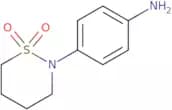
4-(Tetrahydro-1,1-dioxido-2H-1,2-thiazin-2-yl)-benzenamine
CAS:<p>Versatile small molecule scaffold</p>Formula:C10H14N2O2SPurity:Min. 95%Molecular weight:226.3 g/mol1λ6,2-thiazinane-1,1-dione
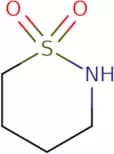
CAS:<p>1,2-Thiazinane-1,1-dione is a short-chain alkylating agent that has been shown to have neuropathic and inflammatory pain relief. It binds to a number of halides and inhibits their action, including the inhibition of angiotensin I-converting enzyme (ACE), which is an antihypertensive agent. 1,2-Thiazinane-1,1-dione also inhibits the production of epoxides in c1-4 alkyl groups. This drug also has antibacterial properties and can be used as a chemical probe for ligand binding studies.</p>Formula:C4H9NO2SPurity:Min. 95%Molecular weight:135.2 g/mol4a-Methyl-decahydroquinoline
CAS:<p>Versatile small molecule scaffold</p>Formula:C10H19NPurity:Min. 95%Molecular weight:153.26 g/mol1-Phenylbut-3-en-2-one
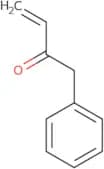
CAS:<p>1-Phenylbut-3-en-2-one is an n-oxide that is the product of the reaction between 2,4,6-trinitrobenzenesulfonic acid and phenylacetic acid. It has been used as a horticultural agent for controlling mildew on plants. It has also been shown to have a potent inhibitory effect against cell growth in vitro at doses of 50 μmol/L. 1-Phenylbut-3-en-2-one will react with chlorine atoms in the environment to form chlorinated derivatives that may be more toxic than the parent compound. 1Phenylbut-3-en-2-one has neuroprotective properties and has been shown to reduce the incidence of cancer in rats by inhibiting carcinogenesis studies. This drug also exhibits antiangiogenic properties, which may be due to its inhibition of DNA synthesis and protein synthesis.</p>Formula:C10H10OPurity:Min. 95%Molecular weight:146.19 g/mol2,2-Dimethoxycyclobutane-1-carbonitrile
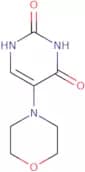
CAS:<p>Versatile small molecule scaffold</p>Formula:C7H11NO2Purity:Min. 95%Molecular weight:141.2 g/mol5-(Morpholin-4-yl)-1,2,3,4-tetrahydropyrimidine-2,4-dione
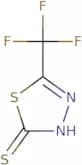
CAS:<p>Versatile small molecule scaffold</p>Formula:C8H11N3O3Purity:Min. 95%Molecular weight:197.19 g/mol5-(Trifluoromethyl)-1,3,4-thiadiazole-2-thiol
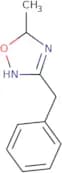
CAS:<p>Versatile small molecule scaffold</p>Formula:C3HF3N2S2Purity:Min. 95%Molecular weight:186.18 g/mol3-Benzyl-5-methyl-4,5-dihydro-1,2,4-oxadiazole
CAS:<p>Versatile small molecule scaffold</p>Formula:C10H12N2OPurity:Min. 95%Molecular weight:176.21 g/molEthyl 2,1,3-benzoxadiazole-4-carboxylate
CAS:<p>Versatile small molecule scaffold</p>Formula:C9H8N2O3Purity:Min. 95%Molecular weight:192.17 g/mol1-Butyl-5-(chloromethyl)-1H-1,2,3,4-tetrazole
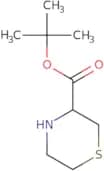
CAS:<p>Versatile small molecule scaffold</p>Formula:C6H11ClN4Purity:Min. 95%Molecular weight:174.63 g/moltert-Butyl thiomorpholine-3-carboxylate
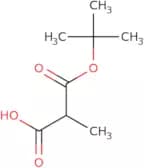
CAS:<p>Versatile small molecule scaffold</p>Formula:C9H17NO2SPurity:Min. 95%Molecular weight:203.3 g/mol3-(tert-Butoxy)-2-methyl-3-oxopropanoic acid
CAS:<p>Versatile small molecule scaffold</p>Formula:C8H14O4Purity:Min. 95%Molecular weight:174.19 g/molEthyl 4-chloro-5-formyl-2-methyl-3-thiophenecarboxylate
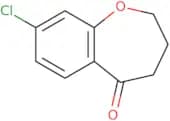
CAS:<p>Versatile small molecule scaffold</p>Formula:C9H9ClO3SPurity:Min. 95%Molecular weight:232.68 g/mol8-Chloro-2,3,4,5-tetrahydro-1-benzoxepin-5-one
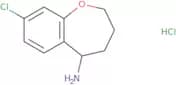
CAS:<p>Versatile small molecule scaffold</p>Formula:C10H9ClO2Purity:Min. 95%Molecular weight:196.63 g/mol8-Chloro-2,3,4,5-tetrahydro-1-benzoxepin-5-amine hydrochloride
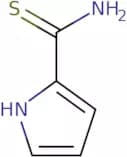
CAS:<p>Versatile small molecule scaffold</p>Formula:C10H13Cl2NOPurity:Min. 95%Molecular weight:234.12 g/mol1H-Pyrrole-2-carbothioamide
CAS:<p>1H-Pyrrole-2-carbothioamide is an analog of porphyrin. It has a macrocyclic structure with a central metal atom that is bonded to four sulfur atoms and two nitrogen atoms. It absorbs light in the visible region, which makes it appealing for use as a pigment or dye. 1H-Pyrrole-2-carbothioamide has been shown to be biocompatible with living cells and tissues, making it suitable for use in biomedical applications. This molecule can be synthesized by reacting potassium with methanesulfonic acid followed by addition of thiocyanate ion.</p>Formula:C5H6N2SPurity:Min. 95%Molecular weight:126.18 g/mol6-Chloro-3H-pyrido[2,3-b][1,4]thiazin-2-amine
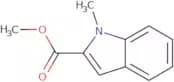
CAS:<p>Versatile small molecule scaffold</p>Formula:C7H6ClN3SPurity:Min. 95%Molecular weight:199.66 g/molMethyl 1-methyl-1H-indole-2-carboxylate
CAS:Controlled Product<p>Methyl 1-methyl-1H-indole-2-carboxylate is an organic compound that belongs to the family of indole carboxylic acid esters. It is an x-ray crystallographic study for the preparation process, and it has been shown to have antileishmanial activity. The methyl ester is a reagent for the synthesis of octahydroaziridine and can be used as a reagent in Grignard reactions.</p>Formula:C11H11NO2Purity:Min. 95%Molecular weight:189.21 g/mol5-Chloro-2-(ethylamino)benzoic acid
CAS:<p>Versatile small molecule scaffold</p>Formula:C9H10ClNO2Purity:Min. 95%Molecular weight:199.63 g/mol1-Cyclopentyl-4,5-dihydro-1H-1,2,3,4-tetrazol-5-one
CAS:<p>Versatile small molecule scaffold</p>Formula:C6H10N4OPurity:Min. 95%Molecular weight:154.17 g/mol1-Chloroisoquinoline-4-carboxylic acid methyl ester
CAS:<p>1-Chloroisoquinoline-4-carboxylic acid methyl ester is a potent compound that acts as an antagonist of the prostanoid receptor. It blocks the binding of prostanoids to the receptor and inhibits the production of inflammatory molecules, such as leukotrienes. 1CIQME has been shown to have affinity for both Cox-1 and Cox-2, but is selective for Cox-2. This drug also competitively inhibits the enzyme cyclooxygenase (COX), which produces prostaglandins from arachidonic acid. 1CIQME has been shown to inhibit chemotaxis in mice and to block chemoattractant effects in human neutrophils.</p>Formula:C11H8ClNO2Purity:Min. 95%Molecular weight:221.64 g/mol7-Bromo-2,3-dihydro-1H-cyclopenta[b]quinoline-9-carboxylic acid
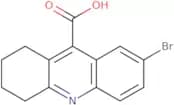
CAS:<p>Versatile small molecule scaffold</p>Formula:C13H10BrNO2Purity:Min. 95%Molecular weight:292.13 g/mol7-Bromo-1,2,3,4-tetrahydro-acridine-9-carboxylic acid
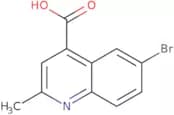
CAS:<p>Versatile small molecule scaffold</p>Formula:C14H12BrNO2Purity:Min. 95%Molecular weight:306.15 g/mol6-Bromo-2-methylquinoline-4-carboxylic acid
CAS:<p>Versatile small molecule scaffold</p>Formula:C11H8BrNO2Purity:Min. 95%Molecular weight:266.09 g/mol[(1-Hydroxy-2-oxo-2-phenylethyl)thio]acetic acid
CAS:<p>[(1-Hydroxy-2-oxo-2-phenylethyl)thio]acetic acid (HPTAA) is a selective inhibitor of the enzyme tyrosine kinase. It has been shown to have antiproliferative effects in vitro against glioblastoma cells lines and other cancer cell lines, as well as in vivo against established tumors. HPTAA inhibits the proliferation of cancer cells by interfering with the activation of multiple signaling pathways. This compound has been shown to be selective for cancer cells, while having no effect on normal cells at micromolar concentrations. HPTAA is currently being tested in preselected patients with malignant gliomas and recurrent testicular seminoma.</p>Formula:C10H10O4SPurity:Min. 95%Molecular weight:226.25 g/mol3,3-Dicyclopropylprop-2-enoic acid
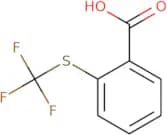
CAS:<p>Versatile small molecule scaffold</p>Formula:C9H12O2Purity:Min. 95%Molecular weight:152.19 g/mol2-((Trifluoromethyl)thio)benzoic acid
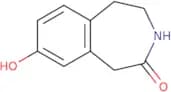
CAS:<p>Versatile small molecule scaffold</p>Formula:C8H5F3O2SPurity:Min. 95%Molecular weight:222.18 g/mol1,3,4,5-Tetrahydro-8-hydroxy-2H-3-benzazepin-2-one
CAS:<p>Versatile small molecule scaffold</p>Formula:C10H11NO2Purity:Min. 95%Molecular weight:177.2 g/mol6-Chloro-7H-purin-8(9H)-one
CAS:<p>Versatile small molecule scaffold</p>Formula:C5H3ClN4OPurity:Min. 95%Molecular weight:170.56 g/mol2-[2-(Ethylsulfanyl)phenyl]acetic acid
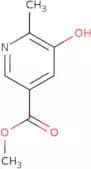
CAS:<p>Versatile small molecule scaffold</p>Formula:C10H12O2SPurity:Min. 95%Molecular weight:196.27 g/mol5-Hydroxy-6-methyl-nicotinic acid methyl ester
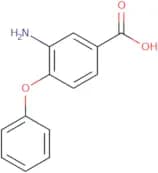
CAS:<p>Versatile small molecule scaffold</p>Formula:C8H9NO3Purity:Min. 95%Molecular weight:167.16 g/mol3-Amino-4-phenoxybenzoic acid
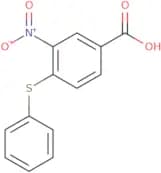
CAS:<p>Versatile small molecule scaffold</p>Formula:C13H11NO3Purity:Min. 95%Molecular weight:229.23 g/mol3-Nitro-4-(phenylsulfanyl)benzoic acid
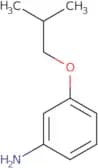
CAS:<p>Versatile small molecule scaffold</p>Formula:C13H9NO4SPurity:Min. 95%Molecular weight:275.28 g/mol3-Isobutoxy-phenylamine
CAS:<p>Versatile small molecule scaffold</p>Formula:C10H15NOPurity:Min. 95%Molecular weight:165.24 g/molPyrido[3,2-d]pyrimidin-4(3H)-one
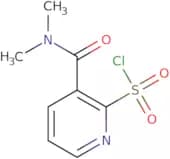
CAS:<p>Pyrido[3,2-d]pyrimidin-4(3H)-one is a molecule that belongs to the class of antimalarial drugs. It inhibits plasmodium falciparum by inhibiting the biosynthesis of purine nucleotides. Pyrido[3,2-d]pyrimidin-4(3H)-one is chemically reactive and apolar. It was isolated from a chemically synthesized compound as an isomer mixture and has been shown to have high activity against erythrocytic stages of plasmodium falciparum in vitro. Pyrido[3,2-d]pyrimidin-4(3H)-one also has a clinical drug application in incrementing the response to other antimalarial drugs.</p>Formula:C7H5N3OPurity:Min. 95%Molecular weight:147.13 g/mol3-(Dimethylcarbamoyl)pyridine-2-sulfonyl chloride
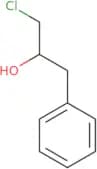
CAS:<p>Versatile small molecule scaffold</p>Formula:C8H9ClN2O3SPurity:Min. 95%Molecular weight:248.69 g/mol(2R)-1-Chloro-3-phenylpropan-2-ol
CAS:<p>Versatile small molecule scaffold</p>Formula:C9H11ClOPurity:Min. 95%Molecular weight:170.63 g/molCyclohexyl 3-methoxypropanoate
CAS:<p>Versatile small molecule scaffold</p>Formula:C10H18O3Purity:Min. 95%Molecular weight:186.2 g/molN-Cyclopropyl-4-nitroaniline
CAS:<p>Versatile small molecule scaffold</p>Formula:C9H10N2O2Purity:Min. 95%Molecular weight:178.19 g/mol2-Bromo-3,4-difluoro-6-nitroaniline
CAS:<p>Versatile small molecule scaffold</p>Formula:C6H3BrF2N2O2Purity:Min. 95%Molecular weight:253 g/mol2-Oxo-1H,2H,5H,6H,7H,8H,9H-cyclohepta[b]pyridine-3-carboxylic acid
CAS:<p>Versatile small molecule scaffold</p>Formula:C11H13NO3Purity:Min. 95%Molecular weight:207.23 g/mol6-Chloro-2-fluoroquinoxaline
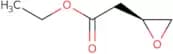
CAS:<p>Versatile small molecule scaffold</p>Formula:C8H4ClFN2Purity:Min. 95%Molecular weight:182.58 g/molEthyl (S)-3,4-epoxybutanoate
CAS:<p>Ai Product Descriptions 50 Creative</p>Formula:C6H10O3Purity:Min. 95%Molecular weight:130.14 g/mol[3-(1H-Imidazol-1-yl)propyl](methyl)amine
CAS:<p>Versatile small molecule scaffold</p>Formula:C7H13N3Purity:Min. 95%Molecular weight:139.2 g/mol3-{[(Pyridin-2-yl)methyl]amino}propanenitrile
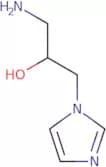
CAS:<p>Versatile small molecule scaffold</p>Formula:C9H11N3Purity:Min. 95%Molecular weight:161.2 g/mol1-Amino-3-(1H-imidazol-1-yl)propan-2-ol
CAS:<p>Versatile small molecule scaffold</p>Formula:C6H11N3OPurity:Min. 95%Molecular weight:141.17 g/mol1-{3-[2-(3-Acetylphenoxy)ethoxy]phenyl}ethan-1-one
CAS:<p>Versatile small molecule scaffold</p>Formula:C18H18O4Purity:Min. 95%Molecular weight:298.3 g/mol2-Cyclopropyl-2-phenylethan-1-amine
CAS:Controlled Product<p>Versatile small molecule scaffold</p>Formula:C11H15NPurity:Min. 95%Molecular weight:161.24 g/mol(2E)-3-(4-Fluorophenyl)prop-2-en-1-amine
CAS:<p>Versatile small molecule scaffold</p>Formula:C9H10FNPurity:Min. 95%Molecular weight:151.18 g/mol3-Methyl-5H,7H-furo[3,4-b]pyridine-5,7-dione
CAS:<p>Versatile small molecule scaffold</p>Formula:C8H5NO3Purity:Min. 95%Molecular weight:163.13 g/mol





![6-Chloro-3H-pyrido[2,3-b][1,4]thiazin-2-amine](/_next/image/?url=https%3A%2Fstatic.cymitquimica.com%2Fproducts%2F3D%2Fthumb-webp%2FMBA48937.webp&w=3840&q=75)


![7-Bromo-2,3-dihydro-1H-cyclopenta[b]quinoline-9-carboxylic acid](/_next/image/?url=https%3A%2Fstatic.cymitquimica.com%2Fproducts%2F3D%2Fthumb-webp%2FMBA50866.webp&w=3840&q=75)
![[(1-Hydroxy-2-oxo-2-phenylethyl)thio]acetic acid](/_next/image/?url=https%3A%2Fstatic.cymitquimica.com%2Fproducts%2F3D%2Fthumb-webp%2FMBA51029.webp&w=3840&q=75)


![2-[2-(Ethylsulfanyl)phenyl]acetic acid](/_next/image/?url=https%3A%2Fstatic.cymitquimica.com%2Fproducts%2F3D%2Fthumb-webp%2FMBA52774.webp&w=3840&q=75)
![Pyrido[3,2-d]pyrimidin-4(3H)-one](/_next/image/?url=https%3A%2Fstatic.cymitquimica.com%2Fproducts%2F3D%2Fthumb-webp%2FMBA53867.webp&w=3840&q=75)


![2-Oxo-1H,2H,5H,6H,7H,8H,9H-cyclohepta[b]pyridine-3-carboxylic acid](/_next/image/?url=https%3A%2Fstatic.cymitquimica.com%2Fproducts%2F3D%2Fthumb-webp%2FMEA07232.webp&w=3840&q=75)

amine](/_next/image/?url=https%3A%2Fstatic.cymitquimica.com%2Fproducts%2F3D%2Fthumb-webp%2FMEA08654.webp&w=3840&q=75)
![3-{[(Pyridin-2-yl)methyl]amino}propanenitrile](/_next/image/?url=https%3A%2Fstatic.cymitquimica.com%2Fproducts%2F3D%2Fthumb-webp%2FMEA08658.webp&w=3840&q=75)
![1-{3-[2-(3-Acetylphenoxy)ethoxy]phenyl}ethan-1-one](/_next/image/?url=https%3A%2Fstatic.cymitquimica.com%2Fproducts%2F3D%2Fthumb-webp%2FMEA09259.webp&w=3840&q=75)


![3-Methyl-5H,7H-furo[3,4-b]pyridine-5,7-dione](/_next/image/?url=https%3A%2Fstatic.cymitquimica.com%2Fproducts%2F3D%2Fthumb-webp%2FMEA11017.webp&w=3840&q=75)