


Building Blocks
This section contains fundamental products for the synthesis of organic and biological compounds. Building blocks are the essential starting materials used to construct complex molecules through various chemical reactions. They play a critical role in drug discovery, material science, and chemical research. At CymitQuimica, we offer a diverse range of high-quality building blocks to support your innovative research and industrial projects, ensuring you have the essential components for successful synthesis.
Subcategories of "Building Blocks"
- Boronic Acids & Boronic Acid Derivatives(5,756 products)
- Chiral Building Blocks(1,242 products)
- Hydrocarbon Building Blocks(6,095 products)
- Organic Building Blocks(61,051 products)
Found 199813 products of "Building Blocks"
Sort by
Purity (%)
0
100
|
0
|
50
|
90
|
95
|
100
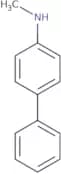
N-Methyl-4-phenylaniline
CAS:<p>N-Methyl-4-phenylaniline (NMP) is a fatty acid inhibitor that can be used to treat hepatitis. It is an inhibitor of the enzyme known as N-hydroxy-4-aminobiphenyl amidohydrolase, which is involved in the second step of the synthesis of arachidonic acid, a precursor of prostaglandins. The inhibition of this enzyme reduces the production of prostaglandin E2 and other eicosanoids that are important for inflammation. NMP has also been shown to have potential mechanism for treating primary sclerosing cholangitis (PSC). This drug binds with bile salts in the intestines and prevents their reabsorption back into circulation. This leads to increased bile salt concentrations in the liver, which may help reduce inflammation and fibrosis in PSC.</p>Formula:C13H13NPurity:Min. 95%Molecular weight:183.25 g/mol2-(3-Methylpiperazin-1-yl)ethan-1-ol
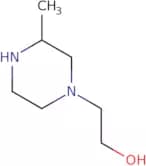
CAS:<p>Versatile small molecule scaffold</p>Formula:C7H16N2OPurity:Min. 95%Molecular weight:144.21 g/mol1-Ethyl-2-methyl-piperazine
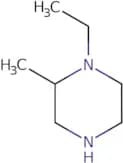
CAS:<p>Versatile small molecule scaffold</p>Formula:C7H16N2Purity:Min. 95%Molecular weight:128.22 g/molMethoxy(propan-2-ylidene)amine
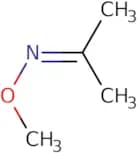
CAS:<p>Please enquire for more information about Methoxy(propan-2-ylidene)amine including the price, delivery time and more detailed product information at the technical inquiry form on this page</p>Formula:C4H9NOPurity:Min. 95 Area-%Molecular weight:87.12 g/mol3-(Ethoxycarbonyl)but-3-enoic acid
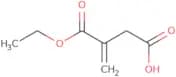
CAS:<p>Versatile small molecule scaffold</p>Formula:C7H10O4Purity:Min. 95%Molecular weight:158.15 g/mol3-(Methoxycarbonyl)but-3-enoic acid
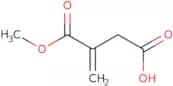
CAS:<p>3-(Methoxycarbonyl)but-3-enoic acid is a monomer that belongs to the group of organic compounds. It has a viscosity of 0.1, and is soluble in water and alcohols. 3-(Methoxycarbonyl)but-3-enoic acid can be used for the synthesis of polyvinyl alcohol, an organic polymer. This compound has functional groups such as hydroxyl and carboxylic acids, which are important in biological functions such as DNA replication and protein synthesis. 3-(Methoxycarbonyl)but-3-enoic acid is also used for the production of carbon nanotubes by chemical vapor deposition, as well as metal hydroxides with high melting points.</p>Formula:C6H8O4Purity:Min. 95%Molecular weight:144.12 g/mol2-Bromohexane (contains 3-Bromohexane) (stabilized with Copper chip)
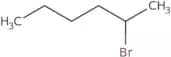
CAS:<p>2-Bromohexane is an organic compound and a chemical building block. It is produced by the reaction of 1,3-dibromohexane with copper. 2-Bromohexane is used in the production of epoxides and other chemicals. The synthesis of 2-bromohexane starts with the addition of bromine to 1,3-dibromohexane followed by the addition of copper (II) chloride. This reaction produces 3-bromohexane as a byproduct which can be removed from the reaction mixture using a Dean–Stark trap. In this process, two moles of hydrogen are used to convert one mole of bromine into one mole of hydrogen bromide gas, which can be easily condensed into liquid form. The monoalkylation product 2-bromohexane reacts with an alkyl halide to produce a mixture containing two different alkyl halides. These</p>Formula:C6H13BrPurity:85%Molecular weight:165.07 g/molVinyl Pivalate (stabilized with HQ)
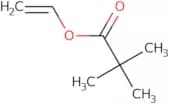
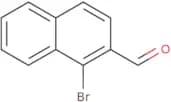
CAS:<p>Vinyl Pivalate is a polyvinyl polymer stabilized with HQ. It is produced by condensation polymerization of vinyl acetate and pivalic acid in presence of a free radical initiator. The monomer ratio is 80:20. Vinyl Pivalate has a high degree of thermal expansion, which makes it suitable for use in the manufacture of films, coatings and adhesives. This polymer also has good chemical resistance and can be used in the manufacture of products where heat resistance is required. Vinyl Pivalate's reactive properties make it ideal for use as an ingredient in the production of polymers with reactive groups such as carboxylic acids or amines. The reaction mechanism for this polymerization is shown below:</p>Formula:C7H12O2Purity:Min. 95%Molecular weight:128.17 g/mol1-Bromo-2-naphthaldehyde
CAS:<p>1-Bromo-2-naphthaldehyde is a reactive aldehyde that reacts with alkyl halides to form unsymmetrical adducts. This compound undergoes intramolecular hydrogenation and can be used as an excellent starting material for synthesizing ferrocenes. 1-Bromo-2-naphthaldehyde is also used in the synthesis of photochromic compounds, which are compounds that change color when exposed to ultraviolet radiation. 1-Bromo-2-naphthaldehyde undergoes protonation and forms hydrogen bonds with other molecules, making it useful for research on hydrogen bonding.</p>Formula:C11H7BrOPurity:Min. 95%Molecular weight:235.08 g/molDiclosan-d4
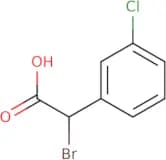
CAS:<p>Diclosan-d4 is a cationic surfactant that is used in the treatment of wastewater. It has been shown to inhibit bacterial growth and reduce the number of bacteria in water. Diclosan-d4 is used as a biocide in detergent compositions, such as laundry detergents and dishwashing liquids. It also has antimicrobial properties against fungi, which may be due to its ability to bind to fatty acids and cell membranes. This compound binds to polymeric surfaces through electrostatic interactions with carboxyl groups on the polymer film surface. Diclosan-d4 is used at concentrations of 10 ppm for subclinical mastitis in cows, but can cause lung cell toxicity at higher concentrations.</p>Formula:C12H4D4Cl2O2Purity:Min. 95%Molecular weight:259.12 g/mol2-Bromo-2-(3-chlorophenyl)acetic acid
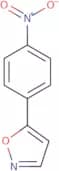
CAS:<p>Versatile small molecule scaffold</p>Formula:C8H6BrClO2Purity:Min. 95%Molecular weight:249.49 g/mol5-(4-Nitrophenyl)isoxazole
CAS:<p>Versatile small molecule scaffold</p>Formula:C9H6N2O3Purity:Min. 95%Molecular weight:190.16 g/molEthylene glycol bis(propionitrile) ether
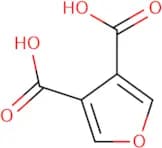
CAS:<p>Ethylene glycol bis(propionitrile) ether is a byproduct of the production of ethylene. It is introduced into a reaction solution containing acrylonitrile, which reacts to form an intermediate that can then be isolated from the solution. The intermediate is neutralized and reacted with water to produce ethylene glycol bis(propionitrile) ether. The electrochemical impedance spectroscopy (EIS) technique has been used to study the morphology and solvation of this compound.</p>Formula:C8H12N2O2Purity:Min. 95%Molecular weight:168.2 g/mol3,4-Furandicarboxylic acid
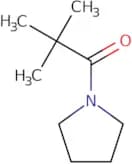
CAS:<p>3,4-Furandicarboxylic acid is a crystalline compound that belongs to the group of carboxylic acids. It is formed by the hydrogenation of 3,4-dihydroxyphenylacetic acid and has been used in the industrial production of diethyl esters. The crystal structure of 3,4-furandicarboxylic acid has been determined using X-ray crystallography. This compound forms a dihedral angle with the ethyl group and hydrogen bonds to the proton on one side and an intramolecular hydrogen bond on the other side. 3,4-Furandicarboxylic acid is used as a precursor for hydrochloric acid and as an energy-efficient fuel in organic synthesis reactions.</p>Formula:C6H4O5Purity:Min. 95%Molecular weight:156.09 g/mol2,2-Dimethyl-1-(pyrrolidin-1-yl)propan-1-one
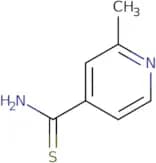
CAS:Versatile small molecule scaffoldFormula:C9H17NOPurity:Min. 95%Molecular weight:155.24 g/mol2-Methy-4-thioisonicotinicamide
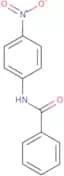
CAS:<p>Versatile small molecule scaffold</p>Formula:C7H8N2SPurity:Min. 95%Molecular weight:152.22 g/mol4'-Nitrobenzanilide
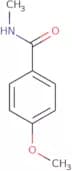
CAS:<p>4'-Nitrobenzanilide is an organic compound that is used to synthesize dyes and other chemicals. It can be prepared by reacting a primary or secondary amine with 4-nitrochlorobenzene in the presence of a base. This reaction produces the nitroanilide, which can be oxidized to the nitrobenzanilide. The high yield and low toxicity of this process make it an attractive alternative to older methods of production. 4'-Nitrobenzanilide has been shown to have significant environmental effects, particularly in terms of pollution caused by chlorinated solvents.</p>Formula:C13H10N2O3Purity:Min. 95%Molecular weight:242.23 g/mol4-Methoxy-N-methylbenzamide
CAS:<p>4-Methoxy-N-methylbenzamide is a benzene that has been synthetically modified to an amide, which is then annulated to an isoquinoline. This compound has two functionalizations: one cyclopropane and one diffraction. The yield of this reaction was approximately 55%. 4-Methoxy-N-methylbenzamide (4MMB) is a x-ray active molecule with a dihedral angle of about 60°, which is common in natural products. 4MMB is also an oxidative molecule and reacts with biomolecules. 4MMB contains the following characteristic structural features: an aromatic ring, a carbonyl group, and two amide bonds.</p>Formula:C9H11NO2Purity:Min. 95%Molecular weight:165.19 g/mol2-Bromopropionaldehyde Diethyl Acetal
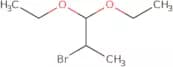
CAS:<p>2-Bromopropionaldehyde diethyl acetal is an organic compound that is used as a reactant in the preparation of other compounds. It can be prepared by the reaction of 3-bromo-1-propanol with magnesium in ether. The reaction is catalyzed by pyridinium chlorochromate, which facilitates the ring-opening reaction. The product can also be used to introduce alkyl groups onto aromatic rings, such as benzene and naphthalene. 2-Bromopropionaldehyde diethyl acetal has a high redox potential, making it reactive and nucleophilic.</p>Formula:C7H15BrO2Purity:Min. 95%Molecular weight:211.1 g/mol1,1-(9H-carbazole-3,6-diyl)diethanone
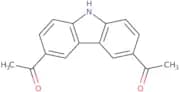
CAS:<p>1,1-(9H-carbazole-3,6-diyl)diethanone is an aromatic compound with a molecular formula of C12H10N2O that belongs to the class of enol ethers. It can be used as a framework for the synthesis of other compounds. The acylation reaction is catalyzed by a transfer catalyst and carried out in dioxane at room temperature. After filtration and washing with deionized water, it is then dried under vacuum to yield the product. Friedel-Crafts acylation or a metal salt may be used during this process. 1,1-(9H-carbazole-3,6-diyl)diethanone has also been shown to act as a ligand for transition metals such as copper and zinc in certain reactions.</p>Formula:C16H13NO2Purity:Min. 95%Molecular weight:251.28 g/mol2-(4-Nitrobenzenesulfinyl)acetic acid
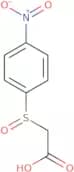
CAS:<p>2-(4-Nitrobenzenesulfinyl)acetic acid is an organic compound that has a hydrogen bond acceptor and a hydrogen bond donor. It also has two groups of nitrobenzenesulfonic acid attached to the same carbon atom, and therefore contains both electron-donating and electron-withdrawing groups.</p>Formula:C8H7NO5SPurity:Min. 95%Molecular weight:229.21 g/mol2-(4-Bromobenzenesulfonyl)acetic acid
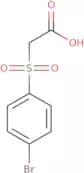
CAS:<p>Versatile small molecule scaffold</p>Formula:C8H7BrO4SPurity:Min. 95%Molecular weight:279.11 g/mol2-[(4-Nitrophenyl)sulfanyl]acetic acid
CAS:<p>2-[(4-Nitrophenyl)sulfanyl]acetic acid is a colorless liquid with a boiling point of 168°C. It is soluble in water, glycol, and ether, but not in ethanol. 2-[(4-Nitrophenyl)sulfanyl]acetic acid has been shown to be an acceptor for borate, forming the perborate ion. It also reacts with glycol to form the glyoxalate ion. The compound has been shown to react with nitric acid and ethylene glycol to form nitroethane and acetic acid molecules. This reaction is catalyzed by hydrogen bonding between the oxygen atoms of acetic acid and nitric acid, which causes an electron transfer from nitric acid to acetic acid molecules. This process results in reactive species that can then react with other substances such as hydrogen bonds or peracetic acid.</p>Formula:C8H7NO4SPurity:Min. 95%Molecular weight:213.21 g/mol(4-Bromo-phenylsulfanyl)-acetic acid
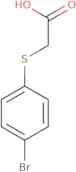
CAS:<p>Versatile small molecule scaffold</p>Formula:C8H7BrO2SPurity:Min. 95%Molecular weight:247.11 g/mol2-((4-Methoxyphenyl)thio)acetic acid
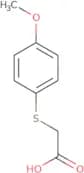
CAS:<p>Versatile small molecule scaffold</p>Formula:C9H10O3SPurity:Min. 95%Molecular weight:198.24 g/mol1-(4-Bromophenyl)-3,3-dimethylurea
CAS:<p>1-(4-Bromophenyl)-3,3-dimethylurea is a growth regulator that belongs to the heterocycle pyrazole derivative. It binds to the cytochrome P450 enzyme and inhibits the production of proteins vital for cell division, leading to cell death by inhibiting the production of proteins vital for cell division. 1-(4-Bromophenyl)-3,3-dimethylurea has been shown to inhibit methionine adenosyltransferase and suppress DNA methylation. This drug also has a toxic effect on respiratory system cells, which may be due to its ability to induce apoptosis.</p>Formula:C9H11BrN2OPurity:Min. 95%Molecular weight:243.1 g/molMethyl (2R)-2-amino-3-(4-hydroxyphenyl)propanoate
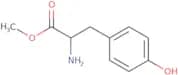
CAS:<p>Methyl (2R)-2-amino-3-(4-hydroxyphenyl)propanoate is a linker that binds to the nuclear hormone receptors found in cancer cells. It has been shown that this molecule has anticancer activity in animals, but its efficacy has not been evaluated in humans. Methyl (2R)-2-amino-3-(4-hydroxyphenyl)propanoate is a stereoselective agent, which means it selectively binds to one of two mirror images of the same molecule. The molecule was originally synthesized for use as an estrogen receptor antagonist but also shows affinity for progesterone and androgen receptors. This linker is being investigated as a potential drug for the treatment of hormone receptor positive glioma, prostate cancer, and breast cancer.</p>Formula:C10H13NO3Purity:Min. 95%Molecular weight:195.21 g/molEthyl[1-(oxolan-2-yl)-2-phenylethyl]amine
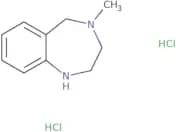
CAS:<p>Versatile small molecule scaffold</p>Formula:C14H21NOPurity:Min. 95%Molecular weight:219.32 g/mol4-Methyl-2,3,4,5-tetrahydro-1H-1,4-benzodiazepine dihydrochloride
CAS:<p>Versatile small molecule scaffold</p>Formula:C10H16Cl2N2Purity:Min. 95%Molecular weight:235.15 g/mol2-Benzylbenzo[D]isothiazol-3(2H)-one 1,1-dioxide
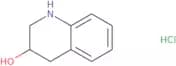
CAS:<p>Versatile small molecule scaffold</p>Formula:C14H11NO3SPurity:Min. 95%Molecular weight:273.31 g/mol1,2,3,4-Tetrahydroquinolin-3-ol
CAS:<p>1,2,3,4-Tetrahydroquinolin-3-ol is a stabilizer that can be used to prevent or slow down the polymerization of epoxy resins. It can also be used as an intermediate in the synthesis of other organic compounds. 1,2,3,4-Tetrahydroquinolin-3-ol has been shown to react with amines and nucleophiles to form new compounds. It has also been shown to stabilize proton transfer reactions. This compound is also capable of reacting with inorganic acids to form ring-opening polymers.</p>Formula:C9H11NOPurity:Min. 95%Molecular weight:149.19 g/mol8-Ethyl-8-azabicyclo[3.2.1]octan-3-one
CAS:<p>8-Ethyl-8-azabicyclo[3.2.1]octan-3-one is a synthetic compound that is structurally similar to nicotine, which is found in the leaves of tobacco plants. It has been shown to have pharmacological activity as a nicotinic receptor agonist. 8-Ethyl-8-azabicyclo[3.2.1]octan-3-one has been used in the treatment of various types of cancer, including Hodgkin's disease and breast cancer, as well as for Parkinson's disease and Alzheimer's disease. 8EBAO also has antiemetic properties and can be used to treat motion sickness or postoperative nausea and vomiting. The drug is metabolized by CYP450 enzymes into tigloyloximes, which are then converted into pseudotropine or piperideine through the action of rhizogenes from Pseudomonas sp., Streptomyces sp.,</p>Formula:C9H15NOPurity:Min. 95%Molecular weight:153.22 g/mol9-Methyl-3,9-diazabicyclo[3.3.1]nonane dihydrochloride
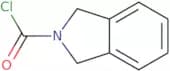
CAS:<p>Versatile small molecule scaffold</p>Formula:C8H18Cl2N2Purity:Min. 95%Molecular weight:213.15 g/mol2,3-Dihydro-1H-isoindole-2-carbonyl chloride
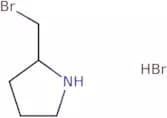
CAS:<p>Versatile small molecule scaffold</p>Formula:C9H8ClNOPurity:Min. 95%Molecular weight:181.62 g/mol2-(Bromomethyl)pyrrolidine hydrobromide
CAS:2-Bromomethylpyrrolidine hydrobromide is a brominated analog of pyrrolidine. It is an intermediate in the reaction pathway for the synthesis of piperidine, which is a precursor to many pharmaceuticals. 2-Bromomethylpyrrolidine hydrobromide is synthesized by the reaction of bromine with pyrrolidine and undergoes electrophilic substitution at the nitrogen atom in its chain. The equilibrium between 2-bromomethylpyrrolidine hydrobromide and 2-methylpyrrolidinium bromide is shifted to favor hydrobromide when it is reacted with an alcohol or amine.Formula:C5H11Br2NPurity:Min. 95%Molecular weight:244.96 g/mol2-Bromomethyl-piperidine hydrobromide
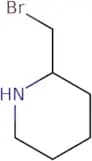
CAS:<p>2-Bromomethyl-piperidine hydrobromide is a potent 5-HT6 receptor antagonist. It has been shown to have affinity for the 5-HT6 receptor and is selective for this receptor over other serotonin receptors. 2-Bromomethyl-piperidine hydrobromide inhibits the binding of serotonin to its receptors and prevents the activation of these receptors, which leads to an anti-depressive effect. This compound is also used as an intermediate in organic synthesis, such as acrylates or hydrides.</p>Formula:C6H13Br2NPurity:Min. 95%Molecular weight:258.99 g/mol4-Phenylpyrimidin-5-amine
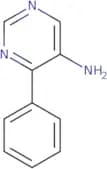
CAS:<p>4-Phenylpyrimidin-5-amine is an organic compound that belongs to the group of bromo compounds. It is a colorless solid. 4-Phenylpyrimidin-5-amine can be synthesized from phenylacetic acid, nitroethane, and ammonium acetate. The substance is used in the manufacture of other substances.</p>Formula:C10H9N3Purity:Min. 95%Molecular weight:171.2 g/mol4-Tert-butyl-6-chloropyrimidine
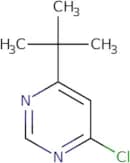
CAS:<p>Versatile small molecule scaffold</p>Formula:C8H11ClN2Purity:Min. 95%Molecular weight:170.64 g/mol4-Chloro-6-phenylpyrimidine
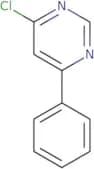
CAS:<p>4-Chloro-6-phenylpyrimidine is a crystalline solid. It has a molecular weight of 193.14 g/mol and a density of 1.832 g/cm3, with the chemical formula C11H10N4Cl2. The crystals are monoclinic and colourless. The crystals have an orthorhombic symmetry with space group P21/n. 4-Chloro-6-phenylpyrimidine has been used to measure the wavelength and radiation parameters for X-ray diffraction measurements. Bruker's software, which is used for data acquisition, was used to generate the parameters for this compound's crystal structure in order to perform these experiments.</p>Formula:C10H7ClN2Purity:Min. 95%Molecular weight:190.63 g/mol4-Cyanostyrene
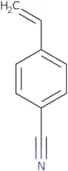
CAS:<p>4-Cyanostyrene is a monomer that belongs to the group of unsaturated hydrocarbons. It has the functional groups of methoxy and hydrogen chloride, which react with other molecules to form polymers. 4-Cyanostyrene is used in polymerization reactions as a functional group. It reacts with tetrazole in an homogeneous catalytic system to form a copolymer. This reaction can be monitored by gravimetric analysis and FT-IR spectroscopy. The polymerization reaction is influenced by the substrate binding and copolymerization, which is affected by temperature, pressure, and solvent choice.</p>Formula:C9H7NPurity:Min. 95%Molecular weight:129.16 g/mol3,3-Dimethylpyrrolidine-2,5-dione
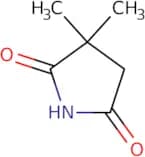
CAS:<p>Versatile small molecule scaffold</p>Formula:C6H9NO2Purity:Min. 95%Molecular weight:127.14 g/mol2-(3,3-Dimethylpyrrolidin-1-yl)ethan-1-amine
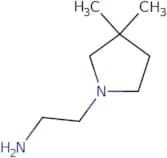
CAS:<p>Versatile small molecule scaffold</p>Formula:C8H18N2Purity:Min. 95%Molecular weight:142.24 g/mol6-tert-Butyl-3,4-dihydropyrimidin-4-one
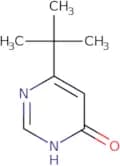
CAS:<p>Versatile small molecule scaffold</p>Formula:C8H12N2OPurity:Min. 95%Molecular weight:152.19 g/mol5-Bromo-4-hydrazino-6-methylpyrimidine
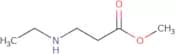
CAS:<p>Versatile small molecule scaffold</p>Formula:C5H7BrN4Purity:Min. 95%Molecular weight:203.04 g/molmethyl 3-(ethylamino)propanoate
CAS:<p>Versatile small molecule scaffold</p>Formula:C6H13NO2Purity:Min. 95%Molecular weight:131.2 g/molMethyl 3-(ethylamino)-2-methylpropanoate
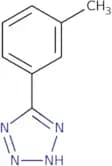
CAS:Versatile small molecule scaffoldFormula:C7H15NO2Purity:Min. 95%Molecular weight:145.2 g/mol5-(m-Tolyl)tetrazole
CAS:<p>5-(m-Tolyl)tetrazole is an experimental compound that has been shown to be a nitrite reductase catalyst. It is also an electrochemical and photocatalytic oxidizing agent that can catalyze the oxidation of bromate. The crystal x-ray diffraction patterns of 5-(m-tolyl)tetrazole show the presence of channels, cycles, and nitrite ions in its structure.</p>Formula:C8H8N4Purity:Min. 95%Molecular weight:160.18 g/mol2-[4-(Propan-2-yl)phenyl]propan-2-ol
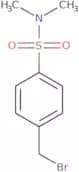
CAS:<p>Versatile small molecule scaffold</p>Formula:C12H18OPurity:Min. 95%Molecular weight:178.27 g/mol4-Bromomethyl-N,N-dimethyl-benzenesulfonamide
CAS:<p>Versatile small molecule scaffold</p>Formula:C9H12BrNO2SPurity:Min. 95%Molecular weight:278.17 g/mol[4-(Benzylsulfanyl)phenyl]methanol
CAS:<p>Versatile small molecule scaffold</p>Formula:C14H14OSPurity:Min. 95%Molecular weight:230.33 g/mol



![2-[(4-Nitrophenyl)sulfanyl]acetic acid](/_next/image/?url=https%3A%2Fstatic.cymitquimica.com%2Fproducts%2F3D%2Fthumb-webp%2FDAA40675.webp&w=3840&q=75)
![Ethyl[1-(oxolan-2-yl)-2-phenylethyl]amine](/_next/image/?url=https%3A%2Fstatic.cymitquimica.com%2Fproducts%2F3D%2Fthumb-webp%2FDAA41334.webp&w=3840&q=75)
![2-Benzylbenzo[D]isothiazol-3(2H)-one 1,1-dioxide](/_next/image/?url=https%3A%2Fstatic.cymitquimica.com%2Fproducts%2F3D%2Fthumb-webp%2FDAA41659.webp&w=3840&q=75)
![8-Ethyl-8-azabicyclo[3.2.1]octan-3-one](/_next/image/?url=https%3A%2Fstatic.cymitquimica.com%2Fproducts%2F3D%2Fthumb-webp%2FDAA42330.webp&w=3840&q=75)
![9-Methyl-3,9-diazabicyclo[3.3.1]nonane dihydrochloride](/_next/image/?url=https%3A%2Fstatic.cymitquimica.com%2Fproducts%2F3D%2Fthumb-webp%2FDAA43107.webp&w=3840&q=75)


![2-[4-(Propan-2-yl)phenyl]propan-2-ol](/_next/image/?url=https%3A%2Fstatic.cymitquimica.com%2Fproducts%2F3D%2Fthumb-webp%2FDAA44542.webp&w=3840&q=75)
![[4-(Benzylsulfanyl)phenyl]methanol](/_next/image/?url=https%3A%2Fstatic.cymitquimica.com%2Fproducts%2F3D%2Fthumb-webp%2FDAA44898.webp&w=3840&q=75)