Building Blocks
Subcategories of "Building Blocks"
- Boronic Acids & Boronic Acid Derivatives(5,784 products)
- Chiral Building Blocks(1,242 products)
- Hydrocarbon Building Blocks(6,105 products)
- Organic Building Blocks(61,061 products)
Found 205399 products of "Building Blocks"
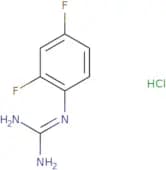
N-(2,4-Difluorophenyl)guanidine hydrochloride
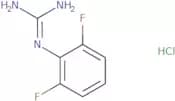
CAS:Versatile small molecule scaffoldFormula:C7H8ClF2N3Purity:Min. 95%Molecular weight:207.61 g/molN-(2,6-Difluorophenyl)guanidine hydrochloride
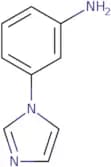
CAS:Versatile small molecule scaffoldFormula:C7H8ClF2N3Purity:Min. 95%Molecular weight:207.61 g/mol3-Imidazol-1-yl-phenylamine
CAS:3-Imidazol-1-yl-phenylamine is an organic compound that contains both aromatic and heterocyclic moieties. 3-Imidazol-1-yl-phenylamine has high thermal stability and selectivity, as well as affinity for ionic membranes. It is used in the chemical industry to transport cations such as K+, Na+, Li+, NH4+ and Ca2+. The imidazolium functional group in 3-imidazol-1-yl phenylamine contributes to its membrane affinity and ion transport properties. This compound also has a low toxicity and is not flammable or corrosive at room temperature.
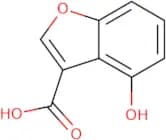
Formula:C9H9N3Purity:Min. 95%Molecular weight:159.19 g/mol4-Hydroxy-1-benzofuran-3-carboxylic acid
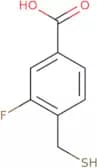
CAS:Versatile small molecule scaffoldFormula:C9H6O4Purity:Min. 95%Molecular weight:178.14 g/mol3-Fluoro-4-(sulfanylmethyl)benzoic acid
CAS:Versatile small molecule scaffold
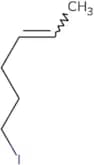
Formula:C8H7FO2SPurity:Min. 95%Molecular weight:186.21 g/mol(2E)-6-Iodohex-2-ene
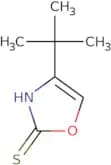
CAS:Versatile small molecule scaffoldFormula:C6H11IPurity:Min. 95%Molecular weight:210.1 g/mol4-(tert-Butyl)oxazole-2-thiol
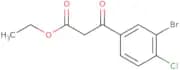
CAS:Versatile small molecule scaffoldFormula:C7H11NOSPurity:Min. 95%Molecular weight:157.24 g/molEthyl 3-(3-bromo-4-chlorophenyl)-3-oxopropanoate
CAS:Versatile small molecule scaffoldFormula:C11H10BrClO3Purity:Min. 95%Molecular weight:305.55 g/mol5-Chloro-1,3-dimethyl-1H,2H,3H,4H-pyrido[2,3-d]pyrimidine-2,4-dione
CAS:Versatile small molecule scaffoldFormula:C9H8ClN3O2Purity:Min. 95%Molecular weight:225.63 g/mol6-Amino-1,3-dimethyl-1H,2H,3H,4H-pyrido[2,3-d]pyrimidine-2,4-dione
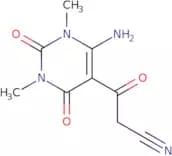
CAS:6-Amino-1,3-dimethyl-1H,2H,3H,4H-pyrido[2,3-d]pyrimidine-2,4-dione is a synthetic molecule that mimics the structure of pyridoxal phosphate. It has been shown to have antioxidant properties in micelles and has been used as a surfactant. This drug has also been found to have anti-inflammatory properties in animals. The mechanism of action is not known with certainty but may involve redox potentials or interaction with functional groups.Formula:C9H10N4O2Purity:Min. 95%Molecular weight:206.2 g/mol6-Amino-1,2,3,4-tetrahydro-1,3-dimethyl-β,2,4-trioxo-5-pyrimidinepropanenitrile
CAS:Versatile small molecule scaffold
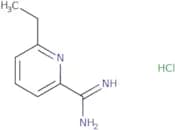
Formula:C9H10N4O3Purity:Min. 95%Molecular weight:222.2 g/mol6-EthylpicoliniMidaMide hydrochloride
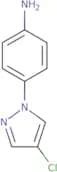
CAS:Versatile small molecule scaffoldFormula:C8H12ClN3Purity:Min. 95%Molecular weight:185.65 g/mol4-(4-Chloro-1H-pyrazol-1-yl)aniline
CAS:Versatile small molecule scaffold
Formula:C9H8ClN3Purity:Min. 95%Molecular weight:193.63 g/mol3,4-Dichloro-1-[(2-fluorophenyl)methyl]-2,5-dihydro-1H-pyrrole-2,5-dione
CAS:Versatile small molecule scaffoldFormula:C11H6Cl2FNO2Purity:Min. 95%Molecular weight:274.07 g/mol3,4-Dichloro-1-[(4-fluorophenyl)methyl]-2,5-dihydro-1H-pyrrole-2,5-dione
CAS:Versatile small molecule scaffoldFormula:C11H6Cl2FNO2Purity:Min. 95%Molecular weight:274.07 g/mol4,5-Dichloro-2-[(2-chlorophenyl)methyl]-2,3-dihydropyridazin-3-one
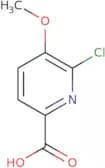
CAS:Versatile small molecule scaffoldFormula:C11H7Cl3N2OPurity:Min. 95%Molecular weight:289.5 g/mol6-Chloro-5-methoxypyridine-2-carboxylic acid
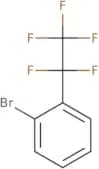
CAS:Versatile small molecule scaffoldFormula:C7H6ClNO3Purity:Min. 95%Molecular weight:187.6 g/mol1-Bromo-2-pentafluoroethyl-benzene
CAS:Versatile small molecule scaffoldFormula:C8H4BrF5Purity:Min. 95%Molecular weight:275.01 g/mol2-[4-(Chloromethyl)phenoxy]acetonitrile
CAS:Versatile small molecule scaffold
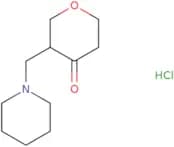
Formula:C9H8ClNOPurity:Min. 95%Molecular weight:181.62 g/mol3-(Piperidin-1-ylmethyl)oxan-4-one hydrochloride
CAS:Versatile small molecule scaffoldFormula:C11H20ClNO2Purity:Min. 95%Molecular weight:233.73 g/mol3-Methyl-1H,2H,3H-pyrido[2,3-b][1,4]oxazin-2-one
CAS:Versatile small molecule scaffoldFormula:C8H8N2O2Purity:Min. 95%Molecular weight:164.16 g/mol(1R)-1-(3-Chlorophenyl)propan-1-ol
CAS:Versatile small molecule scaffold
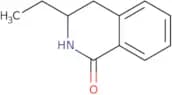
Formula:C9H11ClOPurity:Min. 95%Molecular weight:170.63 g/mol3-Ethyl-1,2,3,4-tetrahydroisoquinolin-1-one
CAS:Versatile small molecule scaffoldFormula:C11H13NOPurity:Min. 95%Molecular weight:175.23 g/mol4-[(Trimethylsilyl)oxy]oxane-4-carbonitrile
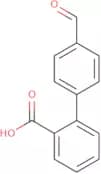
CAS:Versatile small molecule scaffoldFormula:C9H17NO2SiPurity:Min. 95%Molecular weight:199.32 g/mol2-(4-formylphenyl)benzoic acid
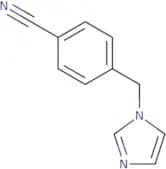
CAS:Versatile small molecule scaffoldFormula:C14H10O3Purity:Min. 95%Molecular weight:226.2 g/mol4-(1H-Imidazol-1-ylmethyl)benzonitrile
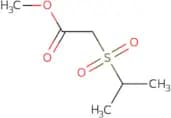
CAS:4-(1H-Imidazol-1-ylmethyl)benzonitrile is a ligand that is used in coordination chemistry. It has been shown to inhibit the activity of carboxylate enzymes, such as aconitase and malate dehydrogenase. This compound binds to the terminal residues on these enzymes, which are hydrophobic and contain a carboxyl group. The coordination geometry of 4-(1H-imidazol-1-ylmethyl)benzonitrile is octahedral, with six ligands binding to the metal ion. The luminescence of this molecule is due to its fluorescence properties when excited by light at 365 nm.Formula:C11H9N3Purity:Min. 95%Molecular weight:183.21 g/molMethyl 2-(propane-2-sulfonyl)acetate
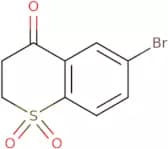
CAS:Versatile small molecule scaffoldFormula:C6H12O4SPurity:Min. 95%Molecular weight:180.22 g/mol6-Bromo-2,3-dihydrothiochromen-1,1-dioxide-4-one
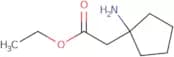
CAS:Versatile small molecule scaffoldFormula:C9H7BrO3SPurity:Min. 95%Molecular weight:275.12 g/molEthyl 2-(1-aminocyclopentyl)acetate
CAS:Versatile small molecule scaffold
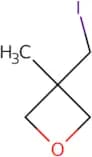
Formula:C9H17NO2Purity:Min. 95%Molecular weight:171.24 g/mol3-(Iodomethyl)-3-methyloxetane
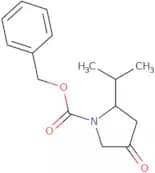
CAS:Versatile small molecule scaffoldFormula:C5H9IOPurity:Min. 95%Molecular weight:212.03 g/molBenzyl 4-oxo-2-(propan-2-yl)pyrrolidine-1-carboxylate
CAS:Versatile small molecule scaffoldFormula:C15H19NO3Purity:Min. 95%Molecular weight:261.32 g/molMethyl 6-oxospiro[2.5]octane-5-carboxylate
CAS:Versatile small molecule scaffold
Formula:C10H14O3Purity:Min. 95%Molecular weight:182.22 g/mol2-[(2,5-Difluorophenyl)amino]pyridine-3-carboxylic acid
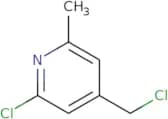
CAS:Versatile small molecule scaffoldFormula:C12H8F2N2O2Purity:Min. 95%Molecular weight:250.2 g/mol2-Chloro-4-(chloromethyl)-6-methylpyridine
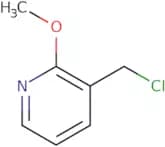
CAS:Versatile small molecule scaffoldFormula:C7H7NCl2Purity:Min. 95%Molecular weight:176.04 g/mol3-(Chloromethyl)-2-methoxypyridine
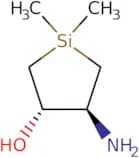
CAS:Versatile small molecule scaffoldFormula:C7H8ClNOPurity:Min. 95%Molecular weight:157.6 g/molrac-(3R,4R)-4-Amino-1,1-dimethylsilolan-3-ol
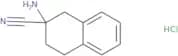
CAS:Versatile small molecule scaffoldFormula:C6H15NOSiPurity:Min. 95%Molecular weight:145.3 g/mol2-Amino-1,2,3,4-tetrahydronaphthalene-2-carbonitrile hydrochloride
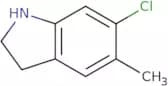
CAS:Versatile small molecule scaffoldFormula:C11H13ClN2Purity:Min. 95%Molecular weight:208.69 g/mol6-Chloro-5-methyl-2,3-dihydro-1H-indole
CAS:6-Chloro-5-methyl-2,3-dihydro-1H-indole is a 5HT receptor agonist that has been shown to be an effective antidepressant in animal models. It has a high affinity for the 5HT2A and 5HT2C receptors, but does not bind to other serotonin receptor subtypes. 6-Chloro-5-methyl-2,3-dihydro-1H-indole also possesses oral activity and is selective for the 5HT2A receptor subtype. The compound has been cloned and evolutionarily optimized to produce a more potent and selective compound.Formula:C9H10ClNPurity:Min. 95%Molecular weight:167.63 g/mol4,5-Dichloro-2,3-dihydro-1-indole
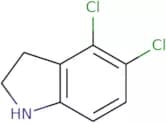
CAS:Versatile small molecule scaffoldFormula:C8H7Cl2NPurity:Min. 95%Molecular weight:188.05 g/molN-(Ethoxymethyl)-N-(2-ethyl-6-methylphenyl)acetamide
CAS:Versatile small molecule scaffoldFormula:C14H21NO2Purity:Min. 95%Molecular weight:235.32 g/mol1-{[3-(Hydroxymethyl)phenyl]sulfanyl}-N,N-dimethylformamide
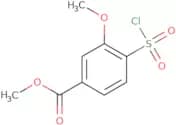
CAS:Versatile small molecule scaffoldFormula:C10H13NO2SPurity:Min. 95%Molecular weight:211.28 g/molmethyl 4-(chlorosulfonyl)-3-methoxybenzoate
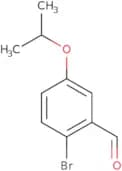
CAS:Versatile small molecule scaffoldFormula:C9H9ClO5SPurity:Min. 95%Molecular weight:264.7 g/mol2-Bromo-5-isopropoxybenzaldehyde
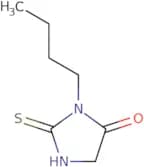
CAS:2-Bromo-5-isopropoxybenzaldehyde is an isopropoxy analog of the natural product suzukol. It has been synthesized by a novel methodology involving oxidative bromination of the phenylacetone. This compound has been used as a model for the synthesis of 2,3,4,5-tetrahydrobenzofuran and can be used as a starting material for the synthesis of other natural products.Formula:C10H11BrO2Purity:Min. 95%Molecular weight:243.1 g/mol1-Butyl-2-sulfanyl-4,5-dihydro-1H-imidazol-5-one
CAS:Versatile small molecule scaffoldFormula:C7H12N2OSPurity:Min. 95%Molecular weight:172.25 g/mol5-(4-Methoxyphenyl)-2-methyl-1-phenyl-1H-pyrrole-3-carboxylic acid
CAS:Versatile small molecule scaffoldFormula:C19H17NO3Purity:Min. 95%Molecular weight:307.3 g/mol3-amino-5-methoxyphenol
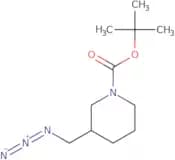
CAS:3-Amino-5-methoxyphenol is a chiral compound with two enantiomers. It has been shown to inhibit tumour growth and to have antitumour properties. 3-Amino-5-methoxyphenol has also been found to be effective against Gram-positive bacteria, such as methicillin resistant Staphylococcus aureus (MRSA). 3-Amino-5-methoxyphenol binds to the active site of bacterial ribosomes and inhibits protein synthesis. This leads to cell death by inhibiting the production of proteins vital for cell division. 3-Amino-5-methoxyphenol can also be used as an antibiotic in humans because it does not affect the metabolism of human serum.Formula:C7H9NO2Purity:Min. 95%Molecular weight:139.15 g/moltert-Butyl 3-(Azidomethyl)-piperidine-1-carboxylate
CAS:Versatile small molecule scaffoldFormula:C11H20N4O2Purity:Min. 95%Molecular weight:240.31 g/mol(3-Aminophenyl)(cyclopropyl)methanone
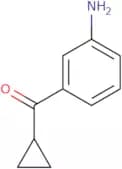
CAS:Versatile small molecule scaffold
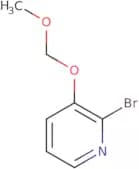
Formula:C10H11NOPurity:Min. 95%Molecular weight:161.2 g/mol2-bromo-3-(methoxymethoxy)pyridine
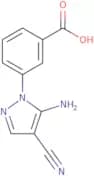
CAS:Versatile small molecule scaffoldFormula:C7H8BrNO2Purity:Min. 95%Molecular weight:218.05 g/mol3-(5-Amino-4-cyano-1H-pyrazol-1-yl)benzoic acid
CAS:Versatile small molecule scaffoldFormula:C11H8N4O2Purity:Min. 95%Molecular weight:228.21 g/mol

![5-Chloro-1,3-dimethyl-1H,2H,3H,4H-pyrido[2,3-d]pyrimidine-2,4-dione](/_next/image/?url=https%3A%2Fstatic.cymitquimica.com%2Fproducts%2F3D%2Fthumb-webp%2FMEA73483.webp&w=3840&q=75)
![6-Amino-1,3-dimethyl-1H,2H,3H,4H-pyrido[2,3-d]pyrimidine-2,4-dione](/_next/image/?url=https%3A%2Fstatic.cymitquimica.com%2Fproducts%2F3D%2Fthumb-webp%2FMEA73489.webp&w=3840&q=75)
![3,4-Dichloro-1-[(2-fluorophenyl)methyl]-2,5-dihydro-1H-pyrrole-2,5-dione](/_next/image/?url=https%3A%2Fstatic.cymitquimica.com%2Fproducts%2F3D%2Fthumb-webp%2FMEA74947.webp&w=3840&q=75)
![3,4-Dichloro-1-[(4-fluorophenyl)methyl]-2,5-dihydro-1H-pyrrole-2,5-dione](/_next/image/?url=https%3A%2Fstatic.cymitquimica.com%2Fproducts%2F3D%2Fthumb-webp%2FMEA74950.webp&w=3840&q=75)
![4,5-Dichloro-2-[(2-chlorophenyl)methyl]-2,3-dihydropyridazin-3-one](/_next/image/?url=https%3A%2Fstatic.cymitquimica.com%2Fproducts%2F3D%2Fthumb-webp%2FMEA74952.webp&w=3840&q=75)
![2-[4-(Chloromethyl)phenoxy]acetonitrile](/_next/image/?url=https%3A%2Fstatic.cymitquimica.com%2Fproducts%2F3D%2Fthumb-webp%2FMEA77283.webp&w=3840&q=75)
![3-Methyl-1H,2H,3H-pyrido[2,3-b][1,4]oxazin-2-one](/_next/image/?url=https%3A%2Fstatic.cymitquimica.com%2Fproducts%2F3D%2Fthumb-webp%2FMEA77731.webp&w=3840&q=75)

![4-[(Trimethylsilyl)oxy]oxane-4-carbonitrile](/_next/image/?url=https%3A%2Fstatic.cymitquimica.com%2Fproducts%2F3D%2Fthumb-webp%2FMEA79902.webp&w=3840&q=75)
![Methyl 6-oxospiro[2.5]octane-5-carboxylate](/_next/image/?url=https%3A%2Fstatic.cymitquimica.com%2Fproducts%2F3D%2Fthumb-webp%2FMFD89004.webp&w=3840&q=75)
![2-[(2,5-Difluorophenyl)amino]pyridine-3-carboxylic acid](/_next/image/?url=https%3A%2Fstatic.cymitquimica.com%2Fproducts%2F3D%2Fthumb-webp%2FMGA01531.webp&w=3840&q=75)

![1-{[3-(Hydroxymethyl)phenyl]sulfanyl}-N,N-dimethylformamide](/_next/image/?url=https%3A%2Fstatic.cymitquimica.com%2Fproducts%2F3D%2Fthumb-webp%2FMGA10706.webp&w=3840&q=75)