


Building Blocks
Subcategories of "Building Blocks"
- Boronic Acids & Boronic Acid Derivatives(5,805 products)
- Chiral Building Blocks(1,248 products)
- Hydrocarbon Building Blocks(6,118 products)
- Organic Building Blocks(61,447 products)
Found 208423 products of "Building Blocks"
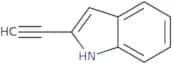
2-Ethynyl-1H-indole
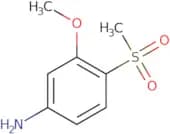
CAS:2-Ethynyl-1H-indole is a synthetic nucleoside analog of the anti-viral drug acyclovir. It is an activated prodrug that is hydrolyzed by esterases to its active form, which inhibits viral polymerase and thus prevents the synthesis of new viral DNA. 2-Ethynyl-1H-indole also has been shown to have inhibitory effects on chronic bronchitis and emphysema, as well as demonstrating cytotoxic activity in vitro. The enantiomers of 2-ethynyl-1H indole have different pharmacological activities. The (R)-enantiomer is more potent than the (S)-enantiomer in inhibiting erythrocyte coagulation and platelet aggregation in vitro.Formula:C10H7NPurity:Min. 95%Molecular weight:141.17 g/mol4-Methanesulfonyl-3-methoxyaniline
CAS:Versatile small molecule scaffold
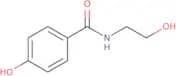
Formula:C8H11NO3SPurity:Min. 95%Molecular weight:201.25 g/mol4-Hydroxy-N-(2-hydroxyethyl)benzamide
CAS:4-Hydroxy-N-(2-hydroxyethyl)benzamide (4OHEBA) is a natural product that belongs to the class of phenolic compounds. It is found in macroalgae and has been shown to have anti-inflammatory properties, which may be due to its ability to inhibit prostaglandin synthesis. 4OHEBA has also been shown to have chemical diversity and studies show that it can be used in preservative systems.
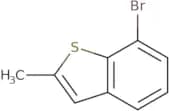
Formula:C9H11NO3Purity:Min. 95%Molecular weight:181.19 g/mol7-Bromo-2-methyl-1-benzothiophene
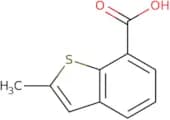
CAS:Versatile small molecule scaffoldFormula:C9H7BrSPurity:Min. 95%Molecular weight:227.12 g/mol2-Methyl-1-benzothiophene-7-carboxylic acid
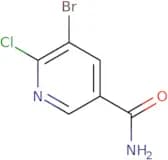
CAS:Versatile small molecule scaffoldFormula:C10H8O2SPurity:Min. 95%Molecular weight:192.24 g/mol5-Bromo-6-chloropyridine-3-carboxamide
CAS:Versatile small molecule scaffoldFormula:C6H4BrClN2OPurity:Min. 95%Color and Shape:PowderMolecular weight:235.5 g/molIndeno[2,1-b]chromene-6-carbaldehyde
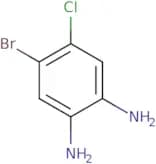
CAS:Versatile small molecule scaffoldFormula:C17H10O2Purity:Min. 95%Molecular weight:246.26 g/mol4-Bromo-5-chlorobenzene-1,2-diamine
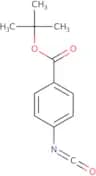
CAS:Versatile small molecule scaffoldFormula:C6H6BrClN2Purity:Min. 95%Molecular weight:221.48 g/moltert-Butyl 4-isocyanatobenzoate
CAS:Versatile small molecule scaffold
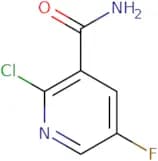
Formula:C12H13NO3Purity:Min. 95%Molecular weight:219.24 g/mol2-Chloro-5-fluoronicotinamide
CAS:Versatile small molecule scaffoldFormula:C6H4ClFN2OPurity:Min. 95%Molecular weight:174.56 g/mol2,3-Dimethylbutane-1-sulfonyl chloride
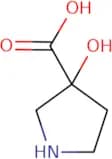
CAS:Versatile small molecule scaffoldFormula:C6H13ClO2SPurity:Min. 95%Molecular weight:184.7 g/mol3-Hydroxypyrrolidine-3-carboxylic acid
CAS:Versatile small molecule scaffold
Formula:C5H9NO3Purity:Min. 95%Molecular weight:131.13 g/molDimethyl bicyclo[3.1.1]heptane-1,5-dicarboxylate
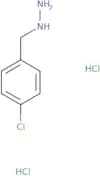
CAS:Versatile small molecule scaffoldFormula:C11H16O4Purity:Min. 95%Molecular weight:212.24 g/mol(4-Chlorobenzyl)hydrazine hydrochloride
CAS:Versatile small molecule scaffoldFormula:C7H10Cl2N2Purity:Min. 95%Molecular weight:193.07 g/mol[(4-Phenylphenyl)methyl]hydrazine hydrochloride
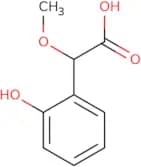
CAS:Versatile small molecule scaffoldFormula:C13H15ClN2Purity:Min. 95%Molecular weight:234.72 g/mol2-(2-Hydroxyphenyl)-2-methoxyacetic acid
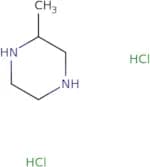
CAS:Versatile small molecule scaffoldFormula:C9H10O4Purity:Min. 95%Molecular weight:182.17 g/mol(R)-2-Methylpiperazine dihydrochloride
CAS:Versatile small molecule scaffold
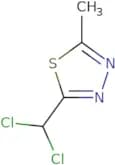
Formula:C5H14Cl2N2Purity:Min. 95%Molecular weight:173.08 g/mol2-(Dichloromethyl)-5-methyl-1,3,4-thiadiazole
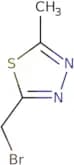
CAS:Versatile small molecule scaffoldFormula:C4H4Cl2N2SPurity:Min. 95%Molecular weight:183.06 g/mol2-(Bromomethyl)-5-methyl-1,3,4-thiadiazole
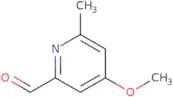
CAS:Versatile small molecule scaffoldFormula:C4H5BrN2SPurity:Min. 95%Molecular weight:193.07 g/mol4-Methoxy-6-methylpyridine-2-carbaldehyde
CAS:Versatile small molecule scaffoldFormula:C8H9NO2Purity:Min. 95%Molecular weight:151.16 g/mol2-[(1R,2S)-2-Hydroxycyclohexyl]acetic acid
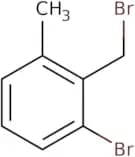
CAS:Versatile small molecule scaffoldFormula:C8H14O3Purity:Min. 95%Molecular weight:158.2 g/mol2-Bromo-6-methylbenzyl bromide
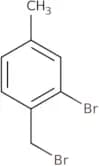
CAS:Versatile small molecule scaffoldFormula:C8H8Br2Purity:Min. 95%Molecular weight:263.96 g/mol2-Bromo-1-(bromomethyl)-4-methylbenzene
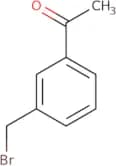
CAS:Versatile small molecule scaffoldFormula:C8H8Br2Purity:Min. 95%Molecular weight:263.96 g/mol-1(3-Bromomethyl-Phenyl)-Ethanone
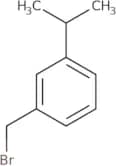
CAS:Versatile small molecule scaffoldFormula:C9H9BrOPurity:Min. 95%Molecular weight:213.07 g/mol1-(bromomethyl)-3-isopropylbenzene
CAS:Versatile small molecule scaffold
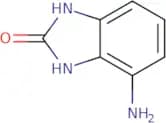
Formula:C10H13BrPurity:Min. 95%Molecular weight:213.12 g/mol4-Amino-1,3-dihydro-2H-benzimidazol-2-one
CAS:Versatile small molecule scaffoldFormula:C7H7N3OPurity:Min. 95%Molecular weight:149.15 g/mol1-(2,4-Dimethyl-4H-pyrazolo[1,5-a]benzimidazol-3-yl)ethanone
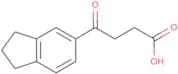
CAS:Versatile small molecule scaffoldFormula:C13H13N3OPurity:Min. 95%Molecular weight:227.27 g/mol4-(2,3-Dihydro-1H-inden-5-yl)-4-oxobutanoic acid
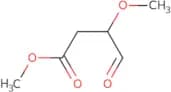
CAS:Versatile small molecule scaffoldFormula:C13H14O3Purity:Min. 95%Molecular weight:218.25 g/molMethyl 3-methoxy-4-oxobutanoate
CAS:Versatile small molecule scaffold
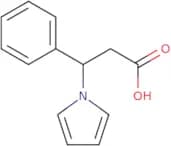
Formula:C6H10O4Purity:Min. 95%Molecular weight:146.14 g/mol3-Phenyl-3-(1H-pyrrol-1-yl)propanoic acid
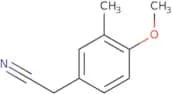
CAS:Versatile small molecule scaffoldFormula:C13H13NO2Purity:Min. 95%Molecular weight:215.25 g/mol4-Methoxy-3-methylphenylacetonitrile
CAS:Versatile small molecule scaffold
Formula:C10H11NOPurity:Min. 95%Molecular weight:161.2 g/mol4-(2-Ethyl-1H-imidazol-1-yl)aniline
CAS:Versatile small molecule scaffold
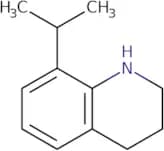
Formula:C11H13N3Purity:Min. 95%Molecular weight:187.24 g/mol8-(Propan-2-yl)-1,2,3,4-tetrahydroquinoline
CAS:Versatile small molecule scaffoldFormula:C12H17NPurity:Min. 95%Molecular weight:175.27 g/mol2-({1-Azabicyclo[2.2.2]octan-3-yl}amino)ethan-1-ol dihydrochloride
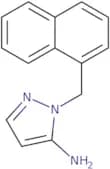
CAS:Versatile small molecule scaffoldFormula:C9H20Cl2N2OPurity:Min. 95%Molecular weight:243.2 g/mol1-(Naphthalen-1-ylmethyl)-1H-pyrazol-5-amine
CAS:Versatile small molecule scaffoldFormula:C14H13N3Purity:Min. 95%Molecular weight:223.27 g/mol5-Nitrothiophene-3-carbaldehyde
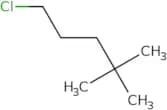
CAS:5-Nitrothiophene-3-carbaldehyde (NTAC) is a tripodal that has been shown to be able to form aggregations with other molecules. It has been used in solar cells as a semiconductor material and can be used as a ligand for optical or x-ray sensors. NTAC also has the ability to absorb light and can be used as a dye in dye-sensitized solar cells. The electron affinity of NTAC is low, making it an effective electron acceptor for photocatalytic reactions. This compound is also useful for particle size measurements using microscopy techniques.Formula:C5H3NO3SPurity:Min. 95%Molecular weight:157.15 g/mol1-Chloro-4,4-dimethylpentane
CAS:Versatile small molecule scaffold
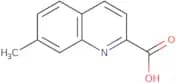
Formula:C7H15ClPurity:Min. 95%Molecular weight:134.65 g/mol7-Methyl-2-Quinolinecarboxylic Acid
CAS:Versatile small molecule scaffold
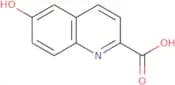
Formula:C11H9NO2Purity:Min. 95%Molecular weight:187.2 g/mol6-hydroxyquinoline-2-carboxylic acid
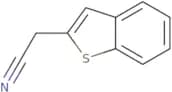
CAS:6-Hydroxyquinoline-2-carboxylic acid is a drug that has been shown to inhibit phospholipidosis, which is the accumulation of phospholipids in cells. It also inhibits naphthalene-induced hyperphosphorylation and histamine release from mast cells. 6-Hydroxyquinoline-2-carboxylic acid is an acceptor for the pharmacophore model and has been validated by molecular properties. The optimization process for this compound was monitored and validated. This lead compound is being considered as a potential therapeutic agent for the treatment of autoimmune diseases such as multiple sclerosis, rheumatoid arthritis, and lupus erythematosus.Formula:C10H7NO3Purity:Min. 95%Molecular weight:189.17 g/mol2-(1-Benzothiophen-2-yl)acetonitrile
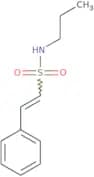
CAS:Versatile small molecule scaffoldFormula:C10H7NSPurity:Min. 95%Molecular weight:173.24 g/mol2-Phenyl-N-propylethene-1-sulfonamide
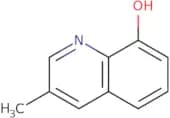
CAS:Versatile small molecule scaffoldFormula:C11H15NO2SPurity:Min. 95%Molecular weight:225.31 g/mol3-Methyl-8-hydroxyquinoline
CAS:3-Methyl-8-hydroxyquinoline (3MQ) is a chemical compound that has been shown to be an inhibitor of the enzyme cyclen. 3MQ binds to the active site of cyclen and blocks the binding of calcium ions, preventing the formation of calcium complexes with cyclen. This inhibition leads to a decrease in cyclen activity and an increase in the synthesis of protein. 3MQ has also been shown to be potent inhibitor against chloride ion currents through voltammetry experiments. It was found that its redox potential is very low, which suggests that it can be used as a probe for electron transfer reactions in cells. The photophysical properties of 3MQ have also been studied and it was found that this molecule absorbs light at wavelengths between 400–600 nm, which may lead to its use as a photosensitizer or photoantagonist for photodynamic therapy.
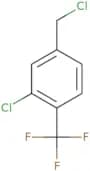
Formula:C10H9NOPurity:Min. 95%Molecular weight:159.18 g/mol2-Chloro-4-(chloromethyl)-1-(trifluoromethyl)benzene
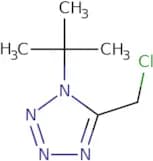
CAS:Versatile small molecule scaffoldFormula:C8H5Cl2F3Purity:Min. 95%Molecular weight:229.02 g/mol1-tert-Butyl-5-(chloromethyl)-1H-1,2,3,4-tetrazole
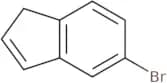
CAS:Versatile small molecule scaffoldFormula:C6H11ClN4Purity:Min. 95%Molecular weight:174.63 g/mol5-Bromo-1H-indene
CAS:5-Bromo-1H-indene is the structural modification of naphthalene. This compound is a benzannulation product that can be systematically obtained through the addition of methoxy groups to the naphthalene ring. 5-Bromo-1H-indene has been shown to have a role in solar cells, as it can act as an electron donor and acceptor. This molecule also has a mechanistic role in transport, as it can bind to metal carbene complexes and form a stable complex with them. 5-Bromo-1H-indene has been used in the synthesis of biomolecules such as arene and fluorine, which are important for the treatment of cancer.Formula:C9H7BrPurity:Min. 95%Molecular weight:195.06 g/mol5-Iodo-1H-indene
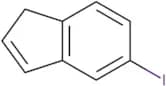
CAS:Versatile small molecule scaffoldFormula:C9H7IPurity:Min. 95%Molecular weight:242.06 g/mol1-(Piperidin-4-yl)piperidine-2,6-dione
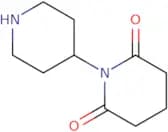
CAS:Versatile small molecule scaffoldFormula:C10H16N2O2Purity:Min. 95%Molecular weight:196.25 g/mol2-Phenyl-N-(piperidin-4-yl)acetamide
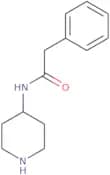
CAS:Versatile small molecule scaffoldFormula:C13H18N2OPurity:Min. 95%Molecular weight:218.29 g/mol1,2,3,4-Tetrahydroquinoline-2-carboxylic acid HCl
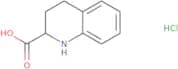
CAS:Versatile small molecule scaffoldFormula:C10H12ClNO2Purity:Min. 95%Molecular weight:213.66 g/molrac-(4aR,9bS)-2,8-Dimethyl-1H,2H,3H,4H,4aH,5H,9bh-pyrido[4,3-b]indole
CAS:Dimebon is a drug that binds to dopamine receptors (D2 and D3) and inhibits locomotor activity in rats. It also has been found to be effective in the treatment of cancer-induced cachexia, as well as bowel disease. Dimebon is a hydrogenated form of rac-(4aR,9bS)-2,8-dimethyl-1H,2H,3H,4H,4aH,5H,9bh-pyrido[4,3-b]indole. The drug was originally synthesized in the Soviet Union for use as an antidepressant but was never marketed because it caused severe side effects such as tardive dyskinesia. Dimebon has been shown to cause neuronal death through inhibition of the growth factor BDNF and its receptor activity. It also blocks dopamine release from nerve cells in the striatum. Dimebon is water soluble and can be taken orally or injected intravenously.Formula:C13H18N2Purity:Min. 95%Molecular weight:202.3 g/mol

![Indeno[2,1-b]chromene-6-carbaldehyde](/_next/image/?url=https%3A%2Fstatic.cymitquimica.com%2Fproducts%2F3D%2Fthumb-webp%2FADA29382.webp&w=3840&q=75)

![Dimethyl bicyclo[3.1.1]heptane-1,5-dicarboxylate](/_next/image/?url=https%3A%2Fstatic.cymitquimica.com%2Fproducts%2F3D%2Fthumb-webp%2FADA32854.webp&w=3840&q=75)
![[(4-Phenylphenyl)methyl]hydrazine hydrochloride](/_next/image/?url=https%3A%2Fstatic.cymitquimica.com%2Fproducts%2F3D%2Fthumb-webp%2FADA33307.webp&w=3840&q=75)
![2-[(1R,2S)-2-Hydroxycyclohexyl]acetic acid](/_next/image/?url=https%3A%2Fstatic.cymitquimica.com%2Fproducts%2F3D%2Fthumb-webp%2FADA36490.webp&w=3840&q=75)
![1-(2,4-Dimethyl-4H-pyrazolo[1,5-a]benzimidazol-3-yl)ethanone](/_next/image/?url=https%3A%2Fstatic.cymitquimica.com%2Fproducts%2F3D%2Fthumb-webp%2FADA38054.webp&w=3840&q=75)

![2-({1-Azabicyclo[2.2.2]octan-3-yl}amino)ethan-1-ol dihydrochloride](/_next/image/?url=https%3A%2Fstatic.cymitquimica.com%2Fproducts%2F3D%2Fthumb-webp%2FADA42674.webp&w=3840&q=75)

![rac-(4aR,9bS)-2,8-Dimethyl-1H,2H,3H,4H,4aH,5H,9bh-pyrido[4,3-b]indole](/_next/image/?url=https%3A%2Fstatic.cymitquimica.com%2Fproducts%2F3D%2Fthumb-webp%2FADA49488.webp&w=3840&q=75)