Building Blocks
Subcategories of "Building Blocks"
- Boronic Acids & Boronic Acid Derivatives(5,778 products)
- Chiral Building Blocks(1,243 products)
- Hydrocarbon Building Blocks(6,099 products)
- Organic Building Blocks(61,038 products)
Found 205376 products of "Building Blocks"
3-Bromo-1H,6H,7H-pyrazolo[4,3-d]pyrimidin-7-one
CAS:Versatile small molecule scaffoldFormula:C5H3BrN4OPurity:Min. 95%Molecular weight:215.01 g/mol7-Bromo-1H,2H,3H,4H,5H-pyrrolo[3,2-d]pyrimidine-2,4-dione
CAS:Versatile small molecule scaffold
Formula:C6H4BrN3O2Purity:Min. 95%Molecular weight:230.02 g/mol3-Methyl-3H,6H,7H-[1,2,3]triazolo[4,5-d]pyrimidin-7-one
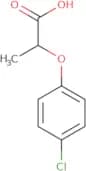
CAS:Versatile small molecule scaffoldFormula:C5H5N5OPurity:Min. 95%Molecular weight:151.13 g/mol(2S)-2-(4-Chlorophenoxy)propanoic acid
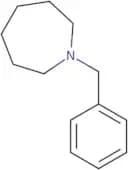
CAS:Versatile small molecule scaffoldFormula:C9H9ClO3Purity:Min. 95%Molecular weight:200.62 g/mol1-Benzylazepane
CAS:Benzylazepane is a triacetoxyborohydride that can be used for the reductive amination of aldehydes to form amines. Benzylazepane has been shown to react with sodium triacetoxyborohydride and amines to produce acrylonitrile, which is useful in the synthesis of polymers. The reductive amination of benzaldehyde with ethyl cyanoacetate forms acrylonitrile and acetaldehyde, which is then oxidized using ozonolysis. This reaction produces nitroethane, nitromethane, and acrylamide. Benzylazepane is also used in the synthesis of nature-inspired molecules such as polysaccharides and nucleotides.
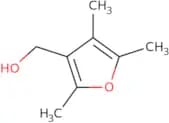
Formula:C13H19NPurity:Min. 95%Molecular weight:189.3 g/mol(Trimethylfuran-3-yl)methanol
CAS:Versatile small molecule scaffold
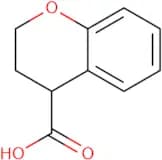
Formula:C8H12O2Purity:Min. 95%Molecular weight:140.18 g/mol3,4-dihydro-2H-1-benzopyran-4-carboxylic acid
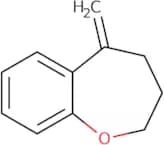
CAS:3,4-Dihydro-2H-1-benzopyran-4-carboxylic acid is a chromanone with an enantiomeric ratio of S:R. It is a synthetic compound and a member of the acid compounds group. 3,4-Dihydro-2H-1-benzopyran-4-carboxylic acid is used as an intermediate in organic chemistry to produce sorbinil sodium salt and ganate, which are also synthetic compounds. This chemical has been shown to be effective for oral hypoglycemia in rats when administered with amines. The racemic mixture contains two enantiomers that are not identical but are related to each other as mirror images. Phenylacetic acid (PAA) is another member of the same class of molecules that can be complicating when purified from this chemical. 3,4-Dihydro-2H-1-benFormula:C10H10O3Purity:Min. 95%Molecular weight:178.19 g/mol5-Methylidene-2,3,4,5-tetrahydro-1-benzoxepine
CAS:Versatile small molecule scaffold
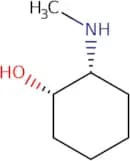
Formula:C11H12OPurity:Min. 95%Molecular weight:160.21 g/mol(1R,2S)-2-Methylamino-cyclohexanol
CAS:(1R,2S)-2-Methylamino-cyclohexanol is an alkanolamine that has been shown to have antioxidant properties. It is synthesized from hydrogen chloride and ethanolamine by a dehydration reaction. This compound can be used as a co-catalyst for the catalytic oxidation of chlorides in organic solvents and has been shown to inhibit the growth of membranes in E. coli. (1R,2S)-2-Methylamino-cyclohexanol also has potential applications in preventing atherosclerosis or treatment of zinc deficiency.
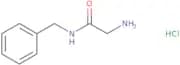
Formula:C7H15NOPurity:Min. 95%Molecular weight:129.2 g/mol2-Amino-N-benzylacetamide hydrochloride
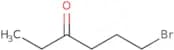
CAS:Versatile small molecule scaffoldFormula:C9H13ClN2OPurity:Min. 95%Molecular weight:200.67 g/mol6-Bromohexan-3-one
CAS:6-Bromohexan-3-one is a pheromone that belongs to the group of skeleton-targeted pheromones. It binds to an unknown receptor in the insect and causes specific behavioral changes such as attraction, orientation, and oviposition. 6-Bromohexan-3-one has been shown to be effective against male gypsy moths, although it is not active against other insects. The structure of 6-Bromohexan-3-one consists of a phosphonium group with a six member ring and a double bond between carbons 3 and 4.Formula:C6H11BrOPurity:Min. 95%Molecular weight:179.05 g/molSpiro[4.5]decan-6-amine
CAS:Versatile small molecule scaffold
Formula:C10H19NPurity:Min. 95%Molecular weight:153.26 g/molSpiro[4.4]nonan-1-amine
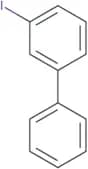
CAS:Versatile small molecule scaffoldFormula:C9H17NPurity:Min. 95%Molecular weight:139.24 g/mol3-Iodobiphenyl
CAS:3-Iodobiphenyl is a synthetic chemical compound that has been used in the manufacture of dyes, pesticides, and other organic chemicals. 3-Iodobiphenyl is a low molecular weight soluble solid with a high solubility in most organic solvents. It is insoluble in water and may be produced as one of two different isomeric forms, depending on the conditions used to synthesize it. The physical properties of these two forms are similar but they differ in their reactivity. 3-Iodobiphenyl can adsorb onto amine groups on proteins and phospholipid membranes, forming a monolayer that alters the permeability of membrane bilayers. This organocatalytic reaction can also be facilitated by metal ions such as copper or zinc. 3-Iodobiphenyl also reacts with halides such as chloride or bromide to form soluble complexes that may be used for solute separation during phase chrom
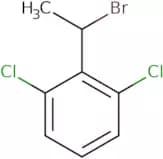
Formula:C12H9IPurity:Min. 95%Molecular weight:280.11 g/mol2-(1-Bromoethyl)-1,3-dichlorobenzene
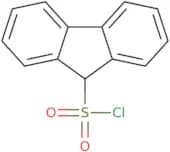
CAS:Versatile small molecule scaffoldFormula:C8H7BrCl2Purity:Min. 95%Molecular weight:253.95 g/mol9H-Fluorene-9-sulfonyl chloride
CAS:Versatile small molecule scaffold
Formula:C13H9ClO2SPurity:Min. 95%Molecular weight:264.73 g/molSpiro[bicyclo[2.2.1]heptane-7,1'-cyclopropan]-6-one
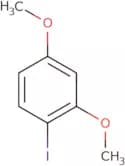
CAS:Versatile small molecule scaffoldFormula:C9H12OPurity:Min. 95%Molecular weight:136.2 g/mol2,4-Dimethoxyiodobenzene
CAS:2,4-Dimethoxyiodobenzene is a methyl ketone that has three methoxy groups. It is used as a building block in organic synthesis and can be synthesized by the reaction of 2,4-dimethoxybenzaldehyde with peroxide and methylamine. 2,4-Dimethoxyiodobenzene inhibits radical formation by reacting with an activated metal halide to form a covalent bond between the two molecules. The terminal alkyne reacts with a halogen to form an alkynyl radical which then reacts with another activated metal halide to form a second covalent bond. This process creates a new radical that has been deactivated by the addition of two bonds, preventing it from initiating another chain reaction. 2,4-Dimethoxyiodobenzene also exhibits inhibitory potency against β-amino acid decomposition through the same mechanism.
Formula:C8H9IO2Purity:Min. 95%Molecular weight:264.06 g/molEthyl 4-chloro-1,3-dimethylpyrazolo[3,4-b]pyridine-5-carboxylate
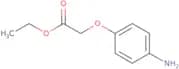
CAS:Versatile small molecule scaffoldFormula:C11H12ClN3O2Purity:Min. 95%Molecular weight:253.69 g/molEthyl 2-(4-aminophenoxy)acetate
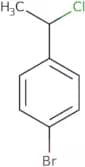
CAS:Versatile small molecule scaffoldFormula:C10H13NO3Purity:Min. 95%Molecular weight:195.21 g/mol1-Bromo-4-(1-chloroethyl)benzene
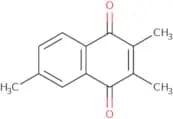
CAS:Versatile small molecule scaffoldFormula:C8H8BrClPurity:Min. 95%Molecular weight:219.5 g/mol2,3,6-Trimethyl-1,4-naphthoquinone
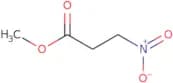
CAS:2,3,6-Trimethyl-1,4-naphthoquinone (2,3,6-TQ) is a hexane extract from the bark of the East Indian tree Pterocarpus marsupium that has been shown to have both reversible and irreversible inhibitory effects on monoamine oxidase. 2,3,6-TQ has been shown to have neuroprotective properties in mouse models of Parkinson's disease. It also has neurotrophic effects in cultured cells. The molecular modeling data suggest that 2,3,6-TQ binds to the active site of monoamine oxidase type A and B with a binding affinity comparable to that of clorgyline and deprenyl. In addition, it inhibits dopamine metabolism by inhibiting monoamine oxidase type A and B.Formula:C13H12O2Purity:Min. 95%Molecular weight:200.23 g/molMethyl 3-nitropropanoate
CAS:Methyl 3-nitropropanoate is a chemical compound that is used in synthetic organic chemistry. It can be synthesized by the nitration of propionic acid and then reacting the product with methyl iodide. This reaction produces an asymmetric synthesis of an α-lactam ring, which is one of the most commonly found functional groups in natural products. The carbonyl group on this molecule is also reactive to many other reagents, which enables it to be modified for use in various methods. The lactam ring has been shown to have anti-inflammatory properties, focusing research on its potential medicinal uses.Formula:C4H7NO4Purity:Min. 95%Molecular weight:133.1 g/mol1-Hydroxybicyclo[3.3.1]nonan-3-one
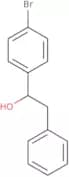
CAS:Versatile small molecule scaffoldFormula:C9H14O2Purity:Min. 95%Molecular weight:154.21 g/mol1-(4-Bromophenyl)-2-phenylethan-1-ol
CAS:Versatile small molecule scaffoldFormula:C14H13BrOPurity:Min. 95%Molecular weight:277.16 g/mol2,3-Dihydro-benzo[b]thiophen-6-amine 1,1-dioxide
CAS:2,3-Dihydro-benzo[b]thiophen-6-amine 1,1-dioxide is a morpholine that undergoes rapid elimination to form an azepine. The compound also undergoes bromination and then subsequent debromination. The compound was found to be stable in the presence of azide, but sensitive to irradiation. Spectroscopic studies revealed that the isomers are present in equal proportions.Formula:C8H9NO2SPurity:Min. 95%Molecular weight:183.23 g/mol1,1-Dioxido-1-benzothien-6-ylamine
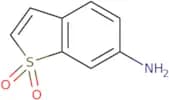
CAS:1,1-Dioxido-1-benzothien-6-ylamine is a cytotoxic drug that inhibits the synthesis of DNA and RNA in cancer cells. It is synthesized from benzo[c]thiophene-2,5-dione by oxidation with nitric acid to give the corresponding dioxido compound. The synthesized product has high lipophilicity (log P = 2.2) and a reactive hydroxy group that can undergo modifications such as esterification or alkylation. 1,1-Dioxido-1-benzothien-6-ylamine shows potent antitumor activity against solid tumours and high lipophilicity that enables it to cross the blood brain barrier very easily. It also induces apoptosis in tumour cells by binding to nucleic acids and inhibiting their synthesis. This drug is cytotoxic at nanomolar concentrations and has been shown to be effective against lung
Formula:C8H7NO2SPurity:Min. 95%Molecular weight:181.21 g/molrac-[(1R,2R,4R)-Bicyclo[2.2.2]oct-5-en-2-yl]methanol
CAS:Versatile small molecule scaffoldFormula:C9H14OPurity:Min. 95%Molecular weight:138.2 g/molrac-(1R,2R,4R)-Bicyclo[2.2.2]oct-5-ene-2-carboxylic acid
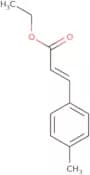
CAS:Versatile small molecule scaffoldFormula:C9H12O2Purity:Min. 95%Molecular weight:152.19 g/molEthyl 4-methylcinnamate
CAS:Ethyl 4-methylcinnamate is a ligand that binds to diazoacetate, which reacts with ethylene and aldehydes to form ethyl diazoacetate. The reaction rate increases with the addition of alkali, which causes hydrolysis of the acetal group in ethyl 4-methylcinnamate. Impurities may be present in this product, including genotoxic impurities and 8-hydroxyquinoline. Industrialized countries have strict quality control standards for this compound, whereas in developing countries, the purity of this chemical is not regulated.Formula:C12H14O2Purity:Min. 95%Molecular weight:190.24 g/mol1-[2-(1H-Imidazol-1-yl)phenyl]ethan-1-one
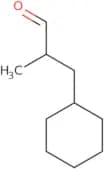
CAS:Versatile small molecule scaffoldFormula:C11H10N2OPurity:Min. 95%Molecular weight:186.21 g/mol3-Cyclohexyl-2-methylpropanal
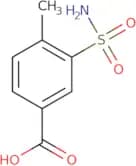
CAS:Versatile small molecule scaffoldFormula:C10H18OPurity:Min. 95%Molecular weight:154.25 g/mol4-Methyl-3-sulfamoylbenzoic acid
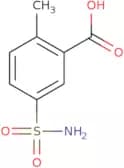
CAS:Versatile small molecule scaffoldFormula:C8H9NO4SPurity:Min. 95%Molecular weight:215.23 g/mol5-(Aminosulfonyl)-2-methylbenzoic acid
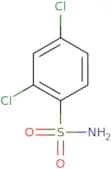
CAS:Versatile small molecule scaffoldFormula:C8H9NO4SPurity:Min. 95%Molecular weight:215.23 g/mol2,4-Dichlorobenzenesulphonamide
CAS:2,4-Dichlorobenzenesulphonamide is a chlorinated benzenesulphonamide compound that has been shown to have anticancer activity. The mechanism of action is not well understood, but it has been suggested that the drug may inhibit mitochondrial membrane potential, leading to cancer cell death. 2,4-Dichlorobenzenesulphonamide has also been shown to induce apoptosis in cervical cancer cells. This drug may be useful for the treatment of carcinomas, as well as other cancers.Formula:C6H5Cl2NO2SPurity:Min. 95%Molecular weight:226.08 g/mol5-Methoxy-benzo[b]thiophene
CAS:5-Methoxy-benzo[b]thiophene is a synthetic compound that has been shown to have antiestrogenic activity. It was synthesized using the acetonitrile technique and has been shown to inhibit the growth of mammary carcinomas in mice. 5-Methoxy-benzo[b]thiophene binds to estrogen receptor protein, which inhibits the binding of estrogen and prevents its effects on breast cancers. This agent also has been shown to be an effective therapy for some human breast cancer cells, which may be due to its ability to block estrogen receptor function.
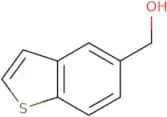
Formula:C9H8OSPurity:Min. 95%Molecular weight:164.22 g/mol1-Benzothien-5-ylmethanol
CAS:Versatile small molecule scaffold
Formula:C9H8OSPurity:Min. 95%Molecular weight:164.23 g/molN-(4-{[(2-Hydroxyethyl)amino]-sulfonyl}phenyl)acetamide
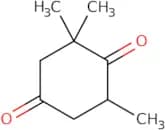
CAS:Versatile small molecule scaffoldFormula:C10H14N2O4SPurity:Min. 95%Molecular weight:258.29 g/mol2,2,6-Trimethyl-1,4-cyclohexanedione
CAS:2,2,6-Trimethyl-1,4-cyclohexanedione is a diketone that is produced from the shikimate pathway. It is used in organic synthesis as a carbon source and to produce volatile compounds. 2,2,6-Trimethyl-1,4-cyclohexanedione has been shown to be an attractant for mosquitoes and other insects. This compound also has pheromone activity which may be due to the presence of different isomers. 2,2,6-Trimethyl-1,4-cyclohexanedione can be found in solution form as well as in solid form with a melting point of 156°C. The compound can also be identified using various biochemical markers (e.g., esterase) or by biological studies on subcultures of bacteria or fungi.
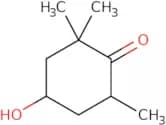
Formula:C9H14O2Purity:Min. 95%Molecular weight:154.21 g/mol4-Hydroxy-2,2,6-trimethylcyclohexan-1-one
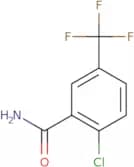
CAS:4-Hydroxy-2,2,6-trimethylcyclohexan-1-one is a subunit of the nonproteinogenic amino acid, selenocysteine. It is an intermediate in the synthesis of selenocysteine and has been shown to be stereoselective and homologous to other amino acids. 4-Hydroxy-2,2,6-trimethylcyclohexan-1-one is found in corynebacterium and thermophilic species. The enzyme dehydrogenase catalyses the conversion of this compound to 3-(3′hydroxyphenyl)-4-(4′hydroxyphenyl)butanoic acid (4HPPBA). This reaction also produces hydrogen peroxide as a byproduct. 4HPPBA can be converted back into 4-hydroxy-2,2,6-trimethylcyclohexanone by the enzyme reductase. ThereFormula:C9H16O2Purity:Min. 95%Molecular weight:156.22 g/mol2-Chloro-5-(trifluoromethyl)benzamide
CAS:2-Chloro-5-(trifluoromethyl)benzamide is a profile that belongs to the group of anti-tuberculosis drugs. It has a high cytotoxic effect against eukaryotic cells and has been shown to have an anti-tuberculosis effect in mice. 2C5BM also inhibits bacterial growth by binding to DNA gyrase and topoisomerases, thereby inhibiting the replication of bacteria. Studies have found that 2C5BM can inhibit the growth of Mycobacterium tuberculosis, but not Mycobacterium avium complex. The therapeutic index for 2C5BM is high, which means it has a wide range of safety margins, with no detectable side effects on healthy human erythrocytes.
Formula:C8H5ClF3NOPurity:Min. 95%Molecular weight:223.58 g/molRef: 3D-VAA56693
1gTo inquire5gTo inquire10gTo inquire25gTo inquire50gTo inquire250mg298.00€2500mg1,126.00€Spiro[2.3]hexan-4-one
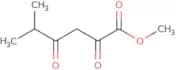
CAS:Spiro[2.3]hexan-4-one is a reactive, hydrophobic molecule that is synthesized by the reaction of an epoxide with an alcohol. This compound has been shown to undergo photooxidation and thermally induced reactions. It can be used in coatings to provide resistance to environmental effects such as hydrolysis, oxidation, or photooxidation. Spiro[2.3]hexan-4-one can also be used in the production of methylenecyclopropanes, which are used as chemical intermediates for pharmaceuticals and other organic compounds.Purity:Min. 95%Methyl 5-methyl-2,4-dioxohexanoate
CAS:Versatile small molecule scaffold
Formula:C8H12O4Purity:Min. 95%Molecular weight:172.18 g/mol4-Methyl-1,5,6,7-tetrahydro-2H-cyclopenta[b]-pyridin-2-one
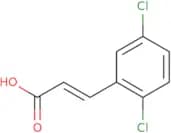
CAS:4-Methyl-1,5,6,7-tetrahydro-2H-cyclopenta[b]-pyridin-2-one is a cycloalkane that has been shown to have antiinflammatory properties. It has been found to produce phosphoric acid and methanol when heated in the presence of phosphoric acid. 4-Methylcyclohexanone has also been shown to form hydrogen bonds with a variety of molecules including other cycloalkanes, nitro compounds, aromatic hydrocarbons, and heterocyclic compounds. Single crystal x-ray diffraction studies of this compound have revealed that it adopts an anisotropic molecular structure.Formula:C9H11NOPurity:Min. 95%Molecular weight:149.19 g/moltrans-2,5-Dichlorocinnamic acid
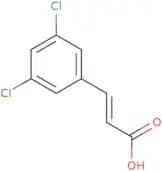
CAS:Versatile small molecule scaffoldFormula:C9H6Cl2O2Purity:Min. 95%Molecular weight:217.05 g/mol3-(3,5-Dichlorophenyl)acrylic acid
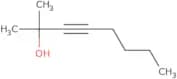
CAS:Versatile small molecule scaffoldFormula:C9H6Cl2O2Purity:Min. 95%Molecular weight:217.5 g/mol2-Methyloct-3-yn-2-ol
CAS:2-Methyloct-3-yn-2-ol is a nucleophile that can be used to make an efficient method for the synthesis of olefinic bonds. This compound is also a ligand, which can form bidentate complexes with electrophilic metal centers. 2-Methyloct-3-yn-2-ol has been shown to react with heterocycles and alkenes in nucleophilic addition reactions. The reaction mechanism is thought to proceed through c–h bond cleavage, followed by dehydration of the resulting olefinic products. This process is reversible and can be driven by acid or base catalysis.
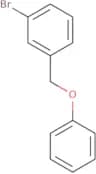
Formula:C9H16OPurity:Min. 95%Molecular weight:140.22 g/mol1-Bromo-3-(phenoxymethyl)benzene
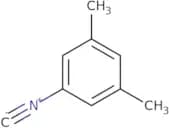
CAS:Versatile small molecule scaffoldFormula:C13H11BrOPurity:Min. 95%Molecular weight:263.13 g/mol1-Isocyano-3,5-dimethylbenzene
CAS:Versatile small molecule scaffold
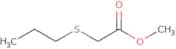
Formula:C9H9NPurity:Min. 95%Molecular weight:131.17 g/molMethyl 2-(propylsulfanyl)acetate
CAS:Versatile small molecule scaffold
Formula:C6H12O2SPurity:Min. 95%Molecular weight:148.23 g/mol
![3-Bromo-1H,6H,7H-pyrazolo[4,3-d]pyrimidin-7-one](/_next/image/?url=https%3A%2Fstatic.cymitquimica.com%2Fproducts%2F3D%2Fthumb-webp%2FVAA41967.webp&w=3840&q=75)

![7-Bromo-1H,2H,3H,4H,5H-pyrrolo[3,2-d]pyrimidine-2,4-dione](/_next/image/?url=https%3A%2Fstatic.cymitquimica.com%2Fproducts%2F3D%2Fthumb-webp%2FVAA41974.webp&w=3840&q=75)
![3-Methyl-3H,6H,7H-[1,2,3]triazolo[4,5-d]pyrimidin-7-one](/_next/image/?url=https%3A%2Fstatic.cymitquimica.com%2Fproducts%2F3D%2Fthumb-webp%2FVAA42086.webp&w=3840&q=75)
![Spiro[4.5]decan-6-amine](/_next/image/?url=https%3A%2Fstatic.cymitquimica.com%2Fproducts%2F3D%2Fthumb-webp%2FVAA44070.webp&w=3840&q=75)
![Spiro[4.4]nonan-1-amine](/_next/image/?url=https%3A%2Fstatic.cymitquimica.com%2Fproducts%2F3D%2Fthumb-webp%2FVAA44071.webp&w=3840&q=75)
![Spiro[bicyclo[2.2.1]heptane-7,1'-cyclopropan]-6-one](/_next/image/?url=https%3A%2Fstatic.cymitquimica.com%2Fproducts%2F3D%2Fthumb-webp%2FVAA45477.webp&w=3840&q=75)
![Ethyl 4-chloro-1,3-dimethylpyrazolo[3,4-b]pyridine-5-carboxylate](/_next/image/?url=https%3A%2Fstatic.cymitquimica.com%2Fproducts%2F3D%2Fthumb-webp%2FVAA48115.webp&w=3840&q=75)
![1-Hydroxybicyclo[3.3.1]nonan-3-one](/_next/image/?url=https%3A%2Fstatic.cymitquimica.com%2Fproducts%2F3D%2Fthumb-webp%2FVAA49802.webp&w=3840&q=75)
![2,3-Dihydro-benzo[b]thiophen-6-amine 1,1-dioxide](/_next/image/?url=https%3A%2Fstatic.cymitquimica.com%2Fproducts%2F3D%2Fthumb-webp%2FVAA50339.webp&w=3840&q=75)
![rac-[(1R,2R,4R)-Bicyclo[2.2.2]oct-5-en-2-yl]methanol](/_next/image/?url=https%3A%2Fstatic.cymitquimica.com%2Fproducts%2F3D%2Fthumb-webp%2FVAA50755.webp&w=3840&q=75)
![rac-(1R,2R,4R)-Bicyclo[2.2.2]oct-5-ene-2-carboxylic acid](/_next/image/?url=https%3A%2Fstatic.cymitquimica.com%2Fproducts%2F3D%2Fthumb-webp%2FVAA50756.webp&w=3840&q=75)
![1-[2-(1H-Imidazol-1-yl)phenyl]ethan-1-one](/_next/image/?url=https%3A%2Fstatic.cymitquimica.com%2Fproducts%2F3D%2Fthumb-webp%2FVAA51361.webp&w=3840&q=75)
![5-Methoxy-benzo[b]thiophene](/_next/image/?url=https%3A%2Fstatic.cymitquimica.com%2Fproducts%2F3D%2Fthumb-webp%2FVAA53230.webp&w=3840&q=75)
![N-(4-{[(2-Hydroxyethyl)amino]-sulfonyl}phenyl)acetamide](/_next/image/?url=https%3A%2Fstatic.cymitquimica.com%2Fproducts%2F3D%2Fthumb-webp%2FVAA53576.webp&w=3840&q=75)
![Spiro[2.3]hexan-4-one](/_next/image/?url=https%3A%2Fstatic.cymitquimica.com%2Fproducts%2F3D%2Fthumb-webp%2FVAA57115.webp&w=3840&q=75)
![4-Methyl-1,5,6,7-tetrahydro-2H-cyclopenta[b]-pyridin-2-one](/_next/image/?url=https%3A%2Fstatic.cymitquimica.com%2Fproducts%2F3D%2Fthumb-webp%2FVAA59430.webp&w=3840&q=75)