Building Blocks
Subcategories of "Building Blocks"
- Boronic Acids & Boronic Acid Derivatives(5,783 products)
- Chiral Building Blocks(1,242 products)
- Hydrocarbon Building Blocks(6,105 products)
- Organic Building Blocks(61,055 products)
Found 205383 products of "Building Blocks"
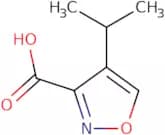
4-(Propan-2-yl)-1,2-oxazole-3-carboxylic acid
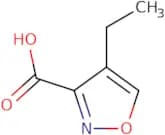
CAS:Versatile small molecule scaffoldFormula:C7H9NO3Purity:Min. 95%Molecular weight:155.2 g/mol4-Ethyl-1,2-oxazole-3-carboxylic acid
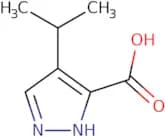
CAS:Versatile small molecule scaffoldFormula:C6H7NO3Purity:Min. 95%Molecular weight:141.1 g/mol4-(Propan-2-yl)-1H-pyrazole-3-carboxylic acid
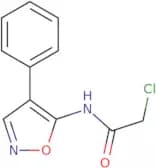
CAS:Versatile small molecule scaffoldFormula:C7H10N2O2Purity:Min. 95%Molecular weight:154.2 g/mol2-Chloro-N-(4-phenyl-1,2-oxazol-5-yl)acetamide
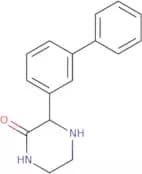
CAS:Versatile small molecule scaffoldFormula:C11H9ClN2O2Purity:Min. 95%Molecular weight:236.65 g/mol3-(3-Phenylphenyl)piperazin-2-one
CAS:Versatile small molecule scaffold
Formula:C16H16N2OPurity:Min. 95%Molecular weight:252.31 g/molEthyl 3-{[(tert-butoxy)carbonyl]amino}-6-oxabicyclo[3.1.0]hexane-3-carboxylate
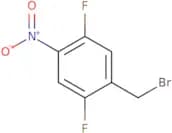
CAS:Versatile small molecule scaffoldFormula:C13H21NO5Purity:Min. 95%Molecular weight:271.31 g/mol1-(Bromomethyl)-2,5-difluoro-4-nitrobenzene
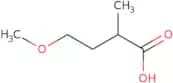
CAS:Versatile small molecule scaffoldFormula:C7H4BrF2NO2Purity:Min. 95%Molecular weight:252.01 g/mol4-Methoxy-2-methylbutanoic acid
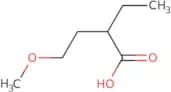
CAS:Versatile small molecule scaffoldFormula:C6H12O3Purity:Min. 95%Molecular weight:132.16 g/mol2-Ethyl-4-methoxybutanoic acid
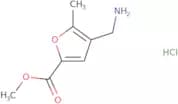
CAS:Versatile small molecule scaffoldFormula:C7H14O3Purity:Min. 95%Molecular weight:146.18 g/molMethyl 4-(aminomethyl)-5-methylfuran-2-carboxylate hydrochloride
CAS:Versatile small molecule scaffold
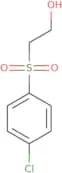
Formula:C8H12ClNO3Purity:Min. 95%Molecular weight:205.64 g/mol2-(4-Chlorobenzenesulfonyl)ethan-1-ol
CAS:Versatile small molecule scaffold
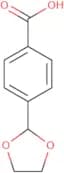
Formula:C8H9ClO3SPurity:Min. 95%Molecular weight:220.67 g/mol4-(1,3-Dioxolan-2-yl)benzoic acid
CAS:Versatile small molecule scaffold
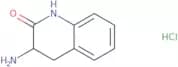
Formula:C10H10O4Purity:Min. 95%Molecular weight:194.18 g/mol3-Amino-1,2,3,4-tetrahydroquinolin-2-one hydrochloride
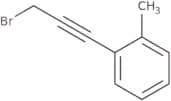
CAS:Versatile small molecule scaffoldFormula:C9H11ClN2OPurity:Min. 95%Molecular weight:198.65 g/mol1-(3-Bromoprop-1-yn-1-yl)-2-methylbenzene
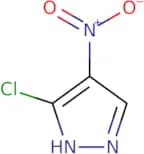
CAS:Versatile small molecule scaffoldFormula:C10H9BrPurity:Min. 95%Molecular weight:209.08 g/mol3-chloro-4-nitro-1H-pyrazole
CAS:Versatile small molecule scaffoldFormula:C3H2N3O2ClPurity:Min. 95%Molecular weight:147.51 g/mol2-[(4-Methoxyphenyl)methyl]pyridine
CAS:Versatile small molecule scaffoldFormula:C13H13NOPurity:Min. 95%Molecular weight:199.25 g/mol3-Phenylimidazo[1,5-a]pyridine
CAS:3-Phenylimidazo[1,5-a]pyridine is a quinoline derivative that is used as an anticancer agent. It inhibits the mitochondrial membrane potential and induces apoptosis in cancer cells. 3-Phenylimidazo[1,5-a]pyridine has also been shown to be effective against cervical cancer cells. The cytotoxic effects of this drug are not due to its DNA binding properties but may be due to its ability to inhibit the synthesis of nitroalkanes from nitrites, which may be carcinogenic. This compound binds to the ring of the quinoline moiety in active site of mitochondrial enzymes such as quinolinate phosphoribosyltransferase (QPRT). This binding prevents the enzyme from catalyzing reactions involving nucleotide biosynthesis, protein synthesis, and cell division.
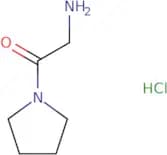
Formula:C13H10N2Purity:Min. 95%Molecular weight:194.24 g/mol2-Amino-1-(1-pyrrolidinyl)-1-ethanone hydrochloride
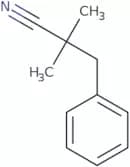
CAS:Versatile small molecule scaffoldFormula:C6H13ClN2OPurity:Min. 95%Molecular weight:164.63 g/mol2,2-Dimethyl-3-phenylpropanenitrile
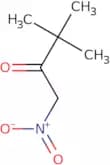
CAS:Versatile small molecule scaffoldFormula:C11H13NPurity:Min. 95%Molecular weight:159.23 g/mol3,3-Dimethyl-1-nitrobutan-2-one
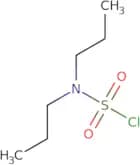
CAS:3,3-Dimethyl-1-nitrobutan-2-one is a ligand that is used in magnetic resonance spectroscopy. It has an axial symmetry and a square planar geometry with four apical nitrogens and four tetragonally equatorial nitrogens. The oxygen atoms are located equatorially. The ligand has two magnetic isotopes, one of which is 3,3-dimethyl-1-nitrobutan-2-one (DMB) with a nuclear spin of 1/2 and the other being 2,2'-dimethylpropionyloxybutyronitrile (DMPRB) with a nuclear spin of 3/2. The electronic spectrum for DMB spans from about 0.4 to about 10 MHz, while the spectrum for DMPRB spans from about 0.4 to about 5 MHz. 3,3-Dimethyl-1-nitrobutan-2-one also has a chromFormula:C6H11NO3Purity:Min. 95%Molecular weight:145.16 g/molN,N-Dipropylsulfamoyl chloride
CAS:N,N-Dipropylsulfamoyl chloride is an organic compound with the chemical formula ClCH(NH)SOCl. It is a colorless liquid that is soluble in water and polar organic solvents. The molecule consists of a pyrimidine moiety substituted at one of the nitrogen atoms with an alkylthio group, and a sulfamoyl substituent on the other nitrogen atom. This compound has been used as a diluent for reactions involving other chlorinating agents and to produce cyclohexane derivatives.Formula:C6H14ClNO2SPurity:Min. 95%Molecular weight:199.7 g/mol1-benzyl-1H-pyrazolo[3,4-d]pyrimidin-4-ol
CAS:Versatile small molecule scaffold
Formula:C12H10N4OPurity:Min. 95%Molecular weight:226.24 g/molrac-(3aR,8aS)-Hexahydro-1H-cyclohepta[C]furan-1,3(3aH)-dione
CAS:Versatile small molecule scaffoldFormula:C9H12O3Purity:Min. 95%Molecular weight:168.19 g/mol2-Methoxy-6,7,8,9-tetrahydro-5H-benzo[7]annulen-6-amine hydrochloride
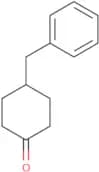
CAS:Controlled ProductVersatile small molecule scaffoldFormula:C12H18ClNOPurity:Min. 95%Molecular weight:227.7 g/mol4-Benzylcyclohexan-1-one
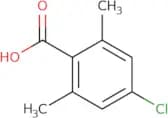
CAS:4-Benzylcyclohexan-1-one is a ketone that can be produced by the dehydrogenation of cyclohexanones. It can also be synthesized from enamines and decarbonylation. This compound is catalytic and used for desymmetrization, hydrolysis, and catalytic reduction reactions. 4-Benzylcyclohexan-1-one has been shown to form oximes through perchloric acid treatment. In addition to its use as an industrial chemical, 4-benzylcyclohexan-1-one is also used in the synthesis of chiral drugs such as thalidomide, which is used to treat a variety of diseases including leprosy, erythema nodosum leprosum, multiple myeloma, and cancer.Formula:C13H16OPurity:Min. 95%Molecular weight:188.26 g/mol4-Chloro-2,6-dimethylbenzoic acid
CAS:Versatile small molecule scaffold
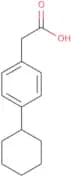
Formula:C9H9ClO2Purity:Min. 95%Molecular weight:184.62 g/mol2-(4-Cyclohexylphenyl)acetic acid
CAS:2-(4-Cyclohexylphenyl)acetic acid is an organic compound that has a chloride substituent and a carboxylic acid functional group. The hydrogen chloride molecule is bound to the active site in the experimental model. 2-(4-Cyclohexylphenyl)acetic acid is also found in cyclohexane ring, phenylpropionic acid and diethylamine salt. It is an isomeric compound, which has two different forms, namely the cis and trans form. The cis form has a quadratic structure with 4 carbons in the benzene ring, while the trans form has a linear structure with 3 carbons in the benzene ring. Chromatographic analysis of 2-(4-cyclohexylphenyl)acetic acid shows a single peak at Rf 0.48 (chloride). High-performance liquid chromatography analysis shows that there are only two peaks detected, one at t=0
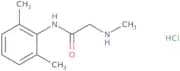
Formula:C14H18O2Purity:Min. 95%Molecular weight:218.29 g/molN-(2,6-Dimethylphenyl)-2-(methylamino)acetamide hydrochloride
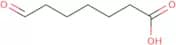
CAS:Versatile small molecule scaffoldFormula:C11H17ClN2OPurity:Min. 95%Molecular weight:228.72 g/mol7-Oxoheptanoic acid
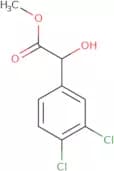
CAS:7-Oxoheptanoic acid is a synthetic fatty acid that is found in the plasma of humans and other mammals. It is produced by oxidation of cholesterol, which occurs in the liver and small intestine. 7-Oxoheptanoic acid has been shown to be involved in the regulation of gene expression through modifications to DNA and protein targets. This fatty acid also has covalent adducts with plasma proteins such as trypsin and plasmin, which may contribute to its biological activity. 7-Oxoheptanoic acid can be oxidized into reactive oxygen species (ROS) that have been shown to cause oxidative damage to lipids, proteins, and DNA.Formula:C7H12O3Purity:Min. 95%Molecular weight:144.17 g/molMethyl 2-(3,4-dichlorophenyl)-2-hydroxyacetate
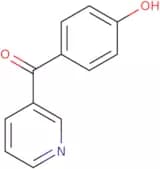
CAS:Versatile small molecule scaffoldFormula:C9H8Cl2O3Purity:Min. 95%Molecular weight:235.06 g/mol(4-Hydroxyphenyl)(pyridin-3-yl)methanone
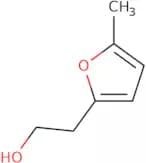
CAS:Versatile small molecule scaffoldFormula:C12H9NO2Purity:Min. 95%Molecular weight:199.2 g/mol2-(5-Methylfuran-2-yl)ethanol
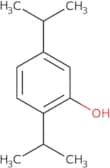
CAS:Versatile small molecule scaffoldFormula:C7H10O2Purity:Min. 95%Molecular weight:126.15 g/mol2,5-Diisopropylphenol
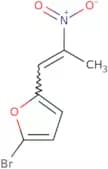
CAS:2,5-Diisopropylphenol is a phenolic compound that belongs to the group of antioxidants. It is an effective scavenger and inhibitor of lipid peroxidation. 2,5-Diisopropylphenol also inhibits nitro and hydroxy radicals, which are reactive oxygen species (ROS) that can cause membrane lipid peroxidation and other oxidative damage. This compound has been shown to have a protective effect on the liver by reducing the toxicity of some drugs. In addition, it has antibacterial activity against Gram-positive bacteria. 2,5-Diisopropylphenol's antioxidant properties are due to its ability to interact with phosphatidylcholine and prevent its oxidation by ROS. It is also glucuronidated in humans and rats.Formula:C12H18OPurity:Min. 95%Molecular weight:178.27 g/mol2-Bromo-5-(2-nitroprop-1-en-1-yl)furan
CAS:Versatile small molecule scaffoldFormula:C7H6BrNO3Purity:Min. 95%Molecular weight:232.03 g/molEthyl 2,5-dihydro-1H-pyrrole-3-carboxylate hydrochloride
CAS:Versatile small molecule scaffold
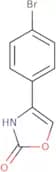
Formula:C7H12ClNO2Purity:Min. 95%Molecular weight:177.6 g/mol4-(4-Bromophenyl)-2,3-dihydro-1,3-oxazol-2-one
CAS:Versatile small molecule scaffold
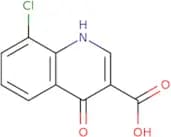
Formula:C9H6BrNO2Purity:Min. 95%Molecular weight:240.05 g/mol8-Chloro-4-hydroxyquinoline-3-carboxylic acid
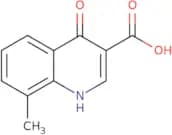
CAS:Versatile small molecule scaffoldFormula:C10H6ClNO3Purity:Min. 95%Molecular weight:223.61 g/mol4-Hydroxy-8-methylquinoline-3-carboxylic acid
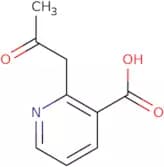
CAS:4-Hydroxy-8-methylquinoline-3-carboxylic acid is a potent antibacterial compound that has been shown to have strong antibacterial activity against both gram-positive and gram-negative bacteria. 4-Hydroxy-8-methylquinoline-3-carboxylic acid has been shown to be active against several different types of bacteria, including Staphylococcus aureus, Streptococcus pneumoniae, Escherichia coli, Haemophilus influenzae, Neisseria gonorrhoeae, and Pseudomonas aeruginosa. It is also active against some antibiotic resistant strains of bacteria. 4HMQC is a quinoline derivative which is modified by the addition of a methyl group to one of the rings. This modification increases its potency because it makes the molecule more lipophilic and hydrophobic. The resulting molecule may also be used as a phase transfer catalyst or as an antimicrobialFormula:C11H9NO3Purity:Min. 95%Molecular weight:203.2 g/mol2-(2-Oxopropyl)pyridine-3-carboxylic acid
CAS:Versatile small molecule scaffoldFormula:C9H9NO3Purity:Min. 95%Molecular weight:179.17 g/mol2-(2-Ethoxy-2-oxoethyl)nicotinic acid
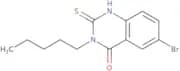
CAS:2-(2-Ethoxy-2-oxoethyl)nicotinic acid (EETN) belongs to the class of intramolecular reactions. It is a urethane that undergoes an intramolecular cyclization reaction with isocyanate and azide. The nucleophiles are then incorporated into the resulting azaindole ring, which can be cleaved by hydrolysis to release nicotinic acid or azaindole. EETN has been used as a target compound in the synthesis of various other compounds, such as nicotinic acid and azaindole.Formula:C10H11NO4Purity:Min. 95%Molecular weight:209.2 g/mol6-Bromo-3-pentyl-2-sulfanyl-3,4-dihydroquinazolin-4-one
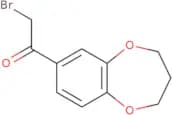
CAS:Versatile small molecule scaffoldFormula:C13H15BrN2OSPurity:Min. 95%Molecular weight:327.24 g/mol2-Bromo-1-(3,4-dihydro-2H-1,5-benzodioxepin-7-yl)ethan-1-one
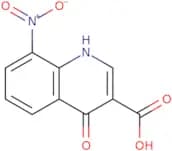
CAS:Versatile small molecule scaffoldFormula:C11H11BrO3Purity:Min. 95%Molecular weight:271.11 g/mol4-Hydroxy-8-nitro-3-quinolinecarboxylic acid
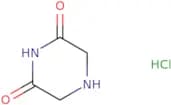
CAS:4-Hydroxy-8-nitro-3-quinolinecarboxylic acid is a cancer treatment that inhibits the growth of cancer cells. It inhibits the production of DNA, RNA, and protein and prevents cell division by binding to DNA. 4-Hydroxy-8-nitro-3-quinolinecarboxylic acid also prevents the synthesis of proteins and nucleic acids. This drug has been shown to be effective for the treatment of leukemia, lymphoma, breast cancer, prostate cancer, and other cancers.Formula:C10H6N2O5Purity:Min. 95%Molecular weight:234.16 g/mol2,6-Piperazinedione Hydrochloride
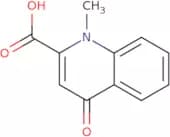
CAS:2,6-Piperazinedione Hydrochloride is a cyclic, acyclic, oxime derivative of amines. It is an intermediate in the production of formamides and carbamates and has been shown to be a good nucleophile in the formation of imines. 2,6-Piperazinedione Hydrochloride also reacts with hydroxylamine to produce heterocyclic compounds. This compound has been shown to react with 2-aminopyridine to form sodamide.Formula:C4H7ClN2O2Purity:Min. 95%Molecular weight:150.56 g/mol1-Methyl-4-oxo-1,4-dihydroquinoline-2-carboxylic acid
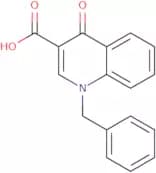
CAS:Versatile small molecule scaffoldFormula:C11H9NO3Purity:Min. 95%Molecular weight:203.19 g/mol1-Benzyl-4-oxo-1,4-dihydroquinoline-3-carboxylic acid
CAS:Controlled ProductVersatile small molecule scaffoldFormula:C17H13NO3Purity:Min. 95%Molecular weight:279.29 g/mol3-[(4-Chlorophenyl)methyl]-2-sulfanyl-3,4-dihydroquinazolin-4-one
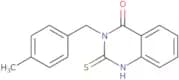
CAS:Controlled Product3-[(4-Chlorophenyl)methyl]-2-sulfanyl-3,4-dihydroquinazolin-4-one is a peptide that binds to the extracellular domain of the alpha subunit of the voltage gated potassium channel. It inhibits potassium ion channels by binding to the extracellular domain of the alpha subunit of the voltage gated potassium channel. 3-[(4-Chlorophenyl)methyl]-2-sulfanyl-3,4-dihydroquinazolin-4-one has been shown to inhibit protein interactions and receptor/ligand interactions in vitro.Formula:C15H11ClN2OSPurity:Min. 95%Molecular weight:302.8 g/mol3-(4-Methylbenzyl)-2-thioxo-2,3-dihydroquinazolin-4(1H)-one
CAS:Controlled Product3-(4-Methylbenzyl)-2-thioxo-2,3-dihydroquinazolin-4(1H)-one is a research tool that is used as an activator for receptors. This compound interacts with the ligand binding site of a receptor, thereby causing activation of the receptor. 3-(4-Methylbenzyl)-2-thioxo-2,3-dihydroquinazolin-4(1H)-one is a ligand for ion channels and may also be used to identify new ligands for ion channels. It has been shown to bind to cell surface proteins such as antibodies, which are important in immunology and immunotherapy. 3-(4-Methylbenzyl)-2-thioxo-2,3-dihydroquinazolin-4(1H)-one has been shown to inhibit protein synthesis by binding to peptides and other macromolecules suchFormula:C16H14N2OSPurity:Min. 95%Molecular weight:282.4 g/mol6-Bromo-3-[(2-chlorophenyl)methyl]-2-sulfanyl-3,4-dihydroquinazolin-4-one
CAS:Versatile small molecule scaffold
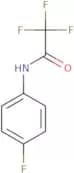
Formula:C15H10BrClN2OSPurity:Min. 95%Molecular weight:381.7 g/molAcetaMide, 2,2,2-trifluoro-N-(4-fluorophenyl)-
CAS:Versatile small molecule scaffoldFormula:C8H5F4NOPurity:Min. 95%Molecular weight:207.13 g/mol

![Ethyl 3-{[(tert-butoxy)carbonyl]amino}-6-oxabicyclo[3.1.0]hexane-3-carboxylate](/_next/image/?url=https%3A%2Fstatic.cymitquimica.com%2Fproducts%2F3D%2Fthumb-webp%2FKAC63734.webp&w=3840&q=75)
![2-[(4-Methoxyphenyl)methyl]pyridine](/_next/image/?url=https%3A%2Fstatic.cymitquimica.com%2Fproducts%2F3D%2Fthumb-webp%2FKBA85445.webp&w=3840&q=75)
![3-Phenylimidazo[1,5-a]pyridine](/_next/image/?url=https%3A%2Fstatic.cymitquimica.com%2Fproducts%2F3D%2Fthumb-webp%2FKBA85446.webp&w=3840&q=75)
![1-benzyl-1H-pyrazolo[3,4-d]pyrimidin-4-ol](/_next/image/?url=https%3A%2Fstatic.cymitquimica.com%2Fproducts%2F3D%2Fthumb-webp%2FKBA87737.webp&w=3840&q=75)
![rac-(3aR,8aS)-Hexahydro-1H-cyclohepta[C]furan-1,3(3aH)-dione](/_next/image/?url=https%3A%2Fstatic.cymitquimica.com%2Fproducts%2F3D%2Fthumb-webp%2FKBA87829.webp&w=3840&q=75)
![2-Methoxy-6,7,8,9-tetrahydro-5H-benzo[7]annulen-6-amine hydrochloride](/_next/image/?url=https%3A%2Fstatic.cymitquimica.com%2Fproducts%2F3D%2Fthumb-webp%2FKBA88116.webp&w=3840&q=75)


![3-[(4-Chlorophenyl)methyl]-2-sulfanyl-3,4-dihydroquinazolin-4-one](/_next/image/?url=https%3A%2Fstatic.cymitquimica.com%2Fproducts%2F3D%2Fthumb-webp%2FKBA97699.webp&w=3840&q=75)
![6-Bromo-3-[(2-chlorophenyl)methyl]-2-sulfanyl-3,4-dihydroquinazolin-4-one](/_next/image/?url=https%3A%2Fstatic.cymitquimica.com%2Fproducts%2F3D%2Fthumb-webp%2FKBA97719.webp&w=3840&q=75)