Building Blocks
This section contains fundamental products for the synthesis of organic and biological compounds. Building blocks are the essential starting materials used to construct complex molecules through various chemical reactions. They play a critical role in drug discovery, material science, and chemical research. At CymitQuimica, we offer a diverse range of high-quality building blocks to support your innovative research and industrial projects, ensuring you have the essential components for successful synthesis.
Subcategories of "Building Blocks"
- Boronic Acids & Boronic Acid Derivatives(5,778 products)
- Chiral Building Blocks(1,242 products)
- Hydrocarbon Building Blocks(6,098 products)
- Organic Building Blocks(61,063 products)
Found 197855 products of "Building Blocks"
Sort by
Purity (%)
0
100
|
0
|
50
|
90
|
95
|
100
rac-(1R,2R)-2-Bromo-1-methoxy-2,3-dihydro-1H-indene
CAS:<p>Versatile small molecule scaffold</p>Formula:C17H13Cl2NO3Purity:Min. 95%Molecular weight:350.2 g/mol4,5-Dimethylthiophene-2-carboxaldehyde
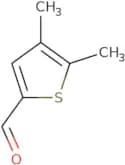
CAS:4,5-Dimethylthiophene-2-carboxaldehyde is a colorless liquid with an unpleasant odor. It is used in the synthesis of amines, azomethines, and heterocycles. This product can be tuned to have a reversible colour change between blue and yellow by changing the pH. 4,5-Dimethylthiophene-2-carboxaldehyde is oxidized to its conjugated form under acidic conditions. The conjugated form has a red color that becomes yellow as it oxidizes further. 4,5-Dimethylthiophene-2-carboxaldehyde is neutral in terms of charge and has no aromatic or heterocyclic properties.Formula:C7H8OSPurity:Min. 95%Molecular weight:140.2 g/mol4-Nitro-1H-pyrrole-2-carboxylic acid
CAS:<p>4-Nitro-1H-pyrrole-2-carboxylic acid is an amide derivative. It has acaricidal activity against ticks and insects, as well as a patent for use as a virus inhibitor. 4-Nitro-1H-pyrrole-2-carboxylic acid has been shown to be effective in treating vaginalis in insects and is also used to protect crops from insect infestation. 4-Nitro-1H-pyrrole-2-carboxylic acid is an amidino compound that contains a nitro group on the nitrogen atom of the amidino group. This nitro group is responsible for its antiacaridal activity against ticks and insects.</p>Formula:C5H4N2O4Purity:Min. 95%Molecular weight:156.1 g/mol4-tert-Butylcycloheptan-1-one
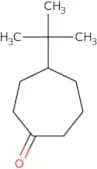
CAS:<p>4-tert-Butylcycloheptan-1-one is an organic compound that belongs to the group of stereoisomeric compounds. It has been used in the synthesis of amines, and spectra have been recorded for it in dimethylformamide and carbonyl. The reagent can be used to produce deuterated 4-tert-butylcycloheptan-1-one by reacting with lithium carbonate and then adding a deuterium atom. This reagent is also useful for determining conformational changes in carbonyl groups because it is not affected by these changes.</p>Formula:C11H20OPurity:Min. 95%Molecular weight:168.28 g/molTrimethyl(trichloromethyl)silane
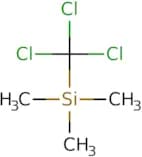
CAS:<p>Trimethyl(trichloromethyl)silane is a chlorinating agent that reacts with hydrocarbons to form quinones. It is synthesized in the liquid phase and reacts with aldehydes, amines, and sodium formate to produce the trichloromethylated product. Trimethyl(trichloromethyl)silane is activated by electron deficiency and can be used to circumvent functional groups such as hydroxyl or carbonyl. This chemical also has properties that are not shared by other chlorinating agents, such as its ability to react with hydrogen fluoride without forming hydrochloric acid.</p>Formula:C4H9Cl3SiPurity:Min. 95%Molecular weight:191.55 g/molDihydrazinyl-1,2,4,5-tetrazine
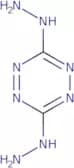
CAS:Dihydrazinyl-1,2,4,5-tetrazine is a coordination compound that contains nitrogen atoms. It has an octahedral geometry with a trigonal plane of symmetry. The nitrogen atoms are the only active sites and are coordinated by six ligands (usually oxygen). Dihydrazinyl-1,2,4,5-tetrazine has been proposed as a potential drug for treating bacterial infections because it has antibacterial activity. This compound also emits light when it reacts with nitric acid in the absence of air. Light emission is due to the red shift of nitro groups in the tetrazole ring and can be used to measure the amount of reactants present.Formula:C2H6N8Purity:Min. 95%Molecular weight:142.12 g/molMethyl 2-(2-bromoacetamido)benzoate
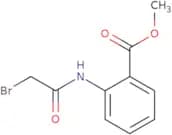
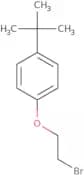
CAS:<p>Versatile small molecule scaffold</p>Formula:C10H10BrNO3Purity:Min. 95%Molecular weight:272.09 g/mol2-Bromoethyl 4-(tert-butyl)phenyl ether
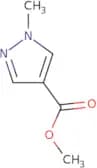
CAS:Versatile small molecule scaffoldFormula:C12H17BrOPurity:Min. 95%Molecular weight:257.17 g/molMethyl 1-methyl-1H-pyrazole-4-carboxylate
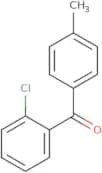
CAS:Versatile small molecule scaffoldFormula:C6H8N2O2Purity:Min. 95%Molecular weight:140.14 g/mol(2-Chlorophenyl)(4-methylphenyl)methanone
CAS:<p>Versatile small molecule scaffold</p>Formula:C14H11ClOPurity:Min. 95%Molecular weight:230.69 g/mol2-Chloro-5-nitro-1H-benzo[d]imidazole
CAS:<p>2-Chloro-5-nitro-1H-benzo[d]imidazole is a modification of the quinazoline nucleus, which is a potent and selective antagonist of the H2 receptor. 2-Chloro-5-nitro-1H-benzo[d]imidazole has been shown to be an antagonist of the αH2 receptor, inhibiting gastric acid secretion and reducing gastric acidity. It also has been shown to inhibit the release of gonadotropins and testosterone in male rats. In addition, it inhibits the activity of various hormone receptors such as benzodiazepine, histamine H1 and muscarinic receptors.<br>2-Chloro-5-nitro-1H-benzo[d]imidazole has been shown to have a number of profiles that are either agonistic or antagonistic depending on its binding site.</p>Formula:C7H4ClN3O2Purity:Min. 95%Molecular weight:197.58 g/mol3-[3-(Trifluoromethyl)phenyl]pyridine
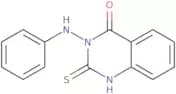
CAS:<p>Versatile small molecule scaffold</p>Formula:C12H8F3NPurity:Min. 95%Molecular weight:223.19 g/mol3-(Phenylamino)-2-sulfanyl-3,4-dihydroquinazolin-4-one
CAS:Versatile small molecule scaffoldFormula:C14H11N3OSPurity:Min. 95%Molecular weight:269.32 g/molEthyl 3-aminonaphthalene-2-carboxylate
CAS:<p>Ethyl 3-aminonaphthalene-2-carboxylate is a molecule that is used in the synthesis of various organic compounds. It can be produced by reacting aniline with copper(II) chloride and dichloroethane in the presence of a base. This reaction requires irradiation, which will produce ethyl 3-aminonaphthalene-2-carboxylate from the aniline and copper(II) chloride at a rate dependent on the reaction time. The product yields are high, but it must be purified before use to remove any traces of dichloroethane or aniline. Ethyl 3-aminonaphthalene-2-carboxylate has been shown to selectively react with dipyridine to form 2,5-diphenylpyridine, which is a target molecule for this reaction.</p>Formula:C13H13NO2Purity:Min. 95%Molecular weight:215.25 g/mol2-(1,3-Dioxo-2,3-dihydro-1H-isoindol-2-yl)-3-(1H-imidazol-5-yl)propanoic acid
CAS:<p>Versatile small molecule scaffold</p>Formula:C14H11N3O4Purity:Min. 95%Molecular weight:285.25 g/mol2,2-Dichloroethan-1-amine hydrochloride
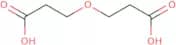
CAS:<p>Versatile small molecule scaffold</p>Formula:C2H6Cl3NPurity:Min. 95%Molecular weight:150.4 g/mol3,3-oxydipropanoic acid
CAS:<p>Versatile small molecule scaffold</p>Formula:C6H10O5Purity:Min. 95%Molecular weight:162.14 g/mol[(Furan-2-yl)methyl]urea
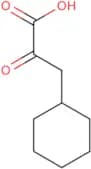
CAS:[(Furan-2-yl)methyl]urea (FMU) is a urea derivative that has been synthesized to inhibit cholesterol acyltransferase (CAT). This enzyme is responsible for the synthesis of lipoproteins, which are involved in the transport and storage of cholesterol. FMU inhibits CAT by forming a covalent bond with the catalytic cysteine residue, thereby inhibiting its activity. FMU also has an activating effect on staphylococcus, which may be due to its ability to inhibit bacterial amines. It also has an inhibitory effect on platelets, which may be due to its ability to bind to the surface of these cells.Formula:C6H8N2O2Purity:Min. 95%Molecular weight:140.14 g/mol3-Cyclohexyl-2-oxopropanoic acid
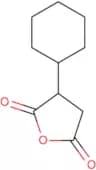
CAS:<p>Versatile small molecule scaffold</p>Formula:C9H14O3Purity:Min. 95%Molecular weight:170.21 g/mol3-Cyclohexyldihydro-2,5-furandione
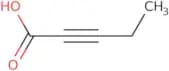
CAS:Versatile small molecule scaffoldFormula:C10H14O3Purity:Min. 95%Molecular weight:182.22 g/mol2-Pentynoic acid
CAS:<p>2-Pentynoic acid (2PA) is an organic compound that belongs to the group of reactive oxygen species. It is a fluorophore and has been extensively used as a reagent in biochemical and biophysical research. 2PA has been shown to induce muscle cell proliferation through activation of the Toll-like receptor 4, which may be due to its ability to cause nucleophilic attack on proteins. 2PA is also involved in metabolic disorders such as diabetes mellitus type II, where it promotes insulin secretion by activating the enzyme catalysis of phospholipase A2.</p>Formula:C5H6O2Purity:Min. 95%Molecular weight:98.1 g/mol4-[(Pyridin-4-ylmethyl)-amino]-benzoic acid
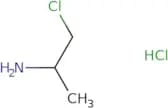
CAS:<p>Versatile small molecule scaffold</p>Formula:C13H12N2O2Purity:Min. 95%Molecular weight:228.25 g/mol1-Chloropropan-2-amine hydrochloride
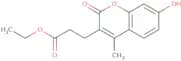
CAS:<p>Versatile small molecule scaffold</p>Formula:C3H9Cl2NPurity:Min. 95%Molecular weight:130 g/molEthyl 3-(7-hydroxy-4-methyl-2-oxo-2H-chromen-3-yl)propanoate
CAS:<p>Versatile small molecule scaffold</p>Formula:C15H16O5Purity:Min. 95%Molecular weight:276.29 g/molBicyclo[2.2.1]heptane-7-carboxylic acid
CAS:<p>Bicyclo[2.2.1]heptane-7-carboxylic acid is a chiral compound that has been used as a synthon for the synthesis of hydroxylated analogues of the prostaglandins, which are important in the regulation of blood pressure and inflammation. It is also an intermediate in the production of antibiotics such as penicillin, erythromycin, and tetracycline. Bicyclo[2.2.1]heptane-7-carboxylic acid can be found in microorganisms such as actinomycetes and fungi such as Penicillium sp., Aspergillus niger, and Chaetomium sp., among others.</p>Formula:C8H12O2Purity:Min. 95%Molecular weight:140.18 g/mol7-Chloro-imidazo[4,5-c]pyridine
CAS:<p>Versatile small molecule scaffold</p>Formula:C6H4ClN3Purity:Min. 95%Molecular weight:153.57 g/mol(S)-1-(2-(Pyridin-3-yl)pyrrolidin-1-yl)ethanone
CAS:<p>Nicotine is a potent alkaloid that is found in the leaves of Nicotiana tabacum and other tobacco plants. Nicotine acts on nicotinic acetylcholine receptors, which are located on the post-synaptic membrane of neurons. These receptors are stimulated by acetylcholinesterase, which breaks down acetylcholine. Nicotine inhibits the breakdown of acetylcholine and stimulates these receptors, leading to increased activity in these neurons. Nicotine also binds to monoamine oxidase (MAO) enzymes, preventing them from metabolizing norepinephrine and epinephrine, which leads to an increase in levels of these neurotransmitters. Nicotine also has been shown to stimulate lipolysis and fatty acid synthesis in cells.</p>Formula:C11H14N2OPurity:Min. 95%Molecular weight:190.24 g/molFenabutene
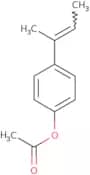
CAS:<p>Fenabutene is a hydrophobic drug that has been reconstituted in an injectable or implantable form. It is used as an active compound for the treatment of cancer. Fenabutene binds to the target cell and creates a monolayer on the outer surface, which is then penetrated by the drug. This drug has been shown to be effective for treating breast cancer and prostate cancer, among other cancers. Fenabutene can also be used as a diagnostic tool as it can be used to measure cell membrane permeability in vitro. Fenabutene does not dissolve in water and must be mixed with solvents such as ethanol or acetone for use in iontophoresis devices.</p>Formula:C12H14O2Purity:Min. 95%Molecular weight:190.24 g/mol4-Amino-2-hydroxybenzamide
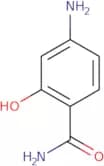
CAS:<p>4-Amino-2-hydroxybenzamide is an aminoaryl amide that is produced by the thermal decomposition of 4-amino-2,6-dihydroxyphenylacetamide. It has been shown to be a potent inhibitor of the growth of bacteria and yeast, including Mycobacterium tuberculosis. The inhibitory effect was found to be due to inhibition of RNA synthesis as well as protein synthesis. This compound has also been shown to be effective against other types of microorganisms such as Pseudomonas aeruginosa and Staphylococcus aureus.</p>Formula:C7H8N2O2Purity:Min. 95%Molecular weight:152.15 g/mol(S)-(ˆ’)-Limonene
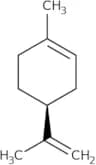
CAS:(S)-(ˆ’)-Limonene is a natural compound that has been found to have analgesic properties in animal models of pain. It also has the ability to inhibit microbial biotransformation, as well as oxidative DNA damage. Studies have shown that (S)-(ˆ’)-limonene can affect enzyme activities and the rat liver microsomes. The optimum concentration for (S)-(ˆ’)-limonene is between 0.5-2mg/mL, which causes an increase in locomotor activity and no carcinogenesis effects at doses up to 1000 mg/kg body weight.Formula:C10H16Purity:Min. 95%Molecular weight:136.23 g/mol4-(4-Chlorobenzoyl)-1H-1,2,3-triazole
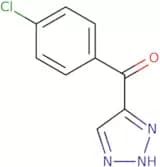
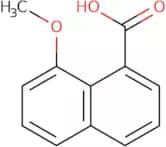
CAS:<p>Versatile small molecule scaffold</p>Formula:C9H6ClN3OPurity:Min. 95%Molecular weight:207.61 g/mol8-Methoxynaphthalene-1-carboxylic acid
CAS:<p>Versatile small molecule scaffold</p>Formula:C12H10O3Purity:Min. 95%Molecular weight:202.21 g/molQuinazoline-2,4(1H,3H)-dithione
CAS:<p>Versatile small molecule scaffold</p>Formula:C8H6N2S2Purity:Min. 95%Molecular weight:194.3 g/mol2H,3H,4H-Pyrido[1,2-a]pyrimidin-3-ol hydrochloride
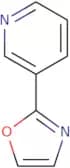
CAS:<p>Versatile small molecule scaffold</p>Formula:C8H11ClN2OPurity:Min. 95%Molecular weight:186.64 g/mol3-(1,3-Oxazol-2-yl)pyridine
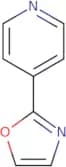
CAS:<p>Versatile small molecule scaffold</p>Formula:C8H6N2OPurity:Min. 95%Molecular weight:146.15 g/mol-2(Pyridin-4-Yl)Oxazole
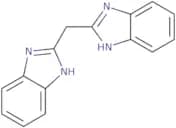
CAS:<p>Versatile small molecule scaffold</p>Formula:C8H6N2OPurity:Min. 95%Molecular weight:146.15 g/mol2-(1H-1,3-Benzodiazol-2-ylmethyl)-1H-1,3-benzodiazole
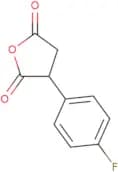
CAS:2-(1H-1,3-Benzodiazol-2-ylmethyl)-1H-1,3-benzodiazole is a solid with an orthorhombic crystal system. It has been shown to crystallize in the space group P2(1)/c. The anion is formed by the transfer of one proton from the cation to the oxygen atom of the nitro group. 2-(1H-1,3-Benzodiazol-2-ylmethyl)-1H-1,3 benzodiazole has been used as a catalyst for reactions in organic synthesis and electrochemistry. It also reacts with molecular oxygen to form a chloride ion and catalyzes reactions involving chloride ions. 2-(1H- 1,3 -Benzodiazol-2 -ylmethyl)- 1 H - 1,3 benzodiazole has been studied using x ray crystallography and diffraction techniques and was found to have a crystalFormula:C15H12N4Purity:Min. 95%Molecular weight:248.28 g/mol3-(4-Fluorophenyl)oxolane-2,5-dione
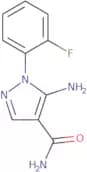
CAS:<p>Versatile small molecule scaffold</p>Formula:C10H7FO3Purity:Min. 95%Molecular weight:194.16 g/mol5-Amino-1-(2-fluorophenyl)-1H-pyrazole-4-carboxamide
CAS:Versatile small molecule scaffoldFormula:C10H9FN4OPurity:Min. 95%Molecular weight:220.2 g/mol1-(2-Fluorophenyl)-1H,4H,5H-pyrazolo[3,4-d]pyrimidin-4-one
CAS:<p>Versatile small molecule scaffold</p>Formula:C11H7FN4OPurity:Min. 95%Molecular weight:230.2 g/mol4-chloro-1-(2-fluorophenyl)-1h-pyrazolo[3,4-d]pyrimidine
CAS:Versatile small molecule scaffoldFormula:C11H6ClFN4Purity:Min. 95%Molecular weight:248.65 g/mol5-Amino-1-(pyrimidin-2-yl)-1H-pyrazole-4-carboxamide
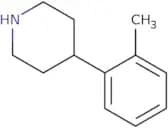
CAS:<p>Versatile small molecule scaffold</p>Formula:C8H8N6OPurity:Min. 95%Molecular weight:204.19 g/mol4-(o-Tolyl)piperidine
CAS:<p>4-(o-Tolyl)piperidine is a competitive antagonist of acetylcholine at muscarinic receptor sites. It has been shown to be an orally active, nonselective, and selective inhibitor of the muscarinic receptors. 4-(o-Tolyl)piperidine interacts with the ligand binding domain of the muscarinic receptor, blocking its ability to bind acetylcholine. This drug has been shown to have anticholinergic effects in a number of animal studies.</p>Formula:C12H17NPurity:Min. 95%Molecular weight:175.27 g/mol2-{[2-(Trifluoromethyl)phenyl]formamido}acetic acid
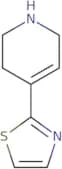
CAS:<p>Versatile small molecule scaffold</p>Formula:C10H8F3NO3Purity:Min. 95%Molecular weight:247.17 g/mol4-(1,3-Thiazol-2-yl)-1,2,3,6-tetrahydropyridine
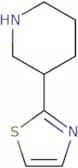
CAS:Versatile small molecule scaffoldFormula:C8H10N2SPurity:Min. 95%Molecular weight:166.25 g/mol2-(Piperidin-3-yl)thiazole
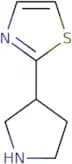
CAS:<p>Versatile small molecule scaffold</p>Formula:C8H12N2SPurity:Min. 95%Molecular weight:168.26 g/mol2-(Pyrrolidin-3-yl)-1,3-thiazole
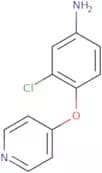
CAS:<p>Versatile small molecule scaffold</p>Formula:C7H10N2SPurity:Min. 95%Molecular weight:154.24 g/mol3-Chloro-4-(pyridin-4-yloxy)aniline
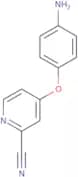
CAS:<p>Versatile small molecule scaffold</p>Formula:C11H9ClN2OPurity:Min. 95%Molecular weight:220.65 g/mol4-(4-Aminophenoxy)pyridine-2-carbonitrile
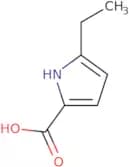
CAS:<p>Versatile small molecule scaffold</p>Formula:C12H9N3OPurity:Min. 95%Molecular weight:211.22 g/mol5-Ethyl-1H-pyrrole-2-carboxylic acid
CAS:<p>Versatile small molecule scaffold</p>Formula:C7H9NO2Purity:Min. 95%Molecular weight:139.15 g/mol


![2-Chloro-5-nitro-1H-benzo[d]imidazole](/_next/image/?url=https%3A%2Fstatic.cymitquimica.com%2Fproducts%2F3D%2Fthumb-webp%2FFAA95572.webp&w=3840&q=75)
![3-[3-(Trifluoromethyl)phenyl]pyridine](/_next/image/?url=https%3A%2Fstatic.cymitquimica.com%2Fproducts%2F3D%2Fthumb-webp%2FFAA95799.webp&w=3840&q=75)

![[(Furan-2-yl)methyl]urea](/_next/image/?url=https%3A%2Fstatic.cymitquimica.com%2Fproducts%2F3D%2Fthumb-webp%2FFAA96213.webp&w=3840&q=75)
![4-[(Pyridin-4-ylmethyl)-amino]-benzoic acid](/_next/image/?url=https%3A%2Fstatic.cymitquimica.com%2Fproducts%2F3D%2Fthumb-webp%2FFAA96620.webp&w=3840&q=75)
![Bicyclo[2.2.1]heptane-7-carboxylic acid](/_next/image/?url=https%3A%2Fstatic.cymitquimica.com%2Fproducts%2F3D%2Fthumb-webp%2FFAA97167.webp&w=3840&q=75)
![7-Chloro-imidazo[4,5-c]pyridine](/_next/image/?url=https%3A%2Fstatic.cymitquimica.com%2Fproducts%2F3D%2Fthumb-webp%2FFAA97513.webp&w=3840&q=75)

![2H,3H,4H-Pyrido[1,2-a]pyrimidin-3-ol hydrochloride](/_next/image/?url=https%3A%2Fstatic.cymitquimica.com%2Fproducts%2F3D%2Fthumb-webp%2FFAA99397.webp&w=3840&q=75)
![1-(2-Fluorophenyl)-1H,4H,5H-pyrazolo[3,4-d]pyrimidin-4-one](/_next/image/?url=https%3A%2Fstatic.cymitquimica.com%2Fproducts%2F3D%2Fthumb-webp%2FFAB10782.webp&w=3840&q=75)
![4-chloro-1-(2-fluorophenyl)-1h-pyrazolo[3,4-d]pyrimidine](/_next/image/?url=https%3A%2Fstatic.cymitquimica.com%2Fproducts%2F3D%2Fthumb-webp%2FFAB10783.webp&w=3840&q=75)

![2-{[2-(Trifluoromethyl)phenyl]formamido}acetic acid](/_next/image/?url=https%3A%2Fstatic.cymitquimica.com%2Fproducts%2F3D%2Fthumb-webp%2FFAB11794.webp&w=3840&q=75)