Building Blocks
Subcategories of "Building Blocks"
- Boronic Acids & Boronic Acid Derivatives(5,781 products)
- Chiral Building Blocks(1,242 products)
- Hydrocarbon Building Blocks(6,101 products)
- Organic Building Blocks(61,033 products)
Found 205320 products of "Building Blocks"
C-(5-Methyl-[1,2,4]oxadiazol-3-yl)-methylaminehydrochloride
CAS:Versatile small molecule scaffold
Formula:C4H8ClN3OPurity:Min. 95%Molecular weight:149.58 g/molRef: 3D-JXB98684
Discontinued product[3-(Piperidine-1-sulfonyl)phenyl]methanamine
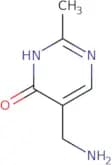
CAS:Versatile small molecule scaffoldFormula:C12H18N2O2SPurity:Min. 95%Molecular weight:254.35 g/mol5-(Aminomethyl)-2-methylpyrimidin-4-ol
CAS:Versatile small molecule scaffold
Formula:C6H9N3OPurity:Min. 95%Molecular weight:139.16 g/molRef: 3D-BAA74972
Discontinued product2-([1]Benzofuro[3,2-d]pyrimidin-4-ylsulfanyl)-N-(3-hydroxyphenyl)acetamide
CAS:Controlled Product2-[(1-Benzofuro[3,2-d]pyrimidin-4-ylsulfanyl)-N-(3-hydroxyphenyl)acetamide] is a peptide that belongs to the class of activators. It has been shown to activate a number of ion channels and receptor types, including potassium channels and G protein coupled receptors. This activator also inhibits the activity of protein interactions such as ligand binding or receptor activation. 2-[(1-Benzofuro[3,2-d]pyrimidin-4-ylsulfanyl)-N-(3-hydroxyphenyl)acetamide] is used in research as an antibody probe and as a pharmacological agent.
Formula:C18H13N3O3SPurity:Min. 95%Molecular weight:351.4 g/molRef: 3D-YIB68862
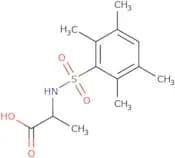
Discontinued product2-(2,3,5,6-Tetramethylbenzenesulfonamido)propanoic acid
CAS:Versatile small molecule scaffoldFormula:C13H19NO4SPurity:Min. 95%Molecular weight:285.36 g/mol3-[(3-Bromophenyl)methoxy]oxolane
CAS:Versatile small molecule scaffold
Formula:C11H13BrO2Purity:Min. 95%Molecular weight:257.12 g/molRef: 3D-UDC27568
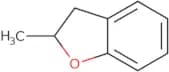
Discontinued product2-Methylcoumaran
CAS:2-Methylcoumaran is a functionalized coumarin. It is synthesized by the reaction of 2-methylcoumarin with an alkylating agent such as acetyl chloride or benzoyl chloride. This reaction involves the substitution of one of the hydroxyl groups in 2-methylcoumarin with an alkyl group, forming a new bond between the two carbon atoms. The resulting product has two new functional groups, which can be used in organic reactions.
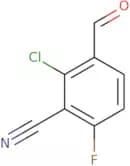
Formula:C9H10OPurity:Min. 95%Molecular weight:134.18 g/mol2-Chloro-6-fluoro-3-formylbenzonitrile
CAS:Versatile small molecule scaffoldFormula:C8H3ClFNOPurity:Min. 95%Molecular weight:183.56 g/molRef: 3D-MMB04033
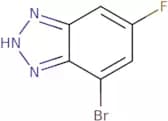
Discontinued product7-Bromo-5-fluoro-1H-Benzotriazole
CAS:Versatile small molecule scaffold
Formula:C6H3BrFN3Purity:Min. 95%Molecular weight:216.01 g/molRef: 3D-MMB01396
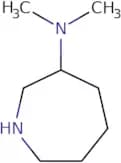
Discontinued productN,N-Dimethylazepan-3-amine
CAS:Versatile small molecule scaffold
Formula:C8H18N2Purity:Min. 95%Molecular weight:142.24 g/mol3-Iodo-1H-thieno[3,2-c]pyrazole
CAS:Versatile small molecule scaffold
Formula:C5H3IN2SPurity:Min. 95%Molecular weight:250.06 g/mol1-(1,3-Diphenyl-1H-pyrazole-4-carbothioyl)piperidine
CAS:Versatile small molecule scaffold
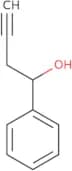
Formula:C21H21N3SPurity:Min. 95%Molecular weight:347.5 g/mol1-Phenylbut-3-yn-1-ol
CAS:1-Phenylbut-3-yn-1-ol is a monomer that belongs to the group of furyl compounds. It is one of the most important building blocks for organic chemistry. This compound has been used as a starting material in the synthesis of many other molecules, such as trisubstituted and asymmetric syntheses. The chloride ion can be substituted with other anions, such as dialkylamino or trisubstituted, to create different chemical structures. 1-Phenylbut-3-yn-1-ol can also be converted into biphenyl by adding phenoxy groups.
Formula:C10H10OPurity:Min. 95%Molecular weight:146.19 g/molRef: 3D-BAA74336
Discontinued product1-(Cyanomethyl)-1H-pyrazole-3-carboxylic acid
CAS:Versatile small molecule scaffold
Formula:C6H5N3O2Purity:Min. 95%Molecular weight:151.12 g/molRef: 3D-UDC27546
Discontinued product5-{[(tert-butoxy)carbonyl]amino}pyridine-2-carboxylic acid
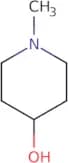
CAS:Versatile small molecule scaffoldFormula:C11H14N2O4Purity:Min. 95%Molecular weight:238.2 g/mol1-Methyl-4-piperidinol
CAS:1-Methyl-4-piperidinol is a hydroxylated piperidine that has been shown to inhibit the growth of cancer cells in culture. It was also found to be cytotoxic against human leukemia cells and murine myeloma cells. 1-Methyl-4-piperidinol has been shown to bind to the receptors on cell membranes, which may be responsible for its anti-cancer effects. The structure of 1-methyl-4-piperidinol is similar to that of pyrrolidine and piperazine, which are known to have antihistamine properties. In addition, 1-methyl-4-piperidinol binds with magnesium salt and forms a complex that inhibits the activity of hydrogen bond formation by amines and fatty acids. This inhibition leads to an increase in pH levels inside the cell, which may lead to cancer cell death.
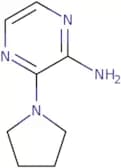
Formula:C6H13NOPurity:Min. 95%Molecular weight:115.17 g/mol3-(Pyrrolidin-1-yl)pyrazin-2-amine
CAS:Versatile small molecule scaffold
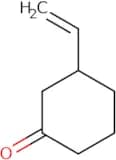
Formula:C8H12N4Purity:Min. 95%Molecular weight:164.21 g/mol3-Ethenylcyclohexan-1-one
CAS:3-Ethenylcyclohexan-1-one is a palladium-catalyzed, tricyclic cyclization of diphosphine and decarboxylation. It is stereoselective and has been used in the synthesis of chiral, asymmetric lactones. 3-Ethenylcyclohexan-1-one has also been used to synthesize analogs with allylic substitution. 3-Ethenylcyclohexan-1-one is catalytic and can be used for intramolecular carbonate formation.
Formula:C8H12OPurity:Min. 95%Molecular weight:124.18 g/molRef: 3D-BAA74063
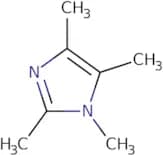
Discontinued product1,2,4,5-Tetramethylimidazole
CAS:1,2,4,5-Tetramethylimidazole is a synthetic organic compound that has been used to synthesize polymers. It is chemically stable in the presence of primary amines and other compounds that can form hydrogen bonds. 1,2,4,5-Tetramethylimidazole has been shown to be useful as a matrix polymer because it can undergo free radical polymerization with various functional groups. It can also react with anions such as nitrate or chloride ion to form ionic complexes. Thermally, 1,2,4,5-tetramethylimidazole decomposes into ammonia and methanol at temperatures above 200°C.
Formula:C7H12N2Purity:Min. 95%Molecular weight:124.19 g/molMaleic acid
CAS:Maleic acid is dicarboxylic acid. It is the cis isomer. The trans isomer is fumaric acid
Formula:C4H4O4Purity:Min. 95%Color and Shape:White Clear LiquidMolecular weight:116.07 g/molRef: 3D-FM29309
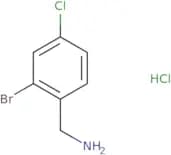
Discontinued product(2-Bromo-4-chlorophenyl)methanamine hydrochloride
CAS:Versatile small molecule scaffold
Formula:C7H8BrCl2NPurity:Min. 95%Molecular weight:256.95 g/molRef: 3D-YGD27370
Discontinued product2-Amino-3-cyclopentylpropanoic acid hydrochloride
CAS:Versatile small molecule scaffold
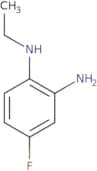
Formula:C8H16ClNO2Purity:Min. 95%Molecular weight:193.67 g/mol1-N-Ethyl-4-fluorobenzene-1,2-diamine
CAS:Versatile small molecule scaffold
Formula:C8H11FN2Purity:Min. 95%Molecular weight:154.18 g/molRef: 3D-BAA73743
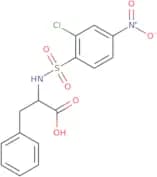
Discontinued product2-(2-Chloro-4-nitrobenzenesulfonamido)-3-phenylpropanoic acid
CAS:Versatile small molecule scaffold
Formula:C15H13ClN2O6SPurity:Min. 95%Molecular weight:384.8 g/molRef: 3D-JQB58233
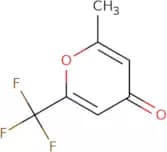
Discontinued product2-Methyl-6-(trifluoromethyl)-4H-pyran-4-one
CAS:Versatile small molecule scaffold
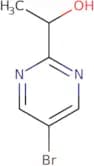
Formula:C7H5F3O2Purity:Min. 95%Molecular weight:178.11 g/mol1-(5-Bromopyrimidin-2-yl)ethan-1-ol
CAS:Versatile small molecule scaffold
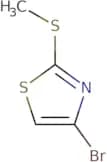
Formula:C6H7BrN2OPurity:Min. 95%Molecular weight:203.04 g/mol4-Bromo-2-(thiomethyl)thiazole
CAS:4-Bromo-2-(thiomethyl)thiazole is an alkylating agent that has anticancer activity. It can be used to synthesize a variety of analogs, which are functional molecules with similar or improved properties. 4-Bromo-2-(thiomethyl)thiazole is hydrophobic, but has been shown to be reactive in simulations and functionalities such as the enolate form. This molecule predominately forms a ferroptosis, which is a type of cyclopentenone. The cancer cells are stabilized by this molecule's biomolecular interactions.
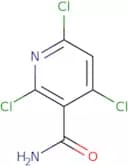
Formula:C4H4BrNS2Purity:Min. 95%Molecular weight:210.12 g/mol2,4,6-Trichloropyridine-3-carboxamide
CAS:Versatile small molecule scaffold
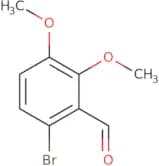
Formula:C6H3Cl3N2OPurity:Min. 95%Molecular weight:225.5 g/mol6-Bromo-2,3-dimethoxybenzaldehyde
CAS:6-Bromo-2,3-dimethoxybenzaldehyde is a quinone that has been used for the synthesis of x-ray crystallography. It is an olefination agent, which also has been used in palladium-catalyzed cross-coupling reactions. 6-Bromo-2,3-dimethoxybenzaldehyde has been used in organic chemistry as a modular building block and has also been used as a reagent in cross-coupling reactions with bromohydrins. 6-Bromo-2,3-dimethoxybenzaldehyde can be purified by recrystallization from methanol and ether.
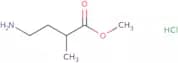
Formula:C9H9BrO3Purity:Min. 95%Molecular weight:245.07 g/molMethyl 4-amino-2-methylbutanoate hydrochloride
CAS:Versatile small molecule scaffoldFormula:C6H14ClNO2Purity:Min. 95%Molecular weight:167.63 g/molRef: 3D-EIA50378
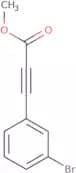
Discontinued productMethyl 3-(3-bromophenyl)prop-2-ynoate
CAS:Versatile small molecule scaffold
Formula:C10H7BrO2Purity:Min. 95%Molecular weight:239.06 g/molMethyl({1-[2-(trifluoromethyl)phenyl]propan-2-yl})amine
CAS:Controlled ProductVersatile small molecule scaffold
Formula:C11H14F3NPurity:Min. 95%Molecular weight:217.23 g/molRef: 3D-UDC27422
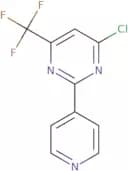
Discontinued product4-Chloro-2-(4-pyridinyl)-6-(trifluoromethyl)-pyrimidine
CAS:4-Chloro-2-(4-pyridinyl)-6-(trifluoromethyl)pyrimidine is a potent anticancer compound that inhibits the polymerization of tubulin, leading to cell death. It has been shown to be effective in inducing apoptosis in cancer cells. The EC50 values for 4-chloro-2-(4-pyridinyl)-6-(trifluoromethyl)pyrimidine are 0.1 and 0.3 μM for t47d cells and A549 cells, respectively. This compound is also an inducer of apoptosis in cancer cells with an EC50 value of 1.0 μM for the A549 cell line.
Formula:C10H5ClF3N3Purity:Min. 95%Molecular weight:259.62 g/molRef: 3D-EIA39470
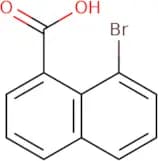
Discontinued product8-bromonaphthalene-1-carboxylic acid
CAS:8-Bromonaphthalene-1-carboxylic acid is an organic compound with the chemical formula C6H4BrO2. It is a white solid that is soluble in water, methanol, and ethanol. 8-Bromonaphthalene-1-carboxylic acid can be synthesized by hydrolysis of ethyl esters of naphthalene with alkali or sulphonation. The yields are usually low (25%). The product can also be made via the diazotization of naphthalenes in the presence of sodium azide to form naphthamide, which then reacts with bromine to form 8-bromonaphthalene-1-carboxylic acid. 8-Bromonaphthalene carboxylic acid has been used as a nucleophile in organic synthesis for conjugate addition reactions.
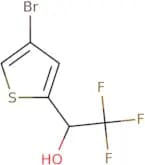
Formula:C11H7BrO2Purity:Min. 95%Molecular weight:251.1 g/mol(1S)-1-(4-Bromothiophen-2-yl)-2,2,2-trifluoroethan-1-ol
CAS:Versatile small molecule scaffoldFormula:C6H4BrF3OSPurity:Min. 95%Molecular weight:261.06 g/molRef: 3D-YGC04075
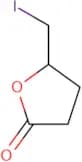
Discontinued product5-(Iodomethyl)oxolan-2-one
CAS:Versatile small molecule scaffold
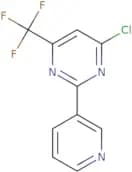
Formula:C5H7IO2Purity:Min. 95%Molecular weight:226.01 g/mol4-Chloro-2-(pyridin-3-yl)-6-(trifluoromethyl)pyrimidine
CAS:Versatile small molecule scaffoldFormula:C10H5ClF3N3Purity:Min. 95%Molecular weight:259.61 g/molRef: 3D-EIA39469
Discontinued productMethyl 6-methylpiperidine-3-carboxylate hydrochloride
CAS:Versatile small molecule scaffold
Formula:C8H15NO2·HClPurity:Min. 95%Molecular weight:193.67 g/molRef: 3D-JQB37674
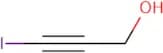
Discontinued product3-Iodo-2-propynol
CAS:3-Iodo-2-propynol is a microbicidal agent, which belongs to the group of phenyl substituted alkylthio compounds. It is active against acarids and reactive with metal ions and organic solvents. 3-Iodo-2-propynol has been shown to have a high microbicidal activity against microorganisms such as Escherichia coli, Pseudomonas aeruginosa, and Staphylococcus aureus. The chemical structure of 3-iodo-2-propynol can be described as a chlorinated derivative of 2-propenal.
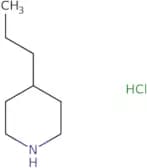
3-Iodo-2-propynol is an ester hydrochloride with the molecular formula CHClNO that was synthesized in 1885 by A. Wurtz and C. Perkin. The chemical properties of this compound are similar to those of phenylethyl alcohol (PEA).Formula:C3H3IOPurity:Min. 95%Molecular weight:181.96 g/mol4-Propyl-piperidine HCl
CAS:Versatile small molecule scaffold
Formula:C8H18ClNPurity:Min. 95%Molecular weight:163.69 g/molRef: 3D-CTA33168
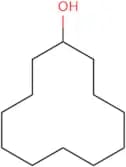
Discontinued productCyclododecanol
CAS:Cyclododecanol is a non-polar solvent that has been used in pharmaceutical preparations. Cyclododecanol is produced by the reaction of cyclododecanone with dodecanedioic acid, fatty acids, and hydrogen fluoride. The hydroxyl group of cyclododecanol reacts with piperazine to form a solid catalyst. This reaction solution can then be separated into two layers using a section: the lower layer contains cyclohexane and the upper layer contains cyclododecanol. Cyclododecanol has a hydrophobic effect due to its lack of polar functional groups.
Molecular Weight: 150
Boiling Point:
Melting Point: -156°C
Solubility: Soluble (0.1 g/100 mL) in water
Flash Point:
Vapor Pressure:
Density: 0.988 g/mL at 25°CFormula:C12H24OPurity:Min. 95%Molecular weight:184.32 g/mol(3R)-1-[(3-Phenyl-1,2,4-oxadiazol-5-yl)methyl]pyrrolidin-3-ol
CAS:Versatile small molecule scaffoldFormula:C13H15N3O2Purity:Min. 95%Molecular weight:245.28 g/molRef: 3D-YGC04064
Discontinued product(1R)-1-(6-Methylpyridin-2-yl)ethan-1-amine dihydrochloride
CAS:Versatile small molecule scaffold
Formula:C8H14Cl2N2Purity:Min. 95%Molecular weight:209.11 g/molRef: 3D-YGC04062
Discontinued product1-Oxaspiro[5.5]undecan-4-amine
CAS:Versatile small molecule scaffold
Formula:C10H19NOPurity:Min. 95%Molecular weight:169.26 g/molRef: 3D-UDC26726
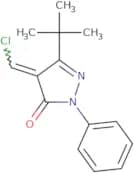
Discontinued product3-tert-Butyl-4-(chloromethylidene)-1-phenyl-4,5-dihydro-1H-pyrazol-5-one
CAS:Versatile small molecule scaffold
Formula:C14H15ClN2OPurity:Min. 95%Molecular weight:262.73 g/molRef: 3D-YGC03711
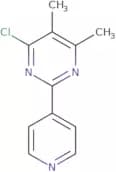
Discontinued product4-Chloro-5,6-dimethyl-2-(pyridin-4-yl)pyrimidine
CAS:Versatile small molecule scaffold
Formula:C11H10ClN3Purity:Min. 95%Molecular weight:219.67 g/molRef: 3D-EIA39462
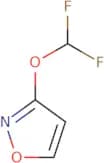
Discontinued product3-(Difluoromethoxy)-1,2-oxazole
CAS:Versatile small molecule scaffold
Formula:C4H3F2NO2Purity:Min. 95%Molecular weight:135.07 g/molRef: 3D-DXC56293
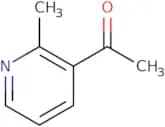
Discontinued product1-(2-Methylpyridin-3-yl)ethanone
CAS:1-(2-Methylpyridin-3-yl)ethanone is a ketone that can be synthesized using the reaction of methyl sulfone, benzyl sulfone, and sulphone. It has been shown to have anti-inflammatory properties by inhibiting prostaglandin synthesis and has been used as a nonsteroidal anti-inflammatory drug (NSAID). 1-(2-Methylpyridin-3-yl)ethanone has also been shown to have analgesic effects in mice. This synthetic compound may be useful in treating inflammation, pain, and fever.
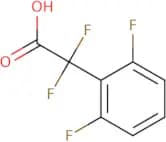
Formula:C8H9NOPurity:Min. 95%Molecular weight:135.16 g/mol2-(2,6-Difluorophenyl)-2,2-difluoroacetic acid
CAS:Versatile small molecule scaffoldFormula:C8H4F4O2Purity:Min. 95%Molecular weight:208.11 g/molRef: 3D-UDC26452
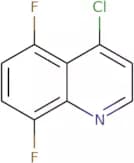
Discontinued product4-Chloro-5,8-difluoroquinoline
CAS:Versatile small molecule scaffold
Formula:C9H4ClF2NPurity:Min. 95%Molecular weight:199.58 g/molRef: 3D-IYB62668
Discontinued product
![C-(5-Methyl-[1,2,4]oxadiazol-3-yl)-methylaminehydrochloride](/_next/image/?url=https%3A%2Fstatic.cymitquimica.com%2Fproducts%2F3D%2Fthumb-webp%2FJXB98684.webp&w=3840&q=75)

![[3-(Piperidine-1-sulfonyl)phenyl]methanamine](/_next/image/?url=https%3A%2Fstatic.cymitquimica.com%2Fproducts%2F3D%2Fthumb-webp%2FYIB81381.webp&w=3840&q=75)
![2-([1]Benzofuro[3,2-d]pyrimidin-4-ylsulfanyl)-N-(3-hydroxyphenyl)acetamide](/_next/image/?url=https%3A%2Fstatic.cymitquimica.com%2Fproducts%2F3D%2Fthumb-webp%2FYIB68862.webp&w=3840&q=75)
![3-[(3-Bromophenyl)methoxy]oxolane](/_next/image/?url=https%3A%2Fstatic.cymitquimica.com%2Fproducts%2F3D%2Fthumb-webp%2FUDC27568.webp&w=3840&q=75)
![3-Iodo-1H-thieno[3,2-c]pyrazole](/_next/image/?url=https%3A%2Fstatic.cymitquimica.com%2Fproducts%2F3D%2Fthumb-webp%2FYIB35668.webp&w=3840&q=75)


![5-{[(tert-butoxy)carbonyl]amino}pyridine-2-carboxylic acid](/_next/image/?url=https%3A%2Fstatic.cymitquimica.com%2Fproducts%2F3D%2Fthumb-webp%2FYIB30847.webp&w=3840&q=75)


![Methyl({1-[2-(trifluoromethyl)phenyl]propan-2-yl})amine](/_next/image/?url=https%3A%2Fstatic.cymitquimica.com%2Fproducts%2F3D%2Fthumb-webp%2FUDC27422.webp&w=3840&q=75)

![(3R)-1-[(3-Phenyl-1,2,4-oxadiazol-5-yl)methyl]pyrrolidin-3-ol](/_next/image/?url=https%3A%2Fstatic.cymitquimica.com%2Fproducts%2F3D%2Fthumb-webp%2FYGC04064.webp&w=3840&q=75)
![1-Oxaspiro[5.5]undecan-4-amine](/_next/image/?url=https%3A%2Fstatic.cymitquimica.com%2Fproducts%2F3D%2Fthumb-webp%2FUDC26726.webp&w=3840&q=75)