Building Blocks
This section contains fundamental products for the synthesis of organic and biological compounds. Building blocks are the essential starting materials used to construct complex molecules through various chemical reactions. They play a critical role in drug discovery, material science, and chemical research. At CymitQuimica, we offer a diverse range of high-quality building blocks to support your innovative research and industrial projects, ensuring you have the essential components for successful synthesis.
Subcategories of "Building Blocks"
- Boronic Acids & Boronic Acid Derivatives(5,756 products)
- Chiral Building Blocks(1,242 products)
- Hydrocarbon Building Blocks(6,095 products)
- Organic Building Blocks(61,051 products)
Found 199813 products of "Building Blocks"
Sort by
Purity (%)
0
100
|
0
|
50
|
90
|
95
|
100
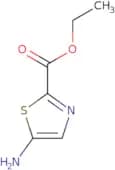
ethyl 5-amino-1,3-thiazole-2-carboxylate
CAS:<p>Versatile small molecule scaffold</p>Formula:C6H8N2O2SPurity:Min. 95%Molecular weight:172.2 g/mol(4-Aminopyridin-2-yl)methanol
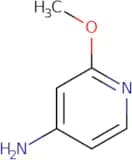
CAS:<p>Versatile small molecule scaffold</p>Formula:C6H8N2OPurity:Min. 95%Molecular weight:124.14 g/mol3-(2-Amino-1,3-thiazol-5-yl)propanoic acid
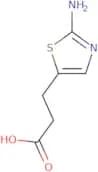
CAS:Versatile small molecule scaffoldFormula:C6H8N2O2SPurity:Min. 95%Molecular weight:172.21 g/mol5,6-Dimethylpyridazin-3(2H)-one
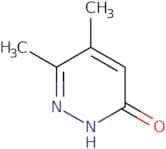
CAS:<p>Versatile small molecule scaffold</p>Formula:C6H8N2OPurity:Min. 95%Molecular weight:124.14 g/mol5-Amino-1,2,3-thiadiazole-4-carbothioamide
CAS:<p>Versatile small molecule scaffold</p>Formula:C3H4N4S2Purity:Min. 95%Molecular weight:160.2 g/mol2-(Tributylstannyl)propene
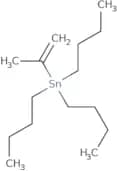
CAS:Controlled Product<p>2-(Tributylstannyl)propene (2-TBTP) is a cardiac muscle relaxant that inhibits the activity of the leukocyte ryanodine receptor. It has been shown to be effective in reducing nasal congestion, and is used for treating post-myocardial infarction. 2-TBTP also prevents the release of intracellular calcium ions from sarcoplasmic reticulum in cardiac muscle cells and has been shown to reduce concentrations of cholesterol, triglycerides, and phospholipids in the blood. 2-TBTP inhibits post-infarction remodeling by inhibiting fibroblast proliferation and collagen synthesis. This agent has also been shown to have chemotactic effects on neutrophils and eosinophils.</p>Formula:C15H32SnPurity:Min. 95%Molecular weight:331.12 g/molMethyl 4-(4-methyl-1,3-thiazol-2-yl)benzoate
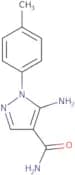
CAS:<p>Versatile small molecule scaffold</p>Formula:C12H11NO2SPurity:Min. 95%Molecular weight:233.29 g/mol5-Amino-1-(4-methylphenyl)-1H-pyrazole-4-carboxamide
CAS:<p>Versatile small molecule scaffold</p>Formula:C11H12N4OPurity:Min. 95%Molecular weight:216.24 g/mol3-(3,4-Dimethoxybenzenesulfonyl)propanoic acid
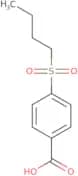
CAS:<p>Versatile small molecule scaffold</p>Formula:C11H14O6SPurity:Min. 95%Molecular weight:274.29 g/mol4-(Butane-1-sulfonyl)benzoic acid
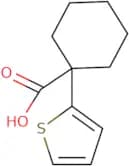
CAS:<p>Versatile small molecule scaffold</p>Formula:C11H14O4SPurity:Min. 95%Molecular weight:242.29 g/mol1-(Thiophen-2-yl)cyclohexane-1-carboxylic acid
CAS:Versatile small molecule scaffoldFormula:C11H14O2SPurity:Min. 95%Molecular weight:210.29 g/mol3-(Benzyloxy)cyclobutanol
CAS:<p>3-(Benzyloxy)cyclobutanol is a synthetic drug that is used as a radiolabeled substrate for positron emission tomography (PET). It has been shown to be metabolically stable in rat plasma and lung carcinoma cell lines. 3-(Benzyloxy)cyclobutanol has high uptake in cancer cells, which may be due to its ability to cross the blood-brain barrier. 3-(Benzyloxy)cyclobutanol can also be used as a model system for cancer research, such as determining how it affects the metabolic activity of cancer cells. This compound can also be used to study the pharmacokinetics of PET imaging agents in humans.</p>Formula:C11H14O2Purity:Min. 95%Molecular weight:178.23 g/mol2-(2-Methylpropyl)benzoic acid
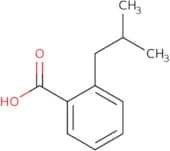
CAS:<p>2-(2-Methylpropyl)benzoic acid (MPBA) is a hydroxy acid that has been shown to exhibit immunosuppressive properties. MPBA inhibits the proliferation of T lymphocytes, which are cells involved in immune responses. This inhibition was found to be due to inhibition of protein synthesis and may be related to the functional group. MPBA also inhibits viral replication by interfering with the production of viral vectors and can be used as a therapeutic agent for hyperproliferative diseases such as cancer.</p>Formula:C11H14O2Purity:Min. 95%Molecular weight:178.23 g/molN-(2,3-Dimethoxybenzyl)ethanamine
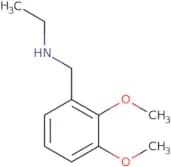
CAS:<p>Versatile small molecule scaffold</p>Formula:C11H17NO2Purity:Min. 95%Molecular weight:195.26 g/molN-(3-Methylbutan-2-yl)aniline
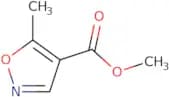
CAS:<p>Versatile small molecule scaffold</p>Formula:C11H17NPurity:Min. 95%Molecular weight:163.26 g/molMethyl 5-methyl-1,2-oxazole-4-carboxylate
CAS:<p>Versatile small molecule scaffold</p>Formula:C6H7NO3Purity:Min. 95%Molecular weight:141.12 g/mol4-Hydroxypyridine-2-carboxamide
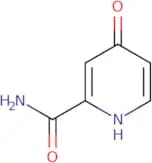
CAS:<p>4-Hydroxypyridine-2-carboxamide is a primary alcohol that can be catalyzed to form an aldehyde or ketone. It is used in the catalytic hydrogenation of primary and secondary alcohols to form the corresponding aldehydes or ketones. 4-Hydroxypyridine-2-carboxamide also has been used as an analog for 2,4-dihydroxypyridine-3-carboxamide in cyclopropanations and hydrolysis reactions.</p>Formula:C6H6N2O2Purity:Min. 95%Molecular weight:138.12 g/molMethyl 2-{[(tert-butoxy)carbonyl]amino}but-3-enoate
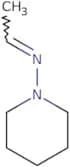
CAS:<p>Versatile small molecule scaffold</p>Formula:C10H17NO4Purity:Min. 95%Molecular weight:215.25 g/mol(1E)-N-(Piperidin-1-yl)ethan-1-imine
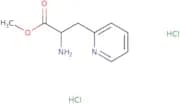
CAS:<p>Versatile small molecule scaffold</p>Formula:C7H14N2Purity:Min. 95%Molecular weight:126.2 g/molMethyl 2-amino-3-(pyridin-2-yl)propanoate
CAS:<p>Versatile small molecule scaffold</p>Formula:C9H14Cl2N2O2Purity:Min. 95%Molecular weight:253.12 g/mol3-[1-Methyl-4-(pyrrolidine-1-carbonyl)-1H-pyrazol-3-yl]piperidine
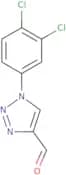
CAS:Versatile small molecule scaffoldFormula:C14H22N4OPurity:Min. 95%Molecular weight:262.4 g/mol1-(3,4-Dichlorophenyl)-1H-1,2,3-triazole-4-carbaldehyde
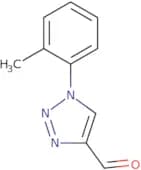
CAS:<p>Versatile small molecule scaffold</p>Formula:C9H5Cl2N3OPurity:Min. 95%Molecular weight:242.06 g/mol1-(2-Methylphenyl)-1H-1,2,3-triazole-4-carbaldehyde
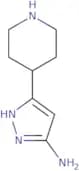
CAS:<p>Versatile small molecule scaffold</p>Formula:C10H9N3OPurity:Min. 95%Molecular weight:187.2 g/mol5-Amino-3-(4-piperidyl)-1H-pyrazole
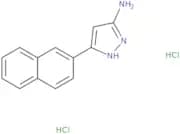
CAS:<p>Versatile small molecule scaffold</p>Formula:C8H14N4Purity:Min. 95%Molecular weight:166.22 g/mol5-(Naphthalen-2-yl)-1H-pyrazol-3-amine dihydrochloride
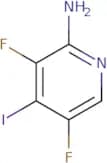
CAS:<p>Versatile small molecule scaffold</p>Formula:C13H13Cl2N3Purity:Min. 95%Molecular weight:282.17 g/mol3,5-Difluoro-4-iodopyridin-2-amine
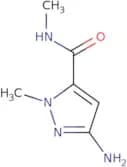
CAS:<p>Versatile small molecule scaffold</p>Formula:C5H3F2IN2Purity:Min. 95%Molecular weight:255.99 g/mol3-Amino-N,1-dimethyl-1H-pyrazole-5-carboxamide
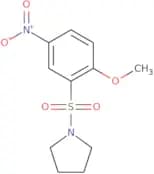
CAS:<p>Versatile small molecule scaffold</p>Formula:C6H10N4OPurity:Min. 95%Molecular weight:154.17 g/mol1-(2-Methoxy-5-nitrobenzenesulfonyl)pyrrolidine
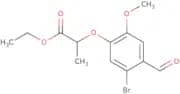
CAS:<p>Versatile small molecule scaffold</p>Formula:C11H14N2O5SPurity:Min. 95%Molecular weight:286.31 g/molEthyl 2-(5-bromo-4-formyl-2-methoxyphenoxy)propanoate
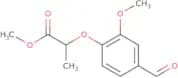
CAS:<p>Versatile small molecule scaffold</p>Formula:C13H15BrO5Purity:Min. 95%Molecular weight:331.16 g/molMethyl 2-(4-formyl-2-methoxyphenoxy)propanoate
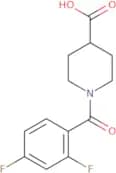
CAS:<p>Versatile small molecule scaffold</p>Formula:C12H14O5Purity:Min. 95%Molecular weight:238.24 g/mol1-(2,4-Difluorobenzoyl)piperidine-4-carboxylic acid
CAS:1-(2,4-Difluorobenzoyl)piperidine-4-carboxylic acid is a custom synthesis that is used for the methylation of carbohydrates. 1-(2,4-Difluorobenzoyl)piperidine-4-carboxylic acid has been shown to be an effective reagent for the conversion of oligosaccharides and polysaccharides to their corresponding monosaccharide derivatives. It can also be used to modify saccharide structures or to fluorinate saccharides. This chemical is highly pure and can be modified with click chemistry.Formula:C13H13F2NO3Purity:Min. 95%Molecular weight:269.24 g/mol4-[1-(Morpholin-4-yl)ethyl]aniline
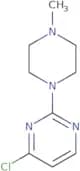
CAS:<p>Versatile small molecule scaffold</p>Formula:C12H18N2OPurity:Min. 95%Molecular weight:206.28 g/mol4-Chloro-2-(4-methylpiperazin-1-yl)pyrimidine
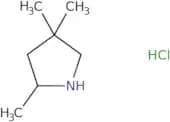
CAS:<p>Versatile small molecule scaffold</p>Formula:C9H13ClN4Purity:Min. 95%Molecular weight:212.68 g/mol2,4,4-Trimethylpyrrolidine hydrochloride
CAS:<p>Versatile small molecule scaffold</p>Formula:C7H16ClNPurity:Min. 95%Molecular weight:149.66 g/mol4-[4-(Ethoxycarbonyl)-5-(trifluoromethyl)-1H-pyrazol-1-yl]benzoic acid
CAS:Controlled Product<p>4-[4-(Ethoxycarbonyl)-5-(trifluoromethyl)-1H-pyrazol-1-yl]benzoic acid is an inhibitor of the protein tyrosine phosphatase 1B. This drug binds to the ATP site and competitively inhibits the binding of ATP, which results in the inhibition of the catalytic activity of this enzyme. 4-[4-(Ethoxycarbonyl)-5-(trifluoromethyl)-1H-pyrazol-1-yl]benzoic acid has been shown to inhibit ion channels, such as nicotinic acetylcholine receptors, as well as other protein interactions like receptor interaction.</p>Formula:C14H11F3N2O4Purity:Min. 95%Molecular weight:328.24 g/mol4-Chloro-7-methyl-3-nitroquinoline
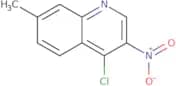
CAS:<p>Versatile small molecule scaffold</p>Formula:C10H7ClN2O2Purity:Min. 95%Molecular weight:222.63 g/mol5-Fluororesorcinol
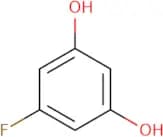
CAS:<p>5-Fluororesorcinol is a fluorine-containing analog of resorcinol. It is used as a topical medication for the treatment of acne, psoriasis, and other skin disorders. 5-Fluororesorcinol has been shown to inhibit the production of tyrosinase, an enzyme that catalyzes the oxidation of phenols to quinones. This process is involved in the formation of melanin and plays a role in inflammation and cell proliferation. 5-Fluororesorcinol also binds to cannabinoid receptors (CB1 and CB2) with high affinity. The molecular model for 5-fluoro resorcinol shows hydrogen bonding interactions with the hydroxyl group and fluorine atom. It also exhibits ferroelectric behavior due to its nonlinear dipole moment. The presence of two isomers (5R or 6S) may be due to steric hindrance from one or more methyl groups in the ortho</p>Formula:C6H5FO2Purity:Min. 95%Molecular weight:128.1 g/mol2-Ethyl-4,6-dimethoxybenzoic acid
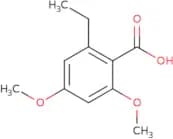
CAS:<p>Versatile small molecule scaffold</p>Formula:C11H14O4Purity:Min. 95%Molecular weight:210.2 g/mol5-Bromo-N-(3-methoxyphenyl)-2-furamide
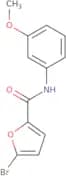
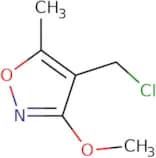
CAS:<p>Versatile small molecule scaffold</p>Formula:C12H10BrNO3Purity:Min. 95%Molecular weight:296.12 g/mol4-(Chloromethyl)-3-methoxy-5-methyl-1,2-oxazole
CAS:<p>4-(Chloromethyl)-3-methoxy-5-methyl-1,2-oxazole (CGS 19755) is a neuroprotective agent that binds to the glutamate receptor, inhibiting glutamate binding. It also inhibits the production of intracellular cGMP, which may be due to its ability to inhibit the binding of G protein coupled receptors. CGS 19755 has been shown to have neuroprotective properties in vivo and expressed in vitro. It has high affinity for both alpha-amino-3-hydroxy-5-methylisoxazolepropionic acid (AMPA) and N -methyl--aspartic acid (NMDA) receptors.<br>CGS 19755 has been shown to be more potent than other glutamate antagonists such as LY 273558 in animal tests for neuroprotection.</p>Formula:C6H8ClNO2Purity:Min. 95%Molecular weight:161.58 g/mol(3-Methoxy-5-methyl-1,2-oxazol-4-yl)methanol
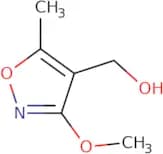
CAS:Versatile small molecule scaffoldFormula:C6H9NO3Purity:Min. 95%Molecular weight:143.14 g/mol4-(pyridin-3-ylmethyl)phenol
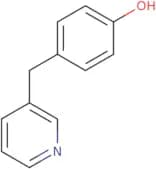
CAS:<p>Versatile small molecule scaffold</p>Formula:C12H11NOPurity:Min. 95%Molecular weight:185.22 g/mol2-(2-Hydroxyethanesulfonyl)acetic acid
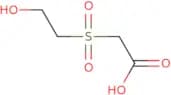
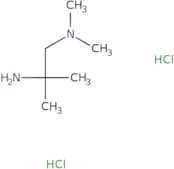
CAS:Versatile small molecule scaffoldFormula:C4H8O5SPurity:Min. 95%Molecular weight:168.17 g/molN1,N1,2-Trimethyl-1,2-propanediamine Dihydrochloride
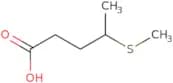
CAS:Versatile small molecule scaffoldFormula:C6H16N2·2HClPurity:Min. 95%Molecular weight:189.12 g/mol4-(Methylsulfanyl)pentanoic acid
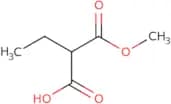
CAS:<p>Versatile small molecule scaffold</p>Formula:C6H12O2SPurity:Min. 95%Molecular weight:148.23 g/mol2-(Methoxycarbonyl)butanoic acid
CAS:<p>Versatile small molecule scaffold</p>Formula:C6H10O4Purity:Min. 95%Molecular weight:146.14 g/mol(R)-1-(4-Chlorophenyl)ethanol
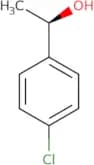
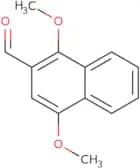
CAS:<p>(R)-1-(4-Chlorophenyl)ethanol is a chiral alcohol that can be used in the synthesis of enantiopure compounds. The racemic mixture of this alcohol is not suitable for use as a substrate in asymmetric synthesis because it has no optical activity. This alcohol is oxidized by dehydrogenase enzymes to form (S)-1-(4-chlorophenyl)ethanol and an H radical, which then reacts with O2 to form HO2 and (R)-1-(4-chlorophenyl)ethyl radical. The reactivity of these two radicals will depend on the concentration of the substrate and the presence of other substrates that compete with it for binding sites on the enzyme. In general, short-chain alcohols are more easily hydrated than longer chain alcohols. The reaction rate also increases with temperature, although at high temperatures, substrate binding and product release may become limiting factors.</p>Formula:C8H9ClOPurity:Min. 95%Molecular weight:156.61 g/mol1,4-Dimethoxynaphthalene-2-carbaldehyde
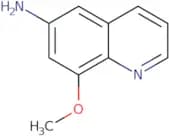
CAS:<p>Versatile small molecule scaffold</p>Formula:C13H12O3Purity:Min. 95%Molecular weight:216.23 g/mol8-Methoxyquinolin-6-amine
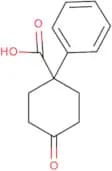
CAS:<p>Versatile small molecule scaffold</p>Formula:C10H10N2OPurity:Min. 95%Molecular weight:174.2 g/mol4-oxo-1-Phenylcyclohexanecarboxylic acid
CAS:<p>Versatile small molecule scaffold</p>Formula:C13H14O3Purity:Min. 95%Molecular weight:218.25 g/mol





![Methyl 2-{[(tert-butoxy)carbonyl]amino}but-3-enoate](/_next/image/?url=https%3A%2Fstatic.cymitquimica.com%2Fproducts%2F3D%2Fthumb-webp%2FAEA03868.webp&w=3840&q=75)
![3-[1-Methyl-4-(pyrrolidine-1-carbonyl)-1H-pyrazol-3-yl]piperidine](/_next/image/?url=https%3A%2Fstatic.cymitquimica.com%2Fproducts%2F3D%2Fthumb-webp%2FADD76840.webp&w=3840&q=75)
![4-[1-(Morpholin-4-yl)ethyl]aniline](/_next/image/?url=https%3A%2Fstatic.cymitquimica.com%2Fproducts%2F3D%2Fthumb-webp%2FADB80406.webp&w=3840&q=75)
![4-[4-(Ethoxycarbonyl)-5-(trifluoromethyl)-1H-pyrazol-1-yl]benzoic acid](/_next/image/?url=https%3A%2Fstatic.cymitquimica.com%2Fproducts%2F3D%2Fthumb-webp%2FADB37226.webp&w=3840&q=75)