Building Blocks
This section contains fundamental products for the synthesis of organic and biological compounds. Building blocks are the essential starting materials used to construct complex molecules through various chemical reactions. They play a critical role in drug discovery, material science, and chemical research. At CymitQuimica, we offer a diverse range of high-quality building blocks to support your innovative research and industrial projects, ensuring you have the essential components for successful synthesis.
Subcategories of "Building Blocks"
- Boronic Acids & Boronic Acid Derivatives(5,778 products)
- Chiral Building Blocks(1,242 products)
- Hydrocarbon Building Blocks(6,098 products)
- Organic Building Blocks(61,098 products)
Found 199594 products of "Building Blocks"
Sort by
Purity (%)
0
100
|
0
|
50
|
90
|
95
|
100
3-Oxa-9-azaspiro[5.5]undecane
CAS:<p>Versatile small molecule scaffold</p>Formula:C9H17NOPurity:Min. 95%Molecular weight:155.24 g/mol8-Thia-2-azaspiro[4.5]decane
CAS:<p>Versatile small molecule scaffold</p>Formula:C8H15NSPurity:Min. 95%Molecular weight:157.28 g/mol4-(2-Aminopropyl)phenol hydrobromide
CAS:Controlled Product<p>4-(2-Aminopropyl)phenol hydrobromide is a nonsteroidal anti-inflammatory drug that inhibits the production of prostaglandins and thromboxanes. It has been shown to be clinically relevant in the treatment of low diastolic pressure. The biological sample is typically obtained from a patient's blood or urine. The locomotor activity of animals was measured using a photocell beam apparatus, and the reaction solution contained 4-(2-aminopropyl)phenol hydrobromide, dopamine, and uric acid. <br>4-(2-Aminopropyl)phenol hydrobromide has been shown to reduce the incidence of infectious diseases in experimental models.</p>Formula:C9H14BrNOPurity:Min. 95%Molecular weight:232.12 g/mol3-Chloro-N-phenethyl-propionamide
CAS:<p>3-Chloro-N-phenethyl-propionamide is a hydrophobic, insoluble, and implanting drug that can be reconstituted with water and injected intravenously. It has been shown to have antimicrobial activity against P. aeruginosa in vitro, but not in vivo. 3-Chloro-N-phenethyl-propionamide has been used for the treatment of chronic wounds and burns. This drug has also been shown to be effective in iontophoresis devices when mixed with a diluent such as saline or water. 3-Chloro-N-phenethyl-propionamide interacts with bacterial cell membranes by binding to the anionic phospholipid head groups, disrupting membrane integrity and inhibiting protein synthesis. In addition, it may inhibit DNA gyrase activity by binding to dnaA protein.</p>Formula:C11H14ClNOPurity:Min. 95%Molecular weight:211.69 g/mol[2-Hydroxy-3-(3-methylphenoxy)propyl](propan-2-yl)amine hydrochloride
CAS:<p>2-Hydroxy-3-(3-methylphenoxy)propyl](propan-2-yl)amine hydrochloride is a pharmaceutical drug that is used to treat autoimmune diseases, such as diabetes. It is a glycol ester of the amino acid proline and has been shown to increase insulin sensitivity in cardiac tissue. The drug also has pluripotent cell activity, which means it can differentiate into other lineages of cells. This property makes 2-Hydroxy-3-(3-methylphenoxy)propyl](propan-2-yl)amine hydrochloride useful for regenerative medicine and tissue engineering. The drug also binds to receptors on cells and alters their function or gene expression. These effects are specific for each receptor and depend on the type of cell being treated.</p>Formula:C13H22ClNO2Purity:Min. 95%Molecular weight:259.77 g/mol2-Hydroxy-[1,1'-biphenyl]-3-carboxylic acid
CAS:<p>2-Hydroxy-[1,1'-biphenyl]-3-carboxylic acid (2HBC) is a monomer that belongs to the group of ester compounds. It has been shown to inhibit the growth of trichophyton mentagrophytes and other fungi by forming hydrogen bonds with the enzyme activities in the cell wall. 2HBC also inhibits microbial growth by binding to enzymes such as phospholipase A2, cyclooxygenase, and lipoxygenase, which are involved in inflammatory processes. This drug also inhibits bacterial growth by binding to the ribosome, preventing protein synthesis and leading to cell death. The inhibition of microbial growth is not limited to bacteria; it also occurs in fungi and protozoa. 2HBC has been shown to be active against both extracellular and intracellular microbial infections.</p>Formula:C13H10O3Purity:Min. 95%Molecular weight:214.22 g/mol(2S)-2-Amino-3-(4-hydroxy-3-methoxyphenyl)propanoic acid
CAS:Controlled Product<p>L-DOPA is a natural amino acid and intermediate in the biosynthesis of dopamine. It is also a precursor for the synthesis of norepinephrine from dopamine. L-DOPA is synthesized from the amino acid tyrosine by the enzyme tyrosine hydroxylase. It can be used as a drug to treat Parkinson's disease and other disorders that affect motor function, such as Huntington's disease and Tourette syndrome. L-DOPA is converted to dopamine by the enzyme dopa decarboxylase, which converts it to dopamine in a two-step process. The conversion of L-DOPA to dopamine can be monitored using electrochemical detection or fluorescence spectroscopy.</p>Formula:C10H13NO4Purity:Min. 95%Molecular weight:211.21 g/mol1-Methyl-6-oxo-1,4,5,6-tetrahydropyridazine-3-carboxamide
CAS:<p>1-Methyl-6-oxo-1,4,5,6-tetrahydropyridazine-3-carboxamide is a fatty acid ester with antihistaminic effects. It is used in pharmaceutical preparations as an antitussive and an excipient in diagnostic tests. It has been shown to be effective against acute or chronic inflammation of the respiratory tract, including bronchitis and asthma. 1-Methyl-6-oxo-1,4,5,6-tetrahydropyridazine-3-carboxamide has also been shown to inhibit prostaglandin synthesis by acting on the enzyme cyclooxygenase.</p>Formula:C6H9N3O2Purity:Min. 95%Molecular weight:155.15 g/molAzacycloundecane
CAS:<p>Azacycloundecane is a cycloalkane that is used as a solvent. The use of this compound in vivo models has been demonstrated to be useful in the study of drug uptake and distribution, as well as having clinical applications. Azacycloundecane is often used in detergent compositions due to its ability to solubilize fatty acids and inhibit their oxidation. This chemical has also been shown to have low energy, which makes it a suitable candidate for use in osmosis experiments. Azacycloundecane does not react with hydrogen chloride or carbonyl groups. It can be found naturally in fatty acids, amines, benzofuran derivatives, and aliphatic hydrocarbons.</p>Formula:C10H21NPurity:Min. 95%Molecular weight:155.28 g/mol9-Azabicyclo[6.1.0]nonane
CAS:<p>Versatile small molecule scaffold</p>Formula:C8H15NPurity:Min. 95%Molecular weight:125.21 g/mol6-Azabicyclo[3.1.0]hexane
CAS:<p>Versatile small molecule scaffold</p>Formula:C5H9NPurity:Min. 95%Molecular weight:83.13 g/mol3-Oxa-7-azabicyclo[3.3.1]nonane
CAS:<p>3-Oxa-7-azabicyclo[3.3.1]nonane is a linker that contains a hydroxyl group, heterocycle, intramolecular hydrogen, and fluorine. It has been shown to be an effective inhibitor of the HIV protease enzyme in vitro, although it is not active against other enzymes such as the human serum albumin or cytochrome P450. 3-Oxa-7-azabicyclo[3.3.1]nonane binds to the active site of the HIV protease by forming hydrogen bonds with amino acids near the active site and by stabilizing the conformation of its piperidine ring. This drug also has an axial orientation with respect to its fluoroquinolone plane and benzyl group that makes it stereoisomeric with 2 possible configurations: cis or trans.</p>Formula:C7H13NOPurity:Min. 95%Molecular weight:127.18 g/molRac-(1S,5R)-6-azabicyclo[3.2.1]octane hydrochloride
CAS:<p>Rac-(1S,5R)-6-azabicyclo[3.2.1]octane hydrochloride is a natural product that belongs to the group of lactams. It has been found in marine sponges and cyanobacteria. Rac-(1S,5R)-6-azabicyclo[3.2.1]octane hydrochloride has been shown to be an inhibitor of phosphoranes and epoxides, which are enzymes that catalyze the formation of phosphoranes, epoxides, and other reactive oxygen species. Rac-(1S,5R)-6-azabicyclo[3.2.1]octane hydrochloride inhibits these enzymes by binding to their active sites with high specificity and affinity, leading to the inhibition of their enzymatic activity and subsequent reduction of reactive oxygen species levels in cells.</p>Formula:C7H13N·HClPurity:Min. 95%Molecular weight:147.65 g/mol[1,3]Thiazolo[4,5-b]pyridine
CAS:<p>[1,3]Thiazolo[4,5-b]pyridine is a heterocyclic compound that is structurally similar to pyridine. It has been shown to act as an acceptor for hydrogen bonds and can be used in the synthesis of other compounds. [1,3]Thiazolo[4,5-b]pyridine has been shown to inhibit the growth of Staphylococcus aureus and amine-producing strains of bacteria such as Pseudomonas aeruginosa, Escherichia coli, and Klebsiella pneumoniae. This compound also acts as a nucleophile in pharmacophores that contain amines.</p>Formula:C6H4N2SPurity:Min. 95%Molecular weight:136.17 g/mol1H-Imidazo[4,5-b]pyrazine
CAS:<p>Imidazo[4,5-b]pyrazine is a chemical compound that binds to calcium ions and has been used in the treatment of metabolic disorders. The symptoms of imidazopyrazine include fatigue, weight loss, fever, chills, and muscle aches. Imidazopyrazine is also used for the treatment of autoimmune diseases such as rheumatoid arthritis. In vitro assays have shown that it activates macrophages and lymphocytes and may be useful in the treatment of skin lesions caused by an infection. Imidazopyrazine has been found to have pharmacokinetic properties with a half-life of 3 hours when administered orally. This drug has also been shown to have biological activity against rat liver microsomes.</p>Formula:C5H4N4Purity:Min. 95%Molecular weight:120.11 g/molBenzo[d][1,2,3]thiadiazole
CAS:<p>Benzo[d][1,2,3]thiadiazole is a benzothiadiazole with a redox potential of -0.25 V that is stable in the absence of oxygen and light. It can be used to synthesize chemical pesticides by reacting with hydrochloric acid. The reaction mechanism of benzo[d][1,2,3]thiadiazole has been determined using nuclear magnetic resonance spectroscopy and quantum chemical calculations. This compound reacts with hydrogen bond acceptors on the enzyme active site to form covalent bonds. It also interacts with the enzyme's steric environment by forming hydrogen bonds and van der Waals forces. Benzo[d][1,2,3]thiadiazole also emits light when it reacts with nitric oxide in solution.</p>Formula:C6H4N2SPurity:Min. 95%Molecular weight:136.17 g/molL-Alaninol
CAS:<p>L-Alaninol is a chemical compound that is used as a building block in organic synthesis.</p>Formula:C3H9NOMolecular weight:75.11 g/mol6-(4-Methoxyphenyl)-1,3-dimethyl-1H-pyrazolo[3,4-b]pyridine-4-carboxylic acid
CAS:<p>Versatile small molecule scaffold</p>Formula:C16H15N3O3Purity:Min. 95%Molecular weight:297.31 g/mol3-[3-(Trifluoromethyl)-1H,4H,5H,6H-cyclopenta[C]pyrazol-1-yl]propan-1-amine
CAS:<p>Versatile small molecule scaffold</p>Formula:C10H14F3N3Purity:Min. 95%Molecular weight:233.23 g/mol{4-[(1-Methylpiperidin-4-yl)oxy]phenyl}methanamine
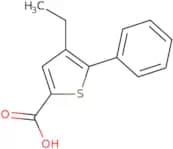
CAS:<p>Versatile small molecule scaffold</p>Formula:C13H20N2OPurity:Min. 95%Molecular weight:220.31 g/mol4-Ethyl-5-phenylthiophene-2-carboxylic acid
CAS:<p>Versatile small molecule scaffold</p>Formula:C13H12O2SPurity:Min. 95%Molecular weight:232.3 g/mol2-[9-(4-Methoxyphenyl)-6-oxo-6,9-dihydro-1H-purin-1-yl]acetic acid
CAS:<p>Versatile small molecule scaffold</p>Formula:C14H12N4O4Purity:Min. 95%Molecular weight:300.27 g/mol2-[3-(Difluoromethyl)-1H,4H,5H,6H-cyclopenta[C]pyrazol-1-yl]acetic acid
CAS:<p>Versatile small molecule scaffold</p>Formula:C9H10F2N2O2Purity:Min. 95%Molecular weight:216.18 g/mol1,7-Dicyclopropyl-2,4-dioxo-1H,2H,3H,4H-pyrido[2,3-d]pyrimidine-5-carboxylic acid
CAS:<p>Versatile small molecule scaffold</p>Formula:C14H13N3O4Purity:Min. 95%Molecular weight:287.27 g/molN'-Hydroxy-3-[3-(trifluoromethyl)-2H,4H,5H,6H-cyclopenta[C]pyrazol-2-yl]propanimidamide
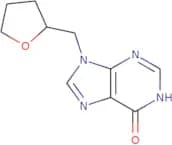
CAS:<p>Versatile small molecule scaffold</p>Formula:C10H13F3N4OPurity:Min. 95%Molecular weight:262.23 g/mol9-(Tetrahydrofuran-2-ylmethyl)-1,9-dihydro-6H-purin-6-one
CAS:<p>Versatile small molecule scaffold</p>Formula:C10H12N4O2Purity:Min. 95%Molecular weight:220.23 g/mol4-{3-Methyl-1H-pyrazolo[3,4-b]pyridin-1-yl}benzoic acid
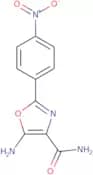
CAS:<p>Versatile small molecule scaffold</p>Formula:C14H11N3O2Purity:Min. 95%Molecular weight:253.26 g/mol5-Amino-2-(4-nitrophenyl)-1,3-oxazole-4-carboxamide
CAS:<p>Versatile small molecule scaffold</p>Formula:C10H8N4O4Purity:Min. 95%Molecular weight:248.19 g/mol6-Cyclopropyl-1-(4-methoxyphenyl)-3-methyl-1H-pyrazolo[3,4-b]pyridine-4-carboxylic acid
CAS:<p>Versatile small molecule scaffold</p>Formula:C18H17N3O3Purity:Min. 95%Molecular weight:323.3 g/mol3,6-Dicyclopropylisoxazolo[5,4-b]pyridine-4-carbohydrazide
CAS:<p>Versatile small molecule scaffold</p>Formula:C13H14N4O2Purity:Min. 95%Molecular weight:258.28 g/mol1-{1-Methyl-1H-pyrazolo[3,4-d]pyrimidin-4-yl}piperidine-4-carboxylic acid
CAS:<p>Versatile small molecule scaffold</p>Formula:C12H15N5O2Purity:Min. 95%Molecular weight:261.28 g/mol2-(4-Methylphenyl)-6H,7H-[1,3]oxazolo[5,4-d]pyrimidin-7-one
CAS:<p>Versatile small molecule scaffold</p>Formula:C12H9N3O2Purity:Min. 95%Molecular weight:227.22 g/mol2-(3-Chloro-1-benzothiophen-2-yl)-6H,7H-[1,3]oxazolo[5,4-d]pyrimidin-7-one
CAS:<p>Versatile small molecule scaffold</p>Formula:C13H6ClN3O2SPurity:Min. 95%Molecular weight:303.72 g/mol2-Cyclohexylmethoxy-benzylamine
CAS:<p>Versatile small molecule scaffold</p>Formula:C14H21NOPurity:Min. 95%Molecular weight:219.3 g/molEthyl 2-[(4-amino-5-cyanopyrimidin-2-yl)sulfanyl]acetate
CAS:<p>Versatile small molecule scaffold</p>Formula:C9H10N4O2SPurity:Min. 95%Molecular weight:238.27 g/mol2-{[(2,2-Difluoroethyl)amino]methyl}-6-methoxyphenol
CAS:<p>Versatile small molecule scaffold</p>Formula:C10H13F2NO2Purity:Min. 95%Molecular weight:217.21 g/mol1-[1-(tert-Butoxycarbonyl)-4-piperidinyl]-5-oxo-3-pyrrolidinecarboxylic acid
CAS:<p>Versatile small molecule scaffold</p>Formula:C15H24N2O5Purity:Min. 95%Molecular weight:312.36 g/mol3-[3-(Trifluoromethyl)-4,5,6,7-tetrahydro-2H-indazol-2-yl]butanenitrile
CAS:<p>Versatile small molecule scaffold</p>Formula:C12H14F3N3Purity:Min. 95%Molecular weight:257.25 g/mol2-Methyl-3-[3-(trifluoromethyl)-4,5,6,7-tetrahydro-2H-indazol-2-yl]propanenitrile
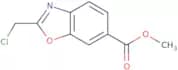
CAS:<p>Versatile small molecule scaffold</p>Formula:C12H14F3N3Purity:Min. 95%Molecular weight:257.25 g/molMethyl 2-(chloromethyl)-1,3-benzoxazole-6-carboxylate
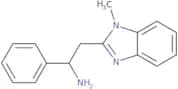
CAS:Versatile small molecule scaffoldFormula:C10H8NO3ClPurity:Min. 95%Molecular weight:225.62 g/mol2-(1-Methyl-1H-1,3-benzodiazol-2-yl)-1-phenylethan-1-amine
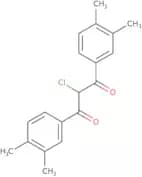
CAS:Controlled Product<p>Versatile small molecule scaffold</p>Formula:C16H17N3Purity:Min. 95%Molecular weight:251.33 g/mol2-Chloro-1,3-bis(3,4-dimethylphenyl)propane-1,3-dione
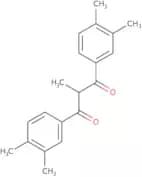
CAS:<p>Versatile small molecule scaffold</p>Formula:C19H19ClO2Purity:Min. 95%Molecular weight:314.8 g/mol1,3-Bis(3,4-dimethylphenyl)-2-methylpropane-1,3-dione
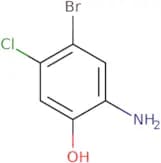
CAS:<p>Versatile small molecule scaffold</p>Formula:C20H22O2Purity:Min. 95%Molecular weight:294.4 g/mol2-Amino-4-bromo-5-chlorophenol
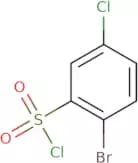
CAS:<p>Versatile small molecule scaffold</p>Formula:C6H5NOClBrPurity:Min. 95%Molecular weight:222.47 g/mol2-Bromo-5-chlorobenzenesulfonyl chloride
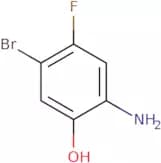
CAS:<p>Versatile small molecule scaffold</p>Formula:C6H3BrCl2O2SPurity:Min. 95%Molecular weight:289.96 g/mol2-Amino-5-bromo-4-fluorophenol
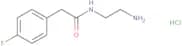
CAS:<p>Versatile small molecule scaffold</p>Formula:C6H5BrFNOPurity:Min. 95%Molecular weight:206.01 g/molN-(2-Aminoethyl)-2-(4-fluorophenyl)acetamide hydrochloride
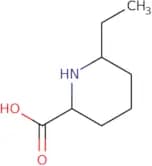
CAS:<p>Versatile small molecule scaffold</p>Formula:C10H14ClFN2OPurity:Min. 95%Molecular weight:232.68 g/mol6-Ethylpiperidine-2-carboxylic acid
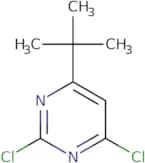
CAS:<p>Versatile small molecule scaffold</p>Formula:C8H15NO2Purity:Min. 95%Molecular weight:157.21 g/mol4-tert-Butyl-2,6-dichloropyrimidine
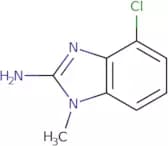
CAS:<p>Versatile small molecule scaffold</p>Formula:C8H10Cl2N2Purity:Min. 95%Molecular weight:205.08 g/mol4-Chloro-1-methyl-1H-1,3-benzodiazol-2-amine
CAS:Versatile small molecule scaffoldFormula:C8H8ClN3Purity:Min. 95%Molecular weight:181.62 g/mol
![3-Oxa-9-azaspiro[5.5]undecane](/_next/image/?url=https%3A%2Fstatic.cymitquimica.com%2Fproducts%2F3D%2Fthumb-webp%2FAAA31121.webp&w=3840&q=75)

![8-Thia-2-azaspiro[4.5]decane](/_next/image/?url=https%3A%2Fstatic.cymitquimica.com%2Fproducts%2F3D%2Fthumb-webp%2FAAA31094.webp&w=3840&q=75)


amine hydrochloride](/_next/image/?url=https%3A%2Fstatic.cymitquimica.com%2Fproducts%2F3D%2Fthumb-webp%2FAAA30611.webp&w=3840&q=75)
![2-Hydroxy-[1,1'-biphenyl]-3-carboxylic acid](/_next/image/?url=https%3A%2Fstatic.cymitquimica.com%2Fproducts%2F3D%2Fthumb-webp%2FAAA30406.webp&w=3840&q=75)


![9-Azabicyclo[6.1.0]nonane](/_next/image/?url=https%3A%2Fstatic.cymitquimica.com%2Fproducts%2F3D%2Fthumb-webp%2FAAA28661.webp&w=3840&q=75)
![6-Azabicyclo[3.1.0]hexane](/_next/image/?url=https%3A%2Fstatic.cymitquimica.com%2Fproducts%2F3D%2Fthumb-webp%2FAAA28563.webp&w=3840&q=75)
![3-Oxa-7-azabicyclo[3.3.1]nonane](/_next/image/?url=https%3A%2Fstatic.cymitquimica.com%2Fproducts%2F3D%2Fthumb-webp%2FAAA28075.webp&w=3840&q=75)
![Rac-(1S,5R)-6-azabicyclo[3.2.1]octane hydrochloride](/_next/image/?url=https%3A%2Fstatic.cymitquimica.com%2Fproducts%2F3D%2Fthumb-webp%2FAAA27985.webp&w=3840&q=75)
![[1,3]Thiazolo[4,5-b]pyridine](/_next/image/?url=https%3A%2Fstatic.cymitquimica.com%2Fproducts%2F3D%2Fthumb-webp%2FAAA27398.webp&w=3840&q=75)
![1H-Imidazo[4,5-b]pyrazine](/_next/image/?url=https%3A%2Fstatic.cymitquimica.com%2Fproducts%2F3D%2Fthumb-webp%2FAAA27394.webp&w=3840&q=75)
![Benzo[d][1,2,3]thiadiazole](/_next/image/?url=https%3A%2Fstatic.cymitquimica.com%2Fproducts%2F3D%2Fthumb-webp%2FAAA27377.webp&w=3840&q=75)

![6-(4-Methoxyphenyl)-1,3-dimethyl-1H-pyrazolo[3,4-b]pyridine-4-carboxylic acid](/_next/image/?url=https%3A%2Fstatic.cymitquimica.com%2Fproducts%2F3D%2Fthumb-webp%2FMMB59882.webp&w=3840&q=75)
![3-[3-(Trifluoromethyl)-1H,4H,5H,6H-cyclopenta[C]pyrazol-1-yl]propan-1-amine](/_next/image/?url=https%3A%2Fstatic.cymitquimica.com%2Fproducts%2F3D%2Fthumb-webp%2FMMB59941.webp&w=3840&q=75)
![{4-[(1-Methylpiperidin-4-yl)oxy]phenyl}methanamine](/_next/image/?url=https%3A%2Fstatic.cymitquimica.com%2Fproducts%2F3D%2Fthumb-webp%2FMMB59945.webp&w=3840&q=75)
![2-[9-(4-Methoxyphenyl)-6-oxo-6,9-dihydro-1H-purin-1-yl]acetic acid](/_next/image/?url=https%3A%2Fstatic.cymitquimica.com%2Fproducts%2F3D%2Fthumb-webp%2FMMB59953.webp&w=3840&q=75)
![2-[3-(Difluoromethyl)-1H,4H,5H,6H-cyclopenta[C]pyrazol-1-yl]acetic acid](/_next/image/?url=https%3A%2Fstatic.cymitquimica.com%2Fproducts%2F3D%2Fthumb-webp%2FMMB59956.webp&w=3840&q=75)
![1,7-Dicyclopropyl-2,4-dioxo-1H,2H,3H,4H-pyrido[2,3-d]pyrimidine-5-carboxylic acid](/_next/image/?url=https%3A%2Fstatic.cymitquimica.com%2Fproducts%2F3D%2Fthumb-webp%2FMMB59959.webp&w=3840&q=75)
![N'-Hydroxy-3-[3-(trifluoromethyl)-2H,4H,5H,6H-cyclopenta[C]pyrazol-2-yl]propanimidamide](/_next/image/?url=https%3A%2Fstatic.cymitquimica.com%2Fproducts%2F3D%2Fthumb-webp%2FMMB59962.webp&w=3840&q=75)
![4-{3-Methyl-1H-pyrazolo[3,4-b]pyridin-1-yl}benzoic acid](/_next/image/?url=https%3A%2Fstatic.cymitquimica.com%2Fproducts%2F3D%2Fthumb-webp%2FMMB60004.webp&w=3840&q=75)
![6-Cyclopropyl-1-(4-methoxyphenyl)-3-methyl-1H-pyrazolo[3,4-b]pyridine-4-carboxylic acid](/_next/image/?url=https%3A%2Fstatic.cymitquimica.com%2Fproducts%2F3D%2Fthumb-webp%2FMMB60018.webp&w=3840&q=75)
![3,6-Dicyclopropylisoxazolo[5,4-b]pyridine-4-carbohydrazide](/_next/image/?url=https%3A%2Fstatic.cymitquimica.com%2Fproducts%2F3D%2Fthumb-webp%2FMMB60030.webp&w=3840&q=75)
![1-{1-Methyl-1H-pyrazolo[3,4-d]pyrimidin-4-yl}piperidine-4-carboxylic acid](/_next/image/?url=https%3A%2Fstatic.cymitquimica.com%2Fproducts%2F3D%2Fthumb-webp%2FMMB60033.webp&w=3840&q=75)
![2-(4-Methylphenyl)-6H,7H-[1,3]oxazolo[5,4-d]pyrimidin-7-one](/_next/image/?url=https%3A%2Fstatic.cymitquimica.com%2Fproducts%2F3D%2Fthumb-webp%2FMMB60036.webp&w=3840&q=75)
![2-(3-Chloro-1-benzothiophen-2-yl)-6H,7H-[1,3]oxazolo[5,4-d]pyrimidin-7-one](/_next/image/?url=https%3A%2Fstatic.cymitquimica.com%2Fproducts%2F3D%2Fthumb-webp%2FMMB60048.webp&w=3840&q=75)
![Ethyl 2-[(4-amino-5-cyanopyrimidin-2-yl)sulfanyl]acetate](/_next/image/?url=https%3A%2Fstatic.cymitquimica.com%2Fproducts%2F3D%2Fthumb-webp%2FMMB60132.webp&w=3840&q=75)
![2-{[(2,2-Difluoroethyl)amino]methyl}-6-methoxyphenol](/_next/image/?url=https%3A%2Fstatic.cymitquimica.com%2Fproducts%2F3D%2Fthumb-webp%2FMMB60146.webp&w=3840&q=75)
![1-[1-(tert-Butoxycarbonyl)-4-piperidinyl]-5-oxo-3-pyrrolidinecarboxylic acid](/_next/image/?url=https%3A%2Fstatic.cymitquimica.com%2Fproducts%2F3D%2Fthumb-webp%2FMMB60151.webp&w=3840&q=75)
![3-[3-(Trifluoromethyl)-4,5,6,7-tetrahydro-2H-indazol-2-yl]butanenitrile](/_next/image/?url=https%3A%2Fstatic.cymitquimica.com%2Fproducts%2F3D%2Fthumb-webp%2FMMB60155.webp&w=3840&q=75)
![2-Methyl-3-[3-(trifluoromethyl)-4,5,6,7-tetrahydro-2H-indazol-2-yl]propanenitrile](/_next/image/?url=https%3A%2Fstatic.cymitquimica.com%2Fproducts%2F3D%2Fthumb-webp%2FMMB60164.webp&w=3840&q=75)