Building Blocks
This section contains fundamental products for the synthesis of organic and biological compounds. Building blocks are the essential starting materials used to construct complex molecules through various chemical reactions. They play a critical role in drug discovery, material science, and chemical research. At CymitQuimica, we offer a diverse range of high-quality building blocks to support your innovative research and industrial projects, ensuring you have the essential components for successful synthesis.
Subcategories of "Building Blocks"
- Boronic Acids & Boronic Acid Derivatives(5,778 products)
- Chiral Building Blocks(1,242 products)
- Hydrocarbon Building Blocks(6,098 products)
- Organic Building Blocks(61,098 products)
Found 199594 products of "Building Blocks"
Sort by
Purity (%)
0
100
|
0
|
50
|
90
|
95
|
100
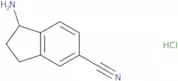
1-Amino-2,3-dihydro-1H-indene-5-carbonitrile hydrochloride
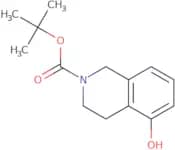
CAS:<p>Versatile small molecule scaffold</p>Formula:C10H11ClN2Purity:Min. 95%Molecular weight:194.66 g/moltert-Butyl 5-hydroxy-3,4-dihydroisoquinoline-2(1H)-carboxylate
CAS:<p>Versatile small molecule scaffold</p>Formula:C14H19NO3Purity:Min. 95%Molecular weight:249.31 g/mol5-{2-Ethoxy-5-[(4-methylpiperazin-1-yl)sulfonyl]phenyl}-1-methyl-3-(2-methylpropyl)-1H,6H,7H-pyrazolo[4,3-d]pyrimidin-7-one
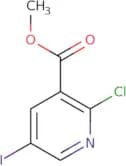
CAS:<p>Tadalafil is a synthetic drug that is used as a treatment for erectile dysfunction. It works by inhibiting the PDE5 enzyme, which is responsible for breaking down cGMP. Tadalafil has been shown to be effective in the treatment of male erectile dysfunction and pulmonary hypertension, with few side effects. This drug is taken orally, with a meal or without one, and can be administered with or without food. To improve absorption, tadalafil should be taken at least 30 minutes before sexual activity. The dosage of tadalafil ranges from 2.5 to 20 mg, and it should not exceed 40 mg per day.</p>Formula:C23H32N6O4SPurity:Min. 95%Molecular weight:488.6 g/molMethyl 2-chloro-5-iodonicotinate
CAS:<p>Methyl 2-chloro-5-iodonicotinate is a basic and yields a radioligand for use in imaging studies. It is used as a specific activity and solid-phase extraction. Methyl 2-chloro-5-iodonicotinate has been shown to be effective for radiolabeling studies of the brain following intravenous administration.</p>Formula:C7H5ClINO2Purity:Min. 95%Molecular weight:297.48 g/mol2-[(6-Chloro-3,4-dihydro-3-methyl-2,4-dioxo-1(2H)-pyrimidinyl)methyl]-benzonitrile
CAS:<p>2-[(6-Chloro-3,4-dihydro-3-methyl-2,4-dioxo-1(2H)-pyrimidinyl)methyl]-benzonitrile is an antibacterial agent that belongs to the group of nitro compounds. It inhibits bacterial growth by blocking the synthesis of proteins and DNA. 2-[(6-Chloro-3,4-dihydro-3-methyl-2,4-dioxo-1(2H)-pyrimidinyl)methyl]-benzonitrile has been shown to be active against a wide range of bacteria including Gram positive and Gram negative organisms. This compound also exhibits metal ion chelating properties and can be used for the removal of heavy metals from water. The square planar geometry of 2-[(6-Chloro-3,4-(dihydro)-3-(methyl)-2,4-(dioxo)-1</p>Formula:C13H10ClN3O2Purity:Min. 95%Molecular weight:275.69 g/molethyl cyclopropaneacetate
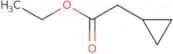
CAS:<p>Ethyl cyclopropaneacetate is an organic compound that belongs to the class of aminophenyl ethyl esters. It has been shown to inhibit neutrophil migration and angiotensin II-induced vasoconstriction in cerebral arteries, suggesting that it may have a role in the treatment of chronic bronchitis. Ethyl cyclopropaneacetate has also been shown to have antimycotic activity against Candida albicans and Aspergillus niger, as well as cancer-fighting effects. This compound is synthesized by reacting triethyl orthoformate with adenosine under mild conditions. The reaction system is high yielding and can be used for the synthesis of other drugs.</p>Formula:C7H12O2Purity:Min. 95%Molecular weight:128.17 g/mol5-bromo-3,3-dimethyl-2,3-dihydro-1H-indole
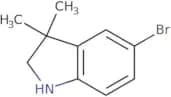
CAS:<p>5-bromo-3,3-dimethyl-2,3-dihydro-1H-indole is an activator that is used in palladium catalyzed reactions to form a phosphine ligand. 5-bromo-3,3-dimethyl-2,3-dihydro-1H-indole is also used as a vasotropic agent and reagent for organic synthesis. It is used to synthesize ethylesters and salts of 5-(5'-bromo)-2,2'-dihydroquinoline carboxylic acid. This compound can be hydrolyzed with alkaline solution to produce the corresponding amine.</p>Formula:C10H12BrNPurity:Min. 95%Molecular weight:226.1 g/mol(S)-(-)-1-Phenylpropylamine
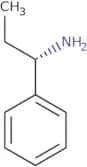
CAS:<p>(S)-(-)-1-Phenylpropylamine is a compound that can be synthesized by the asymmetric synthesis of 1-phenylethylamine. It is an amine that is used in the production of other compounds and has been shown to be reactive with a number of different compounds. The chemical profile of (S)-(-)-1-Phenylpropylamine consists mainly of aldehydes, amides, amines, and alkylating agents. This chiral molecule can be used for the production of drugs or as a precursor for other chemicals.</p>Formula:C9H13NPurity:Min. 95%Molecular weight:135.21 g/mol2,2-Dimethyl-1,3-dioxan-5-ol
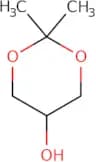
CAS:<p>2,2-Dimethyl-1,3-dioxan-5-ol is a chemical compound that has been shown to have catalytic properties. It has also been used as an additive in organic synthesis reactions to activate carboxylic acids. 2,2-Dimethyl-1,3-dioxan-5-ol is an oxygenated compound that can be synthesized by the reaction of pyridine and formaldehyde. This substance can be used in acidic conditions and must be activated by solketal or dioxane before use. The physical properties of this chemical are shown using FTIR spectroscopy on corncob samples and physicochemical parameters were determined using standard techniques.</p>Formula:C6H12O3Purity:Min. 95%Molecular weight:132.16 g/mol4-Bromo-2,3-difluoropyridine
CAS:<p>Versatile small molecule scaffold</p>Formula:C5H2BrF2NPurity:Min. 95%Molecular weight:193.98 g/mol3-(4-Hydroxyphenyl)hex-4-ynoic acid
CAS:Versatile small molecule scaffoldFormula:C12H12O3Purity:Min. 95%Molecular weight:204.22 g/molDSP-4 hydrochloride
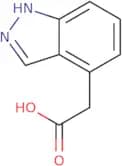
CAS:DSP-4 hydrochloride is a neurotoxin that inhibits the synthesis of norepinephrine. It binds to neurons and prevents the uptake of dopamine, which can lead to neuronal death. DSP-4 hydrochloride affects brain functions by decreasing the concentration of serotonin in the cortex and increasing the concentrations of norepinephrine in the coeruleus. DSP-4 hydrochloride also has estrogenic effects by binding to estrogen receptors and increasing estradiol benzoate concentrations.Formula:C11H16BrCl2NPurity:Min. 95%Molecular weight:313.06 g/mol(1H-Indazol-4-yl)acetic acid
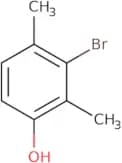
CAS:<p>(1H-Indazol-4-yl)acetic acid is a cation that has been shown to have pharmacological activity. It is hydrolyzable and is used as an anti-inflammatory agent. This compound also decarboxylates and hydrolyzes, which are processes that produce carboxyl and fluoro groups. (1H-Indazol-4-yl)acetic acid has been shown to be an anti-inflammatory agent, with effects against inflammation in the central nervous system. This drug also inhibits the production of inflammatory cytokines, including tumor necrosis factor alpha (TNFα), interleukin 1β (IL1β), and IL6.</p>Formula:C9H8N2O2Purity:Min. 95%Molecular weight:176.17 g/mol3-bromo-2,4-dimethylphenol
CAS:Versatile small molecule scaffoldFormula:C8H9BrOPurity:Min. 95%Molecular weight:201.06 g/mol7-Chloroisoquinolin-1-ol
CAS:<p>Versatile small molecule scaffold</p>Formula:C9H6ClNOPurity:Min. 95%Molecular weight:179.6 g/mol2-chloro-5-(trifluoromethyl)pyrimidin-4-amine
CAS:<p>Versatile small molecule scaffold</p>Formula:C5H3ClF3N3Purity:Min. 95%Molecular weight:197.55 g/mol5-Bromo-2,4-dimethoxypyridine
CAS:<p>Versatile small molecule scaffold</p>Formula:C7H8BrNO2Purity:Min. 95%Molecular weight:218.05 g/mol1-(But-3-yn-1-yl)piperidine
CAS:<p>1-(But-3-yn-1-yl)piperidine is a chiral compound that inhibits the reuptake of serotonin. It has been shown to be an effective inhibitor of the serotonin transporter and to cause an increase in extracellular serotonin levels. 1-(But-3-yn-1-yl)piperidine also has affinity for the dopamine transporter, which may account for its antidepressant effects.</p>Formula:C9H15NPurity:Min. 95%Molecular weight:137.22 g/mol3-Phenylisothiazol-5-amine
CAS:<p>Versatile small molecule scaffold</p>Formula:C9H8N2SPurity:Min. 95%Molecular weight:176.24 g/molN-(11-Bromoundecyl)carbamic acid t-butyl ester
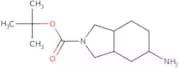
CAS:Versatile small molecule scaffoldFormula:C16H32BrNO2Purity:Min. 95%Molecular weight:350.33 g/moltert-butyl 5-amino-octahydro-1H-isoindole-2-carboxylate, Mixture of diastereomers
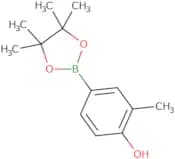
CAS:<p>Versatile small molecule scaffold</p>Formula:C13H24N2O2Purity:Min. 95%Molecular weight:240.3 g/mol2-Methyl-4-(4,4,5,5-tetramethyl-1,3,2-dioxaborolan-2-yl)phenol
CAS:<p>Versatile small molecule scaffold</p>Formula:C13H19BO3Purity:Min. 95%Molecular weight:234.1 g/mol3-(p-tolyl)propiolic acid
CAS:<p>3-(p-tolyl)propiolic acid is a functional group that is used in organic chemistry. It is an alkynoic acid with a terminal triple bond. The compound can be synthesized by the reaction of propiolic acid with an alkyne, followed by oxidation. The 3-(p-tolyl)propiolic acid can be used as a surrogate for other functional groups in organic synthesis, and it has been shown to react as an oxidant in biomolecular systems.</p>Formula:C10H8O2Purity:Min. 95%Molecular weight:160.17 g/mol5-amino-2-chloropyridin-4-ol
CAS:<p>Versatile small molecule scaffold</p>Formula:C5H5ClN2OPurity:Min. 95%Molecular weight:144.56 g/mol1,2,3,4-Tetrahydro-1,7-naphthyridine
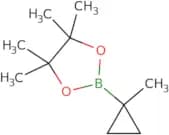
CAS:<p>Versatile small molecule scaffold</p>Formula:C8H10N2Purity:Min. 95%Color and Shape:Clear LiquidMolecular weight:134.18 g/mol4,4,5,5-Tetramethyl-2-(1-methylcyclopropyl)-1,3,2-dioxaborolane
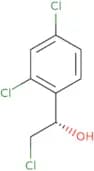
CAS:<p>Versatile small molecule scaffold</p>Formula:C10H19BO2Purity:Min. 95%Molecular weight:182.07 g/mol(S)-2,4-Dichloro-±-(chloromethyl)benzyl Alcohol
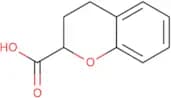
CAS:<p>Versatile small molecule scaffold</p>Formula:C8H7Cl3OPurity:Min. 95%Molecular weight:225.49 g/molChromane-2-carboxylic Acid
CAS:<p>Chromane-2-carboxylic acid is an amide with a hydroxy group that has inhibitory effects on alkoxyphenols. It has been shown to have the ability to inhibit the growth of cancer cells in mammalian tissue and has been used in synthesizing nitro compounds. Chromane-2-carboxylic acid also inhibits matrix metalloproteinases, which are enzymes that break down proteins in the extracellular matrix and are associated with tumor invasion and metastasis. This compound also has radical scavenging activities, which may be due to its ability to form hydrogen bonds or intramolecular hydrogen bonds with aromatic hydrocarbons or fatty acids.</p>Formula:C10H10O3Purity:Min. 95%Molecular weight:178.18 g/mol6,6-Difluorospiro[3.3]heptan-2-amine Hydrochloride
CAS:<p>Versatile small molecule scaffold</p>Formula:C7H11F2N·HClPurity:Min. 95%Molecular weight:147.17 g/molSpiro[3.3]heptane-2,6-dicarboxylic acid, 2,6-dimethyl ester
CAS:<p>Versatile small molecule scaffold</p>Formula:C11H16O4Purity:Min. 95%Molecular weight:212.25 g/moltert-Butyl 5-bromo-3,4-dihydro-2,7-naphthyridine-2(1H)-carboxylate
CAS:<p>Versatile small molecule scaffold</p>Formula:C13H17BrN2O2Purity:Min. 95%Molecular weight:313.19 g/moltert-butyl 2-amino-8-azaspiro[4.5]decane-8-carboxylate
CAS:Versatile small molecule scaffoldFormula:C14H26N2O2Purity:Min. 95%Molecular weight:254.37 g/moln-Butyl methanesulfonate
CAS:N-butyl methanesulfonate is a genotoxic agent that inhibits the growth of bacteria by binding to the DNA. N-butyl methanesulfonate is effective against typhimurium and has shown carcinogenic effects in hamster cells. N-butyl methanesulfonate is also capable of inhibiting quinoline derivatives, which are carcinogens that are found in tobacco smoke. This chemical can be used as a natural compound for the treatment of diabetic neuropathy and cryptococcus neoformans. It may also be used as an antiviral agent for the treatment of influenza virus.Formula:C5H12O3SPurity:Min. 95%Molecular weight:152.21 g/mol2,5-Diazabicyclo[2.2.2]octane dihydrochloride
CAS:Versatile small molecule scaffoldFormula:C6H12N2·2HClPurity:Min. 95%Molecular weight:185.1 g/mol3-Dimethylamino-1-pyridin-3-yl-propenone
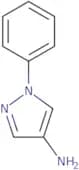
CAS:<p>Versatile small molecule scaffold</p>Formula:C10H12N2OPurity:Min. 95%Molecular weight:176.22 g/mol1-Phenyl-1H-pyrazol-4-amine
CAS:<p>1-Phenyl-1H-pyrazol-4-amine is a white crystalline solid that can be used in organic synthesis. It is soluble in water and acetone, but insoluble in ether and chloroform. The chemical formula for 1-phenyl-1H-pyrazol-4-amine is C6H5N3O. It has a molecular weight of 147.17, an empirical formula of C6H5N3O and a density of 1.47g/mL at 20°C. 1-Phenyl-1H-pyrazol-4-amine reacts with the hydroxyl group on l -glutamic acid to form the corresponding ester, which can be hydrolyzed under alkaline conditions to produce ammonia and benzoic acid. This molecule also contains an anion that can be deprotonated by an alkali metal such as sodium or potassium to form the corresponding salt, which</p>Formula:C9H9N3Purity:Min. 95%Molecular weight:159.19 g/mol(1R,2S)-2-Phenylcyclopropane-1-carboxylic acid
CAS:<p>(1R,2S)-2-Phenylcyclopropane-1-carboxylic acid is a dicarboxylic acid that is produced from the decarboxylation of benzyne. This compound has been shown to be a precursor of benzene and ozonolysis. The stereospecifically of (1R,2S)-2-Phenylcyclopropane-1-carboxylic acid has been determined using lead tetraacetate as the substrate. (1R,2S)-2-Phenylcyclopropane-1-carboxylic acid is an asymmetric molecule.</p>Formula:C10H10O2Purity:Min. 95%Molecular weight:162.18 g/mol4-[4-(Tetramethyl-1,3,2-dioxaborolan-2-yl)-1H-pyrazol-1-yl]pyridine
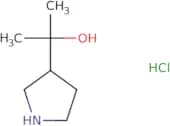
CAS:<p>Versatile small molecule scaffold</p>Formula:C14H18BN3O2Purity:Min. 95%Molecular weight:271.12 g/mol(S)-2-(3-Pyrrolidinyl)-2-propanol Hydrochloride ee
CAS:<p>Versatile small molecule scaffold</p>Formula:C7H16ClNOPurity:Min. 95%Molecular weight:165.66 g/mol2,2-Difluorobenzo[d][1,3]dioxol-5-ol
CAS:<p>Versatile small molecule scaffold</p>Formula:C7H4F2O3Purity:Min. 95%Molecular weight:174.1 g/mol2-Bromo-6-fluoro-3-methylpyridine
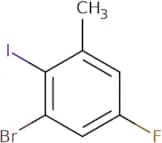
CAS:<p>Versatile small molecule scaffold</p>Formula:C6H5BrFNPurity:Min. 95%Molecular weight:190.02 g/mol3-Bromo-5-fluoro-2-iodotoluene
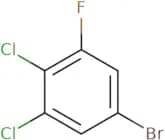
CAS:<p>Versatile small molecule scaffold</p>Formula:C7H5BrFIPurity:Min. 95%Molecular weight:314.92 g/mol3,4-Dichloro-5-fluorobromobenzene
CAS:<p>Versatile small molecule scaffold</p>Formula:C6H2BrCl2FPurity:Min. 95%Molecular weight:243.88 g/moltert-Butyl 3,9-diazaspiro[5.5]undecane-3-carboxylate hydrochloride
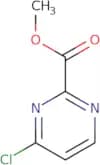
CAS:<p>Versatile small molecule scaffold</p>Formula:C14H27ClN2O2Purity:Min. 95%Molecular weight:290.83 g/molMethyl 4-chloropyrimidine-2-carboxylate
CAS:<p>Versatile small molecule scaffold</p>Formula:C6H5ClN2O2Purity:Min. 95%Molecular weight:172.57 g/mol2-Cyano-5-fluorophenol
CAS:<p>2-Cyano-5-fluorophenol is an organic compound that is used as a precursor to medicines and other chemicals. It reacts with calcium hydroxide in water to form 2-cyano-5-hydroxyfluorobenzene, which can be hydrolyzed to form 2-cyano-5-chlorofluorobenzene. This compound can also react with sodium hydroxide to produce sodium cyanate, which can be hydrolyzed to form sodium chloride and hydrogen cyanide gas. The alkali metal ions are needed for this reaction, which is why the product should not be exposed to water or moisture. 2-Cyano-5-fluorophenol has been shown to have liquid crystal properties and is used in the production of certain types of polymers. 2Cyano-5Fluorophenol crystals are also used in some medicines such as acetaminophen (paracetamol).</p>Formula:C7H4FNOPurity:Min. 95%Molecular weight:137.11 g/molMethyl 4-(2-Bromoethyl)benzoate
CAS:<p>Methyl 4-(2-bromoethyl)benzoate is a potent HDAC6 inhibitor. It has been shown to inhibit cancer cell growth and induce apoptosis in vitro and in vivo. Methyl 4-(2-Bromoethyl)benzoate is also an anti-cancer agent that inhibits the histone deacetylase enzyme, which then prevents the transcription of genes involved in cancer development. In addition, this agent inhibits the production of prostaglandin E2, which may contribute to its anti-cancer activity. The most common side effects are nausea and vomiting.</p>Formula:C10H11BrO2Purity:Min. 95%Molecular weight:243.1 g/moltert-Butyl 3-bromo-1,4,6,7-tetrahydro-5H-pyrazolo[4,3-c]pyridine-5-carboxylate
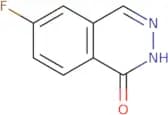
CAS:<p>Versatile small molecule scaffold</p>Formula:C11H16BrN3O2Purity:Min. 95%Molecular weight:302.17 g/mol6-fluoro-1,2-dihydrophthalazin-1-one
CAS:<p>Versatile small molecule scaffold</p>Formula:C8H5FN2OPurity:Min. 95%Molecular weight:164.14 g/mol2-(Bromomethyl)-6-nitro-benzoic acid methyl ester
CAS:Versatile small molecule scaffoldFormula:C9H8BrNO4Purity:Min. 95%Molecular weight:274.07 g/mol

![5-{2-Ethoxy-5-[(4-methylpiperazin-1-yl)sulfonyl]phenyl}-1-methyl-3-(2-methylpropyl)-1H,6H,7H-pyraz…](/_next/image/?url=https%3A%2Fstatic.cymitquimica.com%2Fproducts%2F3D%2Fthumb-webp%2FRFC05395.webp&w=3840&q=75)
![2-[(6-Chloro-3,4-dihydro-3-methyl-2,4-dioxo-1(2H)-pyrimidinyl)methyl]-benzonitrile](/_next/image/?url=https%3A%2Fstatic.cymitquimica.com%2Fproducts%2F3D%2Fthumb-webp%2FQJB75896.webp&w=3840&q=75)







![6,6-Difluorospiro[3.3]heptan-2-amine Hydrochloride](/_next/image/?url=https%3A%2Fstatic.cymitquimica.com%2Fproducts%2F3D%2Fthumb-webp%2FYGC03271.webp&w=3840&q=75)
![Spiro[3.3]heptane-2,6-dicarboxylic acid, 2,6-dimethyl ester](/_next/image/?url=https%3A%2Fstatic.cymitquimica.com%2Fproducts%2F3D%2Fthumb-webp%2FMBA94279.webp&w=3840&q=75)

![tert-butyl 2-amino-8-azaspiro[4.5]decane-8-carboxylate](/_next/image/?url=https%3A%2Fstatic.cymitquimica.com%2Fproducts%2F3D%2Fthumb-webp%2FBAC01090.webp&w=3840&q=75)

![2,5-Diazabicyclo[2.2.2]octane dihydrochloride](/_next/image/?url=https%3A%2Fstatic.cymitquimica.com%2Fproducts%2F3D%2Fthumb-webp%2FBAA19292.webp&w=3840&q=75)


![4-[4-(Tetramethyl-1,3,2-dioxaborolan-2-yl)-1H-pyrazol-1-yl]pyridine](/_next/image/?url=https%3A%2Fstatic.cymitquimica.com%2Fproducts%2F3D%2Fthumb-webp%2FARC54869.webp&w=3840&q=75)
![2,2-Difluorobenzo[d][1,3]dioxol-5-ol](/_next/image/?url=https%3A%2Fstatic.cymitquimica.com%2Fproducts%2F3D%2Fthumb-webp%2FLYB53982.webp&w=3840&q=75)

![tert-Butyl 3,9-diazaspiro[5.5]undecane-3-carboxylate hydrochloride](/_next/image/?url=https%3A%2Fstatic.cymitquimica.com%2Fproducts%2F3D%2Fthumb-webp%2FLJA40647.webp&w=3840&q=75)


![tert-Butyl 3-bromo-1,4,6,7-tetrahydro-5H-pyrazolo[4,3-c]pyridine-5-carboxylate](/_next/image/?url=https%3A%2Fstatic.cymitquimica.com%2Fproducts%2F3D%2Fthumb-webp%2FLCD42906.webp&w=3840&q=75)