


Building Blocks
This section contains fundamental products for the synthesis of organic and biological compounds. Building blocks are the essential starting materials used to construct complex molecules through various chemical reactions. They play a critical role in drug discovery, material science, and chemical research. At CymitQuimica, we offer a diverse range of high-quality building blocks to support your innovative research and industrial projects, ensuring you have the essential components for successful synthesis.
Subcategories of "Building Blocks"
- Boronic Acids & Boronic Acid Derivatives(5,756 products)
- Chiral Building Blocks(1,242 products)
- Hydrocarbon Building Blocks(6,095 products)
- Organic Building Blocks(61,055 products)
Found 199650 products of "Building Blocks"
Sort by
Purity (%)
0
100
|
0
|
50
|
90
|
95
|
100
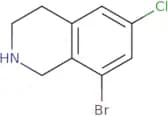
8-Bromo-6-chloro-1,2,3,4-tetrahydroisoquinoline
CAS:<p>Versatile small molecule scaffold</p>Formula:C9H9BrClNPurity:Min. 95%Molecular weight:246.53 g/molRef: 3D-DLC43685
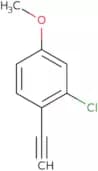
Discontinued product2-Chloro-1-ethynyl-4-methoxybenzene
CAS:<p>Versatile small molecule scaffold</p>Formula:C9H7ClOPurity:Min. 95%Molecular weight:166.6 g/molRef: 3D-DGA44068
Discontinued product4,5-Dihydroxy-2,3-dihydro-1H-isoindole-1,3-dione
CAS:4,5-Dihydroxy-2,3-dihydro-1H-isoindole-1,3-dione is a molybdenum compound with a hydroxyl group. It has been shown to inhibit the growth of bacteria that are resistant to penicillin by binding to the penicillin-binding proteins in their cell wall. 4,5-Dihydroxy-2,3-dihydro-1H-isoindole-1,3-dione has been found to be an effective inhibitor of polymer film formation when used in conjunction with 3 chloroperoxybenzoic acid. This compound also has been shown to have anti bacterial properties against Escherichia coli and Pseudomonas aeruginosa. 4,5-Dihydroxy -2,3 -dihydro -1H -isoindole -1,3 -dione may also have environmental applications due itsFormula:C8H5NO4Purity:Min. 95%Molecular weight:179.13 g/molRef: 3D-DGA35672
Discontinued productPyrazolo[1,5-a]pyridin-4-ol
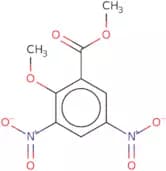
CAS:<p>Pyrazolo[1,5-a]pyridin-4-ol is a heteroaromatic compound that acts as an inhibitor of phosphodiesterase (PDE). It prevents the breakdown of cyclic nucleotides and thus leads to increased levels of cAMP and cGMP. Pyrazolo[1,5-a]pyridin-4-ol has been shown to have bronchodilatory activity in animal models. The drug also inhibits the production of inflammatory mediators such as prostaglandins by inhibiting cyclooxygenases. In addition, pyrazolo[1,5-a]pyridin-4-ol has been shown to be a potential PDE inhibitor replacement for the more commonly used PDE inhibitors such as sildenafil and tadalafil. However, due to its lack of stereochemistry and its bicyclic chemical structure, pyrazolo[1,5-a]</p>Formula:C7H6N2OPurity:Min. 95%Molecular weight:134.14 g/molMethyl 2-methoxy-3,5-dinitrobenzoate
CAS:<p>Versatile small molecule scaffold</p>Formula:C9H8N2O7Purity:Min. 95%Molecular weight:256.2 g/moltert-Butyl 6,6-dioxo-6λ6-thia-2,7-diazaspiro[3.4]octane-2-carboxylate
CAS:<p>Versatile small molecule scaffold</p>Formula:C10H18N2O4SPurity:Min. 95%Molecular weight:262.3 g/molN-[(5-Methyl-2-thienyl)methyl]cyclopropanamine hydrochloride
CAS:<p>Versatile small molecule scaffold</p>Formula:C9H14ClNSPurity:Min. 95%Molecular weight:203.73 g/mol7-Iodo-5h-Pyrrolo[2,3-B]Pyrazine
CAS:<p>Versatile small molecule scaffold</p>Formula:C6H4N3IPurity:Min. 95%Molecular weight:245.02 g/molRef: 3D-PKB45126
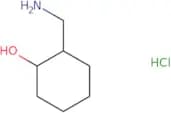
Discontinued product(1R,2S)-2-(Aminomethyl)cyclohexan-1-ol hydrochloride
CAS:<p>Versatile small molecule scaffold</p>Formula:C7H16ClNOPurity:Min. 95%Molecular weight:165.66 g/molRef: 3D-AQA81919
Discontinued product4-[(tert-Butoxy)methyl]aniline
CAS:<p>Versatile small molecule scaffold</p>Formula:C11H17NOPurity:Min. 95%Molecular weight:179.26 g/molRef: 3D-PRB31145
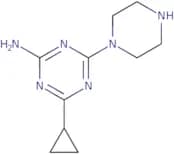
Discontinued product4-Cyclopropyl-6-(piperazin-1-yl)-1,3,5-triazin-2-amine
CAS:<p>Versatile small molecule scaffold</p>Formula:C10H16N6Purity:Min. 95%Molecular weight:220.27 g/molRef: 3D-AAD33568
Discontinued product5-Chloro-2-(1H-pyrrol-1-yl)aniline
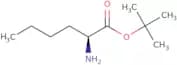
CAS:<p>Versatile small molecule scaffold</p>Formula:C10H9ClN2Purity:Min. 95%Molecular weight:192.64 g/moltert-butyl (2S)-2-aminohexanoate
CAS:<p>Tert-butyl (2S)-2-aminohexanoate is an intermediate that is used in the synthesis of glycine by the reaction of benzyl bromide and tert-butyl amine. The stereospecifically incorporated tert-butyl group has a high degree of enantioselectivity, which makes this intermediate useful in the synthesis of glycine. Tert-butyl (2S)-2-aminohexanoate can be synthesized using lithium diisopropylamide and a tertiary amine as an alkylating agent.</p>Formula:C10H21NO2Purity:Min. 95%Molecular weight:187.3 g/mol3-[(4-Chlorophenyl)amino]propanenitrile
CAS:<p>Versatile small molecule scaffold</p>Formula:C9H9ClN2Purity:Min. 95%Molecular weight:180.63 g/molRef: 3D-RBA83357
Discontinued productrac-2-[(1R,3S)-3-(Propan-2-yl)-2,3-dihydro-1H-inden-1-yl]acetic acid
CAS:<p>Versatile small molecule scaffold</p>Formula:C14H18O2Purity:Min. 95%Molecular weight:218.29 g/molRef: 3D-ZLD00010
Discontinued product4-{4-[(2S)-2,3-Dihydroxypropyl]piperazin-1-yl}benzoic acid
CAS:<p>Versatile small molecule scaffold</p>Formula:C14H20N2O4Purity:Min. 95%Molecular weight:280.3 g/molRef: 3D-RPD10760
Discontinued product1-(1-{[(9H-Fluoren-9-yl)methoxy]carbonyl}-1,2,3,6-tetrahydropyridin-4-yl)cyclobutane-1-carboxylic acid
CAS:<p>Versatile small molecule scaffold</p>Formula:C25H25NO4Purity:Min. 95%Molecular weight:403.5 g/molRef: 3D-RPD12850
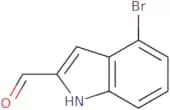
Discontinued product4-bromo-1H-indole-2-carbaldehyde
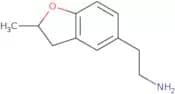
CAS:<p>Versatile small molecule scaffold</p>Formula:C9H6BrNOPurity:Min. 95%Molecular weight:224.1 g/mol2-(2-Methyl-2,3-dihydro-1-benzofuran-5-yl)ethan-1-amine
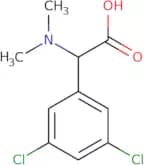
CAS:Controlled Product<p>Versatile small molecule scaffold</p>Formula:C11H15NOPurity:Min. 95%Molecular weight:177.24 g/mol2-(3,5-Dichlorophenyl)-2-(dimethylamino)acetic acid
CAS:<p>Versatile small molecule scaffold</p>Formula:C10H11Cl2NO2Purity:Min. 95%Molecular weight:248.1 g/molRef: 3D-TYB32000
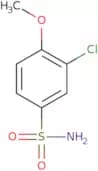
Discontinued product3-Chloro-4-methoxybenzene-1-sulfonamide
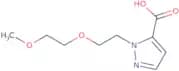
CAS:<p>Versatile small molecule scaffold</p>Formula:C7H8ClNO3SPurity:Min. 95%Molecular weight:221.66 g/mol1-(2-(2-Methoxyethoxy)ethyl)-1H-pyrazole-5-carboxylic acid
CAS:<p>Versatile small molecule scaffold</p>Formula:C9H14N2O4Purity:Min. 95%Molecular weight:214.22 g/molRef: 3D-UDC29241
Discontinued product1-(4H,6H,7H-Pyrano[4,3-d][1,3]thiazol-2-yl)ethan-1-ol
CAS:<p>Versatile small molecule scaffold</p>Formula:C8H11NO2SPurity:Min. 95%Molecular weight:185.25 g/molRef: 3D-UDC36735
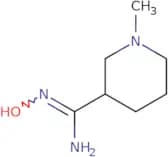
Discontinued productN'-Hydroxy-1-methylpiperidine-3-carboximidamide
CAS:<p>Versatile small molecule scaffold</p>Formula:C7H15N3OPurity:Min. 95%Molecular weight:157.21 g/molRef: 3D-UDC81574
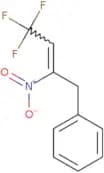
Discontinued product(4,4,4-Trifluoro-2-nitrobut-2-en-1-yl)benzene
CAS:<p>Versatile small molecule scaffold</p>Formula:C10H8F3NO2Purity:Min. 95%Molecular weight:231.17 g/molRef: 3D-UDC84298
Discontinued product2-Cyclopropylbenzaldehyde
CAS:<p>Versatile small molecule scaffold</p>Formula:C10H10OPurity:Min. 95%Molecular weight:146.19 g/molThieno[2,3-b]pyridine-5-carbonitrile
CAS:<p>Thienopyridine analogs are a class of chemical compounds that function as agonists of the receptor α. These compounds have been shown to inhibit fatty acid oxidation and ATP production in rat liver cells, which may be due to their ability to activate AMP-activated protein kinase (AMPK). Thienopyridine analogs are being investigated for use as anti-inflammatory agents and cancer treatments.</p>Formula:C8H4N2SPurity:Min. 95%Molecular weight:160.2 g/molRef: 3D-WAA34431
Discontinued product3,8-Dioxa-11-azaspiro[5.6]dodecane
CAS:<p>Versatile small molecule scaffold</p>Formula:C9H17NO2Purity:Min. 95%Molecular weight:171.24 g/molRef: 3D-WQC17744
Discontinued product3-{[3-(Trifluoromethyl)-1H-pyrazol-1-yl]methyl}benzoic acid
CAS:<p>Versatile small molecule scaffold</p>Formula:C12H9F3N2O2Purity:Min. 95%Molecular weight:270.21 g/mol5H,6H,7H-Pyrrolo[3,4-b]pyridine-2-carboxylic acid hydrochloride
CAS:<p>Versatile small molecule scaffold</p>Formula:C8H9ClN2O2Purity:Min. 95%Molecular weight:200.62 g/molRef: 3D-FDD55460
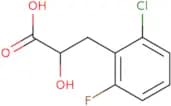
Discontinued product3-(2-Chloro-6-fluorophenyl)-2-hydroxypropanoic acid
CAS:<p>Versatile small molecule scaffold</p>Formula:C9H8ClFO3Purity:Min. 95%Molecular weight:218.61 g/molRef: 3D-GXB56152
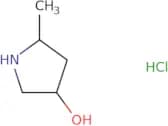
Discontinued product5-Methylpyrrolidin-3-ol hydrochloride
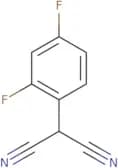
CAS:<p>Versatile small molecule scaffold</p>Formula:C5H12ClNOPurity:Min. 95%Molecular weight:137.61 g/mol2-(2,4-Difluorophenyl)propanedinitrile
CAS:<p>Versatile small molecule scaffold</p>Formula:C9H4F2N2Purity:Min. 95%Molecular weight:178.14 g/molRef: 3D-DXC58290
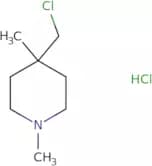
Discontinued product4-(Chloromethyl)-1,4-dimethylpiperidine hydrochloride
CAS:<p>Versatile small molecule scaffold</p>Formula:C8H17Cl2NPurity:Min. 95%Molecular weight:198.13 g/molRef: 3D-DXC58362
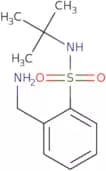
Discontinued product2-(Aminomethyl)-N-tert-butylbenzene-1-sulfonamide
CAS:<p>Versatile small molecule scaffold</p>Formula:C11H18N2O2SPurity:Min. 95%Molecular weight:242.34 g/mol3-[(2-Methyl-2-propen-1-yl)thio]-5H-1,2,4-triazino[5,6-b]indole
CAS:<p>3-[(2-Methyl-2-propen-1-yl)thio]-5H-1,2,4-triazino[5,6-b]indole is a recombinant protein that binds to the ribosomal protein L11. It has been shown to inhibit the biosynthesis of the bacterial cell wall and therefore inhibit replication of the bacterial genome. 3-[(2-Methyl-2-propen-1-yl)thio]-5H-1,2,4-triazino[5,6-b]indole also inhibits the synthesis of proteins essential for cell division. This compound has been shown to bind to ribosomes in both prokaryotic and eukaryotic cells. It may have potential as an inhibitor of cancerous cells because it inhibits protein synthesis in mammalian cells.</p>Formula:C13H12N4SPurity:Min. 95%Molecular weight:256.33 g/molRef: 3D-DNA02311
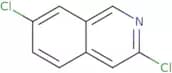
Discontinued product3,7-Dichloroisoquinoline
CAS:<p>Versatile small molecule scaffold</p>Formula:C9H5Cl2NPurity:Min. 95%Molecular weight:198.05 g/molRef: 3D-HDA11722
Discontinued product4-Chloro-2-methyl-5-nitroaniline
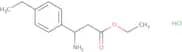
CAS:<p>4-Chloro-2-methyl-5-nitroaniline is an organic compound with the chemical formula C6H4ClNO2. It is a nitro derivative of aniline. 4-Chloro-2-methyl-5-nitroaniline is a white solid that is soluble in water, alcohols, and ethers. It has a melting point around 206 °C and decomposes at temperatures over 350 °C. This compound can be obtained by reacting hydroxylamine with nitrous acid and chlorinating 2,5-dimethylaniline. The sequence of reactions can be summarized as follows: hydroxy group to nitro group, nitro group to methyl group, methyl group to acetyl or acetylamino, acetyl or acetylamino to acetylation or methylation, transformation from hydroxyl group to amino group and esterification from acid hydrazide to acid group.</p>Formula:C7H7ClN2O2Purity:Min. 95%Molecular weight:186.59 g/molEthyl 3-Amino-3-(4-ethylphenyl)propanoate Hydrochloride
CAS:<p>Versatile small molecule scaffold</p>Formula:C13H19NO2·HClPurity:Min. 95%Molecular weight:221.3 g/mol2-[Ethyl(propan-2-yl)amino]ethan-1-ol
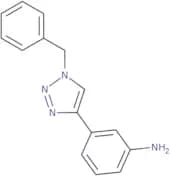
CAS:Controlled Product<p>Versatile small molecule scaffold</p>Formula:C7H17NOPurity:Min. 95%Molecular weight:131.22 g/mol3-(1-Benzyl-1H-1,2,3-triazol-4-yl)aniline
CAS:<p>Versatile small molecule scaffold</p>Formula:C15H14N4Purity:Min. 95%Molecular weight:250.3 g/molRef: 3D-BWB92000
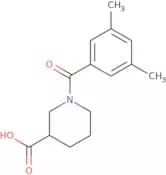
Discontinued product1-(3,5-Dimethylbenzoyl)piperidine-3-carboxylic acid
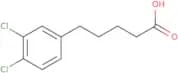
CAS:<p>Versatile small molecule scaffold</p>Formula:C15H19NO3Purity:Min. 95%Molecular weight:261.32 g/mol5-(3,4-Dichlorophenyl)pentanoic acid
CAS:<p>Versatile small molecule scaffold</p>Formula:C11H12Cl2O2Purity:Min. 95%Molecular weight:247.11 g/molQuinoline-5-carbonitrile
CAS:<p>Quinoline-5-carbonitrile is a cyanide compound that can be used in the synthesis of heterocyclic compounds. The reaction between quinoline and 5-cyanovaleric acid produces 6-nitroquinoline, which is then converted to dimethyl sulfoxide by alcoholysis. This reaction product can then be used to synthesize an amide or nucleophile. Quinoline-5-carbonitrile reacts with potassium in the presence of bifunctional hydrazide to produce a cyanide ion, which can be hydrolyzed by an acid to release hydrogen cyanide gas. This experiment has been shown as a model for reactions involving cyano compounds.</p>Formula:C10H6N2Purity:Min. 95%Molecular weight:154.17 g/molRef: 3D-JCA55102
Discontinued product4-[2-(Trifluoromethyl)phenoxy]aniline
CAS:<p>Versatile small molecule scaffold</p>Formula:C13H10F3NOPurity:Min. 95%Molecular weight:253.22 g/mol2-[1-(Difluoromethyl)-1H-imidazol-2-yl]-1-phenylethan-1-amine
CAS:<p>Versatile small molecule scaffold</p>Formula:C12H13F2N3Purity:Min. 95%Molecular weight:237.25 g/molRef: 3D-BAC92276
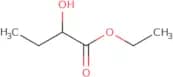
Discontinued product(R)-Ethyl 2-hydroxybutanoate
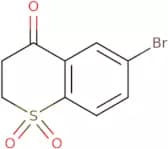
CAS:<p>Versatile small molecule scaffold</p>Formula:C6H12O3Purity:Min. 95%Molecular weight:132.16 g/mol6-Bromo-2,3-dihydrothiochromen-1,1-dioxide-4-one
CAS:<p>Versatile small molecule scaffold</p>Formula:C9H7BrO3SPurity:Min. 95%Molecular weight:275.12 g/mol2-Bromo-3,3,3-trifluoro-1-propene
CAS:Controlled Product<p>2-Bromo-3,3,3-trifluoro-1-propene is a chemical compound that has been synthesized in an asymmetric reaction. The reactant is bromopropane and the product is 2,2,2-trifluoropropene. The methylene group on the propene molecule is activated by the nucleophilic attack of a fluoride ion from hydrogen fluoride to form a cavity with a highly strained bond. The kinetic study of this reaction revealed that the activation energy for the reaction is 42 kJ/mol. Palladium-catalyzed coupling reactions are catalyzed by palladium and require nonpolar solvents such as toluene or dichloromethane. This type of reaction has been shown to be exothermic with an isolated yield of 1%.</p>Formula:C3H2BrF3Purity:Min. 95%Color and Shape:Colorless PowderMolecular weight:174.95 g/mol3-Boc-3-azabicyclo[3.2.1]octan-8-amine
CAS:<p>Versatile small molecule scaffold</p>Formula:C12H22N2O2Purity:Min. 95%Molecular weight:226.32 g/mol

![Pyrazolo[1,5-a]pyridin-4-ol](/_next/image/?url=https%3A%2Fstatic.cymitquimica.com%2Fproducts%2F3D%2Fthumb-webp%2FRFA03272.webp&w=3840&q=75)
![tert-Butyl 6,6-dioxo-6λ6-thia-2,7-diazaspiro[3.4]octane-2-carboxylate](/_next/image/?url=https%3A%2Fstatic.cymitquimica.com%2Fproducts%2F3D%2Fthumb-webp%2FAVD27336.webp&w=3840&q=75)
![N-[(5-Methyl-2-thienyl)methyl]cyclopropanamine hydrochloride](/_next/image/?url=https%3A%2Fstatic.cymitquimica.com%2Fproducts%2F3D%2Fthumb-webp%2FASB21404.webp&w=3840&q=75)
![7-Iodo-5h-Pyrrolo[2,3-B]Pyrazine](/_next/image/?url=https%3A%2Fstatic.cymitquimica.com%2Fproducts%2F3D%2Fthumb-webp%2FPKB45126.webp&w=3840&q=75)
![4-[(tert-Butoxy)methyl]aniline](/_next/image/?url=https%3A%2Fstatic.cymitquimica.com%2Fproducts%2F3D%2Fthumb-webp%2FPRB31145.webp&w=3840&q=75)

![3-[(4-Chlorophenyl)amino]propanenitrile](/_next/image/?url=https%3A%2Fstatic.cymitquimica.com%2Fproducts%2F3D%2Fthumb-webp%2FRBA83357.webp&w=3840&q=75)
![rac-2-[(1R,3S)-3-(Propan-2-yl)-2,3-dihydro-1H-inden-1-yl]acetic acid](/_next/image/?url=https%3A%2Fstatic.cymitquimica.com%2Fproducts%2F3D%2Fthumb-webp%2FZLD00010.webp&w=3840&q=75)
![4-{4-[(2S)-2,3-Dihydroxypropyl]piperazin-1-yl}benzoic acid](/_next/image/?url=https%3A%2Fstatic.cymitquimica.com%2Fproducts%2F3D%2Fthumb-webp%2FRPD10760.webp&w=3840&q=75)
![1-(1-{[(9H-Fluoren-9-yl)methoxy]carbonyl}-1,2,3,6-tetrahydropyridin-4-yl)cyclobutane-1-carboxylic …](/_next/image/?url=https%3A%2Fstatic.cymitquimica.com%2Fproducts%2F3D%2Fthumb-webp%2FRPD12850.webp&w=3840&q=75)
![1-(4H,6H,7H-Pyrano[4,3-d][1,3]thiazol-2-yl)ethan-1-ol](/_next/image/?url=https%3A%2Fstatic.cymitquimica.com%2Fproducts%2F3D%2Fthumb-webp%2FUDC36735.webp&w=3840&q=75)

![Thieno[2,3-b]pyridine-5-carbonitrile](/_next/image/?url=https%3A%2Fstatic.cymitquimica.com%2Fproducts%2F3D%2Fthumb-webp%2FWAA34431.webp&w=3840&q=75)
![3,8-Dioxa-11-azaspiro[5.6]dodecane](/_next/image/?url=https%3A%2Fstatic.cymitquimica.com%2Fproducts%2F3D%2Fthumb-webp%2FWQC17744.webp&w=3840&q=75)
![3-{[3-(Trifluoromethyl)-1H-pyrazol-1-yl]methyl}benzoic acid](/_next/image/?url=https%3A%2Fstatic.cymitquimica.com%2Fproducts%2F3D%2Fthumb-webp%2FEQB64362.webp&w=3840&q=75)
![5H,6H,7H-Pyrrolo[3,4-b]pyridine-2-carboxylic acid hydrochloride](/_next/image/?url=https%3A%2Fstatic.cymitquimica.com%2Fproducts%2F3D%2Fthumb-webp%2FFDD55460.webp&w=3840&q=75)
![3-[(2-Methyl-2-propen-1-yl)thio]-5H-1,2,4-triazino[5,6-b]indole](/_next/image/?url=https%3A%2Fstatic.cymitquimica.com%2Fproducts%2F3D%2Fthumb-webp%2FDNA02311.webp&w=3840&q=75)

![2-[Ethyl(propan-2-yl)amino]ethan-1-ol](/_next/image/?url=https%3A%2Fstatic.cymitquimica.com%2Fproducts%2F3D%2Fthumb-webp%2FCAA89361.webp&w=3840&q=75)
![4-[2-(Trifluoromethyl)phenoxy]aniline](/_next/image/?url=https%3A%2Fstatic.cymitquimica.com%2Fproducts%2F3D%2Fthumb-webp%2FLCA94684.webp&w=3840&q=75)
![2-[1-(Difluoromethyl)-1H-imidazol-2-yl]-1-phenylethan-1-amine](/_next/image/?url=https%3A%2Fstatic.cymitquimica.com%2Fproducts%2F3D%2Fthumb-webp%2FBAC92276.webp&w=3840&q=75)

![3-Boc-3-azabicyclo[3.2.1]octan-8-amine](/_next/image/?url=https%3A%2Fstatic.cymitquimica.com%2Fproducts%2F3D%2Fthumb-webp%2FFDC76351.webp&w=3840&q=75)