Building Blocks
Subcategories of "Building Blocks"
- Boronic Acids & Boronic Acid Derivatives(5,774 products)
- Chiral Building Blocks(1,237 products)
- Hydrocarbon Building Blocks(6,098 products)
- Organic Building Blocks(60,980 products)
Found 205158 products of "Building Blocks"
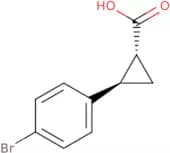
rac-(1R,2R)-2-(4-bromophenyl)cyclopropane-1-carboxylic acid, trans
CAS:Versatile small molecule scaffold
Formula:C10H9BrO2Purity:Min. 95%Molecular weight:241.1 g/molRef: 3D-GAA14265
Discontinued product5H,6H,7H,8H,9H-[1,2,4]Triazolo[4,3-d][1,4]diazepine dihydrochloride
CAS:Versatile small molecule scaffold
Formula:C6H12Cl2N4Purity:Min. 95%Molecular weight:211.09 g/molRef: 3D-FPD91349
Discontinued product(2E)-3-(1H-1,3-Benzodiazol-2-yl)prop-2-enoic acid hydrochloride
CAS:Versatile small molecule scaffoldFormula:C10H9ClN2O2Purity:Min. 95%Molecular weight:224.6 g/molRef: 3D-FPD81695
Discontinued product4-Nitro-1,3-benzothiazol-5-amine hydrochloride
CAS:Versatile small molecule scaffold
Formula:C7H6ClN3O2SPurity:Min. 95%Molecular weight:231.66 g/molRef: 3D-FPD80851
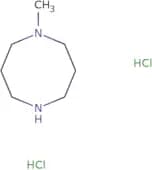
Discontinued product1-Methyl-1,5-diazocane dihydrochloride
CAS:Versatile small molecule scaffold
Formula:C7H18Cl2N2Purity:Min. 95%Molecular weight:201.1 g/molRef: 3D-FPD80786
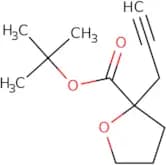
Discontinued producttert-Butyl 2-(prop-2-yn-1-yl)oxolane-2-carboxylate
CAS:Versatile small molecule scaffold
Formula:C12H18O3Purity:Min. 95%Molecular weight:210.27 g/molRef: 3D-FPD80766
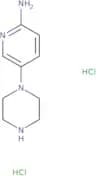
Discontinued product5-(Piperazin-1-yl)pyridin-2-amine dihydrochloride
CAS:Versatile small molecule scaffold
Formula:C9H16Cl2N4Purity:Min. 95%Molecular weight:251.2 g/molRef: 3D-FPD80731
Discontinued product1-Methyl-4,8-dioxa-1,10-diazaspiro[5.5]undecane
CAS:Versatile small molecule scaffold
Formula:C8H16N2O2Purity:Min. 95%Molecular weight:172.2 g/molRef: 3D-FPD80323
Discontinued producttert-Butyl 6-(aminomethyl)-1-azaspiro[3.3]heptane-1-carboxylate
CAS:Versatile small molecule scaffoldFormula:C12H22N2O2Purity:Min. 95%Molecular weight:226.3 g/molRef: 3D-FPD80305
Discontinued productEthyl 1-(hydroxymethyl)-3,3-dimethyl-2-oxabicyclo[2.1.1]hexane-4-carboxylate
CAS:Versatile small molecule scaffold
Formula:C11H18O4Purity:Min. 95%Molecular weight:214.3 g/mol{8-Methyl-1-oxaspiro[4.5]decan-2-yl}methanamine hydrochloride
CAS:Versatile small molecule scaffold
Formula:C11H22ClNOPurity:Min. 95%Molecular weight:219.8 g/molRef: 3D-FPD79951
Discontinued product1-[(5-Fluoro-2-methoxyphenyl)methyl]cyclopropan-1-amine hydrochloride
CAS:Versatile small molecule scaffold
Formula:C11H15ClFNOPurity:Min. 95%Molecular weight:231.7 g/molRef: 3D-FPD79943
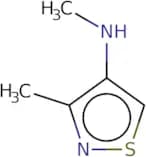
Discontinued productN,3-Dimethyl-1,2-thiazol-4-amine
CAS:Versatile small molecule scaffold
Formula:C5H8N2SPurity:Min. 95%Molecular weight:128.2 g/molRef: 3D-FPD79939
Discontinued product4-(Ethoxycarbonyl)-3,3-dimethyl-2-oxabicyclo[2.1.1]hexane-1-carboxylic acid
CAS:Versatile small molecule scaffold
Formula:C11H16O5Purity:Min. 95%Molecular weight:228.2 g/molRef: 3D-FPD79923
Discontinued product3-Amino-7-oxa-1λ⁶-thiaspiro[3.5]nonane-1,1-dione hydrochloride
CAS:Versatile small molecule scaffoldFormula:C7H14ClNO3SPurity:Min. 95%Molecular weight:227.7 g/molRef: 3D-FPD79892
Discontinued product6-methyl-4,5,6,7-tetrahydro-1,3-benzothiazole-2-carboxylate lithium
CAS:Versatile small molecule scaffold
Formula:C9H10LiNO2SPurity:Min. 95%Molecular weight:203.2 g/molRef: 3D-FPD79878
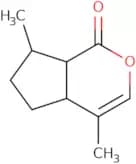
Discontinued productcis-trans Nepetalactone
CAS:荆芥内酯是一种驱虫的化合物,使猫薄荷开花植物能够吸引猫。据信,荆芥内酯可以通过模仿猫的信息素来改变猫的行为。
Formula:C10H14O2Purity:Min. 97 Area-%Color and Shape:Colorless Clear LiquidMolecular weight:166.22 g/mol4-Methoxybenzylamine
CAS:4-Methoxybenzylamine is an organic amine that has a redox potential of -0.14 V (vs. SHE) and a pK a of 10.5. It is used in the synthesis of trifluoroacetic acid esters, which are used as pharmaceutical intermediates. 4-Methoxybenzylamine has been shown to be effective in alleviating pain in animal models, and its mechanism of action may be due to inhibition of the enzyme cyclooxygenase. The kinetic data for this reaction were obtained by studying the deuterium isotope effect, which is characterized by a low energy barrier and rapid reaction rate. The hydrolysis step is also important for the reaction mechanism, with protocatechuic acid being an intermediate product. Hydrochloric acid is needed for dehydration of the reactants, while an aryl halide can be used instead in some cases. In these reactions, there are many possible reaction
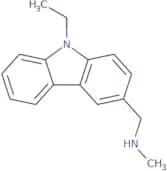
Formula:C8H11NOPurity:Min. 95%Molecular weight:137.18 g/molPhiKan 083
CAS:PhiKan 083 is a monoclonal antibody that binds to the ubiquitin ligase protein. This protein is involved in the regulation of cellular processes such as transcription and apoptosis. PhiKan 083 has been shown to inhibit the growth of cancer cells, which may be due to its ability to bind to epidermal growth factor receptors (EGFRs) and decrease their expression. Binding of phiKAN 083 to EGFRs also inhibits the synthesis of proteins, leading to cell death.
Formula:C16H18N2Purity:Min. 95%Molecular weight:238.33 g/mol8-Amino-2-azaspiro[4.5]decan-3-one
CAS:Versatile small molecule scaffold
Formula:C9H16N2OPurity:Min. 95%Molecular weight:168.24 g/molRef: 3D-FKB27129
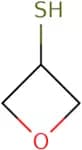
Discontinued product3-Oxetanethiol
CAS:Versatile small molecule scaffold
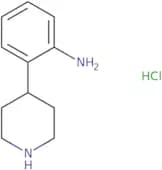
Formula:C3H6OSPurity:Min. 95%Molecular weight:90.14 g/mol2-(Piperidin-4-yl)aniline
CAS:Versatile small molecule scaffold
Formula:C11H17ClN2Purity:Min. 95%Molecular weight:212.72 g/molRef: 3D-FKA05094
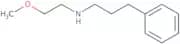
Discontinued product(2-Methoxyethyl)(3-phenylpropyl)amine
CAS:Versatile small molecule scaffold
Formula:C12H19NOPurity:Min. 95%Molecular weight:193.28 g/molN-Isopropyl carvedilol
CAS:Please enquire for more information about N-Isopropyl carvedilol including the price, delivery time and more detailed product information at the technical inquiry form on this page
Formula:C27H32N2O4Purity:Min. 95%Molecular weight:448.56 g/molRef: 3D-FI183299
Discontinued productHydroxypropanedial
CAS:Hydroxypropanedial is a hydroxy group-containing compound that is not found in natural sources. It has antioxidative properties, which may be due to its ability to scavenge reactive oxygen species or donate hydrogen atoms to free radicals. The compound also has cyclohexane ring and carbonyl groups, which are responsible for the hydroxyl and carboxylic acid functionalities respectively. This substance is used as a chromatographic reagent to measure second-order rate constants of reactions involving hydroxyl radicals. Hydroxypropanedial absorbs light strongly at wavelengths shorter than 300 nm, which is the most effective wavelength range for uv absorption in biological systems.
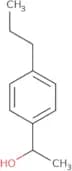
Formula:C3H4O3Purity:Min. 95%Color and Shape:Off-White To Light (Or Pale) Brown SolidMolecular weight:88.06 g/mol(1R)-1-(4-Propylphenyl)ethan-1-ol
CAS:Versatile small molecule scaffold
Formula:C11H16OPurity:Min. 95%Molecular weight:164.24 g/molRef: 3D-FEA36441
Discontinued product[1-(1-Benzofuran-2-yl)ethyl](ethyl)amine
CAS:Versatile small molecule scaffold
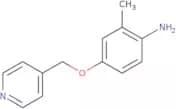
Formula:C12H15NOPurity:Min. 95%Molecular weight:189.25 g/mol2-Methyl-4-(pyridin-4-ylmethoxy)aniline
CAS:Versatile small molecule scaffold
Formula:C13H14N2OPurity:Min. 95%Molecular weight:214.26 g/molRef: 3D-FEA32687
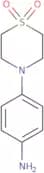
Discontinued product4-(4-Aminophenyl)thiomorpholine 1,1-Dioxide
CAS:Versatile small molecule scaffold
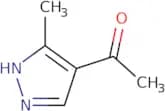
Formula:C10H14N2O2SPurity:Min. 95%Molecular weight:226.29 g/mol1-(5-Methyl-1H-Pyrazol-4-Yl)Ethanone
CAS:Phenylhydrazine is a white crystalline solid with a molecular weight of 150.25, and the molecular formula C6H5NHN. It is soluble in water, alcohol, ether and chloroform. Phenylhydrazine can react with an acid chloride to form a hydrazone; this reaction is used in the synthesis of some pharmaceuticals. The most common use of phenylhydrazine is as a precursor to various pharmaceuticals, such as antipyretics and anti-inflammatory agents. Phenylhydrazine reacts with zinc chloride to form 1-(5-methyl-1H-pyrazol-4-yl)ethanone.
Formula:C6H8N2OPurity:Min. 95%Molecular weight:124.14 g/molRef: 3D-FEA22404
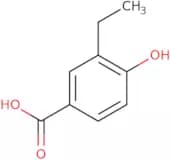
Discontinued product3-Ethyl-4-hydroxybenzoic acid
CAS:Versatile small molecule scaffold
Formula:C9H10O3Purity:Min. 95%Molecular weight:166.17 g/molRef: 3D-FEA21175
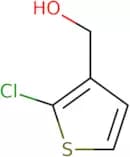
Discontinued product(2-Chlorothiophen-3-yl)methanol
CAS:Versatile small molecule scaffold
Formula:C5H5ClOSPurity:Min. 95%Molecular weight:148.61 g/molRef: 3D-FEA11480
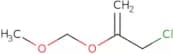
Discontinued product2-(Chloromethyl)-3,5-dioxahex-1-ene
CAS:2-(Chloromethyl)-3,5-dioxahex-1-ene is a synthetic compound that belongs to the group of piperidine compounds. It is a nucleophile and a primary amine that reacts with carbonyl compounds in an efficient method. This reaction is stereoselective and produces the corresponding 2-(chloromethyl)-3,5-dioxahex-1-enes. The chloride ion can be replaced by other nucleophiles such as methoxymethyl or amines. The malonate ester can also be used for this reaction.
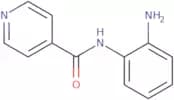
2-(Chloromethyl)-3,5-dioxahex-1-ene has been shown to react with phenylacetonitrile and chloride ions to produce alkylated products such as 2-(chloromethyl)-3,5-dioxahexanenitrile or 2-(chloromethyl)-4,6-dioxFormula:C5H9ClO2Purity:Min. 95%Molecular weight:136.58 g/molN-(2-Amino-phenyl)-isonicotinamide
CAS:N-(2-Amino-phenyl)-isonicotinamide is a compound that has various characteristics and potential applications. It has been studied for its interaction with dopamine, as well as its ability to react with methanol and hydrogen atoms. This compound also exhibits amide properties and has been investigated in the development of DNA vaccines. Additionally, it has shown cytotoxic effects on multidrug-resistant cells and demonstrated potential as a catalyst in reactions involving diphenyl ether and guanidine. Furthermore, N-(2-Amino-phenyl)-isonicotinamide has been explored in research related to ornithine, tripterygium, ammonium salts, and tetrachloride. Its diverse characteristics make it an intriguing compound for further study and potential applications.
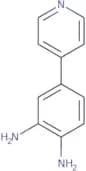
Formula:C12H11N3OPurity:Min. 95%Molecular weight:213.24 g/mol4-(Pyridin-4-yl)benzene-1,2-diamine
CAS:Versatile small molecule scaffold
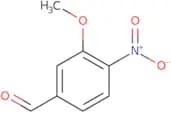
Formula:C11H11N3Purity:Min. 95%Molecular weight:185.22 g/mol3-methoxy-4-nitrobenzaldehyde
CAS:3-Methoxy-4-nitrobenzaldehyde (3MNB) is a biomolecular that is used to study nucleophilic substitutions. It has been shown to inhibit the growth of cells in culture, specifically those with fatty acid amides. 3MNB inhibits the synthesis of β-amyloid, a protein associated with Alzheimer's disease. 3MNB also has potent inhibitory activity on chloride channels and phenylhydrazone binding sites, which are targets for antipsychotic drugs. 3MNB inhibits the production of sh-sy5y cells and piperazine binding sites in the brain. The inhibition of these sites leads to an improvement in memory and learning ability.
Formula:C8H7NO4Purity:Min. 95%Molecular weight:181.1 g/molRef: 3D-FDA41057
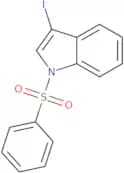
Discontinued product3-Iodo-1-(phenylsulfonyl)indole
CAS:3-Iodo-1-(phenylsulfonyl)indole (3-ISI) is a ligand that is used to crystallize metal ions. 3-ISI binds to metal ions through interactions with the halide ion. The 3-ISI molecule has two phenylsulfonyl groups and one iodine atom, which are the sites of coordination to metal ions. Friedel-Crafts acylation reactions use 3-ISI as a ligand because it does not react with the catalyst or acid, but can be easily replaced by other ligands during the reaction. Parameters for determining its structure include X-ray crystallography, NMR spectroscopy, IR spectroscopy, and elemental analysis. The chloride anion in 3-ISI is able to form hydrogen bonds with other chloride anions in order to stabilize its structure.
3-ISI can be synthesized by reacting iodides with benzyl bromide and phosphorous pentFormula:C14H10INO2SPurity:Min. 95%Molecular weight:383.21 g/molRef: 3D-FDA36014
Discontinued product(2S)-3-(Boc-amino)-2-amino-1-propanol
CAS:Versatile small molecule scaffold
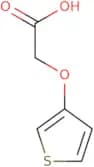
Formula:C8H18N2O3Purity:Min. 95%Molecular weight:190.24 g/mol2-(Thiophen-3-yloxy)acetic acid
CAS:Versatile small molecule scaffold
Formula:C6H6O3SPurity:Min. 95%Molecular weight:158.18 g/molRef: 3D-FDA30506
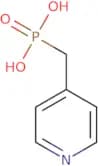
Discontinued product4-Pyridylmethylphosphonic acid
CAS:4-Pyridylmethylphosphonic acid is an inorganic compound that is a ligand for the metal Ruthenium. It is used in organic synthesis as a photosensitizer and a potentiometric titrant. The ligand binds to the metal through one or more of its oxygen atoms, forming a coordination complex. The bond cleavage reaction occurs when the molecule absorbs light of sufficient energy, causing it to break into two parts. 4-Pyridylmethylphosphonic acid is not very soluble in water and is therefore used as an electrolyte in potentiometric titrations. The pH of the solution will change depending on the concentration of the acid. 4-Pyridylmethylphosphonic acid can also be used as a catalyst for certain organic reactions such as esterification and transesterification reactions.
Formula:C6H8NO3PPurity:Min. 95%Molecular weight:173.11 g/molRef: 3D-FDA24143
Discontinued product4-[(1H-Pyrazol-1-yl)methyl]phenol
CAS:4-[(1H-Pyrazol-1-yl)methyl]phenol (4PMP) is an inhibitor of dopamine beta-hydroxylase that has been studied in assays with dopamine and noradrenaline. It has been shown to activate both noradrenaline and dopamine receptors, and can be used as a tool for the study of blood pressure regulation. 4PMP also increases reactive oxygen species production, which may be due to its ability to react with cyanide ions. The binding of 4PMP to the enzyme is reversible and competitive. The pH profile of 4PMP has also been studied, with a range from 2 to 5.4. Kinetic studies have shown that the reaction rate for 4PMP is best described by a Michaelis-Menten kinetic model, with a Km value of 0.03 mM and Vmax value of 9.3 μM/min for dopamine β-hydroxylase inhibition. There are
Formula:C10H10N2OPurity:Min. 95%Molecular weight:174.2 g/molRef: 3D-FDA20009
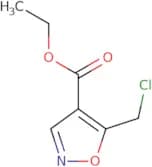
Discontinued productEthyl 5-(chloromethyl)-1,2-oxazole-4-carboxylate
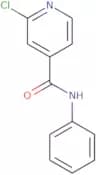
CAS:Versatile small molecule scaffoldFormula:C7H8ClNO3Purity:Min. 95%Molecular weight:189.59 g/mol2-Chloro-N-phenylisonicotinamide
CAS:Versatile small molecule scaffold
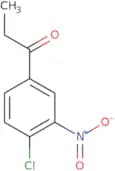
Formula:C12H9ClN2OPurity:Min. 95%Molecular weight:232.67 g/mol1-(4-Chloro-3-nitrophenyl)propan-1-one
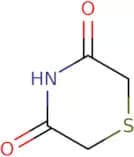
CAS:Versatile small molecule scaffoldFormula:C9H8ClNO3Purity:Min. 95%Molecular weight:213.62 g/molThiomorpholine-3,5-dione
CAS:Thiomorpholine-3,5-dione is a chemical compound that has an x-ray crystal structure. It was first synthesized in 1892 and was the first organic molecule with a herringbone molecular geometry to be discovered. Thiomorpholine-3,5-dione is used as a precursor for dyes, pharmaceuticals, and other organic compounds.
Formula:C4H5NO2SPurity:Min. 95%Molecular weight:131.16 g/molEthyl 5-(bromomethyl)-1,2,3-thiadiazole-4-carboxylate
CAS:Versatile small molecule scaffoldFormula:C6H7BrN2O2SPurity:Min. 95%Molecular weight:251.1 g/mol5-Methyl-4-phenyl-1H-1,2,3-triazole
CAS:Versatile small molecule scaffold
Formula:C9H9N3Purity:Min. 95%Molecular weight:159.19 g/mol1-Isocyanato-3-(propan-2-yl)benzene
CAS:1-Isocyanato-3-(propan-2-yl)benzene is a chiral molecule that has been synthesized and characterized by spectroscopic techniques. It is a colorless liquid with a boiling point of 137°C and an elution time of 12 minutes in high-performance liquid chromatography (HPLC). The compound exhibits strong absorption bands at 220 nm, 276 nm, and 332 nm in the UV region. NMR spectroscopy shows that the compound has a phenyl group nature. The compound also displays dichroism characteristics with correlation to the amylose content.
Formula:C10H11NOPurity:Min. 95%Molecular weight:161.2 g/mol2-Amino-1-(4-methoxyphenyl)ethanol
CAS:2-Amino-1-(4-methoxyphenyl)ethanol is a lactam that is minimally reactive with biological systems. It has been shown to inhibit the binding of the linker molecule to calcitriol, which is a vital component of vitamin D synthesis. This compound can also be used in intra-articular injections for the treatment of arthritis and other inflammatory disorders. 2-Amino-1-(4-methoxyphenyl)ethanol has been synthesized from an endogenous amino acid precursor and conjugated with a fluorophore, enabling it to be tracked in vivo by fluorescence imaging. It has been demonstrated that 2-Amino-1-(4-methoxyphenyl)ethanol can be used as a traceless bioactive molecule in molecular modelling and simulations.
Formula:C9H13NO2Purity:Min. 95%Molecular weight:167.21 g/molRef: 3D-FCA27561
Discontinued product3-(3-Aminopropyl)phenol hydrochloride
CAS:Versatile small molecule scaffold
Formula:C9H14ClNOPurity:Min. 95%Molecular weight:187.66 g/mol

![5H,6H,7H,8H,9H-[1,2,4]Triazolo[4,3-d][1,4]diazepine dihydrochloride](/_next/image/?url=https%3A%2Fstatic.cymitquimica.com%2Fproducts%2F3D%2Fthumb-webp%2FFPD91349.webp&w=3840&q=75)


![1-Methyl-4,8-dioxa-1,10-diazaspiro[5.5]undecane](/_next/image/?url=https%3A%2Fstatic.cymitquimica.com%2Fproducts%2F3D%2Fthumb-webp%2FFPD80323.webp&w=3840&q=75)
![tert-Butyl 6-(aminomethyl)-1-azaspiro[3.3]heptane-1-carboxylate](/_next/image/?url=https%3A%2Fstatic.cymitquimica.com%2Fproducts%2F3D%2Fthumb-webp%2FFPD80305.webp&w=3840&q=75)
![Ethyl 1-(hydroxymethyl)-3,3-dimethyl-2-oxabicyclo[2.1.1]hexane-4-carboxylate](/_next/image/?url=https%3A%2Fstatic.cymitquimica.com%2Fproducts%2F3D%2Fthumb-webp%2FFPD80274.webp&w=3840&q=75)
![{8-Methyl-1-oxaspiro[4.5]decan-2-yl}methanamine hydrochloride](/_next/image/?url=https%3A%2Fstatic.cymitquimica.com%2Fproducts%2F3D%2Fthumb-webp%2FFPD79951.webp&w=3840&q=75)
![1-[(5-Fluoro-2-methoxyphenyl)methyl]cyclopropan-1-amine hydrochloride](/_next/image/?url=https%3A%2Fstatic.cymitquimica.com%2Fproducts%2F3D%2Fthumb-webp%2FFPD79943.webp&w=3840&q=75)
![4-(Ethoxycarbonyl)-3,3-dimethyl-2-oxabicyclo[2.1.1]hexane-1-carboxylic acid](/_next/image/?url=https%3A%2Fstatic.cymitquimica.com%2Fproducts%2F3D%2Fthumb-webp%2FFPD79923.webp&w=3840&q=75)
![3-Amino-7-oxa-1λ⁶-thiaspiro[3.5]nonane-1,1-dione hydrochloride](/_next/image/?url=https%3A%2Fstatic.cymitquimica.com%2Fproducts%2F3D%2Fthumb-webp%2FFPD79892.webp&w=3840&q=75)


![8-Amino-2-azaspiro[4.5]decan-3-one](/_next/image/?url=https%3A%2Fstatic.cymitquimica.com%2Fproducts%2F3D%2Fthumb-webp%2FFKB27129.webp&w=3840&q=75)


amine](/_next/image/?url=https%3A%2Fstatic.cymitquimica.com%2Fproducts%2F3D%2Fthumb-webp%2FFEA34056.webp&w=3840&q=75)

![4-[(1H-Pyrazol-1-yl)methyl]phenol](/_next/image/?url=https%3A%2Fstatic.cymitquimica.com%2Fproducts%2F3D%2Fthumb-webp%2FFDA20009.webp&w=3840&q=75)