


Building Blocks
Subcategories of "Building Blocks"
- Boronic Acids & Boronic Acid Derivatives(5,778 products)
- Chiral Building Blocks(1,243 products)
- Hydrocarbon Building Blocks(6,099 products)
- Organic Building Blocks(61,038 products)
Found 205376 products of "Building Blocks"
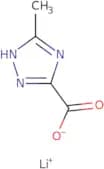
Lithium 5-methyl-1H-1,2,4-triazole-3-carboxylate
CAS:Versatile small molecule scaffold
Formula:C4H4LiN3O2Purity:Min. 95%Molecular weight:133.1 g/mol4-(Dimethyl-1,2-oxazol-4-yl)phenol
CAS:Versatile small molecule scaffold
Formula:C11H11NO2Purity:Min. 95%Molecular weight:189.21 g/molRef: 3D-AKB62875
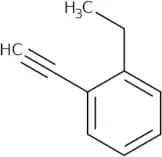
Discontinued product1-Ethyl-2-ethynylbenzene
CAS:1-Ethyl-2-ethynylbenzene is an indene that can be synthesized by the reaction of 1-ethylbenzene with ethynylmagnesium bromide and trifluoroacetyl chloride. 1-Ethyl-2-ethynylbenzene reacts as a nucleophile with electrophiles, such as phenylsulfonyl and acetylene compounds, to form sulfones and acetylenes. It can also react with tetrafluoroborates to form indenes.
Formula:C10H10Purity:Min. 95%Molecular weight:130.19 g/molRef: 3D-ADA65949
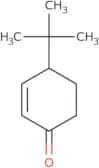
Discontinued product4-tert-Butylcyclohex-2-en-1-one
CAS:Versatile small molecule scaffold
Formula:C10H16OPurity:Min. 95%Molecular weight:152.23 g/molRef: 3D-AAA93707
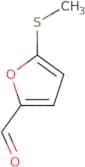
Discontinued product5-(Methylsulfanyl)furan-2-carbaldehyde
CAS:Versatile small molecule scaffold
Formula:C6H6O2SPurity:Min. 95%Molecular weight:142.18 g/molRef: 3D-AAA93294
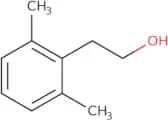
Discontinued product2-(2,6-Dimethylphenyl)ethan-1-ol
CAS:2-(2,6-Dimethylphenyl)ethan-1-ol is a racemic mixture of two compounds with the same molecular formula. The two enantiomers have different chemical properties and can be separated by specific techniques such as chromatography. 2-(2,6-Dimethylphenyl)ethan-1-ol is an ether that is made from methylmalonic acid and ethylene oxide. It is hydrolysed to release methylmalonyl chloride or demethylated to produce methyl ether acetate. This compound has been used in the synthesis of various esters and sesquiterpenoids.
Formula:C10H14OPurity:Min. 95%Molecular weight:150.22 g/molRef: 3D-FBA59580
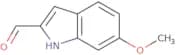
Discontinued product6-Methoxy-1H-indole-2-carbaldehyde
CAS:Versatile small molecule scaffold
Formula:C10H9NO2Purity:Min. 95%Molecular weight:175.18 g/molRef: 3D-FBA46493
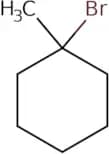
Discontinued product1-Bromo-1-methylcyclohexane
CAS:1-Bromo-1-methylcyclohexane is a monomolecular gas that is used as an intermediate in organic synthesis. It reacts with halides to form cyclopentyl derivatives. This reaction has been shown to be faster than the corresponding reaction of 1-bromocyclohexane with chlorides or bromides. The rate of this reaction may be due to the polarizability and conformational changes of the molecule upon substitution by a methyl group. 1-Bromo-1-methylcyclohexane is also an ionizing reagent, which means it can cause electrophilic reactions to occur on other molecules. It has been found that the solvent effect on this product can affect its reactivity, with solvents such as water having more of an effect than solvents such as benzene. 1-Bromo-1-methylcyclohexane has been shown to interact with other compounds in both transfer and complex
Formula:C7H13BrPurity:Min. 95%Molecular weight:177.08 g/molRef: 3D-AAA93177
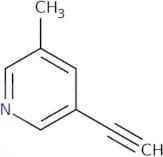
Discontinued product3-Ethynyl-5-methylpyridine
CAS:Versatile small molecule scaffold
Formula:C8H7NPurity:Min. 95%Molecular weight:117.15 g/molRef: 3D-FBA41353
Discontinued productN-[Carbamothioyl(phenyl)methyl]benzamide
CAS:Versatile small molecule scaffold
Formula:C15H14N2OSPurity:Min. 95%Molecular weight:270.3 g/molRef: 3D-AAA89278
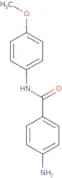
Discontinued product4-Amino-n-(4-methoxyphenyl)benzamide
CAS:4-Amino-N-(4-methoxyphenyl)benzamide is a catalytic sulfamate that has been optimized for use in the synthesis of benzimidazole derivatives. 4-Amino-N-(4-methoxyphenyl)benzamide is used as a reagent for the preparation of aldehydes from sulfamic acid and various types of carboxylic acids. The reaction mechanism involves nucleophilic attack by the hydroxyl group from the sulfamate on the carbonyl carbon atom to form an intermediate, which then reacts with water to release hydrogen sulfate and form a new double bond.
Formula:C14H14N2O2Purity:Min. 95%Molecular weight:242.27 g/molRef: 3D-AAA89135
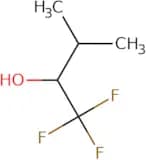
Discontinued product1,1,1-Trifluoro-3-methylbutan-2-ol
CAS:Versatile small molecule scaffold
Formula:C5H9F3OPurity:Min. 95%Molecular weight:142.12 g/mol1-(2-Methylphenyl)propan-2-amine
CAS:Controlled Product1-(2-Methylphenyl)propan-2-amine is a fatty acid ester that is used as an excipient in pharmaceutical dosage forms. It is used to increase the viscosity of drug solutions and suspensions, and to provide a protective coating for tablets. 1-(2-Methylphenyl)propan-2-amine is insoluble in water, but soluble in organic solvents such as alcohols and acetone. It can be prepared by reacting a primary amine with a fatty acid chloride or anhydride. The compound has been shown to have high affinity for 5HT2A receptors in vitro, which may account for its psychoactive effects.
Formula:C10H15NPurity:Min. 95%Molecular weight:149.23 g/molRef: 3D-FAA58032
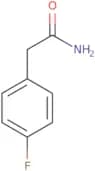
Discontinued product2-(4-Fluorophenyl)acetamide
CAS:2-(4-Fluorophenyl)acetamide (FFAA) is a broad-spectrum antiviral drug that has been evaluated against picornavirus, enterovirus, and rhinovirus. FFAA has been shown to be effective in the treatment of acute enterovirus infections in mice. This compound was also found to have a cytopathic effect on cells infected with enteroviruses in culture. It binds to the virus's RNA-dependent RNA polymerase and prevents viral replication. FFAA is not active against influenza A or B viruses, but it is active against influenza C virus. This compound has also been found to have medicinal properties, as it can inhibit the growth of human lung cancer cells in culture and may be useful for treating cancers such as leukemia.
Formula:C8H8FNOPurity:Min. 95%Molecular weight:153.15 g/molRef: 3D-AAA33229
Discontinued productBenzo[d][1,2,3]thiadiazole
CAS:Benzo[d][1,2,3]thiadiazole is a benzothiadiazole with a redox potential of -0.25 V that is stable in the absence of oxygen and light. It can be used to synthesize chemical pesticides by reacting with hydrochloric acid. The reaction mechanism of benzo[d][1,2,3]thiadiazole has been determined using nuclear magnetic resonance spectroscopy and quantum chemical calculations. This compound reacts with hydrogen bond acceptors on the enzyme active site to form covalent bonds. It also interacts with the enzyme's steric environment by forming hydrogen bonds and van der Waals forces. Benzo[d][1,2,3]thiadiazole also emits light when it reacts with nitric oxide in solution.
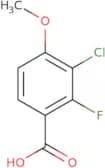
Formula:C6H4N2SPurity:Min. 95%Molecular weight:136.17 g/mol3-Chloro-2-fluoro-4-methoxybenzoic acid
CAS:Versatile small molecule scaffold
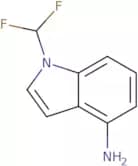
Formula:C8H6ClFO3Purity:Min. 95%Molecular weight:204.58 g/mol1-(Difluoromethyl)-1H-indol-4-amine
CAS:Versatile small molecule scaffold
Formula:C9H8F2N2Purity:Min. 95%Molecular weight:182.17 g/molRef: 3D-EHC04306
Discontinued product2-Bromo-3,3,3-trifluoro-1-propene
CAS:Controlled Product2-Bromo-3,3,3-trifluoro-1-propene is a chemical compound that has been synthesized in an asymmetric reaction. The reactant is bromopropane and the product is 2,2,2-trifluoropropene. The methylene group on the propene molecule is activated by the nucleophilic attack of a fluoride ion from hydrogen fluoride to form a cavity with a highly strained bond. The kinetic study of this reaction revealed that the activation energy for the reaction is 42 kJ/mol. Palladium-catalyzed coupling reactions are catalyzed by palladium and require nonpolar solvents such as toluene or dichloromethane. This type of reaction has been shown to be exothermic with an isolated yield of 1%.
Formula:C3H2BrF3Purity:Min. 95%Color and Shape:Colorless PowderMolecular weight:174.95 g/moltert-Butyl (2,2-difluoro-3-hydroxypropyl)carbamate
CAS:Versatile small molecule scaffoldFormula:C10H13NO4Purity:Min. 95%Molecular weight:211.21 g/mol4,5-Dihydro-1H-imidazol-2-amine hydrochloride
CAS:Please enquire for more information about 4,5-Dihydro-1H-imidazol-2-amine hydrochloride including the price, delivery time and more detailed product information at the technical inquiry form on this page
Formula:C3H7N3•HClPurity:Min. 95%Molecular weight:121.57 g/molRef: 3D-FD183639
Discontinued product1-Hydroxycyclopentane-1-carbonitrile
CAS:1-Hydroxycyclopentane-1-carbonitrile is a monomer that is hydrolyzed to form benzoin and cyanohydrins. It can be used in the production of scifinder as a monomer or dimerizer.
Formula:C6H9NOPurity:Min. 95%Molecular weight:111.14 g/mol8-Bromo-2-methylimidazo[1,2-a]pyridine
CAS:Versatile small molecule scaffold
Formula:C8H7N2BrPurity:Min. 95%Molecular weight:211.05 g/mol3-Hydroxy-5-methylpyridine
CAS:3-Hydroxy-5-methylpyridine (3HMP) is a chemical substance that has been classified as an amine. It is a product of the metabolism of purines, which are nitrogenous bases found in DNA and RNA. 3HMP is produced by aerogenic bacteria (such as Enterobacter), and can be used to estimate the number of these bacteria present in water samples. 3HMP has been shown to have antiviral properties against influenza virus, and can be used as a biomarker for the presence of other viruses in animals. 3HMP also has mineralization properties, which have been studied extensively, particularly with regards to pancreatic disease.
Formula:C6H7NOPurity:Min. 95%Color and Shape:PowderMolecular weight:109.13 g/molRef: 3D-FH16174
Discontinued product4-Chloro-2-hydroxy-6-methylphenylboronic acid
CAS:Versatile small molecule scaffoldFormula:C7H8BClO3Purity:Min. 95%Molecular weight:186.4 g/mol4,5-Dihydroxy-2,3-Pentanedione
CAS:4,5-Dihydroxy-2,3-pentanedione is a carbonyl compound that is the product of the oxidation of ascorbic acid. It is used in wastewater treatment and has antimicrobial properties against infectious diseases. This compound has been shown to inhibit protein synthesis by binding to the ribosome and preventing the formation of peptide bonds between amino acids. 4,5-Dihydroxy-2,3-pentanedione has also been shown to bind to plasma proteins, which may be due to its acyl chain structure. 4,5-Dihydroxy-2,3-pentanedione can be synthesized in a catalytic mechanism that involves dehydroascorbic acid and molecular oxygen.
Formula:C5H8O4Purity:Min. 95%Color and Shape:PowderMolecular weight:132.11 g/molRef: 3D-FD180770
Discontinued productPiperyline
CAS:Piperyline is an alkanoic acid that has shown to be effective against skin cancer. It also has antimicrobial properties, which may be due to its ability to bind metal ions and form polymeric compounds. Piperyline inhibits microbial growth by inhibiting the synthesis of proteins and nucleic acids. The antimicrobial activity is related to its cationic polymerization with hydroxyl groups, which forms a structure that can inhibit microbial enzymes and disrupt microbial cell membranes. This compound also interacts with the skin's natural lipids, making it difficult for microorganisms to attach and grow on the skin. Piperyline is synthesized in organic chemistry laboratories as an amide precursor of other pharmaceuticals such as penicillin.
Formula:C16H17NO3Purity:Min. 95%Molecular weight:271.31 g/mol


![N-[Carbamothioyl(phenyl)methyl]benzamide](/_next/image/?url=https%3A%2Fstatic.cymitquimica.com%2Fproducts%2F3D%2Fthumb-webp%2FAAA89278.webp&w=3840&q=75)

![Benzo[d][1,2,3]thiadiazole](/_next/image/?url=https%3A%2Fstatic.cymitquimica.com%2Fproducts%2F3D%2Fthumb-webp%2FAAA27377.webp&w=3840&q=75)




![8-Bromo-2-methylimidazo[1,2-a]pyridine](/_next/image/?url=https%3A%2Fstatic.cymitquimica.com%2Fproducts%2F3D%2Fthumb-webp%2FUXB37475.webp&w=3840&q=75)



