Building Blocks
Subcategories of "Building Blocks"
- Boronic Acids & Boronic Acid Derivatives(5,778 products)
- Chiral Building Blocks(1,243 products)
- Hydrocarbon Building Blocks(6,098 products)
- Organic Building Blocks(61,042 products)
Found 204339 products of "Building Blocks"
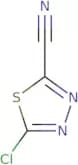
5-Chloro-1,3,4-thiadiazole-2-carbonitrile
CAS:Versatile small molecule scaffold
Formula:C3ClN3SPurity:Min. 95%Molecular weight:145.57 g/molRef: 3D-VHA73725
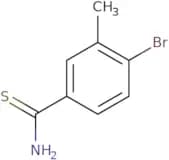
Discontinued product4-Bromo-3-methylbenzene-1-carbothioamide
CAS:Versatile small molecule scaffold
Formula:C8H8BrNSPurity:Min. 95%Molecular weight:230.13 g/molRef: 3D-RBA96321
Discontinued product3-[(4-Chlorophenyl)amino]propanenitrile
CAS:Versatile small molecule scaffold
Formula:C9H9ClN2Purity:Min. 95%Molecular weight:180.63 g/molRef: 3D-RBA83357
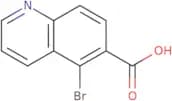
Discontinued product5-Bromoquinoline-6-carboxylic acid
CAS:Versatile small molecule scaffold
Formula:C10H6BrNO2Purity:Min. 95%Molecular weight:252.06 g/molRef: 3D-VMB47048
Discontinued product(5,7-Dimethyl-[1,2,4]triazolo[4,3-a]pyrimidin-3-ylsulfanyl)-acetic acid
CAS:Versatile small molecule scaffold
Formula:C9H10N4O2SPurity:Min. 95%Molecular weight:238.27 g/mol2-Hydroxybicyclo[2.2.1]heptane-2-carboxylic acid
CAS:2-Hydroxybicyclo[2.2.1]heptane-2-carboxylic acid is an aralkyl compound that is an active substance in a reaction of the Diels-Alder type. It can also be used as a starting material for the synthesis of other compounds. The compound is oxidized to 2,3-dihydroxybicyclo[2.2.1]heptane carboxylic acid, which reacts with sodium hypochlorite and hydrogen gas to form 2,3-dihydroxybicyclo[2.2.1]heptane 1,4-oxazepine 4,5-dicarboxylic acid and hydrogen chloride gas. This process is called oxidative decarboxylation and it can be used as an analytical technique for determining the concentration of the original compound in a sample. Optically active 2-hydroxybicyclo
Formula:C8H12O3Purity:Min. 95%Molecular weight:156.18 g/molRef: 3D-RBA24820
Discontinued product3,6-Dibromopyridine-2-carbaldehyde
CAS:Versatile small molecule scaffold
Formula:C6H3Br2NOPurity:Min. 95%Molecular weight:264.9 g/mol1-Bromo-4-[(1E)-4-bromobut-1-en-1-yl]benzene
CAS:Versatile small molecule scaffold
Formula:C10H10Br2Purity:Min. 95%Molecular weight:289.99 g/molRef: 3D-QXB89863
Discontinued product1-{[(9H-Fluoren-9-yl)methoxy]carbonyl}-1,2,3,4-tetrahydroquinoline-4-carboxylic acid
CAS:Versatile small molecule scaffold
Formula:C25H21NO4Purity:Min. 95%Molecular weight:399.4 g/molRef: 3D-QKC60864
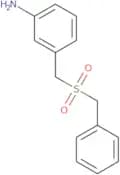
Discontinued product3-(Phenylmethanesulfonylmethyl)aniline
CAS:Versatile small molecule scaffold
Formula:C14H15NO2SPurity:Min. 95%Molecular weight:261.34 g/molRef: 3D-VMB59149
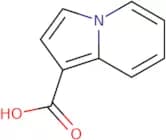
Discontinued productIndolizine-1-carboxylic acid
CAS:Indolizine-1-carboxylic acid (IDCA) is an antimicrobial agent that inhibits bacterial growth by interfering with the synthesis of proteins. IDCA is a fluorescent compound that can be detected using fluorescence spectroscopy. This drug has been shown to have potent cytotoxic effects against cancer cells, as well as antibacterial activity against Staphylococcus aureus and other bacteria.
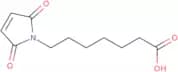
Formula:C9H7NO2Purity:Min. 95%Molecular weight:161.16 g/mol7-(2,5-Dioxo-2,5-dihydro-1H-pyrrol-1-yl)heptanoic acid
CAS:Versatile small molecule scaffold
Formula:C11H15NO4Purity:Min. 95%Molecular weight:225.24 g/molFPS-ZM1
CAS:FPS-ZM1 is a small molecule drug with immunomodulatory and anti-inflammatory properties. It was originally synthesized as an inhibitor of the transcriptional regulator HMG-BOX, which is found in the promoters of genes involved in neuronal death, inflammation, and autoimmune diseases. FPS-ZM1 inhibits the transcriptional regulator HMG-BOX by binding to it, thereby preventing it from interacting with its DNA target. This inhibition leads to decreased expression of proinflammatory genes. The effects of FPS-ZM1 on inflammatory responses have been demonstrated in vitro and in vivo using human cells. In addition, FPS-ZM1 has been shown to inhibit Toll-like receptor (TLR) signaling pathways that are activated by lipopolysaccharide (LPS).
Formula:C20H22ClNOPurity:Min. 95%Molecular weight:327.85 g/mol2-[2-(4-Methoxyphenyl)ethyl]-1H-1,3-benzodiazole
CAS:Versatile small molecule scaffold
Formula:C16H16N2OPurity:Min. 95%Molecular weight:252.31 g/molRef: 3D-QAA45232
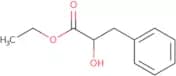
Discontinued productEthyl 2-hydroxy-3-phenylpropanoate
CAS:Ethyl 2-hydroxy-3-phenylpropanoate (EPP) is a component of the fragrance, which is used in perfumes, soaps, and detergents. It has been shown to have a hypocholesterolemic effect in rats and a proliferator-activated receptor agonist effect on human cells. EPP also has been shown to stimulate collagen production and inhibit the proliferation of human keratinocytes. The biological properties of this compound are related to its ability to activate insulin receptors in muscle cells. EP can be synthesized by reacting 3-phenylpropanal with ethyl bromoacetate followed by hydrolysis of the resulting ester.
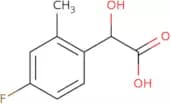
Formula:C11H14O3Purity:Min. 95%Molecular weight:194.23 g/mol2-(4-Fluoro-2-methylphenyl)-2-hydroxyacetic acid
CAS:Versatile small molecule scaffold
Formula:C9H9FO3Purity:Min. 95%Molecular weight:184.16 g/molRef: 3D-PYB34364
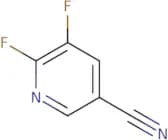
Discontinued product5,6-Difluoropyridine-3-carbonitrile
CAS:Versatile small molecule scaffold
Formula:C6H2F2N2Purity:Min. 95%Molecular weight:140.09 g/molRef: 3D-PYB34048
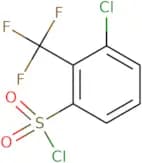
Discontinued product3-Chloro-2-(trifluoromethyl)benzene-1-sulfonyl chloride
CAS:Versatile small molecule scaffold
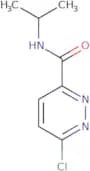
Formula:C7H3Cl2F3O2SPurity:Min. 95%Molecular weight:279.06 g/mol6-Chloro-N-(propan-2-yl)pyridazine-3-carboxamide
CAS:Versatile small molecule scaffold
Formula:C8H10ClN3OPurity:Min. 95%Molecular weight:199.64 g/molRef: 3D-VNA58290
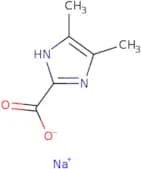
Discontinued productSodium 4,5-dimethyl-1H-imidazole-2-carboxylate
CAS:Versatile small molecule scaffold
Formula:C6H7N2NaO2Purity:Min. 95%Molecular weight:162.12 g/molRef: 3D-PED67285
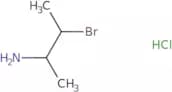
Discontinued product3-Bromobutan-2-amine hydrochloride
CAS:Versatile small molecule scaffold
Formula:C4H11BrClNPurity:Min. 95%Molecular weight:188.49 g/molRef: 3D-PED67222
Discontinued product[1-(Ethanesulfonyl)cyclopropyl]methanamine hydrochloride
CAS:Versatile small molecule scaffold
Formula:C6H14ClNO2SPurity:Min. 95%Molecular weight:199.7 g/molRef: 3D-PED67168
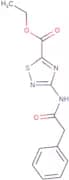
Discontinued productEthyl 3-benzenethioamido-1,2,4-thiadiazole-5-carboxylate
CAS:Versatile small molecule scaffold
Formula:C13H13N3O3SPurity:Min. 95%Molecular weight:291.33 g/molRef: 3D-PED67163
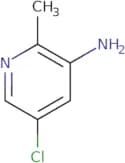
Discontinued product3-Amino-5-chloropicoline
CAS:Versatile small molecule scaffold
Formula:C6H7ClN2Purity:Min. 95%Molecular weight:142.59 g/molRef: 3D-PDA63936
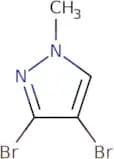
Discontinued product3,4-Dibromo-1-methyl-1H-pyrazole
CAS:Versatile small molecule scaffold
Formula:C4H4Br2N2Purity:Min. 95%Molecular weight:239.9 g/molRef: 3D-PDA60714
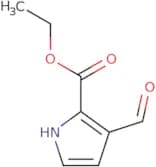
Discontinued productethyl 3-formyl-1H-pyrrole-2-carboxylate
CAS:Ethyl 3-formyl-1H-pyrrole-2-carboxylate is a formyl compound with the molecular formula C8H8O3. It is a colorless liquid that has a strong odor. The compound can be obtained by the reaction of ethyl acetoacetate and pyrrole in the presence of aluminum chloride. The compound has been studied for its nuclear magnetic resonance (NMR) properties. It has two conformers, which are distinguished by their different chemical shifts, and this difference can be used to study coupling between the carbonyl group and other groups in the molecule.
Formula:C8H9NO3Purity:Min. 95%Molecular weight:167.2 g/mol2,2',4,4'-tetrahydroxybenzophenone
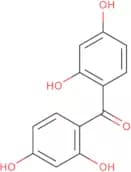
CAS:2,2',4,4'-tetrahydroxybenzophenone is a hydroxylated benzophenone that has immunomodulatory effects. It binds to the receptor in the immune system and can cause an increase in cytokine production. 2,2',4,4'-tetrahydroxybenzophenone is cytotoxic and has significant toxicity in vitro. The molecule has been shown to disrupt mitochondrial membrane potential. This may be due to its ability to form hydrogen bonds with molecules on the mitochondrial membrane. 2,2',4,4'-tetrahydroxybenzophenone also modulates transcriptional regulation of genes involved in cell proliferation and apoptosis. The drug is detectable at low levels by mass spectrometry and is not known to have any toxicological effects.END>>
Formula:C13H10O5Purity:Min. 95%Color and Shape:Green PowderMolecular weight:246.22 g/molRef: 3D-FT55663
Discontinued product2-Bromo-3,3,3-trifluoro-1-propene
CAS:Controlled Product2-Bromo-3,3,3-trifluoro-1-propene is a chemical compound that has been synthesized in an asymmetric reaction. The reactant is bromopropane and the product is 2,2,2-trifluoropropene. The methylene group on the propene molecule is activated by the nucleophilic attack of a fluoride ion from hydrogen fluoride to form a cavity with a highly strained bond. The kinetic study of this reaction revealed that the activation energy for the reaction is 42 kJ/mol. Palladium-catalyzed coupling reactions are catalyzed by palladium and require nonpolar solvents such as toluene or dichloromethane. This type of reaction has been shown to be exothermic with an isolated yield of 1%.
Formula:C3H2BrF3Purity:Min. 95%Color and Shape:Colorless PowderMolecular weight:174.95 g/mol2-Acetylbenzoic acid
CAS:2-Acetylbenzoic acid is a functional molecule that contains an acetyl group. It can form hydrogen bonds with other molecules and has been shown to induce apoptosis in cells. The reaction products of 2-acetylbenzoic acid are malonic acid, acetylsalicylic acid, and 2-benzoylbenzoic acid. These three compounds are made by the addition of hydrogen or hydroxide to the molecule 2-acetylbenzoic acid. The molecule has two functional groups: a carbonyl group and an acetyl group. The chemical structure of this molecule can be seen in the figure below.
2-Acetylbenzoic AcidFormula:C9H8O3Purity:Min. 95%Color and Shape:PowderMolecular weight:164.16 g/molRef: 3D-FA05086
Discontinued producttert-Butyl 5-bromo-3,4-dihydro-2,7-naphthyridine-2(1H)-carboxylate
CAS:Versatile small molecule scaffold
Formula:C13H17BrN2O2Purity:Min. 95%Molecular weight:313.19 g/mol4-(Methylamino)benzene-1-sulfonamide
CAS:Versatile small molecule scaffold
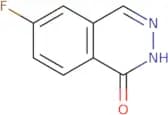
Formula:C7H10N2O2SPurity:Min. 95%Molecular weight:186.23 g/mol6-fluoro-1,2-dihydrophthalazin-1-one
CAS:Versatile small molecule scaffold
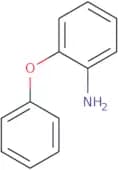
Formula:C8H5FN2OPurity:Min. 95%Molecular weight:164.14 g/mol2-Phenoxyaniline
CAS:2-Phenoxyaniline is a nitro compound that can be converted to the corresponding palladium complexes. It is an inhibitor of the acylation reaction, which is a type of chemical reaction in which an organic molecule reacts with an acid. The inhibition of this reaction has been shown to have an effect on heart disease, specifically by lowering cholesterol levels and reducing atherosclerosis. 2-Phenoxyaniline has also been shown to inhibit the activation energy for electron transfer reactions, making it useful as a catalyst in analytical methods. 2-Phenoxyaniline also undergoes vibrational spectroscopy when exposed to liquid chromatography and other analytical methods.
Formula:C12H11NOPurity:Min. 95%Color and Shape:Brown PowderMolecular weight:185.22 g/moltrans-1,2-Dichloroethylene
CAS:Trans-1,2-Dichloroethylene is a chlorinated hydrocarbon that is used in the production of polyvinyl chloride plastics. When ingested at dietary concentrations, trans-1,2-Dichloroethylene may cause liver damage and death in CD-1 mice. Trans-1,2-Dichloroethylene has been shown to react with nucleophilic substitutions and produce toxic reaction products. This chemical also causes polymerase chain reactions that can lead to cell death. The effective dose for this chemical is unknown because it has not been tested in clinical trials.
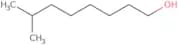
Formula:C2H2Cl2Purity:Min. 95%Molecular weight:96.94 g/molIsononyl alcohol
CAS:Isononyl alcohol is a polycarboxylic acid that has been used in the treatment of skin conditions, such as atopic dermatitis and psoriasis. It has been shown to penetrate the skin and stimulate the production of sebum. Isononyl alcohol is also used as a plasticizer for polyvinyl chloride (PVC) and other plastics, which increases their flexibility. This chemical also has a hydrophobic effect, which may be due to its hydroxyl group. The unsaturated alkyl chain on this chemical also makes it susceptible to oxidation by ozone in air and water vapor in air. Isononyl alcohol is metabolized by humans through conjugation with glucuronic acid or sulfate esters.
Formula:C9H20OPurity:Min. 95%Color and Shape:Clear LiquidMolecular weight:144.25 g/molRef: 3D-FI146181
Discontinued producttert-Butyl 3-(trifluoromethyl)piperazine-1-carboxylate
CAS:Versatile small molecule scaffold
Formula:C10H17F3N2O2Purity:Min. 95%Molecular weight:254.25 g/mol3-Bromo-6,7-dihydro-4H-pyrazolo[1,5-a]pyrazine-5-carboxylic acid tert-butyl ester
CAS:Versatile small molecule scaffold
Formula:C11H16BrN3O2Purity:Min. 95%Molecular weight:302.17 g/mol3-(Methoxycarbonyl)pyridine-4-carboxylic acid
CAS:Versatile small molecule scaffold
Formula:C8H7NO4Purity:Min. 95%Molecular weight:181.15 g/molH-Ser-Ala-Glu-Glu-Tyr-Glu-Tyr-Pro-Ser OH trifluoroacetate
CAS:Please enquire for more information about H-Ser-Ala-Glu-Glu-Tyr-Glu-Tyr-Pro-Ser OH trifluoroacetate including the price, delivery time and more detailed product information at the technical inquiry form on this page
Formula:C47H63N9O20•(C2HF3O2)xPurity:Min. 95%Ref: 3D-FS183525
Discontinued product

![3-[(4-Chlorophenyl)amino]propanenitrile](/_next/image/?url=https%3A%2Fstatic.cymitquimica.com%2Fproducts%2F3D%2Fthumb-webp%2FRBA83357.webp&w=3840&q=75)
![(5,7-Dimethyl-[1,2,4]triazolo[4,3-a]pyrimidin-3-ylsulfanyl)-acetic acid](/_next/image/?url=https%3A%2Fstatic.cymitquimica.com%2Fproducts%2F3D%2Fthumb-webp%2FRBA26671.webp&w=3840&q=75)
![2-Hydroxybicyclo[2.2.1]heptane-2-carboxylic acid](/_next/image/?url=https%3A%2Fstatic.cymitquimica.com%2Fproducts%2F3D%2Fthumb-webp%2FRBA24820.webp&w=3840&q=75)

![1-Bromo-4-[(1E)-4-bromobut-1-en-1-yl]benzene](/_next/image/?url=https%3A%2Fstatic.cymitquimica.com%2Fproducts%2F3D%2Fthumb-webp%2FQXB89863.webp&w=3840&q=75)
![1-{[(9H-Fluoren-9-yl)methoxy]carbonyl}-1,2,3,4-tetrahydroquinoline-4-carboxylic acid](/_next/image/?url=https%3A%2Fstatic.cymitquimica.com%2Fproducts%2F3D%2Fthumb-webp%2FQKC60864.webp&w=3840&q=75)

![2-[2-(4-Methoxyphenyl)ethyl]-1H-1,3-benzodiazole](/_next/image/?url=https%3A%2Fstatic.cymitquimica.com%2Fproducts%2F3D%2Fthumb-webp%2FQAA45232.webp&w=3840&q=75)
![[1-(Ethanesulfonyl)cyclopropyl]methanamine hydrochloride](/_next/image/?url=https%3A%2Fstatic.cymitquimica.com%2Fproducts%2F3D%2Fthumb-webp%2FPED67168.webp&w=3840&q=75)




![3-Bromo-6,7-dihydro-4H-pyrazolo[1,5-a]pyrazine-5-carboxylic acid tert-butyl ester](/_next/image/?url=https%3A%2Fstatic.cymitquimica.com%2Fproducts%2F3D%2Fthumb-webp%2FWXB15425.webp&w=3840&q=75)