Building Blocks
Subcategories of "Building Blocks"
- Boronic Acids & Boronic Acid Derivatives(5,778 products)
- Chiral Building Blocks(1,243 products)
- Hydrocarbon Building Blocks(6,098 products)
- Organic Building Blocks(61,042 products)
Found 204339 products of "Building Blocks"
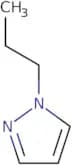
1-Propylpyrazole
CAS:1-Propylpyrazole is a non-classical inhibitor of aldehyde oxidase that has been shown to have an inhibitory effect on pentane. 1-Propylpyrazole has peroxidase-like activity, which means it can bind to lipid hydroperoxides in the presence of hydrogen peroxide or peroxidase. It has also been shown to be an effective inhibitor of dehydrogenase, which is an enzyme that catalyzes the oxidation of aldehydes and ketones to carboxylic acids. This drug is not active against classical aldehyde oxidases such as alcohol dehydrogenase, but it does inhibit polyunsaturated fatty acid synthesis by binding with cytochrome P450 enzymes.
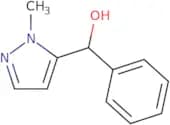
Formula:C6H10N2Purity:Min. 95%Molecular weight:110.16 g/mol(1-Methyl-1H-pyrazol-5-yl)(phenyl)methanol
CAS:Versatile small molecule scaffold
Formula:C11H12N2OPurity:Min. 95%Molecular weight:188.23 g/molRef: 3D-HBA50065
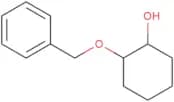
Discontinued productrac-(1R,2R)-2-(Benzyloxy)cyclohexan-1-ol
CAS:Versatile small molecule scaffold
Formula:C13H18O2Purity:Min. 95%Molecular weight:206.28 g/molRef: 3D-BCA32929
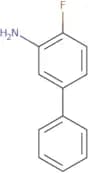
Discontinued product2-Fluoro-5-phenylaniline
CAS:Versatile small molecule scaffold
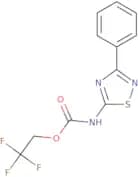
Formula:C12H10FNPurity:Min. 95%Molecular weight:187.21 g/mol2,2,2-Trifluoroethyl N-(3-phenyl-1,2,4-thiadiazol-5-yl)carbamate
CAS:Versatile small molecule scaffold
Formula:C11H8F3N3O2SPurity:Min. 95%Molecular weight:303.26 g/molRef: 3D-EEC95162
Discontinued product(3,4-Dihydro-2H-chromen-6-ylmethyl)ae hydrochloride
CAS:Versatile small molecule scaffold
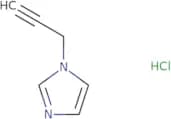
Formula:C10H14ClNOPurity:Min. 95%Molecular weight:199.68 g/mol1-(Prop-2-yn-1-yl)-1H-imidazole hydrochloride
CAS:Versatile small molecule scaffoldFormula:C6H7ClN2Purity:Min. 95%Molecular weight:142.58 g/mol(1R,3R)-3-Phenoxycyclobutan-1-ol
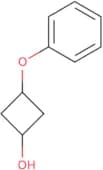
CAS:Versatile small molecule scaffold
Formula:C10H12O2Purity:Min. 95%Molecular weight:164.2 g/mol4-(2,4-Dichlorophenoxy)benzoic acid
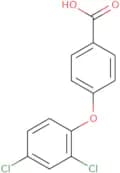
CAS:Versatile small molecule scaffold
Formula:C13H8Cl2O3Purity:Min. 95%Molecular weight:283.1 g/mol4-oxo-2-spiro(N-Boc-piperidine-4-yl)-benzopyran
CAS:Versatile small molecule scaffold
Formula:C18H23NO4Purity:Min. 95%Molecular weight:317.39 g/molRef: 3D-ZIB92822
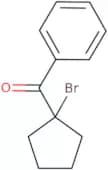
Discontinued product(1-Bromocyclopentyl)(phenyl)methanone
CAS:Versatile small molecule scaffold
Formula:C12H13BrOPurity:Min. 95%Molecular weight:253.13 g/molRef: 3D-GAA74066
Discontinued product3-(4-Ethylphenyl)butanoic acid
CAS:Versatile small molecule scaffold
Formula:C12H16O2Purity:Min. 95%Molecular weight:192.25 g/molRef: 3D-DCA08649
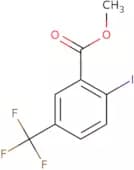
Discontinued productMethyl 2-iodo-5-(trifluoromethyl)benzoate
CAS:Versatile small molecule scaffold
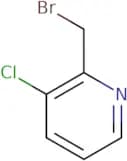
Formula:C9H6F3IO2Purity:Min. 95%Molecular weight:330.04 g/mol2-(bromomethyl)-3-chloropyridine
CAS:Versatile small molecule scaffold
Formula:C6H5BrClNPurity:Min. 95%Molecular weight:206.47 g/molRef: 3D-CZB51576
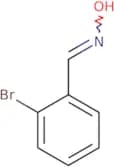
Discontinued product2-Bromobenzaldoxime
CAS:2-Bromobenzaldoxime is a biologically active molecule that has been shown to have significant physiological activities. It is an aldehyde, which is metabolized by the liver or kidneys into the corresponding alcohol, 2-bromoethanol. 2-Bromobenzaldoxime has been shown to be synthesized from diethyl ether and potassium phosphate in the presence of amino acids. The reaction proceeds with dehydration of the intermediate bromohydrin to form an aldoxime. This molecule can be used as a pharmaceutical drug for various diseases such as diabetes mellitus, hypertension, and inflammation.
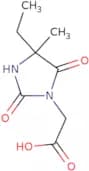
Formula:C7H6BrNOPurity:Min. 95%Molecular weight:200.03 g/mol(4-Ethyl-4-methyl-2,5-dioxo-imidazolidin-1-yl)-acetic acid
CAS:Versatile small molecule scaffold
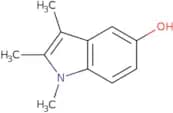
Formula:C8H12N2O4Purity:Min. 95%Molecular weight:200.2 g/mol1,2,3-Trimethyl-1H-indol-5-ol
CAS:Versatile small molecule scaffold
Formula:C11H13NOPurity:Min. 95%Molecular weight:175.23 g/molRef: 3D-IJB19354
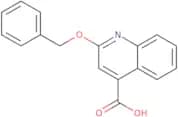
Discontinued product2-(Benzyloxy)quinoline-4-carboxylic acid
CAS:Versatile small molecule scaffold
Formula:C17H13NO3Purity:Min. 95%Molecular weight:279.3 g/molRef: 3D-IJA69343
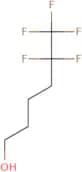
Discontinued product5,5,6,6,6-Pentafluorohexan-1-ol
CAS:Versatile small molecule scaffold
Formula:C6H9F5OPurity:Min. 95%Molecular weight:192.13 g/mol2-{4-[2-(Pyrrolidin-1-yl)ethoxy]phenyl}ethan-1-amine dihydrochloride
CAS:Versatile small molecule scaffold
Formula:C14H24Cl2N2OPurity:Min. 95%Molecular weight:307.3 g/molRef: 3D-HHC68177
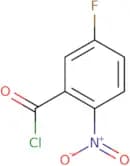
Discontinued product5-Fluoro-2-nitrobenzoyl chloride
CAS:5-Fluoro-2-nitrobenzoyl chloride is a conformationally locked macrocyclic compound that has been synthesized by solid phase synthesis. It is found in two conformational states and can be made to switch between these two states by applying a force to the molecule. This conformation can be controlled by changing the side chain of 5-fluoro-2-nitrobenzoyl chloride, which can be done experimentally. The conformational behavior of this macrocycle was studied using molecular dynamics simulations and it was found that there are four possible conformations for the molecule. The conformations with different side chains were found to have different energies, which could be used as a measure of their relative stability.
Formula:C7H3ClFNO3Purity:Min. 95%Molecular weight:203.55 g/mol[3-Bromo-4-(morpholin-4-yl)phenyl]methanol
CAS:Versatile small molecule scaffold
Formula:C11H14BrNO2Purity:Min. 95%Molecular weight:272.14 g/molRef: 3D-USC85031
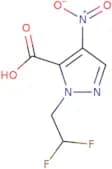
Discontinued product1-(2,2-Difluoroethyl)-4-nitro-1H-pyrazole-5-carboxylic acid
CAS:Versatile small molecule scaffoldFormula:C6H5F2N3O4Purity:Min. 95%Molecular weight:221.12 g/molRef: 3D-VWC27524
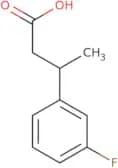
Discontinued product3-(3-Fluorophenyl)butanoic acid
CAS:Versatile small molecule scaffold
Formula:C10H11FO2Purity:Min. 95%Molecular weight:182.19 g/molrac-(1R,5S)-4-Oxaspiro[bicyclo[3.2.0]heptane-6,1'-cyclopentane]-7-one, cis
CAS:Versatile small molecule scaffold
Formula:C10H14O2Purity:Min. 95%Molecular weight:166.2 g/molRef: 3D-HCD80674
Discontinued product2-(Sulfanylmethyl)-4H-pyrido[1,2-a]pyrimidin-4-one
CAS:Versatile small molecule scaffold
Formula:C9H8N2OSPurity:Min. 95%Molecular weight:192.24 g/molRef: 3D-RQB69641
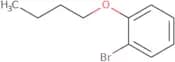
Discontinued product1-Bromo-2-butoxybenzene
CAS:1-Bromo-2-butoxybenzene is a chemical compound that is used in the manufacture of zinc oxide. It is also used as an electrolyte in dye-sensitized solar cells. In these cells, 1-bromo-2-butoxybenzene acts as an electron donor, which provides electrons to the redox dye on the surface of the semiconductor. This process leads to recombination, where electrons and holes recombine to produce electricity. The introduction of alkoxy groups into 1-bromo-2-butoxybenzene molecules allows for increased stability and efficiency in dye-sensitized solar cells.
Formula:C10H13BrOPurity:Min. 95%Molecular weight:229.11 g/molRef: 3D-ECA51430
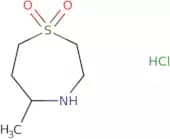
Discontinued product5-Methyl-1,4-thiazepane-1,1-dione hydrochloride
CAS:Versatile small molecule scaffold
Formula:C6H14ClNO2SPurity:Min. 95%Molecular weight:199.7 g/molRef: 3D-VWC27667
Discontinued product5-[(2,4-Difluorophenyl)methyl]-4-methyl-1,3-thiazol-2-amine hydrobromide
CAS:Versatile small molecule scaffold
Formula:C11H11BrF2N2SPurity:Min. 95%Molecular weight:321.19 g/molRef: 3D-VWC49324
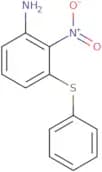
Discontinued product2-Nitro-3-(phenylsulfanyl)aniline
CAS:Versatile small molecule scaffold
Formula:C12H10N2O2SPurity:Min. 95%Molecular weight:246.29 g/molRef: 3D-ALC43340
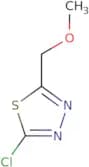
Discontinued product2-Chloro-5-(methoxymethyl)-1,3,4-thiadiazole
CAS:Versatile small molecule scaffoldFormula:C4H5ClN2OSPurity:Min. 95%Molecular weight:164.61 g/molRef: 3D-PDC25110
Discontinued product2-Bromo-5-fluoro-4-methoxybenzoic acid
CAS:Versatile small molecule scaffold
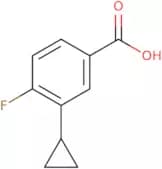
Formula:C8H6BrFO3Purity:Min. 95%Molecular weight:249.03 g/mol3-cyclopropyl-4-fluorobenzoic acid
CAS:Versatile small molecule scaffold
Formula:C10H9FO2Purity:Min. 95%Molecular weight:180.18 g/molRef: 3D-NSB73386
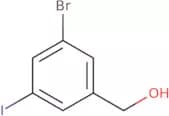
Discontinued product(3-bromo-5-iodophenyl)methanol
CAS:Versatile small molecule scaffold
Formula:C7H6BrIOPurity:Min. 95%Molecular weight:312.9 g/molRef: 3D-NHA81308
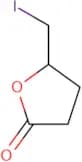
Discontinued product5-(Iodomethyl)oxolan-2-one
CAS:Versatile small molecule scaffold
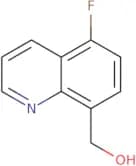
Formula:C5H7IO2Purity:Min. 95%Molecular weight:226.01 g/mol(5-Fluoroquinolin-8-yl)methanol
CAS:Versatile small molecule scaffold
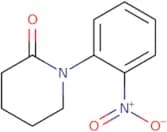
Formula:C10H8FNOPurity:Min. 95%Molecular weight:177.17 g/mol2-Piperidinone, 1-(2-nitrophenyl)-
CAS:Versatile small molecule scaffold
Formula:C11H12N2O3Purity:Min. 95%Molecular weight:220.22 g/molRef: 3D-DIA50992
Discontinued product2-Bromo-3,3,3-trifluoro-1-propene
CAS:Controlled Product2-Bromo-3,3,3-trifluoro-1-propene is a chemical compound that has been synthesized in an asymmetric reaction. The reactant is bromopropane and the product is 2,2,2-trifluoropropene. The methylene group on the propene molecule is activated by the nucleophilic attack of a fluoride ion from hydrogen fluoride to form a cavity with a highly strained bond. The kinetic study of this reaction revealed that the activation energy for the reaction is 42 kJ/mol. Palladium-catalyzed coupling reactions are catalyzed by palladium and require nonpolar solvents such as toluene or dichloromethane. This type of reaction has been shown to be exothermic with an isolated yield of 1%.
Formula:C3H2BrF3Purity:Min. 95%Color and Shape:Colorless PowderMolecular weight:174.95 g/molPiperyline
CAS:Piperyline is an alkanoic acid that has shown to be effective against skin cancer. It also has antimicrobial properties, which may be due to its ability to bind metal ions and form polymeric compounds. Piperyline inhibits microbial growth by inhibiting the synthesis of proteins and nucleic acids. The antimicrobial activity is related to its cationic polymerization with hydroxyl groups, which forms a structure that can inhibit microbial enzymes and disrupt microbial cell membranes. This compound also interacts with the skin's natural lipids, making it difficult for microorganisms to attach and grow on the skin. Piperyline is synthesized in organic chemistry laboratories as an amide precursor of other pharmaceuticals such as penicillin.
Formula:C16H17NO3Purity:Min. 95%Molecular weight:271.31 g/mol



![2-{4-[2-(Pyrrolidin-1-yl)ethoxy]phenyl}ethan-1-amine dihydrochloride](/_next/image/?url=https%3A%2Fstatic.cymitquimica.com%2Fproducts%2F3D%2Fthumb-webp%2FHHC68177.webp&w=3840&q=75)
![[3-Bromo-4-(morpholin-4-yl)phenyl]methanol](/_next/image/?url=https%3A%2Fstatic.cymitquimica.com%2Fproducts%2F3D%2Fthumb-webp%2FUSC85031.webp&w=3840&q=75)
![rac-(1R,5S)-4-Oxaspiro[bicyclo[3.2.0]heptane-6,1'-cyclopentane]-7-one, cis](/_next/image/?url=https%3A%2Fstatic.cymitquimica.com%2Fproducts%2F3D%2Fthumb-webp%2FHCD80674.webp&w=3840&q=75)
![2-(Sulfanylmethyl)-4H-pyrido[1,2-a]pyrimidin-4-one](/_next/image/?url=https%3A%2Fstatic.cymitquimica.com%2Fproducts%2F3D%2Fthumb-webp%2FRQB69641.webp&w=3840&q=75)
![5-[(2,4-Difluorophenyl)methyl]-4-methyl-1,3-thiazol-2-amine hydrobromide](/_next/image/?url=https%3A%2Fstatic.cymitquimica.com%2Fproducts%2F3D%2Fthumb-webp%2FVWC49324.webp&w=3840&q=75)