


Building Blocks
Subcategories of "Building Blocks"
- Boronic Acids & Boronic Acid Derivatives(5,778 products)
- Chiral Building Blocks(1,243 products)
- Hydrocarbon Building Blocks(6,099 products)
- Organic Building Blocks(61,038 products)
Found 205376 products of "Building Blocks"
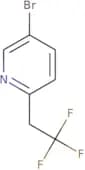
5-Bromo-2-(2,2,2-trifluoroethyl)pyridine
CAS:Versatile small molecule scaffold
Formula:C7H5BrF3NPurity:Min. 95%Molecular weight:240.02 g/molDSP-4 hydrochloride
CAS:DSP-4 hydrochloride is a neurotoxin that inhibits the synthesis of norepinephrine. It binds to neurons and prevents the uptake of dopamine, which can lead to neuronal death. DSP-4 hydrochloride affects brain functions by decreasing the concentration of serotonin in the cortex and increasing the concentrations of norepinephrine in the coeruleus. DSP-4 hydrochloride also has estrogenic effects by binding to estrogen receptors and increasing estradiol benzoate concentrations.Formula:C11H16BrCl2NPurity:Min. 95%Molecular weight:313.06 g/mol5-Chloro-1H-pyrrolo[2,3-c]pyridine-3-carboxylic acid
CAS:Versatile small molecule scaffoldFormula:C8H5ClN2O2Purity:Min. 95%Molecular weight:196.59 g/mol4-bromo-1H-imidazole-2-carbaldehyde
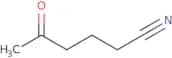
CAS:Versatile small molecule scaffoldFormula:C4H3BrN2OPurity:Min. 95%Molecular weight:175 g/mol5-Ketohexanenitrile
CAS:5-Ketohexanenitrile is a liquid that is used in the production of medicine. The compound has been shown to be an effective inhibitor of the enzyme, dehydrogenase, which catalyzes the conversion of 5-ketohexanoic acid to hexadecanoic acid. This reaction is important for the oxidation of fatty acids and can be found in all living organisms. 5-Ketohexanenitrile has also been shown to inhibit the enzyme, hydrogen peroxide oxidase, which catalyzes the conversion of hydrogen peroxide to water and oxygen gas. 5-Ketohexanenitrile is also an intermediate in acrylonitrile production. It can be produced by vaporizing hexadecanoic acid with a catalyst such as trimethylpyridine or acetic acid. 5-Ketohexanenitrile can exist as two isomers: cis and trans. It is a primary amine that reacts with alkali metals such asFormula:C6H9NOPurity:Min. 95%Molecular weight:111.14 g/mol2-Cyclopropylphenol
CAS:2-Cyclopropylphenol is a hydrogen chloride derivative of 2-cyclohexen-1-one. It has been shown to have high affinity for the α receptor, which is a functional group in the integrin receptor that mediates cell adhesion. 2-Cyclopropylphenol has been shown to be effective for the treatment of hepatitis. 2-Cyclopropylphenol also forms an organometallic complex with platinum, which can be used as an anticancer agent and shows good antiviral activity against hepatitis C virus (HCV). The molecular modeling of this compound was done by using quantum chemical calculations and NMR spectra. The synthesis of this compound was developed from benzene and ethynylbenzene. The photochemical properties of this compound were investigated by methane monooxygenase reconstitution studies.
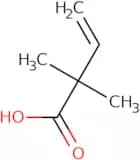
Formula:C9H10OPurity:Min. 95%Molecular weight:134.18 g/mol2,2-Dimethylbut-3-enoic acid
CAS:2,2-Dimethylbut-3-enoic acid is a bioactive compound that is used to synthesize other compounds. It has been shown to have a number of functions, such as being an electrolyte and having an electron deficient group in its structure. 2,2-Dimethylbut-3-enoic acid reacts with electrophilic functional groups at high temperatures to form allylation products. This reaction is called cheletropic and has been shown to be reversible.
Formula:C6H10O2Purity:Min. 95%Molecular weight:114.14 g/molMethyl 4-chlorobenzenesulfonate
CAS:Versatile small molecule scaffold
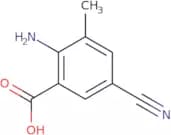
Formula:C7H7ClO3SPurity:Min. 95%Molecular weight:206.65 g/mol2-amino-5-cyano-3-methylbenzoic acid
CAS:2-Amino-5-cyano-3-methylbenzoic acid is a diester of methylamine. It is an acid ester that has been used in the synthesis of other compounds. 2-Amino-5-cyano-3-methylbenzoic acid is an intermediate in the synthesis of some pharmaceuticals, such as carbamazepine and methylphenidate. This compound has not been shown to have any biological activity.Formula:C9H8N2O2Purity:Min. 95%Molecular weight:176.18 g/molBMS-986165
CAS:Controlled ProductBMS-986165 is a P-glycoprotein (P-gp) inhibitor that has been shown to reduce the absorption of ciclosporin, tacrolimus, and everolimus in vitro. BMS-986165 has an activity index of 100% and inhibits the inflammatory response by inhibiting the production of cytokines. It has been found to be effective for treating bowel diseases, such as ulcerative colitis and Crohn's disease. The drug also may be used for the treatment of autoimmune diseases, such as psoriasis or rheumatoid arthritis. BMS-986165 is administered orally and is rapidly absorbed. It is metabolized by CYP3A4 and excreted in urine as metabolites. END>> END>>Formula:C20H19D3N8O3Purity:Min. 95%Molecular weight:425.46 g/mol8-Chloroisoquinolin-5-amine
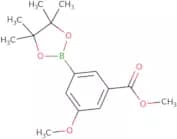
CAS:Versatile small molecule scaffoldFormula:C9H7ClN2Purity:Min. 95%Molecular weight:178.62 g/mol3-Methoxy-5-(methoxycarbonyl)phenylboronic acid pinacol ester
CAS:Versatile small molecule scaffoldFormula:C15H21BO5Purity:Min. 95%Molecular weight:292.14 g/mol2,4-Dichloro-6-(propan-2-yl)pyrimidine
CAS:Versatile small molecule scaffold
Formula:C7H8Cl2N2Purity:Min. 95%Molecular weight:191.05 g/mol6-Oxa-2-azaspiro[3.4]octane HCl
CAS:Versatile small molecule scaffold
Formula:C6H12ClNOPurity:Min. 95%Molecular weight:149.62 g/molMethyl Pyridin-3-ylacetate
CAS:Methyl Pyridin-3-ylacetate is an organic compound that is the methyl ester of pyridine-3-carboxylic acid. It has a melting point of 197°C, with an ionization potential of 1.78 eV and a lactam. Methyl Pyridin-3-ylacetate has been shown to react with hydrochloric acid to form picric acid and methyl 3-(hydroxymethyl)pyridine-2,5-dicarboxylate. Methyl Pyridin-3-ylacetate can be used in the preparation of picrates, which are used in the synthesis of dyes and explosives such as picric acid and TNT. Methyl Pyridin-3-ylacetate can also be demethylated by heating with sodium methoxide to give methyl pyridine carboxylate.Formula:C8H9NO2Purity:Min. 95%Molecular weight:151.16 g/mol5-(2-Aminoethyl)thiophene-2-sulfonamide hydrochloride
CAS:Versatile small molecule scaffoldFormula:C6H11ClN2O2S2Purity:Min. 95%Molecular weight:242.8 g/molMito-TEMPO
CAS:Mito-TEMPO is a mitochondrial-targeted antioxidant that scavenges reactive oxygen species (ROS) and protects against oxidative injury. It has been shown to be effective in reducing oxidative damage in the heart and liver, as well as in models of neuronal death. Mito-TEMPO is also a potent inhibitor of lipid peroxidation and is able to prevent the formation of aldehydes. This drug has minimal toxicity, which may be due to its ability to accumulate in mitochondria without disrupting mitochondrial functions. Mito-TEMPO has been tested on healthy individuals with no observed side effects.Formula:C29H35ClN2O2PPurity:Min. 95%Molecular weight:510.03 g/moltert-Butyl 3-bromo-1,4,6,7-tetrahydro-5H-pyrazolo[4,3-c]pyridine-5-carboxylate
CAS:Versatile small molecule scaffoldFormula:C11H16BrN3O2Purity:Min. 95%Molecular weight:302.17 g/mol2-(4-Methoxyphenyl)ethyl bromide
CAS:2-(4-Methoxyphenyl)ethyl bromide is an adenosine receptor antagonist that can be used in cancer treatment. It has been shown to inhibit the growth of cancer cells by blocking the binding of adenosine to its receptors and inhibiting phosphodiesterase, which is an enzyme that breaks down the key cellular messenger, cyclic AMP (cAMP). 2-(4-Methoxyphenyl)ethyl bromide also inhibits the production of aphanorphine, a morphine analogue that has been shown to stimulate endoplasmic reticulum stress and apoptosis in cancer cells. This compound has been synthesised and tested on animal models with promising results.Formula:C9H11BrOPurity:Min. 95%Molecular weight:215.09 g/moltert-Butyl 4-amino-4-(aminomethyl)piperidine-1-carboxylate
CAS:Versatile small molecule scaffoldFormula:C11H23N3O2Purity:Min. 95%Molecular weight:229.32 g/mol


![5-Chloro-1H-pyrrolo[2,3-c]pyridine-3-carboxylic acid](/_next/image/?url=https%3A%2Fstatic.cymitquimica.com%2Fproducts%2F3D%2Fthumb-webp%2FSSB19336.webp&w=3840&q=75)






![6-Oxa-2-azaspiro[3.4]octane HCl](/_next/image/?url=https%3A%2Fstatic.cymitquimica.com%2Fproducts%2F3D%2Fthumb-webp%2FJEC65612.webp&w=3840&q=75)


![tert-Butyl 3-bromo-1,4,6,7-tetrahydro-5H-pyrazolo[4,3-c]pyridine-5-carboxylate](/_next/image/?url=https%3A%2Fstatic.cymitquimica.com%2Fproducts%2F3D%2Fthumb-webp%2FLCD42906.webp&w=3840&q=75)

