


Building Blocks
Subcategories of "Building Blocks"
- Boronic Acids & Boronic Acid Derivatives(5,774 products)
- Chiral Building Blocks(1,237 products)
- Hydrocarbon Building Blocks(6,098 products)
- Organic Building Blocks(60,970 products)
Found 205134 products of "Building Blocks"
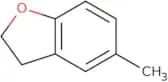
5-Methyl-2,3-dihydro-1-benzofuran
CAS:Versatile small molecule scaffold
Formula:C9H10OPurity:Min. 95%Molecular weight:134.17 g/molRef: 3D-BDA42968
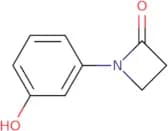
Discontinued product1-(3-Hydroxyphenyl)azetidin-2-one
CAS:Versatile small molecule scaffold
Formula:C9H9NO2Purity:Min. 95%Molecular weight:163.17 g/molRef: 3D-BDA22801
Discontinued product2,2-Bis(chloromethyl)-1,3-dioxolane
CAS:2,2-Bis(chloromethyl)-1,3-dioxolane is a chemical intermediate that can be used in the production of polyester resins. It is a colorless liquid with an unpleasant odor. 2,2-Bis(chloromethyl)-1,3-dioxolane reacts with ethylene and glycol to produce polyester resins. This reaction occurs at high temperatures and produces a mixture of products such as diols and triols. When heated in acidic conditions, the compound hydrolyzes to form dihydroxyacetone and p-toluenesulfonic acid. The compound is also used as an industrial solvent for acidic materials. Recrystallizing the product from ethylene glycol results in a white crystalline powder that can be used in the manufacture of other chemicals such as sulfate salts.
Formula:C5H8Cl2O2Purity:Min. 95%Molecular weight:171.02 g/mol2-[1-(Difluoromethyl)-3,5-dimethyl-1H-pyrazol-4-yl]acetic acid
CAS:Controlled Product2-[1-(Difluoromethyl)-3,5-dimethyl-1H-pyrazol-4-yl]acetic acid is a potent inhibitor of peptide binding to the receptor. It has a Kd value of 0.2 μM and a Ki value of 1.6 μM in the inhibition of insulin binding to its receptor. 2-[1-(Difluoromethyl)-3,5-dimethyl-1H-pyrazol-4-yl]acetic acid is also an activator of protein interactions and ligand for research tools used for studying ion channels and other receptors. This chemical can be used as high purity reagent for life sciences, including cell biology and pharmacology.
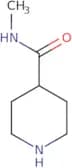
Formula:C8H10F2N2O2Purity:Min. 95%Molecular weight:204.17 g/molN-Methylpiperidine-4-carboxamide
CAS:Versatile small molecule scaffold
Formula:C7H14N2OPurity:Min. 95%Molecular weight:142.2 g/molRef: 3D-BAA90369
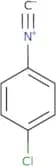
Discontinued product1-Chloro-4-isocyanobenzene
CAS:1-Chloro-4-isocyanobenzene (1CI) is an organic compound that has been used as a chemical probe for the detection of amines and other molecules on metal surfaces. The frequency shift in Raman spectra, which is observed after the addition of 1CI to the metal surface, is used to detect amines. 1CI has also been shown to be a potent inhibitor of mitochondrial function. This molecule binds to nucleophilic sites on metal surfaces and forms covalent bonds with them, leading to a high degree of inhibition.
1CI can be synthesized in three steps from commercially available starting materials and is relatively easy to purify.Formula:C7H4ClNPurity:Min. 95%Molecular weight:137.56 g/mol2-[3-(Propan-2-yl)phenoxy]acetic acid
CAS:2-[3-(Propan-2-yl)phenoxy]acetic acid is a chemical compound that is used as an additive in benzene, and is a phytotoxic chemical. It prevents the formation of chlorophyll by blocking electron transport and inhibiting photosynthesis. 2-[3-(Propan-2-yl)phenoxy]acetic acid is used to induce callus tissue from lettuce, radish, and other plants. This compound also inhibits the growth of various bacteria including Escherichia coli and Pseudomonas aeruginosa.
Formula:C11H14O3Purity:Min. 95%Molecular weight:194.23 g/molRef: 3D-BAA87852
Discontinued product1-[(3-Bromothiophen-2-yl)methyl]piperazine
CAS:Versatile small molecule scaffold
Formula:C9H13BrN2SPurity:Min. 95%Molecular weight:261.18 g/molRef: 3D-WYB72635
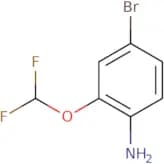
Discontinued product4-Bromo-2-(difluoromethoxy)aniline
CAS:Versatile small molecule scaffold
Formula:C7H6BrF2NOPurity:Min. 95%Molecular weight:238.03 g/mol3-(5-Methyl-[1,3,4]oxadiazol-2-yl)-phenylamine
CAS:Versatile small molecule scaffold
Formula:C9H9N3OPurity:Min. 95%Molecular weight:175.19 g/molRef: 3D-XEA73340
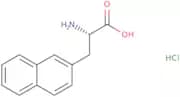
Discontinued product(S)-2-Amino-3-(naphthalen-2-yl)propanoic acid hydrochloride
CAS:Versatile small molecule scaffold
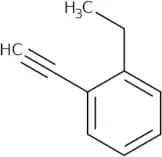
Formula:C13H14ClNO2Purity:Min. 95%Molecular weight:251.71 g/mol1-Ethyl-2-ethynylbenzene
CAS:1-Ethyl-2-ethynylbenzene is an indene that can be synthesized by the reaction of 1-ethylbenzene with ethynylmagnesium bromide and trifluoroacetyl chloride. 1-Ethyl-2-ethynylbenzene reacts as a nucleophile with electrophiles, such as phenylsulfonyl and acetylene compounds, to form sulfones and acetylenes. It can also react with tetrafluoroborates to form indenes.
Formula:C10H10Purity:Min. 95%Molecular weight:130.19 g/molRef: 3D-ADA65949
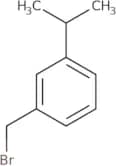
Discontinued product1-(bromomethyl)-3-isopropylbenzene
CAS:Versatile small molecule scaffold
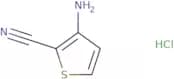
Formula:C10H13BrPurity:Min. 95%Molecular weight:213.12 g/mol3-Aminothiophene-2-carbonitrile hydrochloride
CAS:Versatile small molecule scaffold
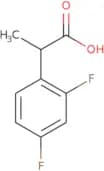
Formula:C5H5ClN2SPurity:Min. 95%Molecular weight:160.63 g/mol2-(2,4-Difluorophenyl)propanoic acid
CAS:Versatile small molecule scaffold
Formula:C9H8F2O2Purity:Min. 95%Molecular weight:186.15 g/molRef: 3D-AAC57263
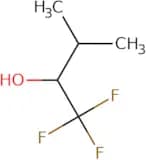
Discontinued product1,1,1-Trifluoro-3-methylbutan-2-ol
CAS:Versatile small molecule scaffold
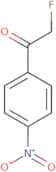
Formula:C5H9F3OPurity:Min. 95%Molecular weight:142.12 g/mol2-Fluoro-1-(4-nitrophenyl)ethan-1-one
CAS:Versatile small molecule scaffold
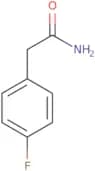
Formula:C8H6FNO3Purity:Min. 95%Molecular weight:183.14 g/mol2-(4-Fluorophenyl)acetamide
CAS:2-(4-Fluorophenyl)acetamide (FFAA) is a broad-spectrum antiviral drug that has been evaluated against picornavirus, enterovirus, and rhinovirus. FFAA has been shown to be effective in the treatment of acute enterovirus infections in mice. This compound was also found to have a cytopathic effect on cells infected with enteroviruses in culture. It binds to the virus's RNA-dependent RNA polymerase and prevents viral replication. FFAA is not active against influenza A or B viruses, but it is active against influenza C virus. This compound has also been found to have medicinal properties, as it can inhibit the growth of human lung cancer cells in culture and may be useful for treating cancers such as leukemia.
Formula:C8H8FNOPurity:Min. 95%Molecular weight:153.15 g/molRef: 3D-AAA33229
Discontinued productBenzo[d][1,2,3]thiadiazole
CAS:Benzo[d][1,2,3]thiadiazole is a benzothiadiazole with a redox potential of -0.25 V that is stable in the absence of oxygen and light. It can be used to synthesize chemical pesticides by reacting with hydrochloric acid. The reaction mechanism of benzo[d][1,2,3]thiadiazole has been determined using nuclear magnetic resonance spectroscopy and quantum chemical calculations. This compound reacts with hydrogen bond acceptors on the enzyme active site to form covalent bonds. It also interacts with the enzyme's steric environment by forming hydrogen bonds and van der Waals forces. Benzo[d][1,2,3]thiadiazole also emits light when it reacts with nitric oxide in solution.
Formula:C6H4N2SPurity:Min. 95%Molecular weight:136.17 g/mol1,8-Dioxa-4-azaspiro[4.5]decane
CAS:Versatile small molecule scaffold
Formula:C7H13NO2Purity:Min. 95%Molecular weight:143.18 g/molRef: 3D-XEA82412
Discontinued product


![2-[1-(Difluoromethyl)-3,5-dimethyl-1H-pyrazol-4-yl]acetic acid](/_next/image/?url=https%3A%2Fstatic.cymitquimica.com%2Fproducts%2F3D%2Fthumb-webp%2FWYB72452.webp&w=3840&q=75)
![2-[3-(Propan-2-yl)phenoxy]acetic acid](/_next/image/?url=https%3A%2Fstatic.cymitquimica.com%2Fproducts%2F3D%2Fthumb-webp%2FBAA87852.webp&w=3840&q=75)
![1-[(3-Bromothiophen-2-yl)methyl]piperazine](/_next/image/?url=https%3A%2Fstatic.cymitquimica.com%2Fproducts%2F3D%2Fthumb-webp%2FWYB72635.webp&w=3840&q=75)
![3-(5-Methyl-[1,3,4]oxadiazol-2-yl)-phenylamine](/_next/image/?url=https%3A%2Fstatic.cymitquimica.com%2Fproducts%2F3D%2Fthumb-webp%2FXEA73340.webp&w=3840&q=75)
![Benzo[d][1,2,3]thiadiazole](/_next/image/?url=https%3A%2Fstatic.cymitquimica.com%2Fproducts%2F3D%2Fthumb-webp%2FAAA27377.webp&w=3840&q=75)
![1,8-Dioxa-4-azaspiro[4.5]decane](/_next/image/?url=https%3A%2Fstatic.cymitquimica.com%2Fproducts%2F3D%2Fthumb-webp%2FXEA82412.webp&w=3840&q=75)