Building Blocks
This section contains fundamental products for the synthesis of organic and biological compounds. Building blocks are the essential starting materials used to construct complex molecules through various chemical reactions. They play a critical role in drug discovery, material science, and chemical research. At CymitQuimica, we offer a diverse range of high-quality building blocks to support your innovative research and industrial projects, ensuring you have the essential components for successful synthesis.
Subcategories of "Building Blocks"
- Boronic Acids & Boronic Acid Derivatives(5,778 products)
- Chiral Building Blocks(1,242 products)
- Hydrocarbon Building Blocks(6,098 products)
- Organic Building Blocks(61,059 products)
Found 199580 products of "Building Blocks"
Sort by
Purity (%)
0
100
|
0
|
50
|
90
|
95
|
100
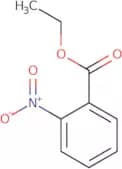
Ethyl 2-nitrobenzoate
CAS:<p>Ethyl 2-nitrobenzoate is a cyclic organic compound that contains a nitro group, which is an organic radical with the formula -NO2. It belongs to the class of amides and has two carbonyl groups. The molecule consists of a bicyclic heterocycle consisting of one ring with five carbon atoms and one ring with six carbon atoms. Ethyl 2-nitrobenzoate can be used in the treatment of muscle diseases, metabolic disorders, growth factor deficiencies, autoimmune diseases, and neural system disorders due to its ability to act as an antihypertensive agent and as an inhibitor of angiotensin converting enzyme (ACE). This molecule's hydroxyl group can also react with epidermal growth factor (EGF) to form N-hydroxyethyl EGF (NHE). This product has been shown to have antiviral properties against HIV-1 protease inhibitors by interfering with viral protein synthesis.</p>Formula:C9H9NO4Purity:Min. 95%Color and Shape:White PowderMolecular weight:195.17 g/molEthyl 3-hydroxybenzoate
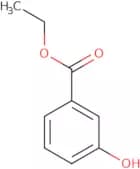
CAS:<p>Ethyl 3-hydroxybenzoate is a preservative that has been shown to be effective against a variety of microorganisms, including gram-positive and gram-negative bacteria. It has been shown to bind with iron, which prevents it from interacting with tyrosinase, an enzyme necessary for the production of melanin. Ethyl 3-hydroxybenzoate also inhibits the activity of benzodiazepine receptor, which reduces the effects of benzodiazepines in the brain. This compound is used in some cosmetics as an antimicrobial agent and cosmetic preservative. The molecular descriptors for this compound are: Molecular Weight=165.07; Log P=0.5; H-bond acceptor count=3; H-bond donor count=2; rotatable bond count=2; hydrogen bond acceptor count=1; hydrogen bond donor count=2; polar surface area=79.90 Å2</p>Formula:C9H10O3Purity:Min. 98.5 Area-%Color and Shape:White PowderMolecular weight:166.17 g/mol4-Ethoxy-3-hydroxybenzaldehyde
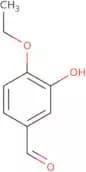
CAS:<p>4-Ethoxy-3-hydroxybenzaldehyde (4EHB) is a thioacetal that has been shown to be an effective precursor for the synthesis of many other molecules, such as combretastatin a-4. It is prepared by reaction of ethylmagnesium bromide and acetone. 4EHB has been shown to have antifungal properties in vitro, and can be used in the treatment of cancer cells. This compound is volatile and can be easily detected with headspace techniques. The functional group of this molecule is an alcohol group, which is found on the ring structure. Spectroscopic analysis shows that it has a carbonyl group with an OH group attached to it.</p>Formula:C9H10O3Purity:Min. 95%Color and Shape:Colorless PowderMolecular weight:166.17 g/mol1-(Furan-2-yl)-2-methoxyethan-1-one
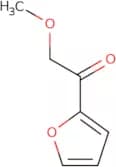
CAS:<p>Versatile small molecule scaffold</p>Formula:C7H8O3Purity:Min. 95%Color and Shape:Clear LiquidMolecular weight:140.14 g/molMethyltetrazine-acid
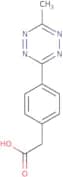
CAS:Versatile small molecule scaffoldFormula:C11H10N4O2Purity:Min. 95%Color and Shape:PowderMolecular weight:230.22 g/molGlutamic acid
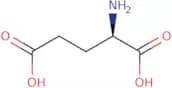
CAS:<p>Glutamic acid is a non-essential amino acid that is present in all cells. It is one of the most abundant amino acids and plays an important role in the biochemical properties and biological properties of living organisms. Glutamic acid has been found to be an important neurotransmitter and is involved in neuronal activity, which can lead to death. It also has been shown to be a potent inhibitor of DNA polymerase, which may explain the structural analysis of glutamic acid as a divalent cation coordination-activator molecule. Glutamate can be used as a model system for studying glutamate receptor function and its optimum concentration is determined using vitro assays. The dinucleotide phosphate (NADPH) oxidase pathway may be involved in the toxicity of glutamic acid as it produces reactive oxygen species.</p>Formula:C5H9NO4Purity:Min. 95%Color and Shape:White PowderMolecular weight:147.13 g/molGuanine
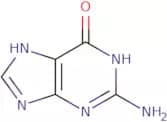
CAS:<p>Guanine is a purine base that is found in the DNA and RNA of all living cells. It plays an important role as a component of the nucleic acid molecule, where it is paired with cytosine. Guanine is involved in many chemical reactions and biological processes, including protein synthesis and cell division. The lack of guanine can lead to deficiency symptoms such as hemolytic anemia or erythrocyte cytoplasmic inclusion bodies. Guanine has been shown to have chemiluminescent properties, which can be used to detect its presence in samples containing DNA or RNA. This reaction occurs when guanine reacts with hydrogen peroxide (H2O2) to form guanidine (HN=C(NH2)NH2). The reaction produces excited states that emit light at a wavelength of 395 nm when they return to their ground state. Guanidine also has electrochemical impedance spectroscopy properties, which can be used for analytical purposes</p>Formula:C5H5N5OPurity:Min. 98 Area-%Color and Shape:PowderMolecular weight:151.13 g/moltrans-4-Hydroxy-L-proline
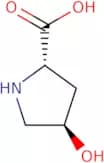
CAS:<p>Proline is a non-essential amino acid that is found in the basic structure of collagen. Proline has been shown to have physiological effects, including a protective effect on the myocardium, and can be used as an analytical method for detecting proline residues in biological samples. Trans-4-Hydroxy-L-proline is a proline derivative that has been shown to inhibit collagenase activity in vitro. It was also shown to have an optimum concentration of 1 mM and a matrix effect at pH 6.5. The model system used to study trans-4-hydroxy-l-proline was the enzyme extracted from rat liver.</p>Formula:C5H9NO3Color and Shape:White PowderMolecular weight:131.13 g/mol3-Hydroxyindole
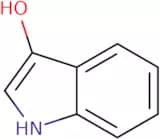
CAS:<p>A building block research chemical</p>Formula:C8H7NOPurity:(¹H-Nmr) Min. 95 Area-%Color and Shape:PowderMolecular weight:133.15 g/mol4D-Hydroxysphinganine
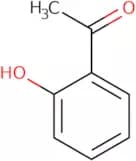
CAS:<p>Sphingolipid; cell membrane component; anti-inflammatory agent</p>Formula:C18H39NO3Purity:Min. 97 Area-%Color and Shape:White PowderMolecular weight:317.51 g/mol2'-Hydroxyacetophenone - 95%
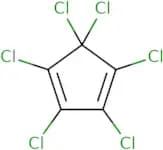
CAS:<p>Purity min. 95%</p>Formula:C8H8O2Purity:Min. 95%Color and Shape:Clear LiquidMolecular weight:136.15 g/molHexachlorocyclopentadiene
CAS:<p>Only available for delivery in the Europe. Prohibited for transport by air. The substantial reactivity and versatility of Hexachlorocyclopentadiene in facilitating multiple synthetic pathways make it indispensable in both agrochemical and industrial sectors.</p>Formula:C5Cl6Purity:Min. 97 Area-%Color and Shape:Clear LiquidMolecular weight:272.77 g/mol4,4',4'',4'''-(21H,23H-Porphine-5,10,15,20-tetrayl)tetrakis[benzaldehyde]
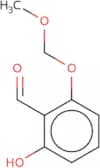
CAS:<p>Please enquire for more information about 4,4',4'',4'''-(21H,23H-Porphine-5,10,15,20-tetrayl)tetrakis[benzaldehyde] including the price, delivery time and more detailed product information at the technical inquiry form on this page</p>Formula:C48H30N4O4Purity:Min. 95%Color and Shape:PowderMolecular weight:726.8 g/mol2-Hydroxy-6-(methoxymethoxy)benzaldehyde
CAS:<p>2-Hydroxy-6-(methoxymethoxy)benzaldehyde is a chemical intermediate that can be used in the synthesis of a wide range of compounds. It is an aromatic compound which has two hydroxyl groups on the benzene ring. This product is a versatile building block, and is useful in the synthesis of complex compounds with high purity. 2-Hydroxy-6-(methoxymethoxy)benzaldehyde can be obtained as a white solid with a melting point of 57°C.</p>Formula:C9H10O4Purity:Min. 95%Color and Shape:Clear LiquidMolecular weight:182.17 g/mol3,4,5,6,7,8-Hexahydro-2,9-benzodioxacyclododecin-1,10-dione
CAS:<p>3,4,5,6,7,8-Hexahydro-2,9-benzodioxacyclododecin-1,10-dione is a research chemical that is an important intermediate for the synthesis of many useful compounds. It can be used as a building block for the synthesis of more complex and valuable compounds in the pharmaceutical industry. 3,4,5,6,7,8-Hexahydro-2,9-benzodioxacyclododecin-1,10-dione is also an important reagent for organic chemistry reactions. It has been shown to behave as a good scaffold for the synthesis of other molecules with high purity. This compound has been shown to be useful in many different reactions such as condensations and cyclizations.</p>Formula:C14H16O4Purity:Min. 95%Color and Shape:PowderMolecular weight:248.27 g/molHydrochlorothiazide-d2
CAS:Controlled Product<p>Please enquire for more information about Hydrochlorothiazide-d2 including the price, delivery time and more detailed product information at the technical inquiry form on this page</p>Formula:C7H6ClD2N3O4S2Purity:Min. 95%Color and Shape:PowderMolecular weight:299.75 g/molHBED-CC-tris(tBu)ester
CAS:<p>Please enquire for more information about HBED-CC-tris(tBu)ester including the price, delivery time and more detailed product information at the technical inquiry form on this page</p>Formula:C38H56N2O10Purity:Min. 95%Color and Shape:PowderMolecular weight:700.86 g/mol8-Hydroxy-2-methylquinoline-5-carboxylic acid hydrochloride
CAS:Please enquire for more information about 8-Hydroxy-2-methylquinoline-5-carboxylic acid hydrochloride including the price, delivery time and more detailed product information at the technical inquiry form on this pageFormula:C11H9NO3•(HCl)xPurity:Min. 95%Molecular weight:203.19 g/molHexacosanoic acid
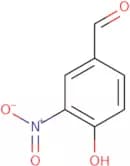
CAS:<p>Hexacosanoic acid is a glycol ether that has been shown to have hypoglycemic activity in mice. It was also shown to increase the levels of fatty acids and decrease the levels of glycerides in rats, which may be due to its ability to inhibit the synthesis of phospholipids. Hexacosanoic acid has been used as an analytical reagent for the determination of p-hydroxybenzoic acid and uronic acid. The polymerization of hexacosanoic acid is catalyzed by a polymerase chain reaction (PCR), which can be used for diagnosis. This molecule has also been found to have anti-inflammatory properties and nitrate reductase activity.</p>Formula:C26H52O2Color and Shape:White PowderMolecular weight:396.69 g/mol4-Hydroxy-3-nitrobenzaldehyde
CAS:<p>4-Hydroxy-3-nitrobenzaldehyde (4NBA) is a chemical compound that belongs to the class of aromatic compounds. It is an intermediate in the synthesis of various pharmaceuticals, including benzocaine and nitroglycerin, and has been researched for its potential use in cancer diagnosis. 4NBA has shown optical properties that allow it to be used as a model system for studying the interactions between water and benzyl groups. It also possesses anti-inflammatory properties due to its ability to inhibit the production of inflammatory cytokines such as IL-1β, IL-6, and TNFα.</p>Formula:C7H5NO4Purity:Min. 95%Color and Shape:PowderMolecular weight:167.12 g/mol


![4,4',4'',4'''-(21H,23H-Porphine-5,10,15,20-tetrayl)tetrakis[benzaldehyde]](/_next/image/?url=https%3A%2Fstatic.cymitquimica.com%2Fproducts%2F3D%2Fthumb-webp%2FFH180948.webp&w=3840&q=75)