Building Blocks
This section contains fundamental products for the synthesis of organic and biological compounds. Building blocks are the essential starting materials used to construct complex molecules through various chemical reactions. They play a critical role in drug discovery, material science, and chemical research. At CymitQuimica, we offer a diverse range of high-quality building blocks to support your innovative research and industrial projects, ensuring you have the essential components for successful synthesis.
Subcategories of "Building Blocks"
- Boronic Acids & Boronic Acid Derivatives(5,778 products)
- Chiral Building Blocks(1,243 products)
- Hydrocarbon Building Blocks(6,098 products)
- Organic Building Blocks(61,057 products)
Found 200710 products of "Building Blocks"
Sort by
Purity (%)
0
100
|
0
|
50
|
90
|
95
|
100
Z-1,4-diaminobutane·HCl
CAS:Z-1,4-diaminobutane·HCl is a fine chemical that is a useful building block in research and manufacture of pharmaceuticals. It is also used as a reagent and speciality chemical in the production of other chemicals, such as dyes, rubber products, and pesticides. This compound has been shown to be an effective intermediate for the synthesis of complex organic compounds with versatile structures. Z-1,4-diaminobutane·HCl can be used as a scaffold for the construction of various types of molecules.Formula:C12H18N2O2·HClPurity:Min. 95%Color and Shape:White PowderMolecular weight:258.74 g/mol[(2-Bromophenyl)sulfamoyl]dimethylamine
CAS:Versatile small molecule scaffoldFormula:C8H11BrN2O2SPurity:Min. 95%Color and Shape:PowderMolecular weight:279.16 g/molD-Allo-isoleucine
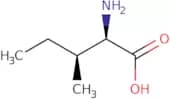
CAS:<p>D-Allo-isoleucine is an antimicrobial agent that belongs to the group of hydroxyl compounds. It is a natural amino acid that can be synthesized by asymmetric synthesis, and its conformational properties are different from those of L-isoleucine. D-Allo-isoleucine has been shown to increase activity against microorganisms in vitro and in mice models. D-Allo-isoleucine also has an inhibitory effect on aminotransferase activity, which may be due to its ability to form a cyclic peptide with the fatty acid group p2.</p>Formula:C6H13NO2Purity:Min. 95%Color and Shape:PowderMolecular weight:131.17 g/mol5-Aminopyrimidine
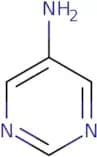
CAS:5-Aminopyrimidine is a synthetic compound that has been shown to have inhibitory effects on the nervous system. The structural formula of 5-aminopyrimidine is C6H4N3O2. It is a structural analogue of pyrimidine and can be used as an anticancer drug. 5-Aminopyrimidine can also be used in the treatment of diseases such as diabetes and Parkinson’s disease. The reaction mechanism of 5-aminopyrimidine begins with the formation of an unstable diazonium salt, which then reacts with a chloride ion to form an alloxan intermediate. This intermediate then reacts with phosphate group to form a product that is soluble in water.Formula:C4H5N3Purity:Min. 95%Color and Shape:White PowderMolecular weight:95.1 g/molD-Alanine amide hydrochloride
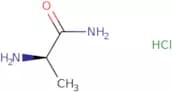
CAS:D-Alanine amide hydrochloride is a molecule that belongs to the class of organic solvents. It is a chiral compound with high specificity for d-alanine. D-Alanine amide hydrochloride has been shown to block bacterial strains such as Acinetobacter, Ochrobactrum and Stenotrophomonas maltophilia. This drug also inhibits the growth of bacteria by binding to the active site of enzymes, preventing them from catalyzing reactions. The stereoselectivity of this drug is due to its pharmacophore that mimics the three amino acids found in d-alanine: an amide, an aliphatic chain, and a hydroxyl group.Formula:C3H8N2O·HClColor and Shape:White Off-White PowderMolecular weight:124.57 g/mol1-(2,3-Difluorophenyl)ethan-1-amine hydrochloride
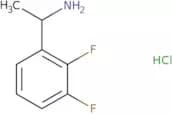
CAS:1-(2,3-Difluorophenyl)ethan-1-amine hydrochloride is a high quality chemical. It is a reagent that can be used as an intermediate in the synthesis of complex compounds and fine chemicals. This compound is also a useful scaffold for the development of new drugs and novel materials. 1-(2,3-Difluorophenyl)ethan-1-amine hydrochloride is also a versatile building block for reactions in organic chemistry. It is a speciality chemical that can be used as a research chemical or reaction component for synthetic organic chemistry.Formula:C8H10ClF2NPurity:Min. 95%Color and Shape:PowderMolecular weight:193.62 g/mol3-Amino-2,4,6-triiodobenzoic acid
CAS:3-Amino-2,4,6-triiodobenzoic acid (3AIBA) is a chemical compound that is used as a contrast agent for medical imaging. It has been shown to be useful in the diagnosis of bladder cancer, and is used in the embolization of renal artery and ureteral calculi. 3AIBA functions by binding to the antigen binding sites on the tumor cells and allows visualization with X-rays. It has also been shown to be effective in reducing blood flow in tumors by blocking blood vessels with its cationic monomer. 3AIBA binds to the phosphate groups on DNA and causes crosslinking, which prevents DNA polymerase from binding with DNA. This inhibits DNA synthesis and cell division.Formula:C7H4I3NO2Purity:Min. 95%Color and Shape:PowderMolecular weight:514.83 g/mol6-bromo-2,3-dihydro-1-benzofuran-3-ol
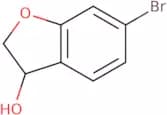
CAS:<p>Versatile small molecule scaffold</p>Formula:C8H7BrO2Purity:Min. 95%Color and Shape:PowderMolecular weight:215.05 g/molThianaphthene
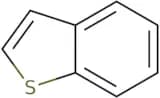
CAS:Used in raloxifene synthesis and preparation of 2-thianapthenylphenyllithiumFormula:C8H6SPurity:Min. 94 Area-%Color and Shape:Brown White Yellow PowderMolecular weight:134.2 g/molFmoc-L-Asn-OH
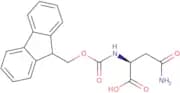
CAS:<p>Fmoc-L-Asn-OH is an organic compound that belongs to the group of amides. It reacts with a reactive site in the molecule and is able to form an amide bond. Fmoc-L-Asn-OH has been shown to be effective in the treatment of Alzheimer's disease by inhibiting the formation of beta-amyloid plaques. This compound has also been shown to have a role in cancer prevention, as it can inhibit tumor growth and reduce tumor size. Fmoc-L-Asn-OH can be used as a potential antiinflammatory agent because its mechanism studies have revealed that it inhibits prostaglandin synthesis.</p>Formula:C19H18N2O5Purity:Min. 95%Color and Shape:PowderMolecular weight:354.36 g/mol1-Acetyl-3-indolecarboxaldehyde
CAS:<p>1-Acetyl-3-indolecarboxaldehyde is a ligand that binds to the cannabinoid receptor 1 (CB1). It has been shown to bind to the CB1 receptor with high affinity and selectivity. In addition, it has been demonstrated to inhibit the proliferation of human breast cancer cells in vitro. The compound is used as a fluorescent probe for cb1 receptor binding. Data obtained from molecular modelling studies have suggested that the hydroxyl group might be involved in binding to the CB1 receptor. 1-Acetyl-3-indolecarboxaldehyde also binds carotenoids, which are molecules responsible for giving plants and other photosynthetic organisms their coloration. This compound can be found in many different plants, such as carrots and bananas, where it acts as an antioxidant.</p>Formula:C11H9NO2Purity:Min. 95%Color and Shape:PowderMolecular weight:187.19 g/mol(2-Bromoethyl)benzene
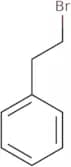
CAS:<p>2-Bromoethylbenzene is a nucleophilic substitutive agent that can be used in organic synthesis. It reacts with an electron-rich compound to form a covalent bond and release bromine. 2-Bromoethylbenzene has been shown to have therapeutic effects on autoimmune diseases such as arthritis and lupus erythematosus. It also has the ability to inhibit protease activity, which may be due to its hydroxy derivative. The reaction mechanism of 2-bromoethylbenzene is not fully understood, but it is known that halides can increase the rate of the substitution reaction. This chemical also has pharmaceutical applications, including as a precursor in amphetamine synthesis and as a reagent in kinetic studies of enzymes.</p>Formula:C8H9BrPurity:Min. 95%Color and Shape:Colorless Clear LiquidMolecular weight:185.06 g/mol1,2-Diiodoethane
CAS:<p>1,2-Diiodoethane is a useful building block that can be used as a reaction component in organic synthesis. It is also used as a reagent and can be used to produce high quality research chemicals. This chemical has many uses, including as a versatile building block or as an intermediate. 1,2-Diiodoethane is not found naturally in the environment and has been assigned CAS number 624-73-7.</p>Formula:C2H4I2Purity:Min. 98.5 Area-%Molecular weight:281.86 g/mol2,2,4,6-Tetramethyl-1,3-dioxan-5-one
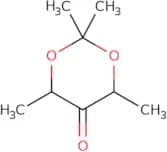
CAS:<p>Please enquire for more information about 2,2,4,6-Tetramethyl-1,3-dioxan-5-one including the price, delivery time and more detailed product information at the technical inquiry form on this page</p>Formula:C8H14O3Purity:Min. 95%Color and Shape:PowderMolecular weight:158.2 g/moltert-butyl N-{2-azabicyclo[2.1.1]hexan-1-ylmethyl}carbamate
CAS:Versatile small molecule scaffoldFormula:C11H20N2O2Purity:Min. 95%Molecular weight:212.3 g/mol3,4,5-Trihydroxytoluene
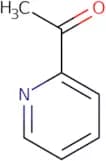
CAS:Substrate for peroxidaseFormula:C7H8O3Purity:Min. 95%Color and Shape:PowderMolecular weight:140.14 g/mol2-Acetylpyridine
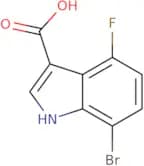
CAS:<p>2-Acetylpyridine is a compound that can be used to study the biological properties of molybdenum. It has been shown to have redox potentials that are similar to the corresponding pyridine compounds. The compound has been shown to be an antimicrobial agent that is active against bacteria and fungi, and it also has antioxidative properties. 2-Acetylpyridine binds to dinucleotide phosphate by hydrogen bonding interactions in human serum, which may be related to its ability as an oxidant. This chemical also has a high surface area and can be used for surface methodology experiments as well as x-ray crystal structures.</p>Formula:C7H7NOPurity:Min. 95%Color and Shape:PowderMolecular weight:121.14 g/mol7-Bromo-4-fluoro-1H-indole-3-carboxylic acid
CAS:Please enquire for more information about 7-Bromo-4-fluoro-1H-indole-3-carboxylic acid including the price, delivery time and more detailed product information at the technical inquiry form on this pageFormula:C9H5BrFNO2Purity:Min. 95%Color and Shape:PowderMolecular weight:258.04 g/mol2-Chloroethyl isocyanate
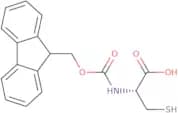
CAS:<p>Please enquire for more information about 2-Chloroethyl isocyanate including the price, delivery time and more detailed product information at the technical inquiry form on this page</p>Formula:C3H4ClNOPurity:Min. 99.0 Area-%Molecular weight:105.52 g/molFmoc-L-cysteine
CAS:Fmoc-L-cysteine is a reactive thiol that can be used for the synthesis of peptides and proteins. Fmoc-L-cysteine is synthesized by hydrothiolation of L-cysteine with 3-mercaptopropionic acid, which leads to the formation of a disulfide bond. The reaction product is purified by column chromatography and analyzed by NMR spectroscopy. Fmoc-L-cysteine has been shown to have efficient prenylation activity in vitro and in cell culture experiments. It has also been shown to be an important amino acid for the formation of amyloid protein aggregates, as well as being involved with other helical peptides in plants. X-ray crystal structures have been determined for Fmoc-L-cysteine bound to monoclonal antibodies.Formula:C18H17NO4SPurity:Min. 98 Area-%Color and Shape:PowderMolecular weight:343.4 g/mol


![[(2-Bromophenyl)sulfamoyl]dimethylamine](/_next/image/?url=https%3A%2Fstatic.cymitquimica.com%2Fproducts%2F3D%2Fthumb-webp%2FZNA54050.webp&w=3840&q=75)



![tert-butyl N-{2-azabicyclo[2.1.1]hexan-1-ylmethyl}carbamate](/_next/image/?url=https%3A%2Fstatic.cymitquimica.com%2Fproducts%2F3D%2Fthumb-webp%2FAAC99746.webp&w=3840&q=75)