Building Blocks
This section contains fundamental products for the synthesis of organic and biological compounds. Building blocks are the essential starting materials used to construct complex molecules through various chemical reactions. They play a critical role in drug discovery, material science, and chemical research. At CymitQuimica, we offer a diverse range of high-quality building blocks to support your innovative research and industrial projects, ensuring you have the essential components for successful synthesis.
Subcategories of "Building Blocks"
- Boronic Acids & Boronic Acid Derivatives(5,778 products)
- Chiral Building Blocks(1,243 products)
- Hydrocarbon Building Blocks(6,098 products)
- Organic Building Blocks(61,057 products)
Found 200710 products of "Building Blocks"
Sort by
Purity (%)
0
100
|
0
|
50
|
90
|
95
|
100
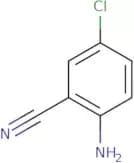
2-Amino-5-chlorobenzonitrile
CAS:2-Amino-5-chlorobenzonitrile is a potent inhibitor of butyrylcholinesterase (BChE) and has been shown to inhibit the activity of this enzyme in cell lung cancer and muscle. 2-Amino-5-chlorobenzonitrile also inhibits the activity of other enzymes, such as acetylcholinesterase (AChE) and phosphatidylcholine esterase (PCE), that are found in the membranes of cells. This inhibition leads to increased levels of acetylcholine in the synaptic cleft, which may lead to an increase in muscular contractions. 2-Amino-5-chlorobenzonitrile is also a product yield enhancer for chromene synthesis.Formula:C7H5ClN2Purity:Min. 95%Color and Shape:PowderMolecular weight:152.58 g/mol1,4-Diaminobutane dihydrochloride
CAS:<p>Ubiquitous polyamine necessary for optimal cell growth</p>Formula:C4H14Cl2N2Purity:Min. 98.0%Color and Shape:PowderMolecular weight:161.07 g/molBiotin alkyne
CAS:Biotin alkyne is a reactive molecule that can be used as a diagnostic or therapeutic agent. It is a bioreactor for the synthesis of amino acid sequences and can be used in the diagnosis and treatment of cancer. Biotin alkyne is also useful in the detection of disease-causing bacteria, as it reacts with their amino acids to form fluorescent products. The reaction between biotin alkyne and azide creates an unstable intermediate that undergoes an addition reaction with nucleophiles such as DNA or RNA. This reaction yields a product that emits light upon excitation by ultraviolet light, which can be detected using fluorescence microscopy or flow cytometry. This product can also be used to label proteins for diagnostics or functionalizing cell surfaces for immunological purposes.Formula:C24H40N4O7SPurity:Min. 95%Color and Shape:PowderMolecular weight:528.66 g/mol4-Acetoxystyrene, stabilized with TBC
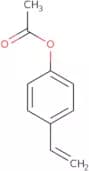
CAS:<p>4-Acetoxystyrene is a monomer that belongs to the group of hydroxylated styrenes. It is stabilized with TBC, which protects the hydroxyl group from reactive substances such as hydrogen fluoride and hydrochloric acid. 4-Acetoxystyrene has a phase transition temperature of 130°C, high resistance to oxidation and reduction, and a high affinity for metal hydroxides. The molecule has been shown to scavenge anion radicals in the presence of hydrogen fluoride or hydrochloric acid and can be used as a hydrogenation catalyst in the palladium-catalyzed coupling reaction. It also has polymerization properties and copolymerizes with malonic acid to produce polyester resins. 4-Acetoxystyrene is also used in electrochemical impedance spectroscopy (EIS) studies, where it acts as an effective solvent for fatty acids.</p>Formula:C10H10O2Purity:Min. 98 Area-%Color and Shape:Colorless Clear LiquidMolecular weight:162.19 g/moltert-Butyl 1-piperazinecarboxylate
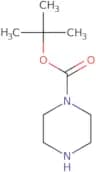
CAS:<p>tert-Butyl 1-piperazinecarboxylate is an antimicrobial agent that belongs to the group of aryl halides. It has been shown to have high affinity for the 5-HT1A receptor and inhibit its function. Tert-butyl 1-piperazinecarboxylate inhibits the kinase activity of protein tyrosine phosphatase 1B (PTP1B) and prevents the activation of this enzyme, which is involved in a number of cellular processes. This compound has been shown to inhibit the growth factor amines, such as NGF, IGF-1, PDGF and GHRH. Hydrogen bonds are formed between tert-butyl 1-piperazinecarboxylate molecules through hydrophobic interactions with aromatic rings, which may account for its potency against resistant mutants.</p>Formula:C9H18N2O2Purity:Min. 95%Color and Shape:PowderMolecular weight:186.25 g/mol1,3-Diacetylbenzene
CAS:<p>Methyl ketones are organic compounds that contain a carbonyl group and an alkyl group. They are reactive, meaning they readily react with other substances. Methyl ketones can be found in many natural compounds such as the essential oils of lavender and rosemary, which have been shown to possess anti-diabetic properties. 1,3-Diacetylbenzene is a methyl ketone that has been used as an experimental model for the study of mitochondrial membrane potential and sciatic nerve injury. This chemical also has conformational properties that mimic those of kinesin and enolate, which are molecules involved in DNA replication.</p>Formula:C10H10O2Purity:Min. 95%Color and Shape:PowderMolecular weight:162.19 g/mol4-Methyl-2,3-dihydro-1H-inden-1-amine hydrochloride
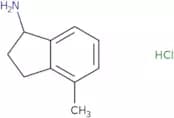
CAS:Controlled Product<p>Versatile small molecule scaffold</p>Formula:C10H13N•HClPurity:Min. 95%Molecular weight:183.68 g/mol2-Amino-4,6-dimethylpyridine
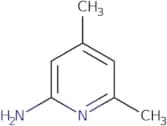
CAS:<p>2-Amino-4,6-dimethylpyridine is a nonsteroidal anti-inflammatory drug that inhibits the production of prostaglandins and leukotrienes. 2-Amino-4,6-dimethylpyridine binds to the cyclooxygenase enzyme and blocks its conversion of arachidonic acid to prostaglandin H2. This compound has been shown to have potent inhibitory effects against Leishmania, with high values in reactive compounds. The molecular modeling of this compound shows that it has an unpaired amino function and an amide.</p>Formula:C7H10N2Purity:Min. 97%Color and Shape:PowderMolecular weight:122.17 g/mol3,3'-Dithiobis[6-nitrobenzoic acid] bis(succinimide) ester
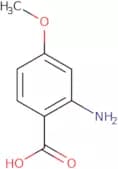
CAS:<p>3,3'-Dithiobis[6-nitrobenzoic acid] bis(succinimide) ester is a reagent and reaction component. It is used as a building block to create other compounds that are useful in research and development of pharmaceuticals, agrochemicals, cosmetics, and other applications. 3,3'-Dithiobis[6-nitrobenzoic acid] bis(succinimide) ester can be used as a versatile building block to produce complex structures with high purity. It is also used as an intermediate for the synthesis of fine chemicals such as pharmaceuticals and agrochemicals. This product has CAS No. 60129-38-6.</p>Formula:C22H14N4O12S2Purity:Min. 95%Color and Shape:PowderMolecular weight:590.5 g/mol2-Amino-4-methoxybenzoic acid
CAS:2-Amino-4-methoxybenzoic acid is a monophenolic compound that has been shown to have antioxidant properties. It is a redox potential with a pK of 7.8 and can be protonated at the phenolic hydroxyl group. 2-Amino-4-methoxybenzoic acid has been shown to inhibit the enzyme activities of histone proteins, which are enzymes that catalyze the formation of DNA from RNA. This compound also inhibits enzymes involved in amino acid synthesis such as anthranilate synthase and malic enzyme, as well as other enzymes such as phosphotransferase (PTS) and pyruvate kinase. 2-Amino-4-methoxybenzoic acid also causes inhibition of growth in phytophthora megasperma, an oomycete plant pathogen, by altering the redox potentials inside the cell membrane. The mechanism forFormula:C8H9NO3Purity:Min. 95%Color and Shape:PowderMolecular weight:167.16 g/mol2-Amino-6-methoxybenzonitrile
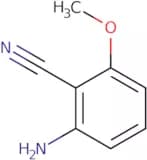
CAS:2-Amino-6-methoxybenzonitrile is an organic compound that belongs to a group of monosubstituted hydroxylamines. It has been used in the synthesis of various analogues, such as caprolactam and methoxyanthranilic acid. Hydrochloric acid reacts with 2-amino-6-methoxybenzonitrile to form 2-amino-6-hydroxybenzonitrile, which can be oxidized to 2-amino-6-(hydroxymethyl)benzonitrile. This reaction is catalyzed by copper or zinc metal.Formula:C8H8N2OPurity:Min. 95%Color and Shape:PowderMolecular weight:148.16 g/mol7-Bromo-1H-indole-3-carboxylic acid
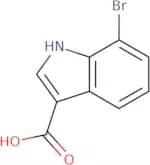
CAS:Please enquire for more information about 7-Bromo-1H-indole-3-carboxylic acid including the price, delivery time and more detailed product information at the technical inquiry form on this pageFormula:C9H6BrNO2Purity:Min. 95%Color and Shape:PowderMolecular weight:240.05 g/mol2-Amino-4-methoxy-benzoic acid methyl ester
CAS:<p>2-Amino-4-methoxy-benzoic acid methyl ester is a high quality, versatile building block for the synthesis of complex compounds. It is an intermediate in the synthesis of a number of biologically active compounds and has been used as a reagent for the determination of amino acids. 2-Amino-4-methoxy-benzoic acid methyl ester is soluble in water and polar organic solvents.</p>Formula:C9H11NO3Purity:Min. 95%Color and Shape:Off-White PowderMolecular weight:181.19 g/mol3-Buten-3-ethyl-1-ol
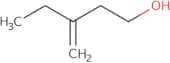
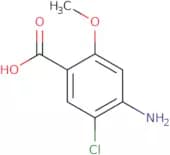
CAS:<p>3-Buten-3-ethyl-1-ol is a versatile building block that can be used as a reagent for chemical synthesis. It is a complex compound that can be used as a reaction component or intermediate in organic synthesis. 3-Buten-3-ethyl-1-ol has been shown to have antiinflammatory properties, which may be due to the inhibition of prostaglandin synthesis.</p>Formula:C6H12OPurity:Min. 95%Color and Shape:Clear LiquidMolecular weight:100.16 g/mol4-Amino-5-chloro-2-methoxybenzoic acid
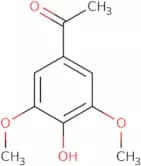
CAS:4-Amino-5-chloro-2-methoxybenzoic acid is a compound that has been shown to be a potent 5-HT4 receptor agonist. It is used in the treatment of obesity and diabetes. The molecular structure of 4-Amino-5-chloro-2-methoxybenzoic acid consists of a carbonyl group and an amine group, which are bound to each other by a covalent bond. This molecule is found to bind to the 5HT4 receptor with high affinity, which leads to its efficacy as an antiobesity agent.Formula:C8H8ClNO3Color and Shape:White PowderMolecular weight:201.61 g/mol3',5'-Dimethoxy-4'-hydroxyacetophenone
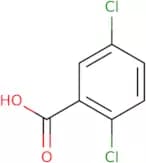
CAS:<p>Inducer of transformation in Agrobacterium tumefaciens</p>Formula:C10H12O4Purity:Min. 97 Area-%Color and Shape:Brown White PowderMolecular weight:196.2 g/mol2,5-Dichlorobenzoic acid
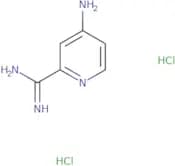
CAS:<p>2,5-Dichlorobenzoic acid is a hydrogen-bonding agent that interacts with other molecules by forming hydrogen bonds. It reacts with benzoate to form 2,5-dichlorobenzoate, which is an intermediate in the synthesis of phenylbenzene and biphenyl. 2,5-Dichlorobenzoic acid has been shown to inhibit the growth of bacteria such as Stenotrophomonas maltophilia and Pseudomonas aeruginosa. The compound also lowers cholesterol levels in rats and humans.<br>2,5-Dichlorobenzoic acid has a redox potential of -0.25 V and can be used to reduce sodium hydroxide solution or hydroxide solution. This chemical's structure allows it to be taken up by cells through passive diffusion and active transport mechanisms.</p>Formula:C7H4Cl2O2Purity:Min. 95%Color and Shape:White PowderMolecular weight:191.01 g/mol4-Aminopyridine-2-carboximidamide dihydrochloride
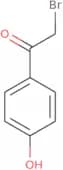
CAS:<p>Versatile small molecule scaffold</p>Formula:C6H10Cl2N4Purity:Min. 95%Color and Shape:PowderMolecular weight:209.07 g/mol2-Bromo-4-hydroxyacetophenone
CAS:<p>2-Bromo-4-hydroxyacetophenone is a membrane permeable inhibitor of monoamine oxidase (MAO) that has been shown to inhibit the enzyme's activity with an IC50 of 10 μM. It is used as a research tool in biological studies and has been shown to be active against MAO A, MAO B, and MAO C. 2-Bromo-4-hydroxyacetophenone has also been shown to inhibit the growth of carcinoma cells in vitro. This molecule is also a β-unsaturated ketone that binds to catalytic domains and forms covalent bonds with chloride ions. 2-Bromo-4-hydroxyacetophenone can be used as an industrial process catalyst for chemical reactions involving chloride.<br>2-Bromo-4-hydroxyacetophenone synergistically inhibits the growth of cancer cells when combined with other compounds such as trifluoroacetic acid or dichloromet</p>Formula:C8H7BrO2Purity:(%) Min. 85%Color and Shape:PowderMolecular weight:215.04 g/mol3-Amino-6-chloropyridazine
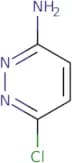
CAS:<p>3-Amino-6-chloropyridazine is a synthetic compound that is soluble in hydrochloric acid. It has been shown to inhibit the proliferation of cells and induce apoptosis, which may be due to its inhibition of the growth factor receptor, factor. 3-Amino-6-chloropyridazine also inhibits bcr-abl kinase, an enzyme that is involved in the development of chronic myelogenous leukemia (CML). This chemical can be synthesized by coupling amino acids with chloropyridazine using cross coupling reactions. 3-Amino-6-chloropyridazine is a synthetic analogue of pyridoxal phosphate and may have use as an antiinflammatory agent.</p>Formula:C4H4ClN3Purity:Min. 95%Color and Shape:PowderMolecular weight:129.55 g/mol




![3,3'-Dithiobis[6-nitrobenzoic acid] bis(succinimide) ester](/_next/image/?url=https%3A%2Fstatic.cymitquimica.com%2Fproducts%2F3D%2Fthumb-webp%2FFD15467.webp&w=3840&q=75)