Building Blocks
This section contains fundamental products for the synthesis of organic and biological compounds. Building blocks are the essential starting materials used to construct complex molecules through various chemical reactions. They play a critical role in drug discovery, material science, and chemical research. At CymitQuimica, we offer a diverse range of high-quality building blocks to support your innovative research and industrial projects, ensuring you have the essential components for successful synthesis.
Subcategories of "Building Blocks"
- Boronic Acids & Boronic Acid Derivatives(5,778 products)
- Chiral Building Blocks(1,242 products)
- Hydrocarbon Building Blocks(6,098 products)
- Organic Building Blocks(61,059 products)
Found 199580 products of "Building Blocks"
Sort by
Purity (%)
0
100
|
0
|
50
|
90
|
95
|
100
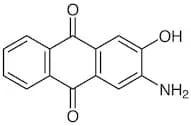
2-Amino-3-hydroxyanthraquinone
CAS:Formula:C14H9NO3Purity:>98.0%(T)Color and Shape:Orange to Amber to Dark red powder to crystalMolecular weight:239.234-Methoxybenzenesulfonyl chloride
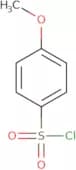
CAS:4-Methoxybenzenesulfonyl chloride is a water-soluble and colorless solid that is used in the treatment of wastewater. It binds to hydroxyl groups and copper complexes, which are present in high concentrations in wastewater. 4-Methoxybenzenesulfonyl chloride can be used as an analytical reagent for determining binding constants, as well as for the separation of amyloid proteins. This compound has been shown to have anti-inflammatory properties by inhibiting the production of pro-inflammatory cytokines such as tumor necrosis factor (TNF) and interleukin (IL)-1β. 4-Methoxybenzenesulfonyl chloride also has activity against certain cancers such as L1210 leukemia cells in mice and diphenyl ethers.Formula:C7H7ClO3SPurity:Min. 97 Area-%Color and Shape:Brown Off-White PowderMolecular weight:206.65 g/mol7-Methoxyquinoline
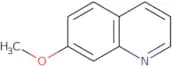
CAS:<p>7-Methoxyquinoline is a drug that belongs to the group of histone deacetylase inhibitors. It has been shown to inhibit monooxygenase and cytochrome p-450, which are enzymes involved in the metabolism of drugs. 7-Methoxyquinoline can be used as a fluorescent probe for reactions involving histones or other proteins with similar chemical structures. It is also used as an inhibitor in biochemical assays, such as fluorometric assays. 7-Methoxyquinoline can be prepared by reacting hydrazine with methoxyacetic acid followed by hydrolysis of the resulting hydrazone. This process yields a mixture of products, some of which are substituted with methoxy groups at different positions on the benzene ring.</p>Formula:C10H9NOPurity:Min. 95%Color and Shape:Colorless PowderMolecular weight:159.18 g/mol1-Methyl-1H-imidazole-4-carboxylic acid methyl ester
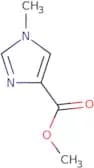
CAS:<p>1-Methyl-1H-imidazole-4-carboxylic acid methyl ester is a carboxylic acid that is aniline derivative with the chemical formula C6H5NCH2COOH. It is soluble in water, ethanol and acetone. 1-Methyl-1H-imidazole-4-carboxylic acid methyl ester hydrolyzes to form aniline and methanol. The reflux of 1-methyl imidazole can produce the same products as well as formaldehyde and hydrogen cyanide.</p>Formula:C6H8N2O2Purity:Min. 95%Color and Shape:PowderMolecular weight:140.14 g/mol4-(2-Aminoanilino)pyridine
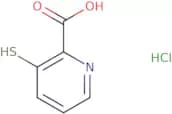
CAS:<p>4-(2-Aminoanilino)pyridine is a pyridine that has been shown to be an impurity in the acid salt of 4-(2-aminophenyl)pyridine. It is an acidified impurity that can form when the pyridine reacts with hydrochloric acid or sulfuric acid.</p>Formula:C11H11N3Purity:Min. 95%Color and Shape:PowderMolecular weight:185.23 g/mol3-Mercapto-2-pyridinecarboxylic acid hydrochloride
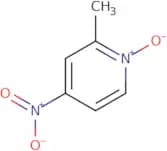
CAS:<p>3-Mercapto-2-pyridinecarboxylic acid hydrochloride (3MP) is a small molecule that is a phosphoenolpyruvate carboxykinase inhibitor. The inhibition of this enzyme leads to an accumulation of 3-phosphoglyceric acid and inhibits the conversion of pyruvate to acetyl CoA, which results in the accumulation of reactive oxygen species. 3MP has been shown to inhibit the activity of mitochondrial phosphoenolpyruvate carboxykinase (PEPCK) in porcine hepatocytes, leading to decreased triglycerides and increased glucose uptake. It also inhibits PEPCK activity in vitro in cultured human cells, leading to increased HSP70 levels and exacerbated oxidative stress.</p>Formula:C6H5NO2S·HClPurity:Min. 95%Color and Shape:PowderMolecular weight:191.64 g/mol2-Methyl-4-nitropyridine-N-oxide
CAS:<p>2-Methyl-4-nitropyridine-N-oxide is an alkoxy radical that is a toxic chemical. It is used in the synthesis of other chemicals and drugs, as well as in diagnostic tests. 2-Methyl-4-nitropyridine-N-oxide is converted to its n-oxide form by hydrochloric acid. The molecule has two functionalities: one nucleophilic and one electrophilic. These functionalities allow it to undergo reactions with many different types of molecules, including ethylene acetal.</p>Formula:C6H6N2O3Purity:Min. 95%Color and Shape:Yellow PowderMolecular weight:154.13 g/mol2-Amino-6-fluorobenzoic acid
CAS:<p>Intermediate in the synthesis of idelalisib</p>Formula:C7H6FNO2Purity:Min. 98 Area-%Color and Shape:PowderMolecular weight:155.13 g/mol4-Butoxyphthalonitrile
CAS:Formula:C12H12N2OPurity:>96.0%(GC)Color and Shape:White to Light yellow powder to crystalMolecular weight:200.243-Methylpyridine
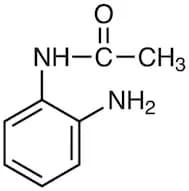
CAS:3-Methylpyridine is a compound that can be used in the treatment of wastewater. It has been shown to have high adsorption capacity for malonic acid and a Langmuir adsorption isotherm with high values. 3-Methylpyridine is stable in acidic conditions and has been shown to efficiently remove nitrogen from wastewater. The coordination geometry of 3-methylpyridine is octahedral, which makes it capable of removing hydrogen fluoride from wastewater. This compound also has the ability to transfer reactions and can be used for titration calorimetry.Formula:C6H7NPurity:Min. 95%Color and Shape:Colorless Clear LiquidMolecular weight:93.13 g/mol2'-Aminoacetanilide
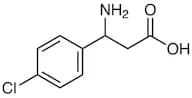
CAS:Formula:C8H10N2OPurity:>98.0%(T)Color and Shape:Light orange to Light red powder to crystallineMolecular weight:150.183-Amino-3-(4-chlorophenyl)propionic Acid
CAS:Formula:C9H10ClNO2Purity:>97.0%(T)(HPLC)Color and Shape:White to Almost white powder to crystalMolecular weight:199.63Adamantane-2-carboxylic acid
CAS:<p>Adamantane-2-carboxylic acid is a synthetic polymer that is used as a matrix in molecular electrostatic potential flow chromatography. Adamantane-2-carboxylic acid has been shown to form a polymeric matrix with trifluoromethyl groups and carbon tetrachloride, which can be used to separate neurotensin receptor agonists from dopamine antagonists. This compound also has the ability to cross the blood-brain barrier and bind to dopamine receptors, which may be useful for controlling diabetes. Adamantane-2-carboxylic acid is also an organic solvent and can be used as an alternative to chlorinated solvents such as carbon tetrachloride for environmental pollution control.</p>Formula:C11H16O2Purity:Min. 95%Color and Shape:White PowderMolecular weight:180.24 g/molD-Allylglycine
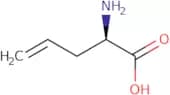
CAS:D-Allylglycine is a l-amino acid with the chemical formula of CH2CH(CH3)COOH. D-Allylglycine binds to the N-methyl-D-aspartate (NMDA) receptor and has been shown in animal studies to have effects on blood pressure, although its clinical relevance remains unclear. It is an enantiopure compound and can be obtained as a trifluoroacetate salt or ethyl diazoacetate ester hydrochloride. D-Allylglycine is also an aminoglycoside and ester hydrochloride that can be used for the treatment of bacterial infections. The amino group in D-allylglycine binds to glutamate receptors, which are found on neurons, and inhibits the release of gamma-aminobutyric acid (GABA). This drug may also have potential as a serotonergic agent due to its ability to inhibit serotonin reFormula:C5H9NO2Purity:Min. 95%Color and Shape:White PowderMolecular weight:115.13 g/mol4-Chloro-6-iodoquinazoline
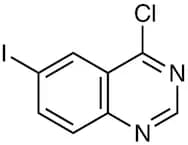
CAS:Formula:C8H4ClIN2Purity:>98.0%(GC)Color and Shape:White to Yellow to Green powder to crystalMolecular weight:290.49Methyl Nonanoate
CAS:<p>Methyl Nonanoate is an ester with a chemical formula of C11H24O2. It has been shown to have antidiabetic activity in mice and is being developed as a potential therapeutic agent for type 2 diabetes. Methyl Nonanoate inhibits the production of glucose by inhibiting the conversion of glucose into glycogen, which can be accomplished via its interaction with the insulin receptor. This chemical also has antimicrobial properties, which are due to its ability to inhibit bacterial cell wall synthesis. This mechanism may be due to methyl nonanoate's ability to bind to the hydroxyl group on glycol esters and react with hydrogen fluoride (HF), which leads to the release of energy that is used in the production of fatty acids.</p>Formula:C10H20O2Purity:Min. 95%Color and Shape:Clear LiquidMolecular weight:172.27 g/mol5-Chloroisatoic Anhydride
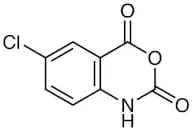
CAS:Formula:C8H4ClNO3Purity:>98.0%(T)(HPLC)Color and Shape:White to Light yellow powder to crystalMolecular weight:197.572-(2-Bromo-1,1,2,2-tetrafluoroethoxy)-1,1,1,2,3,3-hexafluoro-3-(pentafluoroethoxy)propane
CAS:Formula:C7BrF15O2Purity:>98.0%(GC)Color and Shape:Colorless to Almost colorless clear liquidMolecular weight:480.961-Hexen-3-one
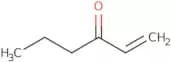
CAS:<p>1-Hexen-3-one is a carbonyl compound that has been shown to act as an estrogen receptor modulator. It has been isolated from the reaction product of hexene and formaldehyde, in which the intramolecular hydrogen is transferred to the carbon atom adjacent to the carbonyl group. 1-Hexen-3-one has been shown to induce muscle cell proliferation in vitro and inhibit liver microsomal protein synthesis in vivo. The 1-hexen-3-one can be prepared by reacting hexene with formaldehyde. The yield of this reaction is about 80%.<br>2 HCHO + C6H12 → C6H14O + 2 HCOOH</p>Formula:C6H10OPurity:Min. 95%Color and Shape:PowderMolecular weight:98.14 g/mol3-Hydrazinopyridine 2HCl
CAS:<p>3-Hydrazinopyridine 2HCl is a carboxylic acid that occurs naturally in the form of its dihydrochloride salt, 3-hydrazinopyridine dihydrochloride. It is an intermediate in the synthesis of numerous other compounds and has been used as a precursor to maleic anhydride. 3-Hydrazinopyridine 2HCl is also a reagent for the production of dialkylated or chlorinated derivatives. The hydrolysis of 3-hydrazinopyridine 2HCl with sodium hydroxide yields acetic acid, which can be oxidized to form maleic acid, or reduced to form acrylonitrile.</p>Formula:C5H9Cl2N3Purity:Min. 95%Color and Shape:PowderMolecular weight:182.05 g/mol