Building Blocks
This section contains fundamental products for the synthesis of organic and biological compounds. Building blocks are the essential starting materials used to construct complex molecules through various chemical reactions. They play a critical role in drug discovery, material science, and chemical research. At CymitQuimica, we offer a diverse range of high-quality building blocks to support your innovative research and industrial projects, ensuring you have the essential components for successful synthesis.
Subcategories of "Building Blocks"
- Boronic Acids & Boronic Acid Derivatives(5,778 products)
- Chiral Building Blocks(1,242 products)
- Hydrocarbon Building Blocks(6,098 products)
- Organic Building Blocks(61,059 products)
Found 199580 products of "Building Blocks"
Sort by
Purity (%)
0
100
|
0
|
50
|
90
|
95
|
100
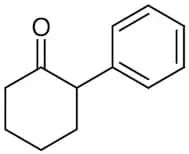
2-Phenylcyclohexanone
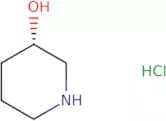
CAS:Formula:C12H14OPurity:>98.0%(GC)Color and Shape:White to Orange to Green powder to crystalMolecular weight:174.24(S)-3-Hydroxypiperidine hydrochloride
CAS:<p>3-Hydroxypiperidine hydrochloride is an industrial chemical that is used in the synthesis of medicines. It is a nucleophile, and will react with electrophiles in a nucleophilic substitution reaction. 3-Hydroxypiperidine hydrochloride can be used for the synthesis of sulfinates, which are often used as medicine reagents. 3-Hydroxypiperidine hydrochloride has also been shown to be useful in the synthesis of five-membered heterocycles, such as diazepinones, from 2-aminoethanethiols.</p>Formula:C5H12ClNOPurity:Min. 95%Color and Shape:White PowderMolecular weight:137.61 g/mol2,6-Dimethylbenzaldehyde
CAS:<p>2,6-Dimethylbenzaldehyde is a colorless liquid with a sweet odor. It is used in the synthesis of fatty acids and as an intermediate for other compounds. This chemical has significant cytotoxicity against leukemia cells, and is used in the production of acrylonitrile. 2,6-Dimethylbenzaldehyde can be synthesized by reacting an amine with an acyl chloride, followed by hydrolysis of the resulting ester. A contactor is usually added to facilitate the reaction. The reaction can also be carried out in the presence of a phosphorane or organic solvent.<br>2,6-Dimethylbenzaldehyde can be hydrogenated to produce 2,4-dimethylaniline and 2,4,6-trimethylaniline.</p>Formula:C9H10OPurity:Min. 95%Color and Shape:Clear White Solid Or Liquid (May Vary)Molecular weight:134.18 g/mol2-Amino-5(6)-benzoylbenzimidazole
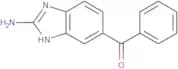
CAS:<p>2-Amino-5(6)-benzoylbenzimidazole is an antifilarial and anthelmintic drug that belongs to the benzimidazole class. It is used for the treatment of filarial infections in humans, including lymphatic filariasis, which is caused by worms transmitted by mosquitoes. 2-Amino-5(6)-benzoylbenzimidazole has low bioavailability due to its poor water solubility. The drug can be administered orally or topically and is metabolized in the liver. The metabolites are excreted in urine as glucuronides and sulfates.</p>Formula:C14H11N3OPurity:Min. 95%Color and Shape:PowderMolecular weight:237.26 g/mol3-Amino-2,6-dichloropyridine
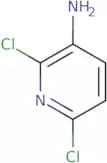
CAS:3-Amino-2,6-dichloropyridine is a carboxamidopyridine that is used as an antiplatelet agent. This drug inhibits the action of ADP and thrombin in platelets, thereby inhibiting platelet aggregation. 3-Amino-2,6-dichloropyridine has been shown to be effective when given orally and is not degraded by stomach acid. It has been shown to inhibit transcriptase activity in vitro. The drug also inhibits the synthesis of prostaglandin E2 (PGE2) through inhibition of cyclooxygenase (COX) enzymes and prevents platelet aggregation by suppressing the production of adenosine diphosphate (ADP).Purity:Min. 95%Color and Shape:PowderMolecular weight:162.92 g/mol4-Pyridineethanol Hydrochloride
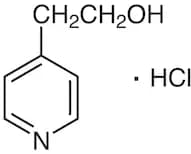
CAS:Formula:C7H9NO·HClPurity:>98.0%(T)(HPLC)Color and Shape:White to Almost white powder to crystalMolecular weight:159.61Isoquinoline
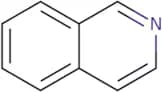
CAS:<p>Isoquinoline is a heterocyclic organic compound that can be synthesized by the asymmetric addition of hydrochloric acid to an isoquinol. It has been shown to inhibit the enzyme DPP-IV, which is involved in the degradation of glucagon-like peptide-1 (GLP-1). Isoquinoline is also a potent antagonist of the NMDA receptor, and has been shown to have anti-inflammatory properties in HLA-60 cells. This drug is soluble in organic solvents and forms crystalline polymorphs. Isoquinoline has been used in polymerase chain reactions as a hydrogen bond donor.</p>Formula:C9H7NPurity:Min. 95%Color and Shape:PowderMolecular weight:129.16 g/mol3-Amino-1-adamantanol
CAS:Formula:C10H17NOPurity:>98.0%(GC)(T)Color and Shape:White to Almost white powder to crystalMolecular weight:167.25Disodium 1,5-Naphthalenedisulfonate
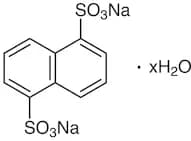
CAS:Formula:C10H6Na2O6S2Purity:>98.0%(T)(HPLC)Color and Shape:White to Almost white powder to crystalMolecular weight:332.258-oxa-5-azaspiro[3.5]nonane
CAS:<p>8-oxa-5-azaspiro[3.5]nonane is a high quality, non-toxic reagent with many uses as a building block for the synthesis of complex compounds. It can be used as an intermediate in the synthesis of fine chemicals, such as pharmaceuticals and agrochemicals, or as a building block for the synthesis of other chemical compounds. CAS No. 602326-48-7 is a versatile building block that can be used to synthesize molecules for research purposes. This compound has been shown to be useful in organic synthesis because it reacts easily with different functional groups.</p>Formula:C7H13NOPurity:Min. 95%Color and Shape:PowderMolecular weight:127.18 g/mol1-(2-Amino-1-naphthyl)isoquinoline
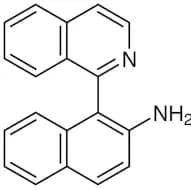
CAS:Formula:C19H14N2Purity:>98.0%(T)Color and Shape:White to Orange to Green powder to crystalMolecular weight:270.342-Amino-2',4-dichlorodiphenyl Ether
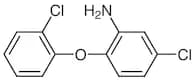
CAS:Formula:C12H9Cl2NOPurity:>98.0%(GC)(T)Color and Shape:Colorless to Brown clear liquidMolecular weight:254.113,5-Dimethylanthranilic acid
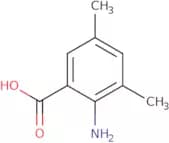
CAS:3,5-Dimethylanthranilic acid is an acridone that has significant effects on the topoisomerase enzymes. It is a reactive compound and can cause sensitivity to light and heat, as well as irritation in the respiratory tract. 3,5-Dimethylanthranilic acid has been shown to have antitumour activity in mice. 3,5-Dimethylanthranilic acid also has cytotoxic potency against cancer cells and can be used to evaluate the sensitivity of tumours to anticancer drugs. This compound may also have mutagenic properties. The dehalogenation of 3,5-dimethylanthranilic acid is not yet fully understood.Formula:C9H11NO2Purity:Min. 95%Color and Shape:Off-White PowderMolecular weight:165.19 g/mol4-Nitrophenylsulfur Pentafluoride
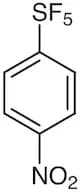
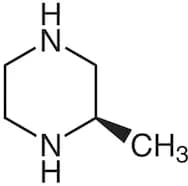
CAS:Formula:C6H4F5NO2SPurity:>96.0%(GC)Color and Shape:White or Colorless to Yellow powder to lump to clear liquidMolecular weight:249.16(R)-(-)-2-Methylpiperazine
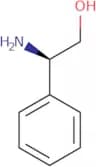
CAS:Formula:C5H12N2Purity:>98.0%(GC)(T)Color and Shape:White to Light yellow powder to crystalMolecular weight:100.17(R)-(-)-2-Phenylglycinol
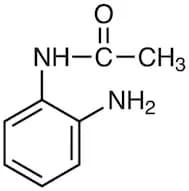
CAS:<p>(R)-(-)-2-Phenylglycinol is an enantiopure chiral compound that has been used in the synthesis of polymers. This polymerase chain reaction (PCR) inhibitor binds to the α subunit of DNA polymerase, preventing replication and transcription. The binding site for this inhibitor is located at the active site of the enzyme and is a hydroxyl group. The (S)-enantiomer of 2-phenylglycinol does not bind to the α subunit, so it can be used as a control in experiments. 2-Phenylglycinol is also known to have antiviral properties against HIV infection.</p>Formula:C8H11NOPurity:Min. 97.5 Area-%Color and Shape:White PowderMolecular weight:137.18 g/mol2'-Aminoacetanilide
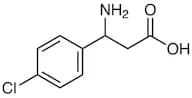
CAS:Formula:C8H10N2OPurity:>98.0%(T)Color and Shape:Light orange to Light red powder to crystallineMolecular weight:150.183-Amino-3-(4-chlorophenyl)propionic Acid
CAS:Formula:C9H10ClNO2Purity:>97.0%(T)(HPLC)Color and Shape:White to Almost white powder to crystalMolecular weight:199.63Methyl 5-methoxy-2-methylindole-3-acetate
CAS:<p>Methyl 5-methoxy-2-methylindole-3-acetate is a versatile building block that can be used as a research chemical, reagent, or speciality chemical. It is also an intermediate in the synthesis of other compounds and has been shown to be useful in reactions involving nucleophilic substitution and electrophilic addition. This compound can be used as a scaffold for complex organic molecules. CAS No. 7588-36-5</p>Formula:C13H15NO3Purity:Min. 95%Color and Shape:Beige SolidMolecular weight:233.26 g/molD-Allylglycine
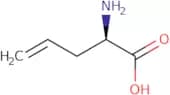
CAS:D-Allylglycine is a l-amino acid with the chemical formula of CH2CH(CH3)COOH. D-Allylglycine binds to the N-methyl-D-aspartate (NMDA) receptor and has been shown in animal studies to have effects on blood pressure, although its clinical relevance remains unclear. It is an enantiopure compound and can be obtained as a trifluoroacetate salt or ethyl diazoacetate ester hydrochloride. D-Allylglycine is also an aminoglycoside and ester hydrochloride that can be used for the treatment of bacterial infections. The amino group in D-allylglycine binds to glutamate receptors, which are found on neurons, and inhibits the release of gamma-aminobutyric acid (GABA). This drug may also have potential as a serotonergic agent due to its ability to inhibit serotonin reFormula:C5H9NO2Purity:Min. 95%Color and Shape:White PowderMolecular weight:115.13 g/mol




![8-oxa-5-azaspiro[3.5]nonane](/_next/image/?url=https%3A%2Fstatic.cymitquimica.com%2Fproducts%2F3D%2Fthumb-webp%2FFO76093.webp&w=3840&q=75)