Building Blocks
This section contains fundamental products for the synthesis of organic and biological compounds. Building blocks are the essential starting materials used to construct complex molecules through various chemical reactions. They play a critical role in drug discovery, material science, and chemical research. At CymitQuimica, we offer a diverse range of high-quality building blocks to support your innovative research and industrial projects, ensuring you have the essential components for successful synthesis.
Subcategories of "Building Blocks"
- Boronic Acids & Boronic Acid Derivatives(5,778 products)
- Chiral Building Blocks(1,242 products)
- Hydrocarbon Building Blocks(6,098 products)
- Organic Building Blocks(61,059 products)
Found 199580 products of "Building Blocks"
Sort by
Purity (%)
0
100
|
0
|
50
|
90
|
95
|
100
2-Chloro-5-(4,4,5,5-tetramethyl-1,3,2-dioxaborolan-2-yl)pyridine
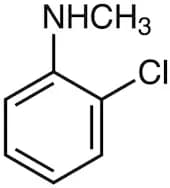
CAS:Formula:C11H15BClNO2Purity:>98.0%(GC)(T)Color and Shape:White to Almost white powder to crystalMolecular weight:239.512-Chloro-N-methylaniline
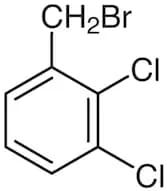
CAS:Formula:C7H8ClNPurity:>98.0%(GC)(T)Color and Shape:Colorless to Red to Green clear liquidMolecular weight:141.602,3-Dichlorobenzyl Bromide
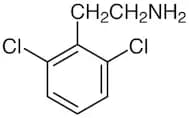
CAS:Formula:C7H5BrCl2Purity:>98.0%(GC)(T)Color and Shape:White or Colorless to Light yellow powder to lump to clear liquidMolecular weight:239.922-(2,6-Dichlorophenyl)ethylamine
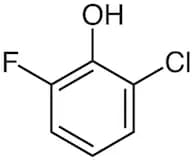
CAS:Formula:C8H9Cl2NPurity:>98.0%(GC)(T)Color and Shape:Colorless to Light orange to Yellow clear liquidMolecular weight:190.072-Chloro-6-fluorophenol
CAS:Formula:C6H4ClFOPurity:>98.0%(GC)Color and Shape:White to Light yellow powder to crystalMolecular weight:146.553,5,7-Trimethyl-1-aminoadamantane hydrochloride
CAS:3,5,7-Trimethyl-1-aminoadamantane hydrochloride is a versatile building block that can be used in the production of various fine chemicals. 3,5,7-Trimethyl-1-aminoadamantane hydrochloride is a reagent and speciality chemical that has been used as a research chemical in the synthesis of complex compounds. It is also a useful building block for the synthesis of high quality reaction components and scaffolds.Formula:C13H23N•HClPurity:Min. 95%Color and Shape:White PowderMolecular weight:229.79 g/mol1,3-Thiazol-2-ylmethanol
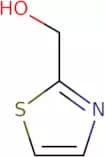
CAS:<p>1,3-Thiazol-2-ylmethanol is a macrocyclic compound that has a structure similar to that of the natural product phenylbutazone. It is synthesized from 1,3-thiazol-2-amine and benzaldehyde by dehydrogenative condensation. The ligand binds with metal ions via its thionyl group. The metal ion coordinates with the chloride anion and the ligand to produce a planar geometry. This process also produces a distillate that contains phenylbutazone as a major product.</p>Formula:C4H5NOSPurity:Min. 95%Color and Shape:White PowderMolecular weight:115.15 g/mol7,7,8,8-Tetracyanoquinodimethane
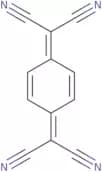
CAS:7,7,8,8-Tetracyanoquinodimethane is a quinoid compound that is used as an analytical chemical reagent. It has been shown to be a powerful reducing agent and can be used in the determination of trace amounts of metals. 7,7,8,8-Tetracyanoquinodimethane also reacts with cationic surfactants and hydroxyl groups to form stable compounds. The nitrogen atoms in this molecule are capable of multiple transfer reactions with other molecules.br>br> The redox potentials of this substance are negative and it has been shown to have the ability to transport pharmaceutical preparations across cell membranes. Boron nitride (BN) has been shown to stabilize the structure of 7,7,8,8-tetracyanoquinodimethane by forming strong hydrogen bonds between the BN and hydroxyl groups on this molecule.Formula:C12H4N4Purity:Min. 95%Color and Shape:Yellow To Green Or Brown SolidMolecular weight:204.19 g/mol7-(Trifluoromethyl)1H-indole-2,3-dione
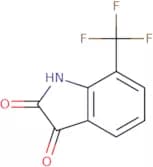
CAS:<p>Trifluoromethyl-substituted 7-(trifluoromethyl)1H-indole-2,3-dione is a trifluoromethyl analogue of indole-2,3-dione that has been shown to have antimalarial activity. It has been shown to be active against plasmodium and cancer cells in vitro. Trifluoromethyl group can be replaced by other substituents such as methoxy, ethoxy, or nitro groups. The compound has centrosymmetric structures and an elemental composition of C8H4F3N.</p>Formula:C9H4F3NO2Purity:Min. 95%Color and Shape:PowderMolecular weight:215.13 g/molTriethyl phosphonoacetate
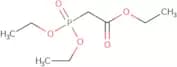
CAS:<p>Triethyl phosphonoacetate is a dpp-iv inhibitor that has been shown to have beneficial effects on congestive heart failure. It is a pyrimidine compound that can be synthesized in an asymmetric synthesis reaction. The hydroxyl group on the triethyl phosphonoacetate molecule reacts with potassium dichromate to form a reactive intermediate, which undergoes hydrolysis by hydrochloric acid to release acetaldehyde. Acetaldehyde then reacts with malonic acid to produce triethyl phosphonoacetate. Triethyl phosphonoacetate has been shown to have biological properties that are similar to those of other dpp-iv inhibitors, and it has also been shown to have receptor binding activity.</p>Formula:C8H17O5PPurity:Min. 98%Color and Shape:Colorless Clear LiquidMolecular weight:224.19 g/molN-Tritylimidazole
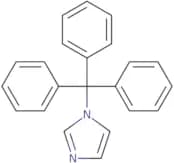
CAS:<p>N-tritylimidazole is a palladium complex that was designed as an inhibitor of glycosidases. It binds to the active site of these enzymes and inhibits their function. N-tritylimidazole has been shown to inhibit the growth of Gram-positive bacteria, such as Staphylococcus aureus, by preventing the production of extracellular polysaccharides. This compound also binds to κ-opioid receptors in the brain and has been shown to block pain transmission. N-tritylimidazole can be synthesized using a cross-coupling reaction with phenylboronic acid and chloroiodomethane, which requires hydrochloric acid as a catalyst.</p>Formula:C22H18N2Purity:Min. 95%Color and Shape:White PowderMolecular weight:310.39 g/moltrans-4-Propyl-L-proline
CAS:Please enquire for more information about trans-4-Propyl-L-proline including the price, delivery time and more detailed product information at the technical inquiry form on this pageFormula:C8H15NO2Purity:Min. 95%Molecular weight:157.21 g/mol2-[(Phenylsulfonyl)amino]benzoic acid
CAS:<p>2-[(Phenylsulfonyl)amino]benzoic acid is a white crystalline solid that is soluble in water and ethanol. It has a melting point of 176°C and a boiling point of 280°C. 2-[(Phenylsulfonyl)amino]benzoic acid binds to DNA by an intercalative mechanism, forming covalent bonds with the bases on the DNA. This binding prevents the DNA from unwinding during replication and transcription, thus inhibiting the synthesis of RNA and protein. The dimers form between two molecules of 2-[(Phenylsulfonyl)amino]benzoic acid, due to hydrogen bonding between the carboxylic acid groups. The crystal structure has been determined for this compound as centrosymmetric with space group P2 1 /c. A benzene ring is found in the molecule, which can form a pyridine ring when exposed to heat or</p>Formula:C13H11NO4SPurity:Min. 95%Color and Shape:White PowderMolecular weight:277.3 g/mol1-(1-Naphthylmethyl)piperazine
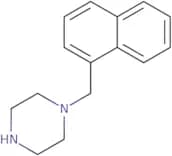
CAS:<p>1-(1-Naphthylmethyl)piperazine (1-NMPP) is an antimicrobial agent that inhibits bacterial efflux pumps. It was shown to be active against Gram-positive bacteria, such as Erythromycin and tetracycline resistant mutants. 1-NMPP has been shown to inhibit the expression of efflux pump proteins in Gram-negative bacteria. One study showed that 1-NMPP can reverse the resistance of colistin and sulfa drugs in a multidrug resistant strain of Staphylococcus aureus. The mechanism of action for this drug is not yet known, but it may be due to its ability to prevent the synthesis of new efflux pump proteins by inhibiting translation or by decreasing mRNA stability.</p>Formula:C15H18N2Purity:Min. 95%Color and Shape:Off-White PowderMolecular weight:226.32 g/mol4-Nitrophenylacetic acid
CAS:<p>4-Nitrophenylacetic acid is a chemical compound that belongs to the class of organic compounds known as nitrophenols. It has been shown to inhibit malonic enzyme, also known as 3-hydroxyacyl-CoA dehydrogenase. This inhibition is thought to be due to the nitro group on the molecule, which reacts with the active site cysteine residue in the enzyme. 4-Nitrophenylacetic acid can be used in the synthesis of monoclonal antibodies. The structure of 4-nitrophenylacetic acid has one hydroxyl group and two nitro groups that are separated by a methylene bridge (a carbon atom with two hydrogen atoms). The reaction solution for this substance contains diazonium salt and hydrochloric acid.</p>Formula:C8H7NO4Purity:Min. 98 Area-%Color and Shape:White PowderMolecular weight:181.15 g/mol6-Nitroquinoline
CAS:<p>6-Nitroquinoline is a nucleophilic compound that reacts with nitroalkanes to form alkyl nitrites. It undergoes a bioreductive reaction, in which it is reduced to the corresponding amine by hydrogen peroxide and ammonia. 6-Nitroquinoline contains functional groups that can act as either electron donors or electron acceptors and is therefore reactive towards other compounds. The reaction mechanism involves nucleophilic attack at the carbon atom in the ring of the 6-nitroquinoline molecule, resulting in an addition product. 6-Nitroquinoline has been shown to react with fluorophores such as fluorescein, forming a fluorescent product that can be detected by spectroscopy. This chemical can also form hydrogen bonds with other molecules, which are important for its reactivity. The reaction products of this compound are nitrite and quinolines where one or more of the nitrogens have been oxidized to nitro groups.<br>END</p>Formula:C9H6N2O2Purity:Min. 95%Color and Shape:White PowderMolecular weight:174.16 g/mol5-Nitroquinoline
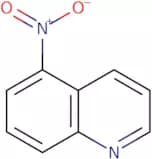
CAS:<p>5-Nitroquinoline is a nitrogen-containing heterocyclic organic compound. It is a white solid that has a melting point of 104 °C and a boiling point of 212 °C. 5-Nitroquinoline can be synthesized by the addition of sodium carbonate to 6-nitroquinoline in hydrochloric acid. The product is then purified by vacuum distillation and recrystallization from nitric acid and acetic acid. 5-Nitroquinoline can be used as an intermediate in the synthesis of other molecules, such as quinolones, which are used in pharmaceuticals. This compound has been shown to cause metastatic colorectal cancer in mice, but not in human liver cells or human lymphocytes.</p>Formula:C9H6N2O2Purity:Min. 95%Color and Shape:Light (Or Pale) Yellow To Dark Yellow SolidMolecular weight:174.16 g/mol(1S,2R,5S)-(+)-Menthol
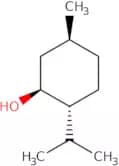
CAS:(1S,2R,5S)-(+)-Menthol is a pharmacological agent that has been shown to have anti-inflammatory activity. It inhibits prostaglandin synthesis by competitively blocking cyclooxygenase-1 and cyclooxygenase-2. (1S,2R,5S)-(+)-Menthol has also been shown to have x-ray crystal structures of the complex with sodium citrate in solution. These structures provide information about how menthol reacts with sodium citrate and water vapor for its reaction mechanism. The thermodynamic data for this process are also available. Menthol was found to be most effective when used in cell lysis experiments at a concentration of 1.0 mM and at room temperature. This compound is a white crystalline solid that is soluble in ethanol or chloroform but insoluble in water.Formula:C10H20OPurity:Min. 98%Color and Shape:White PowderMolecular weight:156.27 g/molN-Methyl methanesulfonamide
CAS:N-Methyl methanesulfonamide is an amide compound that has a vibrational frequency of 1605 cm-1. It is used in the manufacture of covid-19, a pandemic influenza virus vaccine. Covid-19 contains N-methyl methanesulfonamide as one of its ingredients. The vaccine has been shown to have a constant temperature and an inhibitory effect on the production of tyrosine kinase, which is a protein that regulates cell growth and division. The reaction product also inhibits sulfoxide reductase, an enzyme that catalyzes the reduction of sulfoxides. N-Methyl methanesulfonamide is susceptible to acidic hydrolysis and can be structurally represented as follows:Formula:C2H7NO2SPurity:Min. 95%Color and Shape:Light (Or Pale) Yellow To Amber To Brown LiquidMolecular weight:109.15 g/mol5-Methoxyindole-3-acetic acid
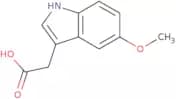
CAS:5-Methoxyindole-3-acetic acid (5MI) is an endogenous indole and metabolite of melatonin that is found in high concentrations in the human serum. 5MI has been shown to inhibit the activity of cyclase enzymes and may be a specific inhibitor of the type I form of estrone sulfate, which is involved in estrogen production. This agent also inhibits matrix metalloproteinases and aminotransferases, which are enzymes that play a role in oxidative injury. 5MI also has a fluorescent derivative that can be used as a probe for biological samples or to study the target enzyme.Formula:C11H11NO3Purity:Min. 97.5 Area-%Color and Shape:PowderMolecular weight:205.21 g/mol




![2-[(Phenylsulfonyl)amino]benzoic acid](/_next/image/?url=https%3A%2Fstatic.cymitquimica.com%2Fproducts%2F3D%2Fthumb-webp%2FFP136709.webp&w=3840&q=75)