Building Blocks
Subcategories of "Building Blocks"
- Boronic Acids & Boronic Acid Derivatives(5,778 products)
- Chiral Building Blocks(1,243 products)
- Hydrocarbon Building Blocks(6,099 products)
- Organic Building Blocks(61,038 products)
Found 205376 products of "Building Blocks"
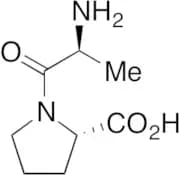
L-Alanyl-L-proline
CAS:Controlled ProductApplications L-Alanyl-L-proline is a dipeptide that contains a sterically constrained proline, a well-known turn inducer in proteins.
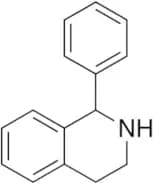
References Moriuchi, T., et al.: J. Organomet. Chem., 589, 50 (1999)Formula:C8H14N2O3Color and Shape:NeatMolecular weight:186.21rac 1-Phenyl-1,2,3,4-tetrahydroisoquinoline
CAS:Controlled ProductApplications 1-Phenyl-1,2,3,4-tetrahydroisoquinoline is a Solifenacin (S676700) intermediate. 1-Phenyl-1,2,3,4-tetrahydroisoquinoline had been detected in parkinsonian human brain. 1-Phenyl-1,2,3,4-tetrahydroisoquinoline maybe a candidate for endogenous MPTP-like neurotoxin since it is a structural analogue of MPTP which produces parkinsonism in humans.
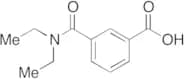
References Kajita, M. et al.: J. Chrom. B Biomed. Appl., 669, 345 (1995);Formula:C15H15NColor and Shape:NeatMolecular weight:209.29DEET ω-Carboxylic Acid
CAS:Controlled ProductStability Hygroscopic
Applications DEET ω-Carboxylic Acid is a metabolite of DEET (D228500), an insect repellant commonly used to prevent contact with mosquitoes.
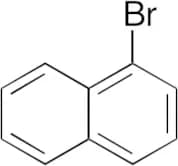
References Constantino, L. & Iley, J.: Xenobiotica, 29, 409 (1999); Syed, Z. & Leal, W.: P. Natl. Acad. Sci. USA, 105, 13598 (2008)Formula:C12H15NO3Color and Shape:NeatMolecular weight:221.251-Bromonapthalene
CAS:Applications 1-Bromonapthalene is used in the preparation of N-aryl imidazoles and diaryl ethers. Also used in the preparations of glutathione peroxidase-like antioxidant activity of diaryl diselenides.
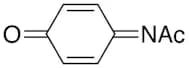
References Ghorbani-Vaghei, R. et al.: Tetrahedron Lett., 54, 7095 (2013); Mugesh, G. et al.: J. Am. Chem. Soc., 123, 839 (2001);Formula:C10H7BrColor and Shape:NeatMolecular weight:207.07N-Acetyl-4-benzoquinone Imine
CAS:Controlled ProductStability Air Sensitive, Light Sensitive, Moisture Sensitive, Temperature Sensitive
Applications N-Acetyl-4-benzoquinone Imine (NAPQI) is a toxic metabolite of Acetaminophen (A161220), an analgesic and antipyretic agent used as a pain reliever to treat headache, muscle aches, and arthritis (1,2,3). N-Acetyl-4-benzoquinone Imine can react with cysteine residues of hepatic proteins to yield Acetaminophen-cysteine (A161255) (4).
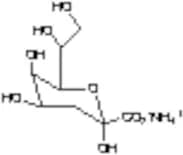
References (1) Jaeschke, H., et al.: Toxicol. Sci., 89, 31 (2006) (2) O’Malley G. F., et al.: J Med Toxicol. 11, 317 (2015)(3) McGill, M. R. and Jaeschke, H. Pharm Res. 30, 2174 (2013)(4) Frey, S. M., et al.: J Med Toxicol. 11, 218 (2015)Formula:C8H7NO2Color and Shape:NeatMolecular weight:149.153-Deoxy-D-manno-2-octulosonic Acid Ammonium Salt
CAS:Controlled ProductStability Hygroscopic
Applications 3-Deoxy-D-manno-2-octulosonic Acid Ammonium Salt is a ketosidic component in all lipopolysaccharides of Gram-negative bacteria and has been identified in several acidic exopolysaccharides (K-antigens). Synthetic analogues of KDO may be studied for their potential to disrupt the biosynthesis of bacterial cell-wall components, and lead to new antibacterial agents.
References Altschul, S., et al.: J. Mol. Biol., 215, 403 (1990), Baumann, H., et al.: Biochemistry, 31, 4081 (1992), Hashimoto, M., et al.: Eur. J. Biochem., 268, 3139 (2001), Kodar, K., et al.: Immunol. Invest., 38, 704 (2009),Formula:C8H14O8·H3NColor and Shape:NeatMolecular weight:255.228-Methoxycarbonyloctanoic Acid
CAS:Controlled ProductApplications 8-Methoxycarbonyloctanoic Acid (cas# 2104-19-0) is a compound useful in organic synthesis.
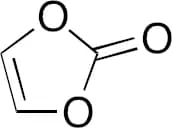
Formula:C10H18O4Color and Shape:NeatMolecular weight:202.25Vinylene Carbonate (Contains Up to 2% BHT)
CAS:Controlled ProductApplications Vinylene Carbonate is the smallest unsaturated cyclic carbonic acid ester. It is used as an additive for electrolyte solutions for Lithium-ion and Sodium-ion batteries.
Not a dangerous good if item is equal to or less than 1g/ml and there is less than 100g/ml in the package
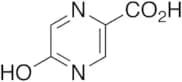
References Aurbach, D., et al.: Electrochim. Acta, 47, 1423 (2002); Hu, Y., et al.: Angew. Chem. Int. Ed., 47, 1645 (2008); Komaba, S., et al.: Adv. Funct. Mater., 21, 3859 (2011);Formula:C3H2O3Color and Shape:NeatMolecular weight:86.055-Hydroxypyrazine-2-carboxylic Acid
CAS:Applications A versatile building block for the synthesis of new antituberculous agents. A metabolite of Pyrazinamide (P840600).
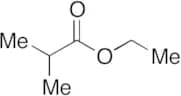
References Wieser, M. et al.: Appl. Microbiol. Biotech., 48, 174 (1997); Lacroix, C. et al.: Eur. J. Clin. Pharmacol., 36, 395 (1989);Formula:C5H4N2O3Color and Shape:Light YellowMolecular weight:140.10Ethyl Isobutyrate
CAS:Controlled ProductApplications Ethyl Isobutyrate is an ester found in fruity aromas in wines and used in varies fragrances.
Not a dangerous good if item is equal to or less than 1g/ml and there is less than 100g/ml in the package
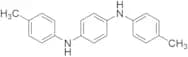
References Gammacurta, M., et al.: J. Agr. Food. Chem., 62, 5378 (2014); Dourtoglou, V., et al.: Food Chem., 159, 181 (2014);Formula:C6H12O2Color and Shape:NeatMolecular weight:116.16N1,N4-Di-p-tolylbenzene-1,4-diamine
CAS:Controlled ProductApplications N1,N4-Di-p-tolylbenzene-1,4-diamine is a useful intermediate for the preparation of some chemically active substances for polymeric materials.
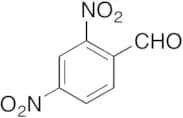
References Belorossova, A. G., et al.: Uchenye Zapiski Yaroslavskogo Tekhnologicheskogo Instituta, 11, 200 (1969)Formula:C20H20N2Color and Shape:RedMolecular weight:288.3862,4-Dinitrobenzaldehyde
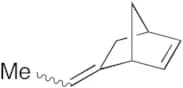
CAS:Controlled ProductFormula:C7H4N2O5Color and Shape:NeatMolecular weight:196.125-Ethylidene-2-norbornene
CAS:Controlled ProductStability Volatile
Applications 5-Ethylidene-2-norbornene is a diene monomer that is used as a self healing agent for polymeric composites and also used to reinforce multiwalled carbon nanotubes. 5-Ethylidene-2-norbornene is potentially toxic to humans.
Not a dangerous good if item is equal to or less than 1g/ml and there is less than 100g/ml in the package
References Ballantyne, B., et al.: J. Appl. Toxicol., 17, 197 (1997); Jeong, W. & Kessler, M.: Carbon, 47, 2406 (2009); Lee, J., et al.: Macromol. Res., 12, 478 (2004)Formula:C9H12Color and Shape:NeatMolecular weight:120.19164,6-Dibromo-2-nitropyridin-3-ol
CAS:Formula:C5H2Br2N2O3Color and Shape:White to Light Beige SolidMolecular weight:297.8896-Bromo-1-hexanol
CAS:Controlled ProductApplications 6-Bromo-1-hexanol is a useful synthetic intermediate. 6-Bromo-1-hexanol is used as a reagent in the preparation of nitric oxide-donating analogues of Sulindac (S699215), a non-steroidal anti-inflammatory drug that has the ability to prevent colon cancer.
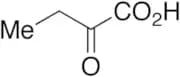
References Nortcliffe, A., et al.: Bioorg. Med. Chem., 22, 756 (2014); Pasricha, P., et al.: Gastroenterology, 109, 994 (1995); Yamamoto, Y., et al.: J. Biol. Chem., 274, 27307 (1999)Formula:C6H13BrOColor and Shape:ColourlessMolecular weight:181.0708a-Ketobutyric Acid
CAS:Controlled ProductApplications A substrate for the determination of lactate dehydrogenase isoenzymes.This compound is suitable for lactate dehydrogenase (LDH) related research.
References Hegeman, G., et al.: J. Bacteriol., 91, 1155 (1966), Dobritzsch, D., et al.: J. Biol. Chem., 273, 20196 (1998), Chang, A., et al.: Biochem. J., 339, 255 (1999),Formula:C4H6O3Color and Shape:Colourless Solid With A Low Melting PointMolecular weight:102.09n-Octacosane-d58
CAS:Controlled ProductApplications n-Octacosane-d58 (CAS# 16416-33-4) is a useful isotopically labeled research compound.
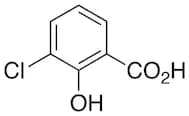
Formula:C28D58Color and Shape:NeatMolecular weight:453.133-Chlorosalicylic Acid
CAS:Applications 3-Chlorosalicylic Acid (cas# 1829-32-9) is a compound useful in organic synthesis.
References Shackelford, J.M.: J.O.C., 26, 4908 (1961)Formula:C7H5ClO3Color and Shape:NeatMolecular weight:172.57