


Building Blocks
Subcategories of "Building Blocks"
- Boronic Acids & Boronic Acid Derivatives(5,780 products)
- Chiral Building Blocks(1,241 products)
- Hydrocarbon Building Blocks(6,100 products)
- Organic Building Blocks(61,024 products)
Found 205297 products of "Building Blocks"
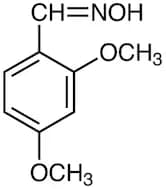
2,4-Dimethoxybenzaldoxime
CAS:Formula:C9H11NO3Purity:>95.0%(GC)Color and Shape:White to Almost white powder to crystalMolecular weight:181.194-Phenyl-2-butanol
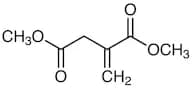
CAS:4-Phenyl-2-butanol is a monoclonal antibody that is used in the treatment of human immunodeficiency virus (HIV). It is an aromatic hydrocarbon that binds to amines and reacts with malonic acid, which has monophenolase activity. The resulting product, dimethyl malonate, reacts with unsaturated ketones to form diphenols. The reaction solution also contains chloride yields, which are generated by the conversion of amines to their corresponding chlorides. 4-Phenyl-2-butanol has been shown to have enantiopure properties for the synthesis of fatty acids and other compounds containing unsaturated ketones.Formula:C10H14OPurity:Min. 95%Color and Shape:Clear Colourless LiquidMolecular weight:150.22 g/molDimethyl Itaconate (stabilized with HQ)
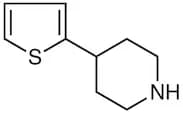
CAS:Formula:C7H10O4Purity:>98.0%(GC)Color and Shape:White or Colorless to Light yellow powder to lump to clear liquidMolecular weight:158.154-(2-Thienyl)piperidine
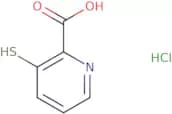
CAS:Formula:C9H13NSPurity:>98.0%(GC)Color and Shape:Light yellow to Brown powder to lumpMolecular weight:167.273-Mercapto-2-pyridinecarboxylic acid hydrochloride
CAS:3-Mercapto-2-pyridinecarboxylic acid hydrochloride (3MP) is a small molecule that is a phosphoenolpyruvate carboxykinase inhibitor. The inhibition of this enzyme leads to an accumulation of 3-phosphoglyceric acid and inhibits the conversion of pyruvate to acetyl CoA, which results in the accumulation of reactive oxygen species. 3MP has been shown to inhibit the activity of mitochondrial phosphoenolpyruvate carboxykinase (PEPCK) in porcine hepatocytes, leading to decreased triglycerides and increased glucose uptake. It also inhibits PEPCK activity in vitro in cultured human cells, leading to increased HSP70 levels and exacerbated oxidative stress.
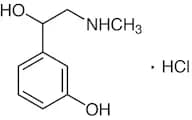
Formula:C6H5NO2S·HClPurity:Min. 95%Color and Shape:PowderMolecular weight:191.64 g/molDL-Phenylephrine Hydrochloride
CAS:Formula:C9H13NO2·HClPurity:>98.0%(T)(HPLC)Color and Shape:White to Almost white powder to crystalMolecular weight:203.672-(4-Chlorophenoxy)ethanol
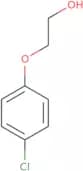
CAS:2-(4-Chlorophenoxy)ethanol is a fatty acid that has shown antimicrobial activity against a number of bacteria and fungi. 2-(4-Chlorophenoxy)ethanol is active against the protozoan Trichomonas vaginalis and has been used in the treatment of bacterial vaginosis. The mechanism of action for the antimicrobial activity of 2-(4-Chlorophenoxy)ethanol is unknown, but it may be due to interference with lipid metabolism or by producing reactive oxygen species and damaging cellular membranes. This compound also possesses anti-inflammatory properties and has been shown to inhibit tumor necrosis factor-α (TNF-α) production in human monocytes.Formula:C8H9ClO2Purity:Min. 95%Color and Shape:PowderMolecular weight:172.61 g/mol2,6-Dimethylbenzaldehyde
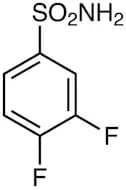
CAS:2,6-Dimethylbenzaldehyde is a colorless liquid with a sweet odor. It is used in the synthesis of fatty acids and as an intermediate for other compounds. This chemical has significant cytotoxicity against leukemia cells, and is used in the production of acrylonitrile. 2,6-Dimethylbenzaldehyde can be synthesized by reacting an amine with an acyl chloride, followed by hydrolysis of the resulting ester. A contactor is usually added to facilitate the reaction. The reaction can also be carried out in the presence of a phosphorane or organic solvent. 2,6-Dimethylbenzaldehyde can be hydrogenated to produce 2,4-dimethylaniline and 2,4,6-trimethylaniline.Formula:C9H10OPurity:Min. 95%Color and Shape:Clear White Solid Or Liquid (May Vary)Molecular weight:134.18 g/mol3,4-Difluorobenzenesulfonamide
CAS:Formula:C6H5F2NO2SPurity:>98.0%(GC)Color and Shape:White to Almost white powder to crystalMolecular weight:193.173-Methylpyridine
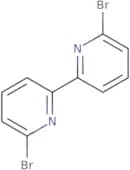
CAS:3-Methylpyridine is a compound that can be used in the treatment of wastewater. It has been shown to have high adsorption capacity for malonic acid and a Langmuir adsorption isotherm with high values. 3-Methylpyridine is stable in acidic conditions and has been shown to efficiently remove nitrogen from wastewater. The coordination geometry of 3-methylpyridine is octahedral, which makes it capable of removing hydrogen fluoride from wastewater. This compound also has the ability to transfer reactions and can be used for titration calorimetry.Formula:C6H7NPurity:Min. 95%Color and Shape:Colorless Clear LiquidMolecular weight:93.13 g/mol6,6'-Dibromo-2,2'-bipyridine
CAS:6,6'-Dibromo-2,2'-bipyridine is a synthetic molecule that is used to produce amines. It can be synthesized in a cross-coupling reaction involving the reaction of an amine with bromine and a palladium catalyst. 6,6'-Dibromo-2,2'-bipyridine reacts with formaldehyde to form 2,4-diaminobiphenyls. This reaction is catalyzed by acid or base. 6,6'-Dibromo-2,2'-bipyridine has been shown to be reactive and photoexcited. Its photophysical properties make it a useful synthetic intermediate for the production of amines.Formula:C10H6Br2N2Purity:Min. 95%Color and Shape:PowderMolecular weight:313.98 g/mol3,5-Dibromo-5'-phenyl-1,1':3',1''-terphenyl
CAS:Formula:C24H16Br2Purity:>98.0%(GC)Color and Shape:White to Light yellow powder to crystalMolecular weight:464.20DL-Valine
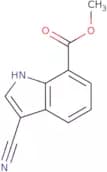
CAS:Valine is a non-essential, branched-chain amino acid that is used for the treatment of bowel disease. Valine is a water-soluble, colorless and odorless crystalline powder that has a sour taste. It can be prepared by reacting valeric acid with ammonia in the presence of an alkali or by hydrolysis of proteins. Valine is also widely distributed in animal tissues, where it participates in the biosynthesis of important biological compounds such as coenzyme A. The optimum concentration to achieve maximum electrochemical impedance spectroscopy (EIS) signal was observed at 20 mM. The EIS signal was found to be dependent on the pH and protein content of the solution matrix. Valine binds to human serum albumin and exhibits strong hydrogen bonding interactions. In addition, valine possesses a signal peptide that helps export it from cells into blood plasma.Formula:C5H11NO2Color and Shape:PowderMolecular weight:117.15 g/molMethyl 3-cyano-1H-indole-7-carboxylate
CAS:Methyl 3-cyano-1H-indole-7-carboxylate is a fine chemical that belongs to the class of useful scaffolds, versatile building blocks, and useful intermediates. It is used as a research chemical and a reaction component. Methyl 3-cyano-1H-indole-7-carboxylate is also a speciality chemical with high quality and can be used as a reagent in the production of other compounds.Formula:C11H8N2O2Purity:Min. 95%Color and Shape:White PowderMolecular weight:200.19 g/mol3,4-Difluorobenzaldehyde
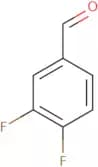
CAS:3,4-Difluorobenzaldehyde is a chemical inhibitor that has been shown to be effective in the treatment of cancer. It inhibits the activity of an enzyme called tyrosine kinase by reacting with its functional group, leading to decreased production of growth factors and cell proliferation. 3,4-Difluorobenzaldehyde has been shown to have a high reaction yield in animal health studies, and it can be used as a drug for treating carcinoma cells. This compound also has strong liquid crystal properties and can be used as a component of diphenyl ether molecules. 3,4-Difluorobenzaldehyde is metabolized by the liver or excreted through urine. The pharmacokinetic properties of this compound are similar to those of other drugs that are metabolized by humans.Formula:C7H4F2OPurity:Min. 95%Color and Shape:Colorless Clear LiquidMolecular weight:142.1 g/molDiethylene glycol dimethanesulfonate
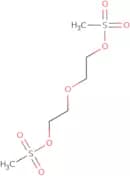
CAS:Diethylene glycol dimethanesulfonate is a functional group that is used in the synthesis of organic compounds. It is a white crystalline solid with a melting point of about 130°C. Diethylene glycol dimethanesulfonate reacts slowly with water and hydrochloric acid to produce diethyl ether and hydrogen chloride gas. The reaction time for this process can be affected by the concentration of reactants, temperature, and pH. Diethylene glycol dimethanesulfonate undergoes acidic hydrolysis in the presence of hydrochloric acid or sodium hydroxide. This reaction produces sodium chloride and ethylene glycol. Busulfan, an anti-cancer drug, is produced by the dehydration of diethylene glycol dimethanesulfonate with copper chloride or chlorine gas. Intramolecular hydrogen bonds are formed during this process to give grandis as an intermediate product. Grandis can be converted into busulfan byFormula:C6H14O7S2Purity:Min. 95%Color and Shape:PowderMolecular weight:262.3 g/molL-Norvaline ethyl ester hydrochloride
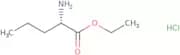
CAS:L-Norvaline ethyl ester hydrochloride is an angiotensin-converting enzyme inhibitor. It has been shown to reduce the levels of angiotensin I and II, which are hormones that constrict blood vessels, resulting in a decrease in blood pressure. L-Norvaline ethyl ester hydrochloride also inhibits the production of aldosterone, a hormone involved in water retention. This drug is used as a supplement for people with congestive heart failure or those who have experienced a myocardial infarction. L-Norvaline ethyl ester hydrochloride is purified by elution from a column and then processed to remove impurities. The flow rate of the process is determined by measuring the height of the liquid in millimeters at various points on the column.Formula:C7H15NO2·HClPurity:Min. 95%Color and Shape:PowderMolecular weight:181.66 g/mol2,2':6',2'-Terpyridine-4,4',4''-tricarboxylic acid
CAS:2,2':6',2'-Terpyridine-4,4',4''-tricarboxylic acid is a model system that has been studied for its photochemical properties. In this molecule, there are two carboxyl groups and three pyridine rings. The molecule can be protonated easily by electron transfer to form a positively charged anion. This allows the molecule to undergo electron transfer reactions with other molecules in the presence of radiation or visible light. 2,2':6',2'-Terpyridine-4,4',4''-tricarboxylic acid absorbs photons easily and then transfers its energy to a nearby electron. The electron then passes on the energy to another molecule, which can produce a photocurrent.
Formula:C18H11N3O6Purity:Min. 95%Color and Shape:Brown SolidMolecular weight:365.3 g/mol2,3,3-Trimethyl-3H-benzo[e]indole
CAS:2,3,3-Trimethyl-3H-benzo[e]indole is a reactive molecule that has been shown to be an effective treatment for cervical cancer. It can be used in conjunction with monoclonal antibodies that have been designed to target the acidic protonation sites on the surface of cervical cancer cells. This active form binds to the site and emits fluorescence when illuminated with a laser, which can then be detected by a confocal microscope. This technique can also be used for the diagnosis of other cancers. 2,3,3-Trimethyl-3H-benzo[e]indole is not toxic to human serum as it does not react with this type of tissue.Formula:C15H15NPurity:Min. 98 Area-%Color and Shape:PowderMolecular weight:209.29 g/mol5,6-Diaminobenzimidazole dihydrochloride
CAS:Please enquire for more information about 5,6-Diaminobenzimidazole dihydrochloride including the price, delivery time and more detailed product information at the technical inquiry form on this pageFormula:C7H10Cl2N4Purity:Min. 95%Color and Shape:Off-white to pale brown solid.Molecular weight:221.09 g/mol








![2,3,3-Trimethyl-3H-benzo[e]indole](/_next/image/?url=https%3A%2Fstatic.cymitquimica.com%2Fproducts%2F3D%2Fthumb-webp%2FFT29018.webp&w=3840&q=75)
