Building Blocks
This section contains fundamental products for the synthesis of organic and biological compounds. Building blocks are the essential starting materials used to construct complex molecules through various chemical reactions. They play a critical role in drug discovery, material science, and chemical research. At CymitQuimica, we offer a diverse range of high-quality building blocks to support your innovative research and industrial projects, ensuring you have the essential components for successful synthesis.
Subcategories of "Building Blocks"
- Boronic Acids & Boronic Acid Derivatives(5,781 products)
- Chiral Building Blocks(1,242 products)
- Hydrocarbon Building Blocks(6,101 products)
- Organic Building Blocks(61,033 products)
Found 205320 products of "Building Blocks"
Sort by
Purity (%)
0
100
|
0
|
50
|
90
|
95
|
100
7-Bromoquinoline
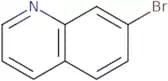
CAS:7-Bromoquinoline is a synthetic molecule that was first synthesized in the early 1980s. It is an analog of 7-bromoquinoline, which has been shown to have cytotoxic properties against cancer cells. The synthesis of 7-bromoquinoline involves a cross-coupling reaction with chloroacetonitrile and N-methylformamide. The nmr spectra for this compound are very similar to those for 7-bromoquinoine, but it lacks the secondary amine peak at δ 10.7 ppm. Primary culture cells were used to test the bioactivity of 7-bromoquinoline, and these cells were disrupted by adding trypsin after incubation with various concentrations of 7-bromoquinoline. This study showed that the quinoline derivatives had cytotoxic effects on cultured cells at low concentrations, suggesting that they may be useful as anticancer agents. Molecular modeling studies show thatFormula:C9H6BrNPurity:Min. 95%Color and Shape:PowderMolecular weight:208.05 g/moln-Octanal Diethyl Acetal
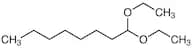
CAS:Formula:C12H26O2Purity:>97.0%(GC)Color and Shape:Colorless to Almost colorless clear liquidMolecular weight:202.347,7,8,8-Tetracyanoquinodimethane
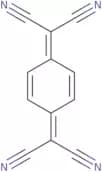
CAS:7,7,8,8-Tetracyanoquinodimethane is a quinoid compound that is used as an analytical chemical reagent. It has been shown to be a powerful reducing agent and can be used in the determination of trace amounts of metals. 7,7,8,8-Tetracyanoquinodimethane also reacts with cationic surfactants and hydroxyl groups to form stable compounds. The nitrogen atoms in this molecule are capable of multiple transfer reactions with other molecules.br>br> The redox potentials of this substance are negative and it has been shown to have the ability to transport pharmaceutical preparations across cell membranes. Boron nitride (BN) has been shown to stabilize the structure of 7,7,8,8-tetracyanoquinodimethane by forming strong hydrogen bonds between the BN and hydroxyl groups on this molecule.Formula:C12H4N4Purity:Min. 95%Color and Shape:Yellow To Green Or Brown SolidMolecular weight:204.19 g/mol4-Methoxy-3-nitropyridine
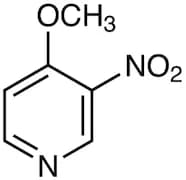
CAS:Formula:C6H6N2O3Purity:>98.0%(GC)Color and Shape:Light orange to Yellow to Green powder to crystalMolecular weight:154.13Galβ(1-3)[Neu5Acα(2-6)]GalNAc-α-pNP
CAS:Formula:C31H45N3O21Purity:>95.0%(HPLC)Color and Shape:White to Almost white powder to crystalMolecular weight:795.703,5-Dibromo-5'-phenyl-1,1':3',1''-terphenyl
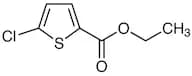
CAS:Formula:C24H16Br2Purity:>98.0%(GC)Color and Shape:White to Light yellow powder to crystalMolecular weight:464.20Ethyl 5-Chlorothiophene-2-carboxylate
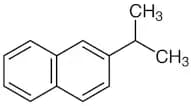
CAS:Formula:C7H7ClO2SPurity:>98.0%(GC)Color and Shape:Colorless to Light yellow clear liquidMolecular weight:190.642-Isopropylnaphthalene
CAS:Formula:C13H14Purity:>95.0%(GC)Color and Shape:Colorless to Light yellow clear liquidMolecular weight:170.26Benzo[b]furan-2-boronic acid
CAS:Benzo[b]furan-2-boronic acid is a potent matrix metalloproteinase inhibitor that can be used in the treatment of cancer. It is synthesized from 2-aminobenzofuran by using a Suzuki coupling reaction with boronic acid. Benzo[b]furan-2-boronic acid has been shown to inhibit MMP-1, MMP-13, and MMP-14. This compound also inhibits the activity of other proteases such as cathepsin G, elastase, and chymase. The compound has been shown to be cytotoxic against human breast cancer cells and colon cancer cells. In addition, this compound is fluorescent and its fluorescence has been shown to increase when it binds to cancer cells.Formula:C8H7BO3Purity:Min. 95%Color and Shape:White PowderMolecular weight:161.95 g/molMethyl 5-methoxy-2-methylindole-3-acetate
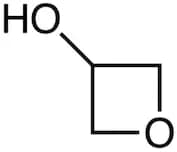
CAS:Methyl 5-methoxy-2-methylindole-3-acetate is a versatile building block that can be used as a research chemical, reagent, or speciality chemical. It is also an intermediate in the synthesis of other compounds and has been shown to be useful in reactions involving nucleophilic substitution and electrophilic addition. This compound can be used as a scaffold for complex organic molecules. CAS No. 7588-36-5Formula:C13H15NO3Purity:Min. 95%Color and Shape:Beige SolidMolecular weight:233.26 g/mol3-Oxetanol
CAS:Formula:C3H6O2Purity:>96.0%(GC)Color and Shape:Colorless to Light yellow clear liquid to slightly cloudy liquidMolecular weight:74.084-Bromoisatin
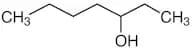
CAS:4-Bromoisatin is a synthetic compound that reversibly inhibits the activity of telomerase and has been shown to be effective against a broad range of bacterial species. It binds to the catalytic site on telomerase and prevents the synthesis of ribonucleotides, which are necessary for DNA replication. 4-Bromoisatin is synthesized by humans, but can also be found in plants such as coffee beans and black tea leaves. The antibacterial properties of 4-bromoisatin may be due to its ability to inhibit the biosynthesis of purine, an essential component in bacterial DNA synthesis.Formula:C8H4BrNO2Purity:Min. 95%Color and Shape:Orange PowderMolecular weight:226.03 g/mol3-Heptanol
CAS:Formula:C7H16OPurity:>98.0%(GC)Color and Shape:Colorless to Almost colorless clear liquidMolecular weight:116.201-Methyl-3-[6-(methylsulfinyl)hexyl]imidazolium p-Toluenesulfonate
CAS:Formula:C18H28N2O4S2Purity:>97.0%(HPLC)(N)Color and Shape:Colorless to Light orange to Yellow clear liquidMolecular weight:400.554-Benzoylpyridine
CAS:4-Benzoylpyridine is a reactive molecule that can undergo electron reduction and protonation. The protonated form of 4-benzoylpyridine has been shown to inhibit the enzyme methionine aminopeptidase, which is involved in the degradation of amino acids. The crystallographic structure of 4-benzoylpyridine was determined by X-ray diffraction and was found to contain nitrogen atoms at the center of its ring. The electron density map showed that there are no hydrogen bonds or lone pairs in 4-benzoylpyridine. This molecule is an inhibitor of the transfer reactions in mitochondria, which are required for ATP synthesis. It has been shown to be cytotoxic to mammalian cells in culture and may have photochemical properties.
Formula:C12H9NOPurity:Min. 95%Color and Shape:White PowderMolecular weight:183.21 g/molBoc-1-amino-3,6-dioxa-8-octanediamine
CAS:Boc-1-amino-3,6-dioxa-8-octanediamine is a linker used to attach targeting moieties to drugs. It is capable of binding iron, chlorine and other metals. Boc-1-amino-3,6-dioxa-8-octanediamine has been shown to be a useful tool for the development of novel cancer treatments by enhancing the uptake of chemotherapeutic agents in tumor tissue. This linker can be modified with functional groups such as amines and carboxyls that allow it to bind various types of molecules. The cellular distribution of this compound is not well understood due to its lack of availability in cell culture models.Formula:C11H24N2O4Purity:Min. 95%Color and Shape:Red Clear LiquidMolecular weight:248.32 g/molEthyl Diformylacetate
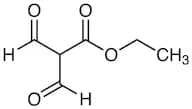
CAS:Formula:C6H8O4Purity:>97.0%(T)Color and Shape:Colorless to Light yellow to Light orange clear liquidMolecular weight:144.132-Methoxy-3-methylbenzaldehyde
CAS:2-Methoxy-3-methylbenzaldehyde is a natural product that belongs to the class of methoxymethyl. It has been shown to be synthesized by permethylation of methoxy, which is an important intermediate in the synthesis of many naturally occurring compounds such as terpenes and sterols. This compound exists in two enantiomers that can be separated chromatographically. The technique used for this separation is known as equivalence. The elution time for each enantiomer is different, and its spectroscopic properties are also different, making it possible to separate them by these means.Formula:C9H10O2Purity:Min. 95%Color and Shape:PowderMolecular weight:150.17 g/mol1,2-Ethanediol ditosylate
CAS:1,2-Ethanediol ditosylate is a coumarin derivative that is used as a contrast agent in the diagnosis of prostate cancer. It has been shown to be effective against prostate cancer cells in vitro and in vivo. 1,2-Ethanediol ditosylate is injected into the excretory organ (e.g., urinary bladder) and then excreted from the body by the kidneys. The compound accumulates in the prostate gland, where it binds to fatty acids on the cell membrane and induces a positron emission that can be detected with positron emission tomography (PET). This compound also inhibits tumor growth by blocking epidermal growth factor receptor signaling through its ability to bind to carbonic anhydrase II (CAII) receptors on tumor cells.Formula:C16H18O6S2Purity:Min. 95%Color and Shape:White PowderMolecular weight:370.44 g/mol1-Iodo-4-nitrobenzene
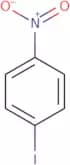
CAS:1-Iodo-4-nitrobenzene is an insecticide with a nitro group. It is synthesized by the asymmetric synthesis of diazonium salt and hydroxyl group in the presence of a solid catalyst, such as palladium. 1-Iodo-4-nitrobenzene can be used as a coupling reagent for Suzuki coupling reactions, halide transfer reactions, and other multi-walled carbon transfer reactions. It has also been reported to have neuroprotective effects against Parkinson's disease in levopimaric acid model system. 1-Iodo-4-nitrobenzene has also been shown to inhibit the proliferation of neuro2a cells.Formula:C6H4INO2Purity:Min. 95%Color and Shape:Slightly Yellow PowderMolecular weight:249.01 g/mol


![Galβ(1-3)[Neu5Acα(2-6)]GalNAc-α-pNP](/_next/image/?url=https%3A%2Fstatic.cymitquimica.com%2Fproducts%2F3B%2Fthumb-webp%2FG0377.webp&w=3840&q=75)

![Benzo[b]furan-2-boronic acid](/_next/image/?url=https%3A%2Fstatic.cymitquimica.com%2Fproducts%2F3D%2Fthumb-webp%2FFB40264.webp&w=3840&q=75)


![1-Methyl-3-[6-(methylsulfinyl)hexyl]imidazolium p-Toluenesulfonate](/_next/image/?url=https%3A%2Fstatic.cymitquimica.com%2Fproducts%2F3B%2Fthumb-webp%2FM2274.webp&w=3840&q=75)