Building Blocks
Subcategories of "Building Blocks"
- Boronic Acids & Boronic Acid Derivatives(5,780 products)
- Chiral Building Blocks(1,241 products)
- Hydrocarbon Building Blocks(6,100 products)
- Organic Building Blocks(61,023 products)
Found 205289 products of "Building Blocks"
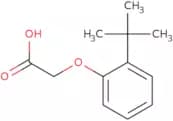
(2-tert-Butyl-phenoxy)-acetic acid
CAS:2-tert-Butyl-phenoxyacetic acid is a chain compound that has a crystal structure with hydrogen bonds. This compound has a disordered conformation and is composed of two dimers connected by hydrogen bonds. The dimers are linked by a benzene ring and form hydrogen-bonded chains. The molecule also has an asymmetric dihedral conformation. 2-tert-Butylphenoxyacetic acid can exist as either of the two conformations, depending on the environment it is in.
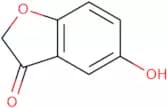
2-tert-Butylphenoxyacetic acid is soluble in alcohols, ethers, acetone, and chloroform. It has been shown to inhibit the growth of bacteria when used as a preservative agent in food products.Formula:C12H16O3Purity:Min. 95%Molecular weight:208.25 g/mol5-Hydroxy-2,3-dihydro-1-benzofuran-3-one
CAS:Versatile small molecule scaffoldFormula:C8H6O3Purity:Min. 95%Molecular weight:150.13 g/mol3-{2,4-Dioxo-1,3-diazaspiro[4.5]decan-3-yl}propanoic acid
CAS:Versatile small molecule scaffoldFormula:C11H16N2O4Purity:Min. 95%Molecular weight:240.26 g/mol3-{2,4-Dioxo-1,3-diazaspiro[4.5]decan-3-yl}propanenitrile
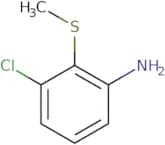
CAS:Versatile small molecule scaffoldFormula:C11H15N3O2Purity:Min. 95%Molecular weight:221.26 g/mol3-Chloro-2-(methylsulfanyl)aniline
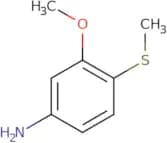
CAS:Versatile small molecule scaffoldFormula:C7H8ClNSPurity:Min. 95%Molecular weight:173.66 g/mol3-Methoxy-4-(methylsulfanyl)aniline
CAS:Versatile small molecule scaffoldFormula:C8H11NOSPurity:Min. 95%Molecular weight:169.24 g/molN-[(Pentafluorophenyl)methylidene]hydroxylamine
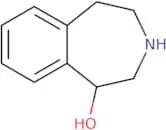
CAS:N-[(Pentafluorophenyl)methylidene]hydroxylamine is a gas that is used as an antibacterial agent. It is proposed to be a triazole derivative and has been shown to inhibit the growth of bacteria by binding to their cell membranes. The mechanism of action may be due to the formation of reactive oxygen species in the bacterial cell membrane, which are generated by cycloadditions with an electron-deficient olefin, such as styrene. This gas is also able to bind with n-oxide groups on benzene molecules, which may explain its effectiveness against benzoyl-containing bacteria.Formula:C7H2F5NOPurity:Min. 95%Molecular weight:211.09 g/mol2,3,4,5-Tetrahydro-1H-3-benzazepin-1-ol
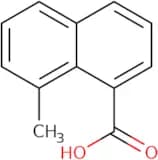
CAS:Versatile small molecule scaffoldFormula:C10H13NOPurity:Min. 95%Molecular weight:163.22 g/mol8-Methylnaphthalene-1-carboxylic acid
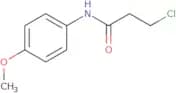
CAS:8-Methylnaphthalene-1-carboxylic acid is an intermediate in the synthesis of acenaphthylene. It is a lactone that can be obtained by irradiation of methanol and acetone with ultraviolet light. 8-Methylnaphthalene-1-carboxylic acid is a dione that can be synthesized from naphthalene and formaldehyde. The chemical reaction involves the formation of a carbene, which reacts with an oxygen molecule to produce a carboxyl group. This intermediate can then undergo pyrolysis to produce acenaphthylene.Formula:C12H10O2Purity:Min. 95%Molecular weight:186.21 g/mol3-Chloro-N-(4-methoxyphenyl)propanamide
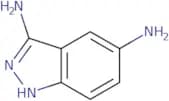
CAS:3-Chloro-N-(4-methoxyphenyl)propanamide (PCMP) is a ligand that binds to aromatic systems. PCMP has been shown to react with alkylating agents, such as methyl iodide and dimethyl sulfate, to form a tetradentate ligand with two chloro groups and two methoxy groups. This compound can be used as a counterion for dianionic complexes, or it can be used for the synthesis of amides by deprotonation followed by intramolecular reaction.Formula:C10H12ClNO2Purity:Min. 95%Molecular weight:213.66 g/mol1H-Indazole-3,5-diamine
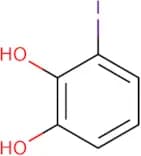
CAS:1H-Indazole-3,5-diamine is a ligand that binds to the active site of the enzyme nitric oxide synthase. The binding of 1H-indazole-3,5-diamine inhibits the conversion of arginine to citrulline and disrupts the interaction between the enzyme and its cofactors. This leads to decreased production of nitric oxide. 1H-Indazole-3,5-diamine has been shown to cause cancer cell death in vitro by inhibiting DNA synthesis and increasing levels of reactive oxygen species. It also inhibits cancer cell growth in vivo by causing apoptosis and necrosis.Formula:C7H8N4Purity:Min. 95%Molecular weight:148.17 g/mol3-Iodobenzene-1,2-diol
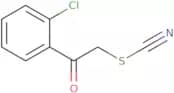
CAS:3-Iodobenzene-1,2-diol is an organic compound with the formula CH3C6H4(OH)2. It is a colorless oil that is insoluble in water and soluble in organic solvents. It can be prepared by reaction of 2,3-dibromobenzene with sodium iodide in ethanol or acetone. 3-Iodobenzene-1,2-diol is used as a reagent for the synthesis of esters from carboxylic acids and alcohols, and for the preparation of boronic acid esters. 3-Iodobenzene-1,2-diol can also be used to synthesize polymers such as polyesters and polycarbonates. The natural product dihydrolycopodine contains a 3-iodo group. It is also used as a synthon in organic chemistry reactions involving electron deficient species.Formula:C6H5IO2Purity:Min. 95%Molecular weight:236.01 g/mol1-(2-Chlorophenyl)-2-(cyanosulfanyl)ethan-1-one
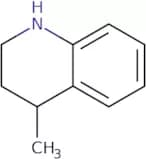
CAS:Versatile small molecule scaffoldFormula:C9H6ClNOSPurity:Min. 95%Molecular weight:211.67 g/mol4-Methyl-1,2,3,4-tetrahydroquinoline
CAS:4-Methyl-1,2,3,4-tetrahydroquinoline is a molecule that is an amine derivative of glycyrrhizin. It has been shown to be an effective vaccine adjuvant that enhances the immune response to antigens in animal models. 4-Methyl-1,2,3,4-tetrahydroquinoline has also been found to inhibit the growth of bacteria by binding to target proteins that are involved in the synthesis of DNA and other macromolecules. This compound can also inhibit the production of hydrogen peroxide from allylamines. 4-Methyl-1,2,3,4-tetrahydroquinoline is also active against bacteria that are resistant to antibiotics such as penicillin and erythromycin. This molecule contains a 1H-[1]benzopyran ring with a methyl substituent at position 4 and a hydroxy group at
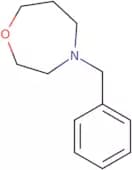
Formula:C10H13NPurity:Min. 95%Molecular weight:147.22 g/mol4-Benzyl-1,4-oxazepane
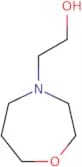
CAS:Versatile small molecule scaffoldFormula:C12H17NOPurity:Min. 95%Molecular weight:191.27 g/mol2-(1,4-Oxazepan-4-yl)ethan-1-ol
CAS:Versatile small molecule scaffoldFormula:C7H15NO2Purity:Min. 95%Molecular weight:145.2 g/molAV-153 free base
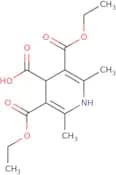
CAS:AV-153 is an organic compound with a carboxylic acid group and an ethyl acetoacetate chain. The crystal structure of this compound is not determined, but it has been found that the molecule is stabilized by hydrogen bonds. It is also known to form dimers and carboxyl groups within its molecular structure. AV-153 has been shown to have antioxidant and glyoxylic acid inhibitory properties, as well as antibacterial activity against methicillin-resistant Staphylococcus aureus (MRSA).
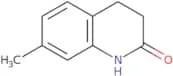
Formula:C14H19NO6Purity:Min. 95%Molecular weight:297.3 g/mol7-Methyl-1,2,3,4-tetrahydroquinolin-2-one
CAS:Versatile small molecule scaffoldFormula:C10H11NOPurity:Min. 95%Molecular weight:161.2 g/mol2-Methylisonicotinamide
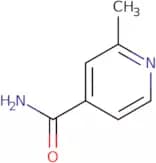
CAS:2-Methylisonicotinamide is a scalable, functional group with a wide range of oxidative reactions. It has been shown to be selective for the oxidation of heteroarenes. It efficiently oxidizes in a one-pot process, and can be used as an efficient and economical oxidant. 2-Methylisonicotinamide is used in biomolecular chemistry for coupling reactions, including the oxidation of heterocyclic compounds. The compound is also employed as an oxidant in organic synthesis.Formula:C7H8N2OPurity:Min. 95%Molecular weight:136.15 g/mol2,2-Dichloro-N-(4-chlorophenyl)-3-oxo-3-phenylpropanamide
CAS:Versatile small molecule scaffoldFormula:C15H10Cl3NO2Purity:Min. 95%Molecular weight:342.6 g/mol

![3-{2,4-Dioxo-1,3-diazaspiro[4.5]decan-3-yl}propanoic acid](/_next/image/?url=https%3A%2Fstatic.cymitquimica.com%2Fproducts%2F3D%2Fthumb-webp%2FUAA28294.webp&w=3840&q=75)
![3-{2,4-Dioxo-1,3-diazaspiro[4.5]decan-3-yl}propanenitrile](/_next/image/?url=https%3A%2Fstatic.cymitquimica.com%2Fproducts%2F3D%2Fthumb-webp%2FUAA28300.webp&w=3840&q=75)
![N-[(Pentafluorophenyl)methylidene]hydroxylamine](/_next/image/?url=https%3A%2Fstatic.cymitquimica.com%2Fproducts%2F3D%2Fthumb-webp%2FUAA29227.webp&w=3840&q=75)