Building Blocks
Subcategories of "Building Blocks"
- Boronic Acids & Boronic Acid Derivatives(5,781 products)
- Chiral Building Blocks(1,242 products)
- Hydrocarbon Building Blocks(6,101 products)
- Organic Building Blocks(61,033 products)
Found 205320 products of "Building Blocks"
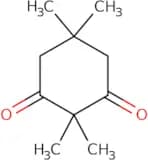
2,2,5,5-Tetramethyl-1,3-cyclohexanedione
CAS:Versatile small molecule scaffold
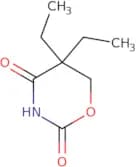
Formula:C10H16O2Purity:Min. 95%Molecular weight:168.23 g/mol5,5-Diethyl-1,3-oxazinane-2,4-dione
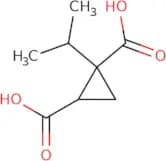
CAS:5,5-Diethyl-1,3-oxazinane-2,4-dione is a water soluble plant growth regulator that belongs to the chemical class of hydroxylated dioximes. It has been shown to have biological properties in plants and is used as a soil wetting agent, but not as an herbicide. 5,5-Diethyl-1,3-oxazinane-2,4-dione has been shown to be highly resistant to microbial infection and have biocompatible properties. This compound was also found to be nonirritant in vitro and can be used as a sample preparation tool for kinetic studies. The compound is also useful for the detection of radiation in fatty acids.Formula:C8H13NO3Purity:Min. 95%Molecular weight:171.19 g/molrac-(1R,2R)-1-(Propan-2-yl)cyclopropane-1,2-dicarboxylic acid
CAS:Versatile small molecule scaffoldFormula:C8H12O4Purity:Min. 95%Molecular weight:172.2 g/mol4-Bromo-N-methylbenzenesulfonamide
CAS:Versatile small molecule scaffoldFormula:C7H8BrNO2SPurity:Min. 95%Molecular weight:250.11 g/mol7,8-Dichloroquinoline
CAS:7,8-Dichloroquinoline is a chlorinated quinoline that can be used as a marker for the identification of lactobacillus acidophilus. It has been shown to be an effective agent against l. acidophilus and other lactobacilli in vitro. The effect of 7,8-dichloroquinoline on the growth of lactobacillus species was studied using a nutrient agar medium containing potassium phosphate and calcium carbonate as nutrients. The results showed that 7,8-dichloroquinoline inhibited the growth of all strains tested except Lactobacillus pentosus and Lactobacillus brevis.
Formula:C9H5Cl2NPurity:Min. 95%Molecular weight:198.05 g/mol3-Phenyl-2-oxazolidinone
CAS:3-Phenyl-2-oxazolidinone is a potent antibacterial agent. It has been shown to be active against a wide range of Gram-positive and Gram-negative bacteria, including Enterococcus faecalis, Staphylococcus aureus, Mycobacterium avium complex and Escherichia coli. 3-Phenyl-2-oxazolidinone has also been shown to inhibit the growth of Mycobacterium tuberculosis in culture. The mechanism of action is not yet fully understood but may involve inhibition of cell wall synthesis or protein synthesis. 3-Phenyl-2-oxazolidinone also exhibits antiviral activity against human immunodeficiency virus type 1 (HIV) and herpes simplex virus type 2 (HSV).Formula:C9H9NO2Purity:Min. 95%Molecular weight:163.17 g/molBicyclo[2.2.2]oct-5-ene-2-sulfonyl fluoride-(endo)
CAS:Versatile small molecule scaffoldFormula:C8H11FO2SPurity:Min. 95%Molecular weight:190.24 g/mol4-Fluoro-2-nitro-n-methylaniline
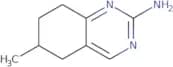
CAS:Versatile small molecule scaffoldFormula:C7H7FN2O2Purity:Min. 95%Molecular weight:170.14 g/mol6-Methyl-5,6,7,8-tetrahydroquinazolin-2-amine
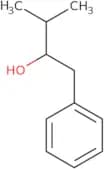
CAS:Versatile small molecule scaffoldFormula:C9H13N3Purity:Min. 95%Molecular weight:163.22 g/mol3-Methyl-1-phenylbutan-2-ol
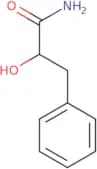
CAS:3-Methyl-1-phenylbutan-2-ol is a benzene derivative that is used in the formulation of perfumes, as well as other products. It is safe to use and has no known side effects. 3-Methyl-1-phenylbutan-2-ol is a fragrance ingredient that belongs to the class of aromatic alcohols. This compound has been shown to have toxicologic and dermatologic properties, although it does not cause irritation or sensitization. 3-Methyl-1-phenylbutan-2-ol contains a benzene ring with an alcohol group. The benzene ring has two methyl groups at positions 1 and 2.Formula:C11H16OPurity:Min. 95%Molecular weight:164.24 g/mol2-Hydroxy-3-phenylpropanamide
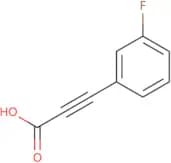
CAS:2-Hydroxy-3-phenylpropanamide is a fatty acid that has been shown to have radical scavenging activity. It is an omega-3 fatty acid, which means it has the first double bond at the third carbon from the methyl end of the molecule. 2-Hydroxy-3-phenylpropanamide also has a phenolic group, which is a type of chemical group with one or more hydroxyl (-OH) groups attached to an aromatic hydrocarbon ring. This compound may be selective for substrate, as it does not react with carboxylic acids or amides. 2-Hydoxy-3-phenylpropanamide's unsaturated aliphatic chain makes it susceptible to oxidation and can lead to the formation of carboxylic acids and aldehydes, which are reactive molecules.Formula:C9H11NO2Purity:Min. 95%Molecular weight:165.19 g/mol3-(3-fluorophenyl)prop-2-ynoic acid
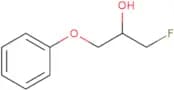
CAS:3-(3-fluorophenyl)prop-2-ynoic acid is an organic compound that is used as a reagent in organic synthesis. It is activated with strong Lewis acids such as aluminum chloride and boron trifluoride etherate to yield the terminal alkynes. The terminal alkynes can be converted to carboxylic acids by carboxylation. 3-(3-Fluorophenyl)prop-2-ynoic acid has been shown to catalyze the reaction in which propiolic acid reacts with butyllithium, yielding methylene chloride and 1,1,1-trichloropropanol. 3-(3-Fluorophenyl)prop-2-ynoic acid also has a mononuclear structure and can be diffracted by x-rays.Formula:C9H5O2FPurity:Min. 95%Molecular weight:164.13 g/mol1-Fluoro-3-phenoxypropan-2-ol
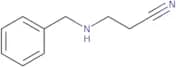
CAS:1-Fluoro-3-phenoxypropan-2-ol is a chiral epoxide that is used as a reagent in organic synthesis. It reacts with styrene to form an enantiomerically pure styrene oxide. 1-Fluoro-3-phenoxypropan-2-ol also has the ability to react with epoxides, chlorohydrins, and chloride to form cyclohexene oxide and fluorine oxide, respectively. The stereochemistry of these reactions can be manipulated by changing the solvent or by using an enantioselective catalyst.Formula:C9H11FO2Purity:Min. 95%Molecular weight:170.18 g/mol²-(Benzylamino)propionitrile
CAS:²-(Benzylamino)propionitrile is a synthetic organic compound that is used in the synthesis of catalytic amines and aziridinium salts. It is an intermediate for the production of amines and aziridinium salts, which are compounds with a wide range of applications. ²-(Benzylamino)propionitrile also has the ability to be used as a ligand in metal-catalyzed reactions, such as hydrochloric acid catalyzed reactions. This chemical can be reused several times and is stable at temperatures from 0 to 150 ˚C.
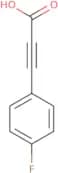
Formula:C10H12N2Purity:Min. 95%Molecular weight:160.22 g/mol3-(4-Fluorophenyl)prop-2-ynoic acid
CAS:Versatile small molecule scaffoldFormula:C9H5FO2Purity:Min. 95%Molecular weight:164.13 g/mol1,3-Diazaspiro[4.6]undecane-2,4-dione
CAS:Versatile small molecule scaffoldFormula:C9H14N2O2Purity:Min. 95%Molecular weight:182.22 g/mol8-Methyl-1,3-diazaspiro[4.5]decane-2,4-dione
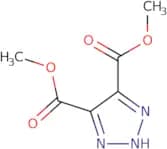
CAS:Versatile small molecule scaffoldFormula:C9H14N2O2Purity:Min. 95%Molecular weight:182.22 g/mol4,5-Dimethyl 1H-1,2,3-triazole-4,5-dicarboxylate
CAS:Versatile small molecule scaffold
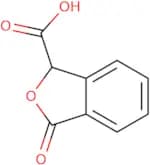
Formula:C6H7N3O4Purity:Min. 95%Molecular weight:185.14 g/mol3-Oxo-1,3-dihydro-2-benzofuran-1-carboxylic acid
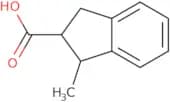
CAS:3-Oxo-1,3-dihydro-2-benzofuran-1-carboxylic acid is a cyclic compound with a molecular weight of 174.19. It is a white crystalline solid with a melting point of 164°C and can be found in isopropyl alcohol. 3-Oxo-1,3-dihydro-2-benzofuran-1-carboxylic acid is used as an intermediate for the synthesis of coatings, which are applied to surfaces to protect them from corrosion or other chemical attack. The reaction time and solvent must be considered when working with this compound.Formula:C9H6O4Purity:Min. 95%Molecular weight:178.14 g/mol1-Methyl-2,3-dihydro-1H-indene-2-carboxylic acid
CAS:Versatile small molecule scaffoldFormula:C11H12O2Purity:Min. 95%Molecular weight:176.21 g/mol



![Bicyclo[2.2.2]oct-5-ene-2-sulfonyl fluoride-(endo)](/_next/image/?url=https%3A%2Fstatic.cymitquimica.com%2Fproducts%2F3D%2Fthumb-webp%2FAAA70390.webp&w=3840&q=75)

![1,3-Diazaspiro[4.6]undecane-2,4-dione](/_next/image/?url=https%3A%2Fstatic.cymitquimica.com%2Fproducts%2F3D%2Fthumb-webp%2FAAA70716.webp&w=3840&q=75)
![8-Methyl-1,3-diazaspiro[4.5]decane-2,4-dione](/_next/image/?url=https%3A%2Fstatic.cymitquimica.com%2Fproducts%2F3D%2Fthumb-webp%2FAAA70717.webp&w=3840&q=75)