


Building Blocks
This section contains fundamental products for the synthesis of organic and biological compounds. Building blocks are the essential starting materials used to construct complex molecules through various chemical reactions. They play a critical role in drug discovery, material science, and chemical research. At CymitQuimica, we offer a diverse range of high-quality building blocks to support your innovative research and industrial projects, ensuring you have the essential components for successful synthesis.
Subcategories of "Building Blocks"
- Boronic Acids & Boronic Acid Derivatives(5,781 products)
- Chiral Building Blocks(1,242 products)
- Hydrocarbon Building Blocks(6,101 products)
- Organic Building Blocks(61,033 products)
Found 205320 products of "Building Blocks"
Sort by
Purity (%)
0
100
|
0
|
50
|
90
|
95
|
100
2-(1H-Benzo[D]imidazol-1-yl)-N-methylacetamide
CAS:2-(1H-Benzo[D]imidazol-1-yl)-N-methylacetamide is a water soluble compound that is used to enhance the data transfer rate in multimedia and computer networks. It is also an adsorbent that can be used to remove sodium ions from deionized water. 2-(1H-Benzo[D]imidazol-1-yl)-N-methylacetamide has been used as a reagent for the detection of amyloid plaques in human brains by immunohistochemical staining techniques. This reagent has been shown to bind selectively with the amyloid beta protein and can be used for the diagnosis of Alzheimer's disease.Formula:C10H11N3OPurity:Min. 95%Molecular weight:189.21 g/mol2,3-Diamino-6-ethylpyrimidin-4(3H)-one
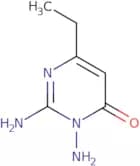
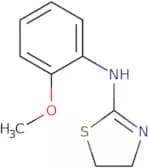
CAS:Versatile small molecule scaffoldFormula:C6H10N4OPurity:Min. 95%Molecular weight:154.17 g/molN-(2-Methoxyphenyl)-4,5-dihydro-1,3-thiazol-2-amine
CAS:Versatile small molecule scaffoldFormula:C10H12N2OSPurity:Min. 95%Molecular weight:208.28 g/molChroman-6-carboxylic acid
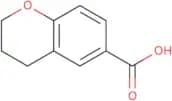
CAS:Chroman-6-carboxylic acid is a hydroxamic acid that is used in the production of carboxylate emulsions. It is an active substance that has been shown to inhibit the growth of bacteria and fungi. Chroman-6-carboxylic acid has also been shown to be a strong oxidizing agent, which can generate hydrogen peroxide in alkaline media. This agent also has functional groups such as carboxylate, chloride, and carboxylic acid.
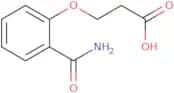
Formula:C10H10O3Purity:Min. 95%Molecular weight:178.19 g/mol3-(2-Carbamoyl-phenoxy)-propionic acid
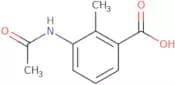
CAS:Versatile small molecule scaffoldFormula:C10H11NO4Purity:Min. 95%Molecular weight:209.2 g/mol3-Acetamido-2-methylbenzoic acid
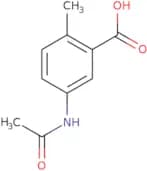
CAS:Versatile small molecule scaffoldFormula:C10H11NO3Purity:Min. 95%Molecular weight:193.2 g/mol5-Acetamido-2-methylbenzoic acid
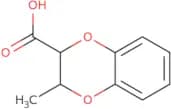
CAS:5-Acetamido-2-methylbenzoic acid is a linker that is used to attach ubiquitin to other proteins as a covalent inhibitor. It has been shown to inhibit the HIV-1 reverse transcriptase, which is an enzyme in the viral replication process. 5-Acetamido-2-methylbenzoic acid is also able to form a covalent bond with peptidomimetic warheads, which are compounds that mimic viral proteins and inhibit the activity of host immune response enzymes. This compound has been shown to be reactive with polymerases, such as RNA polymerase and DNA polymerase, inhibiting their activity.Formula:C10H11NO3Purity:Min. 95%Molecular weight:193.2 g/mol3-Methyl-2,3-dihydro-1,4-benzodioxine-2-carboxylic acid
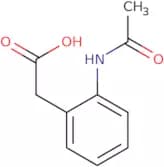
CAS:Versatile small molecule scaffoldFormula:C10H10O4Purity:Min. 95%Molecular weight:194.18 g/mol2-(2-Acetamidophenyl)acetic acid
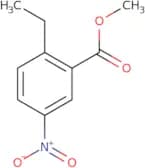
CAS:2-(2-Acetamidophenyl)acetic acid is a product that has been shown to have immunosuppressive and anti-inflammatory effects. It inhibits the production of proinflammatory cytokines, such as tumor necrosis factor (TNF), by blocking the lipoxygenase pathway. 2-(2-Acetamidophenyl)acetic acid also inhibits the expression of proinflammatory genes, such as IL-1β and IL-6, in human cells. 2-(2-Acetamidophenyl)acetic acid is used for the treatment of autoimmune diseases, eye disorders, and inflammatory diseases.Formula:C10H11NO3Purity:Min. 95%Molecular weight:193.2 g/molMethyl 2-ethyl-5-nitrobenzoate
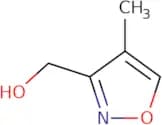
CAS:Versatile small molecule scaffoldFormula:C10H11NO4Purity:Min. 95%Molecular weight:209.2 g/mol(4-Methyl-1,2-oxazol-3-yl)methanol
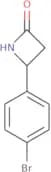
CAS:Versatile small molecule scaffoldFormula:C5H7NO2Purity:Min. 95%Molecular weight:113.11 g/mol4-(4-Bromophenyl)azetidin-2-one
CAS:Versatile small molecule scaffoldFormula:C9H8BrNOPurity:Min. 95%Molecular weight:226.07 g/mol2-(4-Hydroxyphenyl)propane-1,3-diol
CAS:Versatile small molecule scaffoldFormula:C9H12O3Purity:Min. 95%Molecular weight:168.19 g/molN1-(6-Fluoropyridin-2-yl)ethane-1,2-diamine
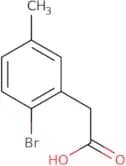
CAS:Versatile small molecule scaffoldFormula:C7H10FN3Purity:Min. 95%Molecular weight:155.17 g/mol2-(2-Bromo-5-methylphenyl)acetic acid
CAS:Versatile small molecule scaffoldFormula:C9H9BrO2Purity:Min. 95%Molecular weight:229.07 g/mol1-[4-(4-Hydroxyphenyl)-1,2,3,6-tetrahydropyridin-1-yl]ethan-1-one
CAS:Versatile small molecule scaffoldFormula:C13H15NO2Purity:Min. 95%Molecular weight:217.26 g/molMethyl 4-[methoxy(methyl)carbamoyl]benzoate
CAS:Versatile small molecule scaffold
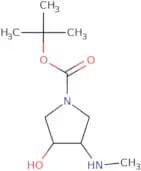
Formula:C11H13NO4Purity:Min. 95%Molecular weight:223.22 g/molrac-tert-Butyl (3R,4R)-3-hydroxy-4-(methylamino)pyrrolidine-1-carboxylate
CAS:Versatile small molecule scaffoldFormula:C10H20N2O3Purity:Min. 95%Molecular weight:216.28 g/mol3-(2,3-Dihydro-1-benzofuran-5-yl)acrylic acid
CAS:Versatile small molecule scaffoldFormula:C11H10O3Purity:Min. 95%Molecular weight:190.2 g/mol1-[(4-Bromophenyl)sulfonyl]-4-piperidinecarboxylic acid
CAS:Versatile small molecule scaffoldFormula:C12H14BrNO4SPurity:Min. 95%Molecular weight:348.21 g/mol
![2-(1H-Benzo[D]imidazol-1-yl)-N-methylacetamide](/_next/image/?url=https%3A%2Fstatic.cymitquimica.com%2Fproducts%2F3D%2Fthumb-webp%2FDEA09630.webp&w=3840&q=75)



![1-[4-(4-Hydroxyphenyl)-1,2,3,6-tetrahydropyridin-1-yl]ethan-1-one](/_next/image/?url=https%3A%2Fstatic.cymitquimica.com%2Fproducts%2F3D%2Fthumb-webp%2FDIA43846.webp&w=3840&q=75)
![Methyl 4-[methoxy(methyl)carbamoyl]benzoate](/_next/image/?url=https%3A%2Fstatic.cymitquimica.com%2Fproducts%2F3D%2Fthumb-webp%2FDIA44283.webp&w=3840&q=75)

![1-[(4-Bromophenyl)sulfonyl]-4-piperidinecarboxylic acid](/_next/image/?url=https%3A%2Fstatic.cymitquimica.com%2Fproducts%2F3D%2Fthumb-webp%2FDIA51901.webp&w=3840&q=75)