Building Blocks
Subcategories of "Building Blocks"
- Boronic Acids & Boronic Acid Derivatives(5,780 products)
- Chiral Building Blocks(1,241 products)
- Hydrocarbon Building Blocks(6,100 products)
- Organic Building Blocks(61,024 products)
Found 205297 products of "Building Blocks"
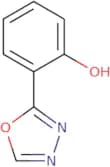
2-(1,3,4-Oxadiazol-2-yl)phenol
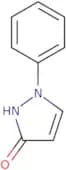
CAS:2-(1,3,4-Oxadiazol-2-yl)phenol (ODAP) is a prodrug that can be converted to the active form, estradiol. It has been shown to have anti-inflammatory effects and is used to treat nasal polyps. ODAP is also used as a site specific drug for the treatment of breast cancer. ODAP has been shown to inhibit the growth of bacteria such as Staphylococcus aureus and Helicobacter pylori. ODAP binds to bacterial 16S ribosomal RNA and inhibits protein synthesis, leading to cell death by inhibiting the production of proteins vital for cell division.Formula:C8H6N2O2Purity:Min. 95%Molecular weight:162.15 g/mol1-Phenyl-1H-pyrazol-3(2H)-one
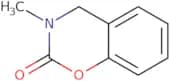
CAS:1-Phenyl-1H-pyrazol-3(2H)-one is a molecule that has been synthesized in the form of a cyclic compound. It can be used for the synthesis of polymers, which are used as coatings and adhesives. The molecule's structure was determined by x-ray crystallography. The chemical properties of 1-phenyl-1H-pyrazol-3(2H)-one depend on its oxidation state, which can be reversibly oxidized to the corresponding quinone with a cyclic voltammetry strategy. This process involves the use of a solid electrode and nonpolar solvents, such as chloroform or ether. This reaction is irreversible and leads to oxidation of 1-phenyl-1H-pyrazol-3(2H)-one to the quinone form. The molecule has also been synthesized using a solid phase synthesis technique involving methoxy groups as monomersFormula:C9H8N2OPurity:Min. 95%Molecular weight:160.17 g/mol3-Methyl-3,4-dihydro-2H-1,3-benzoxazin-2-one
CAS:Versatile small molecule scaffold
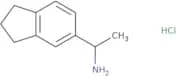
Formula:C9H9NO2Purity:Min. 95%Molecular weight:163.17 g/mol1-(2,3-Dihydro-1H-inden-5-yl)ethan-1-amine hydrochloride
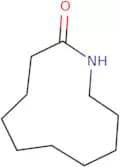
CAS:Versatile small molecule scaffoldFormula:C11H16ClNPurity:Min. 95%Molecular weight:197.7 g/molAzacycloundecan-2-one
CAS:Azacycloundecan-2-one is a ring-opening polymerization monomer that exhibits good solubility in organic solvents. It is used as the precursor to polyamides and polymeric matrices. Azacycloundecan-2-one has been shown to form a film with a high degree of viscosity and excellent mechanical properties, which are desirable for films in the food industry. Ring opening polymerization of azacycloundecan-2-one can be achieved by using magnesium salts or diacids as catalysts. The lactam ring structure of azacycloundecan-2-one provides reactive sites for reactions with other compounds, such as amines, alcohols, phenols, and carboxylic acids.
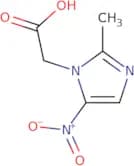
Formula:C10H19NOPurity:Min. 95%Color and Shape:PowderMolecular weight:169.26 g/mol2-(2-Methyl-5-nitro-1H-imidazol-1-yl)acetic acid
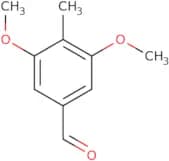
CAS:2-(2-Methyl-5-nitro-1H-imidazol-1-yl)acetic acid is an antimicrobial agent that inhibits the growth of bacteria by oxidation. It has been shown to be effective against protozoan parasites and has a good activity against Gram-positive bacteria. The main metabolic pathway for 2-(2-Methyl-5-nitro-1H-imidazol-1-yl)acetic acid is hydrolysis by hydrochloric acid, with a minor route involving hydroxy metabolite formation. This drug also acts as a prodrug for antipyrine, which inhibits bacterial growth via inhibition of protein synthesis.Formula:C6H7N3O4Purity:Min. 95%Molecular weight:185.14 g/mol3,5-dimethoxy-4-methylbenzaldehyde
CAS:3,5-Dimethoxy-4-methylbenzaldehyde is a phenylacetic compound that is found in the fructus of plants. It has been shown to have tumor necrosis factor (TNF) and phenolic properties. This molecule also stimulates the inflammatory process by inducing pro-inflammatory cytokines such as TNF-α and IL-1β. 3,5-Dimethoxy-4-methylbenzaldehyde has been found to inhibit the growth of various bacteria, including methicillin resistant Staphylococcus aureus isolates, when used at concentrations of 0.001%.Formula:C10H12O3Purity:Min. 95%Molecular weight:180.2 g/mol3-Phenylisoxazole-5-carbonitrile
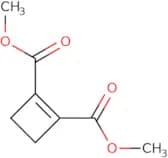
CAS:Versatile small molecule scaffoldFormula:C10H6N2OPurity:Min. 95%Molecular weight:170.17 g/molDimethyl cyclobut-1-ene-1,2-dicarboxylate
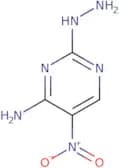
CAS:Dimethyl cyclobut-1-ene-1,2-dicarboxylate (DMCB) is a lipase inhibitor that belongs to the class of dicarboxylic acid esters. It is used as an immobilized catalyst in organic synthesis and has a high stereoselectivity. This compound has been shown to be effective in catalyzing the thermal isomerization of maleates to produce 1,2-diols with high yields. DMCB also has a spontaneous reaction with photosensitizers such as rose bengal and benzoporphyrin derivative. The maleate form can be converted into the diacid form by the enzyme maleate dehydrogenase, which is found in porcine tissues. The diacid form can then undergo hydrolysis by an esterase or glucuronidase, releasing DMCB and regenerating the original maleate substrate.Formula:C8H10O4Purity:Min. 95%Molecular weight:170.16 g/mol2-Hydrazinyl-5-nitropyrimidin-4-amine
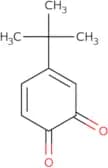
CAS:Versatile small molecule scaffoldFormula:C4H6N6O2Purity:Min. 95%Molecular weight:170.13 g/mol4-tert-Butylcyclohexa-3,5-diene-1,2-dione
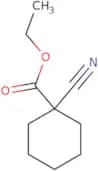
CAS:4-tert-Butylcyclohexa-3,5-diene-1,2-dione is a flavonoid that inhibits the enzyme tyrosinase in the synthesis of melanin. It is used for the treatment of hyperpigmentation conditions, such as melasma and chloasma. The inhibitory effect of 4-tert-Butylcyclohexa-3,5-diene-1,2-dione has been shown to be competitive with respect to 3-hydroxyanthranilic acid and noncompetitive with respect to naphthol. 4BCD also inhibits the monophenolase activity of tyrosinase and its ability to oxidize phenols. This inhibition is due to its structural similarity with phenols and its ability to bind covalently with tyrosinase's active site.Formula:C10H12O2Purity:90%NmrColor and Shape:PowderMolecular weight:164.2 g/mol1-Cyano-cyclohexanecarboxylic acid ethyl ester
CAS:1-Cyano-cyclohexanecarboxylic acid ethyl ester is a synthetic intermediate in the preparation of benzene. It is used as a reagent for the synthesis of methylcyclohexane and other cyclohexanones. The compound can be prepared by reacting chlorinated aliphatic hydrocarbons with carbon dioxide, followed by acidification and decarbonylation. 1-Cyano-cyclohexanecarboxylic acid ethyl ester can be purified by distillation or recrystallization from acetonitrile, chloroform, or benzene.
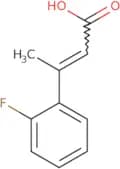
Formula:C10H15NO2Purity:Min. 95%Molecular weight:181.23 g/mol3-(2-Fluorophenyl)but-2-enoic acid
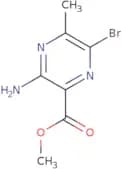
CAS:Versatile small molecule scaffoldFormula:C10H9FO2Purity:Min. 95%Molecular weight:180.17 g/molMethyl 3-amino-6-bromo-5-methylpyrazine-2-carboxylate
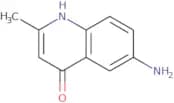
CAS:Versatile small molecule scaffoldFormula:C7H8BrN3O2Purity:Min. 95%Molecular weight:246.06 g/mol6-Amino-2-methyl-quinolin-4-ol
CAS:Versatile small molecule scaffoldFormula:C10H10N2OPurity:Min. 95%Molecular weight:174.2 g/mol3,5-Di-tert-butyl-1H-pyrazole
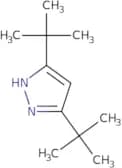
CAS:3,5-Di-tert-butyl-1H-pyrazole is a molecule that has two phenyl groups and one hydrogen bond. It is used as a reagent in analytical chemistry for the determination of hydrochloric acid and in crystallography for the study of x-ray crystal structures. 3,5-Di-tert-butyl-1H-pyrazole has been shown to have x-ray crystal structures with four nitrogens and one proton. The molecule also has a pyrazole ring at the center that contains one hydroxy group and two phenyl groups. The molecular weight of 3,5-Di-tert-butyl-1H-pyrazole is 152.2 g/mol.
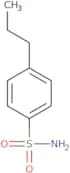
Formula:C11H20N2Purity:Min. 95%Molecular weight:180.29 g/mol4-N-Propylbenzenesulfonamide
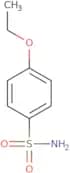
CAS:4-N-Propylbenzenesulfonamide is a hydrophobic compound that binds to the active site of carbonyl reductase, an enzyme involved in the metabolism of ketones and aldehydes. It also inhibits the catalytic activity of this enzyme, which reduces the amount of carbonyls produced in the cell. 4-N-Propylbenzenesulfonamide has been shown to be effective in preventing kidney damage in animal models. The structural features of this drug are similar to those found in acetoacetate and propionate, which are important for stimulating renal function. These drugs can bind to alpha and beta subunits on the surface of renal tubules, resulting in increased blood flow, improved filtration rates, and decreased fluid retention. This leads to protection against acute kidney injury (AKI) and chronic kidney disease (CKD).Formula:C9H13NO2SPurity:Min. 95%Molecular weight:199.27 g/mol4-Ethoxybenzenesulfonamide
CAS:Versatile small molecule scaffoldFormula:C8H11NO3SPurity:Min. 95%Molecular weight:201.25 g/mol3-[(3-Chlorophenyl)sulfanyl]propanoic acid
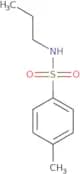
CAS:Versatile small molecule scaffoldFormula:C9H9ClO2SPurity:Min. 95%Molecular weight:216.68 g/mol4-Methyl-N-propylbenzene-1-sulfonamide
CAS:4-Methyl-N-propylbenzene-1-sulfonamide is a colorless crystalline solid. It has an alkynyl group that can form metal hydrogen bonds and it has a functional group that can be substituted with other groups. The compound contains chlorides and sulfates, which are acidic functional groups. 4-Methyl-N-propylbenzene-1-sulfonamide can be synthesized by the reaction of toluene and acid chlorides in high yield. This compound is an organic chemistry reagent that is used for the synthesis of carboxylic acids.Formula:C10H15NO2SPurity:Min. 95%Molecular weight:213.3 g/mol


![3-[(3-Chlorophenyl)sulfanyl]propanoic acid](/_next/image/?url=https%3A%2Fstatic.cymitquimica.com%2Fproducts%2F3D%2Fthumb-webp%2FBAA13252.webp&w=3840&q=75)