


Building Blocks
This section contains fundamental products for the synthesis of organic and biological compounds. Building blocks are the essential starting materials used to construct complex molecules through various chemical reactions. They play a critical role in drug discovery, material science, and chemical research. At CymitQuimica, we offer a diverse range of high-quality building blocks to support your innovative research and industrial projects, ensuring you have the essential components for successful synthesis.
Subcategories of "Building Blocks"
- Boronic Acids & Boronic Acid Derivatives(5,756 products)
- Chiral Building Blocks(1,242 products)
- Hydrocarbon Building Blocks(6,095 products)
- Organic Building Blocks(61,055 products)
Found 199650 products of "Building Blocks"
Sort by
Purity (%)
0
100
|
0
|
50
|
90
|
95
|
100
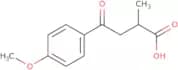
4-(4-Methoxyphenyl)-2-methyl-4-oxobutanoic acid
CAS:<p>Versatile small molecule scaffold</p>Formula:C12H14O4Purity:Min. 95%Molecular weight:222.24 g/mol3,4-Dimethylcyclohexanol (mixture of isomers)
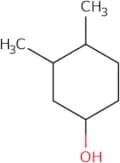
CAS:3,4-Dimethylcyclohexanol is a trimer of cyclohexanol that has a boiling point of 113.2°C and a density of 0.816 g/mL at 20°C. The mixture is composed of two isomers, cis-3,4-dimethylcyclohexanol and trans-3,4-dimethylcyclohexanol. 3,4-Dimethylcyclohexanol is soluble in water and alcohols and can form hydrogen bonds with other molecules. The equilibrium constant for the formation of the cis-isomer from the trans-isomer is 2.05x10^5 at 25°C and 1 atm pressure. At equilibrium, the concentrations are 0.25 mol/L for cis-3,4-dimethylcyclohexanol and 0.75 mol/L for trans-3,4-dimethylcyclohexanol.Formula:C8H16OPurity:Min. 95%Molecular weight:128.22 g/mol(2-Phenylethyl)[(pyridin-4-yl)methyl]amine
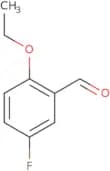
CAS:Controlled Product<p>Versatile small molecule scaffold</p>Formula:C14H16N2Purity:Min. 95%Molecular weight:212.29 g/mol2-Ethoxy-5-fluorobenzaldehyde
CAS:<p>Versatile small molecule scaffold</p>Formula:C9H9FO2Purity:Min. 95%Molecular weight:168.17 g/mol2-Nitro-1H-benzo[d]imidazole
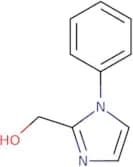
CAS:<p>2-Nitro-1H-benzo[d]imidazole is an analog of benzimidazole compounds. It is used in the preparation of antibodies. 2-Nitro-1H-benzo[d]imidazole reacts with hydrochloric acid to form a trifluoroacetic acid, which can be purified by trichloroacetic acid and recrystallized from methanol. The purity of the product can be checked using a UV spectrophotometer, and it has a melting point of 141°C.</p>Formula:C7H5N3O2Purity:Min. 95%Molecular weight:163.13 g/mol(1-Phenyl-1H-imidazol-2-yl)methanol
CAS:<p>Versatile small molecule scaffold</p>Formula:C10H10N2OPurity:Min. 95%Molecular weight:174.2 g/mol1-Benzyl-1-phenylhydrazine hydrochloride
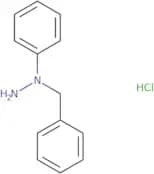
CAS:<p>1-Benzyl-1-phenylhydrazine hydrochloride is a selective androgen receptor modulator that binds to the prostate response element (RARE) in the promoter region of prostate cancer cells. It is used for the treatment of prostatic hyperplasia and benign prostatic hypertrophy. 1-Benzyl-1-phenylhydrazine hydrochloride has been shown to reduce the symptoms of urinary obstruction and to slow the progression of prostate cancer cells in vitro. It also has side effect profiles that are similar to those of nonsteroidal anti-inflammatory drugs, such as gastrointestinal upset and diarrhea.</p>Formula:C13H15ClN2Purity:Min. 95%Molecular weight:234.72 g/mol3-Phenylpent-4-enoic acid
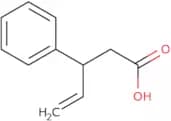
CAS:<p>3-Phenylpent-4-enoic acid is a natural product that is obtained from the lipophilic fraction of various plant species. It can be synthesized using chemoenzymatic reactions. 3-Phenylpent-4-enoic acid can be used as a chiral chemical intermediate in the synthesis of other compounds, such as olefinic compounds and alkene derivatives. This compound has been shown to have promiscuous reactivity, which is characterized by its ability to catalyze metathesis reactions with high enantiomeric excess. The isolated yield for this reaction was high at 96%.</p>Formula:C11H12O2Purity:Min. 95%Molecular weight:176.21 g/mol2-(2-Methylpropyl)butanedioic acid
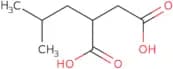
CAS:<p>2-(2-Methylpropyl)butanedioic acid is an uncatalyzed chemical reaction that is used for the treatment of wastewater. It is a chiral compound, which means it has a non-superimposable mirror image. 2-(2-Methylpropyl)butanedioic acid can be synthesized by homochiral reactions, which are reactions that uses only one type of chiral molecule to produce a chiral product. The rate of this reaction is controlled by the concentration of reactants and the temperature at which it occurs. This reaction mechanism involves the formation of an enolate ion from 2-(2-methylpropyl) butanedioic acid, followed by deprotonation to form the conjugated enolate. Leukocyte elastase is an enzyme that breaks down elastin in cells, and this enzyme may be inhibited by gabapentin.</p>Formula:C8H14O4Purity:Min. 95%Molecular weight:174.19 g/mol2-Amino-3,4-dimethoxybenzoic acid
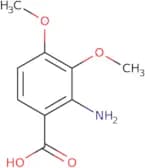
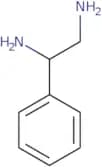
CAS:<p>2-Amino-3,4-dimethoxybenzoic acid is a chemotherapeutic agent that inhibits the function of P-glycoprotein (Pgp) and other ATPase pumps. It has been shown to be effective in inhibiting the growth of human cancer cells with functionalities such as epidermal growth factor, p-glycoprotein, and TNF-α. This drug also inhibits the production of alicyclic compounds in the body by blocking their metabolic pathways. 2-Amino-3,4-dimethoxybenzoic acid is a fluorescent compound that emits green light when excited at 350 nm and 450 nm.</p>Formula:C9H11NO4Purity:Min. 95%Molecular weight:197.19 g/mol1-Phenylethane-1,2-diamine
CAS:<p>1-Phenylethane-1,2-diamine (1PD) is a diamine tetraacetic acid salt that is a conformational analogue of the chemokine CXCL12. It has been shown to bind to its receptor and inhibit chemotaxis in vitro. 1PD has also been shown to be stereoselective in its binding to the receptor, with the sodium salt showing greater selectivity for CXCR4 than CXCR5. The solvation of 1PD has been studied by spectroscopic techniques and it is found that the solvation process is dominated by hydrogen bonding interactions with solvent molecules. This drug has not yet been analysed for human use or toxicity.</p>Formula:C8H12N2Purity:Min. 95%Molecular weight:136.19 g/mol1,4-Diazaspiro[5.5]undecane-3,5-dione
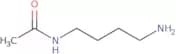
CAS:Versatile small molecule scaffoldFormula:C9H14N2O2Purity:Min. 95%Molecular weight:182.22 g/molN-(4-Aminobutyl)acetamide
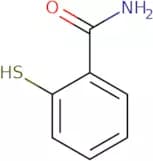
CAS:<p>N-(4-Aminobutyl)acetamide (4-ABAA) is a polyamine that can be found in the body as a byproduct of putrescine and spermidine. It is a potential biomarker for cancer, and has been shown to inhibit the activity of enzymes involved in energy metabolism. 4-ABAA is also present in maternal blood, where it can be used as a measure of disease activity during pregnancy. The basic structure of 4-ABAA is N-(4-aminobutyl)acetamide, which contains a nitrogen atom and an amine group. This molecule is soluble in water and has been used for analytical purposes.</p>Formula:C6H14N2OPurity:Min. 95%Color and Shape:Clear LiquidMolecular weight:130.19 g/mol2-Sulfanylbenzamide
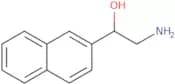
CAS:<p>2-Sulfanylbenzamide is a chemical compound that has been used as an anti-inflammatory drug and as a medicine for the treatment of autoimmune diseases. It has been shown to bind to basic proteins in human serum, which is responsible for its neutral pH. This agent also binds to primary cells and is chemically stable, with ethylene diamine as a matrix effect. 2-Sulfanylbenzamide has been shown to be effective against inflammatory diseases by inhibiting the synthesis of inflammatory mediators such as prostaglandins and leukotrienes.</p>Formula:C7H7NOSPurity:Min. 95%Molecular weight:153.2 g/mol2-Amino-1-(2-naphthyl)-1-ethanol
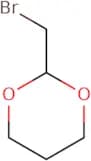
CAS:<p>2-Amino-1-(2-naphthyl)-1-ethanol (2NPE) is an atypical amino alcohol that is used as a pharmacological agent. It has been shown to have glucuronide and phenolic hydroxyl groups, which are reactive metabolites. 2NPE may be carcinogenic due to its ability to inhibit the activity of the enzyme glutathione reductase, which is involved in the detoxification of hydrogen peroxide and organic hydroperoxides. The metabolic pathways for 2NPE include sulfation by phenolic hydroxyl groups, which can lead to a residue of phenolic compounds in humans and animals. 2NPE has been found to have a thymic effect similar to natural n-substituted amino alcohols.</p>Formula:C12H13NOPurity:Min. 95%Molecular weight:187.24 g/mol2-(Bromomethyl)-1,3-dioxane
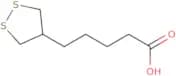
CAS:<p>Versatile small molecule scaffold</p>Formula:C5H9BrO2Purity:Min. 95%Molecular weight:181.03 g/mol5-(1,2-Dithiolan-4-yl)pentanoic acid
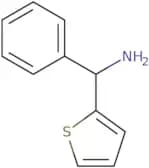
CAS:<p>Versatile small molecule scaffold</p>Formula:C8H14O2S2Purity:Min. 95%Molecular weight:206.3 g/molPhenyl(thiophen-2-yl)methanamine
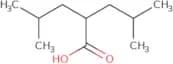
CAS:<p>Versatile small molecule scaffold</p>Formula:C11H11NSPurity:Min. 95%Molecular weight:189.28 g/mol4-Methyl-2-(2-methylpropyl)pentanoic acid
CAS:<p>Versatile small molecule scaffold</p>Formula:C10H20O2Purity:Min. 95%Molecular weight:172.26 g/mol2-Amino-2,3-dihydro-1H-benzo[de]isoquinoline-1,3-dione
CAS:<p>2-Amino-2,3-dihydro-1H-benzo[de]isoquinoline-1,3-dione (BENZENE) is a chemical compound that has been used to study the photochemical properties of epoxides. It is also used as a starting material in the synthesis of polymers. The synthesis of polymers may be accomplished by cationic polymerization or ring opening. Nitro groups on BENZENE are commonly used to synthesize nitro polymers and other compounds containing nitro groups. This chemical can be synthesized by chlorination with formamide and subsequent reaction with nitrous acid or acrylates. BENZENE is also capable of localizing fluorescent dyes within a specific region of a sample and can be used to measure distances between molecules.</p>Formula:C12H8N2O2Purity:Min. 95%Molecular weight:212.2 g/mol

![(2-Phenylethyl)[(pyridin-4-yl)methyl]amine](/_next/image/?url=https%3A%2Fstatic.cymitquimica.com%2Fproducts%2F3D%2Fthumb-webp%2FFAA71384.webp&w=3840&q=75)
![2-Nitro-1H-benzo[d]imidazole](/_next/image/?url=https%3A%2Fstatic.cymitquimica.com%2Fproducts%2F3D%2Fthumb-webp%2FFAA70967.webp&w=3840&q=75)
![1,4-Diazaspiro[5.5]undecane-3,5-dione](/_next/image/?url=https%3A%2Fstatic.cymitquimica.com%2Fproducts%2F3D%2Fthumb-webp%2FFAA69991.webp&w=3840&q=75)
![2-Amino-2,3-dihydro-1H-benzo[de]isoquinoline-1,3-dione](/_next/image/?url=https%3A%2Fstatic.cymitquimica.com%2Fproducts%2F3D%2Fthumb-webp%2FFAA69046.webp&w=3840&q=75)