Building Blocks
This section contains fundamental products for the synthesis of organic and biological compounds. Building blocks are the essential starting materials used to construct complex molecules through various chemical reactions. They play a critical role in drug discovery, material science, and chemical research. At CymitQuimica, we offer a diverse range of high-quality building blocks to support your innovative research and industrial projects, ensuring you have the essential components for successful synthesis.
Subcategories of "Building Blocks"
- Boronic Acids & Boronic Acid Derivatives(5,756 products)
- Chiral Building Blocks(1,242 products)
- Hydrocarbon Building Blocks(6,095 products)
- Organic Building Blocks(61,051 products)
Found 199813 products of "Building Blocks"
Sort by
Purity (%)
0
100
|
0
|
50
|
90
|
95
|
100
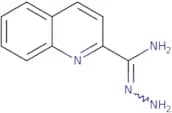
N-Aminoquinoline-2-carboximidamide
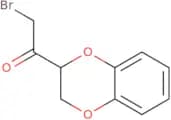
CAS:<p>Versatile small molecule scaffold</p>Formula:C10H10N4Purity:Min. 95%Molecular weight:186.21 g/mol2-Bromo-1-(2,3-dihydro-1,4-benzodioxin-2-yl)ethan-1-one
CAS:Versatile small molecule scaffoldFormula:C10H9BrO3Purity:Min. 95%Molecular weight:257.08 g/mol3-Chloro-6-cyclohexylaminopyridazine
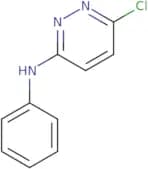
CAS:<p>Versatile small molecule scaffold</p>Formula:C10H14ClN3Purity:Min. 95%Molecular weight:211.7 g/mol6-Chloro-N-phenylpyridazin-3-amine
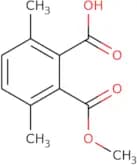
CAS:<p>Versatile small molecule scaffold</p>Formula:C10H8ClN3Purity:Min. 95%Molecular weight:205.64 g/mol2-(Methoxycarbonyl)-3,6-dimethylbenzoic acid
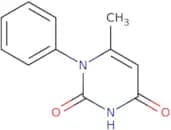
CAS:<p>Versatile small molecule scaffold</p>Formula:C11H12O4Purity:Min. 95%Molecular weight:208.2 g/mol6-Methyl-1-phenyl-1,2,3,4-tetrahydropyrimidine-2,4-dione
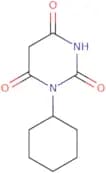
CAS:<p>Versatile small molecule scaffold</p>Formula:C11H10N2O2Purity:Min. 95%Molecular weight:202.21 g/mol1-Cyclohexyl-1,3-diazinane-2,4,6-trione
CAS:Versatile small molecule scaffoldFormula:C10H14N2O3Purity:Min. 95%Molecular weight:210.23 g/mol5-Methyl-1-phenyl-1H-[1,2,4]triazole-3-carboxylic acid
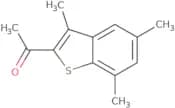
CAS:<p>Versatile small molecule scaffold</p>Formula:C10H9N3O2Purity:Min. 95%Molecular weight:203.2 g/mol1-(3,5,7-Trimethyl-1-benzothiophen-2-yl)ethan-1-one
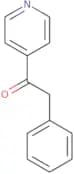
CAS:<p>Versatile small molecule scaffold</p>Formula:C13H14OSPurity:Min. 95%Molecular weight:218.32 g/mol2-Phenyl-1-(pyridin-4-yl)ethan-1-one
CAS:<p>Versatile small molecule scaffold</p>Formula:C13H11NOPurity:Min. 95%Molecular weight:197.23 g/mol1-[(3-Aminophenyl)methyl]-1,2-dihydropyridin-2-one
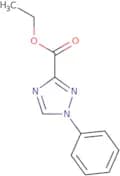
CAS:<p>Versatile small molecule scaffold</p>Formula:C12H12N2OPurity:Min. 95%Molecular weight:200.24 g/molEthyl 1-phenyl-1,2,4-triazole-3-carboxylate
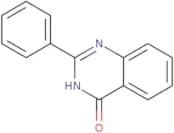
CAS:Versatile small molecule scaffoldFormula:C11H11N3O2Purity:Min. 95%Molecular weight:217.23 g/mol2-Phenyl-4(3H)-quinazolinone
CAS:<p>2-Phenyl-4(3H)-quinazolinone (2-PKQ) is a novel chemical compound that has been shown to have apoptotic properties. It induces cell death by inducing apoptosis, and it blocks the antiplatelet effects of adriamycin. 2-PKQ also has significant inhibitory activities against cancer cells, and it inhibits the growth of B16 melanoma cells in vitro with an IC50 of 0.004 μM. 2-PKQ has been shown to be effective in inhibiting platelet aggregation in a dose dependent manner, suggesting that it may be useful for treating patients with thrombocytopenia or thrombocytopathy associated with leukemia or other blood diseases. 2-PKQ has been found to be fluorescent, which can be used for its detection and quantification.</p>Formula:C14H10N2OPurity:Min. 95%Molecular weight:222.24 g/molBentranil
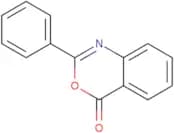
CAS:<p>Bentranil is a chemical compound that contains a pyrazole ring. It is used in the synthesis of more complex molecules and has been shown to have an inhibitory effect on mollusca. Bentranil is produced when carbon disulphide reacts with nitrobenzene, or when amines react with fatty acid. The molecule has a hydrogen bond between its nitrogen and oxygen atoms, which may be due to the presence of an intramolecular hydrogen bond. Bentranil also has an n-oxide group which can form an amine group by reacting with hydrogen peroxide. This reaction can be catalyzed by light or heat.</p>Formula:C14H9NO2Purity:Min. 95%Molecular weight:223.23 g/mol3-Phenyl-1,2,3,4-tetrahydroquinolin-2-one
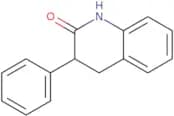
CAS:<p>Versatile small molecule scaffold</p>Formula:C15H13NOPurity:Min. 95%Molecular weight:223.27 g/molN-(2-Bromophenyl)-4-methylbenzene-1-sulfonamide
CAS:<p>N-(2-Bromophenyl)-4-methylbenzene-1-sulfonamide (MBAS) is a pentacyclic molecule that contains an atom transfer reaction. The reaction is catalyzed by aryl bromides, chlorides, and iodides. MBAS is efficient for the synthesis of 1,2,3-triazoles from 2-bromoarylketones. It is also used in the synthesis of aspidophylline.</p>Formula:C13H12BrNO2SPurity:Min. 95%Molecular weight:326.21 g/mol1,3-Diphenyl-1,3-diazetidine-2,4-dione
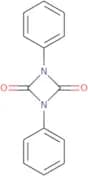
CAS:<p>1,3-Diphenyl-1,3-diazetidine-2,4-dione is a compound that has been synthesized by the reaction of benzene with ethyl acetoacetate and cyclopentadiene. This organometallic compound has an expansion of 10 degrees C to 40 degrees C and can be used as a monosubstituted benzene. It has been shown that 1,3-Diphenyl-1,3-diazetidine-2,4-dione can be converted into hydantoin through the addition of sodium hydroxide. This conversion occurs at temperatures between 100 degrees C and 120 degrees C. The ultraviolet absorption spectrum for 1,3-Diphenyl-1,3-diazetidine-2,4-dione is found in the range of 270 nanometers to 350 nanometers. The Raman spectra for this compound are found in the range of 1600</p>Formula:C14H10N2O2Purity:Min. 95%Molecular weight:238.24 g/mol1-Benzyl-2-phenylpyrrolidine
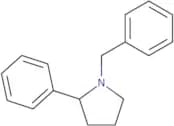
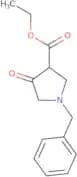
CAS:<p>Versatile small molecule scaffold</p>Formula:C17H19NPurity:Min. 95%Molecular weight:237.34 g/molethyl 1-benzyl-4-oxo-pyrrolidine-3-carboxylate
CAS:<p>Versatile small molecule scaffold</p>Formula:C14H17NO3Purity:Min. 95%Molecular weight:247.29 g/mol3-(4-Bromophenyl)-2-thioxo-2,3-dihydroquinazolin-4(1H)-one
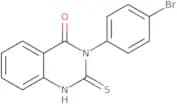
CAS:<p>3-(4-Bromophenyl)-2-thioxo-2,3-dihydroquinazolin-4(1H)-one is a compound with disorder. It crystallizes in the monoclinic space group P21/c and has a pairwise stabilized crystal structure. 3-(4-Bromophenyl)-2-thioxo-2,3-dihydroquinazolin-4(1H)-one is stable as dimers and amides, which are linked by hydrogen bonds. The amide bond distance is 1.47 Å. The dihedral angle between substituents is 99° and it has an HOMO energy level of -5.94 eV, making it a hole acceptor. 3-(4-Bromophenyl)-2-thioxo-2,3-dihydroquinazolin-4(1H)-one has the following crystal structures:</p>Formula:C14H9BrN2OSPurity:Min. 95%Molecular weight:333.2 g/mol


![5-Methyl-1-phenyl-1H-[1,2,4]triazole-3-carboxylic acid](/_next/image/?url=https%3A%2Fstatic.cymitquimica.com%2Fproducts%2F3D%2Fthumb-webp%2FBAA01657.webp&w=3840&q=75)
![1-[(3-Aminophenyl)methyl]-1,2-dihydropyridin-2-one](/_next/image/?url=https%3A%2Fstatic.cymitquimica.com%2Fproducts%2F3D%2Fthumb-webp%2FBAA01751.webp&w=3840&q=75)