Building Blocks
This section contains fundamental products for the synthesis of organic and biological compounds. Building blocks are the essential starting materials used to construct complex molecules through various chemical reactions. They play a critical role in drug discovery, material science, and chemical research. At CymitQuimica, we offer a diverse range of high-quality building blocks to support your innovative research and industrial projects, ensuring you have the essential components for successful synthesis.
Subcategories of "Building Blocks"
- Boronic Acids & Boronic Acid Derivatives(5,756 products)
- Chiral Building Blocks(1,242 products)
- Hydrocarbon Building Blocks(6,095 products)
- Organic Building Blocks(61,038 products)
Found 196817 products of "Building Blocks"
Sort by
Purity (%)
0
100
|
0
|
50
|
90
|
95
|
100
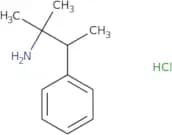
2-Methyl-3-phenylbutan-2-amine hydrochloride
CAS:Controlled Product<p>Versatile small molecule scaffold</p>Formula:C11H18ClNPurity:Min. 95%Molecular weight:199.72 g/mol4-Hydroxy-3,4-diphenylcyclopent-2-en-1-one
CAS:<p>Versatile small molecule scaffold</p>Formula:C17H14O2Purity:Min. 95%Molecular weight:250.29 g/mol2-(Benzylamino)benzonitrile
CAS:<p>2-(Benzylamino)benzonitrile is an organometallic reagent that is used in the synthesis of heterocyclic compounds. It can be used to form anions with various halides, such as 2-aminobenzaldehyde and quinazolines. The chemical rearrangements of acyl halides are a common reaction that occurs when 2-(benzylamino)benzonitrile is exposed to acid or base. This reaction produces 6-membered heterocycles, which have been shown to have therapeutic potential against cancer cells.</p>Formula:C14H12N2Purity:Min. 95%Molecular weight:208.26 g/molrac-(1R,2R)-2-Phenylcyclopropane-1-carbonitrile
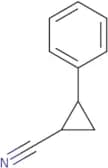
CAS:<p>Rac-1R,2R-2-phenylcyclopropane-1-carbonitrile is an enantiopure compound with two chiral centers. It is a reaction intermediate in the synthesis of prodrugs for the treatment of cancer. Rac-1R,2R-2-phenylcyclopropane-1-carbonitrile is converted to its corresponding amide by reaction with ammonia and then reacted with hydrochloric acid to form the corresponding ester. The optical purity of rac-(1R,2R)-2-phenylcyclopropane-1-carbonitrile can be determined by measuring the optical rotation of the chiral center at 366 nm. Rac-(1R,2R)-2-phenylcyclopropane-1-carbonitrile has a spontaneous rate constant of k=0.02±0.001 s−1 and an additivity parameter of ΔH=-3.84±0.17 kcal mol−1</p>Formula:C10H9NPurity:Min. 95%Molecular weight:143.18 g/mol5-Bromo-2,3-dihydro-1-benzofuran-3-ol
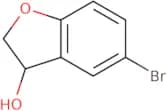
CAS:<p>Versatile small molecule scaffold</p>Formula:C8H7BrO2Purity:Min. 95%Molecular weight:215.04 g/mol2-Azabicyclo[3.2.2]nonan-3-one
CAS:<p>Versatile small molecule scaffold</p>Formula:C8H13NOPurity:Min. 95%Molecular weight:139.19 g/mol3-Azabicyclo[3.2.2]nonane HCl
CAS:<p>Versatile small molecule scaffold</p>Formula:C8H16ClNPurity:Min. 95%Molecular weight:161.67 g/molMethyl 6-methyl-7-oxooctanoate
CAS:<p>Versatile small molecule scaffold</p>Formula:C10H18O3Purity:Min. 95%Molecular weight:186.25 g/mol6-Cyanohexanoic acid
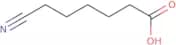
CAS:<p>6-Cyanohexanoic acid is a compound that belongs to the group of oximes. It is a deacetylase inhibitor, which inhibits the activity of histone deacetylases (HDACs). 6-Cyanohexanoic acid has been shown to inhibit HDACs in vitro and in vivo. 6-Cyanohexanoic acid also functions as an acetylcholinesterase inhibitor, and can be used for the treatment of Alzheimer's disease. This molecule has been shown to be effective against aluminium toxicity, by reducing its accumulation in the brain. 6-Cyanohexanoic acid also inhibits crotonoyl-CoA reductase, which can be used as a potential treatment for metabolic diseases such as type 2 diabetes.</p>Formula:C7H11NO2Purity:Min. 95%Molecular weight:141.17 g/molEthyl N-(2-hydroxyethyl)carbamate
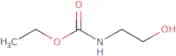
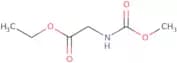
CAS:<p>Ethyl N-(2-hydroxyethyl)carbamate is a carbamate insecticide that is used in agriculture and horticultural industries to control lepidopteran insects. It is a metabolite of methoprene, which is an insect growth regulator. The ethyl group of ethyl N-(2-hydroxyethyl)carbamate is conjugated with the hydroxyl group of the 2-hydroxyethylamine moiety. This results in the formation of an antigenic site for antibody production, enhancing immunosorbent assays for determination of methoprene residues in plants or animal tissues.</p>Formula:C5H11NO3Purity:Min. 95%Molecular weight:133.15 g/molEthyl 2-((methoxycarbonyl)amino)acetate
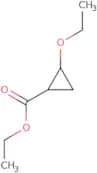
CAS:<p>Versatile small molecule scaffold</p>Formula:C6H11NO4Purity:Min. 95%Molecular weight:161.16 g/molEthyl 2-ethoxycyclopropane-1-carboxylate
CAS:<p>Versatile small molecule scaffold</p>Formula:C8H14O3Purity:Min. 95%Molecular weight:158.19 g/mol1-Oxa-4-thia-8-azaspiro[4.5]decane
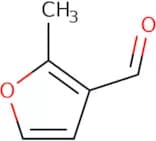
CAS:<p>Versatile small molecule scaffold</p>Formula:C7H13NOSPurity:Min. 95%Molecular weight:159.25 g/mol2-Methyl-3-furaldehyde
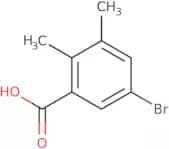
CAS:<p>Versatile small molecule scaffold</p>Formula:C6H6O2Purity:Min. 95%Molecular weight:110.11 g/mol5-Bromo-2,3-dimethylbenzoic acid
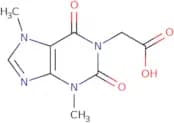
CAS:<p>Versatile small molecule scaffold</p>Formula:C9H9BrO2Purity:Min. 95%Molecular weight:229.07 g/mol2-(3,7-Dimethyl-2,6-dioxo-2,3,6,7-tetrahydro-1H-purin-1-yl)acetic acid
CAS:Controlled Product<p>2-(3,7-Dimethyl-2,6-dioxo-2,3,6,7-tetrahydro-1H-purin-1-yl)acetic acid is a molecule used in various industries. It is an organic solvent that can be used to deodorize and clean surfaces. This compound is also used as a diagnostic agent for animal health. 2-(3,7-Dimethyl-2,6-dioxo-2,3,6,7-tetrahydro-1H-purin-- 1yl)acetic acid has been shown to have carboxylic acid group properties. It can be found in the leaves of marrubium and caffeic acid.</p>Formula:C9H10N4O4Purity:Min. 95%Molecular weight:238.2 g/mol2-[(Pyridin-2-yl)formamido]acetic acid
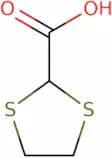
CAS:<p>2-[(Pyridin-2-yl)formamido]acetic acid is a chemical substance which can be used as a substrate in the production of 2-(pyridin-2-yl)acetic acid. It is also used to investigate the pharmacokinetics and biological properties of aromatic hydrocarbons. This compound has been found to induce proton release from fibrinogen and to inhibit aerobic glycolysis, n-oxide hydroxylase, and hydroxylase. 2-[(Pyridin-2-yl)formamido]acetic acid is an orally active compound that is excreted mainly in urine.</p>Formula:C8H8N2O3Purity:Min. 95%Molecular weight:180.16 g/mol1,3-Dithiolane-2-carboxylic acid
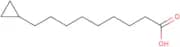
CAS:<p>1,3-Dithiolane-2-carboxylic acid is an organic molecule with the chemical formula C4H4O4. It is a dithiolane carboxylic acid that has been used in the preparation of glyoxylic acid and its derivatives. 1,3-Dithiolane-2-carboxylic acid can be prepared from the condensation of acetaldehyde and ethyl formate to give diethyl acetal, followed by reaction with sodium bisulfite to yield ethyl thioacetate. This compound can also be prepared by alkylation of diethyl sulfide with propylene oxide or butanol. The esterification of 1,3-dithiolane-2-carboxylic acid yields glyoxylic acid. Preparative methods for this compound include the use of acetals and dithioacetals as sources.</p>Formula:C4H6O2S2Purity:Min. 95%Molecular weight:150.2 g/mol9-Cyclopropylnonanoic acid
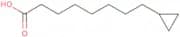
CAS:<p>Versatile small molecule scaffold</p>Formula:C12H22O2Purity:Min. 95%Molecular weight:198.3 g/mol8-Cyclopropyloctanoic acid
CAS:<p>Versatile small molecule scaffold</p>Formula:C11H20O2Purity:Min. 95%Molecular weight:184.3 g/mol


![2-Azabicyclo[3.2.2]nonan-3-one](/_next/image/?url=https%3A%2Fstatic.cymitquimica.com%2Fproducts%2F3D%2Fthumb-webp%2FFAA59732.webp&w=3840&q=75)
![3-Azabicyclo[3.2.2]nonane HCl](/_next/image/?url=https%3A%2Fstatic.cymitquimica.com%2Fproducts%2F3D%2Fthumb-webp%2FFAA59741.webp&w=3840&q=75)

![1-Oxa-4-thia-8-azaspiro[4.5]decane](/_next/image/?url=https%3A%2Fstatic.cymitquimica.com%2Fproducts%2F3D%2Fthumb-webp%2FFAA60898.webp&w=3840&q=75)
![2-[(Pyridin-2-yl)formamido]acetic acid](/_next/image/?url=https%3A%2Fstatic.cymitquimica.com%2Fproducts%2F3D%2Fthumb-webp%2FFAA61629.webp&w=3840&q=75)