Building Blocks
This section contains fundamental products for the synthesis of organic and biological compounds. Building blocks are the essential starting materials used to construct complex molecules through various chemical reactions. They play a critical role in drug discovery, material science, and chemical research. At CymitQuimica, we offer a diverse range of high-quality building blocks to support your innovative research and industrial projects, ensuring you have the essential components for successful synthesis.
Subcategories of "Building Blocks"
- Boronic Acids & Boronic Acid Derivatives(5,756 products)
- Chiral Building Blocks(1,242 products)
- Hydrocarbon Building Blocks(6,095 products)
- Organic Building Blocks(61,038 products)
Found 196817 products of "Building Blocks"
Sort by
Purity (%)
0
100
|
0
|
50
|
90
|
95
|
100
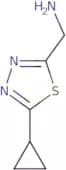
(5-Cyclopropyl-1,3,4-thiadiazol-2-yl)methanamine
CAS:<p>Versatile small molecule scaffold</p>Formula:C6H9N3SPurity:Min. 95%Molecular weight:155.22 g/mol4-Fluoro-3-[(2,2,2-trifluoroethyl)amino]phenol
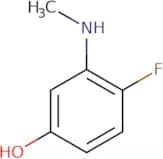
CAS:<p>Versatile small molecule scaffold</p>Formula:C8H7F4NOPurity:Min. 95%Molecular weight:209.14 g/mol4-Fluoro-3-(methylamino)phenol
CAS:<p>Versatile small molecule scaffold</p>Formula:C7H8FNOPurity:Min. 95%Molecular weight:141.14 g/molBenzyl azocane-1-carboxylate
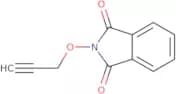
CAS:<p>Versatile small molecule scaffold</p>Formula:C15H21NO2Purity:Min. 95%Molecular weight:247.3 g/mol2-prop-2-ynoxyisoindoline-1,3-dione
CAS:<p>2-Prop-2-ynoxyisoindoline-1,3-dione is a multifunctional pyridine derivative with potential anticancer activity. It has been shown to inhibit HDAC and panobinostat, an inhibitor of histone deacetylase. 2-Prop-2-ynoxyisoindoline-1,3-dione has a solubility of less than 20 mg/mL in most solvents and is insoluble in water. This compound has been shown to have a low yield when synthesized from 2,6-dichloropyridine. These properties are advantageous for cell culture studies because they allow for the detection of changes in cellular morphology and the frequency of cell division. 2-Prop-2-ynoxyisoindoline-1,3-dione also has an activated aromatic ring that can be used as a prodrug to activate other compounds that need activation at this site (e.g., transition metals).</p>Formula:C11H7NO3Purity:Min. 95%Molecular weight:201.18 g/molMethyl 2-acetyl-3-oxobutanoate
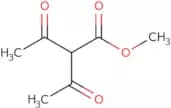
CAS:<p>Methyl 2-acetyl-3-oxobutanoate (M2OB) is an acceptor molecule in the Michael reaction. The temperature of the reaction is usually between -20°C and 0°C. A primary amine, a trifluoroacetic acid, and vinylene are required for the reaction to occur. Methyl 2-acetyl-3-oxobutanoate can be converted to an amide or pyrazole derivatives by hydrogenolysis. M2OB has a carboxylate group that is hydrolyzed by acidic conditions. M2OB reacts with pentamethoxybenzene in a pyrimidine compound synthesis.</p>Formula:C7H10O4Purity:Min. 95%Molecular weight:158.15 g/molEthyl 2-(benzoyloxy)-3-oxobutanoate
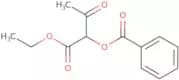
CAS:<p>Versatile small molecule scaffold</p>Formula:C13H14O5Purity:Min. 95%Molecular weight:250.25 g/mol2-Amino-4-methylthiophene-3-carbonitrile
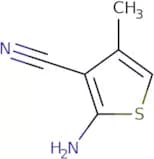
CAS:<p>2-Amino-4-methylthiophene-3-carbonitrile is a cyclic molecule that has been shown to be reactive with a number of nucleophiles. 2-Amino-4-methylthiophene-3-carbonitrile is an intermediate in the preparation of other organic compounds and has been used to synthesize polymers. It has also been used for kinetic studies and cyclic voltammetry experiments. This compound was found to react with hydrogen peroxide, which led to the formation of an intermolecular hydrogen bond between the two molecules. This type of reaction has not previously been reported for this class of molecules.</p>Formula:C6H6N2SPurity:Min. 95%Molecular weight:138.19 g/mol1,3-Dimethyl-4-piperidone
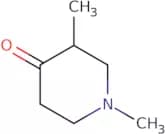
CAS:<p>1,3-Dimethyl-4-piperidone is a colorless liquid at room temperature that is soluble in water and polar organic solvents. It is a protonated nucleophile that reacts with electrophiles to form alkylations. 1,3-Dimethyl-4-piperidone also reacts with chloride to form an imine, which can be hydrolyzed to yield piperidine. A Grignard reagent can be formed from 1,3-dimethyl-4-piperidone and potassium phosphate. The nature of the product obtained depends on the order of addition of reactants. 1,3-Dimethyl-4-piperidone has been shown to have a number of isomers.</p>Formula:C7H13NOPurity:Min. 95%Molecular weight:127.19 g/molDeschloroketamine Hydrochloride
CAS:Controlled Product<p>Versatile small molecule scaffold</p>Formula:C13H18ClNOPurity:Min. 95%Molecular weight:239.74 g/mol5-Chlorosalicylanilide
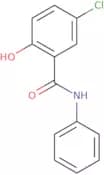
CAS:<p>5-Chlorosalicylanilide is a chemical that is used as an analytical reagent. It can be used to determine the concentration of styrene in ethyl esters and has been shown to inhibit the growth of S. aureus and Mycobacterium tuberculosis. 5-Chlorosalicylanilide has also been shown to induce autophagy, which may be an effective treatment for lung cancer cells resistant to chemotherapy drugs. The bulk density of this product is 1.13 g/cm3 at 25°C and 1 atmosphere (1 bar).</p>Formula:C13H10ClNO2Purity:Min. 95%Molecular weight:247.68 g/mol2,6-Dichloro-4-hydroxybenzoic acid
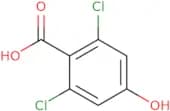
CAS:<p>Versatile small molecule scaffold</p>Formula:C7H4Cl2O3Purity:Min. 95%Molecular weight:207.01 g/molN-Methyl-1-naphthylamine Hydrochloride
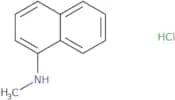
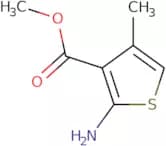
CAS:<p>Versatile small molecule scaffold</p>Formula:C11H11N·HClPurity:Min. 95%Molecular weight:193.67 g/molMethyl 2-amino-4-methylthiophene-3-carboxylate
CAS:<p>Methyl 2-amino-4-methylthiophene-3-carboxylate is a synthetic, biologically active derivative of 2-amino-4-methylthiophene. It is an indirect, noncompetitive antagonist of the 5HT receptor and has shown to be effective in animal models for the treatment of depression. The compound is available in multigrams and can be extracted from its salts with water. Methyl 2-amino-4-methylthiophene-3-carboxylate can also be synthesized.</p>Formula:C7H9NO2SPurity:Min. 95%Molecular weight:171.22 g/mol[(2-Chlorophenyl)methyl]urea
CAS:<p>Versatile small molecule scaffold</p>Formula:C8H9ClN2OPurity:Min. 95%Molecular weight:184.62 g/molIsopropyl methacrylate
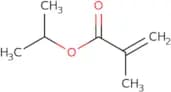
CAS:<p>Isopropyl methacrylate is a monomer with the chemical formula CH2=CHCOCH3. Isopropyl methacrylate is a colorless, highly viscous liquid with an acrid odor and a boiling point of 124-126°C. It has a high refractive index, which results in optical properties that are similar to those of glass. Isopropyl methacrylate polymerizes cationically or by free radical initiation. The optimum concentration for polymerization lies between 30 and 60%. Polymerization by free radicals occurs at higher concentrations than cationic polymerization. Covid-19 pandemic is caused by the H1N1 influenza virus, which was first reported in April 2009. This virus has been found to have an increased resistance to fluoroquinolones such as levofloxacin and gatifloxacin, which may be due to the presence of a hydroxyl group on its surface</p>Formula:C7H12O2Purity:Min. 95%Molecular weight:128.17 g/molDacarbazine Related Compound B
CAS:<p>Dacarbazine Related Compound B is a potent antitumor agent that inhibits the growth of cancer cells by inhibiting the production of angiogenic factors during their development. It binds to the carotenoid molecule, which prevents it from being converted into retinal and subsequently destroys the tumor's blood vessels. Dacarbazine Related Compound B has been shown to inhibit metabolism in human serum, but also has strong hydrochloric acid-sensitivity when exposed to light or in an acidic environment. The compound reacts with other chemical species in solution and can be detected using analytical methods such as high performance liquid chromatography (HPLC).</p>Formula:C4H3N5O·H2OPurity:Min. 95%Molecular weight:155.11 g/mol5-Amino-1,2-dihydroacenaphthylene
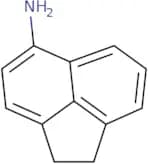
CAS:<p>5-Amino-1,2-dihydroacenaphthylene is an amide that stabilizes the cellulose derivative by reacting with the amine groups. This compound has shown antitumor activity against human bladder cancer cells in a xenograft model, as well as potential antitumor activity against other cancers. 5-Amino-1,2-dihydroacenaphthylene is a potential anticancer agent that inhibits tumor growth by binding to fatty acids and causing them to form chloride, which leads to apoptosis of tumor cells.</p>Formula:C12H11NPurity:Min. 95%Molecular weight:169.22 g/mol2-Hydroxyethyl N-benzylcarbamate
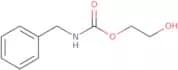
CAS:<p>2-Hydroxyethyl N-benzylcarbamate is a biodegradable, analog of the amino acid L-phenylalanine. It has been shown to be an effective inhibitor of muscle cell contraction. 2-Hydroxyethyl N-benzylcarbamate binds to the active site of the enzyme acetylcholinesterase and blocks its activity. This blockage leads to a build up of acetylcholine in the synapse between nerve cells, resulting in muscle paralysis and death. The symptoms of poisoning from this compound are typical for organophosphates, including respiratory failure, hypotension, bradycardia, and seizures. Treatment with 2-Hydroxyethyl N-benzylcarbamate is symptomatic and supportive care should be provided until symptoms resolve.</p>Formula:C10H13NO3Purity:Min. 95%Molecular weight:195.21 g/mol(4-Methylpyridin-3-yl)methanol
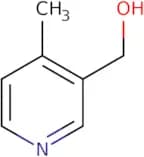
CAS:<p>Versatile small molecule scaffold</p>Formula:C7H9NOPurity:Min. 95%Molecular weight:123.15 g/mol

![4-Fluoro-3-[(2,2,2-trifluoroethyl)amino]phenol](/_next/image/?url=https%3A%2Fstatic.cymitquimica.com%2Fproducts%2F3D%2Fthumb-webp%2FDZB99651.webp&w=3840&q=75)
![[(2-Chlorophenyl)methyl]urea](/_next/image/?url=https%3A%2Fstatic.cymitquimica.com%2Fproducts%2F3D%2Fthumb-webp%2FEAA65463.webp&w=3840&q=75)