Building Blocks
This section contains fundamental products for the synthesis of organic and biological compounds. Building blocks are the essential starting materials used to construct complex molecules through various chemical reactions. They play a critical role in drug discovery, material science, and chemical research. At CymitQuimica, we offer a diverse range of high-quality building blocks to support your innovative research and industrial projects, ensuring you have the essential components for successful synthesis.
Subcategories of "Building Blocks"
- Boronic Acids & Boronic Acid Derivatives(5,756 products)
- Chiral Building Blocks(1,242 products)
- Hydrocarbon Building Blocks(6,095 products)
- Organic Building Blocks(61,038 products)
Found 196817 products of "Building Blocks"
Sort by
Purity (%)
0
100
|
0
|
50
|
90
|
95
|
100
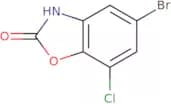
5-Bromo-7-chloro-2,3-dihydro-1,3-benzoxazol-2-one
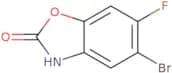
CAS:<p>Versatile small molecule scaffold</p>Formula:C7H3BrClNO2Purity:Min. 95%Molecular weight:248.46 g/mol5-Bromo-6-fluoro-2,3-dihydro-1,3-benzoxazol-2-one
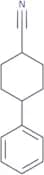
CAS:<p>Versatile small molecule scaffold</p>Formula:C7H3BrFNO2Purity:Min. 95%Molecular weight:232.01 g/mol4-Phenylcyclohexane-1-carbonitrile
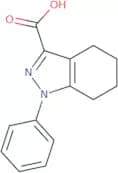
CAS:<p>Versatile small molecule scaffold</p>Formula:C13H15NPurity:Min. 95%Molecular weight:185.26 g/mol1-Phenyl-4,5,6,7-tetrahydro-1h-indazole-3-carboxylic acid
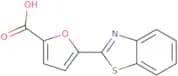
CAS:<p>Versatile small molecule scaffold</p>Formula:C14H14N2O2Purity:Min. 95%Molecular weight:242.28 g/mol5-(1,3-Benzothiazol-2-yl)furan-2-carboxylic acid
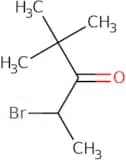
CAS:<p>Versatile small molecule scaffold</p>Formula:C12H7NO3SPurity:Min. 95%Molecular weight:245.26 g/mol4-Bromo-2,2-dimethyl-3-pentanone
CAS:<p>Versatile small molecule scaffold</p>Formula:C7H13OBrPurity:Min. 95%Molecular weight:193.08 g/mol2-Methyl-5-oxo-[1,3]thiazolo[3,2-a]pyrimidine-6-carboxylic acid
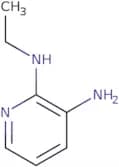
CAS:<p>Versatile small molecule scaffold</p>Formula:C8H6N2O3SPurity:Min. 95%Molecular weight:210.21 g/mol2-N-Ethylpyridine-2,3-diamine
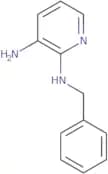
CAS:<p>2-N-Ethylpyridine-2,3-diamine is a small molecule inhibitor that binds to the ATP binding site of HIV reverse transcriptase and inhibits its activity. It has been shown to inhibit the proliferation of human tumor cells in culture. This compound also prevents the formation of new virus particles and leads to a decrease in viral load. 2-N-Ethylpyridine-2,3-diamine does not bind to the same site as nevirapine, but instead binds to a different amino acid residue on the reverse transcriptase enzyme called Y181C. Residues at this location are found in all HIV strains resistant to nevirapine.</p>Formula:C7H11N3Purity:Min. 95%Molecular weight:137.18 g/molN2-Benzyl-2,3-pyridinediamine
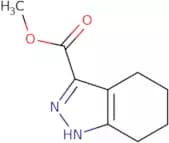
CAS:<p>N2-Benzyl-2,3-pyridinediamine is an imidazole derivative that inhibits the proliferation of cancer cells by inducing apoptosis. It also has anti-cancer properties and can be used as a chemotherapeutic agent in the treatment of cancer. N2-Benzyl-2,3-pyridinediamine has been shown to induce cancer cells in cell lines from human colon carcinoma and carcinoma cell lines. This drug also has inhibitory activities against the protein MCL1, which is involved in the regulation of programmed cell death. Further studies have shown that this drug induces cancer cells through the activation of proapoptotic proteins such as caspase 3, PARP1, and Bax.</p>Formula:C12H13N3Purity:Min. 95%Molecular weight:199.3 g/molMethyl 4,5,6,7-tetrahydro-1H-indazole-3-carboxylate
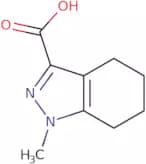
CAS:<p>Versatile small molecule scaffold</p>Formula:C9H12N2O2Purity:Min. 95%Molecular weight:180.2 g/mol1-Methyl-4,5,6,7-tetrahydro-1H-indazole-3-carboxylic acid
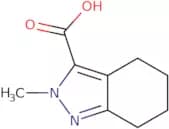
CAS:<p>Versatile small molecule scaffold</p>Formula:C10H12O3Purity:Min. 95%Molecular weight:180.2 g/mol2-Methyl-4,5,6,7-tetrahydro-2H-indazole-3-carboxylic acid
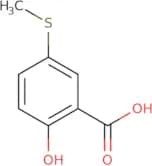
CAS:<p>Versatile small molecule scaffold</p>Formula:C9H12N2O2Purity:Min. 95%Molecular weight:180.2 g/mol2-Hydroxy-5-(methylsulfanyl)benzoic acid
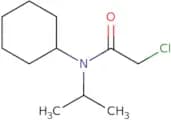
CAS:<p>Versatile small molecule scaffold</p>Formula:C8H8O3SPurity:Min. 95%Molecular weight:184.21 g/mol2-Chloro-N-cyclohexyl-N-(propan-2-yl)acetamide
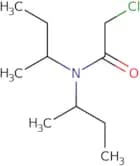
CAS:<p>Versatile small molecule scaffold</p>Formula:C11H20ClNOPurity:Min. 95%Molecular weight:217.73 g/molN,N-Bis(butan-2-yl)-2-chloroacetamide
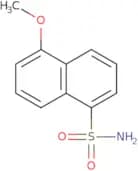
CAS:<p>Versatile small molecule scaffold</p>Formula:C10H20ClNOPurity:Min. 95%Molecular weight:205.72 g/mol5-methoxynaphthalene-1-sulfonamide
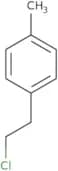
CAS:<p>5-Methoxynaphthalene-1-sulfonamide is a fluorescent substrate that is used in the screening of catalysts for metathesis reactions. 5-Methoxynaphthalene-1-sulfonamide fluoresces when it reacts with a metal catalyst, which can be observed in a microplate assay. The reaction of 5-methoxynaphthalene-1-sulfonamide with a metal catalyst produces two products, one fluorescent and one nonfluorescent. A profluorescent plate assay can be used to validate the results of the microplate assay. The solvents used to dissolve the compounds are also listed as keywords.</p>Formula:C11H11NO3SPurity:Min. 95%Molecular weight:237.28 g/mol1-(2-Chloroethyl)-4-methylbenzene
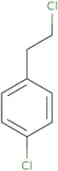
CAS:<p>Versatile small molecule scaffold</p>Formula:C9H11ClPurity:Min. 95%Molecular weight:154.63 g/mol1-Chloro-4-(2-chloroethyl)benzene
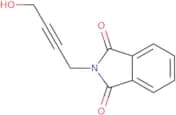
CAS:<p>1-Chloro-4-(2-chloroethyl)benzene is a yellow, anhydrous, light yellow powder that is a synthetic chemical. It may be used as an intermediate for the synthesis of other chemicals or as a solvent in organic reactions. 1-Chloro-4-(2-chloroethyl)benzene can be prepared by the Friedel-Crafts acylation of benzene with chloroethane and aluminium chloride. The filtration and washing steps are followed by evaporation to yield a crystalline product. Reaction time varies depending on temperature, but generally takes around 24 hours at room temperature. Deionized water and hydrochloric acid are used to dissolve the crystals and produce a clear solution.</p>Formula:C8H8Cl2Purity:Min. 95%Molecular weight:175.06 g/mol2-(4-Hydroxybut-2-yn-1-yl)-2,3-dihydro-1H-isoindole-1,3-dione
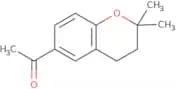
CAS:<p>Versatile small molecule scaffold</p>Formula:C12H9NO3Purity:Min. 95%Molecular weight:215.2 g/mol1-(2,2-dimethyl-3,4-dihydro-2H-1-benzopyran-6-yl)ethan-1-one
CAS:<p>Versatile small molecule scaffold</p>Formula:C13H16O2Purity:Min. 95%Molecular weight:204.27 g/mol

![2-Methyl-5-oxo-[1,3]thiazolo[3,2-a]pyrimidine-6-carboxylic acid](/_next/image/?url=https%3A%2Fstatic.cymitquimica.com%2Fproducts%2F3D%2Fthumb-webp%2FHBA27856.webp&w=3840&q=75)