


Building Blocks
This section contains fundamental products for the synthesis of organic and biological compounds. Building blocks are the essential starting materials used to construct complex molecules through various chemical reactions. They play a critical role in drug discovery, material science, and chemical research. At CymitQuimica, we offer a diverse range of high-quality building blocks to support your innovative research and industrial projects, ensuring you have the essential components for successful synthesis.
Subcategories of "Building Blocks"
- Boronic Acids & Boronic Acid Derivatives(5,778 products)
- Chiral Building Blocks(1,242 products)
- Hydrocarbon Building Blocks(6,098 products)
- Organic Building Blocks(61,092 products)
Found 199296 products of "Building Blocks"
Sort by
Purity (%)
0
100
|
0
|
50
|
90
|
95
|
100
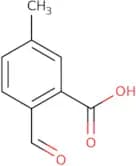
2-Formyl-5-methylbenzoic acid
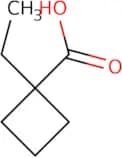
CAS:<p>2-Formyl-5-methylbenzoic acid is a chemical compound that belongs to the group of isoindolinones. It is a tetracyclic, hydrazide, and tricyclic compound. 2-Formyl-5-methylbenzoic acid has been shown to be an efficient additive for organic chemistry reactions. This chemical compound can be obtained by iodocyclization of 5-methylbenzene with hydroiodic acid and potassium iodide in the presence of catalysts such as potassium carbonate or sodium bromide. The product can also be synthesized by allylation of 2-formylbenzoic acid with allyl bromide in the presence of copper(II) acetate as a catalyst.</p>Formula:C9H8O3Purity:Min. 95%Molecular weight:164.16 g/mol1-Ethylcyclobutanecarboxylic acid
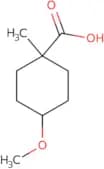
CAS:<p>1-Ethylcyclobutanecarboxylic acid is a liquid crystal that is optically active. It can be used as a nutrient for aerobic organisms and also has a role in the biosynthesis of fluorine. The preparation process of 1-ethylcyclobutanecarboxylic acid includes the use of fluorine, which is obtained from the mineral fluorspar, and an inorganic acid such as sulfuric acid. This compound has been shown to have an important role in the production of l-valine. It is also used as a substrate for dehydrogenase enzymes to produce hydrogen gas, which can then be used as an energy source.</p>Formula:C7H12O2Purity:Min. 95%Molecular weight:128.17 g/mol4-Methoxy-1-methylcyclohexane-1-carboxylic acid
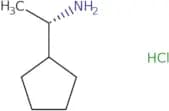
CAS:Versatile small molecule scaffoldFormula:C9H16O3Purity:Min. 95%Molecular weight:172.22 g/mol(S)-1-Cyclopentyl-ethylamine hydrochloride ee
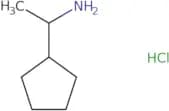
CAS:Versatile small molecule scaffoldFormula:C7H16ClNPurity:Min. 95%Molecular weight:149.66 g/molMethyl 10-aminodecanoate hydrochloride
CAS:<p>Versatile small molecule scaffold</p>Formula:C11H24ClNO2Purity:Min. 95%Molecular weight:237.77 g/mol(1-cyclopentylethyl)amine hydrochloride
CAS:Versatile small molecule scaffoldFormula:C7H15N·HClPurity:Min. 95%Molecular weight:149.66 g/mol2-{[(tert-butoxy)carbonyl](phenyl)amino}acetic acid
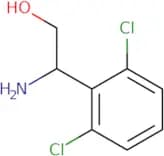
CAS:<p>2-{[(tert-Butoxy)carbonyl](phenyl)amino}acetic acid is a supramolecular building block that can be used as an additive for the synthesis of taxol, quinine and other drugs. The synthesis of 2-{[(tert-butoxy)carbonyl](phenyl)amino}acetic acid starts from the imine, which is generated by reaction with tert-butanol in the presence of a catalytic amount of pyridine. The imine is then dehydrated to form 2-{[(tert-butoxy)carbonyl](phenyl)amino}acetic acid. This method has been shown to be efficient and provides an asymmetric route to various pharmaceuticals.<br>2-[(tert-Butoxy)carbonyl]phenylaminoacetic acid was first synthesized in 1990 by Atsushi Ochiai and Yoshih</p>Formula:C13H17NO4Purity:Min. 95%Molecular weight:251.3 g/mol2-Amino-2-(2,6-dichlorophenyl)ethan-1-ol
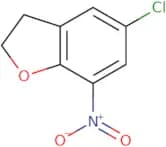
CAS:<p>Versatile small molecule scaffold</p>Formula:C8H9Cl2NOPurity:Min. 95%Molecular weight:206.07 g/mol5-Chloro-7-nitro-2,3-dihydro-1-benzofuran
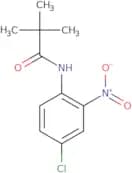
CAS:Versatile small molecule scaffoldFormula:C8H6ClNO3Purity:Min. 95%Molecular weight:199.59 g/molN-(4-Chloro-2-nitrophenyl)-2,2-dimethylpropanamide
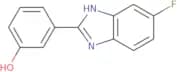
CAS:<p>Versatile small molecule scaffold</p>Formula:C11H13ClN2O3Purity:Min. 95%Molecular weight:256.68 g/mol3-(5-Fluoro-1H-1,3-benzodiazol-2-yl)phenol
CAS:<p>Versatile small molecule scaffold</p>Formula:C13H9FN2OPurity:Min. 95%Molecular weight:228.22 g/mol4-(trans-4-Ethylcyclohexyl)cyclohexanone
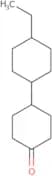
CAS:Versatile small molecule scaffoldFormula:C14H24OPurity:Min. 95%Molecular weight:208.35 g/mol4-Butoxy-2-methylaniline
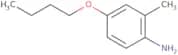
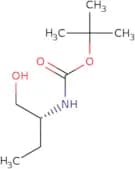
CAS:<p>Versatile small molecule scaffold</p>Formula:C11H17NOPurity:Min. 95%Molecular weight:179.26 g/molN-Boc-(S)-(ˆ’)-2-amino-1-butanol
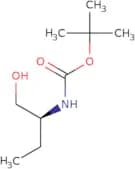
CAS:<p>Versatile small molecule scaffold</p>Formula:C9H19NO3Purity:Min. 95%Molecular weight:189.25 g/molN-Boc-(R)-(+)-2-amino-1-butanol
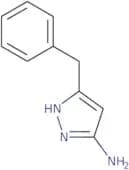
CAS:<p>Versatile small molecule scaffold</p>Formula:C9H19NO3Purity:Min. 95%Molecular weight:189.25 g/mol5-Benzyl-1H-pyrazol-3-amine
CAS:<p>Versatile small molecule scaffold</p>Formula:C10H11N3Purity:Min. 95%Molecular weight:173.22 g/mol2,2,2-Trifluoro-1-[4-(trifluoromethyl)phenyl]ethan-1-ol
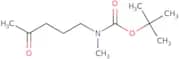
CAS:<p>Versatile small molecule scaffold</p>Formula:C9H6F6OPurity:Min. 95%Molecular weight:244.13 g/moltert-Butyl N-methyl-N-(4-oxopentyl)carbamate
CAS:<p>Versatile small molecule scaffold</p>Formula:C11H21NO3Purity:Min. 95%Molecular weight:215.3 g/mol2-[2-(Naphthalen-1-yl)acetamido]propanoic acid
CAS:Versatile small molecule scaffoldFormula:C15H15NO3Purity:Min. 95%Molecular weight:257.28 g/mol1H,2H,3H,4H-Cyclopenta[b]indol-2-one
CAS:<p>Versatile small molecule scaffold</p>Formula:C11H9NOPurity:Min. 95%Molecular weight:171.19 g/mol


amino}acetic acid](/_next/image/?url=https%3A%2Fstatic.cymitquimica.com%2Fproducts%2F3D%2Fthumb-webp%2FAGA80661.webp&w=3840&q=75)
![2,2,2-Trifluoro-1-[4-(trifluoromethyl)phenyl]ethan-1-ol](/_next/image/?url=https%3A%2Fstatic.cymitquimica.com%2Fproducts%2F3D%2Fthumb-webp%2FAGA69881.webp&w=3840&q=75)
![2-[2-(Naphthalen-1-yl)acetamido]propanoic acid](/_next/image/?url=https%3A%2Fstatic.cymitquimica.com%2Fproducts%2F3D%2Fthumb-webp%2FAGA67194.webp&w=3840&q=75)
![1H,2H,3H,4H-Cyclopenta[b]indol-2-one](/_next/image/?url=https%3A%2Fstatic.cymitquimica.com%2Fproducts%2F3D%2Fthumb-webp%2FAGA67063.webp&w=3840&q=75)