Building Blocks
This section contains fundamental products for the synthesis of organic and biological compounds. Building blocks are the essential starting materials used to construct complex molecules through various chemical reactions. They play a critical role in drug discovery, material science, and chemical research. At CymitQuimica, we offer a diverse range of high-quality building blocks to support your innovative research and industrial projects, ensuring you have the essential components for successful synthesis.
Subcategories of "Building Blocks"
- Boronic Acids & Boronic Acid Derivatives(5,756 products)
- Chiral Building Blocks(1,242 products)
- Hydrocarbon Building Blocks(6,093 products)
- Organic Building Blocks(60,522 products)
Found 195533 products of "Building Blocks"
Sort by
Purity (%)
0
100
|
0
|
50
|
90
|
95
|
100
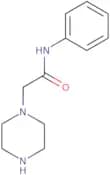
N-Phenyl-2-(piperazin-1-yl)acetamide
CAS:<p>Versatile small molecule scaffold</p>Formula:C12H17N3OPurity:Min. 95%Molecular weight:219.28 g/molEthyl 4-amino-3-methylbenzoate
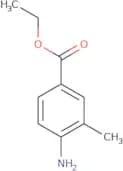
CAS:<p>Ethyl 4-amino-3-methylbenzoate is a dimer that can be formed by the reaction of ethyl benzoate with anilines. This dimer has been shown to have an asymmetric center and can form hydrogen bonds with other molecules. The reactivity of this molecule is similar to benzocaine, which is also a dimer, but it does not contain any nitrogen atoms.</p>Formula:C10H13NO2Purity:Min. 95%Molecular weight:179.22 g/molEthyl 2-(methylsulfanyl)propanoate
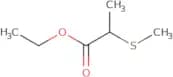
CAS:<p>Versatile small molecule scaffold</p>Formula:C6H12O2SPurity:Min. 95%Molecular weight:148.23 g/mol4-(2-Chloroacetyl)benzonitrile
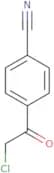
CAS:<p>Versatile small molecule scaffold</p>Formula:C9H6ClNOPurity:Min. 95%Molecular weight:179.6 g/mol5-(4-Methylphenyl)-2-thiophenecarboxylic acid
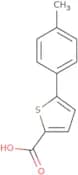
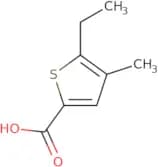
CAS:<p>Versatile small molecule scaffold</p>Formula:C12H10O2SPurity:Min. 95%Molecular weight:218.27 g/mol5-Ethyl-4-methylthiophene-2-carboxylic acid
CAS:<p>Versatile small molecule scaffold</p>Formula:C8H10O2SPurity:Min. 95%Molecular weight:170.23 g/mol2-(4-Methoxypyridin-2-yl)acetonitrile
CAS:<p>Versatile small molecule scaffold</p>Formula:C8H8N2OPurity:Min. 95%Molecular weight:148.16 g/mol3-Nitro-4-(pyrrolidin-1-yl)benzoic acid
CAS:<p>Versatile small molecule scaffold</p>Formula:C11H12N2O4Purity:Min. 95%Molecular weight:236.22 g/mol2-Aminoperimidine hydrobromide sesquihydrate
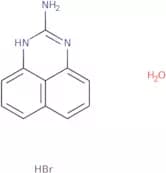
CAS:<p>2-Aminoperimidine hydrobromide sesquihydrate (2AP) is a sulfonamide antibiotic that inhibits bacterial growth by binding to the ribosome. 2AP is a potentiometric titrant, with an endpoint of 1.5 M NaOH. It has been shown to inhibit the growth of bacteria, such as Staphylococcus aureus and Escherichia coli, in vitro. The synthesis of 2AP can be achieved through a two-step reaction between ammonium salt and sulfate ester. This chemical synthesis uses the following parameters:</p>Formula:C11H9N3•HBr•(H2O)1Purity:Min. 95%Molecular weight:291.14 g/mol3-(1H-Imidazol-4-yl)propanenitrile hydrochloride
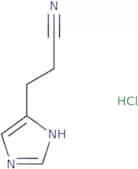
CAS:<p>Versatile small molecule scaffold</p>Formula:C6H8ClN3Purity:Min. 95%Molecular weight:157.6 g/mol3-(1H-Imidazol-4-yl)propan-1-amine dihydrochloride
CAS:<p>Versatile small molecule scaffold</p>Formula:C6H13Cl2N3Purity:Min. 95%Molecular weight:198.09 g/mol1-Benzyl-4-chlorophthalazine
CAS:<p>1-Benzyl-4-chlorophthalazine (1BCP) is a heterocyclic compound that inhibits the piperazine pathway. It has been shown to be a lead compound for inhibiting the growth of medulloblastoma cells in vivo and allografts in vitro. 1BCP inhibits the proliferation of mouse cells by blocking the production of pyrimidine nucleotides and DNA synthesis. This inhibition is due to its ability to inhibit the enzymes involved in pyrimidine biosynthesis, including dihydropteroate synthase, dihydrooratase, and ribonucleotide reductase. The observed effects are mediated through inhibiting key enzymes in the pyrimidine biosynthetic pathway, which leads to cell cycle arrest and apoptosis.</p>Formula:C15H11ClN2Purity:Min. 95%Molecular weight:254.71 g/molMethyl 2-(o-tolyl)acetate
CAS:<p>Methyl 2-(o-tolyl)acetate is a methylester that is used in organic chemistry as a pharmacophore. It is synthesized by the acylation reaction of chlorobenzene and formyl chloride in the presence of methanol. The product can be hydrolyzed to methyl 2-(o-tolyl)acrylate with an alkali metal hydroxide or ammonia, or it can undergo formylation with triazolinone to yield methyl 3-(o-tolyl)propionate. Methyl 2-(o-tolyl)acetate has been shown to react with metal cations such as copper(II) and mercury(II). This product is also stable isotope labeled for use as a tracer in biological studies.</p>Formula:C10H12O2Purity:Min. 95%Molecular weight:164.2 g/mol5-Chloro-2-methyl-3H-imidazo[4,5-b]pyridine
CAS:<p>Versatile small molecule scaffold</p>Formula:C7H6ClN3Purity:Min. 95%Molecular weight:167.6 g/mol(5S)-5-[(1H-Indol-3-yl)methyl]imidazolidine-2,4-dione
CAS:<p>The enzyme 5S-5-[(1H-Indol-3-yl)methyl]imidazolidine-2,4-dione is a multiphase enzyme that has two binding sites for the substrate. The first site is at the top of the cavity and the second site is at the bottom of the cavity. The first site binds to substrates with a low yield, while the second site binds to substrates with a high yield. The multiphase mechanism allows for transport of substrates through the enzyme by an alternating flow or plenum. This enzyme also has magnetic properties, which can be used in calibration and tabulation.</p>Formula:C12H11N3O2Purity:Min. 95%Molecular weight:229.23 g/mol2,4-Difluoro-5-nitropyrimidine
CAS:<p>Versatile small molecule scaffold</p>Formula:C4HF2N3O2Purity:Min. 95%Molecular weight:161.07 g/mol1-[3-(Dimethylamino)propyl]-6-hydroxy-4-methyl-2-oxo-1,2-dihydropyridine-3-carbonitrile
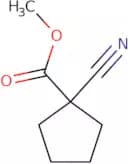
CAS:<p>Versatile small molecule scaffold</p>Formula:C12H17N3O2Purity:Min. 95%Molecular weight:235.28 g/molMethyl 1-cyanocyclopentanecarboxylate
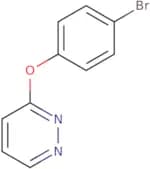
CAS:<p>Versatile small molecule scaffold</p>Formula:C8H11NO2Purity:Min. 95%Molecular weight:153.18 g/mol3-(4-Bromophenoxy)pyridazine
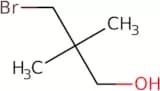
CAS:<p>Versatile small molecule scaffold</p>Formula:C10H7BrN2OPurity:Min. 95%Molecular weight:251.08 g/mol3-Bromo-2,2-dimethyl-1-propanol
CAS:<p>3-Bromo-2,2-dimethyl-1-propanol is a thioether with a dithiol structure. It is an intermediate in the synthesis of other compounds and has been used as a ligand for copper in asymmetric synthesis. 3-Bromo-2,2-dimethyl-1-propanol reacts with formaldehyde to produce 2,4,6-trimethylaniline in the presence of a catalyst, such as palladium chloride or platinum oxide. The reaction can be carried out at room temperature without hazardous conditions. 3Br 2 DMPr is also used as an optical reagent for the detection of metals. This compound is selective in its reactivity and can be used for alkylation reactions on various metal surfaces with high selectivity. The optical properties of 3Br 2 DMPr are due to its ability to absorb light strongly at 285 nm and weakly at 365 nm. This property can be</p>Formula:C5H11BrOPurity:Min. 95%Molecular weight:167.04 g/mol





![5-Chloro-2-methyl-3H-imidazo[4,5-b]pyridine](/_next/image/?url=https%3A%2Fstatic.cymitquimica.com%2Fproducts%2F3D%2Fthumb-webp%2FQBA85192.webp&w=3840&q=75)
![(5S)-5-[(1H-Indol-3-yl)methyl]imidazolidine-2,4-dione](/_next/image/?url=https%3A%2Fstatic.cymitquimica.com%2Fproducts%2F3D%2Fthumb-webp%2FQBA85680.webp&w=3840&q=75)

![1-[3-(Dimethylamino)propyl]-6-hydroxy-4-methyl-2-oxo-1,2-dihydropyridine-3-carbonitrile](/_next/image/?url=https%3A%2Fstatic.cymitquimica.com%2Fproducts%2F3D%2Fthumb-webp%2FQBA85937.webp&w=3840&q=75)