Building Blocks
This section contains fundamental products for the synthesis of organic and biological compounds. Building blocks are the essential starting materials used to construct complex molecules through various chemical reactions. They play a critical role in drug discovery, material science, and chemical research. At CymitQuimica, we offer a diverse range of high-quality building blocks to support your innovative research and industrial projects, ensuring you have the essential components for successful synthesis.
Subcategories of "Building Blocks"
- Boronic Acids & Boronic Acid Derivatives(5,781 products)
- Chiral Building Blocks(1,242 products)
- Hydrocarbon Building Blocks(6,101 products)
- Organic Building Blocks(61,038 products)
Found 205338 products of "Building Blocks"
Sort by
Purity (%)
0
100
|
0
|
50
|
90
|
95
|
100
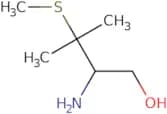
(2R)-2-Amino-3-methyl-3-(methylsulfanyl)butan-1-ol
CAS:Versatile small molecule scaffoldFormula:C6H15NOSPurity:Min. 95%Molecular weight:149.3 g/mol2-(5-Methylfuran-2-yl)piperidine
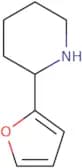
CAS:Versatile small molecule scaffoldFormula:C10H15NOPurity:Min. 95%Molecular weight:165.23 g/mol2-(Furan-2-yl)piperidine
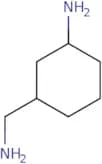
CAS:Versatile small molecule scaffoldFormula:C9H13NOPurity:Min. 95%Molecular weight:151.21 g/mol3-(Aminomethyl)cyclohexan-1-amine
CAS:Versatile small molecule scaffold
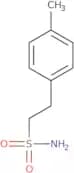
Formula:C7H16N2Purity:Min. 95%Molecular weight:128.22 g/mol2-(4-Methylphenyl)ethane-1-sulfonamide
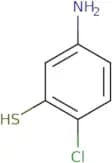
CAS:Versatile small molecule scaffoldFormula:C9H13NO2SPurity:Min. 95%Molecular weight:199.27 g/mol5-Amino-2-chlorobenzene-1-thiol
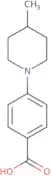
CAS:5-Amino-2-chlorobenzene-1-thiol is a herbicide that is used to control weeds in wheat, soybean, and other crops. It is a hydrolysis product of 2,4-dichlorophenol (2,4-D) and reacts with chloride ions to form the hydrochloric acid. 5-Amino-2-chlorobenzene-1-thiol inhibits the growth of plants by inhibiting chlorophyll synthesis. This product also has phytotoxic properties and can be found in fruit juice as an additive to prevent browning. 5-Amino-2-chlorobenzene-1 thiol may cause skin irritation or burns when it comes into contact with skin.Formula:C6H6ClNSPurity:Min. 95%Molecular weight:159.64 g/mol4-(4-Methylpiperidin-1-yl)benzoic acid
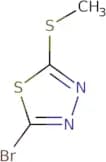
CAS:Versatile small molecule scaffoldFormula:C13H17NO2Purity:Min. 95%Molecular weight:219.28 g/mol2-Bromo-5-(methylsulfanyl)-1,3,4-thiadiazole
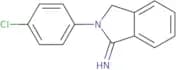
CAS:Versatile small molecule scaffoldFormula:C3H3BrN2S2Purity:Min. 95%Molecular weight:211.1 g/mol2-(4-Chlorophenyl)-2,3-dihydro-1H-isoindol-1-imine
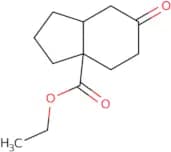
CAS:Versatile small molecule scaffoldFormula:C14H11ClN2Purity:Min. 95%Molecular weight:242.7 g/molEthyl 6-oxo-octahydro-1H-indene-3a-carboxylate
CAS:Versatile small molecule scaffoldFormula:C12H18O3Purity:Min. 95%Molecular weight:210.27 g/mol4-[(tert-Butyldimethylsilyl)oxy]piperidine
CAS:Versatile small molecule scaffoldFormula:C11H25NOSiPurity:Min. 95%Molecular weight:215.41 g/mol[1,3]Thiazolo[4,5-c]pyridine-2-carboxylic acid
CAS:Versatile small molecule scaffoldFormula:C7H4N2O2SPurity:Min. 95%Molecular weight:180.19 g/mol5-benzyl-1-Oxa-5-azaspiro[2.4]heptane
CAS:Versatile small molecule scaffold
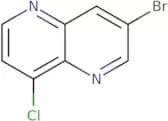
Formula:C12H15NOPurity:Min. 95%Molecular weight:189.25 g/mol3-bromo-8-chloro-1,5-naphthyridine
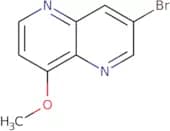
CAS:3-bromo-8-chloro-1,5-naphthyridine is a nucleophilic amine that has been shown to have antimalarial activity against Plasmodium falciparum. It is injected intraperitoneally and has significant activity at 50 mg/kg. 3-bromo-8-chloro-1,5-naphthyridine is not active against other strains of the parasite, such as Plasmodium berghei. This drug can be synthesized from dimethylaminomethyl malonate and substituted naphthyridines.Formula:C8H4BrClN2Purity:Min. 95%Molecular weight:243.5 g/mol3-Bromo-8-methoxy-1,5-naphthyridine
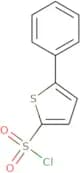
CAS:Versatile small molecule scaffoldFormula:C9H7BrN2OPurity:Min. 95%Molecular weight:239.07 g/mol5-Phenylthiophene-2-sulphonyl chloride
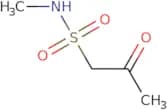
CAS:Versatile small molecule scaffoldFormula:C10H7ClO2S2Purity:Min. 95%Molecular weight:258.74 g/molN-Methyl-2-oxopropane-1-sulfonamide
CAS:Versatile small molecule scaffoldFormula:C4H9NO3SPurity:Min. 95%Molecular weight:151.19 g/mol5,5-Dimethyl-3-propylimidazolidine-2,4-dione
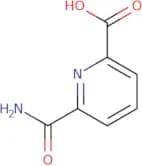
CAS:Versatile small molecule scaffoldFormula:C8H14N2O2Purity:Min. 95%Molecular weight:170.21 g/mol6-Carbamoyl-pyridine-2-carboxylic acid
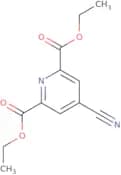
CAS:6-Carbamoyl-pyridine-2-carboxylic acid is a resonance form of the picolinic acid. The proton resonances are observed at 2.35, 2.41 and 2.53 ppm, while the picolinic acid has proton resonances at 4.04 ppm (proton) and 3.02 ppm (proton). The bifunctional nature of 6-carbamoyl-pyridine-2-carboxylic acid is due to an interaction between the carboxyl group on one end and the amine group on the other end, which may be due to its sialic and proton resonances. This compound is used as a molecular probe for biosynthesis studies in biochemical reactions, such as nucleotide synthesis or protein synthesis. 6-Carbamoyl-pyridine-2-carboxylic acid has been shown to have affinity to picolinic acid,Formula:C7H6N2O3Purity:Min. 95%Molecular weight:166.13 g/mol2,6-Diethyl 4-cyanopyridine-2,6-dicarboxylate
CAS:Versatile small molecule scaffoldFormula:C12H12N2O4Purity:Min. 95%Molecular weight:248.23 g/mol


![4-[(tert-Butyldimethylsilyl)oxy]piperidine](/_next/image/?url=https%3A%2Fstatic.cymitquimica.com%2Fproducts%2F3D%2Fthumb-webp%2FXDA23191.webp&w=3840&q=75)
![[1,3]Thiazolo[4,5-c]pyridine-2-carboxylic acid](/_next/image/?url=https%3A%2Fstatic.cymitquimica.com%2Fproducts%2F3D%2Fthumb-webp%2FXDA26626.webp&w=3840&q=75)
![5-benzyl-1-Oxa-5-azaspiro[2.4]heptane](/_next/image/?url=https%3A%2Fstatic.cymitquimica.com%2Fproducts%2F3D%2Fthumb-webp%2FXDA26684.webp&w=3840&q=75)