Building Blocks
This section contains fundamental products for the synthesis of organic and biological compounds. Building blocks are the essential starting materials used to construct complex molecules through various chemical reactions. They play a critical role in drug discovery, material science, and chemical research. At CymitQuimica, we offer a diverse range of high-quality building blocks to support your innovative research and industrial projects, ensuring you have the essential components for successful synthesis.
Subcategories of "Building Blocks"
- Boronic Acids & Boronic Acid Derivatives(5,756 products)
- Chiral Building Blocks(1,242 products)
- Hydrocarbon Building Blocks(6,095 products)
- Organic Building Blocks(61,055 products)
Found 199650 products of "Building Blocks"
Sort by
Purity (%)
0
100
|
0
|
50
|
90
|
95
|
100
2-Chloro-6-methylbenzaldehyde
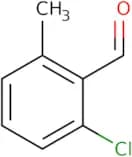
CAS:<p>2-Chloro-6-methylbenzaldehyde is a byproduct of the oxidation of metalloporphyrins. It is an organic compound that has nucleophilic properties and can react with chloride to form sulfoxide. 2-Chloro-6-methylbenzaldehyde can also react with magnesium to form a dihedral molecule, which is an isomer of 2-chloro-6-fluorobenzaldehyde. The nature of this chemical has not yet been determined, but it is known that it reacts with peroxide to produce silicon dioxide.</p>Formula:C8H7ClOPurity:Min. 95%Molecular weight:154.59 g/molPyrazolo[1,5-a]pyrimidin-7-amine
CAS:<p>Pyrazolo[1,5-a]pyrimidin-7-amine is a synthetic compound that was derived from the natural product pyrazolopyrimidine. It has been shown to be an effective inhibitor of growth in human liver cancer cells and in virus replication. Pyrazolo[1,5-a]pyrimidin-7-amine also inhibits the growth of human liver cancer cells by binding to the factor receptor, which is involved in platelet-derived growth. This drug inhibits the production of platelet-derived growth factor (PDGF) by binding to the PDGF receptor on cells. Pyrazolo[1,5-a]pyrimidin-7-amine does not inhibit cell proliferation but rather induces cell death by apoptosis in Mcf-7 human breast cancer cells.</p>Formula:C6H6N4Purity:Min. 95%Molecular weight:134.13 g/mol1-Methyleneindane
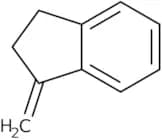
CAS:<p>1-Methyleneindane is a peroxide that has been synthesized to study the mechanistic aspects of hydrogen peroxide as a reactant in Wittig reactions. This molecule also serves as an intermediate in synthesizing phosphonium salts, which have been shown to have potential applications in perfluorinated and alcohol chemistry. The 1-methyleneindane skeleton is made up of two carbonyl groups and an interaction between the singlet state and the carbonyl group can be observed.</p>Formula:C10H10Purity:Min. 95%Molecular weight:130.19 g/mol4-Methylbicyclo[2.2.2]octan-1-amine hydrochloride
CAS:<p>Versatile small molecule scaffold</p>Formula:C9H18ClNPurity:Min. 95%Molecular weight:175.7 g/mol3-(Thiophen-2-yl)prop-2-yn-1-ol
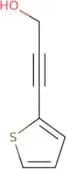
CAS:<p>Versatile small molecule scaffold</p>Formula:C7H6OSPurity:Min. 95%Molecular weight:138.19 g/molCyclopentylurea
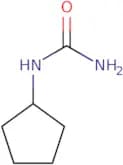
CAS:<p>Cyclopentylurea is an inhibitor of the NS3 protease, which is an enzyme that plays a key role in the replication of the hepatitis C virus. Cyclopentylurea binds to the active site of this enzyme and blocks its activity. This inhibition prevents the production of new viral particles and can help treat chronic hepatitis C. Cyclopentylurea has also been shown to have anti-cancer effects, as it inhibits protein synthesis in tumour cells and induces their apoptosis.</p>Formula:C6H12N2OPurity:Min. 95%Molecular weight:128.17 g/mol4-Cyano-1-methylpyridin-1-ium iodide
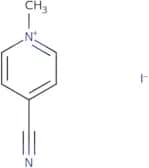
CAS:<p>4-Cyano-1-methylpyridin-1-ium iodide is a yellow solid that is insoluble in water and methanol. It has anions, which are negatively charged ions, such as chlorides and cations. The cation has a positive charge, while the anion has a negative charge. This chemical also crystallizes in different crystal structures and hydrogen bonds with other molecules in the crystal lattice.</p>Formula:C7H7IN2Purity:Min. 95%Molecular weight:246.05 g/mol2-Isocyanatooxane
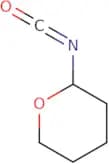
CAS:<p>Versatile small molecule scaffold</p>Formula:C6H9NO2Purity:Min. 95%Molecular weight:127.14 g/mol2-Propylcyclopentan-1-one
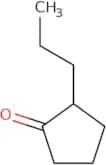
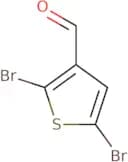
CAS:<p>2-Propylcyclopentan-1-one is a hydrolysate from the reaction of cyclopentanone and ethylene glycol, or with formaldehyde and water. It has been used for the synthesis of liquid crystals, which are composed of molecules that align parallel to each other in response to an applied electric field. 2-Propylcyclopentan-1-one is also used as a heat resistant crystal compound, and has been shown to be effective in the polymerization initiator reactions. The molecule contains a carbonyl group, which can be hydrogenated to produce saturated fatty acids. This chemical also reacts with fluorine at high temperatures, producing high kinetic energy.</p>Formula:C8H14OPurity:Min. 95%Molecular weight:126.2 g/mol2,5-Dibromothiophene-3-carboxaldehyde
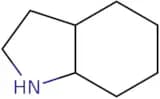
CAS:<p>2,5-Dibromothiophene-3-carboxaldehyde is a model complex that has been shown to have acceptor and photophysical properties. It can be used in organic electrochemical polymerization experiments, where it is dipolar and can act as an electron donor. This substance has also been shown to inhibit the rate of polymerization in polymer films. The morphology of 2,5-dibromothiophene-3-carboxaldehyde is determined by electron microscopy. It has a melting point of about 210 degrees Celsius and an electron microscopic efficiency of about 10%.</p>Formula:C5H2Br2OSPurity:Min. 95%Molecular weight:269.94 g/molrac-(3aR,7aR)-Octahydro-1H-indole
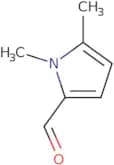
CAS:<p>Versatile small molecule scaffold</p>Formula:C8H15NPurity:Min. 95%Molecular weight:125.21 g/mol1,5-dimethyl-1H-pyrrole-2-carbaldehyde
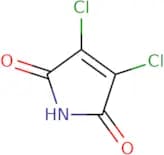
CAS:<p>Versatile small molecule scaffold</p>Formula:C7H9NOPurity:Min. 95%Molecular weight:123.16 g/mol3,4-dichloro-2,5-dihydro-1H-pyrrole-2,5-dione
CAS:<p>3,4-dichloro-2,5-dihydro-1H-pyrrole-2,5-dione is a compound that has been used in the synthesis of conjugates. It has been shown to be an inhibitor of mitochondrial protein synthesis and is able to inhibit the growth of Candida glabrata and Trichophyton mentagrophytes at concentrations of 2.0 mM. The compound is also reversible and can be hydrolyzed by hydrochloric acid. 3,4-Dichloro-2,5-dihydro-1H-pyrrole-2,5-dione shows synergistic effects with hepg2 cells and human liver cancer cells when combined with chlorine atom. This compound has been shown to have a high affinity for polycarbonates as well as a low molecular weight (270).</p>Formula:C4HCl2NO2Purity:Min. 95%Molecular weight:165.96 g/molBicyclo[2.2.2]octan-1-amine hydrochloride
CAS:<p>Versatile small molecule scaffold</p>Formula:C8H15N·HClPurity:Min. 95%Molecular weight:161.67 g/mol6-Azaspiro[3.4]octan-5-one
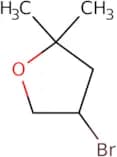
CAS:<p>Versatile small molecule scaffold</p>Formula:C7H11NOPurity:Min. 95%Molecular weight:125.17 g/mol4-Bromo-2,2-dimethyloxolane
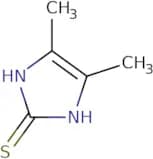
CAS:<p>Versatile small molecule scaffold</p>Formula:C6H11BrOPurity:Min. 95%Molecular weight:179.05 g/mol4,5-Dimethyl-1H-imidazole-2-thiol
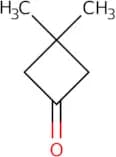
CAS:<p>4,5-Dimethyl-1H-imidazole-2-thiol is a potential drug candidate for cancer therapy. It is an insulin-like growth factor (IGF) inhibitor that can be used to treat cancer. 4,5-Dimethyl-1H-imidazole-2-thiol has the ability to inhibit IGF receptors and reduce cell proliferation in tumor cells. This compound also has the ability to inhibit tyrosine kinase activity and disrupt IGF receptor autophosphorylation. The isoquinolinedione derivative of 4,5-dimethyl 1H imidazole 2 thiol has been shown to have increased potency as an inhibitor of IGF receptors and tyrosine kinase activity in vitro.</p>Formula:C5H8N2SPurity:Min. 95%Molecular weight:128.19 g/mol3,3-Dimethylcyclobutan-1-one
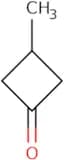
CAS:<p>3,3-Dimethylcyclobutan-1-one is a molecule that has been shown to be a sensitizer of ethylene in the presence of activated oxygen. The kinetics of this reaction were studied by determining the rate constant for the formation of 3,3-dimethylcyclobutan-1-one at various temperatures. This compound is an analog to cyclobutanone and can be synthesized by photolytic or reductive elimination. The nature of the substituents on the ring affects the bond cleavage and product yields during these reactions. 3,3-Dimethylcyclobutan-1-one has been used as a radiation sensitizer for polymers, although this application is limited because it reacts with oxygen. In addition, 3,3-dimethylcyclobutan-1-one can be used to produce isobutene by coupling with acetylene.</p>Formula:C6H10OPurity:Min. 95%Molecular weight:98.14 g/mol3-Methylcyclobutan-1-one
CAS:<p>3-Methylcyclobutan-1-one is a monoterpene that is used for the production of butenes, benzene, and aspartyl. It can be photolyzed or activated with radiation to form a cyclobutane ring. The three possible stereoisomers are in an equal ratio when 3-methylcyclobutan-1-one is synthesized from cyclopropanecarboxylic acid. There are many modifications that can be done to this molecule such as oxidation, reduction, and hydrogenation. The yields of product are dependent on the type of modification used.</p>Formula:C5H8OPurity:Min. 95%Molecular weight:84.12 g/molPrenyl acetate
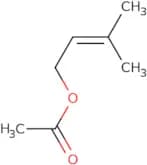
CAS:<p>Prenyl acetate is a prenylated polyhydric alcohol with the chemical formula C10H22O4. It is a colorless liquid with a pleasant smell. Prenyl acetate can be used as an additive to make polymers such as polyesters or polyurethanes more flexible, or in the synthesis of cationic polymerization initiators, which are used in the production of films and coatings. Prenyl acetate has been shown to have physiological effects on animals by acting as an anti-inflammatory agent. Prenyl acetate may also act as a nucleophile that reacts with carboxylic acids to form esters, such as isopropyl palmitate.</p>Formula:C7H12O2Purity:Min. 95%Molecular weight:128.17 g/mol

![Pyrazolo[1,5-a]pyrimidin-7-amine](/_next/image/?url=https%3A%2Fstatic.cymitquimica.com%2Fproducts%2F3D%2Fthumb-webp%2FBAA19463.webp&w=3840&q=75)
![4-Methylbicyclo[2.2.2]octan-1-amine hydrochloride](/_next/image/?url=https%3A%2Fstatic.cymitquimica.com%2Fproducts%2F3D%2Fthumb-webp%2FBAA19443.webp&w=3840&q=75)
![Bicyclo[2.2.2]octan-1-amine hydrochloride](/_next/image/?url=https%3A%2Fstatic.cymitquimica.com%2Fproducts%2F3D%2Fthumb-webp%2FBAA19343.webp&w=3840&q=75)
![6-Azaspiro[3.4]octan-5-one](/_next/image/?url=https%3A%2Fstatic.cymitquimica.com%2Fproducts%2F3D%2Fthumb-webp%2FBAA19330.webp&w=3840&q=75)