


Building Blocks
This section contains fundamental products for the synthesis of organic and biological compounds. Building blocks are the essential starting materials used to construct complex molecules through various chemical reactions. They play a critical role in drug discovery, material science, and chemical research. At CymitQuimica, we offer a diverse range of high-quality building blocks to support your innovative research and industrial projects, ensuring you have the essential components for successful synthesis.
Subcategories of "Building Blocks"
- Boronic Acids & Boronic Acid Derivatives(5,756 products)
- Chiral Building Blocks(1,242 products)
- Hydrocarbon Building Blocks(6,095 products)
- Organic Building Blocks(61,055 products)
Found 199650 products of "Building Blocks"
Sort by
Purity (%)
0
100
|
0
|
50
|
90
|
95
|
100
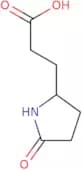
3-(5-Oxo-pyrrolidin-2-yl)-propionic acid
CAS:<p>3-(5-Oxo-pyrrolidin-2-yl)-propionic acid is a pharmacological agent that is used for animal studies. This drug is an activator of the glutamatergic system, which plays a role in cognition. 3-(5-Oxo-pyrrolidin-2-yl)-propionic acid was found to increase the number of methyl groups in rats and mice, which may be due to its ability to activate the enzyme methoxy radical. 3-(5-Oxo-pyrrolidin-2-yl)-propionic acid increases the amount of lactam in tissues, leading to increased production of amide, which may also increase cognitive function.</p>Formula:C7H11NO3Purity:Min. 95%Molecular weight:157.17 g/mol4-(p-Tolyl)butan-2-one
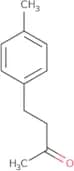
CAS:<p>4-(p-Tolyl)butan-2-one (4PtBA) is a chemical intermediate that is used in the synthesis of other compounds, such as pharmaceuticals. The reaction sequence begins with the addition of acetone to a solution of triphenylphosphine in an inert solvent. The resulting solution is then treated with a catalytic amount of rhodium and carbon monoxide gas. This yields 4PtBA and phosphine oxide, which are separated by distillation. 4PtBA can be reacted with phenylacetylene to produce diphenyldibenzofuran.</p>Formula:C11H14OPurity:Min. 95%Molecular weight:162.23 g/mol5-(Bromomethyl)-1,3-dichlorobenzene
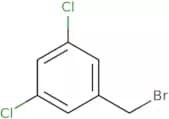
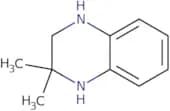
CAS:<p>5-(Bromomethyl)-1,3-dichlorobenzene is a lead compound for the treatment of osteoarthritis. It inhibits aggrecanase and proteoglycanases, which are enzymes that break down proteins in cartilage. 5-(Bromomethyl)-1,3-dichlorobenzene has been shown to inhibit mmp-1 and tnf-α and to be selective for aggrecanase over other proteoglycanases. This drug also has anti-inflammatory properties due to its ability to inhibit cyclooxygenase enzymes, which are involved in prostaglandin synthesis. 5-(Bromomethyl)-1,3-dichlorobenzene is a racemic mixture of two enantiomers (enantiomer 1 and enantiomer 2). Enantiomer 1 is more potent than enantiomer 2 at inhibiting aggrecanase and proteoglycanases.</p>Formula:C7H5BrCl2Purity:Min. 95%Molecular weight:239.93 g/mol2,2-Dimethyl-1,2,3,4-tetrahydroquinoxaline
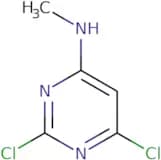
CAS:<p>Versatile small molecule scaffold</p>Formula:C10H14N2Purity:Min. 95%Molecular weight:162.23 g/mol2,6-dichloro-N-methylpyrimidin-4-amine
CAS:Versatile small molecule scaffoldFormula:C5H5Cl2N3Purity:Min. 95%Molecular weight:178 g/mol2-Chloro-3-(piperidin-1-yl)quinoxaline
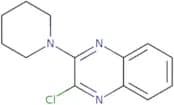
CAS:<p>Versatile small molecule scaffold</p>Formula:C13H14ClN3Purity:Min. 95%Molecular weight:247.72 g/moldichloro-1,3,4-thiadiazole
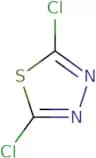
CAS:<p>Dichloro-1,3,4-thiadiazole is a dipole molecule with a nitrogen atom in the center of two chlorine atoms. It has a molecular electrostatic potential of -0.6 and an efficiency of 73%. Dichloro-1,3,4-thiadiazole is a polar molecule that can be described by three geometries: amide, dimethylformamide, and chlorine. The geometry of dichloro-1,3,4-thiadiazole is optimized using parameters such as the distance between two chlorine atoms (-2.8) and the distance between two nitrogen atoms (1.7).</p>Formula:C2Cl2N2SPurity:Min. 95%Molecular weight:155 g/molN-tert-Butyl-3-methylpyridine-2-carboxamide
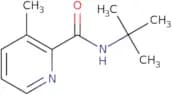
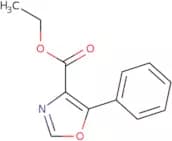
CAS:<p>Versatile small molecule scaffold</p>Formula:C11H16N2OPurity:Min. 95%Molecular weight:192.26 g/molEthyl 5-phenyl-1,3-oxazole-4-carboxylate
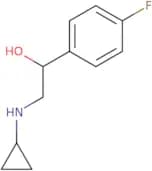
CAS:<p>Versatile small molecule scaffold</p>Formula:C12H11NO3Purity:Min. 95%Molecular weight:217.22 g/mol2-(Cyclopropylamino)-1-(4-fluorophenyl)ethan-1-ol
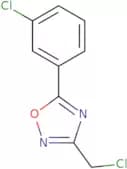
CAS:<p>Versatile small molecule scaffold</p>Formula:C11H14FNOPurity:Min. 95%Molecular weight:195.23 g/mol3-(Chloromethyl)-5-(3-chlorophenyl)-1,2,4-oxadiazole
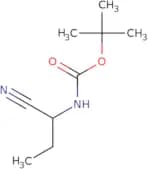
CAS:<p>Versatile small molecule scaffold</p>Formula:C9H6Cl2N2OPurity:Min. 95%Molecular weight:229.06 g/moltert-Butyl N-(1-cyanopropyl)carbamate
CAS:<p>Versatile small molecule scaffold</p>Formula:C9H16N2O2Purity:Min. 95%Molecular weight:184.24 g/mol[5-(3-Chlorophenyl)-1,2-oxazol-3-yl]methanol
CAS:<p>Versatile small molecule scaffold</p>Formula:C10H8ClNO2Purity:Min. 95%Molecular weight:209.63 g/mol3-Iodo-2,6-dihydro-4H-pyrrolo[3,4-c]pyrazole-5-carboxylic acid tert-butyl ester
CAS:<p>Versatile small molecule scaffold</p>Formula:C10H14IN3O2Purity:Min. 95%Molecular weight:335.14 g/mol4-[5-(Difluoromethyl)-1,3,4-oxadiazol-2-yl]benzoic acid
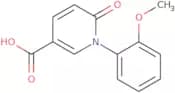
CAS:<p>Versatile small molecule scaffold</p>Formula:C10H6F2N2O3Purity:Min. 95%Molecular weight:240.16 g/mol1-(2-Methoxyphenyl)-6-oxo-1,6-dihydropyridine-3-carboxylic acid
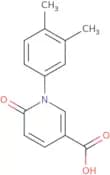
CAS:<p>Versatile small molecule scaffold</p>Formula:C13H11NO4Purity:Min. 95%Molecular weight:245.23 g/mol1-(3,4-Dimethylphenyl)-6-oxo-1,6-dihydropyridine-3-carboxylic acid
CAS:<p>Versatile small molecule scaffold</p>Formula:C14H13NO3Purity:Min. 95%Molecular weight:243.26 g/mol9-[(2-Chloropyridin-4-yl)methyl]-9H-purin-6-amine
CAS:<p>Versatile small molecule scaffold</p>Formula:C11H9ClN6Purity:Min. 95%Molecular weight:260.68 g/mol6-[(3-Bromophenyl)sulfanyl]pyridine-2-carboxylic acid
CAS:<p>Versatile small molecule scaffold</p>Formula:C12H8BrNO2SPurity:Min. 95%Molecular weight:310.17 g/mol1-[(2-Cyanophenyl)methyl]pyrrolidine-2-carboxamide
CAS:<p>Versatile small molecule scaffold</p>Formula:C13H15N3OPurity:Min. 95%Molecular weight:229.28 g/mol

![[5-(3-Chlorophenyl)-1,2-oxazol-3-yl]methanol](/_next/image/?url=https%3A%2Fstatic.cymitquimica.com%2Fproducts%2F3D%2Fthumb-webp%2FHBB42479.webp&w=3840&q=75)
![3-Iodo-2,6-dihydro-4H-pyrrolo[3,4-c]pyrazole-5-carboxylic acid tert-butyl ester](/_next/image/?url=https%3A%2Fstatic.cymitquimica.com%2Fproducts%2F3D%2Fthumb-webp%2FHBB42843.webp&w=3840&q=75)
![4-[5-(Difluoromethyl)-1,3,4-oxadiazol-2-yl]benzoic acid](/_next/image/?url=https%3A%2Fstatic.cymitquimica.com%2Fproducts%2F3D%2Fthumb-webp%2FHBC02266.webp&w=3840&q=75)
![9-[(2-Chloropyridin-4-yl)methyl]-9H-purin-6-amine](/_next/image/?url=https%3A%2Fstatic.cymitquimica.com%2Fproducts%2F3D%2Fthumb-webp%2FHBC14810.webp&w=3840&q=75)
![6-[(3-Bromophenyl)sulfanyl]pyridine-2-carboxylic acid](/_next/image/?url=https%3A%2Fstatic.cymitquimica.com%2Fproducts%2F3D%2Fthumb-webp%2FHBC16823.webp&w=3840&q=75)
![1-[(2-Cyanophenyl)methyl]pyrrolidine-2-carboxamide](/_next/image/?url=https%3A%2Fstatic.cymitquimica.com%2Fproducts%2F3D%2Fthumb-webp%2FHBC17213.webp&w=3840&q=75)