Alcohols
Subcategories of "Alcohols"
Found 5817 products of "Alcohols"
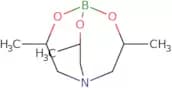
Triisopropanolamine Borate
CAS:Triisopropanolamine borate is an organic compound with the formula (CH3)3N(CH2)3OH. It is a colorless liquid with a sweet, amine-like odor. Triisopropanolamine borate is widely used as a cross-linking agent in coatings, and as a reactive functional group in polycarboxylic acid synthesis and cationic polymerization. It also has been used as a blood pressure lowering agent and to treat high calcium levels in the blood. The chemical structure of triisopropanolamine borate can be seen below: Triisopropanolamine Borate, Chemical Structure The chemical formula for triisopropanolamine borate is CH3N(CH2)3OH. Triisopropanolamine borate has many applications due to its reactive functional groups, including cross-linking agents for coatings and polycarboxylic acid synthesis
Formula:C9H18BNO3Purity:Min. 95%Molecular weight:199.06 g/molRef: 3D-FT159810
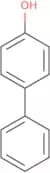
Discontinued product4-Phenylphenol
CAS:4-Phenylphenol is a phenolic compound that is used in the synthesis of other compounds. 4-Phenylphenol was found to react with rat liver microsomes and showed a hydroxyl group as its reactive site. 4-Phenylphenol also inhibited the activities of enzymes such as diazonium salt, sodium carbonate, monoclonal antibodies, analytical methods, light emission and p-hydroxybenzoic acid. The reaction mechanism of 4-Phenylphenol involves hydrogen bonding with human serum biphenyl.
Formula:C12H10OPurity:Min. 95%Color and Shape:PowderMolecular weight:170.21 g/molRef: 3D-FP62585
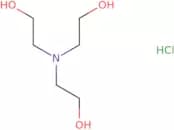
Discontinued productTriethanolamine hydrochloride
CAS:Controlled ProductTriethanolamine hydrochloride, widely known as TEA-HCl, is a buffer used in biochemistry to maintain a stable pH in the range of 7.3 to 8.3 during processes like protein extraction and purification. They are also used in enzyme assays.
Formula:C6H15NO3·HClPurity:Min. 95%Color and Shape:PowderMolecular weight:185.65 g/molRef: 3D-FT46965
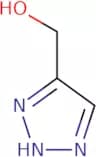
Discontinued product2H-1,2,3-Triazol-4-ylmethanol
CAS:2H-1,2,3-Triazol-4-ylmethanol is an aliphatic hydrocarbon that can be synthesized by reacting chlorine with a hydroxy group. It has been shown to have insecticidal activity against flies and mosquitoes. 2H-1,2,3-Triazol-4-ylmethanol is also used as a precursor for the synthesis of triazole derivatives. These compounds are used in the production of pharmaceuticals and pesticides. 2H-1,2,3-Triazol-4-ylmethanol also has neurodegenerative disease activities. This compound may be useful in treating diseases such as Alzheimer's disease or Parkinson's disease because it inhibits the formation of beta amyloid proteins that are linked to these conditions.
Formula:C3H5N3OPurity:Min. 95%Molecular weight:99.09 g/molRef: 3D-FT133965
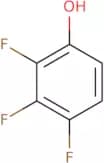
Discontinued product2,3,4-Trifluorophenol
CAS:2,3,4-Trifluorophenol is a chemical control agent that is used as an intermediate in the synthesis of organic compounds. It reacts with hydroxyl groups to form 2,3,4-trifluoroacetophenone from a proton. The compound has low light and x-ray absorption properties and is typically used in liquid crystal compositions. Chemical ionization experiments have shown that 2,3,4-trifluorophenol binds to copper oxide and forms copper trifluoride. This compound also has been found to be conjugated with neutral ph phenols and chlorinated with chlorine atom.
Formula:C6H3F3OPurity:Min. 95%Color and Shape:PowderMolecular weight:148.08 g/mol2-(2-Aminoethoxy)ethanol
CAS:2-(2-Aminoethoxy)ethanol (2-AE) is a natural compound that has been synthesized from ethanol and 2-aminoethanol. It has been shown to react with sodium carbonate to form stable complexes that are resistant to hydrolysis by amines. The stability of the complex is attributed to the formation of an intermolecular hydrogen bond between the hydroxyl group on the 2-AE molecule and the carboxylate group on the sodium carbonate molecule. 2-AE reacts with benzalkonium chloride, a quaternary ammonium salt, in water vapor to produce an alcohol and a fatty acid, which is then hydrolyzed by glycol ethers into glycolates. This mechanism is similar to that of other reactions involving quaternary ammonium salts, such as those in fatty acids or glycol ethers.
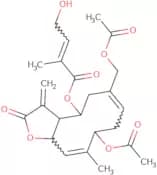
Formula:C4H11NO2Purity:Min. 95%Molecular weight:105.14 g/molEupalinolide A
CAS:Eupalinolide A is a sesquiterpene lactone that is extracted from Eupatorium. It has been shown to have anti-inflammatory and antioxidant properties, as well as the ability to activate caspase-9 in cells. This drug also inhibits the production of reactive oxygen species (ROS) by inhibiting mitochondrial membrane potential, which leads to cell death. Eupalinolide A also has the ability to inhibit collagen synthesis and can be used for the treatment of chronic bronchitis, hepatitis, and liver cirrhosis.
Formula:C24H30O9Purity:Min. 95%Molecular weight:462.49 g/molRef: 3D-FE73986
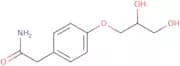
Discontinued productDes(isopropylamino) atenolol diol
CAS:Des(isopropylamino) atenolol diol is a synthetic, high-performance liquid chromatography (HPLC) analyte with an absorbance maximum of 254 nm. It is a white/off-white solid that is soluble in water and has a molecular weight of 187.5 g/mol. This compound can be analyzed using multichannel or liquid chromatographic techniques. Des(isopropylamino) atenolol diol can be used to measure the concentration of various compounds, such as impurities, by elution from the column. The elution profile has been shown to be dependent on the type of sample and technique used for analysis.
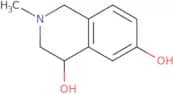
Formula:C11H15NO4Purity:Min. 95%Molecular weight:225.24 g/mol1,2,3,4-Tetrahydro-4,6-dihydroxy-2-methyl-isoquinoline
CAS:1,2,3,4-Tetrahydro-4,6-dihydroxy-2-methyl-isoquinoline is a useful building block in the synthesis of various compounds such as pharmaceuticals and pesticides. It is an intermediate for the preparation of other valuable chemicals such as the antihistamine diphenhydramine, which is used to treat allergies. Tetrahydroisoquinoline can also be used as a reagent to synthesize other chemical compounds. This compound has been used in research as well as commercial applications. Tetrahydroisoquinoline is also a versatile scaffold that can be modified to produce different derivatives with different properties.
Formula:C10H13NO2Purity:Min. 95%Color and Shape:White PowderMolecular weight:179.22 g/molRef: 3D-FT28104
Discontinued product(20R)-Pregn-4-ene-3,17,20-triol
CAS:Controlled ProductPlease enquire for more information about (20R)-Pregn-4-ene-3,17,20-triol including the price, delivery time and more detailed product information at the technical inquiry form on this page
Formula:C21H34O3Purity:Min. 95%Molecular weight:334.49 g/molRef: 3D-FP27142
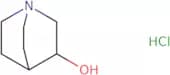
Discontinued product3-Quinuclidinol HCl
CAS:Controlled Product3-Quinuclidinol HCl is a cholinergic drug that inhibits the enzyme acetylcholinesterase. This action prevents the breakdown of the neurotransmitter acetylcholine, which causes an increase in its concentration in the synaptic cleft. 3-Quinuclidinol HCl has been shown to have a dose-dependent effect on increasing acetylcholine levels, which is believed to be due to its ability to inhibit butyrylcholinesterase. In addition, this drug has been shown to have pharmacokinetic properties that are consistent with those of other cholinergic drugs. 3-Quinuclidinol HCl also interacts with other substances and can block nicotinic receptors at high doses.
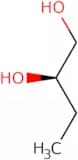
Formula:C7H13NO·HClPurity:Min. 95%Molecular weight:163.64 g/mol(R)-1,2-Butanediol
CAS:(R)-1,2-Butanediol is a chemical compound that is classified as a diol. It has two hydroxyl groups and is an active substance. The (R)-1,2-Butanediol molecule consists of two asymmetric carbon atoms. In the presence of oxygen, it can form a ternary complex with copper and the hydroxyl group. This ternary complex catalyzes the conversion of various substrates such as L-xylulose to its corresponding ketones or L-arabinose to its corresponding acetals. The reaction proceeds via substrate binding to the active site on the ternary complex and subsequent functional group participation in the reaction.
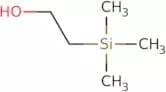
Formula:C4H10O2Purity:Min. 95%Molecular weight:90.12 g/mol2-(Trimethylsily)ethanol
CAS:2- (Trimethylsily)ethanol is a hdac inhibitor that is used in the synthesis of other chemical substances. It inhibits HDAC activity by binding to the hydroxyl group on the histone and prevents acetylation of lysine residues, preventing gene transcription. 2-(Trimethylsily)ethanol has been shown to inhibit oxidation reactions in biological systems, such as those caused by trifluoroacetic acid or trichloroacetic acid. In addition, this reagent can be used to prepare functional groups through a synthetic method with an activation energy of 15 kcal/mol and a reaction rate constant of 0.04 M-1 s-1. 2-(Trimethylsily)ethanol has also been used for preparative methods with cleavage products including sulfamoyl chloride.
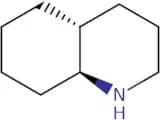
Formula:C5H14OSiPurity:95%NmrColor and Shape:PowderMolecular weight:118.25 g/moltrans-Decahydroquinoline
CAS:Trans-decahydroquinoline is a chiral compound that can be synthesized by an asymmetric synthesis. It is an amide with a carbonyl group and a dialkylamino group. Trans-decahydroquinoline can be used to synthesize different compounds, such as enantiopure drugs, pharmaceuticals, and agrochemicals. The synthesis of trans-decahydroquinoline can be accomplished through the aldol cyclization or the addition of an acid to the carbonyl group. The magnetic resonance spectroscopy (NMR) and molecular modeling techniques have been used to study its structure and properties.
Formula:C9H17NPurity:Min. 95%Molecular weight:139.24 g/molRef: 3D-FD76040
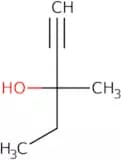
Discontinued product3-Methyl-1-pentyn-3-ol
CAS:Controlled Product3-Methyl-1-pentyn-3-ol is a chemical that has been shown to have interactive effects on the metabolism of urea nitrogen and low light. 3-Methyl-1-pentyn-3-ol has been shown to produce a depressant effect in animals, which may be due to its ability to inhibit the production of acetylcholine by blocking the enzyme cholinesterase. This chemical has also been shown to react with hydroxyl groups, producing a pharmacological agent. The reaction mechanism for 3-methyl pentynol is via hydrolysis by hydrochloric acid or pentobarbital sodium.
Formula:C6H10OPurity:Min. 95%Molecular weight:98.14 g/molRef: 3D-FM35088
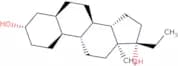
Discontinued product(3β,5β,17α)-19-Norpregnane-3,17-diol
CAS:Controlled ProductPlease enquire for more information about (3β,5β,17α)-19-Norpregnane-3,17-diol including the price, delivery time and more detailed product information at the technical inquiry form on this page
Formula:C20H34O2Purity:Min. 95%Color and Shape:PowderMolecular weight:306.48 g/molRef: 3D-FN26473
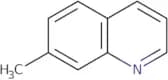
Discontinued product7-Methylquinoline
CAS:7-Methylquinoline is an organic compound that can be used to synthesize antimalarial drugs. It is a quinoline derivative with a methyl group at the 7th position. The structure of 7-methylquinoline contains a nitrogen atom and hydrogen atoms, which are bonded to fluorine, chlorine, and bromine atoms. This molecule has been shown to be stable in the presence of Friedel-Crafts catalysts and chloride ions. The reaction mechanism for 7-methylquinoline is intramolecular hydrogen transfer from the chloroform molecule to the quinoline ring system. The formation rate for this compound is slow because it requires two steps: nucleophilic substitution and electrophilic addition reactions.
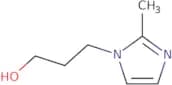
Formula:C10H9NPurity:Min. 95%Molecular weight:143.19 g/mol3-(2-Methyl-1H-imidazol-1-yl)propan-1-ol hydrochloride
CAS:Please enquire for more information about 3-(2-Methyl-1H-imidazol-1-yl)propan-1-ol hydrochloride including the price, delivery time and more detailed product information at the technical inquiry form on this page
Formula:C7H12N2OPurity:Min. 95%Molecular weight:140.18 g/molRef: 3D-FM120530
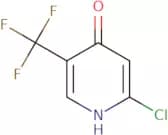
Discontinued product2-Chloro-5-(trifluoromethyl)pyridin-4-ol
CAS:Please enquire for more information about 2-Chloro-5-(trifluoromethyl)pyridin-4-ol including the price, delivery time and more detailed product information at the technical inquiry form on this page
Formula:C6H3ClF3NOPurity:Min. 95%Molecular weight:197.54 g/molRef: 3D-FC154736
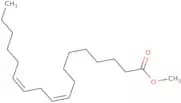
Discontinued productMethyl linoleate
CAS:Methyl linoleate is a fatty acid that is naturally found in human and animal cells. It has been shown to inhibit the growth of bacteria through its antimicrobial properties. Methyl linoleate also has antioxidative properties, which may be due to its ability to chelate metal ions such as iron and copper. This fatty acid also has anti-inflammatory activity, which may be due to its ability to inhibit prostaglandin synthesis by blocking cyclooxygenase (COX) enzymes.
Formula:C19H34O2Purity:Min. 95%Color and Shape:Colorless Clear LiquidMolecular weight:294.47 g/molRef: 3D-FM74198
Discontinued product