Alcohols
Subcategories of "Alcohols"
Found 5818 products of "Alcohols"
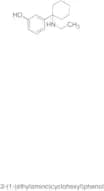
3-(1-(Ethylamino)cyclohexyl)phenol
CAS:Controlled ProductApplications 3-(1-(Ethylamino)cyclohexyl)phenol is a useful synthesis intermediate.
Formula:C14H21NOColor and Shape:NeatMolecular weight:219.3232,5-Dimethoxythiophenol
CAS:Controlled ProductApplications 2,5-Dimethoxythiophenol is a thiophenol derivative used in the preparation of dihydrofolate reductase inhibitors and potential antitumor agents.
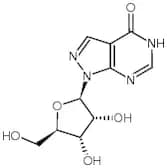
References Gangjee, A. et al.: J. Med. Chem., 52, 4892 (2009); Gangjee, A. et al.: Biiorg. Med. Chem., 18, 953 (2010);Formula:C8H10O2SColor and Shape:NeatMolecular weight:170.23Allopurinol riboside
CAS:Controlled ProductFormula:C10H12N4O5Color and Shape:NeatMolecular weight:268.2269-Decen-1-ol
CAS:Controlled ProductStability Light Sensitive
Applications 9-Decen-1-ol can be used to synthesize terminal olefins or generate epoxides.
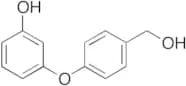
References Blackwell, H. E., et al., J. Am. Chem. Soc. 122, 58 (2000); Coperet, C., et al.: Chem. Commun 16, 1565 (1997)Formula:C10H20OColor and Shape:NeatMolecular weight:156.273-(4-(Hydroxymethyl)phenoxy)phenol
Controlled ProductFormula:C13H12O3Color and Shape:NeatMolecular weight:216.233(1R)-2-(Methylamino)-1-phenylethan-1-ol Hydrochloride
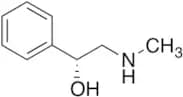
CAS:Controlled ProductApplications (1R)-2-(methylamino)-1-phenylethan-1-ol (cas# 495-42-1) is a useful research chemical.
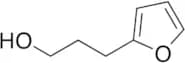
Formula:C9H13NO·ClHColor and Shape:NeatMolecular weight:187.6673-(Furan-2-yl)propan-1-ol
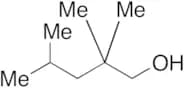
CAS:Controlled ProductFormula:C7H10O2Color and Shape:NeatMolecular weight:126.1532,2,4-Trimethyl-1-pentanol
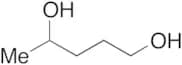
CAS:Controlled ProductFormula:C8H18OColor and Shape:NeatMolecular weight:130.2281,4-Pentanediol
CAS:Stability Hygroscopic
Applications 1,4-Pentanediol is a useful synthetic intermediate. It was used in the preparation of poly(ortho ester). 1,4-Pentanediol on dehydration in water at 573K yields five-membered ether, 2-methyltetrahydrofuran.
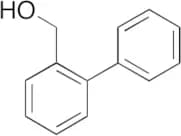
References Heller, J., et al.: J. Controlled Release, 78, 133 (2002); Yamaguchi, A., et al.: green Chem., 11, 48 (2009)Formula:C5H12O2Color and Shape:Colourless OilyMolecular weight:104.1482-Biphenylmethanol
CAS:Controlled ProductApplications 2-Biphenylmethanol is a useful reactant in organic synthesis.
References Li, Zheng, et al.: Bioorg. & Med. Chem., 25(24), 6647-6652 (2017);Shi, Guangfa, et al.: Org. Let., 18(12), 2958-2961 (2016)Formula:C13H12OColor and Shape:NeatMolecular weight:184.233-Furanmethanol
CAS:Controlled ProductApplications 3-Furanmethanol (cas# 4412-91-3) is a useful research chemical.
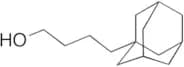
Formula:C5H6O2Color and Shape:NeatMolecular weight:98.11-Adamantanebutan-4-ol
CAS:Controlled ProductApplications 1-Adamantanebutan-4-ol is a building block used in various synthetic preparations. Adamantanealkanamines are potential antidepressant and anti-Parkinson agents.
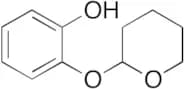
References Chakrabarti, J., et al.: J. Med. Chem., 17, 602 (1974);Formula:C14H24OColor and Shape:NeatMolecular weight:208.342-(Tetrahydropyran-2-yloxy)phenol
CAS:Controlled ProductFormula:C11H14O3Color and Shape:NeatMolecular weight:194.227(2S,3R,4E)-3-Benzoyl-2-tert-butyloxycarbonylamino-4-octadecen-1,3-diol
CAS:Controlled ProductApplications (2S,3R,4E)-3-Benzoyl-2-tert-butyloxycarbonylamino-4-octadecen-1,3-diol (cas# 299172-59-1) is a compound useful in organic synthesis.
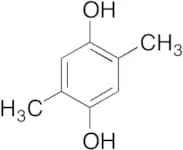
References Kinjo, Y., et al.: Chem. Biol., 15, 654 (2008),Formula:C30H49NO5Color and Shape:NeatMolecular weight:503.712,5-Dimethylbenzene-1,4-diol
CAS:Controlled ProductApplications 2,5-Dimethylbenzene-1,4-diol is an intermediate used in the synthesis of β-Tocopherol (Racemic Mixture) (T625170), which is one of the naturally occurring forms of Vitamins E and is biologically less active than α-Tocopherol. This is the racemic mixture of all stereoisomers.
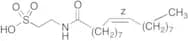
References Bianchi, G., et al.: Eur. J. Lipid Sci. Technology, 105, 229 (2003), Sakouhi, F., et al.: Food Chem., 108, 833 (2008)Formula:C8H10O2Color and Shape:NeatMolecular weight:138.164N-Oleoyl Taurine
CAS:Controlled ProductApplications N-Oleoyl Taurine which belongs to the class of N-Acyl Taurines were detected in beta cells of Langerhans islets causing insulin secretion results beta cell dysfunction in type 2 diabetes
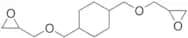
References Aichler, M., et al.: Cell Metab., 25, 1334-1347 (2017)Formula:C20H39NO4SColor and Shape:NeatMolecular weight:389.601,4-Cyclohexanedimethanol Diglycidyl Ether
CAS:Controlled ProductApplications 1,4-Cyclohexanedimethanol diglycidyl ether (cas# 14228-73-0) is a useful research chemical.
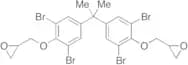
Formula:C14H24O4Color and Shape:NeatMolecular weight:256.34Tetrabromobisphenol A Diglycidyl Ether
CAS:Controlled ProductApplications Tetrabromobisphenol A Diglycidyl Ether is a brominated flame retardant (BFR) with good stability and a thermal decomposition temperature over 300°.
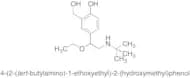
References Oleszek S., et al.: Waste Manag., 33, 1835 (2013); Jia, X., et al.: Henan Daxue Xuebao, Ziran Kexueban, 36, 44 (2006)Formula:C21H20Br4O4Color and Shape:NeatMolecular weight:656.004-(2-(tert-butylamino)-1-ethoxyethyl)-2-(hydroxymethyl)phenol
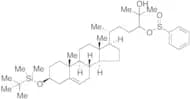
CAS:Controlled ProductFormula:C15H25NO3Color and Shape:NeatMolecular weight:267.3643-O-tert-Butyldimethylsilyl-cholest-5-ene-3-ol 24-(2-Hydroxyisopropyl) 24-Phenyl Sulfinate
Controlled ProductApplications 3-O-tert-Butyldimethylsilyl-cholest-5-ene-3-ol 24-(2-hydroxyisopropyl) 24-Phenyl Sulfinate is an intermediate in the preparation of Campesterol (C155360).
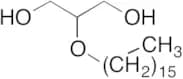
Formula:C39H64O4SSiColor and Shape:NeatMolecular weight:657.0742-O-Hexadecyl Glycerol
CAS:Controlled ProductApplications 2-O-Hexadecyl Glycerol is an important research chemical where chiral-phase HPLC/MS is used to identify its alkyl group.
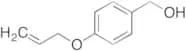
References Yamashina, T., et al.: Bunseki Kagaku, 55, 643-650 (2006)Formula:C19H40O3Color and Shape:NeatMolecular weight:316.519p-(Allyloxy)benzyl Alcohol
CAS:Controlled ProductApplications p-(Allyloxy)benzyl Alcohol is an intermediate in the synthesis of 2-amino-nicotinic acid benzyl ester derivatives as agrochemical fungicides.
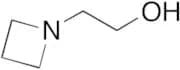
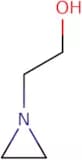
References Jpn. Kokai Tokkyo Koho (2015), JP 2015089883 A 20150511.Formula:C10H12O2Color and Shape:NeatMolecular weight:164.22-(Azetidin-1-yl)ethanol
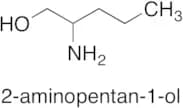
CAS:Controlled ProductFormula:C5H11NOColor and Shape:NeatMolecular weight:101.15DL-2-Amino-1-pentanol
CAS:Controlled ProductApplications DL-2-Amino-1-pentanol is a useful intermediate for organic synthesis. It is used in the preparation of amino-substituted pyrimidine derivatives and other aminoethanethiol derivatives with potential antiradiation properties.
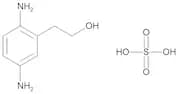
References Yoo, K. H., et al.: Korean J. Med. Chem., 9, 83 (1999); Fernandez, S., et al.: Synthesis, 9, 713 (1991)Formula:C5H13NOColor and Shape:NeatMolecular weight:103.162-(2,5-diaminophenyl)ethanol Sulfate
CAS:Controlled ProductStability Hygroscopic
Applications 2-(2,5-diaminophenyl)ethanol Sulfate (cas# 93841-25-9) is a useful research chemical.
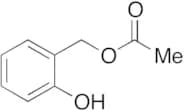
Not a dangerous good if item is equal to or less than 1g/ml and there is less than 100g/ml in the packageFormula:C8H12N2O·H2O4SColor and Shape:NeatMolecular weight:250.272-Acetoxymethylphenol
CAS:Controlled ProductFormula:C9H10O3Color and Shape:NeatMolecular weight:329.4332-Chlorothiophenol
CAS:2-Chlorothiophenol is a chemical compound that belongs to the group of fatty acids. It is synthesized by reacting phosphorus pentachloride with 2-chloroethanol in the presence of magnesium salt. The corresponding molecule has a diameter of 4.8 Å and a thermal expansion coefficient of 1.5×10 K−1, which is similar to the thermal expansion coefficients of fatty acids. 2-Chlorothiophenol reacts with carbonyl groups in the presence of oxygen to form 2-chlorophenol and hydrogen chloride gas, which are products that can be detected using spectroscopic techniques such as infrared or nuclear magnetic resonance spectroscopy. The reaction mechanism for this reaction is not well understood, but it is thought that the intramolecular hydrogen acts as an electron donor to form a pi bond between carbon atoms on adjacent molecules, leading to formation of an oxygenated molecule. 2-Chlorothiophenol also has proteinFormula:C6H5ClSPurity:Min. 95%Color and Shape:Clear Colourless LiquidMolecular weight:144.62 g/mol4-Methylquinoline
CAS:4-Methylquinoline is a natural compound that is structurally related to coumarin. It serves as an enzyme substrate for various types of enzymes, and has been shown to inhibit the activity of enzymes such as N-acetyltransferase, indoleamine 2,3-dioxygenase, and tryptophan 2,3-dioxygenase. 4-Methylquinoline has also been shown to be effective against infectious diseases such as toxoplasmosis and leishmaniasis. Furthermore, 4-methylquinoline has been shown to have anti-inflammatory properties in autoimmune diseases such as multiple sclerosis. The mechanism of action of 4-methylquinoline is not fully understood but it may interfere with the production of nitric oxide by inhibiting the enzyme nitric oxide synthase.
Formula:C10H9NPurity:Min. 95%Molecular weight:143.19 g/mol4-Amino-2-(1,3-benzoxazol-2-yl)phenol
CAS:4-Amino-2-(1,3-benzoxazol-2-yl)phenol (4APB) is a fluorescent compound that has been used to study the fungal cell wall. It has shown to cause morphological changes in the conidia of some fungi, including transfer and swelling of the contents. 4APB has also been used to study the transfer mechanism of conidia by fluorescence microscopy and epifluorescence microscopy. This chemical can be stained with tosylates, which are reagents used for staining proteins and other molecules that contain sulfur atoms.
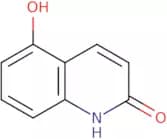
Formula:C13H10N2O2Purity:Min. 95%Molecular weight:226.23 g/mol5-Hydroxyquinolin-2(1H)-one
CAS:5-Hydroxyquinolin-2(1H)-one is a chalcone that can be synthesized from 2,5-dihydroxybenzaldehyde and quinoline. It is a bacteriostatic agent that inhibits bacterial growth by binding to the 50S ribosomal subunit, blocking the formation of an antibiotic-substrate complex with the enzyme cell wall synthesis that is required for cell wall biosynthesis, inhibiting protein synthesis and cell division. 5-Hydroxyquinolin-2(1H)-one has shown activity against methicillin resistant Staphylococcus aureus (MRSA) and methicillin resistant Enterococcus faecium. 5-Hydroxyquinolin-2(1H)-one also represses the expression of DNA topoisomerase II genes, which may be associated with its inhibitory effects on bacterial growth.
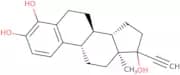
Formula:C9H7NO2Purity:Min. 95%Molecular weight:161.16 g/mol4-Hydroxy ethynyl estradiol
CAS:4-Hydroxy ethynyl estradiol is a synthetic estrogen that is used in the treatment of hormone-dependent cancers, such as breast cancer. It has been shown to induce cellular proliferation and promote tumor growth by binding to estrogen receptors and inhibiting the synthesis of proteins in cells. 4-Hydroxy ethynyl estradiol may be carcinogenic due to its ability to form covalent adducts with DNA, which causes mutations that may lead to cancer. The drug also damages protein targets, including enzymes responsible for regulating cell division or protecting against oxidative stress.Formula:C20H24O3Purity:Min. 95%Molecular weight:312.4 g/mol1-Aziridineethanol
CAS:1-Aziridineethanol is a chemical used in research to study the effects of radiation on cells. It has been shown that the presence of 1-aziridineethanol in cells increases their sensitivity to radiation. In addition, this compound can be used as a chelate ligand for potassium ions. This product is also hydrophilic, allowing it to be dissolved in water and other polar solvents. Moreover, this chemical contains one hydroxy group and can undergo dehydration reactions with acids such as hydrochloric acid. The patterning of this product is determined by the presence of hydroxyl groups, which are reactive with hydrogen bond formation. 1-Aziridineethanol is also able to react with aromatic hydrocarbons and proteins due to its nucleophilic property. This product can undergo a number of chemical reactions, including the formation of azo bonds with azides and amines, as well as epoxidation reactions with peroxyacids such as m-Formula:C4H9NOPurity:Min. 95%Molecular weight:87.12 g/mol2-(2-Methyl-4-nitro-1H-imidazol-1-yl)ethanol
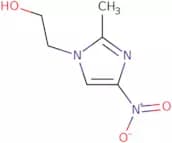
CAS:Please enquire for more information about 2-(2-Methyl-4-nitro-1H-imidazol-1-yl)ethanol including the price, delivery time and more detailed product information at the technical inquiry form on this page
Formula:C6H9N3O3Purity:Min. 95%Molecular weight:171.15 g/mol2-Chloro-5-iodophenol
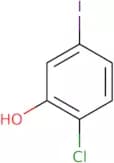
CAS:Please enquire for more information about 2-Chloro-5-iodophenol including the price, delivery time and more detailed product information at the technical inquiry form on this page
Formula:C6H4ClIOPurity:Min. 95%Molecular weight:254.45 g/molKushenol Q
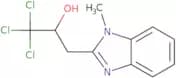
CAS:Kushenol Q is a flavonoid compound, which is derived from the roots of Sophora flavescens, a traditional medicinal plant. This compound exhibits a multifaceted mode of action characterized by its ability to modulate various cellular pathways. Kushenol Q interacts with specific signaling proteins and enzymes, thereby influencing cell proliferation, apoptosis, and inflammatory responses. Notably, its interaction at the molecular level can result in the inhibition of cancer cell growth and the reduction of inflammation.Purity:Min. 95%1,1,1-Trichloro-3-(1-methyl-1H-benzimidazol-2-yl)propan-2-ol
CAS:Controlled ProductPlease enquire for more information about 1,1,1-Trichloro-3-(1-methyl-1H-benzimidazol-2-yl)propan-2-ol including the price, delivery time and more detailed product information at the technical inquiry form on this page
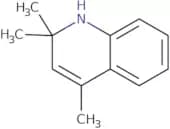
Formula:C11H11Cl3N2OPurity:Min. 95%Molecular weight:293.58 g/molPoly(1,2-dihydro-2,2,4-trimethylquinoline)
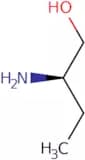
CAS:Poly(1,2-dihydro-2,2,4-trimethylquinoline) is a high molecular weight polymeric quinoline. It is an intramolecular hydrogen bond donor. The nitrogen atoms in the polymers are bound to hydrogen and form a ring with two amino groups. Poly(1,2-dihydro-2,2,4-trimethylquinoline) has been shown to be resistant to many chemical agents such as hydrogen fluoride and glycoside derivatives. It also has a carcinogenic potential and can induce liver lesions. The carcinogenesis studies of poly(1,2-dihydro-2,2,4-trimethylquinoline) have shown that it may cause cancer in animals via diazonium salt and methyl ethyl hydrochloric acidFormula:(C12H15N)xPurity:Min. 95%Color and Shape:Powder(R)-(-)-2-Amino-1-butanol
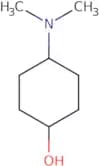
CAS:(R)-(-)-2-Amino-1-butanol is an organic compound that is used as a reagent in the synthesis of pharmaceuticals. It has antimycobacterial properties and can be used to treat tuberculosis. The mechanism for its antimycobacterial activity is not fully understood, but it may involve copper complex formation with the mycobacteria. The chloride ion may also play a role in this process by binding to the copper complex and increasing its solubility in water. This compound may react with aminothiols from the host cell, leading to degradation of DNA, RNA, and proteins. (R)-(-)-2-Amino-1-butanol has been shown to have cytotoxic effects on colorectal adenocarcinoma cells and human lung cancer cells in culture. It also inhibits human colon carcinoma cells in culture through the production of organic acids such as formic acid and acetic acid.Formula:C4H11NOPurity:Min. 95%Molecular weight:89.14 g/mol4-(Dimethylamino)cyclohexanol
CAS:4-(Dimethylamino)cyclohexanol is a colorless liquid that has a sweet odor. It is insoluble in water but soluble in alcohol, ether, and chloroform. This compound has been used as a solvent for fats, oils, waxes, resins, and rubber. 4-(Dimethylamino)cyclohexanol is found in the environment as a result of its use in insecticides and herbicides. 4-(Dimethylamino)cyclohexanol has been shown to be carcinogenic in animal studies.Formula:C8H17NOPurity:Min. 95%Molecular weight:143.23 g/mol1-[(2-Chlorophenyl)-N-(methylimino)methyl]cyclopentanol hydrochloride
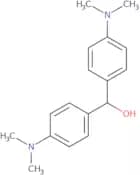
CAS:Controlled ProductPlease enquire for more information about 1-[(2-Chlorophenyl)-N-(methylimino)methyl]cyclopentanol hydrochloride including the price, delivery time and more detailed product information at the technical inquiry form on this pageFormula:C13H16ClNO•HClPurity:Min. 95%Molecular weight:274.19 g/mol4,4'-Bis(dimethylamino)diphenyl carbinol
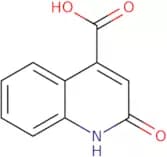
CAS:4,4'-Bis(dimethylamino)diphenyl carbinol is a bathochromic compound that belongs to the group of amines. It has been synthesized from 4,4'-diaminodiphenylmethane and hydrochloric acid. This molecule has been shown to react with protonated nitrogen atoms in an oxidation-reduction reaction. The protonation process occurs via kinetic, thermodynamic, and photophysical mechanisms. 4,4'-Bis(dimethylamino)diphenyl carbinol was used to study the proton transfer reactions between chlorine and nitrogen atoms in molecular modeling studies. On the other hand, this molecule has been shown to have fluorescence properties due to its carbonyl group.Formula:C17H22N2OPurity:Min. 95%Color and Shape:White PowderMolecular weight:270.37 g/mol2-Hydroxyquinoline-4-carboxylic acid
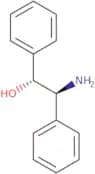
CAS:2-Hydroxyquinoline-4-carboxylic acid is a carboxylate that is structurally classified as a multidrug. It has been shown to inhibit bacterial efflux pumps and target enzymes, such as cancer cells and multidrug resistant bacteria. 2-Hydroxyquinoline-4-carboxylic acid also has potent antibacterial activity against Streptococcus faecalis, an opportunistic pathogen that causes infections in the urinary tract and on skin wounds. The fluorescence properties of this compound can be used for fluorescent labeling of biomolecules or for sensing applications.Formula:C10H7NO3Purity:Min. 95%Color and Shape:PowderMolecular weight:189.17 g/mol(1R,2S)-(-)-2-Amino-1,2-diphenylethanol
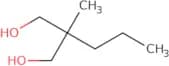
CAS:Controlled ProductThe compound is a stereoselective amine. The molecule has two diastereomers, one of which is the (1R,2S) configuration and the other of which is the (1S,2R) configuration. The compound is an efficient method for preparing fatty acid esters with aromatic hydrocarbons. The chemical structure of the molecule provides a cavity that can be used to bind with ethyl bromoacetate. This cavity has been shown in x-ray crystal structures to be able to bind with ethyl bromoacetate and provide an efficient method for preparing fatty acid esters with aromatic hydrocarbons.Formula:C14H15NOPurity:Min. 95%Molecular weight:213.28 g/mol2-Methyl-2-propyl-1,3-propanediol
CAS:Propanediol is a chemical compound that is a diol, or a molecule containing two hydroxyl groups. The propanediol molecule contains two alcohol functional groups. It is an organic solvent with a sweet odor and a slightly viscous consistency. Propanediol can be found in cosmetics, pharmaceuticals, and food products as an inactive ingredient and solute. Propanediol has been shown to have anti-allergic properties in experimental studies. This drug also has the ability to modify the properties of other compounds that are mixed with it, such as glycol esters, which are used in pharmaceuticals and cosmetics. 2-Methyl-2-propyl-1,3-propanediol is soluble in water and readily dissolves in most organic solvents at room temperature. It has been shown to be reactive with oxalyl chloride, forming 2-(2-methylpropyl)oxirane chloride: CH3(CHOH)CH(Formula:C7H16O2Purity:Min. 95%Molecular weight:132.2 g/mol(16b,17a)-Estra-1,3,5(10)-triene-3,16,17-triol
CAS:Controlled Product(16b,17a)-Estra-1,3,5(10)-triene-3,16,17-triol is a molecule that belongs to the group of estrogens. Its structure is similar to 17β-estradiol and it has been shown to have inhibitory properties against bacterial growth. This compound has been found in human breast tissue and urine samples. 16b,17a)-Estra-1,3,5(10)-triene-3,16,17-triol has been shown to be active against colistin resistant bacteria. (16b,17a)-Estra-1,3,5(10)-triene-3,16,17-triol is also active against methicillin resistant staphylococcus aureus isolates. The optimum pH for this compound is 4.8 and it can be used for diagnostic purposes as it stains cells with a blue color in Gram's stain test.Formula:C18H24O3Purity:Min. 95%Molecular weight:288.38 g/mol4-[(4-Chlorophenyl)phenylmethyl]-1-piperazineethanol dihydrochloride
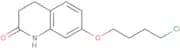
CAS:4-[(4-Chlorophenyl)phenylmethyl]-1-piperazineethanol dihydrochloride is a cholinergic drug that is used to treat allergic rhinitis in children and adults. It has been shown to be well tolerated in pediatric patients and geriatric patients, as well as being an innovative, labile, and biopharmaceutical compound. 4-[(4-Chlorophenyl)phenylmethyl]-1-piperazineethanol dihydrochloride is not metabolized by the liver and does not have significant side effects. It has a low potential for abuse because of its low solubility in water. It is an antihistamine that blocks the action of histamine at H1 receptors on smooth muscle cells in the nose, which helps reduce nasal congestion and sneezing.Formula:C19H23ClN2O·2HClPurity:Min. 95%Molecular weight:403.77 g/mol3,4-Dihydro-7-(4-chlorobutoxy)-2(1H)-Quinolinone
CAS:3,4-Dihydro-7-(4-chlorobutoxy)-2(1H)-Quinolinone is a crystalline organic base. It is used as an intermediate in the synthesis of piperazine derivatives. 3,4-Dihydro-7-(4-chlorobutoxy)-2(1H)-Quinolinone can be used to acetylate phenols and amines. This compound also has been shown to be useful in the industrial production of carbostyril and other pharmaceuticals. 3,4-Dihydro-7-(4-chlorobutoxy)-2(1H)-Quinolinone is also a high yield coupling agent for the production of heterocyclic compounds such as 1,5,6,8-tetrahydropyrimidines and benzimidazoles.Purity:Min. 95%Sorbitan trioleate
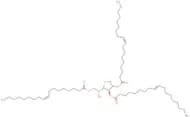
CAS:Sorbitan trioleate is a model system used in pharmaceutical preparations. It is also a particle that consists of three fatty acid chains attached to a hydroxyl group. Sorbitan trioleate has been shown to have many pharmacological effects, including receptor activity and treating allergic reactions. It is also used as a cationic surfactant with magnetic particles for the treatment of bacterial infections. The type strain for this compound is Staphylococcus epidermidis ATCC 12228.
Formula:C60H108O8Color and Shape:Clear LiquidMolecular weight:957.49 g/mol







![1-[(2-Chlorophenyl)-N-(methylimino)methyl]cyclopentanol hydrochloride](/_next/image/?url=https%3A%2Fstatic.cymitquimica.com%2Fproducts%2F3D%2Fthumb-webp%2FFC146990.webp&w=3840&q=75)

![4-[(4-Chlorophenyl)phenylmethyl]-1-piperazineethanol dihydrochloride](/_next/image/?url=https%3A%2Fstatic.cymitquimica.com%2Fproducts%2F3D%2Fthumb-webp%2FFC53582.webp&w=3840&q=75)