


Amines
Amines are a set of molecules containing an amino functional group (derived from ammonia). This category includes amines at any level of substitution : primary, secondary, tertiary, and ammonium salts. Amines are fundamental in organic synthesis and are widely used in pharmaceuticals, agrochemicals, and materials science. At CymitQuimica, we provide a comprehensive selection of amines to meet your research and industrial needs. Our range ensures access to various amines for diverse chemical processes and innovative research.
Subcategories of "Amines"
- Nitrosamines(2,603 products)
- Primary Amines(30,805 products)
- Quaternary Ammonium Cations and Salts(1,099 products)
- Secondary Amines(20,809 products)
- Tertiary Amines(17,111 products)
Found 8777 products of "Amines"
Sort by
Purity (%)
0
100
|
0
|
50
|
90
|
95
|
100
Azido-PEG1-amine
CAS:Controlled Product<p>Applications Azido-PEG1-amine (cas# 464190-91-8) is a useful research chemical.<br></p>Formula:C4H10N4OColor and Shape:NeatMolecular weight:130.15Methyl (1R,4S)-4-[[(1,1-Dimethylethoxy)carbonyl]amino]-2-cyclopentene-1-carboxylic Acid Ester
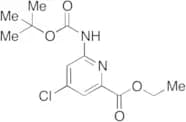
CAS:Controlled Product<p>Applications Methyl (1R,4S)-4-[[(1,1-Dimethylethoxy)carbonyl]amino]-2-cyclopentene-1-carboxylic Acid Ester is used in the discovery of a potent, selective and orally bioavailable dual CCR2 and CCR5 antagonist.<br>References Zheng, C., et al.: Bioorg. Med. Chem. Lett., 21, 1442-1446 (2011)<br></p>Formula:C12H19NO4Color and Shape:NeatMolecular weight:241.284Ethyl 6-(tert-Butoxycarbonylamino)-4-chloropicolinate
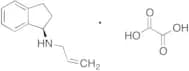
CAS:Controlled ProductFormula:C13H17ClN2O4Color and Shape:NeatMolecular weight:300.74(1R)-2,3-Dihydro-N-2-propen-1-yl-1H-inden-1-amine Ethanedioate
CAS:Controlled Product<p>Applications (1R)-2,3-Dihydro-N-2-propen-1-yl-1H-inden-1-amine Ethanedioate is an intermediate used in the synthesis of propargylated aminoindan derivatives via allylation, bromination, dehalogenation sequence.<br>References Phull, M., et al.: PCT Int. Appl., WO 2009081148 A1 20090702 (2009)<br></p>Formula:C21H23NO10Color and Shape:NeatMolecular weight:449.408[2-(Aminocarbonyl)phenoxy]acetic Acid
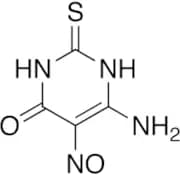
CAS:Controlled Product<p>Applications [2-(aminocarbonyl)phenoxy]acetic acid (cas# 25395-22-6) is a useful research chemical.<br></p>Formula:C9H9NO4Color and Shape:NeatMolecular weight:195.176-Amino-5-nitroso-2-thiouracil
CAS:Controlled Product<p>Applications Pyrimidine with the ability to form complexes with heavy metal ions.<br>References Iltzsch, M., et al.: Biochem. Pharmacol., 48, 781 (1994),<br></p>Formula:C4H4N4O2SColor and Shape:NeatMolecular weight:172.17(S)-2-(((1S,2S)-1-Hydroxy-1-phenylpropan-2-yl)(methyl)amino)propanoic Acid
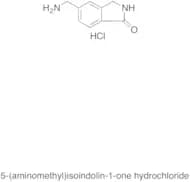
Controlled ProductFormula:C13H19NO3Color and Shape:NeatMolecular weight:212.2035-(Aminomethyl)isoindolin-1-one Hydrochloride
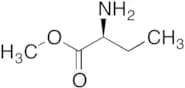
CAS:Controlled ProductFormula:C9H10N2O•(HCl)Color and Shape:NeatMolecular weight:198.05599Methyl (2S)-2-Aminobutanoate
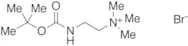
CAS:Controlled Product<p>Applications Methyl (2S)-2-Aminobutanoate is a general chemical reagent used in the synthesis of methylsulphonamide based small molecule legumain inhibitors.<br>References Ness, K. et al.: Bioorg. Med. Chem. Lett., 26, 413 (2016);<br></p>Formula:C5H11NO2Color and Shape:NeatMolecular weight:117.146Trimethyl (2-N-t-Butoxycarbonylamino)ethylammonium Bromide
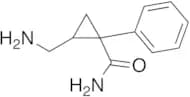
CAS:Controlled Product<p>Applications Trimethyl (2-N-t-Butoxycarbonylamino)ethylammonium Bromide is a compound useful in organic synthesis.<br></p>Formula:C10H23BrN2O2Color and Shape:NeatMolecular weight:283.212-(Aminomethyl)-1-phenylcyclopropanecarboxamide
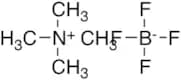
CAS:Controlled ProductFormula:C11H14N2OColor and Shape:NeatMolecular weight:190.242Tetramethylammonium Tetrafluoroborate
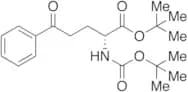
CAS:Controlled Product<p>Applications Tetramethylammonium Tetrafluoroborate (cas# 661-36-9) is a useful research chemical.<br></p>Formula:C4H12BF4NColor and Shape:NeatMolecular weight:160.95(R)-tert-Butyl 2-(tert-Butoxycarbonylamino)-5-oxo-5-phenylpentanoate
CAS:Controlled ProductFormula:C20H29NO5Color and Shape:NeatMolecular weight:364.5N-[[(2R,3S,4R)-4-[Bis[(3-cyanophenyl)methyl]amino]-3-hydroxyoxolan-2-yl]methyl]cyclopropanecarboxamide
CAS:Controlled ProductFormula:C25H26N4O3Color and Shape:NeatMolecular weight:430.499Ethyl 4-[[(methylphenylamino)methylene]amino]benzoate
CAS:Controlled Product<p>Applications Ethyl 4-[[(methylphenylamino)methylene]amino]benzoate<br></p>Formula:C17H18N2O2Color and Shape:NeatMolecular weight:282.34N1-(2-Chloroethyl)-N2-(2,3-dichlorophenyl)ethane-1,2-diamine Hydrochloride (>80%)
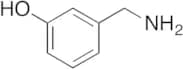
CAS:Controlled ProductFormula:C10H13Cl3N2·xHClPurity:>80%Color and Shape:NeatMolecular weight:340.5053-Hydroxybenzylamine
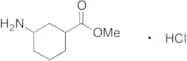
CAS:Controlled ProductFormula:C7H9NOColor and Shape:NeatMolecular weight:123.153Methyl 3-Aminocyclohexane-1-carboxylate Hydrochloride
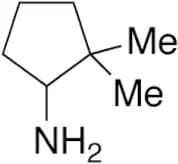
CAS:Controlled ProductFormula:C8H15NO2·HClColor and Shape:NeatMolecular weight:193.672,2-Dimethyl Cyclopentanamine
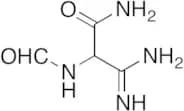
CAS:Controlled ProductFormula:C7H15NColor and Shape:NeatMolecular weight:113.2013-Amino-2-(formylamino)-3-iminopropanamide
CAS:Controlled Product<p>Applications 3-Amino-2-(formylamino)-3-iminopropanamide is a Temozolomide (T017775) impurity. Temozolomide acts as a imidazotetrazine alkylating agent. An antineoplastic.<br>References Newlands, E.S., et al.: Cancer Treat. Rev., 23, 35 (1997), Kim, C., et al.: J. Biol. Chem., 274, 1233 (1999), Hait, W., et al.: Cancer Res., 69, 1263 (2009),<br></p>Formula:C4H8N4O2Color and Shape:NeatMolecular weight:144.132O-(Tetrahydro-2H-pyran-2-yl)hydroxylamine
CAS:<p>Applications O-(Tetrahydro-2H-pyran-2-yl)hydroxylamine can be used to treat fibrotic and inflammatory diseases.<br>References Gomer, R.H., et.al., PCT Int. Appl., 167, (2020);<br></p>Formula:C5H11NO2Color and Shape:NeatMolecular weight:117.15rac 1-(5-Bromo-2-fluorophenyl)ethane-1,2-diamine
CAS:Controlled ProductFormula:C8H10BrFN2Color and Shape:NeatMolecular weight:233.08(3aS,4R,6S,6aR)-rel-6-Aminotetrahydro-2,2-dimethyl-4H-cyclopenta-1,3-dioxol-4-ol
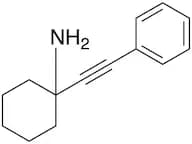
CAS:Controlled ProductFormula:C8H15NO3Color and Shape:NeatMolecular weight:173.211-(2-Phenylethynyl)cyclohexanamine
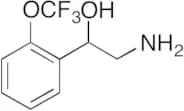
CAS:Controlled Product<p>Applications 1-(2-Phenylethynyl)cyclohexanamine is a reactant that functions as a catalyst in the cyclization of propargylamines.<br>References Zhao, D. et al.: ChemCatChem., 9, 4598 (2017); Yuan, R. et al.: J. Org. Chem., 82, 3639 (2017);<br></p>Formula:C14H17NColor and Shape:NeatMolecular weight:199.292α-(Aminomethyl)-2-(trifluoromethoxy)benzenemethanol
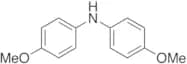
CAS:Controlled Product<p>Applications α-(Aminomethyl)-2-(trifluoromethoxy)benzenemethanol is an analog of α-(Aminomethyl)-3-(trifluoromethoxy)benzenemethanol (A630745); a compound that is used as a reagent in the synthesis of potent and selective ethanolamine inhibitors of bacterial phenylalanyl tRNA synthetase. It is also used as a reagent in the synthesis of 1-aryl-2-((6-aryl)pyrimidin-4-yl)amino)ethanols as competitive inhibitors of fatty acid amide hydrolase.<br>References Jarvest, R.L., et al.: Bioorg. Med. Chem. Lett., 15, 2305 (2005); Keith, J.M., et al.: Bioorg. Med. Chem. Lett., 24, 1280 (2014)<br></p>Formula:C9H10F3NO2Color and Shape:NeatMolecular weight:221.184,4'-Dimethoxydiphenylamine
CAS:Controlled Product<p>Applications 4,4'-Dimethoxydiphenylamine is a diphenylamine derivative used as a chemical additive for cured rubber. 4,4'-Dimethoxydiphenylamine is highly toxic and may potentially induce chromosome abberation.<br>References Kel'man, G.Y. et al.: Kauch. Rez., 26, 28 (1967); Sofuni, T. et al.: Mutat. res. Gen. Toxicol. Test., 24, 175 (1990);<br></p>Formula:C14H15NO2Color and Shape:NeatMolecular weight:229.276-Aminohexanenitrile
CAS:Controlled Product<p>Applications 6-Aminohexanenitrile (cas# 2432-74-8) is a compound useful in organic synthesis.<br></p>Formula:C6H12N2Color and Shape:NeatMolecular weight:112.172-Amino cyclopentanol
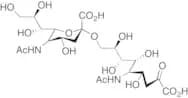
CAS:Controlled Product<p>Applications 2-Amino cyclopentanol<br></p>Formula:C5H11NOColor and Shape:NeatMolecular weight:101.147N-Acetyl-9-O-(N-acetyl-β-neuraminosyl)-neuraminic Acid
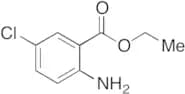
CAS:Controlled ProductFormula:C22H36N2O17Color and Shape:NeatMolecular weight:600.524Ethyl 2-Amino-5-chlorobenzoate
CAS:Controlled ProductFormula:C9H10ClNO2Color and Shape:NeatMolecular weight:199.634N,N-Diethyl-2-[(phenylmethyl)thio]ethanamine
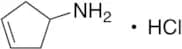
CAS:Controlled ProductFormula:C13H21NSColor and Shape:NeatMolecular weight:223.377Cyclopent-3-en-1-amine Hydrochloride
CAS:Controlled Product<p>Applications Cyclopent-3-enamine hydrochloride (cas# 91469-55-5) is a useful research chemical.<br></p>Formula:C5H9N·HClColor and Shape:NeatMolecular weight:119.5932-[(2-Aminophenyl)sulfanyl]benzonitrile
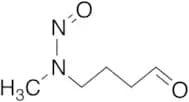
CAS:Controlled ProductFormula:C13H10N2SColor and Shape:NeatMolecular weight:226.2974-(Methylnitrosoamino)-butanal
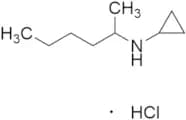
CAS:Controlled ProductFormula:C5H10N2O2Color and Shape:NeatMolecular weight:130.145n-(Hexan-2-yl)cyclopropanamine Hydrochloride
CAS:Controlled ProductFormula:C9H19N·HClColor and Shape:NeatMolecular weight:177.7151,4-Diaminobutane
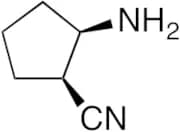
CAS:Controlled Product<p>Applications 1,4-Diaminobutane is an amino acid degradation product. Used in the preparation of hexahydropyrimidines as novel hepatitis C virus inhibitors. Also a reagent in the synthesis of antibacterial castor oil-based polyurethane membranes.<br> Not a dangerous good if item is equal to or less than 1g/ml and there is less than 100g/ml in the package<br>References Hwang, J. et al.: Eur. J. Med. Chem., 70, 315 (2013); Yari, A. et al.: J. Biomed. Mat. Res., 102A, 84 (2014);<br></p>Formula:C4H12N2Color and Shape:Colourless To Off-WhiteMolecular weight:88.15cis-2-Aminocyclopentanecarbonitrile
CAS:Controlled ProductFormula:C6H10N2Color and Shape:NeatMolecular weight:110.157O-(2-Aminoethyl)-O’-(2-azidoethyl)pentaethylene Glycol
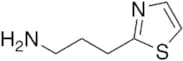
CAS:Controlled ProductFormula:C14H30N4O6Color and Shape:NeatMolecular weight:350.4113-(1,3-Thiazol-2-yl)-1-propanamine Dihydrochloride
CAS:Controlled ProductFormula:C6H10N2S•2HClColor and Shape:NeatMolecular weight:215.58α-(Aminomethyl)-p-anisyl Alcohol
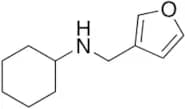
CAS:Controlled ProductFormula:C9H13NO2Color and Shape:NeatMolecular weight:167.205N-(3-Furylmethyl)cyclohexanamine Hydrochloride
CAS:Controlled Product<p>Applications N-(furan-3-ylmethyl)cyclohexanamine (cas# 462068-58-2) is a useful research chemical.<br></p>Formula:C11H17NO·HClColor and Shape:NeatMolecular weight:215.724-[[2-(2-Amino-4,5-dihydro-4-oxo-5-thiazolyl)acetyl]amino]benzeneacetic Acid
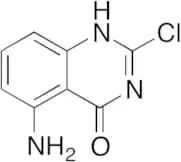
CAS:Controlled ProductFormula:C13H13N3O4SColor and Shape:NeatMolecular weight:223.3115-Amino-2-chloroquinazolin-4(1H)-one
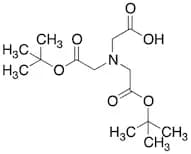
CAS:Controlled Product<p>Applications 5-Amino-2-chloroquinazolin-4(1H)-one is a synthetic reagent.<br></p>Formula:C8H6ClN3OColor and Shape:NeatMolecular weight:195.6062-(bis(2-(tert-Butoxy)-2-oxoethyl)amino)acetic Acid
CAS:Controlled Product<p>Applications 2-(bis(2-(tert-butoxy)-2-oxoethyl)amino)acetic acid (cas# 171557-31-6) is a useful research chemical.<br></p>Formula:C14H25NO6Color and Shape:NeatMolecular weight:303.35trans-4-(Dimethylamino)-3-buten-2-one
CAS:Controlled Product<p>Applications trans-4-(Dimethylamino)-3-buten-2-one is an reagent used in the synthetic preparation of various substances.<br>References Maggiulli, C.A., et al.: Org. Prep. Pro. Int., 16, 31 (1984); Afarinkia, K., et al.: Sci. Syn., 14, 275 (2003);<br></p>Formula:C6H11NOColor and Shape:NeatMolecular weight:113.16(2S,3R,4E)-3-Benzoyl-2-tert-butyloxycarbonylamino-4-octadecen-1,3-diol
CAS:Controlled Product<p>Applications (2S,3R,4E)-3-Benzoyl-2-tert-butyloxycarbonylamino-4-octadecen-1,3-diol (cas# 299172-59-1) is a compound useful in organic synthesis.<br>References Kinjo, Y., et al.: Chem. Biol., 15, 654 (2008),<br></p>Formula:C30H49NO5Color and Shape:NeatMolecular weight:503.713,4-Bis(phenylmethoxy)benzeneethanamine
CAS:Controlled Product<p>Applications 3,4-Bis(phenylmethoxy)benzeneethanamine is an intermediate used in the synthesis of S-(-)-Tretoquinol Hydrochloride (T798100), which belongs to the class of adrenergic inhalants, selective β-2-adrenoreceptor agonists. S-(-)-Tretoquinol is used in the treatment of obstructive airway diseases. S-(-)-Tretoquinol is a bronchodilator.<br>References Meshi, et al.: Biochem. Pharmacol., 19, 2937 (1970), Satoh, et al.: Chem. Pharm. Bull., 19, 667 (1971),<br></p>Formula:C22H23NO2Color and Shape:NeatMolecular weight:333.423Tetramethylammonium Bromide
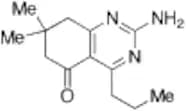
CAS:Controlled Product<p>Applications Tetramethylammonium Bromide (cas# 64-20-0) is a useful research chemical.<br></p>Formula:C4H12BrNColor and Shape:NeatMolecular weight:154.052-Amino-7,8-dihydro-7,7-dimethyl-4-propyl-5(6H)quinazolinone
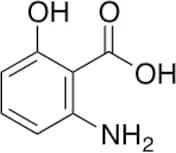
CAS:Controlled Product<p>Applications: 2-Amino-7,8-dihydro-7,7-dimethyl-4-propyl-5(6H)quinazolinone (cas# 331966-05-3) is a compound useful in organic synthesis.<br></p>Formula:C13H19N3OColor and Shape:NeatMolecular weight:233.312-amino-6-hydroxybenzoic acid
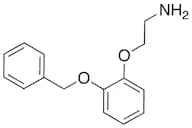
CAS:Controlled Product<p>Applications 2-amino-6-hydroxybenzoic acid (cas# 567-62-4) is a useful research chemical.<br></p>Formula:C7H7NO3Color and Shape:NeatMolecular weight:153.142-(2-Benzyloxyphenoxy)ethylamine
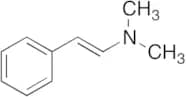
CAS:Controlled Product<p>Applications 2-(2-Benzyloxyphenoxy)ethylamine (cas# 72955-81-8) is a compound useful in organic synthesis.<br></p>Formula:C15H17NO2Color and Shape:NeatMolecular weight:243.30N,N-Dimethyl-2-phenylethenamine (E/Z Mixture)
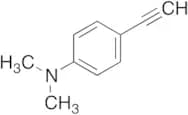
CAS:Controlled ProductFormula:C10H13NColor and Shape:NeatMolecular weight:147.2174'-Dimethylaminophenyl Acetylene
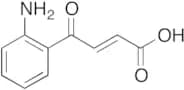
CAS:Controlled Product<p>Applications 4'-Dimethylaminophenyl acetylene<br></p>Formula:C10H11NColor and Shape:WhiteMolecular weight:145.24-(2-Aminophenyl)-4-oxo-2-butenoic Acid
CAS:Controlled Product<p>Stability Light Sensitive, Temperature Sensitive<br>Applications 4-(2-Aminophenyl)-4-oxo-2-butenoic Acid is a novel human lens metabolite from normal and cataractous human lenses. A UV filter.<br>References Mizdrak, J., et al.: Tetrahedron, 63, 4990 (2007); Taylor, L. M., et al.: Exp. Eye Res., 75, 165 (2002)<br></p>Formula:C10H9NO3Color and Shape:NeatMolecular weight:191.18349-Dimethylamino Minocycline
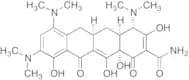
CAS:Controlled ProductFormula:C25H32N4O7Color and Shape:NeatMolecular weight:500.544(E,E)-5-[4-(Diethylamino)phenyl]penta-2,4-dienal
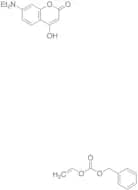
CAS:Controlled Product<p>Stability Light Sensitive<br>Applications (E,E)-5-[4-(Diethylamino)phenyl]penta-2,4-dienal is used in polymerization process.<br>References Innocenzi, P., et al.: J. Mater Chem., 15, 3821 (2005), Cai, Y., et al.: Polymer, 2006, 47, 6560 (2006),<br></p>Formula:C15H19NOColor and Shape:NeatMolecular weight:229.327-Diethylamino-4-hydroxy-chromen-2-one
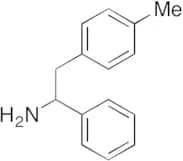
CAS:Controlled ProductFormula:C13H15NO3Color and Shape:NeatMolecular weight:233.2631-Phenyl-2-(p-tolyl)ethylamine
CAS:<p>Applications 1-Phenyl-2-(p-tolyl)ethylamine is an intermediate used to prepare γ-nitroaldehydes with quaternary stereogenic centers.<br>References Angewandte Chemie, International Edition, 52, 7228 (2013)<br></p>Formula:C15H17NColor and Shape:NeatMolecular weight:211.3026-Deoxy-6-[(2-hydroxyethyl)amino]-α-L-sorbofuranose-d4 Hydrochloride
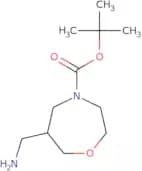
CAS:Controlled ProductFormula:C8H14D4ClNO6Color and Shape:Off-WhiteMolecular weight:259.685tert-Butyl 6-(aminomethyl)-1,4-oxazepane-4-carboxylate
CAS:<p>Please enquire for more information about tert-Butyl 6-(aminomethyl)-1,4-oxazepane-4-carboxylate including the price, delivery time and more detailed product information at the technical inquiry form on this page</p>Formula:C11H22N2O3Purity:Min. 95%Molecular weight:230.3 g/mol4,6-Diaminobenzene-1,3-dicarboxylic acid
CAS:<p>4,6-Diaminobenzene-1,3-dicarboxylic acid is an inorganic copper compound that is used as a copper salt. It has been shown to be effective as a chelating agent for the treatment of copper toxicity. 4,6-Diaminobenzene-1,3-dicarboxylic acid binds to metal ions and forms a complex with them. This complex can then be excreted from the body through urine or bile.</p>Formula:C8H8N2O4Purity:Min. 95%Molecular weight:196.16 g/mol(1R,2R)-Boc-aminocyclopentane carboxylic acid
CAS:<p>(1R,2R)-Boc-aminocyclopentane carboxylic acid (BCPC) is a high quality, reagent, and useful intermediate. It is a versatile building block that can be used as a speciality chemical or research chemical. BCPC has been shown to react with amines to form ureas, with nitriles to form oxazolidines, and with epoxides to form aziridinones.</p>Formula:C11H19NO4Purity:Min. 95%Color and Shape:White PowderMolecular weight:229.27 g/molTetrabutylammonium hydroxide - 40 wt. % aqueous solution
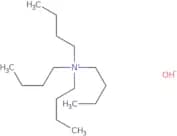
CAS:<p>Picolinic acid is a product of the reaction between sodium salts and tetrabutylammonium hydroxide. It has been shown to have anti-inflammatory properties in chronic arthritis patients and may be due to its ability to inhibit the production of prostaglandins. Picolinic acid also has been shown to inhibit the growth of bacteria, including Mycobacterium tuberculosis, by preventing protein synthesis. The analytical method for picolinic acid is electrochemical impedance spectroscopy with a 5% picolinic acid solution in human serum or other biological sample.</p>Formula:C16H37NOPurity:Min. 95%Color and Shape:Clear LiquidMolecular weight:259.47 g/mol2-(Trifluoroacetamido)Ethylamine Hydrochloride
CAS:<p>Please enquire for more information about 2-(Trifluoroacetamido)Ethylamine Hydrochloride including the price, delivery time and more detailed product information at the technical inquiry form on this page</p>Formula:C4H7F3N2OPurity:Min. 95%Molecular weight:156.11 g/mol2-(2-Fluoro-3,4-dimethoxyphenyl)ethanamine
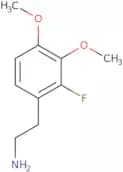
CAS:Controlled Product<p>Please enquire for more information about 2-(2-Fluoro-3,4-dimethoxyphenyl)ethanamine including the price, delivery time and more detailed product information at the technical inquiry form on this page</p>Formula:C10H14FNO2Purity:Min. 95%Molecular weight:199.22 g/mol2-(1H-Indol-5-yl)ethanamine
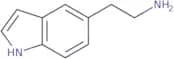
CAS:Controlled Product<p>Please enquire for more information about 2-(1H-Indol-5-yl)ethanamine including the price, delivery time and more detailed product information at the technical inquiry form on this page</p>Formula:C10H12N2Purity:Min. 95%Molecular weight:160.22 g/mol1-(Boc-amino)-4,9-dioxa-12-dodecanamine
CAS:Controlled Product<p>Please enquire for more information about 1-(Boc-amino)-4,9-dioxa-12-dodecanamine including the price, delivery time and more detailed product information at the technical inquiry form on this page</p>Formula:C15H32N2O4Purity:Min. 95%Molecular weight:304.43 g/molFmoc-1-amino-4,7,10-trioxa-13-tridecanamine succinimic acid
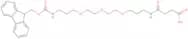
CAS:<p>Fmoc-1-amino-4,7,10-trioxa-13-tridecanamine succinimic acid is a synthetic amide that is used as an intermediate in the synthesis of peptides. It has a conformational structure and can be labeled with dyes to study the structures of proteins or peptides. Fmoc-1-amino-4,7,10-trioxa-13-tridecanamine succinimic acid has been used as an immunogen in the preparation of monoclonal antibodies. It also can be conjugated to drugs or other compounds for use as bioconjugates. This compound has been shown to have enzymatic activity and can be used as a substrate for enzyme linked immunosorbent assays (ELISA). Trifluoroacetic acid is commonly used in the synthesis of this compound.</p>Formula:C29H38N2O8Purity:Min. 98 Area-%Molecular weight:542.62 g/mol2,3-Dihydro-1-(3-hydroxypropyl)-5-[(2R)-2-[[2-[2-(2,2,2-trifluoroethoxy)phenoxy]ethyl]amino]propyl]-1H-indole-7-carbonitrile
CAS:<p>Please enquire for more information about 2,3-Dihydro-1-(3-hydroxypropyl)-5-[(2R)-2-[[2-[2-(2,2,2-trifluoroethoxy)phenoxy]ethyl]amino]propyl]-1H-indole-7-carbonitrile including the price, delivery time and more detailed product information at the technical inquiry form on this page</p>Formula:C25H30F3N3O3Purity:Min. 95%Molecular weight:477.52 g/mol[(1-Benzyl-1H-pyrazol-4-yl)methyl]amine
CAS:<p>Please enquire for more information about [(1-Benzyl-1H-pyrazol-4-yl)methyl]amine including the price, delivery time and more detailed product information at the technical inquiry form on this page</p>Formula:C11H13N3Purity:Min. 95%Molecular weight:187.24 g/mol4-Amino-3-bromoisoquinoline
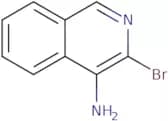
CAS:<p>4-Amino-3-bromoisoquinoline is an isocyanide that reacts with nucleophilic heteroatoms such as the amino group. It also reacts with bromine to form a bromopyridine. The nitrile group of 4-amino-3-bromoisoquinoline can be reduced with sodium borohydride to produce 4-aminoquinoline. This compound has shown potential for use in chemotherapy and treating bacterial infections.</p>Purity:Min. 95%Fmoc-trans-4-(aminomethyl)cyclohexane-1-carboxylic acid
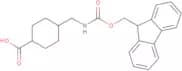
CAS:<p>Fmoc-trans-4-(aminomethyl)cyclohexane-1-carboxylic acid is a synthetic amino acid that has been shown in vitro to inhibit the growth of prostate cancer cells. It is an analog of butyric acid, a naturally occurring fatty acid. Fmoc-trans-4-(aminomethyl)cyclohexane-1-carboxylic acid has been synthesized by solid phase methods and labeled with radiotracers such as indium 111 or technetium 99m. The use of Fmoc-trans-4-(aminomethyl)cyclohexane-1-carboxylic acid in vivo is limited by its short circulating half life, rapid metabolism, and high toxicity.</p>Formula:C23H25NO4Purity:Min. 95%Color and Shape:White SolidMolecular weight:379.45 g/mol[(6-Chloro-1-isopropyl-1H-benzimidazol-2-yl)methyl]amine dihydrochloride
CAS:Controlled Product<p>Please enquire for more information about [(6-Chloro-1-isopropyl-1H-benzimidazol-2-yl)methyl]amine dihydrochloride including the price, delivery time and more detailed product information at the technical inquiry form on this page</p>Formula:C11H14ClN3Purity:Min. 95%Molecular weight:223.7 g/molN-Methylphenethylamine
CAS:Controlled Product<p>N-Methylphenethylamine (NMPEA) is a chemical substance that is found in many natural compounds. It can be synthesized by reacting phenethylamine with trifluoroacetic acid and reacts with ionization sources to produce ions detectable in mass spectrometry. NMPEA has been detected in human urine samples and has been shown to have significant interactions with the hepg2 cell line. The uptake of NMPEA into cells is facilitated by amines, which are abundant in heart tissue.</p>Formula:C9H13NPurity:Min. 95%Molecular weight:135.21 g/molBis(tert-butoxycarbonyl) Lisdexamphetamine
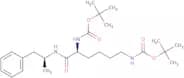
CAS:Controlled Product<p>Please enquire for more information about Bis(tert-butoxycarbonyl) Lisdexamphetamine including the price, delivery time and more detailed product information at the technical inquiry form on this page</p>Formula:C25H41N3O5Purity:Min. 95%Molecular weight:463.61 g/mol1,2-diaminocyclohexane
CAS:<p>1,2-Diaminocyclohexane is a chiral compound with a cyclohexane ring. It is reactive and has been shown to be carcinogenic. It is used in the preparation of other compounds, such as amino acid derivatives and dyes. 1,2-Diaminocyclohexane can also be used as an intermediate for the synthesis of various drugs. This compound has been shown to inhibit transcriptional regulation and to have biochemical properties that are related to cancer. 1,2-Diaminocyclohexane reacts with copper to form a coordination geometry complex with six nitrogen atoms. The reaction mechanism involves the formation of a copper complex that bears an electron-deficient carbon atom in its structure.</p>Formula:C6H14N2Purity:Min. 95%Molecular weight:114.19 g/molN-Trifluoroacetyl (R)-amphetamine
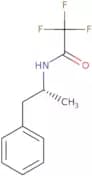
CAS:Controlled Product<p>Please enquire for more information about N-Trifluoroacetyl (R)-amphetamine including the price, delivery time and more detailed product information at the technical inquiry form on this page</p>Formula:C11H12F3NOPurity:Min. 95%Molecular weight:231.21 g/mol3-Amino-5-methoxybenzoic acid
CAS:<p>3-Amino-5-methoxybenzoic acid is a macrocyclist, which means that it can switch between two different forms. When the temperature is below 27 degrees Celsius, it exists as a mesomorphic phase and when the temperature increases above 27 degrees Celsius, it exists as an isotropic phase. 3-Amino-5-methoxybenzoic acid also has homologues that are also mesomorphic or isotropic depending on their temperatures. The chemoenzymatic parameters of the two phases are different and so are their lamellar morphologies. The fluorine atom in 3-amino-5-methoxybenzoic acid makes it act like a Lewis acid, decreasing its melting point and increasing its vapor pressure. There are two isomers of 3-amino-5-methoxybenzoic acid: dodecyl and octadecyl 3--amino--5--methoxyben</p>Formula:C8H9NO3Purity:Min. 95%Color and Shape:White To Yellow To Light Brown SolidMolecular weight:167.16 g/mol4-Fluoro methamphetamine hydrochloride
CAS:Controlled Product<p>4-Fluoro methamphetamine hydrochloride is a psychoactive substance that can be detected by the use of a gas chromatograph. It is a formic acid derivative of methamphetamine, which is found in methanolic solution. The drug is used as an illicit recreational drug and can be used to treat ADHD and narcolepsy. 4-Fluoro methamphetamine hydrochloride is also used as a research chemical. The detection of this substance in urine samples can be done by the use of chromatography, with confirmation by mass spectrometry or gas chromatography-mass spectrometry.</p>Formula:C10H15ClFNPurity:Min. 95%Molecular weight:203.68 g/mol3-Aminopropyltrimethoxysilane
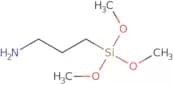
CAS:<p>3-Aminopropyltrimethoxysilane is a chemical that belongs to the group of aminopropyltriethoxysilanes. It is a reactive substance and is commonly used as an additive in adhesives and sealants. 3-Aminopropyltrimethoxysilane has been shown to be an efficient coupling agent for the formation of hydroxyl groups on nanoparticles, which are then used as drug carriers. The optimum concentration of 3-aminopropyltrimethoxysilane lies between 0.01 and 0.1 M, with a pH range of 6 and 8. This chemical can react with hydrochloric acid, resulting in the production of hydrogen gas; with cervical cancer cells in culture, leading to cell death; or with skin cells, causing damage to their transport properties.</p>Formula:C6H17NO3SiPurity:Min. 95%Color and Shape:Clear LiquidMolecular weight:179.29 g/molBenzyl N-(2-aminoethyl)carbamate hydrochloride
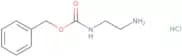
CAS:<p>Please enquire for more information about Benzyl N-(2-aminoethyl)carbamate hydrochloride including the price, delivery time and more detailed product information at the technical inquiry form on this page</p>Formula:C10H15ClN2O2Purity:Min. 95%Molecular weight:230.69 g/mol2-(2-Aminothiazol-4-yl)acetic acid HCl
CAS:<p>2-(2-Aminothiazol-4-yl)acetic acid HCl is a white to off-white crystalline solid that is soluble in organic solvents. It is an intermediate used in the synthesis of thiourea derivatives, which are used as pharmaceuticals and agrochemicals. 2-(2-Aminothiazol-4-yl)acetic acid HCl is synthesized by the reaction of 2-aminothiazole with acetic anhydride. The purity can be determined using GC or NMR spectroscopy. Impurities may be removed by recrystallization with a solvent such as chloroform or dichloromethane. The melting point of 2-(2-aminothiazol-4-yl)acetic acid HCl is 147°C (298K). 2-(2-Aminothiazol-4-yl)acetic acid HCl can be purified by distillation at</p>Formula:C5H7ClN2O2SPurity:Min. 95%Molecular weight:194.64 g/mol2N-Boc-2',2''-triaminotriethylamine
CAS:<p>Please enquire for more information about 2N-Boc-2',2''-triaminotriethylamine including the price, delivery time and more detailed product information at the technical inquiry form on this page</p>Formula:C11H26N4O2Purity:Min. 95%Color and Shape:Yellow PowderMolecular weight:246.35 g/molDihydro ergotamine mesylate
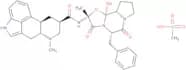
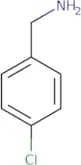
CAS:Controlled Product<p>Dihydroergotamine mesylate is a medication that is used in the treatment of migraines. It belongs to the group of drugs called ergot alkaloids and has been shown to have high values in cerebral metabolism. Dihydroergotamine mesylate has also been shown to have an effect on dopamine levels in human serum, which may be due to its ability to inhibit neuronal death. Dihydroergotamine mesylate is administered intravenously, orally or intramuscularly for the treatment of acute migraine attacks. The drug can also be given rectally for the prevention of chronic migraine episodes. This drug may cause side effects such as nausea, vomiting and dizziness.</p>Formula:C34H41N5O8SPurity:Min. 95%Color and Shape:PowderMolecular weight:679.78 g/mol4-Chlorobenzylamine
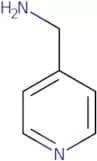
CAS:<p>4-Chlorobenzylamine is a chemical that is used as an intermediate in the synthesis of other compounds. It has low bioavailability, which may be due to its reactive site. The chemical can be characterized using nmr spectra and potent inhibitory activity. 4-Chlorobenzylamine has been found to react with nitrogen atoms, and this reaction is highly acidic. FT-IR spectroscopy can also be used to characterize this compound. Intermolecular hydrogen bonding and hydroxyl group are two of the major interactions of 4-chlorobenzylamine with other molecules. This chemical reacts with serine protease, glyoxal, and other substances in a manner that depends on the molecule's structure.</p>Formula:C7H8ClNPurity:Min. 95%Molecular weight:141.6 g/molPyridin-4-ylmethanamine
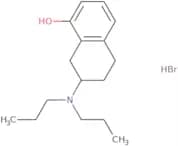
CAS:<p>Pyridin-4-ylmethanamine is a chemical compound that contains a pyridine ring and an amine (-NH2) group. It is usually used as a building block for the synthesis of other compounds. Pyridin-4-ylmethanamine can be synthesized from picolinic acid, which is obtained through a reaction with sodium hydrochloride in an alkaline solution. This reaction proceeds via two steps: first, the formation of a pyridinecarboxylic acid ester and then the addition of ammonia to form pyridin-4-ylmethanamine. The transfer reactions that occur during this process are highly dependent on temperature and pH. The frequency shift effect can be observed when pyridin-4-ylmethanamine interacts with amines, which changes its absorption spectrum.</p>Formula:C6H8N2Purity:Min. 95%Color and Shape:Colorless Clear LiquidMolecular weight:108.14 g/molrac-8-hydroxy-2-dipropylaminotetralin hydrobromide
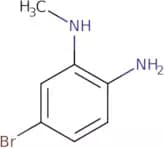
CAS:Controlled Product<p>Rac-8-hydroxy-2-dipropylaminotetralin hydrobromide is a potent 5-HT agonist that has been shown to inhibit the release of prolactin in the serum of rats. Rac-8-hydroxy-2-dipropylaminotetralin hydrobromide was found to be an antagonist of 5HT receptors, with a potency comparable to that of 8-OHDPAT and WAY 100635. Rac rac8-hydroxy-2-dipropylaminotetralin hydrobromide also inhibits locomotor activity induced by the 5HT1A agonist 8OHDPAT. Experiments in vivo have shown that rac rac8-hydroxy-2-dipropylaminotetralin hydrobromide binds to benzodiazepine binding sites and has a low affinity for dopamine receptors. It also blocks cholinergic transmission in the brain, which may explain its</p>Formula:C16H26BrNOPurity:Min. 95%Molecular weight:328.29 g/mol5-Bromo-N1-methylbenzene-1,2-diamine
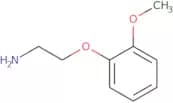
CAS:<p>Please enquire for more information about 5-Bromo-N1-methylbenzene-1,2-diamine including the price, delivery time and more detailed product information at the technical inquiry form on this page</p>Formula:C7H9BrN2Purity:Min. 95%Molecular weight:201.06 g/mol2-(2-Methoxyphenoxy)ethylamine base
CAS:<p>2-(2-Methoxyphenoxy)ethylamine base is an inorganic base with a hydroxyl group. It is soluble in organic solvents and has been used as a coumarin derivative. 2-(2-Methoxyphenoxy)ethylamine base has shown potential use as an antifungal agent, which may be due to its ability to cause lysis in fungi cells. This compound has also shown in vitro activity against bacteria and viruses, including herpes simplex virus type 1 and HIV-1. The 2-(2-methoxyphenoxy)ethylamine base can be sulfonated or acid catalyzed to produce other derivatives that have potential use as anti-inflammatory or analgesic agents.</p>Formula:C9H13NO2Purity:Min. 95%Molecular weight:167.21 g/molMethyl 2-amino-4,6-dichloropyridine-3-carboxylate
CAS:<p>Please enquire for more information about Methyl 2-amino-4,6-dichloropyridine-3-carboxylate including the price, delivery time and more detailed product information at the technical inquiry form on this page</p>Formula:C7H6Cl2N2O2Purity:Min. 95%Molecular weight:221.04 g/mol(3-IMidazol-1-yl-propyl)-[4-(4,4,5,5-tetraMethyl-[1,3,2]dioxaborolan-2-yl)-benzyl]aMine
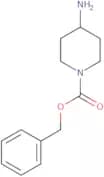
CAS:<p>Please enquire for more information about (3-IMidazol-1-yl-propyl)-[4-(4,4,5,5-tetraMethyl-[1,3,2]dioxaborolan-2-yl)-benzyl]aMine including the price, delivery time and more detailed product information at the technical inquiry form on this page</p>Purity:Min. 95%Benzyl 4-aminopiperidine-1-carboxylate
CAS:<p>Please enquire for more information about Benzyl 4-aminopiperidine-1-carboxylate including the price, delivery time and more detailed product information at the technical inquiry form on this page</p>Formula:C13H18N2O2Purity:Min. 95%Color and Shape:PowderMolecular weight:234.29 g/molDemethyl benzydamine hydrochloride
CAS:Controlled Product<p>Please enquire for more information about Demethyl benzydamine hydrochloride including the price, delivery time and more detailed product information at the technical inquiry form on this page</p>Formula:C18H22ClN3OPurity:Min. 95%Molecular weight:331.84 g/mol[1-Methyl-2-(7-methyl-1H-indol-3-yl)ethyl]amine hydrochloride
CAS:Controlled Product<p>Please enquire for more information about [1-Methyl-2-(7-methyl-1H-indol-3-yl)ethyl]amine hydrochloride including the price, delivery time and more detailed product information at the technical inquiry form on this page</p>Formula:C12H16N2Purity:Min. 95%Molecular weight:188.27 g/mol[2-(5-Fluoro-1-methyl-1H-indol-3-yl)ethyl]amine hydrochloride
CAS:Controlled Product<p>Please enquire for more information about [2-(5-Fluoro-1-methyl-1H-indol-3-yl)ethyl]amine hydrochloride including the price, delivery time and more detailed product information at the technical inquiry form on this page</p>Formula:C11H13FN2·HClPurity:Min. 95%Molecular weight:228.69 g/mol4-Amino-3,5-difluorobenzoic Acid
CAS:<p>4-Amino-3,5-difluorobenzoic Acid is a chemical compound that is used to manufacture dyes and pharmaceuticals. It is prepared by the reaction of dimethyl formamide with bromobenzoate and hydrobromic acid. The reaction product is decompressed to remove the toxic hydrogen cyanide gas and then reacted with sodium borohydride in liquid ammonia. This process yields 4-amino-3,5-difluorobenzoic acid which can be purified by recrystallization from water or chloroform.</p>Formula:C7H5F2NO2Purity:Min. 95%Molecular weight:173.12 g/mol3-Aminopropyl Silica Gel (0.6-1.3mmol/g)
<p>Please enquire for more information about 3-Aminopropyl Silica Gel (0.6-1.3mmol/g) including the price, delivery time and more detailed product information at the technical inquiry form on this page</p>Purity:Min. 95%(S)-tert-Butyl 3-(methylamino)pyrrolidine-1-carboxylate
CAS:<p>(S)-tert-Butyl 3-(methylamino)pyrrolidine-1-carboxylate is a research chemical that can be used as a versatile building block for the synthesis of complex compounds. It is also a reaction component in the synthesis of speciality chemicals and useful scaffolds. It has been shown to have high quality, reagent grade and purity.</p>Formula:C10H20N2O2Purity:Min. 95%Color and Shape:PowderMolecular weight:200.28 g/mol8-[(2-Hydroxyethyl)(methyl)amino]-1,3,9-trimethyl-3,9-dihydro-1H-purine-2,6-dione
CAS:Controlled Product<p>Please enquire for more information about 8-[(2-Hydroxyethyl)(methyl)amino]-1,3,9-trimethyl-3,9-dihydro-1H-purine-2,6-dione including the price, delivery time and more detailed product information at the technical inquiry form on this page</p>Formula:C11H17N5O3Purity:Min. 95%Molecular weight:267.28 g/mol


![Methyl (1R,4S)-4-[[(1,1-Dimethylethoxy)carbonyl]amino]-2-cyclopentene-1-carboxylic Acid Ester](/_next/image/?url=https%3A%2Fstatic.cymitquimica.com%2Fproducts%2FTR%2Fthumb-webp%2FM220430.webp&w=3840&q=75)
![[2-(Aminocarbonyl)phenoxy]acetic Acid](/_next/image/?url=https%3A%2Fstatic.cymitquimica.com%2Fproducts%2FTR%2Fthumb-webp%2FA615628.webp&w=3840&q=75)

![N-[[(2R,3S,4R)-4-[Bis[(3-cyanophenyl)methyl]amino]-3-hydroxyoxolan-2-yl]methyl]cyclopropanecarboxa…](/_next/image/?url=https%3A%2Fstatic.cymitquimica.com%2Fproducts%2FTR%2Fthumb-webp%2FB400145.webp&w=3840&q=75)
![Ethyl 4-[[(methylphenylamino)methylene]amino]benzoate](/_next/image/?url=https%3A%2Fstatic.cymitquimica.com%2Fproducts%2FTR%2Fthumb-webp%2FE925558.webp&w=3840&q=75)





![N,N-Diethyl-2-[(phenylmethyl)thio]ethanamine](/_next/image/?url=https%3A%2Fstatic.cymitquimica.com%2Fproducts%2FTR%2Fthumb-webp%2FD444715.webp&w=3840&q=75)
![2-[(2-Aminophenyl)sulfanyl]benzonitrile](/_next/image/?url=https%3A%2Fstatic.cymitquimica.com%2Fproducts%2FTR%2Fthumb-webp%2FA638133.webp&w=3840&q=75)



![4-[[2-(2-Amino-4,5-dihydro-4-oxo-5-thiazolyl)acetyl]amino]benzeneacetic Acid](/_next/image/?url=https%3A%2Fstatic.cymitquimica.com%2Fproducts%2FTR%2Fthumb-webp%2FA629388.webp&w=3840&q=75)


![(E,E)-5-[4-(Diethylamino)phenyl]penta-2,4-dienal](/_next/image/?url=https%3A%2Fstatic.cymitquimica.com%2Fproducts%2FTR%2Fthumb-webp%2FD443665.webp&w=3840&q=75)
![6-Deoxy-6-[(2-hydroxyethyl)amino]-α-L-sorbofuranose-d4 Hydrochloride](/_next/image/?url=https%3A%2Fstatic.cymitquimica.com%2Fproducts%2FTR%2Fthumb-webp%2FD239672.webp&w=3840&q=75)




![2,3-Dihydro-1-(3-hydroxypropyl)-5-[(2R)-2-[[2-[2-(2,2,2-trifluoroethoxy)phenoxy]ethyl]amino]propyl…](/_next/image/?url=https%3A%2Fstatic.cymitquimica.com%2Fproducts%2F3D%2Fthumb-webp%2FFD103483.webp&w=3840&q=75)
![[(1-Benzyl-1H-pyrazol-4-yl)methyl]amine](/_next/image/?url=https%3A%2Fstatic.cymitquimica.com%2Fproducts%2F3D%2Fthumb-webp%2FFB133964.webp&w=3840&q=75)
![[(6-Chloro-1-isopropyl-1H-benzimidazol-2-yl)methyl]amine dihydrochloride](/_next/image/?url=https%3A%2Fstatic.cymitquimica.com%2Fproducts%2F3D%2Fthumb-webp%2FFC135800.webp&w=3840&q=75)







![(3-IMidazol-1-yl-propyl)-[4-(4,4,5,5-tetraMethyl-[1,3,2]dioxaborolan-2-yl)-benzyl]aMine](/_next/image/?url=https%3A%2Fstatic.cymitquimica.com%2Fproducts%2F3D%2Fthumb-webp%2FFI39774.webp&w=3840&q=75)

![[1-Methyl-2-(7-methyl-1H-indol-3-yl)ethyl]amine hydrochloride](/_next/image/?url=https%3A%2Fstatic.cymitquimica.com%2Fproducts%2F3D%2Fthumb-webp%2FFM123634.webp&w=3840&q=75)
![[2-(5-Fluoro-1-methyl-1H-indol-3-yl)ethyl]amine hydrochloride](/_next/image/?url=https%3A%2Fstatic.cymitquimica.com%2Fproducts%2F3D%2Fthumb-webp%2FFF118334.webp&w=3840&q=75)


![8-[(2-Hydroxyethyl)(methyl)amino]-1,3,9-trimethyl-3,9-dihydro-1H-purine-2,6-dione](/_next/image/?url=https%3A%2Fstatic.cymitquimica.com%2Fproducts%2F3D%2Fthumb-webp%2FFH132897.webp&w=3840&q=75)