Amines
Amines are a set of molecules containing an amino functional group (derived from ammonia). This category includes amines at any level of substitution : primary, secondary, tertiary, and ammonium salts. Amines are fundamental in organic synthesis and are widely used in pharmaceuticals, agrochemicals, and materials science. At CymitQuimica, we provide a comprehensive selection of amines to meet your research and industrial needs. Our range ensures access to various amines for diverse chemical processes and innovative research.
Subcategories of "Amines"
- Nitrosamines(2,605 products)
- Primary Amines(30,947 products)
- Quaternary Ammonium Cations and Salts(1,099 products)
- Secondary Amines(20,886 products)
- Tertiary Amines(17,193 products)
Found 8780 products of "Amines"
Sort by
Purity (%)
0
100
|
0
|
50
|
90
|
95
|
100
N,N-Diethyl-p-phenylenediamine oxalate
CAS:<p>N,N-Diethyl-p-phenylenediamine oxalate is an oxidant that is used in the production of sintering materials. It is a salt of diethyloxalate and p-phenylenediamine. The reaction products are mainly chlorine and potassium carbonate. This material can be used to produce ozone, which can be used as an oxidizing agent for other materials. Quantification of N,N-diethyl-p-phenylenediamine oxalate can be done using gas chromatography with electron capture detection or mass spectrometry. Kinetic studies have been conducted to determine the time required for the complete conversion of this material to its oxidation products. This process is responsive to changes in pH and ionic strength, as well as temperature, pressure, and concentration of reactants.</p>Formula:C10H16N2·C2H2O4Purity:Min. 95%Molecular weight:418.53 g/mol4-Amino-2-methylphenylboronic acid, pinacol ester
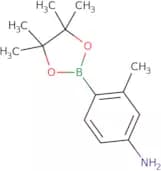
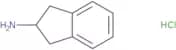
CAS:<p>Please enquire for more information about 4-Amino-2-methylphenylboronic acid, pinacol ester including the price, delivery time and more detailed product information at the technical inquiry form on this page</p>Formula:C13H20BNO2Purity:Min. 95%Molecular weight:233.11 g/mol2-Aminoindane HCl
CAS:Controlled Product<p>2-Aminoindane HCl is a betalamic acid derivative that inhibits the activity of the dopamine receptor. It has been shown to inhibit the binding of dopamine in both rat and human liver, as well as in a model system. 2-Aminoindane HCl is formed by intramolecular hydrogenation of betalamic acid and hydrolysis of the resulting 2-aminoindane acetic acid chloride. The carbonic ester group on the indane ring forms an alkoxy radical with hydrogen chloride in water, which then reacts with a hydroxy group on the indane ring to form 2-aminoindane HCl. This process can be modeled using molecular modeling techniques.</p>Purity:Min. 95%Molecular weight:169.65 g/mol3,4-Methylenedioxy amphetamine hydrochloride
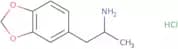
CAS:Controlled Product<p>3,4-Methylenedioxy amphetamine hydrochloride is an enantiomer of methylenedioxyamphetamine. It is a synthetic molecule that has been used as a drug and chemical intermediate. 3,4-MDA has not been detected in any natural products. 3,4-MDA is not soluble in water but is soluble in most organic solvents and oils. 3,4-MDA can be made into a non-polymeric form by adding acid to the molecule. The impurities are typically related to the solvent used during synthesis and include unreacted starting materials, side products from chemical reactions, and traces of other chemicals such as acetyl derivatives or polymers. 3,4-MDA can be assayed using high performance liquid chromatography (HPLC) with fluorescent detection; however, due to the impurities present in this substance it may be difficult to obtain a reliable result. There are two polymorphs for 3,4-MDA:</p>Formula:C10H14ClNO2Purity:Min. 95%Color and Shape:PowderMolecular weight:215.68 g/mol3-Aminopropyl Silica Gel (0.6-1.3mmol/g)
<p>Please enquire for more information about 3-Aminopropyl Silica Gel (0.6-1.3mmol/g) including the price, delivery time and more detailed product information at the technical inquiry form on this page</p>Purity:Min. 95%(2R)-1-[2-[(3-Hydroxytricyclo[3.3.1.1(3,7)]dec-1-yl)amino]acetyl]-2-pyrrolidinecarbonitrile
CAS:(2R)-1-[2-[(3-Hydroxytricyclo[3.3.1.1(3,7)]dec-1-yl)amino]acetyl]-2-pyrrolidinecarbonitrile is a drug that belongs to the class of DPP-IV inhibitors and is used for the treatment of type 2 diabetes mellitus. It has been shown to be effective in reducing postprandial blood glucose levels in patients with type 2 diabetes mellitus. The mechanism of action of this drug is not fully understood, but it may have an effect on insulin release from pancreatic beta cells and/or inhibition of gastric emptying or intestinal absorption of glucose. This drug has been shown to reduce tubulointerstitial injury in diabetic rats and can be used as a combination therapy for type 2 diabetes mellitus. There are no known clinically relevant interactions between (2R)-1-[2-[(3-HydroxytricycloFormula:C17H25N3O2Purity:Min. 95%Molecular weight:303.4 g/molAmmonium benzenesulfonate
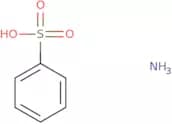
CAS:<p>Ammonium benzenesulfonate is a glycol ester that belongs to the class of ammonium salts. It is used as a synergist for the synthesis of sodium salts, which are used in analytical methods. Ammonium benzenesulfonate has been shown to have an effect on autoimmune diseases by inhibiting the production of inflammatory cytokines, such as TNF-α and IL-6, in human serum. This compound also has been shown to have a synergistic effect when combined with monoethyl ethers and sodium salts. The mechanism of this reaction is not well understood but it may be due to intramolecular hydrogen transfer or air entrainment.</p>Formula:C6H9NO3SPurity:Min. 95%Molecular weight:175.21 g/molTetrahydropyran-3-ylamine
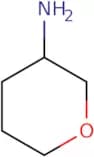
CAS:<p>Tetrahydropyran-3-ylamine is a potent and selective inhibitor of dipeptidyl peptidase IV (DPP-IV), an enzyme that plays an important role in the metabolism of proteins. Tetrahydropyran-3-ylamine is used for the treatment of type 2 diabetes and other metabolic disorders. This compound has been shown to inhibit DPP-IV activity in human plasma and in vitro, with IC50 values of 0.6 μM and 0.2 μM respectively. Tetrahydropyran-3-ylamine also inhibits the production of amyloid β peptides, which are associated with Alzheimer's disease. Tetrahydropyran-3-ylamine is orally active and stable at acidic pH levels, making it suitable for oral administration. It has a high degree of crystallinity, with the crystalline substance being thermally stable up to 200°C. Tetrahydropyr</p>Formula:C5H11NOPurity:Min. 95%Molecular weight:101.15 g/mol3-Amino-1,2,4-triazole
CAS:<p>3-Amino-1,2,4-triazole is a fine chemical that has been used as a versatile building block in the synthesis of complex compounds. It reacts with many different types of molecules to form covalent bonds, and can also be used as a reactant in many organic reactions, such as the formation of amides. 3-Amino-1,2,4-triazole is not currently available commercially but can be synthesized in the laboratory from readily available starting materials. 3-Amino-1,2,4-triazole is a high quality chemical with few impurities that is suitable for use in research or industrial settings.</p>Formula:C2H4N4Molecular weight:84.08 g/molrac-N-ethyl amphetamine hydrochloride
CAS:Controlled Product<p>Racemic amphetamine is a psychoactive substance that has been extensively used in the past as a stimulant, for example in the treatment of ADHD and narcolepsy. Racemic amphetamine is typically used to monitor drug use or to identify adulterants in urine samples. It is also used in the analysis of psychoactive substances and for the detection of phenylpropanolamine (PPA) and formic acid. Racemic amphetamine is a controlled substance that can be found in various forms, including methanolic solution, dilution, analyze, and reaction monitoring. Its use has been shown to be linear and it can be quantified by high-performance liquid chromatography.</p>Formula:C11H18ClNPurity:Min. 95%Molecular weight:199.72 g/molN-[4-(Aminosulfonyl)-2,1,3-benzoxadiazol-7-yl]-2-aminoethyl methanethiosulfonate
CAS:<p>Please enquire for more information about N-[4-(Aminosulfonyl)-2,1,3-benzoxadiazol-7-yl]-2-aminoethyl methanethiosulfonate including the price, delivery time and more detailed product information at the technical inquiry form on this page</p>Formula:C9H12N4O5S3Purity:Min. 95%Molecular weight:352.41 g/mol2-(Dimethylaminocarbonyl)ethylboronic acid, pinacol ester
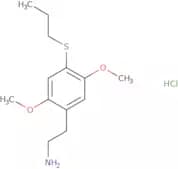
CAS:<p>Please enquire for more information about 2-(Dimethylaminocarbonyl)ethylboronic acid, pinacol ester including the price, delivery time and more detailed product information at the technical inquiry form on this page</p>Formula:C11H22BNO3Purity:Min. 95%Molecular weight:227.11 g/mol2,5-Dimethoxy-4-(propylsulfanyl)phenethylamine hydrochloride
CAS:Controlled ProductPlease enquire for more information about 2,5-Dimethoxy-4-(propylsulfanyl)phenethylamine hydrochloride including the price, delivery time and more detailed product information at the technical inquiry form on this pageFormula:C13H22ClNO2SPurity:Min. 95%Molecular weight:291.84 g/mol[(1,5-Dimethyl-1H-benzimidazol-2-yl)methyl]amine
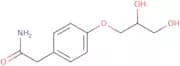
CAS:Controlled Product<p>Please enquire for more information about [(1,5-Dimethyl-1H-benzimidazol-2-yl)methyl]amine including the price, delivery time and more detailed product information at the technical inquiry form on this page</p>Formula:C10H13N3Purity:Min. 95%Molecular weight:175.23 g/molDes(isopropylamino) atenolol diol
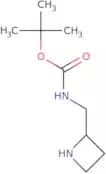
CAS:<p>Des(isopropylamino) atenolol diol is a synthetic, high-performance liquid chromatography (HPLC) analyte with an absorbance maximum of 254 nm. It is a white/off-white solid that is soluble in water and has a molecular weight of 187.5 g/mol. This compound can be analyzed using multichannel or liquid chromatographic techniques. Des(isopropylamino) atenolol diol can be used to measure the concentration of various compounds, such as impurities, by elution from the column. The elution profile has been shown to be dependent on the type of sample and technique used for analysis.</p>Formula:C11H15NO4Purity:Min. 95%Molecular weight:225.24 g/mol2-(N-Boc-aminomethyl)azetidine
CAS:<p>Please enquire for more information about 2-(N-Boc-aminomethyl)azetidine including the price, delivery time and more detailed product information at the technical inquiry form on this page</p>Formula:C9H18N2O2Purity:Min. 95%Molecular weight:186.25 g/molDiethyl[2-(4-nitrophenoxy)ethyl]amine
CAS:Controlled Product<p>Please enquire for more information about Diethyl[2-(4-nitrophenoxy)ethyl]amine including the price, delivery time and more detailed product information at the technical inquiry form on this page</p>Formula:C12H18N2O3Purity:Min. 95%Molecular weight:238.28 g/mol4-Methoxybenzene-1,3-diamine sulfate
CAS:Controlled Product<p>4-Methoxybenzene-1,3-diamine sulfate (4MBD) is a chemical substance that inhibits the activity of cytochrome P450 enzymes. It has been shown to inhibit the activity of rat liver microsomal p-450 enzymes, and is used in studies on the effects of chemicals on protein synthesis. When 4MBD is administered to rats at dietary concentrations, it causes an increase in thyroid hormone levels and a decrease in renal function. The enzyme inhibition caused by 4MBD may be due to its ability to acylate amines, which are located near the active site of the enzyme. Linear regression analysis showed that there was a strong correlation between dietary concentrations and the inhibition of protein synthesis caused by 4MBD.</p>Formula:C7H12N2O5SPurity:Min. 95%Molecular weight:236.25 g/molBeclotiamine hydrochloride
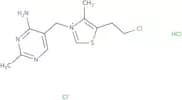
CAS:Beclotiamine hydrochloride, also known as beclamethasone 17,21-dipropionate, is a synthetic corticosteroid that has anti-inflammatory and anticoccidial properties. It is not active against coccidiosis in piglets. Beclotiamine hydrochloride has been shown to have a prophylactic effect on coccidiosis in piglets by inhibiting the development of the oocysts. The mechanism of action is not fully understood but may involve inhibition of the uptake of pyrophosphate or interference with the conversion of organic phosphates to inorganic phosphate. Beclotiamine hydrochloride can be used for the treatment and prevention of coccidiosis in pigs.Formula:C12H17Cl3N4SPurity:Min. 95%Color and Shape:PowderMolecular weight:355.71 g/mol3-Amino-6-hydroxy-2-methylquinazolin-4(3H)-one
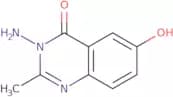
CAS:Controlled ProductPlease enquire for more information about 3-Amino-6-hydroxy-2-methylquinazolin-4(3H)-one including the price, delivery time and more detailed product information at the technical inquiry form on this pageFormula:C9H9N3O2Purity:Min. 95%Molecular weight:191.19 g/mol


![(2R)-1-[2-[(3-Hydroxytricyclo[3.3.1.1(3,7)]dec-1-yl)amino]acetyl]-2-pyrrolidinecarbonitrile](/_next/image/?url=https%3A%2Fstatic.cymitquimica.com%2Fproducts%2F3D%2Fthumb-webp%2FFH46129.webp&w=3840&q=75)


![N-[4-(Aminosulfonyl)-2,1,3-benzoxadiazol-7-yl]-2-aminoethyl methanethiosulfonate](/_next/image/?url=https%3A%2Fstatic.cymitquimica.com%2Fproducts%2F3D%2Fthumb-webp%2FFA17849.webp&w=3840&q=75)

![[(1,5-Dimethyl-1H-benzimidazol-2-yl)methyl]amine](/_next/image/?url=https%3A%2Fstatic.cymitquimica.com%2Fproducts%2F3D%2Fthumb-webp%2FFD135790.webp&w=3840&q=75)
![Diethyl[2-(4-nitrophenoxy)ethyl]amine](/_next/image/?url=https%3A%2Fstatic.cymitquimica.com%2Fproducts%2F3D%2Fthumb-webp%2FFD21808.webp&w=3840&q=75)