Amines
Amines are a set of molecules containing an amino functional group (derived from ammonia). This category includes amines at any level of substitution : primary, secondary, tertiary, and ammonium salts. Amines are fundamental in organic synthesis and are widely used in pharmaceuticals, agrochemicals, and materials science. At CymitQuimica, we provide a comprehensive selection of amines to meet your research and industrial needs. Our range ensures access to various amines for diverse chemical processes and innovative research.
Subcategories of "Amines"
- Nitrosamines(2,606 products)
- Primary Amines(30,821 products)
- Quaternary Ammonium Cations and Salts(1,099 products)
- Secondary Amines(20,817 products)
- Tertiary Amines(17,117 products)
Found 8778 products of "Amines"
Sort by
Purity (%)
0
100
|
0
|
50
|
90
|
95
|
100
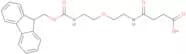
N-(Fmoc-5-amino-3-oxa-pentyl)succinamic acid
CAS:<p>N-(Fmoc-5-amino-3-oxa-pentyl)succinamic acid is a high quality chemical that is used as an intermediate in the production of pharmaceuticals and other fine chemicals. It is also a reagent for use in peptide synthesis. N-(Fmoc-5-amino-3-oxa-pentyl)succinamic acid has a CAS No. 669073-62-5 and can be used as a useful scaffold for the production of complex compounds. This compound is also useful for research purposes, due to its versatility as a building block with speciality chemical applications.</p>Formula:C23H26N2O6Purity:Min. 95%Molecular weight:426.46 g/molAminocaproic acid
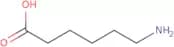
CAS:<p>Aminocaproic acid is a non-specific lysing agent that is used in the treatment of acute blood clots. Aminocaproic acid has minimal toxicity and low-dose effects, and can be used for the treatment of thrombotic disorders. It also has biological properties that are different from those of aminocaproate, which can lead to a more rapid dissolution of the clot. Aminocaproic acid is an organic compound that belongs to the class of dicarboxylic acids. It is synthesized from two molecules of aminoacetic acid by the enzyme aminocaproic acid synthetase. The synthesis occurs in a two-step process: first, caprylic acid reacts with ATP to form aminopropyl-adenylate (APA), followed by hydrolysis by APA lyase to form aminocaproic acid.</p>Formula:C6H13NO2Color and Shape:PowderMolecular weight:131.17 g/mol(Nle 35)-Amyloid b-Protein (1-40) ammonium salt
CAS:<p>Please enquire for more information about (Nle 35)-Amyloid b-Protein (1-40) ammonium salt including the price, delivery time and more detailed product information at the technical inquiry form on this page</p>Formula:C195H297N53O58Purity:Min. 95%Molecular weight:4,311.77 g/mol2,5-Diaminopyridine
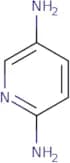
CAS:<p>2,5-Diaminopyridine is an organic compound that is expressed in the human body. It has been shown to inhibit the growth of cells in culture by binding to their DNA and preventing the production of hydrogen bonds. 2,5-Diaminopyridine has also been used clinically to treat inflammatory diseases such as rheumatoid arthritis. The hydrogen bond formation and inhibition of cell growth occurs at a low concentration of 2,5-Diaminopyridine. This drug may have potential as a therapeutic agent for cancer treatment because it inhibits the transcription factor CXCR4.</p>Formula:C5H7N3Purity:Min. 98.0 Area-%Color and Shape:Yellow To Purple To Brown SolidMolecular weight:109.13 g/mol4-Amino-2-methylbenzoic acid
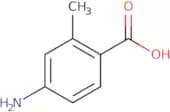
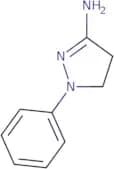
CAS:<p>4-Amino-2-methylbenzoic acid is a low molecular weight compound that has been shown to inhibit the neuraminidase enzyme. It interacts with the imine group of the enzyme and forms a covalent bond, which prevents the release of sialic acid from the terminal sugar residue of glycoproteins. The inhibition of this enzyme leads to decreased bacterial growth. 4-Amino-2-methylbenzoic acid has been shown to be active against Gram positive bacteria such as Staphylococcus aureus and Streptococcus pneumoniae, but not against Gram negative bacteria such as Escherichia coli or Pseudomonas aeruginosa. This compound is also able to inhibit the synthesis of c-reactive protein (CRP) in human erythrocytes.</p>Formula:C8H9NO2Purity:Min. 95%Color and Shape:PowderMolecular weight:151.16 g/mol1-Phenyl-4,5-dihydro-1H-pyrazol-3-amine
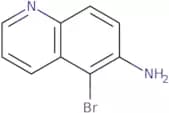
CAS:<p>1-Phenyl-4,5-dihydro-1H-pyrazol-3-amine is an organic compound that is used as a reagent in the synthesis of other compounds. It is a dimeric compound that can be synthesized by electrolysis. It has been shown to have kinetic and potential properties, which are determined by its anilines and pyridines. 1-Phenyl-4,5-dihydro-1H-pyrazol-3-amine can also be synthesized from ethanolamine and copper (II) salts. This technique involves the electrochemical oxidation of copper, followed by reduction with acetonitrile. The resulting 1-(aminomethyl)-4,5 dihydro pyrazole 3 amine can then be used for further reactions.</p>Formula:C9H11N3Purity:Min. 95%Molecular weight:161.2 g/mol5-Bromoquinolin-6-amine
CAS:<p>Please enquire for more information about 5-Bromoquinolin-6-amine including the price, delivery time and more detailed product information at the technical inquiry form on this page</p>Formula:C9H7BrN2Purity:Min. 95%Molecular weight:223.07 g/mol5-tert-Butyl-1,3,4-oxadiazol-2-amine
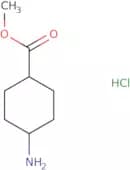
CAS:<p>Please enquire for more information about 5-tert-Butyl-1,3,4-oxadiazol-2-amine including the price, delivery time and more detailed product information at the technical inquiry form on this page</p>Formula:C6H11N3OPurity:Min. 95%Molecular weight:141.17 g/molcis-4-Aminocyclohexanecarboxylic acid methyl ester hcl
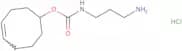
CAS:<p>cis-4-Aminocyclohexanecarboxylic acid methyl ester hcl is a chemical compound that is used in research and industry. It is an efficient isomer of 4-aminocyclohexanecarboxylic acid methyl ester hydrochloride. cis-4-Aminocyclohexanecarboxylic acid methyl ester hcl has been used as a model for the study of glimepiride, an insulin secretagogue, and has been shown to be active against Toxoplasma gondii.</p>Formula:C8H15NO2·HClPurity:Min. 95%Color and Shape:SolidMolecular weight:193.67 g/molTCO-amine hydrochloride
CAS:<p>Please enquire for more information about TCO-amine hydrochloride including the price, delivery time and more detailed product information at the technical inquiry form on this page</p>Formula:C12H22N2O2•HClPurity:Min. 95%Color and Shape:PowderMolecular weight:262.78 g/molAc-Val-Met-[(2S,4S,5S)-5-amino-4-hydroxy-2-isopropyl-7-methyl-octanoyl]-Ala-Glu-Phe-OH trifluoroacetate salt
CAS:<p>Please enquire for more information about Ac-Val-Met-[(2S,4S,5S)-5-amino-4-hydroxy-2-isopropyl-7-methyl-octanoyl]-Ala-Glu-Phe-OH trifluoroacetate salt including the price, delivery time and more detailed product information at the technical inquiry form on this page</p>Formula:C41H66N6O11SPurity:Min. 95%Molecular weight:851.06 g/mol2-[(5-Chloropyridin-2-yl)amino]-2-oxoacetic acid ethyl ester monohydrochloride
CAS:<p>Intermediate in the synthesis of edoxaban</p>Formula:C9H9ClN2O3·HClPurity:Min. 95%Molecular weight:265.09 g/molAmmonium isothiocyanate
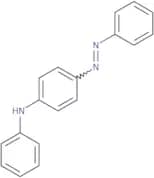
CAS:<p>Ammonium thiocyanate is a natural compound that is found in the blood of humans and animals. It binds to an antigen-binding molecule and has been shown to be effective against infectious diseases. Ammonium thiocyanate is toxic, so it should only be administered as a last resort for treatment. The toxicity of ammonium thiocyanate can be reduced by complexing with copper chloride or zirconium oxide. Ammonium thiocyanate has also been shown to have high redox potentials, which are indicative of its ability to donate electrons. These properties make ammonium thiocyanate an ideal candidate for use in electrochemical impedance spectroscopy experiments.</p>Formula:CH4N2SPurity:Min. 95%Color and Shape:PowderMolecular weight:76.12 g/mol4-(Phenylazo)diphenylamine
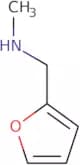
CAS:<p>4-(Phenylazo)diphenylamine is a phenylazodiphenyl amine that is soluble in nonpolar solvents. It has been used as a dye for the detection of heavy metals, such as mercury and lead. This compound can be synthesized by trimerization of nitrobenzene with ammonia and phenol in acidic conditions. 4-(Phenylazo)diphenylamine has been used for the detection of chloride ions, boron nitride, or other impurities in pharmaceutical products due to its high sensitivity.</p>Formula:C18H15N3Purity:Min. 95%Molecular weight:273.33 g/mol(2-Furylmethyl)methylamine
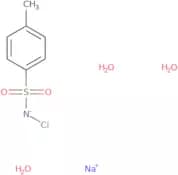
CAS:<p>(2-Furylmethyl)methylamine is a protein inhibitor that has been shown to inhibit γ-secretase, an enzyme responsible for the cleavage of amyloid precursor protein (APP) and the production of beta-amyloid. It has also been shown to be effective in treating cancer and Alzheimer's disease when administered as an intravenous injection or oral medication. The effects on animals were observed in a study involving mice with bladder cancer. (2-Furylmethyl)methylamine was found to inhibit the growth of bladder cancer cells and induce apoptosis. This compound also inhibits glycogen synthase kinase 3 (GSK3), which is involved in cell proliferation. Trichophyton mentagrophytes, a fungus that causes athlete's foot, has also been found to be sensitive to this drug. Heterocycles are not affected by this compound because they lack nitrogen atoms at their positions corresponding to those in the amide group</p>Formula:C6H9NOPurity:Min. 95%Color and Shape:Colorless Clear LiquidMolecular weight:111.14 g/molChloramine T trihydrate
CAS:<p>Chloramine T trihydrate is a water-soluble and biodegradable chemical that is used in wastewater treatment. It reacts with chloramines to produce chloramine, which has a higher disinfectant potential than chlorine. Chloramine T trihydrate also has antimicrobial properties and can be used to control microbial growth in biological samples. In addition, it can inhibit the activity of certain enzymes, such as aziridination, which is involved in the production of nitrosamines and nitric oxide. The matrix effect for chloramine-t may be different from other antimicrobial agents because it does not have a high affinity for proteins. It was found that benzalkonium chloride had an inhibitory effect on chloramine-t activity.<br>MECHANISM OF ACTION: Chloramine T trihydrate is an oxidizing agent that reacts with organic matter to form chloramines and other oxidized products. When these reactions occur in the presence of water or organic material,</p>Formula:C7H7ClNNaO2S•(H2O)3Purity:Min. 98 Area-%Color and Shape:PowderMolecular weight:282.7 g/molH-Glu-Leu-Asp-[(2R,4S,5S)-5-amino-4-hydroxy-2,7-dimethyl-octanoyl]-Val-Glu-Phe-Gly-Gly-D-Arg-D-Arg-D-Arg-D-Arg-D-Arg-D-Arg-D-Arg-D-A rg-D-Arg-OH trifluoroacetate salt
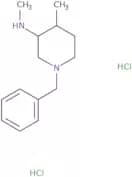
CAS:<p>Please enquire for more information about H-Glu-Leu-Asp-[(2R,4S,5S)-5-amino-4-hydroxy-2,7-dimethyl-octanoyl]-Val-Glu-Phe-Gly-Gly-D-Arg-D-Arg-D-Arg-D-Arg-D-Arg-D-Arg-D-Arg-D-A rg-D-Arg-OH trifluoroacetate salt including the price, delivery time and more detailed product information at the technical inquiry form on this page</p>Formula:C102H183N45O26Purity:Min. 95%Molecular weight:2,455.83 g/molN,4-Dimethyl-1-(phenylmethyl)-3-piperidinamine hydrochloride (1:2)
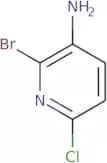
CAS:<p>Intermediate in the synthesis of tofacitinib</p>Formula:C14H24N2Cl2Purity:Min. 95%Molecular weight:291.26 g/mol3-Amino-2-bromo-6-chloropyridine
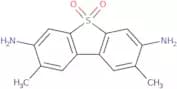
CAS:<p>Please enquire for more information about 3-Amino-2-bromo-6-chloropyridine including the price, delivery time and more detailed product information at the technical inquiry form on this page</p>Formula:C5H4BrClN2Purity:Min. 95%Molecular weight:207.46 g/mol3,7-Diamino-2,8-dimethyldibenzothiophene sulfone, contains 2,6-Dimethyl isomer
CAS:<p>3,7-Diamino-2,8-dimethyldibenzothiophene sulfone (contains 2,6-Dimethyl isomer) is a hydrophilic aromatic hydrocarbon that is used in the production of polymers. It is a copolymerization agent and monomer for epoxy resins and vulcanizates. The product contains impurities such as benzene and sulfur.</p>Formula:C14H14N2O2SPurity:Min. 95%Color and Shape:Slightly Yellow PowderMolecular weight:274.34 g/mol


![Ac-Val-Met-[(2S,4S,5S)-5-amino-4-hydroxy-2-isopropyl-7-methyl-octanoyl]-Ala-Glu-Phe-OH trifluoroac…](/_next/image/?url=https%3A%2Fstatic.cymitquimica.com%2Fproducts%2F3D%2Fthumb-webp%2FFA111093.webp&w=3840&q=75)
![2-[(5-Chloropyridin-2-yl)amino]-2-oxoacetic acid ethyl ester monohydrochloride](/_next/image/?url=https%3A%2Fstatic.cymitquimica.com%2Fproducts%2F3D%2Fthumb-webp%2FFC63138.webp&w=3840&q=75)

![H-Glu-Leu-Asp-[(2R,4S,5S)-5-amino-4-hydroxy-2,7-dimethyl-octanoyl]-Val-Glu-Phe-Gly-Gly-D-Arg-D-Arg…](/_next/image/?url=https%3A%2Fstatic.cymitquimica.com%2Fproducts%2F3D%2Fthumb-webp%2FFG111107.webp&w=3840&q=75)